
Tokyo Travel Guide: Things to Do, Best Areas and Getting Around
Tokyo is easier than it looks once you see it as a set of neighbourhoods strung along train lines. Asakusa and Ueno, in the north-east, keep the old temples and the national museums. Shinjuku and Shibuya, on the west side of the Yamanote Line loop, are where the neon and the late bars are, and the Imperial Palace sits in the green middle beside Tokyo Station. The best things to do in Tokyo are spread across all of them, and a good number cost nothing at all: Senso-ji, Meiji Jingu, the 45th floor view from the Tokyo Metropolitan Government Building and the Imperial Palace East Gardens are all free to enter.
This guide goes area by area with opening hours, prices and the nearest station, all checked against each venue’s own website or the rail operators on 1 November 2026. It then covers how to get around on a Suica card or a Tokyo Subway Ticket, how to get in from Narita and Haneda, what the weather and festivals look like month by month, and a three-day route that avoids the Monday and Friday closures that catch out a lot of first-time visitors.
| Tokyo at a glance | |
|---|---|
| Population | 14,288,867 on 1 October 2026 (Tokyo Metropolitan Government estimate) |
| Airports | Narita, about an hour east in Chiba, and Haneda, on Tokyo Bay about 15 minutes from Shinagawa |
| Getting around | A Suica or PASMO card on every train, subway and bus; the Tokyo Subway Ticket from ¥1,000 for 24 hours |
| Free headline sights | Senso-ji, Meiji Jingu, the Tokyo Metropolitan Government Building observatory and the Imperial Palace East Gardens |
| Closures to plan around | Tokyo National Museum and Shinjuku Gyoen close on Mondays; the Imperial Palace East Gardens close on Mondays and Fridays |
| Best months | Late March to early April for cherry blossom; November for clear skies and autumn colour |
| How long to stay | Three full days for the main areas, five if you want a day trip to Kamakura, Hakone or Nikko |
| Hotel tax | ¥100 or ¥200 per person per night on rooms from ¥10,000, moving to 3% of the room rate from 1 April 2027 |
Places to Visit in Tokyo, From Asakusa to Shibuya
Things to Do in Tokyo: Free and Paid Sights With Hours and Prices
These are the sights most first trips are built around. Several of them change their hours with the season or close on one weekday, so the table gives the detail you need to put them in the right order. Prices are adult prices on each venue’s own site.
| Sight | Area and station | Hours | Adult price |
|---|---|---|---|
| Senso-ji | Asakusa; Asakusa Station | Grounds always open; main hall from early morning to 5pm | Free |
| Meiji Jingu | Harajuku; JR Harajuku Station | Sunrise to sunset (6.10am to 4.10pm in November) | Free |
| Tokyo Metropolitan Government Building | Shinjuku West Exit; Tochomae Station | South deck 9.30am to 10pm | Free |
| Imperial Palace East Gardens | Otemachi Station, Ote-mon Gate | 9am to 4pm from November to February; closed Mondays and Fridays | Free |
| Shinjuku Gyoen National Garden | Shinjuku-gyoemmae or JR Sendagaya | 9am to 4.30pm from October to mid March; closed Mondays | ¥500 |
| Tokyo National Museum | Ueno Park; JR Ueno, 10 minutes’ walk | 9.30am to 5pm, to 8pm on Fridays and Saturdays; closed Mondays | ¥1,000 |
| Tokyo Skytree | Oshiage; Tokyo Skytree Station | Timed tickets, priced by date | From ¥1,800 (Tembo Deck) |
| teamLab Borderless | Azabudai Hills; Kamiyacho Station | 8.30am to 9pm on most days | ¥3,400 (dynamic pricing) |
| Ghibli Museum | Mitaka; JR Mitaka or Kichijoji | Advance reservation only | See the museum’s ticket page |
Two of these are worth booking before you fly. teamLab Borderless sells timed entry passes with prices that move with demand, and adds ¥200 if you buy at the door. The Ghibli Museum in Mitaka sells every ticket in advance and none at the gate. Our guide to Studio Ghibli locations in Japan covers the museum alongside the places that inspired the films.
Asakusa, Ueno and Yanaka: Senso-ji, Museums and Old Tokyo
The north-east of central Tokyo is where the older city survives best. It is also one of the better-value parts of town to stay in, and it is the first stop on the Keisei Skyliner from Narita, so many visitors start here.
Senso-ji and Nakamise, Tokyo’s oldest temple
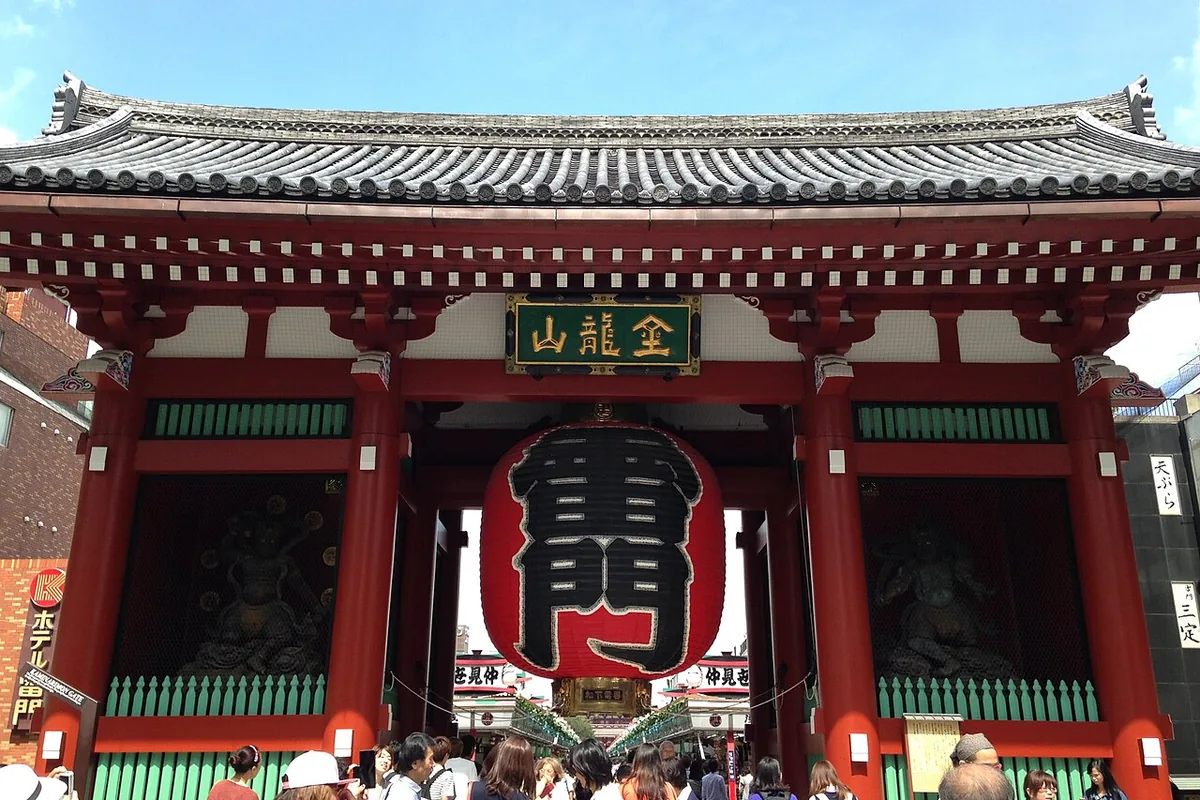
Senso-ji calls itself the oldest temple in Tokyo. Its founding story begins on 18 March 628, when two brothers fishing in the Sumida River pulled a small statue of Kannon out of their net, and the temple says around 30 million people now visit each year. You walk in through Kaminarimon, the gate with the giant red lantern, then along Nakamise, a shopping street of snack and souvenir stalls, to the main hall and the five-storey pagoda. Entry is free and the grounds never close, which is the useful part: arrive at 7am and you have the lanterns almost to yourself, while by late morning Nakamise is shoulder to shoulder. Asakusa Station on the Ginza and Toei Asakusa lines is a short walk from Kaminarimon.
The temple’s calendar adds a reason to time your visit. Hatsumode, the first prayers of the year, runs from 1 to 7 January. The Hozuki market of potted ground cherries fills the precinct on 9 and 10 July, and the battledore market of decorated hagoita paddles runs from 17 to 19 December.
Kappabashi kitchen town and Tokyo Skytree
About 15 minutes’ walk west of Senso-ji is Kappabashi Street, an 800-metre trade street where more than 170 shops sell kitchen knives, tableware and the plastic food samples you see in restaurant windows. Most shops open from about 10am to 5pm and only around a third open on Sundays, so go on a weekday or a Saturday. Tawaramachi Station on the Ginza Line is five minutes away.
Across the Sumida River, Tokyo Skytree stands 634 metres tall and has two viewing levels. Online tickets start from ¥1,800 for the Tembo Deck at 350 metres and from ¥3,000 for both decks, with ¥500 added per ticket if you buy at the counter on the day. On clear days the view reaches Mount Fuji.
Ueno Park and the Tokyo National Museum
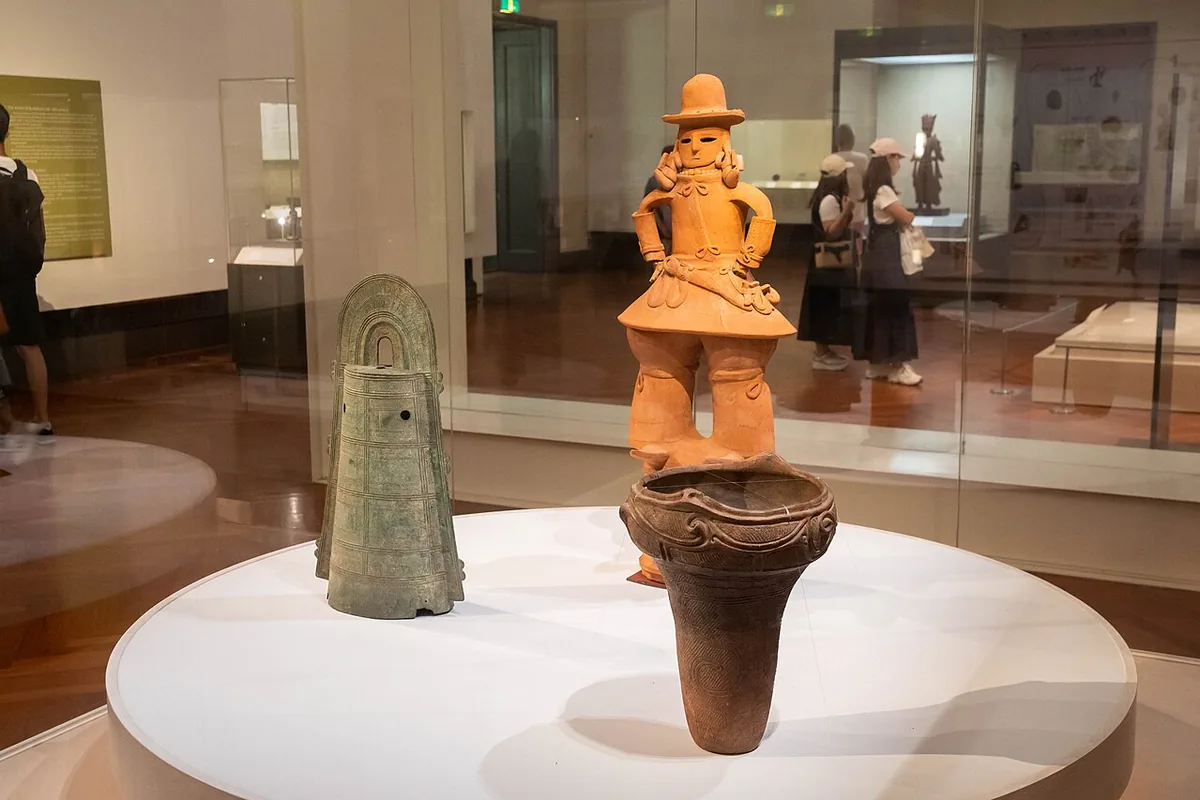
Ueno Park holds several national museums and Ueno Zoo, and its Shinobazu Pond fills with lotus leaves in summer. The one to prioritise is the Tokyo National Museum, Japan’s oldest museum, where the Honkan building runs through Japanese art from clay haniwa figures to Edo-period painted screens. Collection tickets are ¥1,000 for adults. It opens 9.30am to 5pm, stays open to 8pm on Fridays and Saturdays, and closes on Mondays and from 26 to 31 December 2026. Entry is free on 3 November. Our Ueno guide covers the park’s other museums and the Ameyoko market under the railway.
Yanaka Ginza and the Yanesen streets
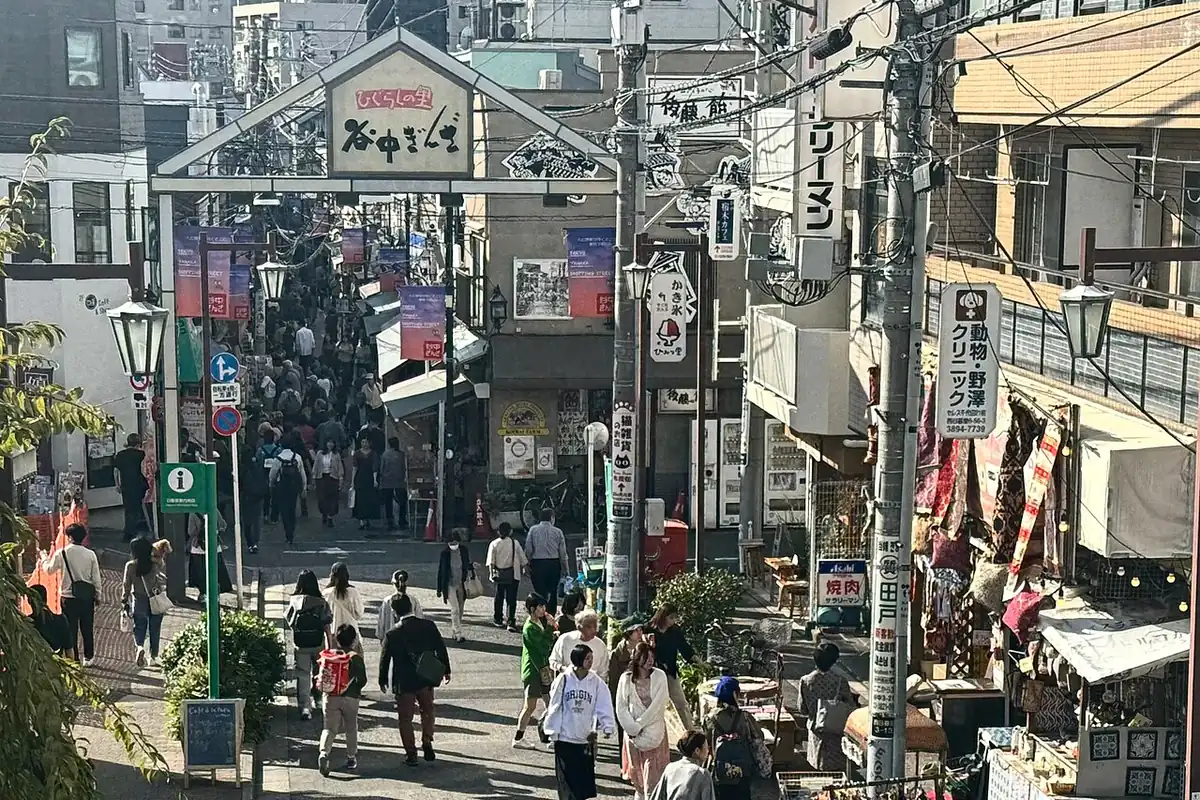
Two stops north of Ueno on the Yamanote Line, the streets around Nippori Station escaped much of the damage of the last century, and they still feel like a small town. Yanaka Ginza is a 170-metre shopping street of about 60 family shops, five minutes from Nippori’s west exit, known for menchi katsu croquettes from its two butchers and the sunset view from the Yuyake Dandan steps. Yanaka Cemetery and the walk down to Nezu Shrine turn it into an easy afternoon. Yanaka, Ueno and Asakusa all sit in Taito City, and our Taito City travel guide fills in the quieter corners between them.
The Imperial Palace, Marunouchi and Ginza Around Tokyo Station
Imperial Palace East Gardens and the free palace tour
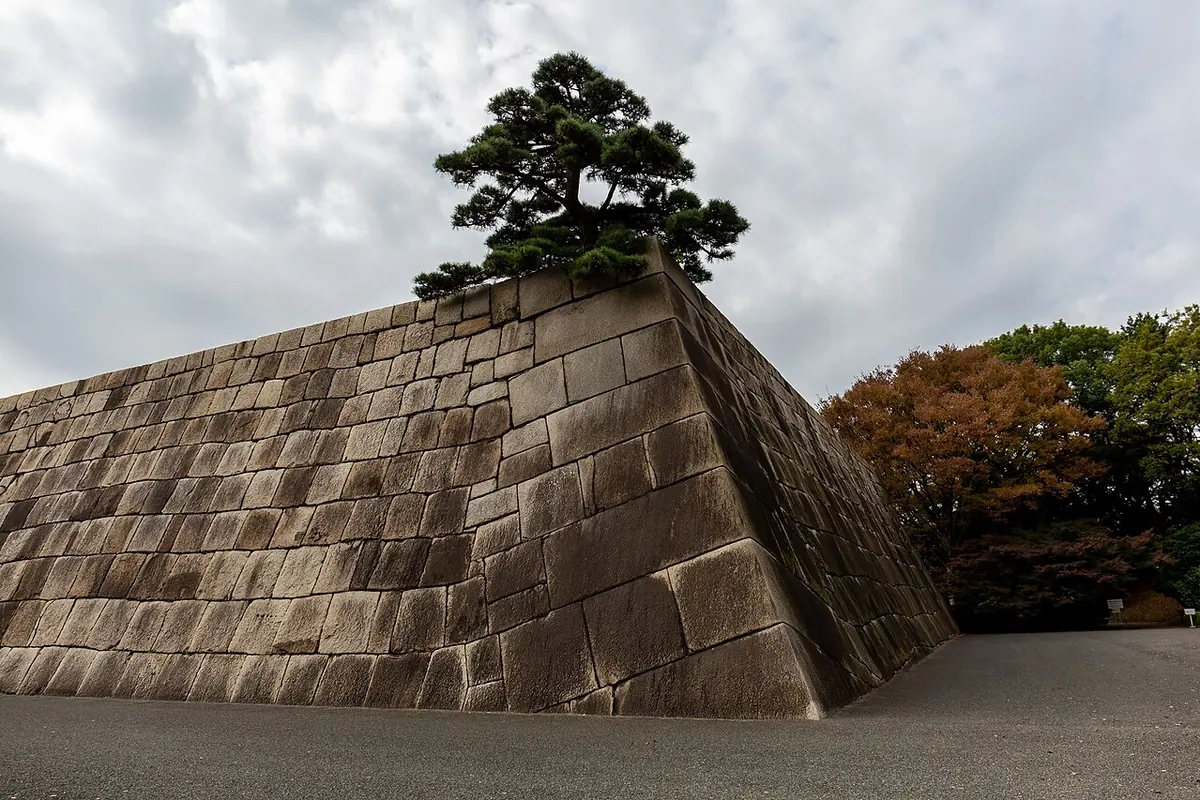
The Emperor’s home stands on the site of Edo Castle, a ten to fifteen minute walk from Tokyo Station’s Marunouchi side. The Imperial Household Agency runs free guided walks through the palace grounds, booked about a month ahead, and the East Gardens are open to walk-ins with no ticket. The gardens cover the old castle compounds, including Tenshudai, the stone base of a keep that burned in 1657 and was never rebuilt. They open at 9am and close at 4pm from November to February, later in spring and summer, and they close every Monday and Friday. Our Tokyo Imperial Palace guide has the full booking rules, the seasonal hours and the two public greeting days, 2 January and 23 February.
Ginza, Kabuki-za and the Tsukiji Outer Market
Ginza starts ten minutes’ walk south of Tokyo Station and is Tokyo’s grand shopping street, with department store food halls in the basements and the Kabuki-za theatre beside Higashi-Ginza Station; our explainer on what kabuki is tells you how to get single-act tickets there. Our Ginza guide covers the shops, galleries and bars. A short walk further on is the Tsukiji Outer Market, the streets of fishmongers and tiny sushi counters that stayed put when the wholesale market moved to Toyosu in 2018. It is a morning place: go for breakfast and arrive from Tsukiji Station on the Hibiya Line. Our Tokyo markets guide compares Tsukiji, Toyosu and the city’s other food markets.
Shinjuku: Free City Views, Omoide Yokocho and Shinjuku Gyoen
Shinjuku Station is huge and easy to get lost in, so the trick is to plan by exit. Our guide to things to do in Shinjuku is laid out exactly that way, and the short version follows.
West Exit: the free observatory and Omoide Yokocho
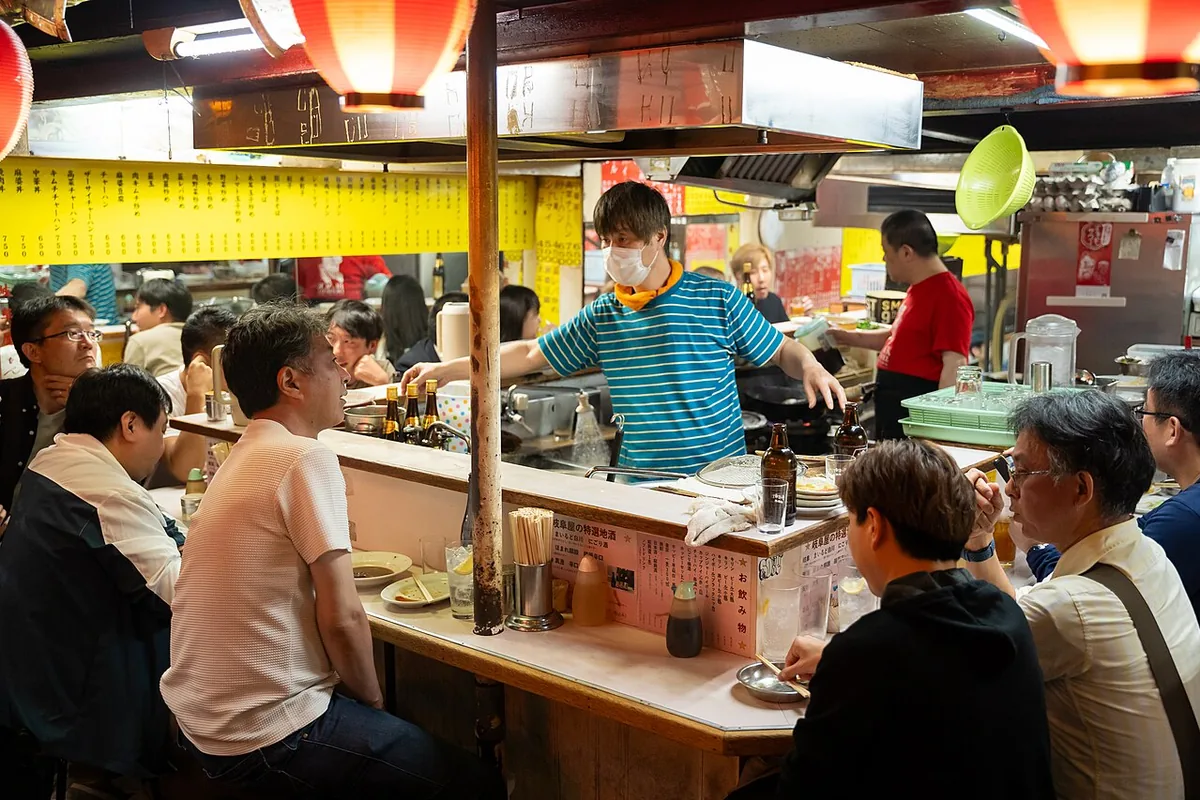
The Tokyo Metropolitan Government Building has a free observation deck on the 45th floor, 202 metres up, with no booking needed. The south deck stays open from 9.30am to 10pm, and on a clear day it looks straight across the city to Mount Fuji. Right beside the West Exit, Omoide Yokocho packs about 80 shops into a block of narrow alleys, about 60 of them yakitori and grilled offal counters that grew out of the street stalls of 1946. Many are cash only, and some ask for one dish and one drink each.
East Exit and Shinjuku Gyoen National Garden
The East Exit leads to Kabukicho, Tokyo’s best-known nightlife district, and to Golden Gai, where the local association counts more than 280 tiny bars in six lanes. Most add a cover charge of ¥500 to ¥1,500. Our Kabukicho guide covers the area, and our list of jazz kissaten in Shinjuku points you to the old record-playing cafés nearby. South-east of the station, Shinjuku Gyoen mixes a formal French garden, an English landscape garden and a Japanese garden across 58.3 hectares. Adult tickets are ¥500, Suica and PASMO work at the gate, and the garden closes on Mondays except during cherry blossom season and the chrysanthemum show from 1 to 15 November.
Shibuya, Harajuku and Meiji Jingu
Shibuya Crossing and Shibuya Sky
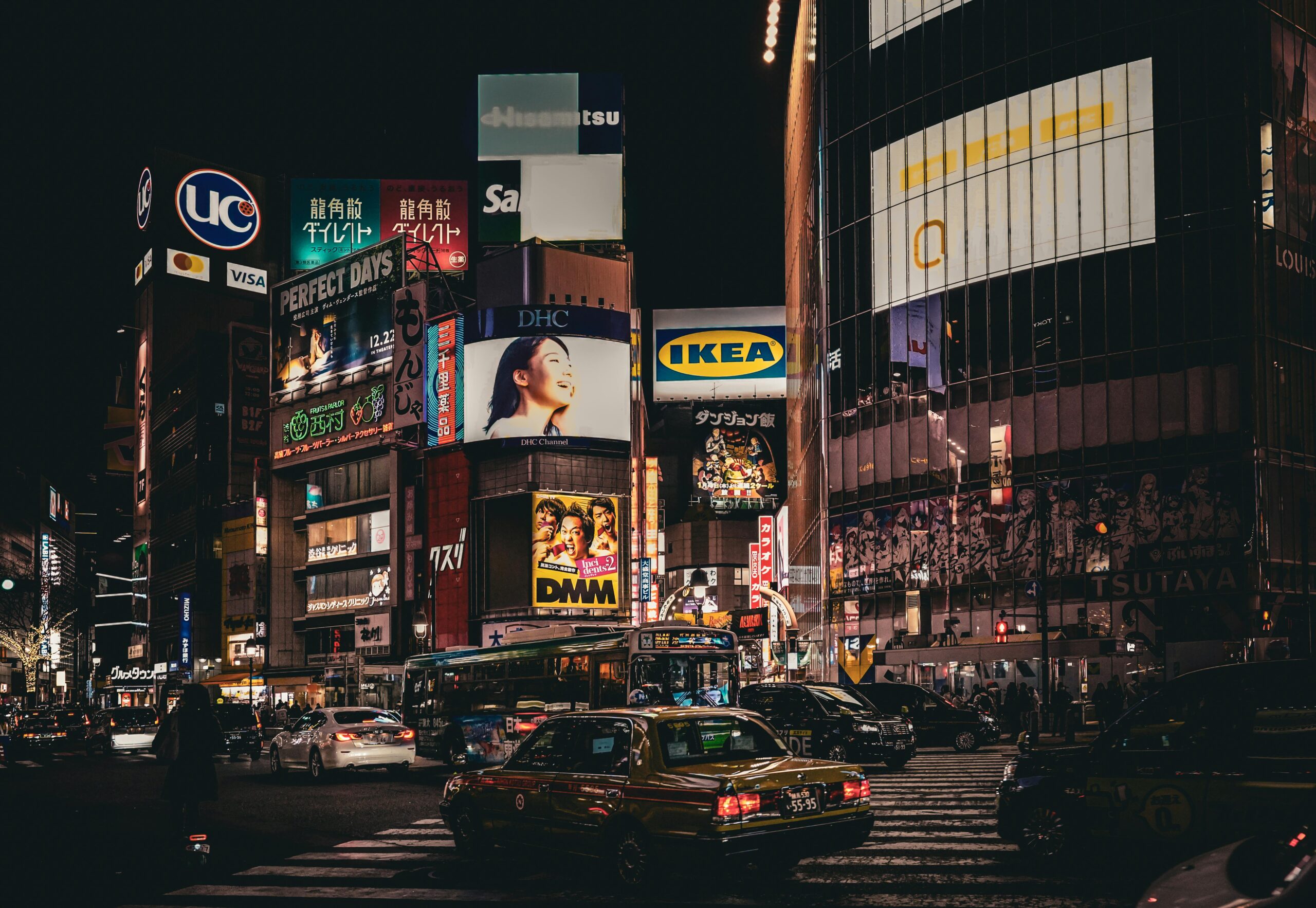
Shibuya Crossing, the scramble junction outside the Hachiko Exit of JR Shibuya Station, is the image most people have of Tokyo, and the best views of it are from the station’s upper floors and the cafés around the junction. For the whole city, Shibuya Sky is an open-air rooftop 229 metres above the street on top of Shibuya Scramble Square, so book a timed ticket in advance if you want to be up there for sunset. Our Shibuya guide covers the shopping streets, history and where to eat.
Meiji Jingu and Takeshita Street
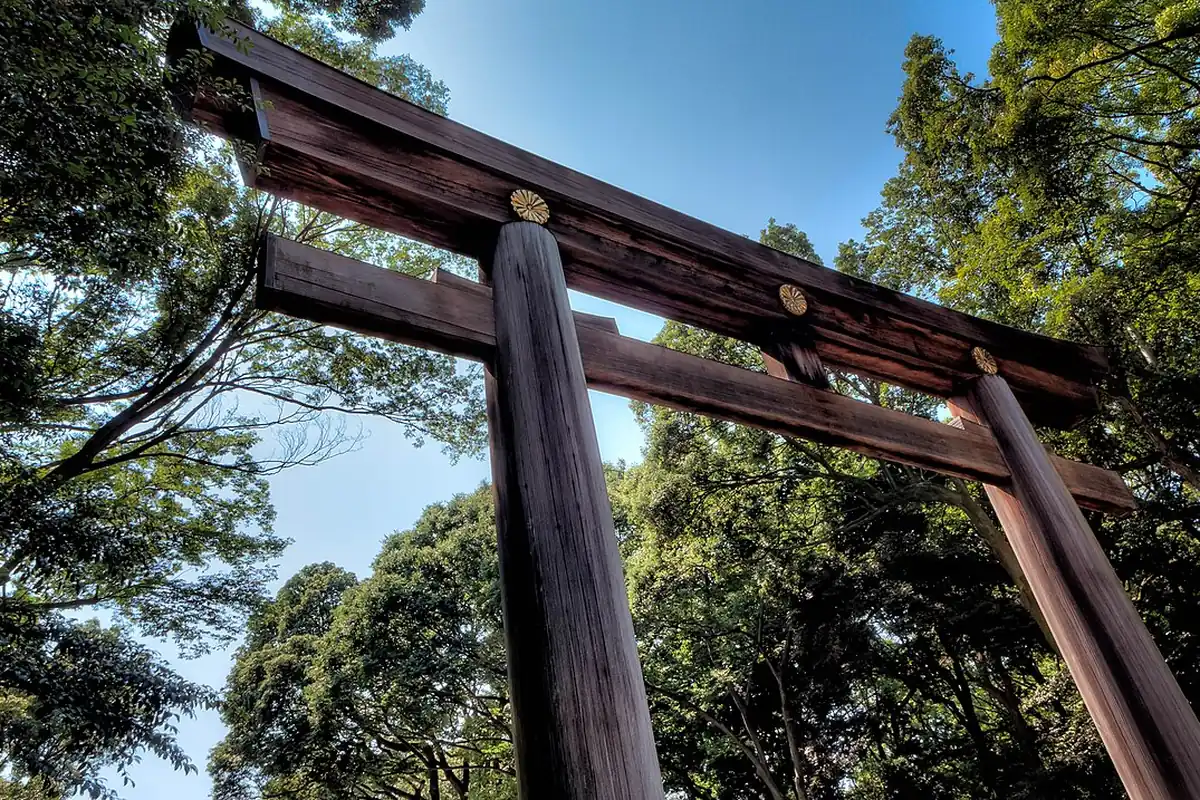
One stop north on the Yamanote Line, JR Harajuku Station sits at the edge of the forest around Meiji Jingu, the shrine to Emperor Meiji and Empress Shoken. It is free and open every day from sunrise to sunset, so the hours move by month: in November the gates open at 6.10am and close at 4.10pm, and in December they open at 6.40am and close at 4pm. The walk through the forest from the station to the main hall takes about ten minutes. Across the road, Takeshita Street is the narrow lane of crêpe stands and youth fashion that made Harajuku famous, and Omotesando is the tree-lined avenue of designer flagships running down towards Aoyama. Our guide to Harajuku fashion, food and fun has the shops and cafés.
Akihabara and Tokyo’s Anime and Gaming Streets
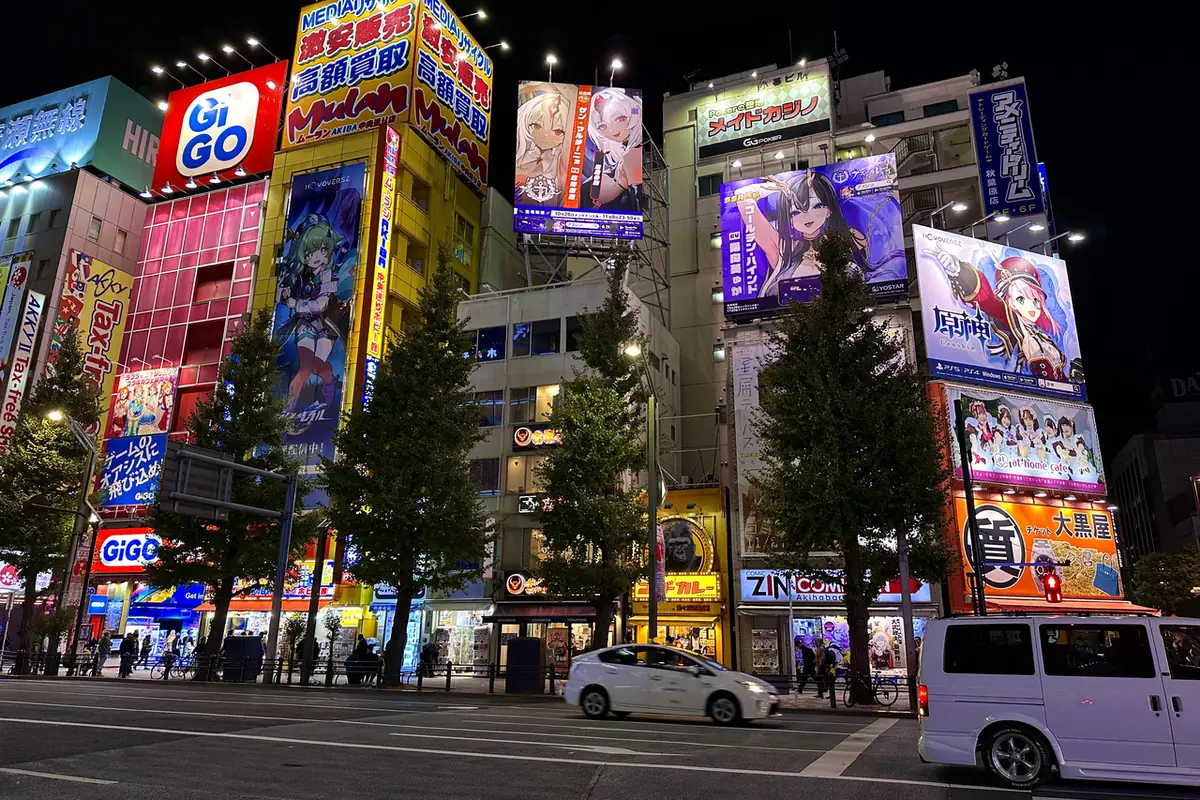
Akihabara, Electric Town, starts at the Electric Town Exit of JR Akihabara Station and runs up Chuo-dori in a wall of anime billboards, multi-storey arcades, retro game shops and capsule toy machines. If you want someone to take you to the right floors, our review of an Akihabara anime and gaming tour explains what a three-hour guided walk covers. For karaoke afterwards, our guide to Big Echo karaoke explains how Japan’s biggest karaoke chain works.
Roppongi and Azabudai Hills: teamLab Borderless and Art Museums
Roppongi has the late bars and clubs, and it also has some of Tokyo’s best art, with the Mori Art Museum high in Roppongi Hills. Next door, Azabudai Hills is home to teamLab Borderless, the immersive digital art museum where rooms of projected light flow into each other. It opens from 8.30am to 9pm on most days, and adult entry passes were ¥3,400 on teamLab’s site when we checked. Our teamLab Borderless guide explains the rooms and how long to allow, and our pick of the best art museums in Tokyo lists 14 museums with stations, prices and closed days.
Koenji, Shimokitazawa, Kichijoji and Nakameguro: West Tokyo by Train
A short ride west of Shinjuku and Shibuya, Tokyo turns into low-rise neighbourhoods of vintage clothes shops, record shops, coffee bars and small live music venues known as live houses. These are the areas people who live in Tokyo go to at the weekend.
- Koenji: thrift shops, record shops and live houses a few stops from Shinjuku on the JR Chuo Line. On the last weekend of August it hosts the Koenji Awa Odori, a two-evening street dance festival that drew 950,000 spectators in 2026.
- Shimokitazawa: Setagaya’s vintage and theatre district, a few minutes from Shibuya on the Keio Inokashira Line.
- Kichijoji: 14 minutes from Shinjuku on the JR Chuo Line Rapid, with Inokashira Park five minutes from the Park Exit and the Ghibli Museum at the far end of the park.
- Nakameguro: cafés and boutiques along the Meguro River, which is lined with cherry trees and lit up in blossom season.
For smaller finds in the central wards, our list of hidden gems in each Tokyo ward picks out rooftops, gardens and backstreets in Shibuya, Shinjuku and Chiyoda.
Eating and Drinking in Tokyo: Izakaya Alleys, Food Halls and Konbini
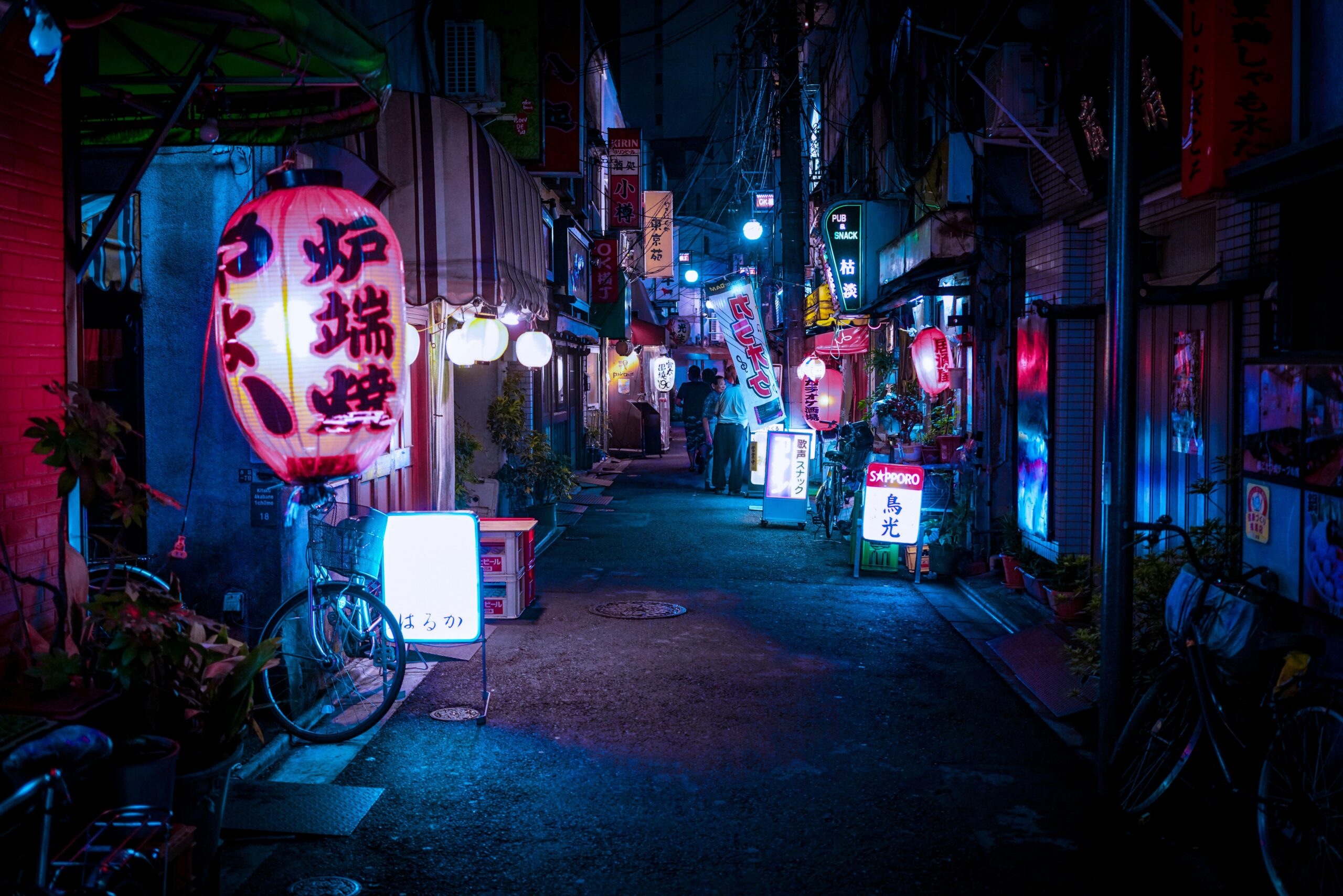
Tokyo has more ways to eat well for little money than most visitors expect. Many restaurants put plastic food models and prices in the window, so you can check what a meal costs before you go in, and ramen and soba counters near stations often take your order through a ticket machine at the door. The places below are where people who live here eat every day.
| Where to eat | What you get | Where to find it |
|---|---|---|
| Konbini (convenience stores) | Onigiri rice balls, sandwiches, bento boxes and hot snacks, open around the clock | Every neighbourhood |
| Depachika (department store food halls) | Prepared dishes, bento, sweets and gift boxes in the basements of department stores | Ginza, Nihonbashi, Shinjuku and Ikebukuro |
| Ticket-machine ramen and soba counters | A bowl ordered at a machine by the door, eaten at a counter | Around most stations |
| Kaitenzushi (conveyor-belt sushi) | Sushi priced by the plate, often ordered on a tablet | Shopping streets and station buildings |
| Yokocho alleys | Yakitori, grilled offal and a drink at a counter seating a handful of people | Omoide Yokocho and Golden Gai in Shinjuku |
| Tsukiji Outer Market | Sushi breakfasts, tamagoyaki omelette on a stick and grilled seafood | Tsukiji Station, mornings |
Coffee is serious business too, and our pick of the best coffee shops in Tokyo runs from old kissaten to modern roasters. If you want a café with animals, read our guide to Tokyo’s animal cafés first, since it covers which ones treat their animals well. There is no tipping anywhere in Japan, and our list of unspoken Japanese etiquette rules explains that and the other habits worth knowing before you sit down.
Getting Around Tokyo: Suica, the Yamanote Line and the Tokyo Subway Ticket
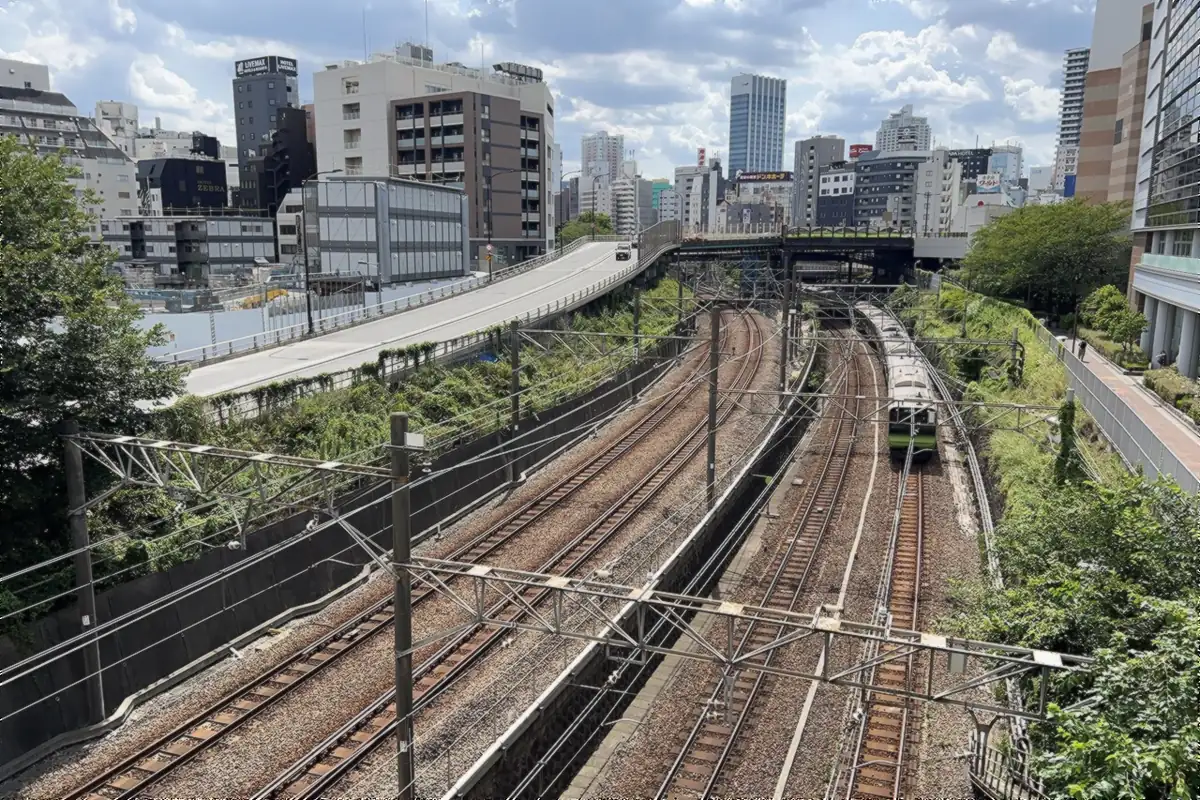
Almost everywhere in this guide is on a train line, and one tap-on card pays for all of them. A Suica or PASMO card works on JR trains, the subway, private railways and buses, and in convenience stores, lockers and many vending machines. Both can also live in the wallet app on your phone. Our guide to Suica and PASMO explains the differences, the visitor versions and how refunds work.
Two networks do most of the work. JR East’s Yamanote Line is a loop of 30 stations that links Tokyo, Ueno, Akihabara, Ikebukuro, Shinjuku, Shibuya and Shinagawa, taking about an hour to go all the way round. Under it, Tokyo Metro’s nine lines and the four Toei Subway lines reach the places the loop misses, including Asakusa, Ginza, Roppongi and Tsukiji.
| Ticket | Adult price | What it covers |
|---|---|---|
| Tokyo Subway Ticket, 24 hours | ¥1,000 | All Tokyo Metro and Toei Subway lines |
| Tokyo Subway Ticket, 48 hours | ¥1,500 | All Tokyo Metro and Toei Subway lines |
| Tokyo Subway Ticket, 72 hours | ¥2,000 | All Tokyo Metro and Toei Subway lines |
| Suica or PASMO | Pay as you go | JR, subway, private railways and buses |
The Tokyo Subway Ticket starts counting from your first ride and pays off on days built around the subway, such as Asakusa, Ginza and Roppongi in one go. It does not cover JR lines, so the Yamanote Line still comes off your Suica. A Japan Rail Pass is rarely worth buying for Tokyo alone; our Japan Rail Pass guide explains when the maths works, and our Japan public transport guide covers buses, taxis and the shinkansen. Trains are at their most crowded from about 7.30am to 9.30am on weekdays, so start sightseeing after the rush if you can.
Narita and Haneda to Central Tokyo: Trains, Times and Fares
Haneda is the closer of Tokyo’s two airports. Narita is further out but has two fast airport trains into the city.
| From | Train | To | Time | Adult fare |
|---|---|---|---|---|
| Narita | Narita Express (JR) | Tokyo Station | About 53 minutes | ¥3,140 one way |
| Narita | Narita Express (JR) | Shinjuku, Shibuya or Shinagawa | Check the JR timetable | ¥3,330 one way |
| Narita | N’EX Tokyo Round Trip Ticket | Tokyo area stations on the N’EX route | Valid 14 days | ¥5,200 return, non-Japanese passport holders |
| Narita | Keisei Skyliner | Nippori and Keisei Ueno | From 36 minutes to Nippori; 41 minutes to Ueno | See Keisei’s ticket pages |
| Haneda | Keikyu Line | Shinagawa | About 15 minutes | Pay by Suica |
| Haneda | Tokyo Monorail | Hamamatsucho | About 20 minutes | Pay by Suica |
Haneda Airport’s own journey times put Tokyo Station about 30 minutes away by train, Shibuya about 45 minutes and Shinjuku about 50 minutes. If you are staying in Asakusa or Ueno and landing at Narita, the Skyliner is the quickest way in. For Shinjuku and Shibuya the Narita Express runs straight through without a change.
Where to Stay in Tokyo: Shinjuku, Tokyo Station, Asakusa or Shibuya
For a first trip, Shinjuku is the easiest base for trains and evenings out, and the Tokyo Station and Ginza area is the easiest for the bullet train and the Narita Express. Asakusa and Ueno are the better value and closer to the old city, Shibuya suits shoppers and late nights, and Shinagawa is the practical choice for Haneda and for an onward trip to Kyoto. Our guide to where to stay in Tokyo compares seven areas on train lines and airport times, with hotels in each from a capsule bed upwards.
Tokyo charges an accommodation tax of ¥100 per person per night on rooms from ¥10,000 and ¥200 from ¥15,000. It is set to become 3% of the room rate from 1 April 2027, with the exemption rising to rooms under ¥13,000 per person, as SoraNews24 reported in July 2026. Hotels add it to the bill.
What Tokyo Costs in 2026: Transport, Tickets and Tax
The good news for a budget is that the headline sights are free and a day of unlimited subway travel costs ¥1,000. The table pulls together the fixed prices from this guide so you can plan a daily spend.
| Item | Adult price |
|---|---|
| Senso-ji, Meiji Jingu, the Tokyo Metropolitan Government Building observatory, Imperial Palace East Gardens, Yanaka Ginza and Kappabashi | Free |
| Tokyo Subway Ticket | ¥1,000 for 24 hours |
| Shinjuku Gyoen National Garden | ¥500 |
| Tokyo National Museum collection | ¥1,000 |
| Tokyo Skytree, Tembo Deck | From ¥1,800 online |
| teamLab Borderless | ¥3,400 entrance pass |
| Narita Express, Narita to Tokyo Station | ¥3,140 one way |
| Golden Gai bar cover charge | ¥500 to ¥1,500 on top of drinks |
| Accommodation tax | ¥100 or ¥200 per person per night |
Since 1 November 2026, tax-free shopping in Japan works as a refund. You pay the full price in the shop, which logs your passport, and you claim the consumption tax back at customs when you leave Japan, with 90 days to take the goods out of the country, according to the Japan National Tourism Organization. Keep your purchases with you, since customs may ask to see them.
Tokyo Month by Month: Weather, Cherry Blossom and Festivals
Tokyo has hot, humid summers and cool, dry, mostly sunny winters. The temperatures and rainfall below are the Japan Meteorological Agency’s 1991 to 2020 averages for central Tokyo.
| Month | Average high and low | Rainfall | What is on |
|---|---|---|---|
| January | 9.8°C and 1.2°C | 60mm | Hatsumode at Senso-ji, 1 to 7 January; New Year greeting at the Imperial Palace, 2 January |
| February | 10.9°C and 2.1°C | 57mm | Setsubun at Senso-ji around 3 February; Emperor’s Birthday greeting at the palace, 23 February |
| March | 14.2°C and 5.0°C | 116mm | Cherry blossom usually opens in the last week of March |
| April | 19.4°C and 9.8°C | 134mm | Cherry blossom usually lasts into the first week of April; Buddha’s birthday at Senso-ji, 8 April |
| May | 23.6°C and 14.6°C | 140mm | Sanja Matsuri at Asakusa Shrine, Friday to Sunday around the third Saturday |
| June | 26.1°C and 18.5°C | 168mm | Rainy season; Shinjuku Gyoen stays open to 7pm from 11 June |
| July | 29.9°C and 22.4°C | 156mm | Hozuki market at Senso-ji, 9 and 10 July; Sumidagawa Fireworks, last Saturday of July |
| August | 31.3°C and 23.5°C | 155mm | Koenji Awa Odori, last weekend of August |
| September | 27.5°C and 20.3°C | 225mm | Typhoon season; still hot for most of the month |
| October | 22.0°C and 14.8°C | 235mm | Cooler days and the start of autumn |
| November | 16.7°C and 8.8°C | 96mm | Chrysanthemum show at Shinjuku Gyoen, 1 to 15 November; autumn colour from late month |
| December | 12.0°C and 3.8°C | 58mm | Battledore market at Senso-ji, 17 to 19 December; often the clearest views of Mount Fuji |
The Sumidagawa Fireworks are watched from the streets of Asakusa and along the river, and the crowds are enormous, so pick your spot early in the day. Over New Year the Imperial Palace East Gardens close from 28 December to 3 January and Shinjuku Gyoen from 29 December to 3 January, while temples and shrines are at their busiest; our guide to Japanese New Year traditions explains what is happening. For the colder months, our guide to Japan in winter covers what is on beyond Tokyo.
A 3-Day Tokyo Itinerary by Train Line
This route puts each day in one part of the city to save time on trains, and it keeps the Monday and Friday closures in mind. Run day one on any day except Monday, and day two on a Tuesday, Wednesday, Thursday or weekend.
Day 1: Asakusa, Kappabashi, Ueno and Yanaka
- Morning: Senso-ji and Nakamise before 9am, then walk about 15 minutes west to Kappabashi as the shops open at 10am.
- Afternoon: walk on to Ueno Park for the Tokyo National Museum, which needs at least two hours.
- Late afternoon: two stops on the Yamanote Line to Nippori, then Yanaka Ginza and the Yuyake Dandan steps at sunset.
- Evening: back to Asakusa for dinner, or across the river to Tokyo Skytree for the night view.
Day 2: Imperial Palace, Ginza and Shinjuku
- Morning: the Imperial Palace East Gardens at 9am, entering by Ote-mon Gate from Otemachi Station.
- Late morning: Tsukiji Outer Market for an early lunch, then walk into Ginza.
- Afternoon: the Marunouchi Line to Shinjuku-gyoemmae for Shinjuku Gyoen.
- Evening: the free view from the Tokyo Metropolitan Government Building after dark, then yakitori in Omoide Yokocho and a drink in Golden Gai.
Day 3: Meiji Jingu, Harajuku and Shibuya
- Morning: Meiji Jingu soon after opening, entering from JR Harajuku Station.
- Late morning: Takeshita Street, then down Omotesando.
- Afternoon: walk to Shibuya for the crossing, with a timed Shibuya Sky ticket for sunset.
- Evening: the Keio Inokashira Line to Shimokitazawa, a few minutes from Shibuya, for a live house or a bar.
With more time, add Akihabara and teamLab Borderless as a fourth day, then a day trip. If Tokyo is the first stop on a longer trip, our two-week Japan itinerary starts with five days in Tokyo and Hakone before heading to Kyoto.
Day Trips From Tokyo: Kamakura, Yokohama, Hakone and Nikko
Tokyo’s rail network makes it a good base for day trips, and each one leaves from a different side of the city. Our full guide to day trips from Tokyo compares seven of them on journey time, fare and season. The closest are:
- Kamakura: the Great Buddha, Zen temples and the coast, about an hour from Tokyo Station.
- Yokohama: Chinatown and the harbour, about 30 minutes from Shibuya.
- Kawagoe: the old merchant warehouse street known as Little Edo, 26 minutes from Ikebukuro.
Further out, Hakone has hot springs and Lake Ashi on the Hakone Freepass from Shinjuku, Lake Kawaguchi gives the classic view of Mount Fuji just under two hours from Busta Shinjuku by bus, and Nikko’s Toshogu Shrine is 1 hour 50 minutes from Asakusa. Leave early for all three.
Tokyo Travel Tips: Cash, Closures and Apps
- Carry some cash. Cards and Suica work in most shops, museums and chains, but many small bars and yokocho counters take cash only. Convenience store ATMs accept foreign cards.
- Check the closed day before you set out. Mondays close many museums and gardens, and the Imperial Palace East Gardens also close on Fridays.
- Bins are rare in the street. Take rubbish back to your hotel, or use the bins at convenience stores and beside vending machines.
- Keep quiet on trains and stand on the left on escalators in Tokyo.
- Download maps and a translation app before you land. Our list of Japan travel apps covers taxis, trains and translation.
Many of the best experiences cost nothing, from temple grounds to city views; our list of the best free places to visit in Japan includes several in Tokyo.
Map of Central Tokyo
Tokyo Travel Questions Answered
Three full days covers the main areas: Asakusa, Ueno and Yanaka on one day, the Imperial Palace, Ginza and Shinjuku on another, and Meiji Jingu, Harajuku and Shibuya on the third. Allow five days if you want Akihabara, teamLab Borderless and a day trip to Kamakura, Hakone or Nikko.
Senso-ji in Asakusa, Meiji Jingu in Harajuku, the 45th floor observation deck of the Tokyo Metropolitan Government Building in Shinjuku and the Imperial Palace East Gardens are all free. So are Shibuya Crossing, Yanaka Ginza, Kappabashi Street and the free guided walk through the Imperial Palace grounds, which you book with the Imperial Household Agency.
Late March to early April brings the cherry blossom and November brings dry, mild days and autumn colour, so those are the most popular times. December to February is cold but clear and quieter, and it gives the best views of Mount Fuji. July and August are hot and humid, and September and October are the wettest months on Japan Meteorological Agency averages.
Shinjuku is the easiest base for a first trip because of its train lines and evenings out. The Tokyo Station and Ginza area is best for the bullet train and the Narita Express, and Asakusa and Ueno are better value with the Skyliner to Narita on the doorstep.
It is worth it on days spent mostly on the subway, such as Asakusa, Ginza and Roppongi. It costs ¥1,000 for 24 hours, ¥1,500 for 48 hours or ¥2,000 for 72 hours and covers every Tokyo Metro and Toei Subway line, but it does not cover JR lines such as the Yamanote Line.
From Narita, the Narita Express reaches Tokyo Station in about 53 minutes for ¥3,140 one way, and the Keisei Skyliner reaches Nippori in as little as 36 minutes. From Haneda, the Keikyu Line reaches Shinagawa in about 15 minutes and the Tokyo Monorail reaches Hamamatsucho in about 20 minutes.
Hotels are the biggest cost, and Tokyo room rates change daily with demand. Many headline sights are free, a 24-hour Tokyo Subway Ticket is ¥1,000 and the Tokyo National Museum charges ¥1,000, so days out can be cheap. Tokyo adds an accommodation tax of ¥100 or ¥200 per person per night on rooms from ¥10,000.
Carry some. Cards and Suica or PASMO are accepted in most shops, chains and museums, but many small bars and the counters in Omoide Yokocho take cash only. Convenience store ATMs accept foreign cards.
Not for Tokyo alone. Most journeys in the city are short, and many sights are on the subway, which the pass does not cover. It can pay off when your trip includes long shinkansen journeys, for example to Kyoto and Osaka and back.
Akihabara is the centre, with anime shops, arcades and retro game stores along Chuo-dori from the Electric Town Exit of JR Akihabara Station. The Ghibli Museum in Mitaka is the other essential stop for anime fans, and tickets must be bought in advance.