The vibrant streets of Tokyo’s Kabukicho district are adorned with an array of dazzling neon signs that have become synonymous with the city’s bustling nightlife. Plus, with its late-night and lively atmosphere, every curious traveller in Tokyo is bound to find themselves walking through the crazy maze that is Kabukicho.
Take a step into one of Japan’s red light districts and learn more about the charm of Kabukicho, where an old empty corner in Shinjuku became one of Tokyo’s hottest nightlife spots.
Kabukicho at a glance
- Where: Kabukicho 1 and 2 chome, Shinjuku City, north of Yasukuni-dori
- Nearest stations: Seibu-Shinjuku (1 minute to Tokyu Kabukicho Tower) and JR Shinjuku East Exit (5 minutes to Hotel Gracery)
- Busiest: after dark; the district never fully closes
- Touts: illegal in Shinjuku. Tokyo police say never follow one into a bar
- Emergency: dial 110. For police advice that is not urgent, dial #9110, where English is available

Around Kabukicho: Golden Gai to the Godzilla Head
The History of Kabukicho’s Glow
Kabukicho is a neighbourhood in Shinjuku, Tokyo, renowned for its vibrant nightlife and entertainment. As the sun sets, Tokyo’s streets come alive with a kaleidoscope of Japanese neon signs that illuminate the city. Particularly the neon lights in Kabukicho cast a vibrant glow that lures locals and tourists alike into a world of excitement and curiosity.

Post-War Recovery
The Kabukicho entertainment district that we know today has an intriguing history that stems from Japan’s post-war era starting from 1945 onwards. The area was flattened in the air raid of 13 April 1945, when it was still called Tsunohazu. The rebuilding was not a government scheme. It was driven by a local man, Kihei Suzuki, who came back from evacuation and put a land readjustment and revival plan to the people living there, backed by the district’s biggest landowner, Mohei Mineshima.
The plan had a kabuki theatre at its centre, to be called the Kiku-za. The name Kabukicho was proposed by the city planner Hideaki Ishikawa and formally adopted on 1 April 1948. The theatre was never built, because the money ran out. The name stuck, and the district grew up around everything else instead. By 1956 the Tokyu Bunka Kaikan, the Milano-za cinema and the Koma Theatre had all opened, and Suzuki’s plan had become a real entertainment quarter.

By the 1980s in Japan, Kabukicho was firmly established as Tokyo’s entertainment hub with a variety of bars, restaurants, and other entertainment halls. Known as Japan’s red light district, Kabukicho was also a vast space of adult entertainment such as host clubs, love hotels, and pachinko parlours.
Nowadays, tourists flock to Kabukicho for its local bars and karaoke lounges. Some are known to even stay there at a Capsule Hotel. With its iconic red Kabuki-chō Ichiban-gai (歌舞伎町一番街) gate, along Yasukuni-Dōri; Kabukicho invites visitors to explore its mix of izakayas, host clubs, cinemas, and retro game arcades.

Why Visit Kabukicho?
Certainly, the district’s atmosphere makes it a top tourist destination, where travellers can lose themselves in the excitement of buzzing streets, indulge in true Japanese cuisine, and immerse themselves in the unique blend of modern and traditional entertainment that defines Kabukicho.
Additionally, Kabukicho is filled with iconic landmarks to visit, such as the aforementioned Kabukicho Gate and the Godzilla Head, which sits on the eighth floor terrace of Hotel Gracery in the Shinjuku Toho Building and roars and lights up on the hour from midday to 8pm. Worth knowing before you go that the Godzilla Terrace itself has been shut to the public since November 2023, so you will be looking up at it from the street. This area has a lot in store for you, especially if you’re a night owl.
The head sits on the Shinjuku Toho Building, which Toho completed in March 2015 on the site of the old Koma Theatre, one of the three big venues that turned Kabukicho into an entertainment district in the 1950s. Hotel Gracery Shinjuku fills the building with 970 rooms over 30 floors, and its front desk is on the 8th floor, the same level as the head. Guests can book Godzilla View rooms that look straight out at it, a Godzilla Room on the 30th floor where a giant Godzilla hand wraps around the room, and a whole Godzilla floor at the top of the hotel. The monster itself first appeared in Toho’s 1954 film, and our look at how Godzilla changed through the Shōwa era films follows him from there.

If you’re a fan of karaoke, Kabukicho offers plenty of opportunities to belt out your favourite tunes at its lively karaoke spots.
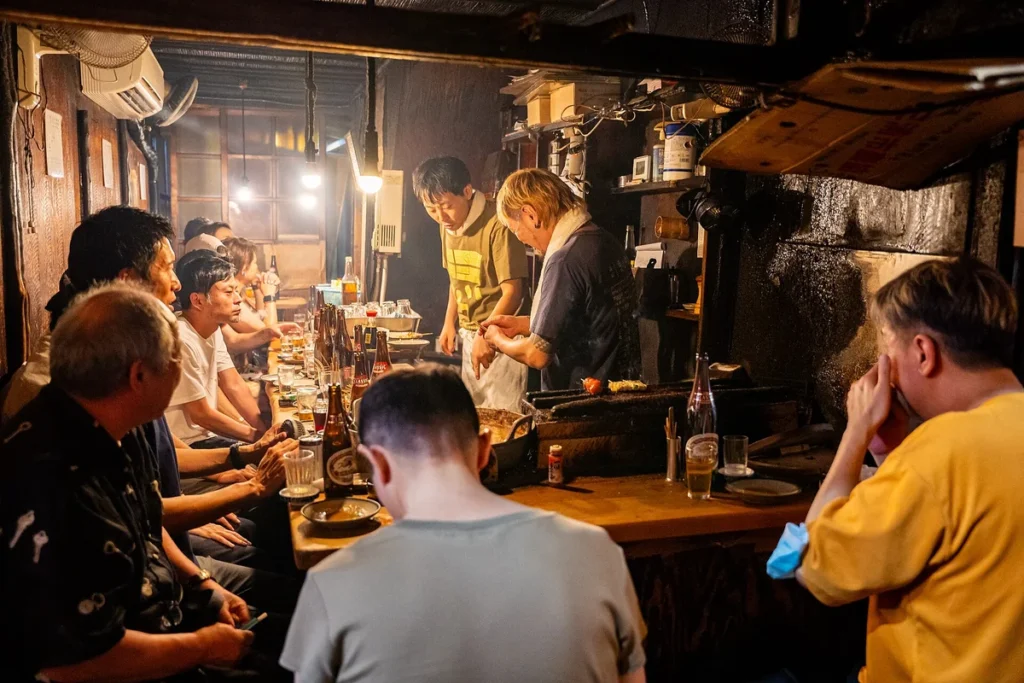
Certainly, food lovers will also find themselves in paradise. Kabukicho is packed with foodie gems, offering a variety of genuine Japanese dishes. So, be sure to visit an izakaya or Japanese pub, where you can savour local favourites like yakitori and sushi in an atmosphere full of character.

If you’re craving a late-night bite, Kabukicho won’t let you down: its bustling streets are filled with 24-hour ramen spots, street food vendors, and local joints ready to satisfy those midnight cravings.
Indeed, this busy Tokyo district is alive with energy, so make sure to check out our recommended spots below.
Our Favourite Hangout Spots in Kabukicho
Golden Gai
Golden Gai is a yokocho, also known as a Japanese alleyway, located in the secret streets of Kabukicho. This iconic alley is lined with many izakaya pubs and restaurants where many businessmen come over to relax after a long day’s work.

Many eateries in Golden Gai offer a variety of specialty snacks and drinks, so make sure you visit the place with a hungry and adventurous stomach! To make the most out of your Golden Gai experience, try joining a pub crawl and see how diverse the bars are around the area.
Location: 1 Chome-1-6 Kabukicho, Shinjuku City, Tokyo 160-0021, Japan
Samurai Restaurant

The Samurai Restaurant has emerged as a top spot in Shinjuku ever since its predecessor, the Kabukicho Robot Restaurant, closed permanently in May 2023. Despite its name, the Samurai Restaurant is not actually a restaurant, but a two hour performance featuring samurai and ghosts dancing, plus geishas drumming on taikos.

Sounds crazy, right? Well, that’s what makes this establishment a popular tourist attraction. Expect a series of performances full of LED lights, crazy dancing, live singers, and samurai antics. Take note though, the Samurai Restaurant is for strictly over 18s!
Location: 1 Chome-7-7 Kabukicho, Shinjuku City, Tokyo 160-0021, Japan
Kabukicho Tower
Kabukicho’s tallest building is the Tokyu Kabukicho Tower. It rises 48 floors and about 225 metres, and it opened on 14 April 2023. Inside this skyscraper includes a cinema, live concert venue, a gaming arcade bar, a yokocho-inspired food hall, and more.

Opened in 2023, Kabukicho Tower is a modern addition to this nightlife district, showcasing Tokyo’s dynamic identity of intertwining tradition and modernity. Additionally, the tower includes open spaces where visitors can take Instagram-worthy photos and enjoy the views of Tokyo.
| Floors | What is there |
|---|---|
| B1 to B4 | Zepp Shinjuku, a live music hall for 1,500 people |
| 1 to 5 | Restaurants and entertainment, including the Shinjuku Kabuki Hall food hall on the 2nd floor (open 6am to 5am) and the namco TOKYO amusement complex on the 3rd |
| 6 to 8 | THEATER MILANO-Za, a theatre of about 900 seats named after the Shinjuku Milano-za cinema that grew up with Kabukicho |
| 9 to 10 | 109 Cinemas Premium Shinjuku |
| 17 | JAM17 dining and bar floor |
| 18, 20 to 38 | HOTEL GROOVE SHINJUKU, A PARKROYAL Hotel |
| 18, 39 to 47 | BELLUSTAR TOKYO, A Pan Pacific Hotel, with restaurants and a bar on the 45th floor |
Location: 1 Chome-29-1 Kabukicho, Shinjuku City, Tokyo 160-0021, Japan
One Coin Bar Champion
For those who want to sing their hearts out in Shinjuku, here’s the best karaoke spot in Kabukicho! For only 500 yen, One Coin Bar Champion serves you one alcoholic drink with no seat-charge, offering brands such as Kirin, Heineken, Scotch, and Bourbon.

Now, the fun part, karaoke! For only 100 yen, take centre stage and perform your favourite songs, singing along with everyone at the bar. The atmosphere of One Coin Bar Champion invites you to make new friends, so enjoy the drinks and party all night!
Location: 1 Chome-1-10 Kabukicho, Shinjuku City, Tokyo 160-0021, Japan
ARTNIA Square Enix
What is Japan without their iconic video games? Square Enix is a Japanese video game company known for popular titles such as Final Fantasy and Kingdom Hearts and happens to have an official cafe based on these games!

ARTNIA Square Enix is the company’s flagship cafe and store, with a menu you will not find at its other shops. Some of their most popular dishes include their Slime Pancakes, Cappuccino Latte, and Red Materia Cocktail, all inspired by Square Enix games.

Besides purchasing official Square Enix merchandise from their goods section, you can also take a step into their “luxury area,” a gallery within the establishment that exhibits different accessories, figures, and apparel based on the games. So, Square Enix fans, what are you waiting for?
Location: 6 Chome-27-30 Shinjuku, Shinjuku City, Tokyo 160-0022, Japan
Beer Pong Bar GROVE Shinjuku
Another nightlife spot in Kabukicho that tourists can spend a few drinks on is Beer Pong Bar GROVE! They’re not your typical bar… they’re referred to as an “amusement bar,” meaning they have more than just drinks for you. Beer pong, darts, karaoke, you name it!

Beer Pong Bar GROVE seats 40 and runs from 7pm to 5am every day, two minutes from Seibu-Shinjuku Station, so you are likely to end up playing against strangers. Challenge them with all sorts of games in the bar and come out as a champion! Sing a few victory songs with unlimited karaoke afterwards.
Location: Japan, 〒160-0021 Tokyo, Shinjuku City, Kabukicho, 1 Chome−23−15, Suzuya Bldg, 6階
Shinjuku Batting Centre
If you’re looking to try something new in Kabukicho, the Shinjuku Batting Centre may pique your interest. It’s not a bar, nor is it a restaurant, but a sports facility where you can bring out the baseball player in you with their batting ranges.

For 400 yen you get 25 pitches, with varying ball speeds and digital pitchers. It is open from 10am to 4am, has twelve cages plus a strike-out lane, and lends out shoes and helmets free. All types of players are welcome, from newbies to experienced players! Plus, there are arcade game machines around the facility as well for extra fun.
Location: 2 Chome-21-13 Kabukicho, Shinjuku City, Tokyo 160-0021, Japan
Kabukicho Safety: Touts, Bar Bills and Tokyo Police Advice
Japan is a very safe country, and Kabukicho is busy, brightly lit and heavily policed. Most visitors have a completely uneventful night out here. The risks are specific ones, and they are worth knowing before you go.
The UK Foreign, Commonwealth and Development Office names Kabukicho directly in its Japan travel advice, and says most British victims report being targeted here. The pattern it describes is drink spiking and card fraud, with people waking up unable to remember the evening and finding large sums billed to their card, anywhere from hundreds to tens of thousands of pounds.
The people to walk past are the touts, called kyakuhiki in Japanese. They approach visitors in English and offer to take you to a bar. The Foreign Office is blunt about this one: do not follow street touts into bars. Touting has been banned in Shinjuku since 2013 and has carried penalties since June 2016, so anyone doing it is already breaking the law.
Three habits cover most of it. Ask to see a menu with prices before you go in anywhere. Confirm any entry or seat charge at the door rather than after you sit down. Keep track of what you order. If someone offers you a free drink or invites you in just to have a look, keep walking, because you may not be free to leave once you are inside.
What the Tokyo police and Shinjuku City say
The Tokyo Metropolitan Police Department’s advice for visitors is short: touts take people to partner bars, then charge excessive fees or use their credit card while they are drunk, so do not follow a street tout under any circumstance. Its English flyer, Scammers are targeting tourists in Kabukicho, includes a street map. It marks the heaviest touting along Kabukicho Ichiban-gai, Central Road, Sakura-dori and Hanamichi-dori, and shows police boxes on Hanamichi-dori near Seibu-Shinjuku Station and on the east side of JR Shinjuku Station.
Shinjuku City’s ordinance bans touting on public streets for izakaya, karaoke, cabaret and host clubs, and also bans hanging about waiting to do it. Handing out flyers to everyone is allowed, but once a flyer handler starts talking prices with someone who has stopped, that counts as touting. Since June 2016 people who ignore warnings can be named publicly and fined. The city also gives a “no touting” sticker (客引きしない宣言店) to bars and restaurants that sign a pledge never to use touts, and publishes the list of signed venues for Kabukicho.
If something goes wrong, dial 110 for the police. For advice that is not an emergency, dial #9110, where English is available, or walk into the nearest police box. Carry only the cash and cards you need for the night and leave the rest at your hotel, which is the Foreign Office’s own advice. For a night with a guide who knows which doors to open, a small group bar crawl through Shinjuku and Kabukicho takes the guesswork out of it.

Kabukicho Since 1948: From Rebuilding Plan to Neon District
Without a doubt, Kabukicho’s bright neon streets are more than just eye-catching: they represent the energy and excitement of Tokyo’s nightlife. Beyond the neon signs that draw in visitors, this area is packed with unique experiences and endless entertainment.

What started as a plan to rebuild after World War II has turned into one of Tokyo’s go-to spots for nightlife. Kabukicho mixes old traditions with modern attractions, creating a lively and exciting place full of fun and chaos.
Be sure to explore our top tourist spots to make the most of your time in Kabukicho, Tokyo’s glowing centre of nightlife and adventure!
First time in Kabukicho? Here are some Frequently Asked Questions that can serve as a guide while you walk around the neon streets of Kabukicho.
FAQs
How do I get to Kabukicho?
To get to the Kabukicho district, it’s important to find yourself in Tokyo first. Since Kabukicho is located in the Shinjuku area, the nearest station is Seibu-Shinjuku, about three minutes on foot. From the JR Shinjuku East Exit it is about five minutes. Shinjuku-sanchome, on the Marunouchi, Fukutoshin and Toei Shinjuku lines, is the handiest for Golden Gai, and Higashi-Shinjuku on the Fukutoshin and Oedo lines works if you are coming from the east.
| Station | Lines | Walking time (official) | Handiest for |
|---|---|---|---|
| Seibu-Shinjuku | Seibu Shinjuku Line | 1 minute to Tokyu Kabukicho Tower; 3 minutes to Hotel Gracery | The tower and Beer Pong Bar GROVE |
| Shinjuku, East Exit | JR lines, Odakyu, Keio, Marunouchi Line | 5 minutes to Hotel Gracery; 7 minutes to the tower | The Kabukicho Ichiban-gai gate on Yasukuni-dori, the Godzilla head |
| Shinjuku-nishiguchi | Toei Oedo Line | 6 minutes to the tower | Arriving on the Oedo Line, for example from Roppongi |
| Shinjuku-sanchome | Marunouchi, Fukutoshin and Toei Shinjuku lines | 8 minutes to the tower | Golden Gai, and Shinjuku Ni-chome right beside the station |
From the JR Shinjuku East exit, look for the iconic Kabukicho Gate entrance clad in bright neon red, that’s the entrance to Kabukicho!
The map at the top of this guide shows how the district is laid out. Trains stop running somewhere between midnight and 1am and start again around 5am, so if you are planning a late one, work out where you are sleeping before you go out.
Can visitors explore Kabukicho at any time of the day?
Yes, Kabukicho operates 24/7, allowing visitors to experience its lively atmosphere at any time. However, the district truly comes alive at night when the neon signs light up the streets. Therefore, it’s recommended to drop by early evening!
Is Kabukicho safe for tourists?
Yes, for most visitors, as long as you never follow a street tout. The UK Foreign Office says most British victims of drink spiking and card fraud in Japan report being targeted in Kabukicho, often after English speaking street touts approach them. Ask for prices before you sit down, and dial 110 if anything goes wrong. The full advice is in our safety section above.
How much should I spend in Kabukicho?
The beauty about Kabukicho is that it offers dining options for those on a budget. In fact, the simplest dishes in Kabukicho tend to be the most delicious!
Street food around Kabukicho can cost around at least 300 yen. Dishes like yakitori or ramen are around 500 yen to 1,500 yen per meal. For bars and drinks, expect to spend at least 500 yen for one beer, with special drinks costing up to 1,000 yen each.
What else can I do in Kabukicho?
As a district that never sleeps, Kabukicho will tempt you to stay up all night discovering its nooks and crannies as an entertainment hub. Not only should you try out their bars and restaurants, but explore other establishments such as;
- Don Quijote Shinjuku Kabukicho: Famous Discount Store
- Hanazono Shrine: Shinto Shrine
- Thermae-Yu, 24/7 hot spring facility
- Shinjuku’s jazz kissaten: old record bars a short walk away
In Kabukicho, you get to see what the side of bold and playful Tokyo is like. With its endless bars, delicious street food, and fun entertainment shows, you’re in for a wild treat in Shinjuku’s Kabukicho district. For the rest of the district by day, from the free observation decks to Shinjuku Gyoen, see our guide to things to do in Shinjuku.
Where is the Kabukicho gate?
The red Kabukicho Ichiban-gai gate stands on Yasukuni-dori, a few minutes’ walk north of the JR Shinjuku East Exit. It marks the start of Ichiban-gai, the main street into the district. It is the most photographed sign in Kabukicho, and the street behind it is also one of the busiest for touts, so take your photo and keep walking.
Where is the Godzilla head in Shinjuku?
On the 8th floor terrace of the Shinjuku Toho Building, home of Hotel Gracery Shinjuku, a 5 minute walk from the JR Shinjuku East Exit and 3 minutes from Seibu-Shinjuku Station. You can see it from the street below. Hotel guests can book rooms that look out at it.
What is inside Tokyu Kabukicho Tower?
Two hotels, a theatre, a cinema and a music hall in one 48 floor building. Zepp Shinjuku is in the basement, a food hall open from 6am to 5am and the namco TOKYO arcade are on the lower floors, THEATER MILANO-Za and 109 Cinemas Premium Shinjuku sit above them, and HOTEL GROOVE SHINJUKU and BELLUSTAR TOKYO fill the upper floors.
Is Kabukicho a red light district?
It is Tokyo’s best known adult entertainment district, with host and hostess clubs and love hotels among its streets. Most of what visitors actually do here is ordinary nightlife: izakaya, karaoke, cinemas, the Golden Gai bars and the tower. The adult venues are where touts work hardest, so they are the part to avoid if you do not know them.
When did Tokyu Kabukicho Tower open?
On 14 April 2023. It stands about 225 metres tall, with 48 floors above ground and 5 below, and was developed by Tokyu Corporation and Tokyu Recreation on the site of their old Shinjuku TOKYU MILANO building, home of the Milano-za cinema. Seibu-Shinjuku Station is a 1 minute walk away.