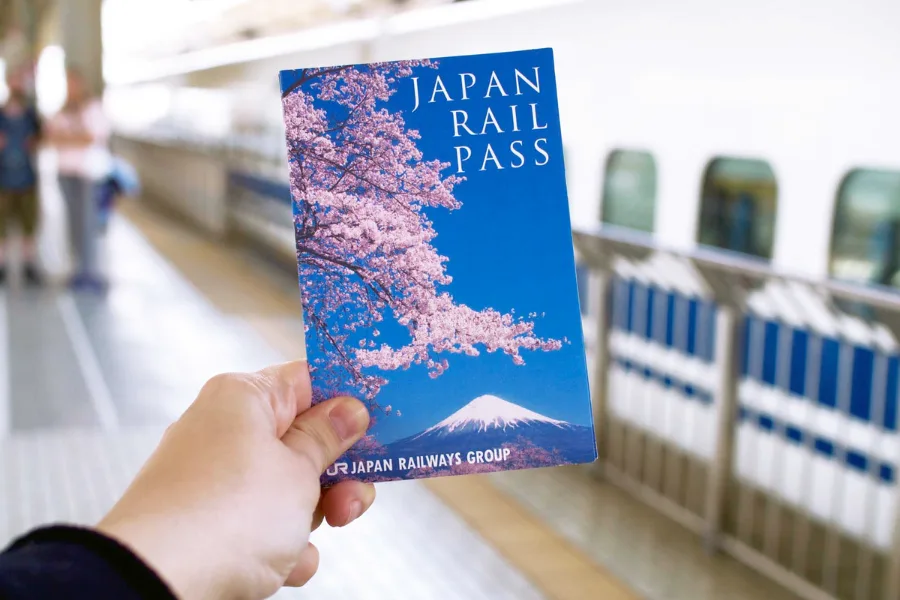
One of the best decisions you can make for your trip to Japan is to purchase a Japan Rail Pass. With this physical ticket, you can make the most of the extensive and reliable train network connecting every corner of Japan. Here’s everything you need to know about the Japan Rail Pass, from what it is and where it works to how you can get the most from it.
Who Can Use the Japan Rail Pass?
What Does the Japan Rail Pass Cover?
Explore Japan Region by Region with Specialised JR Passes
Reserving Shinkansen Seats with Your Japan Rail Pass
Shinkansen Rules for Oversized Luggage Over 160 cm
Storing Luggage with Bounce Before Your Shinkansen Trip
How Does the Japan Rail Pass Save Money?
How to Plan Your Rail Pass Journey
What is the Japan Rail Pass?
Japan is known worldwide for its extremely efficient rail network that extends across the country. No matter where you want to travel across its four largest islands, you’re likely to find a train connection that can get you there. As such, it’s one of the best ways for international visitors to get around Japan.

A 14 day ordinary Japan Rail Pass in its current ticket format. Photo: DragonFury, CC BY-SA 4.0, via Wikimedia Commons
Several factors contribute to the quality of Japan’s rail network. One is that the network is made up of a combination of different types of trains in Japan, such as local, regional, and high-speed trains, the last of which is the famous bullet train or shinkansen. Another factor is the extreme dedication it has to punctuality, with the average delay for Shinkansen trains just a matter of seconds. It also doesn’t hurt that stations are quite easy to navigate, with English signs and information available throughout.
But really, one of the most important reasons why train travel is so good for tourists is the Japan Rail Pass. With this one pass, foreign visitors gain unlimited travel all over Japan using trains operated by the Japan Railways (JR) Group. Composed of JR Central, JR East, JR West, JR Kyushu, JR Hokkaido & JR Shikoku, this group of six companies provides a whole range of regional and intercity train services, including shinkansen services. Using a JR Pass, you can freely travel as much as you like around Japan and potentially save lots of money in the process.
Who Can Use the Japan Rail Pass?

Rush hour on the Yamanote Line and Keihin Tohoku Line platform at Tokyo Station. Photo: Chris 73, CC BY-SA 3.0, via Wikimedia Commons
When looking into buying a Japan Rail Pass for your trip to Japan, you must understand who is eligible to use the pass. This is because the pass is not available for everyone and has strict requirements regarding nationality and entry status. We will go over all of this in this Japan Rail Pass Guide.
The Japan Rail Pass is only available to foreign tourists visiting Japan for sightseeing under the “Temporary Visitor” entry status, which allows a stay of 15 or 90 days, and to Japanese nationals living abroad who meet certain conditions. Your passport must carry a “Temporary Visitor” stamp or sticker. Automated immigration gates at the airport do not add one, so use a staffed gate or ask a clerk to stamp your passport when you land. The pass cannot be exchanged or used by anyone who enters Japan under any other status, such as long-term, student, trainee, entertainer or working holiday visas, permanent residency, special permanent residency (Tokubetsu Eijuken), military entry status or a re-entry permit. To learn more about public transport in Japan check out our article on How To Travel in Japan.


How the Japan Rail Pass Works
Because the Japan Rail Pass doesn’t work quite like an ordinary train ticket, the process of using it in the real world isn’t always clear. To ensure that there aren’t any problems for you when using the JR Pass, here’s a step-by-step guide to using your Japan Rail Pass.

Inside a JR East E235 series Yamanote Line train at Osaki Station, Tokyo. Photo: Cfktj1596, CC BY-SA 4.0, via Wikimedia Commons
Purchase Your Pass
Buy the pass before you travel. Agents outside Japan, such as JRPass.com, sell it as an Exchange Order, and since 1 October 2026 a 7 day ordinary pass costs 53,000 yen this way. An Exchange Order must be exchanged for the pass within three months of the date it was issued, so don’t buy it too early.
Receive Exchange Order
Upon completing your Japan Rail Pass purchase, JRPass.com will dispatch a physical Exchange Order to your specified address, regardless of your location. This document is crucial for activating your pass in Japan. Consequently, we strongly recommend ordering your pass with sufficient lead time to account for international shipping.
Activating Your Japan Rail Pass
Landing in Japan marks the start of an incredible adventure. To seamlessly begin your journey with the Japan Rail Pass, you’ll need to activate it at a designated Japan Rail (JR) Exchange Office. These offices are conveniently located at major airports and train stations across the country.
The Exchange Process
- Locate an Exchange Office: Upon arrival at airports like Narita or Kansai, or major stations such as Tokyo or Kyoto, look for the clearly marked JR Exchange Offices.
- Present Your Documents: Bring your Exchange Order (the voucher received after purchasing your JR Pass) and your passport.
- Choose Your Activation Date: You’ll select the date your pass will become valid. This date can be within 30 days of the exchange.
- Receive Your Japan Rail Pass: Once processed, you’ll receive your activated Japan Rail Pass, ready for unlimited JR travel.
Get Your Japan Rail Pass
Once at the office, you’ll hand both your order and passport over and fill out a form identifying your “Activation Day”, i.e., the date you would like to start using your Japan Rail Pass. Note that this date cannot be changed afterwards and must be within one month of receiving the pass.
Travel with your JR Pass
On the start date you chose, look for the JR symbol at the station. Insert your pass into the slot of an automatic ticket gate and remember to pick it up as it comes out the other side, or show it to the attendant at a staffed gate. Gates marked “IC only” will not take the pass, and you must carry your passport whenever you use it.
Tips for a Hassle-Free Exchange
- Allow Ample Time: Exchange offices can be busy, especially during peak travel seasons. Factor in extra time, particularly if you plan to travel immediately after arrival.
- Check Office Hours: Ensure the exchange office is open upon your arrival, as hours may vary.
- Have your documents ready: Having your exchange order and passport ready will speed up the process.
What Does the Japan Rail Pass Cover?
To avoid any confusion or problems when travelling by train with a Japan Rail Pass, it’s useful to know what it does and doesn’t cover. That’s because the JR Pass does not cover all train travel in Japan; it covers unlimited travel on most high-speed, limited express, express, rapid, and local JR train services. But like with everything in life, there are exceptions, as well as a few bonus inclusions in this Japan Rail Pass Guide.
Narita Express, Tokyo Monorail and Other Included Services
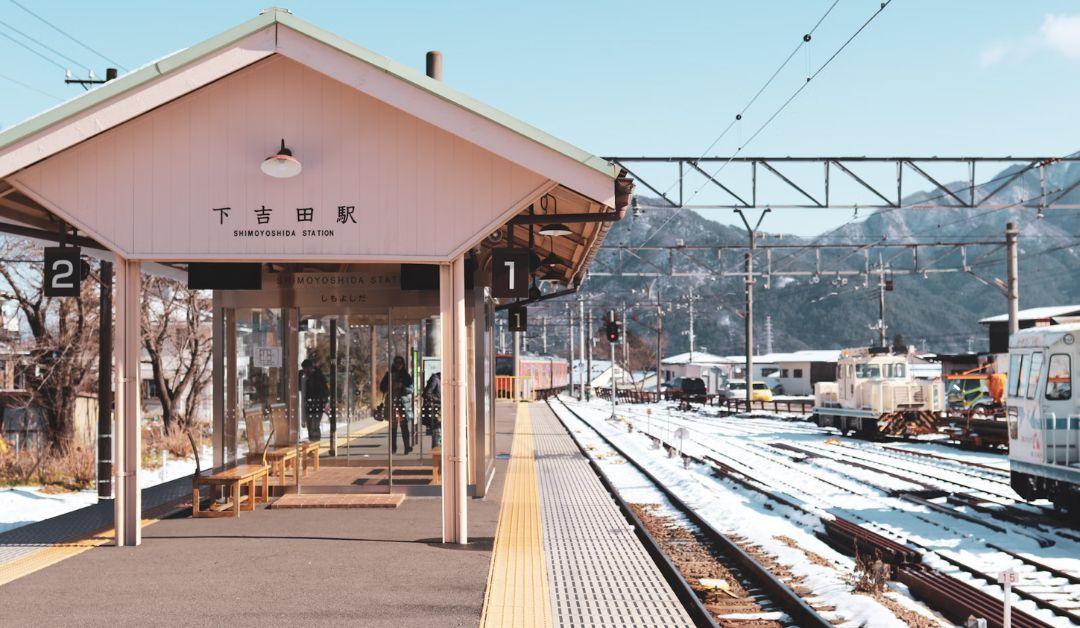
Shimoyoshida Station on the Fujikyu Line, a private railway that the pass does not cover. Photo Credit: Karen Z
Beyond the variety of JR train services on the classic network listed above, there are some specific train services that are included, such as:
- The Narita Express between Narita Airport and Tokyo
- The Tokyo Monorail between Haneda Airport and Tokyo
- Local JR trains in cities such as Tokyo, including the especially useful Yamanote loop line
Nozomi, Mizuho, Private Railways and Metros: What Is Not Covered
While the JR Pass covers trains in the JR network, there are a few notable exceptions. The most important are the Nozomi and Mizuho Shinkansen services, which run on the Tokaido, Sanyo, and Kyushu Shinkansen lines.
To ride the Nozomi and Mizuho trains, you need to buy a special supplementary ticket, the [ONLY WITH JAPAN RAIL PASS] NOZOMI MIZUHO Ticket, before boarding. So while the lines are used in the JR network, those two specific train services have extra cost associated with them.
Luckily, there are other Shinkansen services on these routes that are covered under the JR Pass, so this shouldn’t be too much of a problem. Of course, private railways operated outside of the JR Group and city metros are also excluded from this rail pass.

A Chugoku JR Bus local service in Hiroshima. Photo: Kitakyushuhamojiko, CC BY-SA 4.0, via Wikimedia Commons
JR Buses and the Miyajima Ferry
Beyond trains, the JR Pass is also able to be used on various other forms of transport operated by the JR Group. This includes the network of local buses operated by Japan Rail. Moreover, they bear the JR logo on the bus and their bus stops. While you can check the full guide to JR buses, some local JR buses cover cities like Sapporo, Hiroshima, and Fukuoka. Do note that JR highway buses are not included. One other unusual inclusion in the JR Pass is the JR West Miyajima ferry between Miyajimaguchi and Miyajima. It takes people to the popular attractions on the island of Miyajima in Hiroshima Bay. You pay the 100 yen Miyajima Visitor Tax separately when you visit.
Explore Japan Region by Region with Specialised JR Passes

While the nationwide Japan Rail Pass offers extensive coverage, regional JR passes provide a fantastic way to delve deeper into specific areas of Japan. These regional passes cater to travellers focusing on particular parts of Japan, offering cost-effective and convenient travel within those areas.
Benefits of Regional JR Passes
- Targeted Travel: Regional passes are ideal for those focusing on a specific area, such as Hokkaido, Kyushu, or Kansai.
- Cost Savings: If your itinerary centres on a particular region, a regional pass can be more economical than the nationwide pass.
- Flexibility: Like the nationwide pass, regional passes offer unlimited travel within their designated areas.
- Specialised Access: Some regional passes include access to unique local trains and attractions.
Popular Regional JR Passes
- Hokkaido Rail Pass: Explore the vast landscapes of Hokkaido, from Sapporo to Hakodate.
- JR East Pass (Tohoku Area): Discover the scenic beauty of the Tohoku region, including Sendai and Aomori.
- JR Kansai Area Pass: Travel throughout the Kansai region, including Osaka, Kyoto, and Nara.
- JR Kyushu Rail Pass: Journey across Kyushu, visiting cities like Fukuoka, Nagasaki, and Kumamoto.
- JR Hokuriku Arch Pass: Travel between Tokyo and Osaka through the Hokuriku region.
Choosing the Right Regional Pass
- Consider your travel itinerary and the specific areas you plan to visit.
- Compare the cost of the regional pass with individual train tickets.
- Check the validity period and coverage area of each pass.
Regional JR passes offer a fantastic way to experience the unique charm and attractions of Japan’s diverse regions. Compare the regional passes against your route to find the one that fits your trip.








Reserving Shinkansen Seats with Your Japan Rail Pass
While your JR Rail Pass grants you unlimited Shinkansen travel for 7, 14, or 21 days, reserving a seat in advance is highly recommended for a smoother, more comfortable journey. Seat reservations cost nothing extra with the pass. Here’s why they are worth making:
Few Unreserved Cars and Crowded Peak Seasons
- Limited Unreserved Seating: Most Shinkansen trains only dedicate 1 to 3 cars to unreserved seating, while the rest require reservations. This means unreserved cars fill up quickly, especially on busy routes, and you may end up standing with your luggage.
- Peak Travel Periods Get Crowded: On weekends, public holidays, and peak seasons (e.g. cherry blossom season, Golden Week, New Year’s), Shinkansen trains are in high demand. A reservation guarantees you a seat for yourself and your travel group, so you can sit together stress-free.
- Hassle-Free Travel: While the idea of hopping on and off the Shinkansen sounds convenient, planning ahead helps you avoid unnecessary delays, especially when travelling with large suitcases. (Refer below for oversized luggage reservation info.)
How to Reserve a Seat at a JR Ticket Machine
Reserving a seat at a JR Rail Ticket Machine is quick and easy. Just follow these steps:
1️⃣ Select “English” and tap on “JR Rail Pass”.
2️⃣ Choose “Select Train to Use Now”.
3️⃣ Enter the number of passengers (1 to 6 people can be booked at once).
4️⃣ Scan the QR code on your JR Rail Pass ticket (this little piece of paper is crucial, don’t lose it!).
5️⃣ Enter your passport number when prompted.
6️⃣ Select your departure and arrival stations and pick a departure time (the machine will suggest the closest match).
7️⃣ Choose your preferred train from the list.
8️⃣ Press the “O” button for Ordinary Car.
9️⃣ Select Green No Oversized Baggage Button (Refer to instructions below if you’d like to Reserve Oversized Baggage Seats)
🔟 “Select from Seat Map”.
1️⃣1️⃣ Pick your seats for everyone in your group.
Press Confirm, your seat reservation tickets will print, showing your car and seat numbers.
💡 Tip: Keep these reservation tickets handy: you may need to present them to train staff during your journey.
By reserving in advance, you’ll skip the stress, travel in comfort, and make the most of your Shinkansen experience in Japan!
Asking JR Station Staff for Help at the Ticket Machine
Navigating a busy train station while juggling bags, JR Rail Passes, and keeping track of your travel group can feel overwhelming.
Thankfully, JR staff are incredibly helpful. Just ask, and they’ll guide you through the ticket reservation process at the machine, making sure you get the seats you need without the stress.
Shinkansen Rules for Oversized Luggage Over 160 cm
Travelling on the Shinkansen with large luggage? On the Tokaido, Sanyo, Kyushu and Nishi Kyushu Shinkansen, you must reserve both your seat and a space for oversized items in advance. If your luggage exceeds the size limit, you’ll need to book a dedicated space.
What is Considered Oversized?
- Oversized baggage is defined as any piece of luggage with total dimensions (length + width + height) exceeding 160 cm, but not exceeding 250 cm.
- Each passenger can bring up to two pieces of luggage, each weighing 30 kg or less with total dimensions of 250 cm or less.
Oversized Luggage Reservation Requirements
- A reservation is required for oversized baggage. You will need to reserve a special seat with an oversized baggage area or compartment.
- Without a reservation, you may be charged a fee of 1,000 yen and will be required to store your luggage in a designated area.
Types of Oversized Baggage Storage
- Oversized Baggage Area: These seats are typically located at the rear of the car, with space directly behind the last row of seats for luggage.
- Oversized Baggage Compartment: These compartments are located in the deck area closest to your seat. They have size limits (typically 80cm x 60cm x 40cm, or up to 80cm x 60cm x 50cm for upper compartments) and may require a contactless IC card (like Suica or Pasmo) to lock.
By following these guidelines, you can ensure a smooth and hassle-free journey on the Shinkansen with your luggage.
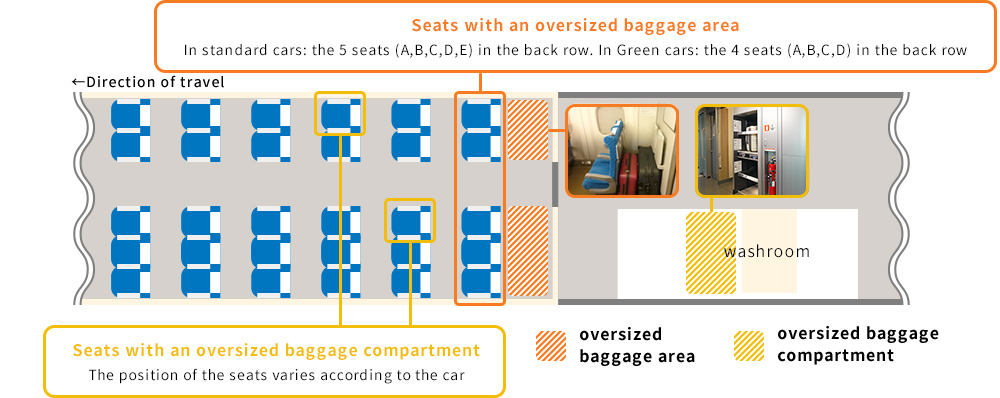
Reserving a Seat with an Oversized Baggage Area (Behind the Last Row)
Certain last-row seats in some cars have extra space behind them for oversized baggage. Follow these steps to reserve one using a JR Ticket Machine:
1️⃣ Select “English”, then tap “JR Rail Pass”.
2️⃣ Choose “Select Train to Use Now”.
3️⃣ Enter the number of passengers (1 to 6 people can be booked at once).
4️⃣ Scan the QR code on your JR Rail Pass (keep this ticket safe!).
5️⃣ Enter your passport number when prompted.
6️⃣ Select your departure and arrival stations, then pick a departure time (the machine will suggest the closest match).
7️⃣ Choose your preferred train from the list.
8️⃣ Press the “O” button for Ordinary Car.
9️⃣ Select “Purchase Seat with Oversized Baggage Area”. (These seats are located in the last row of certain cars and have a shared space for large bags behind them.)
🔟 Tap “Select from Seat Map”.
1️⃣1️⃣ Pick your seats for everyone in your group.
Sharing the Space Behind the Last Row
- This shared luggage space is available to the passengers seated in the last row: five seats (A to E) in a standard car and four seats (A to D) in a Green Car. Be considerate of others when placing your baggage.
- Not all reserved cars have these designated oversized baggage areas.
Reserving a Seat with an Oversized Baggage Compartment
If you prefer to store your luggage in a dedicated baggage compartment, follow steps 1 to 8 above, then:
9️⃣ Select “Purchase Seat with an Oversized Baggage Compartment” (These seats are near a secure luggage rack on the train deck).
🔟 Tap “Select from Seat Map”.
1️⃣1️⃣ Choose your seats for everyone in your group.
Upper and Lower Baggage Compartment Sizes and IC Card Locks
- Upper and Lower Racks:
- Upper rack: Max luggage size 80 x 60 x 50 cm (Reserve an aisle seat to use this rack).
- Lower rack: Max luggage size 80 x 60 x 40 cm (Reserve a window seat to use this rack).
- You must lock your baggage using a contactless IC card (e.g., Suica, PASMO). Not all IC cards and mobile devices are supported, so check before your trip.
- If your luggage is too big for these racks, reserve a seat with an oversized baggage area instead.
Alternatively, this YouTube short explains the necessary steps with the Ticket Machine screens. Check it out here.
Reserving at a JR Ticket Office
Prefer human assistance? Simply visit a JR Ticket Office, inform the staff about your oversized luggage, and they’ll help you reserve the appropriate seat.
Oversized Baggage Seats Cost No More Than a Standard Reservation
- There is no extra fee for reserving a seat with oversized baggage storage; only the standard reserved seat price applies.
- Limited availability: Reserve early, especially during peak travel seasons.
- JR Pass Holders: Seat reservations are included with the Japan Rail Pass at no extra cost, so you can book a seat with oversized baggage storage without paying anything more.
By securing your oversized baggage space in advance, you’ll enjoy a stress-free and comfortable journey across Japan on the Shinkansen!
Storing Luggage with Bounce Before Your Shinkansen Trip
Navigating Japan’s extensive rail network is a highlight for many travellers, but lugging around heavy suitcases can quickly dampen the experience. Enter Bounce, a convenient luggage storage solution that allows you to explore Japan burden-free.
With Bounce, you can securely store your oversized or non-essential luggage in one city and travel light to your next destination. For instance, if you’re planning a round trip from Tokyo to Kyoto, consider leaving your bulky bags at a Bounce location in Tokyo. This way, you can enjoy the scenic journey and explore Kyoto’s historic sites without the burden of heavy luggage. Upon returning to Tokyo, simply pick up your stored items before heading to the airport.
Bounce partners with local businesses across Japan, providing over 22,000 trusted locations worldwide, with over 3,900 in Japan alone, including Tokyo, Kyoto, and Osaka. Each booking includes $10,000 protection and 24/7 support available in 36 languages, ensuring peace of mind while you travel. The process is straightforward: reserve a spot through the Bounce app, drop off your bags, and continue your journey hassle-free.
Download on the App Store (Apple) or on Google Play (Android).
By leveraging Bounce’s services, you can stay within the Shinkansen luggage rules and enhance your travel experience, making your Japanese adventure more comfortable and enjoyable.
How Does the Japan Rail Pass Save Money?

A 10,000 yen note from the series first issued in 2024. Photo: Heavy Frisker, CC BY-SA 4.0, via Wikimedia Commons
A big part of deciding whether a rail pass is right for you is working out whether it will save you money. To understand the value of a Japan Rail Pass, compare the cost of the pass with the individual tickets you would otherwise buy. Long distance and high-speed train fares in Japan are expensive compared with many other countries, so a busy itinerary of single tickets adds up quickly.
For perspective, a 7 day ordinary pass costs 53,000 yen. That is well above the price of a single Tokyo to Kyoto return, so the pass pays off when your week includes several long Shinkansen journeys. Add up the fares for your actual route before you buy.
How to Plan Your Rail Pass Journey
Once you’ve purchased your Japan Rail Pass and understood what’s included, it’s time to figure out how you’re going to use it to make your dream trip a reality. If you’re still at the brainstorming stage of planning, it will probably help to first take a look at the Japan Rail Pass Map. This map allows you to see the train routes available with your JR Pass in great detail. As well as the Shinkansen and regional JR lines that are valid with your pass, it separately highlights private railways, trams, and ropeways not included. That way, you can see how much of your journey the Japan Rail Pass covers.

The view along the tracks from a Yamanote Line train in Tokyo. Photo: Dick Thomas Johnson, CC BY 2.0, via Wikimedia Commons
Once you’re ready to start scheduling your train travel, use a live route planner such as Google Maps to find departures. HyperDia, long the go-to tool for JR Pass holders, stopped its timetable search on 31 March 2022 and now only shows average journey times. Whichever planner you use, leave out Nozomi and Mizuho trains and private railways so the routes you see are covered by your JR Pass.
What Pass Options Are There?
Because everyone travels differently, several options allow you to tailor your Japan Rail Pass to your travel requirements. The first option regards the duration of your pass, with 7, 14 and 21 day passes available, so you can match the pass to the length of your trip. There are also different passes for adults and children, providing a greatly discounted rate for children ages 6 to 11. (Note: Children ages 0 to 5 travel free if they don’t need a seat.)
One other way you can customise your Japan Rail experience is to upgrade your pass to Green Class. With a JR Green Pass, you are treated to the Japan Rail version of 1st Class travel. It includes wider seats in the quieter, more luxurious first-class carriages, along with other conveniences.
How Do Seat Reservations Work with the Japan Rail Pass?
One of the many benefits of travelling with a Japan Rail Pass is that it simplifies the process of making seat reservations when you travel by train. That’s because you get free seat reservations with your JR Pass. This allows you to secure a seat on a Shinkansen, limited express, or express train covered by the pass.
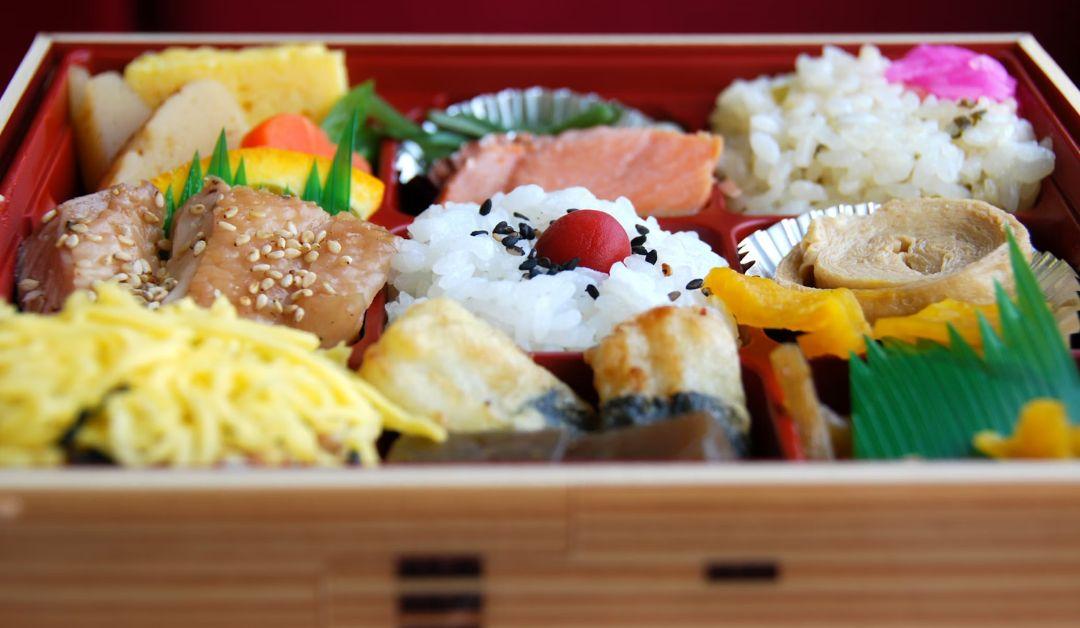
Bento Box. Photo Credit: Unsplash
Is There Food on Board the Trains?
There’s little chance of you going starving as you travel by train in Japan. For starters, it’s quite common for passengers to buy food and drinks before boarding. Stations sell special packed lunches called ekiben, which give you the chance to try regional Japanese food while on the train.
Buying before you board matters more than it used to. The Tokaido Shinkansen between Tokyo and Shin-Osaka ended its refreshment trolley service on 31 October 2023, and only Green Car passengers can now order snacks and drinks from their seat, by scanning a QR code. Trains in Japan do not have a restaurant car like in Europe.

Commuters using internet inside a train in Japan. Photo Credit: Storyblocks
Do Trains Have Amenities like Wi-Fi and Power Sockets?
To help you enjoy your journey, you’ll find power sockets with the standard Japanese configuration for nearly all Shinkansen and a majority of limited expresses. As for staying connected, free onboard Wi-Fi is increasingly available. With it already available on the Tokaido, Sanyo, and Tohoku lines. If having the internet is important to you, you can hire a Pocket Wi-Fi device. This is to ensure you have WiFi access no matter where you are. That’s it for this Japan Rail Pass Guide, see you in the next one.