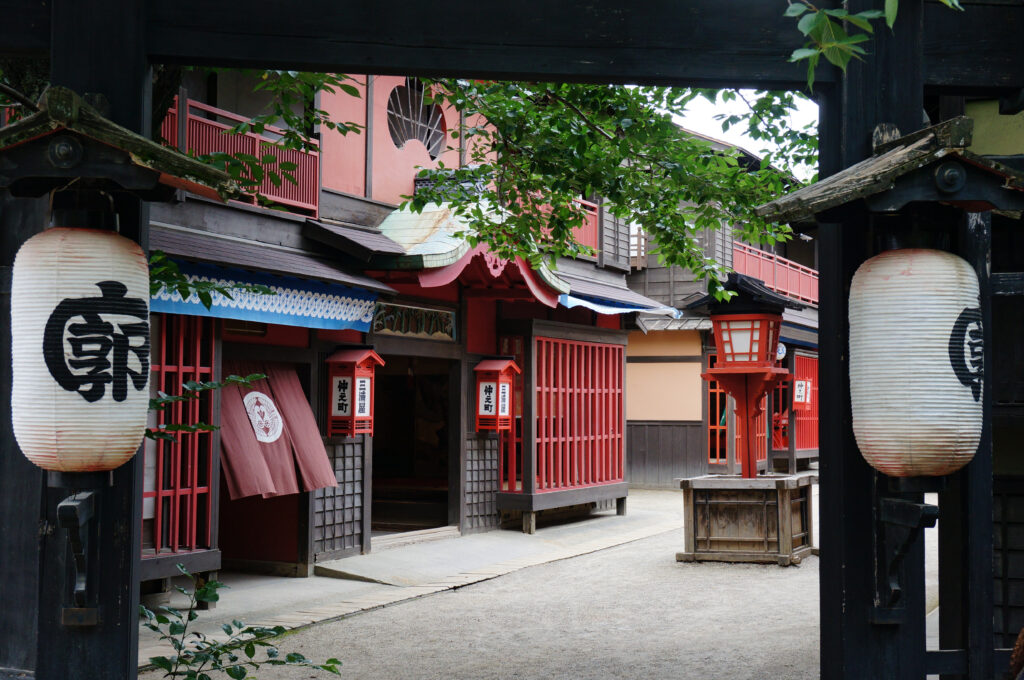
Japan is known for its exquisite cuisine, which includes everything from bowls of boiling ramen to the delicate artistry of sushi. However, going outside the restaurant industry allows everyone to explore a more fascinating aspect of this rich history: the fascinating world of Japanese marketplaces.
These vibrant markets offer you a unique glimpse into Japanese culture in addition to being a location to find fresh ingredients. Moreover, they also transport you to an experience filled with flavours, colours, and fragrances. Japanese markets are a sensory overload and an absolute must-visit for any foodie, offering everything from the freshest seasonal seafood to unique regional delicacies.
Check out these Japanese markets below and see where your next adventure will be.
Tokyo Markets
How to Pick Your Market
Seafood
- Japan’s lively fish markets reflect the country’s deep relationship to the sea, which is fostered by its archipelagic geography. These vibrant markets have developed into more than just shopping centres; they are now cultural magnets where ancient fishing customs coexist peacefully with contemporary trade.
- With the freshest seafood available at the height of the season, these markets are a chef’s and home cook’s paradise. Simultaneously, the air is filled with the mouthwatering smell of sizzling sushi fillings or grilled fish, enticing you to visit one of the on-site restaurants or vendors selling delicious ready-made dishes.
Fresh Produce
- The farmer’s markets of Japan are a dispersed maze of new discoveries. Unlike structured supermarkets, these markets are run by local communities or JA groups (agricultural cooperatives) and often operate on specific days, adding a layer of cultural intrigue.
- Don’t be surprised to find markets rotating throughout the week. This local focus extends to the produce itself. Since each market showcases the abundance of its particular location, you may anticipate seasonal specials on fruits and vegetables, locally made sake in brewing regions, and freshly caught fish close to the shore.
Flowers
- In Japan, flower markets aren’t just about showcasing beauty; they embody a deep cultural reverence for nature and aesthetics. Inspired by centuries-old flower-appreciation traditions like hanami (observing cherry blossoms) and ikebana (arranging flowers), these markets are colourful representations of Japan’s relationship with flowers.
Vintage Clothing
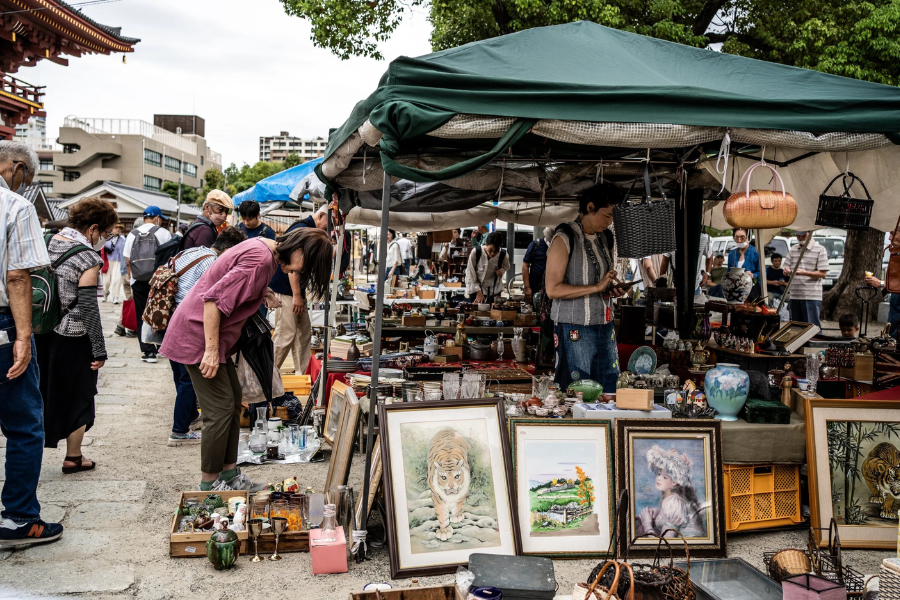
- Japan’s flea markets, known as “nomi no ichi,” enjoy enduring popularity due to their unique blend of economic advantage and cultural immersion. Consequently, these markets offer a treasure trove of pre-loved goods at enticing prices, ranging from vintage clothing and traditional crafts to unexpected finds like quirky trinkets and hidden antiques.
- Moreover, this variety caters to both budget-conscious shoppers and collectors, thereby transforming the market experience into a vibrant social space. Furthermore, here, tourists may interact with residents, discover unique artefacts, and thus develop a greater understanding of Japanese culture.
Antique Items and Collectibles
- Antique markets in Japan are goldmines for vintage lovers and antique collectors. You’ll usually find them held at shrines, temples, and parks where vendors display kimonos, ceramics, ukiyo-e prints, netsuke carvings, and traditional art pieces.
- Although antiques are the main attraction of these markets, you’ll also find modern Japanese goods that are pre-loved, including furniture, household items, bicycles, and even musical instruments! Antique markets are popular for their selection of secondhand products, making them a haven for collectors.


Fish Markets
Tsukiji Fish Market (Open Year-Round)
Tsukiji Fish Market in Tokyo is one of the most well-known fish markets in the world and a must-see for anyone who likes seafood. The outside market is still thriving and offers customers a wide selection of seafood, fresh fruit, kitchenware, and traditional Japanese snacks, even though the inner wholesale market relocated to Toyosu in 2018.

Moreover, here, you can watch as knowledgeable merchants skillfully prepare sushi or fillet fish in front of you. As you wander through the tiny passageways at Tsukiji Fish Market, lined with shops selling everything from uni (sea urchin) to toro (fatty tuna), the smell of cooked seafood fills the air, thereby capturing the spirit of Japanese culinary tradition in a sensory overload.
- Nearest station: Tsukiji Station
- Hours: 5:00 to 14:00
- Spending Range: ¥500 to ¥1,000
- Map: 4-16-2, Tsukiji, Chuo-ku
- Pro tip: Most vendors in Tsukiji are long-running businesses that are still used to old-fashioned transactions. This means, bring cash!
Toyosu Market 豊洲市場 (Open Year-Round)
While the Tsukiji Outer Market captured hearts for years, Tokyo’s seafood scene has a new champion: Toyosu Market. This state-of-the-art market offers a vibrant atmosphere and an incredible selection of fresh fish, fruit, and Japanese specialties.
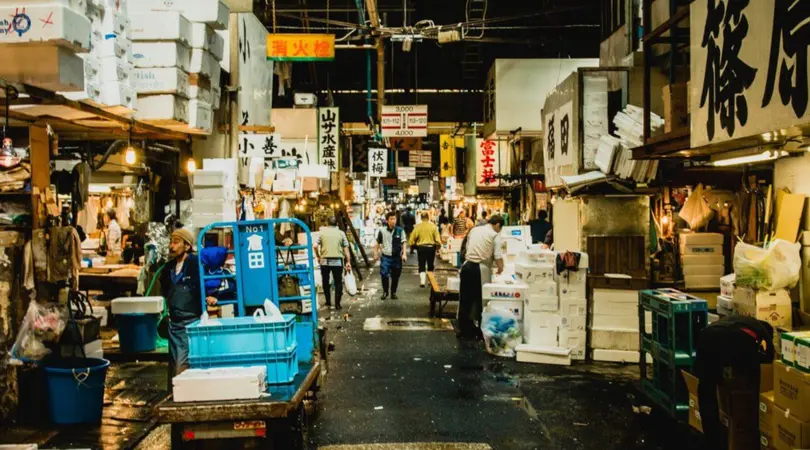
Witness skilled vendors expertly prepare sushi or fillet fish right before your eyes. Explore the aisles brimming with everything from melt-in-your-mouth uni (sea urchin) to decadent toro (fatty tuna). The aroma of cooked seafood fills the air, creating a sensory experience that captures the essence of Japanese culinary tradition.
- Nearest station: Shijō-mae Station
- Hours: Wholesale areas early AM; restaurants typically breakfast to lunch; closed Wed/Sun (confirm before visit)
- Spend: ¥1,200 to ¥3,500 per set
- Map: 6 Chome-6-1 Toyosu, Koto City
- Pro tip: Go before 09:00 for shorter queues; many restaurants sell out by late morning.
Farmer’s Markets
Aoyama Farmers Market (Open Every Weekend)
The United Nations University (UNU) in Tokyo serves as a research and postgraduate teaching organisation… Who would’ve thought it would also be a landmark for the Aoyama Farmers Market? Right in front of the university is where vendors set up to sell farm-fresh fruits and vegetables, alongside food trucks selling coffee and ready-to-eat snacks.
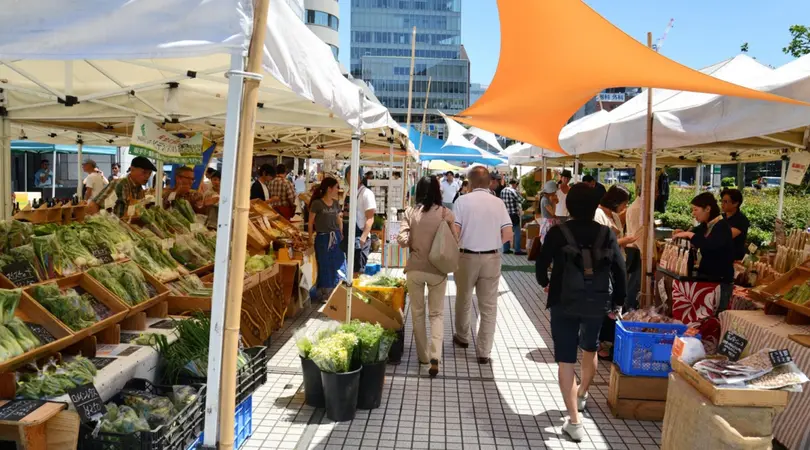
The layout of Aoyama Farmers Market encourages you to sit down with locals and strike conversations with them, surrounded by music and laughter. Feel free to chat with the farmers as well, they’re more than willing to share their stories with you as they offer samples of their seasonal delights! Aoyama Farmers Market is the epitome of community.
- Nearest station: Omotesando Station
- Hours: 10:00 to 16:00
- Spending range: ¥500 to ¥2,500
- Map: 5 Chome-53-70 Jingumae, Shibuya
- Pro tip: Aim to arrive by 10:30 to beat crowds without waiting for the vendors to set up.
Marche of the Sun (Open Second Weekend of Every Month)
As one of the largest farmers’ markets in Tokyo, Marche of the Sun features more than 80 vendors from around the country. Think of various stalls selling only the freshest of produce, whether it’s tomatoes, oranges, or even herbs! Besides fruits and vegetables, Marche of the Sun also promotes vendors who specialise in homemade breads and baked goods.

Wander through this market located at the Tsukishima Second Children’s Park and discover unique food products that locals are proud to showcase. If you’re lucky, you may visit on a day where the farmers hold workshops about their livelihood and allow visitors to experience what it’s like to harvest and farm on Japan’s soil.
- Nearest station: Kachidoki Station
- Hours: 10:00 to 17:00 (April to Sept) and 10:00 to 16:00 (Oct to Mar)
- Spending Range: ¥1,000 to ¥3,000
- Map: 1 Chome-8-1 Kachidoki, 中央区 Chuo City
- Pro tip: Bring a few tote bags if you’re planning to buy in bulk!
Food Markets
Earth Day Market (Monthly at Yoyogi Park)
Two different things share the Earth Day name at Yoyogi Park, and it is worth knowing which you are looking for. The Earth Day Market, properly Tokyo Asaichi Earth Day Market, is a monthly farmers market held along the park’s keyaki tree-lined avenue, where non-profit organisations and small producers sell food and goods built around sustainable living. Separately, Earth Day Tokyo is a large two-day festival held in the same park every April, free to enter, which in 2026 ran on the 18th and 19th.
The monthly market has not published a schedule for several years, so check it is running before making a special trip. The April festival is the reliable annual fixture.
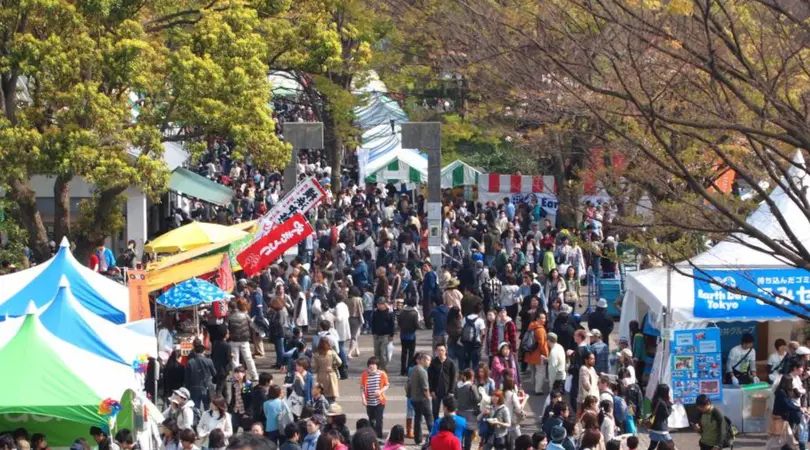
Launched in 2006 with just six vendors, it now draws 50-60 regular sellers with seasonal sellers every once in a while. You’ll find stalls overflowing with fresh produce, traditional crops, homemade meals, and artisan goods like ceramics and handicrafts. Visiting Earth Day Market means supporting Japan’s farming community, so check it out when you’re around!
- Nearest station: Harajuku Station
- Hours: 10:00 to 16:00
- Spending Range: ¥1,000 to ¥2,000
- Map: 2-1 Yoyogikamizonocho, Shibuya
- Pro tip: You might want to dedicate the entire day to Yoyogi Park when you visit for Earth Day Market, there’s a lot more to do here in one of Tokyo’s largest and most beloved parks!
Yanaka Ginza (Open Year-Round)
The neighbourhood of Yanaka has a tiny, charming shopping street called Yanaka Ginza which serves as a year-round market for locals and tourists who want to escape from the fast-paced lifestyle of modern Tokyo. In Yanaka Ginza, you are brought into a nostalgic era where independent, family-run shops sell all kinds of food and novelties.
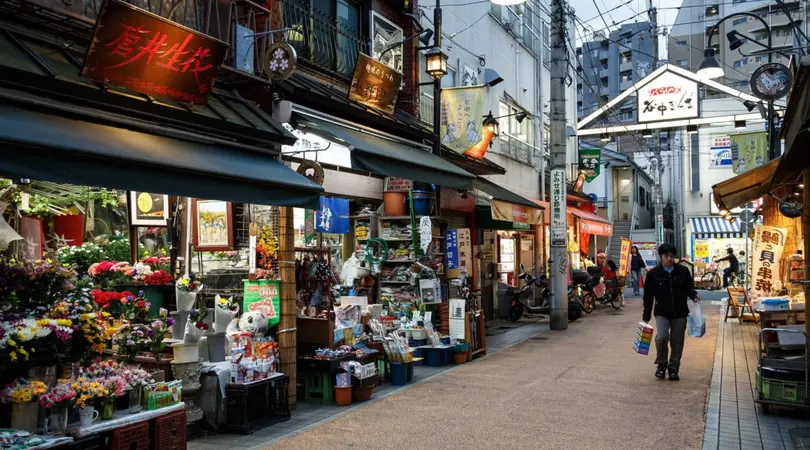
The heart of Yanaka Ginza is the street food that they sell, serving seafood, rice dishes, and even specialty dishes like menchi katsu (minced meat cutlets). You can also find plenty of tea houses along the street. Stroll around Yanaka Ginza and you’ll see how it blends daily life with traditional Japanese culture.
- Nearest station: Nippori Station
- Hours: 10:00 to 18:00
- Spending Range: ¥2,000 to ¥3,000
- Map: 3 Chome-13-1 Yanaka, Taito City
- Pro tip: If you want to include Yanaka Ginza in your itinerary, it’s best to do it during the day. It’s a daytime destination so it’s better to have lunch than dinner here.
Nakamise Market (Open Year-Round)
Another shopping street in Tokyo that also serves as a market is Nakamise, a historic destination that has been around since the 17th century. What’s beautiful about this market is that it’s actually on temple property! It starts and ends with a temple gate, stretching from Kaminarimon Gate to Senso-ji Temple’s Hozomon Gate in Asakusa.
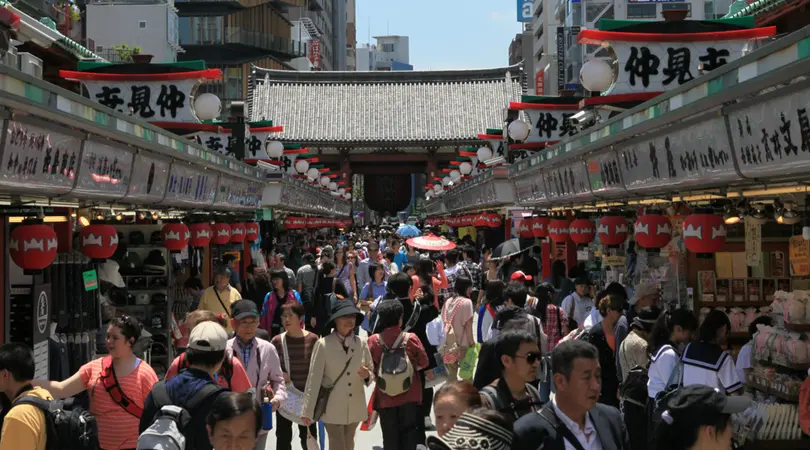
In Nakamise, you must try their ningyo-yaki or “baked doll” cakes which are soft-baked sponge cakes filled with sweet bean paste. Freshly toasted senbei rice crackers are also a local favourite here, as well as manju sweets, sweet melon pan bread, and matcha ice cream. Buy a snack and eat on-the-go as you look through the variety of shops in Nakamise selling traditional arts and crafts, clothes and accessories, and all kinds of toys and souvenirs.
- Nearest station: Asakusa Station
- Hours: 9:00 to 20:00
- Spending Range: ¥1,000 to ¥4,000
- Map: 1 Chome-36-3 Asakusa, Taito City
- Pro tip: The opening hours of each store depends on the individual shop owners. Some owners open as early as 8:00 while others start selling at 10:00. Nonetheless, it’s always best to arrive in the morning before the large crowds come in.








Flea Markets
Sugamo Flea Market (Open on the 4th, 14th, and 24th of Every Month)
Known as the “Harajuku for grandmas,” this flea market is a popular hang-out spot for the senior citizens of Tokyo. But that doesn’t mean that young ones aren’t welcome! The Sugamo Flea Market is a bustling hub of vintage finds, with around 60 vendors selling all kinds of items like pre-loved clothes, handcrafted goods, and fabrics.
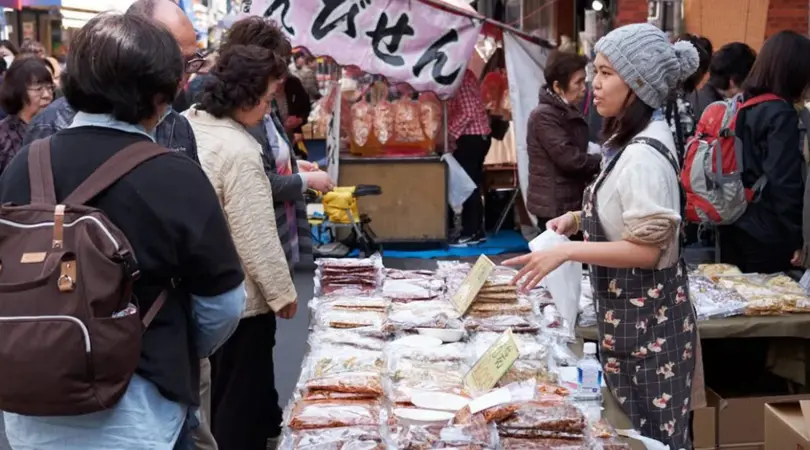
The “old soul energy” of the Sugamo Flea Market is what makes it unique, it feels less touristy and more community-focused. The vendors here are very friendly and hospitable so you can definitely strike a few conversations with them to learn more about the history of the flea market to make your experience even more memorable.
- Nearest station: JR Sugamo Station
- Hours: 9:00 to 17:00
- Spending Range: ¥1,000 to ¥5,000
- Map: 3 Chome-21-17 Sugamo, Toshima City
- Pro tip: For a full cultural experience, pair your trip to the Sugamo Flea Market with a few temple visits nearby.
Oedo Antique Market (Open on the 1st and 3rd Sundays of Each Month)
As the largest outdoor antique market in Japan, the Oedo Antique Market lives up to its title by hosting approximately 250 vendors at the Tokyo International Forum every month. It features a large number of antique goods like Japanese pottery and tableware, but most visitors look forward to the clothes that they sell here.
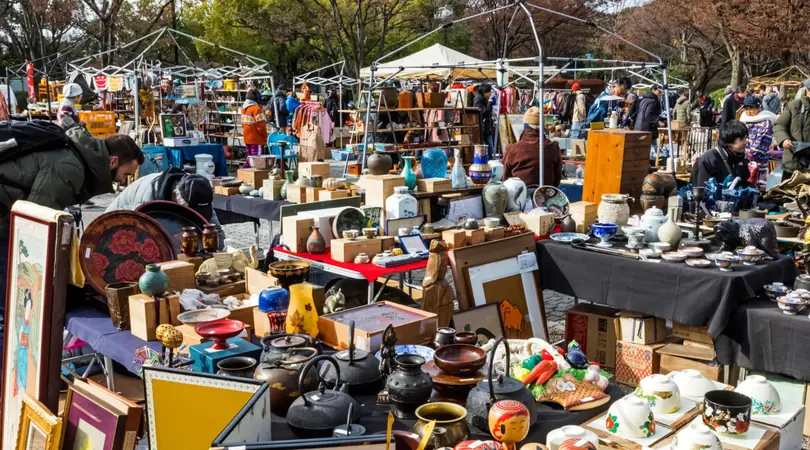
At the Oedo Antique Market, expect kimono and sashes, plus accessories like belts, ties, bags, and even watches. Since the majority of the items sold at the flea market are secondhand, you can easily find items below ¥1,000. Alternately, you’ll also find pieces that are on the pricier end because of their rarity. Either way, you’ll definitely bring something home from the market!
- Nearest station: Yurakucho Station
- Hours: 9:00 to 16:00
- Spending Range: ¥500 to ¥10,000
- Map: 3 Chome-5 Marunouchi, Chiyoda City
- Pro tip: Monitor weather apps a day or two before your scheduled trip to the market just to make sure that you don’t catch yourself in the rain when you visit. Sometimes, the Oedo Antique Market cancels because of rainy days.
Oi Racecourse Tokyo City Flea Market (Open Almost Every Weekend)
The Oi Racecourse Tokyo City Flea Market is one of the largest in Tokyo, with around 250 to 300 vendors selling an extensive collection of goods. It feels like a treasure hunt as you go through multiple stores and discover piles of second-hand clothes, antiques, ceramics, vinyl records, and more.
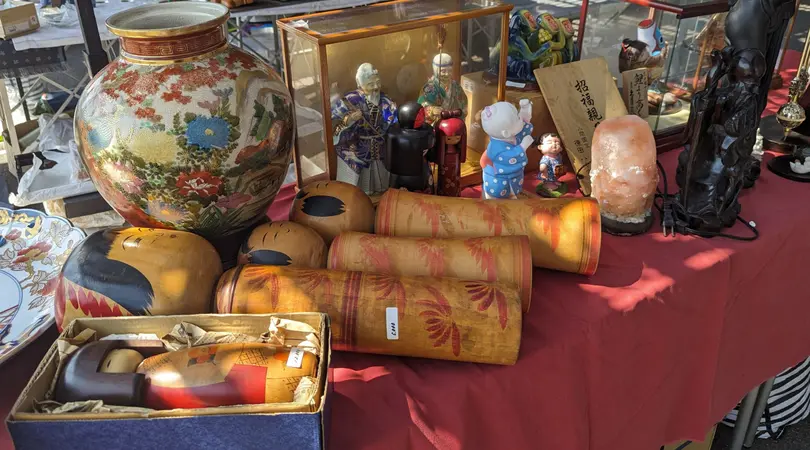
Because of how big the Oi Racecourse Tokyo City Flea Market is, the organisers make sure that there’s enough rest spaces for visitors and even food trucks for those who need an extra boost of energy to browse through the different stalls. With the number of vendors that this flea market has, it’s not difficult to spend half a day here!
- Nearest station: Oikeibajo-Mae Station
- Hours: 9:00 to 14:30
- Spending Range: ¥1,000 to ¥8,000
- Map: 2 Chome-1-2 Katsushima, Shinagawa City
- Pro tip: The popularity of this flea market has caused its prices to increase, so you can try to negotiate and haggle for lower prices. Just make sure you know some Japanese!
Flower Markets
The Bunkyo Asagao Market (Open Once a Year in July)
Every summer in Japan, the Bunkyo Morning Glory and Lantern Plant Festival is held within the grounds of Denzuin temple and the nearby Genkaku-ji temple to celebrate “ibuki,” which means the breath of life, symbolising the change of the seasons. The asagao or the “morning glory,” is the flower that is highlighted during this festival.

As part of the celebration, the festival hosts the Bunkyo Asagao Market where vendors sell various potted morning glories in vivid shades of blue, purple, and white. Other flowers are also sold such as hozuki, alongside food vendors and community booths. Beyond the plants, enjoy floral exhibits, live performances, and the overall cosy vibe of the market.
- Nearest station: Kasuga Station
- Hours: 8:00 to 15:00
- Spending Range: ¥500 to ¥3,000
- Map: 3 Chome-14-6 Koishikawa, Bunkyo City
- Pro tip: If you’re buying plants or flowers, make sure that you have the capability of bringing it home. Water plants immediately post-buy and clarify the rules and regulations on bringing plants or flowers home from Japan.
Kunitachi Asagao Market (Open Once a Year in July)
Another seasonal morning glory market in Tokyo is the Kunitachi Asagao Market located in Kunitachi City, western Tokyo. It’s usually held at the south gate of Hitotsubashi University where people can easily gather to celebrate morning glories through purchasing them from vendors that sell them in pots.
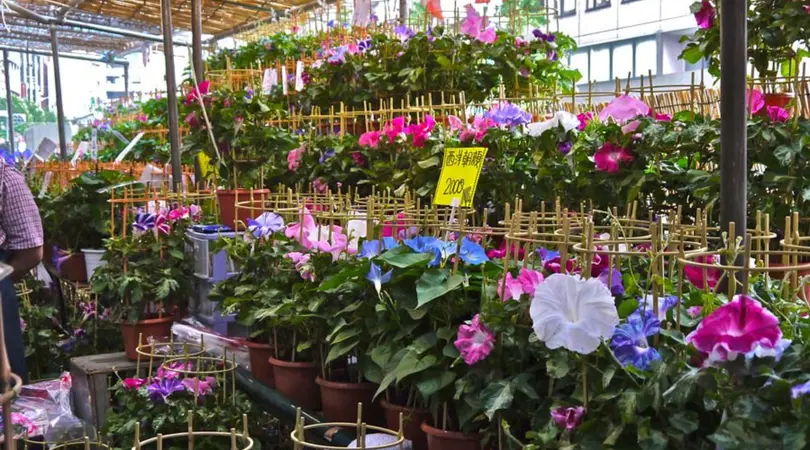
Vendors display rare varieties of morning glories bred by locals, drawing plant enthusiasts for this summer tradition in Tokyo. Here, you’ll find vibrant blooms, gardening tools, seeds, and even light snacks to keep you going as you explore the market.
- Nearest station: Kunitachi Station
- Hours: 5:00 to 18:00
- Spending Range: ¥500 to ¥2,000
- Map: 2 Chome-1 Naka, Kunitachi
- Pro tip: As this market is held during summer, bring sunscreen and apply before leaving.
Hozuki Market at Senso-ji (Open Once a Year in July)
The Hozuki Market at Senso-ji Temple in Asakusa is a cherished two-day summer tradition known as the Hozuki-ichi or the “46,000 Days Festival.” Around 120 stalls fill the temple grounds selling vibrant hozuki, which are Chinese lantern plants or better known as ground cherries. Japanese locals believe that hozuki plants ward off evil at home.
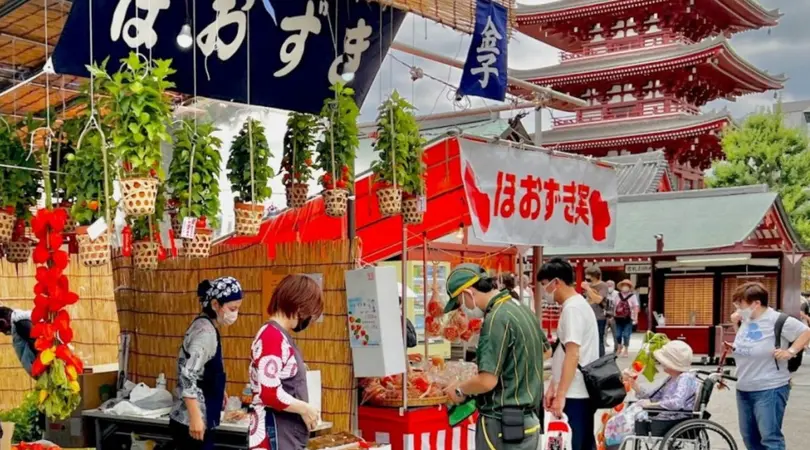
What makes this flower market special is its close roots to religious practices as the seeds of the hozuki fruit are traditionally used in Japan during the Obon festival as offerings to guide the souls of the deceased. On the other hand, hozuki can simply be used as a decoration.
- Nearest station: Asakusa Station
- Hours: 8:00 to 21:00
- Spending Range: ¥500 to ¥2,000
- Map: 2 Chome-3-1 Asakusa, Taito City
- Pro tip: Arrive at the market early in the morning for rare varieties and freshness.
Antique Markets
Heiwajima Antiques Fair (Open Four Times Yearly)
The Heiwajima Antiques Fair is paradise for antique collectors as this fair stands as one of Tokyo’s largest and oldest indoor antique markets with nearly 300 vendors from across Japan. Most of the stalls here are manned by professional antique dealers, so expect higher prices and quality. These dealers take their antiques very seriously!
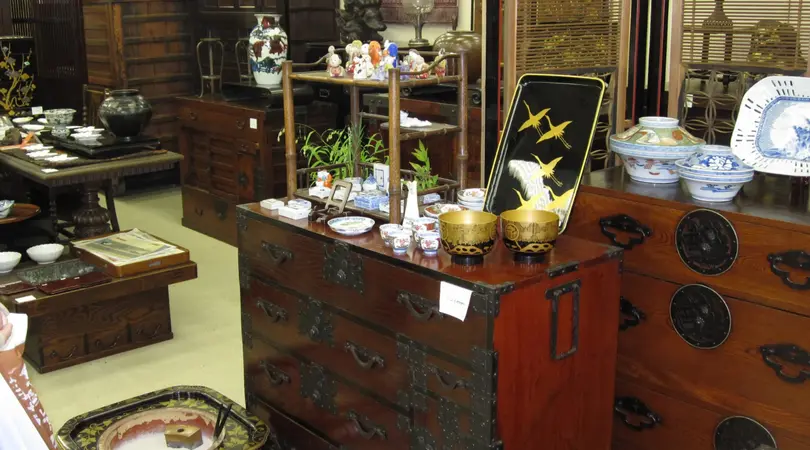
Here, you’ll discover an array of exclusive Japanese antiques, including netsuke (miniature sculptures), porcelain items, and other traditional goods like kimonos and toys. Hunt for rare items like kokeshi dolls and temple bells or engage directly with the dealers to learn more about their antique wares.
- Nearest station: Ryutsu Center Station
- Hours: 10:00 to 17:00
- Spending Range: ¥5,000 to ¥20,000
- Map: 6 Chome-1-1 Heiwajima, Ota City
- Pro tip: Avoid buying from the first stalls you see as the prices start higher there. Scout the entire venue first before committing to a purchase!
Hanazono Shrine Antique Market (Open Almost Every Sunday)
For those who’d prefer a small-scale antique market, the Hanazono Shrine Antique Market focuses on a more tranquil setting for the market. They keep the amount of vendors to around 40 stalls only yet the market still offers a diverse selection of antiques. Most visitors enjoy the cosy vibe this market brings, which is perfect for casual browsing.
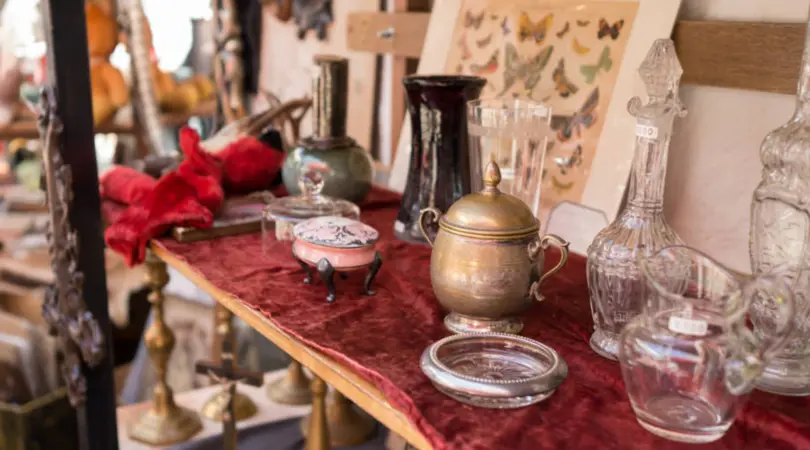
Despite its location amid the bustling streets of Shinjuku, the Hanazono Antique Market still manages to provide an intimate environment for visitors who prefer less crowds and noise. Expect small-scale finds like pottery, kimono fabrics, art scrolls, prints, and other retro goods that you may want to bring home.
- Nearest station: Shinjuku-sanchome Station
- Hours: 6:00 to 15:00
- Spending Range: ¥1,000 to ¥3,000
- Map: 5 Chome-17-3 Shinjuku, Shinjuku City
- Pro tip: The market tends to cancel due to bad weather conditions, so always verify the night before through social media if the market will still push through to spare wasted trips.
Tomioka Antique Market (Open Year-Round Except in January)
On the grounds of Tomioka Hachiman Shrine stands the Tomioka Antique Market, a treasure trove for antique enthusiasts and history buffs alike. Browsing through this market feels like revisiting old Japan, since the shrine grounds are a historic Edo period landmark.
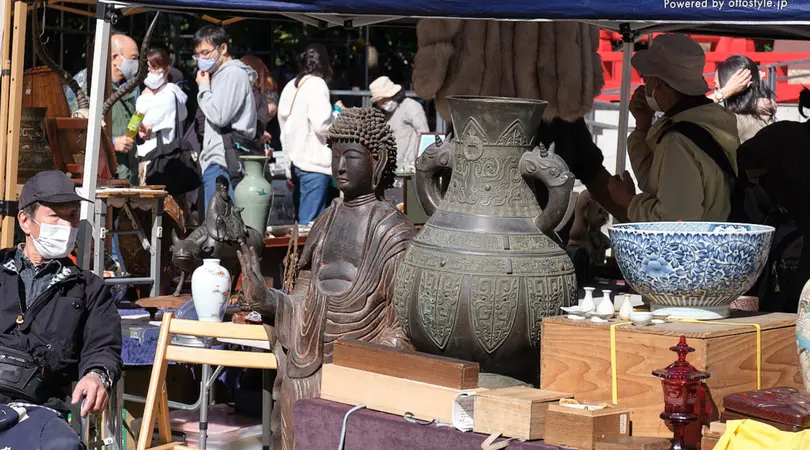
Unlike indoor fairs, the outdoor setup of the Tomioka Antique Market provides more space to roam and an atmosphere that immerses visitors in the spiritual side of Japanese culture with the shrine buildings, traditional lanterns, and Inari sub-shrines. Shoppers can find vintage books, toys, Imari porcelain, ceramics, furniture, and rare collectibles!
- Nearest station: Monzen-Nakacho Station (門前仲町駅)
- Hours: 6:00 to 15:00
- Spending Range: ¥500 to ¥2,000
- Map: 1 Chome-20-3 Tomioka, Koto City
- Pro tip: Bargain culture is practised at the Tomioka Antique Market, so you are encouraged to haggle on rare finds! Don’t worry, the vendors are friendly.
Mini-Itinerary: A Saturday in Tokyo
Here’s a Saturday mini-itinerary for you that will take you to Tokyo’s top markets from sunrise until sunset!
Morning
- 7:00: Arrive at Shijo-mae Station from Shimbashi Station via the Yurikamome Line and start your day at Toyosu Market with a fresh seafood breakfast. Note that the tuna auction is long over by then. Watching it means being at the market by 5:30, and the close-up lower deck is allocated by advance online lottery.
- 9:30: Walk to Tsukiji Outer Market (15 minutes) and browse through different kinds of street food stalls. Grab a little snack like tamagoyaki!
Midday
- 11:00: Take a train to Omotesando Station which is just a few minutes away from the United Nations University where they hold the Aoyama Farmers Market. Purchase a few fresh produce, buy coffee from a food truck, sit down on one of the outdoor tables, and enjoy buskers performing live music.
Afternoon
- 14:00: From Aoyama Farmers Market, take the Ginza Line to Yurakucho, about twenty minutes, for the Oedo Antique Market at the Tokyo International Forum. Hunt for rare collectibles. One catch: this market runs on the first and third Sundays only, so on a Saturday give the morning markets a longer run and go straight to Oi instead.
- 16:00: After going through the Oedo Antique Market, take a train from Yurakucho Station to Hamamatsucho Station and then transfer to Oi Keibajo Mae Station where you’ll find the Oi Racecourse Flea Market selling vintage clothes and trinkets.
Evening
- 18:00: To end the day, take a train from Oimachi Station to Asakusa Station and find yourself at Nakamise Market to indulge in a series of street food dishes for dinner.
FAQs
What’s the difference between Toyosu and Tsukiji Outer Market?
Toyosu and Tsukiji are closely related in a way that Toyosu is the “modern version” of a part of Tsukiji Market. The Tsukiji Market consists of the inner and outer market where Toyosu is referred to as the former. Toyosu is the newly renovated inner market of Tsukiji relocated to a larger and cleaner facility on Tokyo Bay but the Tsukiji Outer Market still remains at the original site.
Both markets are pioneers in Tokyo’s seafood scene with a few differences. Since it’s newer, Toyosu is more structured and minimalist, focusing on wholesale operations and indoor restaurants. On the other hand, Tsukiji has a more compact and maze-like layout with an old-fashioned and traditional vibe.
If you’re figuring out which market to visit, why not go to both? However, choose Tsukiji if you’re looking for old-school Japan, and Toyosu for modern-day Japan.
When is the best day to visit Aoyama Farmers Market?
The Aoyama Farmers Market held at the United Nations University grounds in Aoyama operates every weekend, both Saturdays and Sundays, from 10:00 AM to 4:00 PM.
Both days are equally fun to visit, but take note that Saturdays usually have larger crowds while Sundays offer a more relaxed vibe. If you’re eyeing for a more exciting experience with gimmicks and events, go on Saturdays. For a more peaceful trip, go on Sundays.
Are Tokyo flea markets cash-only?
In recent years, there has been a rise of Tokyo flea market vendors that now accept cards or digital payments for customers. However, most Tokyo flea markets are still cash-only, so make sure you have your wallet filled with small bills and coins.
Thankfully, carrying yen as a tourist is easy since there are a lot of convenience stores around Tokyo that have ATMs that accept international cards.
Can I bring luggage to markets?
When it comes to bringing luggage to Tokyo markets, small personal bags such as backpacks and handbags are generally allowed. On the other hand, large luggage like suitcases and duffel bags are discouraged as they may obstruct paths and block people’s ways. At the same time, as a tourist, it’ll be very inconvenient lugging big bags around.
Luckily for you, Bounce is a luggage storage service that has over 100 locations across Tokyo where you can book storage online, drop off your bags, and pick them up when ready, for only ¥275/day!
Final Thoughts: Japanese Markets as Cultural Hubs
In a Tokyo market, you will truly get to see Japanese ingenuity all in one space. What’s even better is that you’ll see different facets of Japanese culture, from food to clothes to antique items, in these markets. These spaces aren’t just for shopping, they’re also for fostering communities, supporting local businesses, and keeping Japanese traditions alive.
Even with all of these Tokyo markets, you are still missing out on a huge chunk of what Tokyo has to offer for you! Check out our Tokyo Guide to show you other ways to enjoy this diverse and alluring city.
References
- Aoyama Farmers Market. (n.d.). UNU Aoyama Farmers Market. United Nations University. https://farmersmarket.jp/en/
- Earth Day Tokyo. (2025). Earth Day Market at Yoyogi Park. https://earthday.tokyo/market/
- Heiwajima Antiques Fair. (n.d.). Heiwajima Antiques & Flea Market. https://www.antique-fair.com/english/
- Japan National Tourism Organization. (2024). Toyosu Market: Tokyo’s newest seafood market. https://www.japan.travel/en/spot/2031/
- Japan National Tourism Organization. (2024). Tsukiji Outer Market. https://www.japan.travel/en/spot/2030/
- Kunitachi Asagao Market. (n.d.). Kunitachi Morning Glory Market. City of Kunitachi. https://www.city.kunitachi.tokyo.jp/kurashi/sogoseisaku/asagaoichi.html
- Marche of the Sun. (n.d.). Marche of the Sun. http://marcheofthesun.com/english/
- Nakamise-dori Shopping Street. (n.d.). Nakamise Shopping Street. Asakusa Culture Tourist Information Center. https://asakusa-kankou.or.jp/en/nakamise/
- Oedo Antique Market. (2026). Oedo Antique Market schedule. Tokyo International Forum. https://www.t-i-forum.co.jp/english/event/oedo/
- Oi Racecourse Flea Market. (n.d.). Tokyo City Flea Market at Oi Keiba. https://tokyocityflea.com/en/
- Senso-ji Temple. (n.d.). Hozuki Market (46,000 Days Festival). https://www.senso-ji.jp/english/hozuki_ichi/
- Tsukiji Outer Market. (n.d.). Tsukiji Outer Market official site. https://www.tsukiji.or.jp/english/
- Tsukiji to Toyosu: The move. (2024). Toyosu Market. Tokyo Metropolitan Government Bureau of Fisheries. https://www.shijou.metro.tokyo.lg.jp/english/
- Wikipedia contributors. (2026, January 15). Tsukiji fish market. In Wikipedia, The Free Encyclopedia. https://en.wikipedia.org/wiki/Tsukiji_fish_market
- Wikipedia contributors. (2026, January 20). Nomi no ichi. In Wikipedia, The Free Encyclopedia. https://en.wikipedia.org/wiki/Flea_market#Japan (See “Nomi no ichi” section)
- Yanaka Ginza Shopping Street Promotion Association. (n.d.). Yanaka Ginza. https://yanakaginza.com/english/