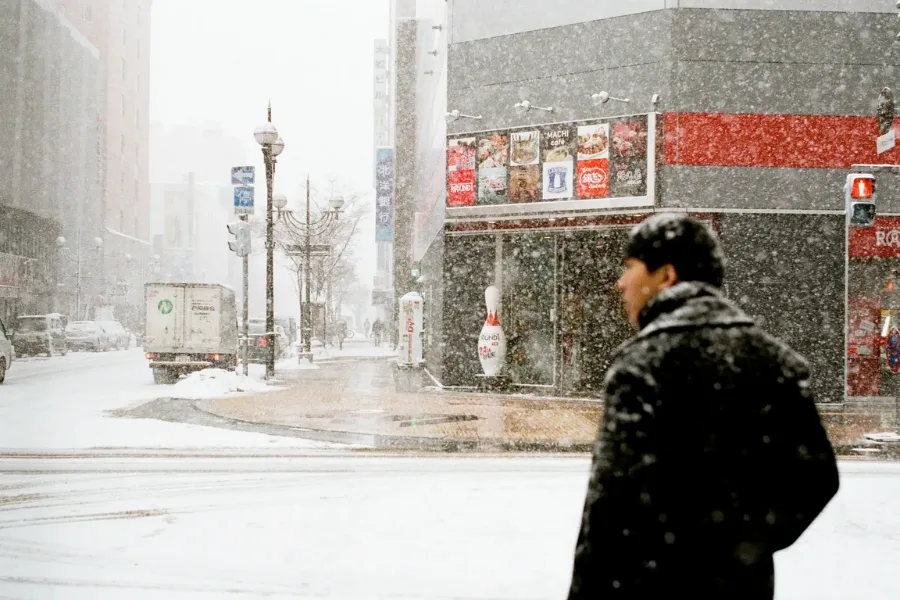
Japan is the ultimate travel destination with ever-changing sights that welcome travellers all year round. But winter transforms the country into a snowy wonderland, with unique experiences that can’t be replicated any other time of the year, and anywhere else in the world.
Winter in Japan (December, January, February) is a romantic experience full of illuminations, festivals, and hot springs amid quaint towns, layers of powder snow on castle rooftops, and legends of snow monsters and festivals for prosperity. Forget Tokyo: Go a little further up north to see the country’s most beautiful snowscapes, including our roundup of the best Winter destinations in Japan.
Sapporo Snow Festival
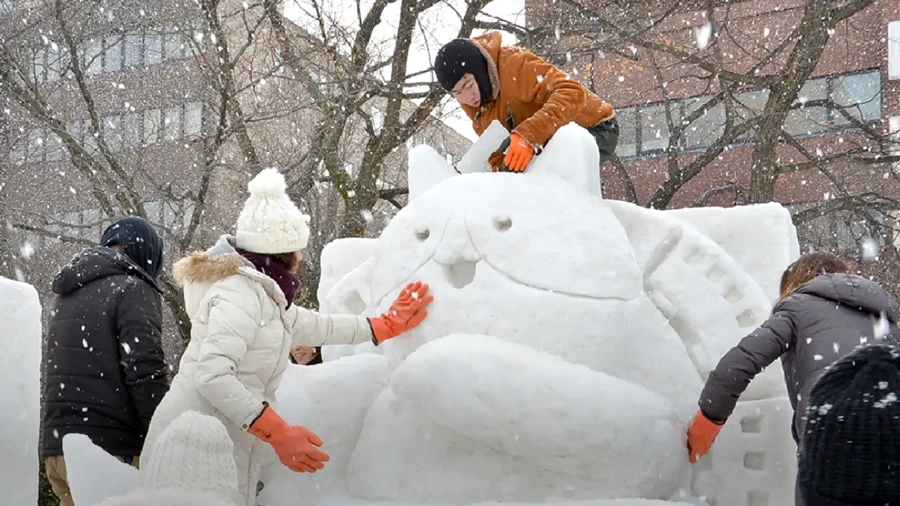
Around February every year, Sapporo is engulfed in snowy festivities that make up the acclaimed Sapporo Snow Festival. It’s a week-long, once-a-year event that turns three sites (Odori, Tsudome, Susukino) into a winter wonderland, where you can enjoy anime-themed snow sculptures, ice exhibitions, museums, music events, light shows, idol performances, winter sports, local cuisine, and so many more events that change every year!
Sapporo Snow Festival’s origins trace back to the 1950s when students took to Odori Park to build snow sculptures. It has since become the primary attraction in the yearly event, where visitors can build snow sculptures for fun or participate in serious competitions.
Access & Tips
The 77th festival runs 4 to 11 February 2027, eight days, with all three sites open across the same dates. A spin-off, Sapporo Snow Sports Park, follows on 12 to 14 February at the Daiwa House Premist Dome, so the snow programming carries on for three days after the festival itself closes. As Sapporo is in Hokkaido, you will be flying into New Chitose Airport on a direct international or domestic flight, and both flights and hotels sell out for this week, so book early.
Pay a visit to the official website to help you plan your trip.
Snow Monkey Park
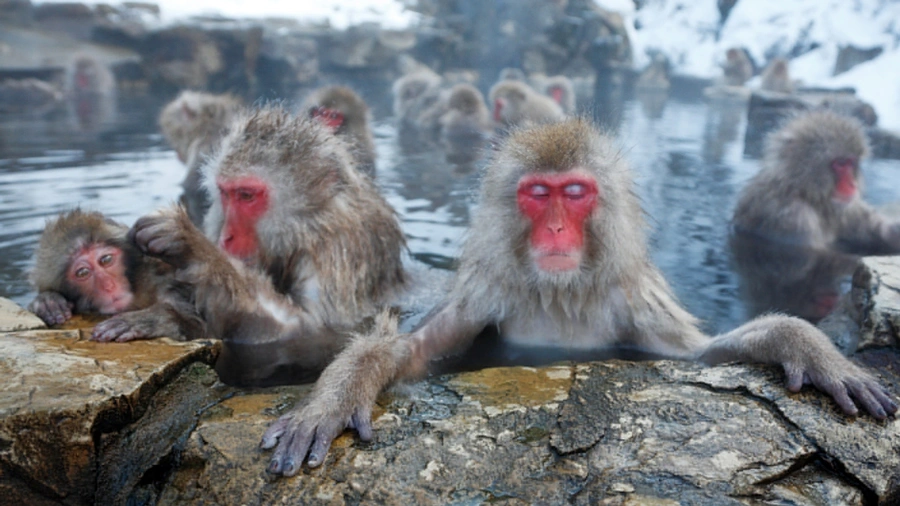
Every winter, the Jigokudani Yaen-Koen (also known as the Snow Monkey Park) located along the Valley of Yokoyu River in Nagano Prefecture becomes a favourite destination among locals and tourists alike. The unique atmosphere in the area allows it to produce plenty of steam, resulting in an enchanting view of natural onsen pools that are especially magical in the winter. Inside the Jigokudani Yaen-Koen, you can find a wild flock of Japanese macaques, better known as Snow Monkeys, which go about their day in the natural reserve.
While the Snow Monkey Park is open all year round, it’s widely popular in the winter, which is the only time of the year when you can watch the Snow Monkeys bathe in man-made onsen to warm up. The one-of-a-kind experience makes for an absolute seasonal treat, and one not to miss when you happen to be in Nagano.
Access & Tips
Be cautious as the park is located at an elevation, so you have to hike a trail (with stairs and sharp roads) amid the freezing winter. We strongly recommend dressing appropriately with warm outdoor gear and snow boots to prevent slipping on ice. The area is not accessible by strollers or wheelchairs, but children are welcome. You are not allowed to bring food into the park, so we recommend filling up before arriving.
Snow Monkey Park is accessible via train or private car, and there are plenty of guided tours that will take care of your itinerary for the day. You can find more information on the Jigokudani Monkey Park via the official site.


Himeji Castle
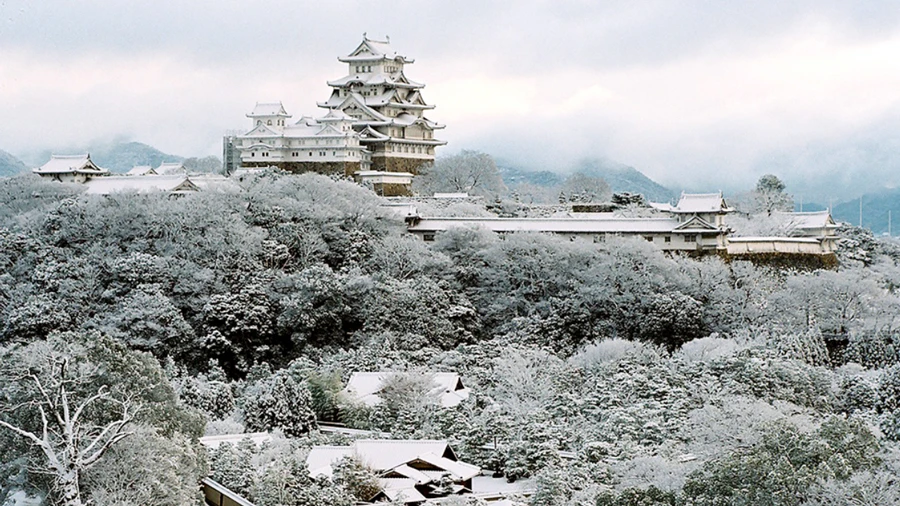
Himeji Castle (also known as Himeji-jō), a UNESCO World Heritage Site, is one of only twelve castles in Japan whose keep still stands as it was built, rather than being reconstructed in concrete after the war. Toyotomi Hideyoshi raised a three-storey keep on the site in 1581, but the white complex you walk round today is Ikeda Terumasa’s, finished in 1609.
Himeji Castle’s white exterior is beautifully painted against any seasonal backdrop, but it’s especially magical in the wintertime when the building’s white facade perfectly blends into scenes of snow-capped trees and traditional buildings. It’s difficult not to feel like you’re in a movie when the powder snow envelopes the entirety of the scenery, unlike any other time of the year. At night, you can enjoy illuminations unique to the season.
History of Himeji Castle
Originally constructed as a fortress in 1346 by Akamatsu Norimura, Himeji Castle underwent several expansions and enhancements under different rulers, most notably Toyotomi Hideyoshi and later Ikeda Terumasa in the early 1600s. The castle’s strategic design includes a complex maze of pathways intended to confuse invaders, as well as multiple defensive fortifications.
Unlike many other castles in Japan that were destroyed by war, fire, or natural disasters, Himeji Castle has remained intact. Its nickname, White Heron Castle, comes from the elegant white exterior, which resembles a bird taking flight. Today, it stands as a symbol of Japan’s feudal past and architectural ingenuity.
Access & Tips
Himeji Castle is located in Hyogo Prefecture, which is close enough to Osaka to make a day trip possible. Visitors are allowed to walk around the castle’s interior and exterior, and it takes two to three hours to go around the compound while appreciating its beauty and culture. Remember to wear a pair of socks to comfortably walk around the castle interior. Guided tours are available in English at certain times of the year via the official website, but you can also join independent tours that offer transportation to and from the castle.
Iiyama Kamakura Village
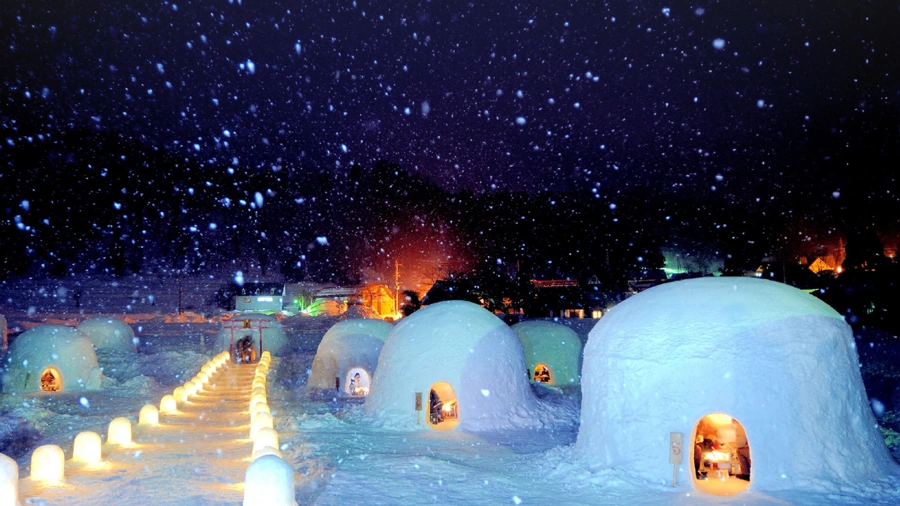
Not to be confused with the widely popular seaside city, Kamakura, where visitors flock to see the Slam Dunk level crossing, Iiyama Kamakura Village is a winter pop-up in Nagano that can only be enjoyed for a couple of weeks every year. The little village is nestled amid the snowscapes of northern Nagano, where temporary ‘kamakura’ (which translates to ‘igloo’) are built to be little abodes where visitors can gather to eat nabe (hotpot).
Iiyama is known for snowsports and outdoor activities, so you can spend a fun day (or a couple of days) sledding, snowboarding, and exploring various temples and museums around the area. You can then wind down at the Iiyama Kamakura Village, where 15 to 20 makeshift Japanese igloos make up a restaurant where guests can enjoy a warm meal.
At the centre of the village, a snowy path will take you toward the Kamakura Shrine, which is also housed inside a little Japanese igloo. The place is especially picturesque at night, where lanterns and the warmth inside the kamakura illuminate the path toward the shrine, and the starry expanse offers a romantic backdrop to snap the perfect memory.
Access & Tips
Iiyama Kamakura Village opens for roughly five weeks each winter, from late January to the end of February. The operator confirms the exact run in the autumn and opens igloo reservations in December, so check before you build a trip around it. It is reached by public bus or car from Iiyama Station. The location is within relative proximity to Tokyo, and you can ride the Hokuriku Shinkansen from Tokyo Station directly to Iiyama Station.
While all visitors are free to walk around the area after paying a minimal entry fee, you can only enter an igloo after making a reservation with Restaurant Kamakura Village, which specialises in serving the Nagano specialty, Noroshi Nabe. We strongly recommend making a reservation in advance, but you can also do it in person at the igloo at the front of the site.
Matsumoto Castle
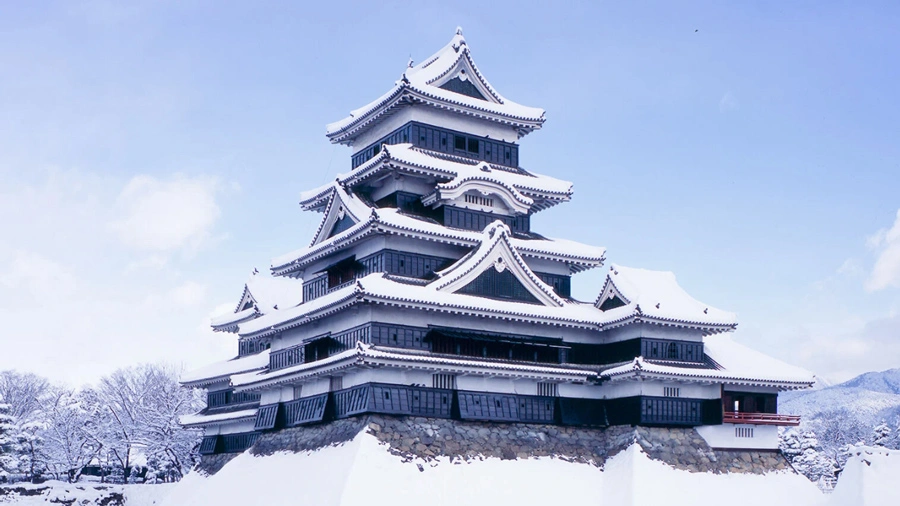
Matsumoto-jō (also known as Matsumoto Castle) resides in the second-largest city in the Nagano Prefecture (also called Matsumoto), with quaint views that change throughout the year. It is one of Japan’s five National Treasure castles, alongside Himeji, Inuyama, Hikone and Matsue, and one of only twelve anywhere in the country whose keep has survived since it was built rather than being reconstructed in concrete. Inuyama holds the record for the oldest keep; Matsumoto’s claim is that it is the oldest five-tiered one. The castle and surrounding courtyard have been carefully preserved for visitors to enjoy a grandiose piece of history that has survived conflict over time.
While Matsumoto Castle is beautiful all year round, the landscape becomes otherworldly in the winter, when snow envelopes the castle and nearby foliage and structures, and the surrounding moat freezes in negative-degree weather. Pay a visit during winter nights to enjoy the illuminations that decorate the castle with festive wonder, and enjoy the ice sculptures crafted by local artists. Matsumoto City is also filled with onsen, hiking trails, museums, and delicious restaurants, so there’s enough to do to fill a full day or more!
The History of Matsumoto Castle
Originally built in 1504 during the Sengoku period, Matsumoto Castle is one of Japan’s most iconic flatland castles, meaning it was constructed on a plain rather than a hill or mountain. The castle’s design features a unique “crow” aesthetic, thanks to its striking black exterior, contrasting with the white walls of castles like Himeji. During the Edo period, the castle served as a significant military stronghold under the Matsumoto domain.
Over the centuries, it faced threats of demolition due to political reform, but local citizens fought to preserve it, leading to a successful restoration project in the early 20th century. Today, Matsumoto Castle’s six-storey donjon (main tower) remains one of the few original castle towers left standing in Japan, offering visitors an authentic glimpse into Japan’s feudal past.
Access & Tips
The castle and the streets around it are illuminated from December through to around February each winter, and the separate Ice Sculpture Festival lands in late January, traditionally the last full weekend of the month. Both are confirmed closer to the season, so check before travelling for them specifically. If you would rather see the castle against the snow without the lights, come in daylight. Matsumoto gets pretty busy over the holidays, so be sure to check the website for updated waiting times and activity calendars.
While people of all ages are welcome to visit the castle, it’s surrounded by a moat, which means that you’ll have to climb steep wooden stairs to go up the castle and explore the multi-floor interior. Wheelchairs and strollers can’t be lugged up the stairs, but they can be used in the surrounding courtyard.








Otaru Snow Light Path
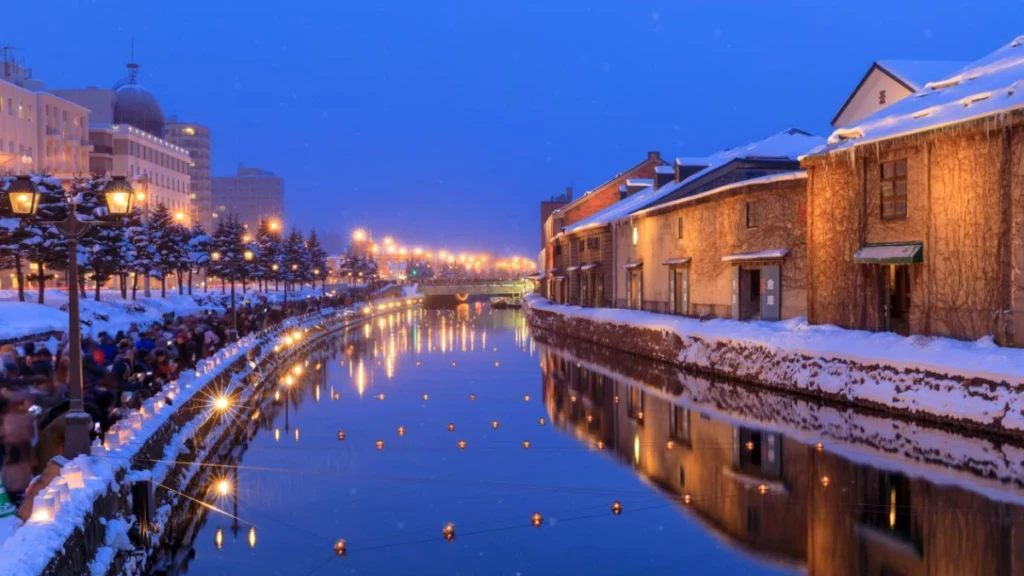
The Otaru Snow Light Path is a yearly winter festival held in Otaru City, a picturesque port town in Hokkaido. It’s an atmospheric festival where volunteers light up lanterns and build snow sculptures that decorate the Otaru Canal and the snow fields that surround it. The festival is best visited at night when the lanterns are illuminated against the starry sky, offering a romantic experience reminiscent of Tangled’s lantern scene.
We suggest taking a day trip to Otaru to explore the beautiful port town in winter, where you can enjoy a fusion of Japanese and European architecture. Apart from the abundance of seaside cuisine, you can also walk along the snow-covered promenade surrounding the Otaru Canal or ride a boat to take in the daylight sights before the lanterns are illuminated after sunset.
Access & Tips
Otaru is within proximity to the Sapporo Snow Festival, so if you’re visiting for the latter, consider allotting a day to see the Otaru Snow Light Path instead. The 2027 festival runs 6 to 13 February, which overlaps the Sapporo Snow Festival almost exactly, so the two pair naturally in one trip. Otaru is about 35 minutes from Sapporo Station by rapid train.
Zao Snow Monsters

While Zao Onsen is a popular winter destination for ski lovers, the resort is better known for the presence of legendary Snow Monsters, also known as juhyo, that greet visitors who dare to grace their presence. Zao Snow Monsters are created through a natural phenomenon where frozen particles from the icy Siberian winds stick to the trees that line the slopes of Mount Zao. With enough ice and snow, the trees transform into foreboding Snow Monsters, though they aren’t particularly scary!
While the Zao Snow Monsters can be found along the skiing route in Mount Zao, non-skiers can enjoy the view by riding on the Zao Ropeway, a cable car that takes you to the summit of the mountain. The ropeway runs all year, but the Snow Monsters do not. They form through late December, grow through January, peak in February and start collapsing in early March. If the trip is specifically for the juhyo, go in February. December is a genuine gamble: the evening Night Cruiser tours were cancelled outright for most of December 2025 because the ice had not held, and did not start running until 9 January. In the area, you can also enjoy other activities, such as hot springs and a stroll along the quaint town filled with traditional Japanese architecture.
Access & Tips
Zao Onsen is located in Yamagata Prefecture, which is accessible via shinkansen from Tokyo and is close enough to allow for a day trip. As the area sees snow more than cosmopolitan parts of Japan, make sure to dress warmly or pack layers even if you visit closer to springtime (March). Yamagata is also home to plenty of hiking trails and onsen towns, including the picturesque Ginzan Onsen, so it’s also worth spending a night in one of the traditional-style hotels (ryokan) in the city to round up your trip.
Yunishigawa Onsen Kamakura Festival
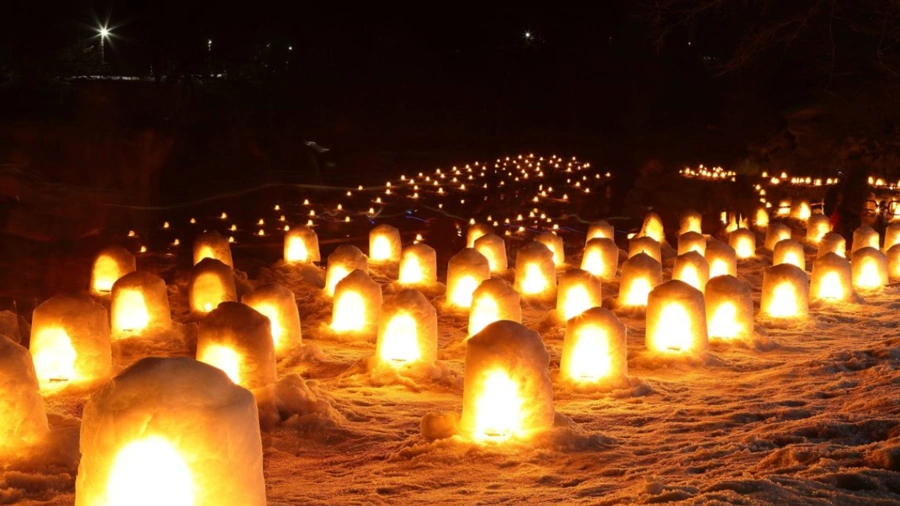
The Yunishigawa Onsen Kamakura Festival is a limited-time event that happens from January to early March in Tochigi Prefecture, where the Sawaguchi Riverbed is lined with mini kamakura (Japanese igloo) with lanterns that illuminate at night. The festival is reminiscent of the Iiyama Kamakura Village’s winter pop-up that happens around the same time, but Yunishigawa Onsen is a great alternative to enjoy on weekends, which you can easily squeeze in the middle of your Tokyo holiday.
The festival primarily takes place in two sites: an open-air museum called Heike no Sato and the Sawaguchi Riverbed. Hundreds of mini kamakura are illuminated on select nights, creating a mesmerising view that can only be enjoyed at the height of the frosty winter. Apart from the lantern show, you can also make reservations to dine inside larger snow houses or spend a night at a traditional ryokan with a private onsen.
Access & Tips
The 2027 festival runs 29 January to 28 February. The festival itself is open every day across that month, but the part everyone photographs is not. The mini-kamakura on the Sawaguchi riverbed are lit on Friday, Saturday and Sunday evenings only, 5:30pm to 9:00pm. If you cannot make a weekend, go to Heike no Sato instead, where the mini-kamakura are lit every night of the period at the same times and the site is open from 9:00am. To get to Yunishigawa Onsen, you can either take a shinkansen from Tokyo to Nikko and then transfer to get to the area or you can take a limited express train (Revaty Aizu via the Tobu Railway) from Tokyo to Kinugawa Onsen, and then transfer to get to your destination.
Nozawa Onsen Fire Festival
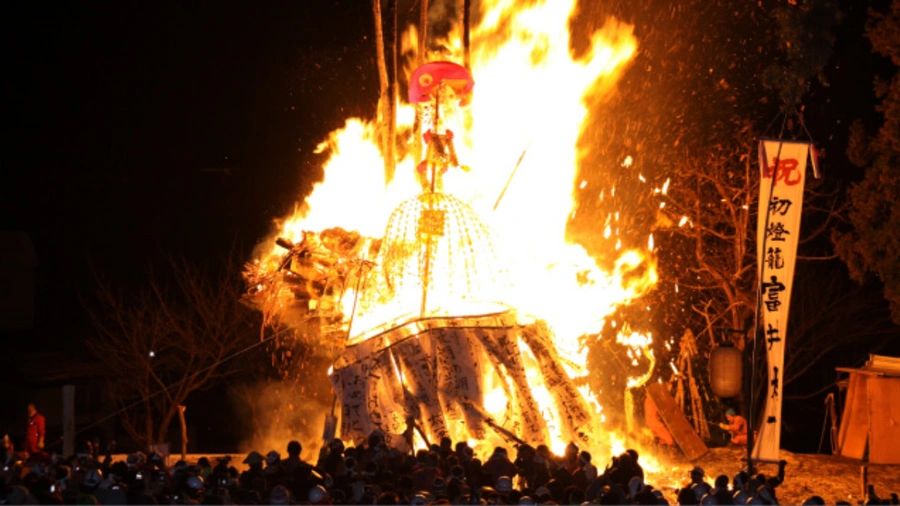
Also known as Dosojin Matsuri, the Nozawa Fire Festival happens once a year to honour the deity of the Hokuriku Shinetsu region, Dosojin. During the event, locals hold up torches while men ages 25 and 42 play an important role in protecting the shrine. In Japanese astrology, these ages are considered unlucky for men, so they are called upon to participate in the festival to earn their luck for the year ahead. Meanwhile, locals often participate to pray for health, wealth, and marriage, and to celebrate the birth of a child.
The Nozawa Onsen Fire Festival is fixed on 15 January every year and does not shift to a weekend, so in 2027 it falls on a Friday. The build-up starts two days earlier, on the 13th, when the villagers haul the sacred tree down from the mountain. The bulk of the festival happens at sundown, so you can take the opportunity to explore other winter events around Nagano in the daytime.
Access & Tips
The Nozawa Fire Festival is held in Nagano Prefecture, an area that is accessible from Tokyo via the Hokuriku Shinkansen in Tokyo Station. Upon arriving at Iiyama Station, ride the Nozawa Onsen Liner Bus to arrive at your destination. The distance from Tokyo is short enough to merit a day trip, and you can even visit the Iiyama Kamakura Village on the same day with a carefully planned itinerary.
Hirosaki Castle Snow Lantern Festival
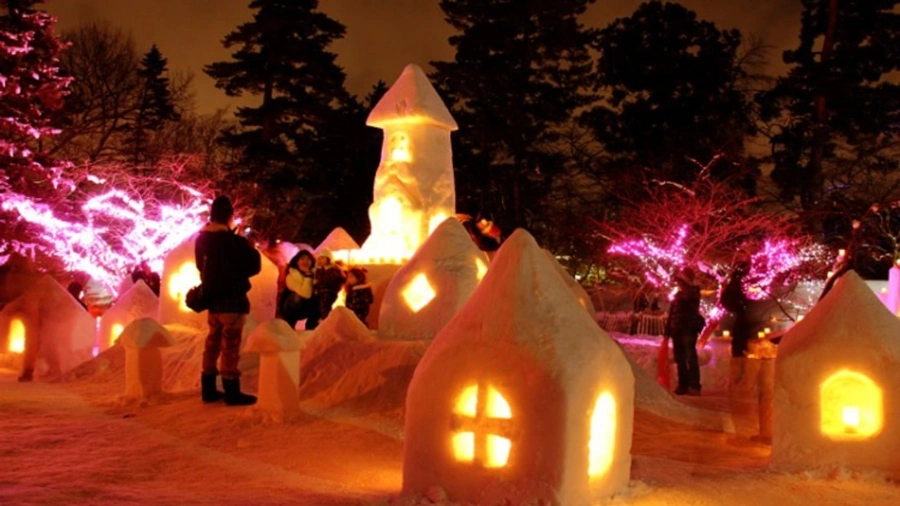
During winters in Aomori, you can’t miss a visit to the Hirosaki Castle Snow Lantern Festival, which offers a hodgepodge of activities that can usually be found in more popular winter destinations like Nagano. Hirosaki Castle (Hirosaki-jō) is a vestige of the original castle built in 1611, which was struck by lightning and later rebuilt as the smaller structure that we can visit today. It has transformed into a museum that houses a plethora of samurai weaponry that fans of Japanese culture will love.
The beautifully restored castle is nestled within Hirosaki Park, which is usually regarded as one of the best cherry blossom viewing spots in spring. But on winter nights, the Hirosaki Castle Snow Lantern Festival is in full swing, treating visitors to amazing illuminations, snow sculptures, and hundreds of kamakura (Japanese igloos) that shed winter light upon the magical snowscape.
Access & Tips
Aomori is accessible via plane or shinkansen from Tokyo, but it does take a considerable amount of time to get there, so we recommend spending at least a night or stretching the visit to a couple of days to make the trip worth it. From Shin-Aomori Station, transfer to Hirosaki Station to get to the vicinity of the park, where you can partake in the winter festivities.
The 2027 festival runs 10 to 14 February. It moves each year, sitting in the second week of February around the National Foundation Day holiday on the 11th, so check before booking rather than assuming last year’s dates. The area is unusually easy going for wheelchairs, older visitors and children, with no stairs up to the castle despite the surrounding moat.
Inukko Festival
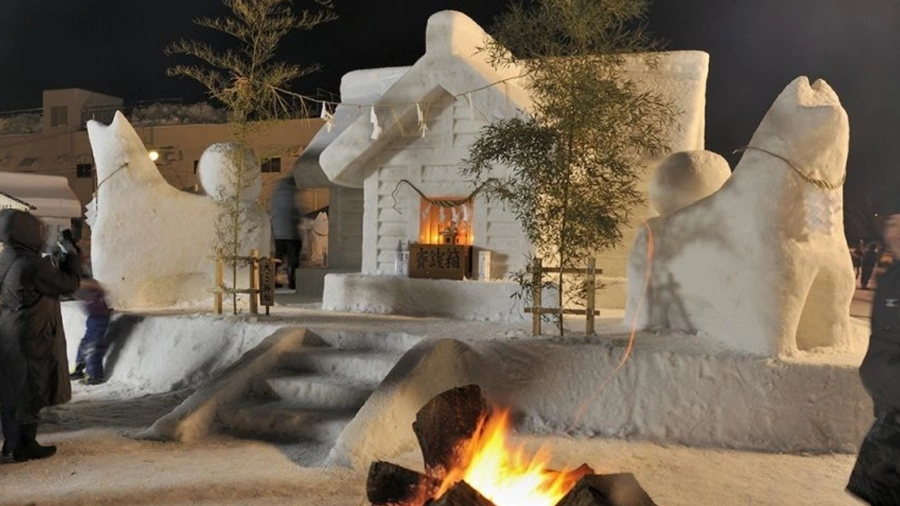
The Inukko Festival is held in the picturesque Yuzawa City in Akita Prefecture (located in the Tōhoku region of Honshu) and is a must-visit for dog lovers hoping to pray for their pets. During the festival, a shrine made out of snow adorns the site and offers visitors a place to pray, and snow sculptures of dogs surround the area to guard the shrine. The entire venue is illuminated by lanterns, creating an enchanting atmosphere that is more enjoyable at night. The Inukko Festival is a pet-friendly event, so locals will often bring their pet dogs to participate in various activities that can be enjoyed by both humans and furry friends.
While the views are most beautiful at night, you can easily spend a half day enjoying the festivities, as plenty of food stalls will sell traditional festival food like yakisoba and grilled meat. Businesses in the surrounding area will usually also join in on the festivities, so you may run into more dog-themed events than usual.
Access & Tips
The Inukko Festival has a fixed rule rather than a fixed date: both Yuzawa City and the local tourism association state that it falls on the second Saturday of February and the day after, a pattern inherited from the old lunar Little New Year. The organiser confirms each year’s dates on the official site a few months ahead. Akita is generally far from typical tourist destinations like Tokyo and Osaka, but it’s accessible via plane or a long shinkansen ride. We suggest staying in the area for a few days to make the trip worth it.
How to Prepare for Your Winter Holiday in Japan
Winter Clothing
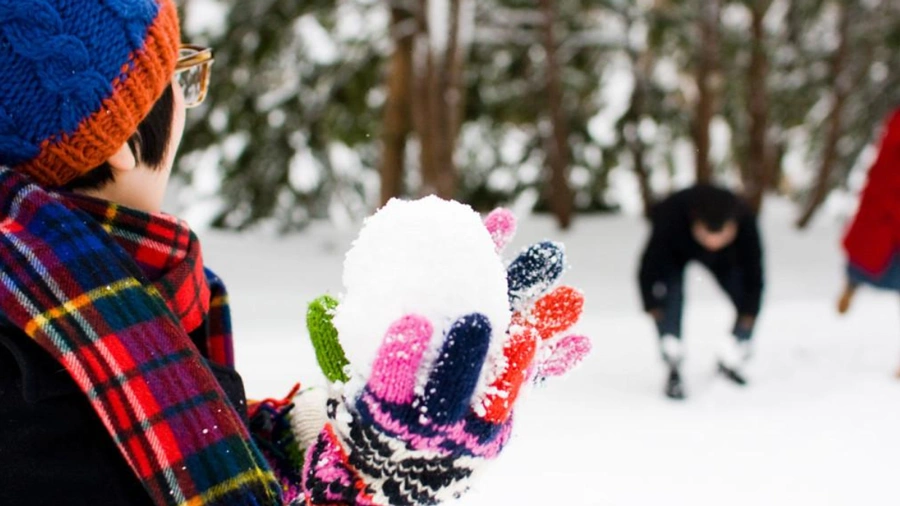
While Japan’s winter temperatures don’t typically reach the extreme negatives (especially in big cities like Tokyo), most winter destinations will still see plenty of snow, so it’s best to come prepared with enough clothing to stay warm, especially if you’ll be spending hours outdoors. Temperatures typically reach more or less -6°C (up to -13°C at night) in snowy places like Nagano and Hokkaido at the height of February, when most of the winter festivities take place.
Recommended clothing is as follows:
- Down/puffer jacket or wool coat
- Heattech innerwear, including thick tights
- Thick sweater or additional outerwear made of windproof material
- Pants (preferably thick and lined with fleece)
- Thick socks, gloves, hat, and earmuffs
- Snow boots or shoes with non-slip soles
It’s best to dress in layers as temperatures inside restaurants and establishments will usually be warmer due to heating, so you can take off your coat to dry it off as necessary. Don’t be afraid to wear plenty of layers to keep warm, especially if you’re going on a day trip from a less frosty location, as the temperatures from one area to another can greatly differ.
It’s easier to take a couple of layers off than to scramble to purchase additional ones! Additionally, don’t underestimate the need for shoes with non-slip soles, as it’s easy to slip on ice, which is sometimes concealed by a layer of snow.