Located between Tokyo and Kyoto, Hakone is the perfect city for transitioning between a metropolis and a culture-based environment. With its vast cultural importance, beautifully preserved natural habitats, and modern-day transportation infrastructure, Hakone is perfect for those looking for a different take on the Japanese scenery. Planning a day trip to Hakone or considering an overnight stay to experience a romantic side of Japan? Perhaps you’re seeking a peaceful retreat immersed in Japanese hospitality, surrounded by the breathtaking beauty of Hakone’s views. This guide is designed to help you make the most of your visit.
Home to some breathtaking mountains, religiously important temples and one-of-a-kind foods, Hakone is a destination you won’t regret adding to your Japan trip. Join us as we dive into the best things to do in Hakone: what to see, where to eat, where to shop, and the best ways to enjoy it.
Key Takeaways
- Hakone is perfect for nature lovers, with beautiful gardens, parks, and overall stunning natural scenery.
- The place is rich in culture, with the Open-air museum and the Hakone shrine being noteworthy attractions.
- The Hakone Ropeway from Sounzan station, one cable car ride above Gora, is the most scenic way to reach Lake Ashi.
- Hakone offers a unique culinary experience, from cosy restaurants serving authentic regional dishes to delicious desserts.
- With the historical Tōkaidō road and the modern-day infrastructure that allows for fast-travel, Hakone blends tradition with modernity seamlessly.
- Hakone is great to visit all year round, and it is at its best when the cherry blossoms are out in spring or the leaves turn in autumn.
- The town is easily accessible, located just a short ride away from Tokyo, making it a great day trip destination.
Hakone’s History as a Tōkaidō Checkpoint Town
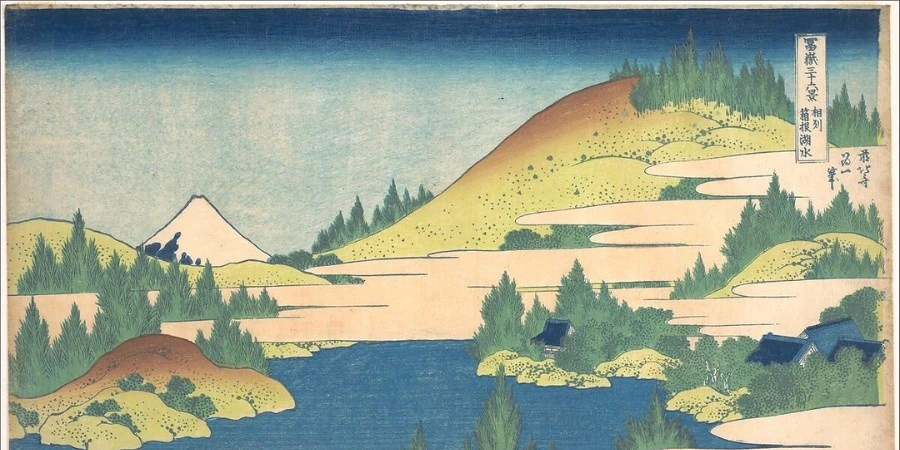
Image credit: Katsushika Hokusai, via The Metropolitan Museum
During the Tokugawa Shogunate, the city became known for the Hakone sekisho, a control point in the Tōkaidō Road. This was an important strategic location, as the mountains of the region would be used to separate the Kanto and Chubu regions. For that reason, the city developed, and travellers from across Japan would stop in Hakone to catch a breath. This is especially important due to the natural onsen (Japanese hot springs) of the city, which made for a fantastic stop after a long trip. Additionally, the Tōkaidō road meant that the Shintoist sanctuary (Jinja) of Hakone was now easily accessible, leading to the rise of religious pilgrims.
This is to say that Hakone has always thrived as a city that accommodates travellers, which remains true to this day. With a population of just over 10,000, Hakone residents are specialised in meeting the needs of everyone that comes by. Beyond this, there’s a reason why the city was not only chosen as a stop, but destination, as there are plenty of things to do in Hakone. With seasonal festivities, hiking trails, relaxing onsen escapes and more, Hakone is perfect for day trips or dedicated tours for adventurous souls. This being said, one question remains: how to get to Hakone?


Transportation in Hakone
How to get to Hakone from Tokyo
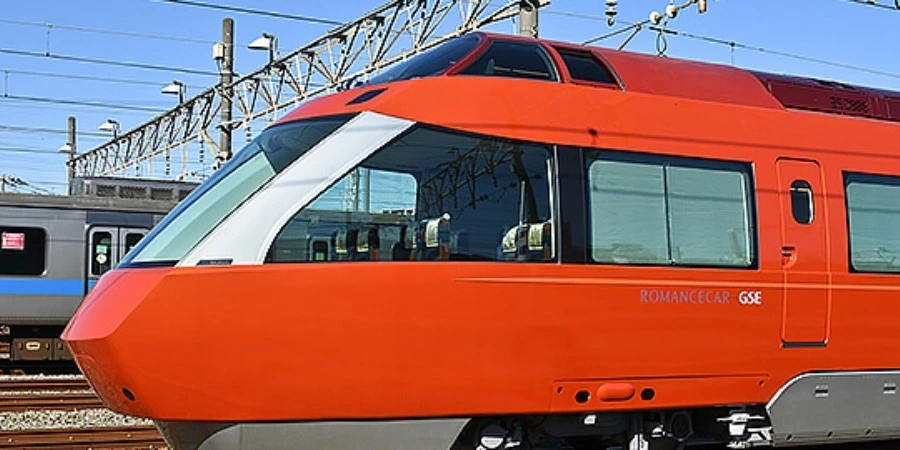
Image credit: Odakyu
There are two ways of getting to Hakone from Tokyo: bus and train. Within these, options depend on your personal preference. Preferences can range from how quick do you want to get to Hakone or how much you want to spend.
Our recommendation is, it depends.
Japan Rail Pass Holders: Shinkansen from Shinagawa to Odawara
For example, if you have already activated or are ready to activate your JR Rail Pass, it’s most cost effective to take the Shinkansen from Shinagawa Station in Tokyo to Odawara Station. This trip is effectively free, as you’ve already got your JR Rail tickets sorted.
From Odawara Station you have the option of the local Hakone Tozan Line from Odawara to Hakone-Yumoto station. The Hakone Tozan Railway is one of Japan’s few mountain railways, and the views change with every season as the train climbs its steep slopes. Alternatively, from Odawara you can take the Romancecar to Hakone-Yumoto station. Both options from Odawara are fine; the Romancecar is slightly faster, less hectic and you’ll have a better chance of grabbing a seat.
Odakyu and JR Tōkaidō Line Trains from Shinjuku and Tokyo
Odakyu
You can take the Odakyu Line to Odawara station, which takes about 1.5 to 2 hours, and continue on either the Hakone Tozan Line or the Romancecar. Another option is taking the Romancecar the whole way from Shinjuku to Hakone-Yumoto, which takes about 80 minutes.
Additionally, taking the Odakyu line opens the opportunity for taking the Hakone Freepass. The pass gives you unlimited rides for two or three days on eight kinds of transport in the Hakone area, including the Hakone Tozan Train and Cable Car, the Hakone Ropeway, the pirate ship cruise and designated buses, plus a round trip on the Odakyu Line. The two-day pass costs 6,000 yen from Odawara or 7,100 yen from Shinjuku, and the three-day pass costs 6,400 yen from Odawara or 7,500 yen from Shinjuku, which makes it an ideal option for a Hakone day trip or a round trip from Tokyo.
JR Train
You can also reach Hakone from Tokyo by taking a JR train (Japan Railways). True to the history of the area, this train travels along the Tōkaidō Line and arrives at Odawara Station in around an hour and a half. From there, you can take a bus or train to get to central Hakone (we recommend buying the previously mentioned Hakone Freepass). The JR Tōkaidō Line can be accessed from both Tokyo Station and Shinagawa Station, making it great if you’re staying close to those areas.
As for buses, there is the Odakyu Highway Bus. This option takes approximately 2 to 3 hours to reach Hakone. Its main selling point is its destination, as it goes directly to Lake Ashi, home to some fantastic sightseeing spots. You can catch these buses at either Shinjuku station or Haneda Airport, with the latter being great for dedicated Hakone tours.
Transportation within Hakone
Hakone-Yumoto Station serves as the gateway to the stunning Hakone region, offering easy connections to some of the area’s most famous attractions. Upon arrival, you can hop on the Hakone Tozan Line, a scenic mountain railway that winds through lush forests and hot spring towns, eventually reaching Gora, one of Hakone’s most vibrant hubs.
Gora: the Hakone Open-Air Museum, Gora Brewery & Grill and Nearby Yunessun
Once in Gora, there are plenty of attractions to explore:
The Hakone Open-Air Museum combines art and nature, featuring stunning outdoor sculptures and a Picasso Pavilion showcasing his ceramic works. A short bus ride from Gora, at Hakone Kowakien Yunessun, visitors can enjoy uniquely themed hot spring baths, including coffee, green tea, and wine baths, set against scenic mountain views. For a culinary experience, GORA BREWERY & GRILL serves locally brewed craft beer and premium wagyu steaks, making it the perfect spot to relax after a day of exploring.
Ascending Hakone: From Gora to Sounzan and Beyond
From Gora, take the Hakone Tozan Cable Car, a funicular railway that climbs 209 metres in altitude, offering panoramic views of the mountainous terrain. The cable car connects Gora to Sounzan Station, where you can transfer to the Hakone Ropeway, one of the best ways to experience Hakone’s volcanic landscapes from above.
Hakone Ropeway Route
The Hakone Ropeway links four major stations:
- Sounzan Station: Transfer point from the Hakone Tozan Cable Car.
- Owakudani Station: Famous for its dramatic volcanic landscapes and the iconic black eggs (Kuro-tamago), said to extend one’s life by seven years.
- Ubako Station: Provides access to Ubako Hot Springs, a serene retreat with views of Mt. Fuji on clear days.
- Togendai Station: Located on the shores of Lake Ashi, where you can board a pirate ship cruise and enjoy breathtaking reflections of Mt. Fuji on the lake’s surface.
With its blend of art, nature, relaxation, and adventure, Hakone offers an unforgettable escape from Tokyo. Whether you’re here for a day trip or an overnight stay, this region promises a perfect balance of culture, tranquillity, and scenic beauty.
Hakone Freepass, Fuji Hakone Pass and Hakone Kamakura Pass
The previously mentioned Hakone Freepass is the best and most economical way to move within the Hakone area, and you have several ways to buy one. Odakyu recommends buying the pass digitally, which you can do through its website. As a side note, digital passes are for smartphones only, and two digital passes of the same type cannot be used on the same smartphone. Physical passes are sold at ticket machines in Odakyu stations and at Odakyu Sightseeing Service Centers. The pass also brings discounts at around 70 hot springs, museums and restaurants in the area.
The Hakone Freepass is not the only option available for moving around Hakone. There are two more options, both of which offer unique perks that set them apart from the Hakone Freepass. The first one is the Fuji Hakone Pass (11,100 yen for three days), which, in addition to providing transportation around Hakone, also offers round trips to the northern base of Mount Fuji. This is noteworthy, as this area includes the Fuji Five Lakes (Fujigoko), which makes for a fantastic destination.
Finally, the last option is the Hakone Kamakura Pass. This is yet another deal offered by Odakyu Railways, but is set apart from the Hakone Freepass thanks to access to Kamakura. Located south of Tokyo, Kamakura is a town rich in temples, shrines and historical monuments. As a matter of fact, Kamakura is often called the Kyoto of Eastern Japan, as it was the seat of the Kamakura shogunate from 1185 to 1333. The Hakone Kamakura Pass costs 8,520 yen and is valid for three days, which suits travellers who want to fit both towns into one trip.
Best Time to Visit Hakone
As a place that continues to awe travellers with its natural beauty, Hakone is best experienced during a season that highlights its unique diversity. In spring, for example, the cherry trees are in full bloom, making for one breathtaking experience. Autumn doesn’t fall behind either, as the changing colour of leaves, combined with the vast mountainous regions, provides a majestic scene.
Additionally, Hakone in autumn is also great for experiencing vast gardens of Susuki grass (Miscanthus sinensis). A plant known in Japanese poetry and folk traditions for its simplicity and abundance, Susuki teaches us to see beauty in what’s commonly found. With the natural setting of Hakone, as well as the efforts of the Hakone Botanical Garden of Wetlands, Susuki is best experienced here. If you travel during this season, we also recommend attending the Sengokuhara Susuki Festival, where Hakone shows its full appreciation of this simple yet special plant.
Finally, if your Hakone trip could only be arranged around summer or winter, don’t be hard on yourself, as Hakone is beautiful throughout the year. Travelling during these seasons can even be advantageous, with the winter making the onsens much more relaxing, and the town less crowded. The summer, on the other hand, is noticeably cooler up in the mountains than in Tokyo, which makes sightseeing more comfortable. In addition, if you happen to be there on 2 or 3 January, you could even catch sight of the Hakone Ekiden, one of Japan’s most important university relay races, whose route follows much of the old Tōkaidō Road between central Tokyo and Lake Ashi.








Where to stay in Hakone
If you’re planning a dedicated Hakone Tour, or simply fell in love while exploring on your Hakone day trip, the city offers some fantastic accommodations. True to its status as a transitional place for modernity and traditions, the accommodations of the city can be breathtakingly futuristic, charmingly traditional or a mixture of both. For that reason, the question “where to stay in Hakone?” is in reality a question of preference. Do you want a traditional Japanese Inn? The commodities of the modern world at your disposal? A simple place that gets you easy access to onsens? Etc.
To make things easier for our readers, we’ve compiled a list of some of the best accommodations in Hakone. In accordance with the many preferences the city can cater to, we have divided this list into two categories: Ryokans and Hotels.
Best Ryokans in Hakone
For those unaware, ryokans are traditional Japanese inns, which differ from western hotels in their structure, layout and equipment. More often than not, ryokans offer futons instead of beds, have a more attentive service and the food is served in the rooms by a specialised staff member (Nakai). The following list includes traditional, as well as some luxurious, approaches to the ryokan experience. All of the ryokans featured on this list include a private onsen, so let’s discover some of the best ryokans in Hakone.
Madoka no Mori
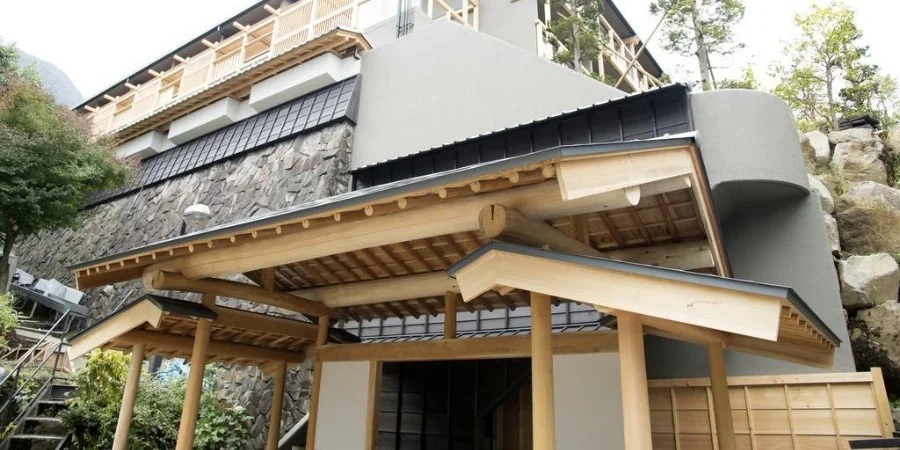
Image credit: Hakone Hotels Site
A ryokan that blends Japanese sensibilities, a modern aesthetic and the serene beauty of the Hakone forest, Madoka no Mori is a one-of-a-kind place to stay. Built under the idea of connecting with nature, Madoka no Mori invites its residents to hear the trees whisper and create bonds with the other people staying in. The architecture of the Ryokans is in accordance with its goal, with a beautiful varnished wood minimalist aesthetic that is tied up by the idea of “the circle”: always coming back to its natural origins. With its 20 different room types, private onsen and regional food menu, Madoka no Mori is a fantastic choice.
🌐Official Website: https://gorahanaougi.com/madokanomori/?utm_source=Googlegbp&utm_medium=Google&utm_campaign=gbp&utm_id=gbp
📍Google Maps: https://maps.app.goo.gl/eKkw7UUbqcUC7m2T6
Hakone-Gora Byakudan
A place with the spirit of a poet, “As if Hearing The Aroma of Sandalwood” is the opening verse Hakone-Gora Byakudan uses to introduce itself. Similar to the essence of a haiku, this ryokan aims to blend Japanese traditions with the spirit of nature. Just like the opening verse suggests, Hakone-Gora Byakudan achieves this by building the resources Hakone provides into the inn itself. Sandalwood, for example, is everywhere in the ryokan, with its elegant aroma freely moving through the inn. The same could be said about their careful selection of sake and wine, the way air flows from room to room, or the seasonal ingredients they use in their Kaiseki meals. No matter the angle, Hakone-Gora Byakudan will bring you closer to Hakone in a Japanese way.
🌐Official Website: https://www.byakudan.co.jp/
📍Google Maps:https://maps.app.goo.gl/BHwsgUS8LAynfd1F9
Gora Kadan
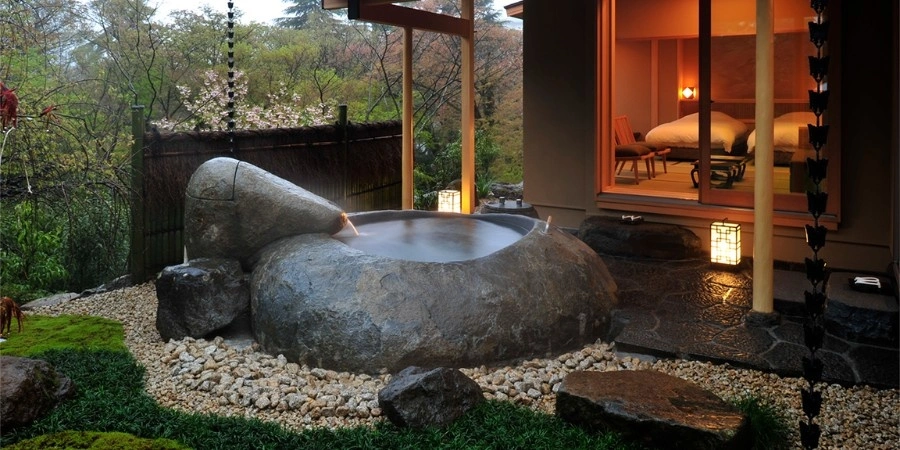
The definition of a subtle luxury, Gora Kadan may at first seem like a typical ryokan, and the deeper you go, the better it gets. This is a place that thrives in the little details, blending modern accommodations in a way that remains true to the grounds it’s lying on. What grounds? Well, Gora Kadan was once a summer villa of a branch of the imperial family, which gives it a unique and distinct beauty. Additionally, it’s located in one of the most sought-after places in Hakone, with every room having views to the Fuji-Hakone-Izu National Park. Add to this their private Onsen, massage rooms, and delicious Kaiseki meals, and it’s unsurprising Gora Kadan made its way into our list of best ryokans in Hakone.
🌐Official Website: https://www.gorakadan.com/?lang=en
📍Google Maps: https://maps.app.goo.gl/uCyL5JsKcqE9tY5h8
Hakone Ginyu
Perhaps the most uniquely positioned ryokan on this list, Hakone Ginyu is located in the Hakone Mountain range, at an altitude of 420 metres. Additionally, it’s just above the Hayakawa River, which gives its rooms some spectacular views from above. Combine this with their philosophy, which emphasises the healing power of the changing nature, and you have a recipe for success.
Just like the river that runs below it, Hakone Ginyu is focused on the theme of change. This includes the changing of seasons and the different scenery that comes with it; the change of natural resources that feeds into their cuisine; and the change from a world of serene poetry to the fun its bar offers. Hakone Ginyu is, in short, one of the best ryokans there is, perfect for every possible occasion.
🌐Official Website: https://www.hakoneginyu.co.jp/index.html
📍Google Maps: https://maps.app.goo.gl/yHm3e4gQUa9fHSbP8
Best Hotels in Hakone
Hyatt Regency Hakone Resort and Spa
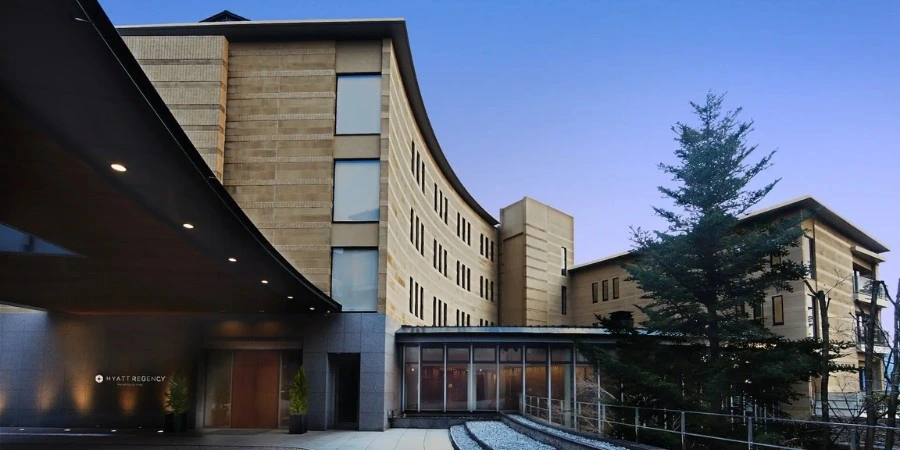
A name that needs no introductions, Hyatt Regency Hakone Resort and Spa brings the world-famous Hyatt services to Hakone. Widely considered one of Japan’s premier hot spring resorts, this hotel is perfect if you’re looking for something familiar while traversing a new environment. It still has surprises, hosting a variety of activities that keep things interesting inside the hotel. We must also add this hotel has five different dining options, which, in addition to a western style dining room and room service, include a dedicated sushi room, a log fireplace and private rooms for special occasions. In short, it’s Hyatt as you know and love it, only this time combined with the beauty of Hakone, a match made in heaven.
🌐Official Website: https://www.hyatt.com/hyatt-regency/en-US/hakhr-hyatt-regency-hakone-resort-and-spa
📍Google Maps: https://maps.app.goo.gl/uS8bBajCor7N4p4n8
THE HIRAMATSU HOTELS & RESORTS SENGOKUHARA HAKONE
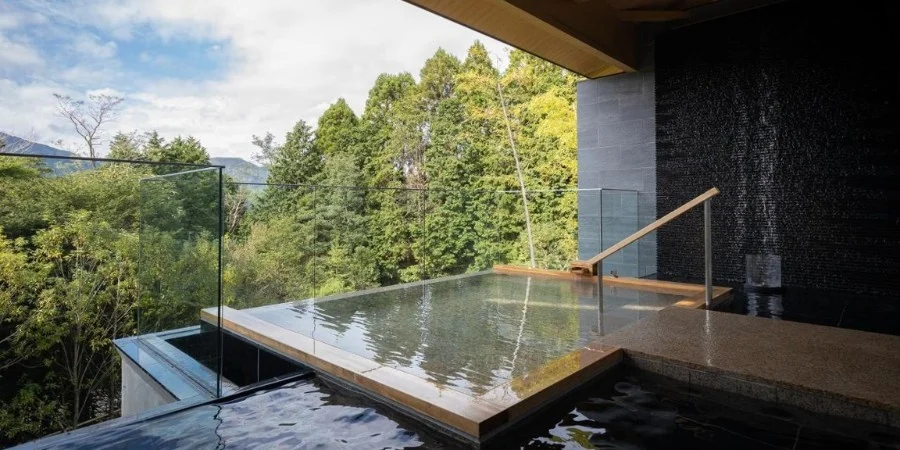
Image credit: Booking.com
One of the biggest testaments to modernity Hakone has to offer, the Hiramatsu Hotels & Resorts Sengokuhara is one of the best and most exclusive hotels in the region. With only 20 rooms, this hotel is keen on meeting everyone’s needs. They don’t achieve this solely with hospitality, rather, they do by combining it with gourmet dining, relaxing Onsen, and an elegant environment. For this hotel, every single element from their rooms design, to Hakone’s unique nature, is in service to the residents. In short, it’s a fantastic hotel, and if you want to have a one-of-a-kind experience, it’s a great choice.
🌐Official Website: https://www.hiramatsuhotels.com/sengokuhara/
📍Google Maps: https://maps.app.goo.gl/KgXWwJBRVUVCtn7s5
Hotel Shikinoyakata Hakone Ashinoko
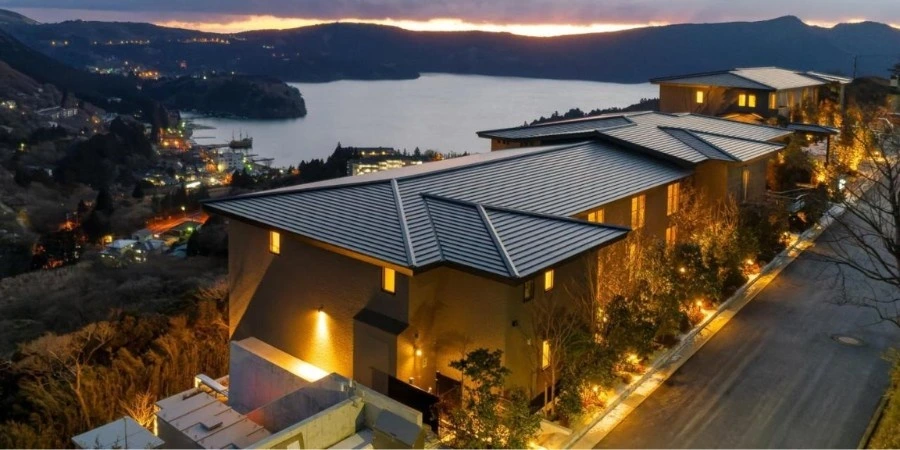
Image credit: Hakone Hotels Site
To conclude this section, it is only fitting to have a place that combines Japanese and Western styles, and that place is Hotel Shikinoyakata Hakone Ashinoko. A hotel with the heart of a ryokan, Shikinoyakata Hakone Ashinoko offers the diligent approach of Japanese services to a western environment. Case in point, the food, where the French cuisine they served has a presentation reminiscent of Kaiseki and is prepared using seasonal ingredients. A similar thing could be said about the environment inside the building, with a layout that allows for nature to greet the guests, but is also clearly built like a western style hotel. If you’re looking for a good middle ground between traditional Japanese Inn and hotels, Hotel Shikinoyakata Hakone Ashinoko should be your pick.
🌐Official Website: https://www.shikinoyakata-hakone-ashinoko.com/
📍Google Maps: https://maps.app.goo.gl/MKgTY5fiX3o8sELF8
Best Hiking Trails in Hakone
As part of this day trip Hakone guide, we must mention a fan favourite activity that can take a whole day: a hiking trail. Hiking in Hakone Japan is an opportunity to see a different side of the country, with the vast mountainous area and overall beautiful natural scenery. Thanks to its proximity to Mount Fuji, Mount Hakone, the historical Tōkaidō road and many other man-made and natural wonders, hiking it’s a fantastic plan.
If you’re interested in any of the following trails, keep in mind the estimated duration we’ll provide, so you can plan accordingly. Without further ado, here are some of our favourite Hakone hiking trails.
Hakone Kyu Kaido (Tōkaidō Road)
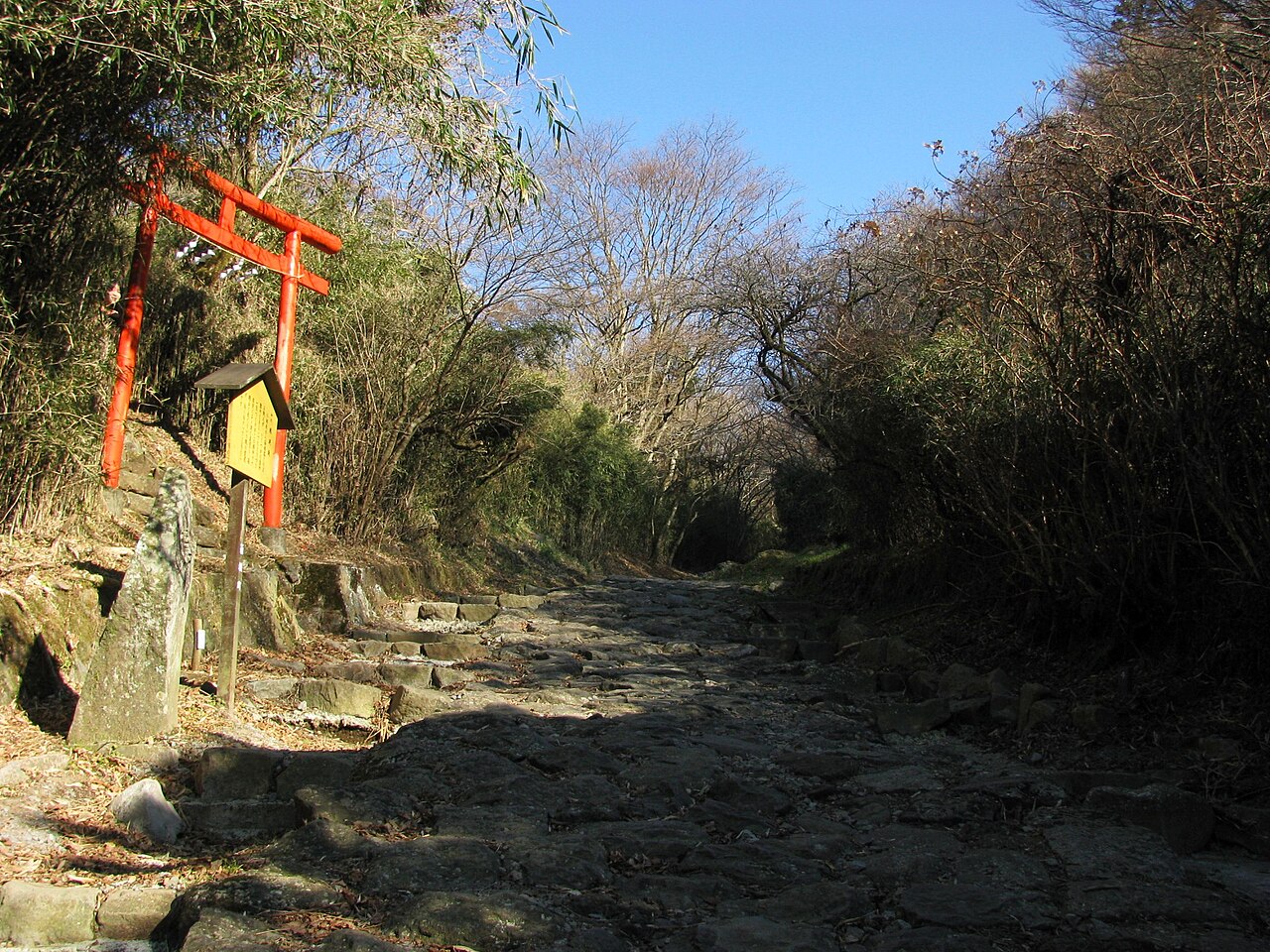
Image credit: Photo: Aimaimyi, CC BY-SA 3.0, via Wikimedia Commons
The path that originally put Hakone on the map, the Kyu Kaido trail lets you follow in the footsteps of religious pilgrims, ancient merchants and devoted samurai as they traversed the Tōkaidō Road. The trail can start as soon as you arrive in Hakone, with it beginning in the Hakone-Yumoto station. There, you’ll be greeted by the townsfolk of Sukumogawa, which will show you the Sôun-ji Temple, the Tenguyama Sanctuary and the bamboo passage leading to the Tōkaidō road.
What follows is a relaxing trail across the Hakone wilderness. Along this path, you’ll have the opportunity to try some old culinary specialities, courtesy of Amazake-chaya, an ancestral house that offers hikers a taste of old Japan. Finally, the trail finishes at the famous Lake Ashi, which has some great views of Mount Fuji and the beautifully preserved Hakone Shrine. Additionally, it is also next to the Onshi Hakone Park and the Hakone Sekisho, two fantastic sights.
🕔Estimated time: 2 hours and 30 minutes
Chisuji Waterfalls Trail
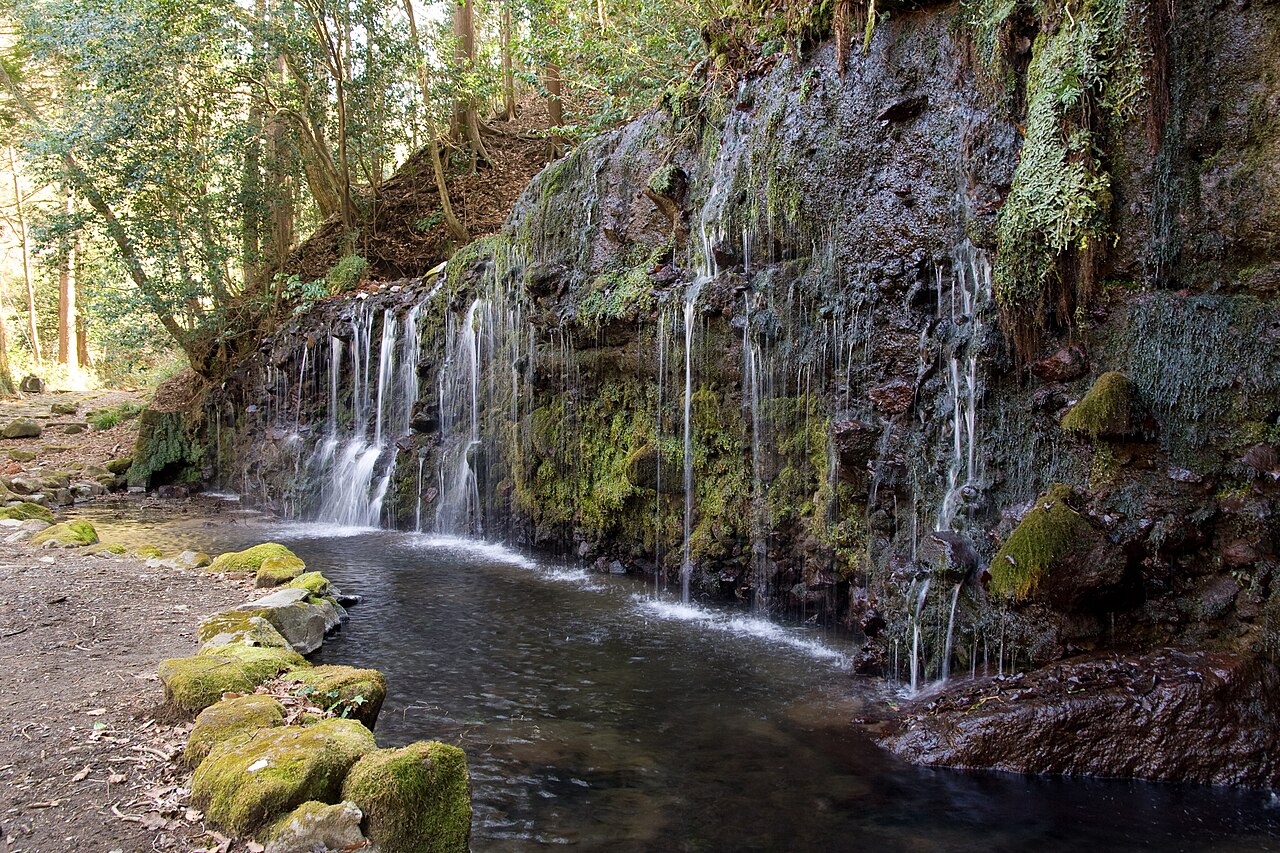
Image credit: Photo: Σ64, CC BY 3.0, via Wikimedia Commons
Often considered one of the most challenging and rewarding trails Hakone can offer, the quest for the Chisuji Waterfalls is a must for adventurous souls. Similarly to our previously discussed trail, this one can begin as soon as you arrive at Hakone Yumoto Station. However, this is the only thing they share, as this path prefers traversing through the mountains, rather than going past them. In this trail, you’ll walk through Mt. Yusaka, Mt. Shiroyama and Mt. Segen, getting to fully know the Hakone wilderness with a great view. Finally, the trail concludes at the Chisuji Waterfalls, a 3-metre-high natural beauty flowing with underground water. Considering it is composed of two solidified magma streams, this waterfall is a sight to behold. Additionally, the waterfall has a unique property during the winter, with the earth warming the water and making it steam, giving off a unique view.
This all being said, the waterfall itself can be easily accessed through a 15 minute stroll from the Kowakien Station. So if you just want easy access to the unique beauty of the Chisuji Waterfalls, Hakone has you covered.
🕔Estimated time: 2 hours and 50 minutes
Owakudani Trail
A must for any Hakone trip, hiking or otherwise, Owakudani is a volcanic valley with steam vents, sulphur pools and hot springs ready for you to enjoy. As a famous place, it is easily accessible through a variety of means, but the trail that begins at the Hakone Visitor Center is the most exciting way of reaching it.
Designed for geology lovers, this trail will take you through the Kintaro-Iwa Rock Observatory, a place renowned in Japanese folk legends. Afterwards, you will traverse the Funamiiwa Rock, the Kobo-no Suzuriishi Rock, and the Hakone GeoMuseum, where you can get a better understanding of what you just saw. Finally, you’ll reach Owakudani, which offers a plethora of activities such as shopping or eating their famous sulphur boiled black eggs. Add to this the fantastic views to Mount Fuji and the quick return via the Hakone Ropeway, and you have a perfect plan in your hands.
🕔Estimated time: about 1 hour and 30 minutes
Must Visit Attractions in Hakone
A hiking trail can potentially take a whole day due to the energy required; but if you’re not planning one, you could realistically visit more than half of Hakone’s must-see attractions. For this reason, a Hakone guide would be incomplete without addressing all the amazing places the town has to offer. We recommend visiting all of the following places, but the experience can be taxing for a single day, so one of each kind is more than enough.
As you’ll soon see, Hakone possesses a varied amount of museums, religiously important places and natural escapes for you to enjoy. Getting a taste of these places will temporarily satisfy your adventurous appetite, but you’ll surely want to return to see the rest. That being said, pay close attention to the names in the following list.
Hakone Open Air Museum
The Hakone Open Air Museum is Japan’s first, and arguably the most important, outdoor museum. Like the name suggests, this museum allows the work of arts to blend with the natural beauty of Hakone, making for an enchanting first impression. This was all by design. Many of the works sit out in the open, such as the walk-through my sky hole pieces by the sculptor Bukichi Inoue, which lead you through an underground passage to a window onto the sky. The Hakone Open-Air Museum, founded in 1969, is therefore a piece of art in itself.
The magic ambience of the Hakone Open-Air Museum is further aided by the artists it features, all of whom were carefully selected. Case in point, Joan Miró and Henry Moore, two renowned European artists whose sculptures add a surreal touch to the place. Beyond them, artists like Pablo Picasso, who has a whole pavilion here, Taro Okamoto, Constantin Brancusi and many more are included in the museum. If you’re looking for a place that quite literally lets the works of art breathe, the Hakone Open-Air Museum is a great stop.
As a cherry on top, the museum is one of the places that offers a discount to Hakone Freepass holders.
🌐Official Website:https://www.hakone-oam.or.jp/en/
📍Google Maps: https://maps.app.goo.gl/njPxDwuq9kNY1reEA
Hakone Shrine
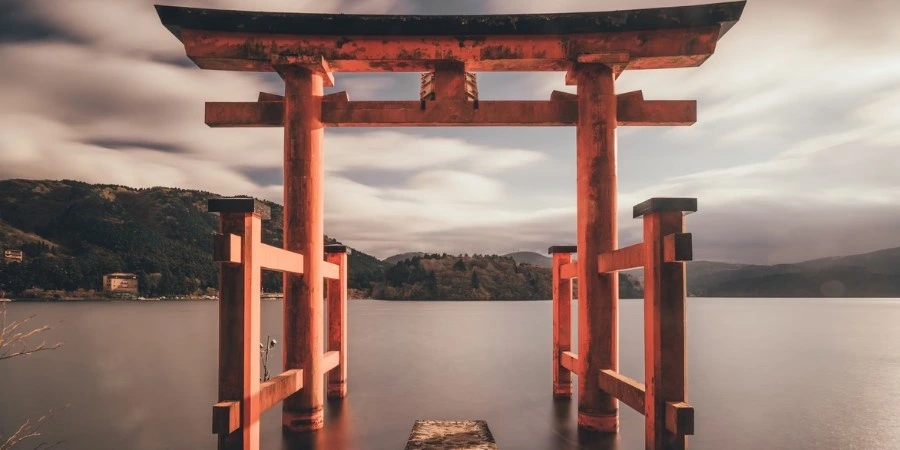
Image credit: Tianshu Liu, via Unsplash
Founded in 757, Hakone Shrine is one of the oldest places of worship in the area and a gateway to nature’s serenity. Located between the Hakone Forest and Lake Ashi, this shrine presents itself as one more element in the nature that surrounds it, guiding travellers to see the natural landscape in a different way.
The Hakone Shrine, it should be noted, is first and foremost a religiously important place. For this reason, many practising Shintoists visit the shrine for guidance. Deities like Ninigi no Mikoto, Konohanasakuya-hime and Hoori no Mikoto are some of the figures people come to worship here. Additionally, there is the Legendary Dragon of Lake Ashi, which has its own celebration every 31 of July called the Ashinoko Kosui Matsuri. All of this is to say that, if you visit the Hakone Shrine, be careful and respectful, as that is a great way to get in touch with what Shintoism is all about.
🌐Official Website: https://hakonejinja.or.jp/
📍Google Maps: https://maps.app.goo.gl/1AvRZ3vQyGmbfQjx5
Hakone Museum of Art (MOA)
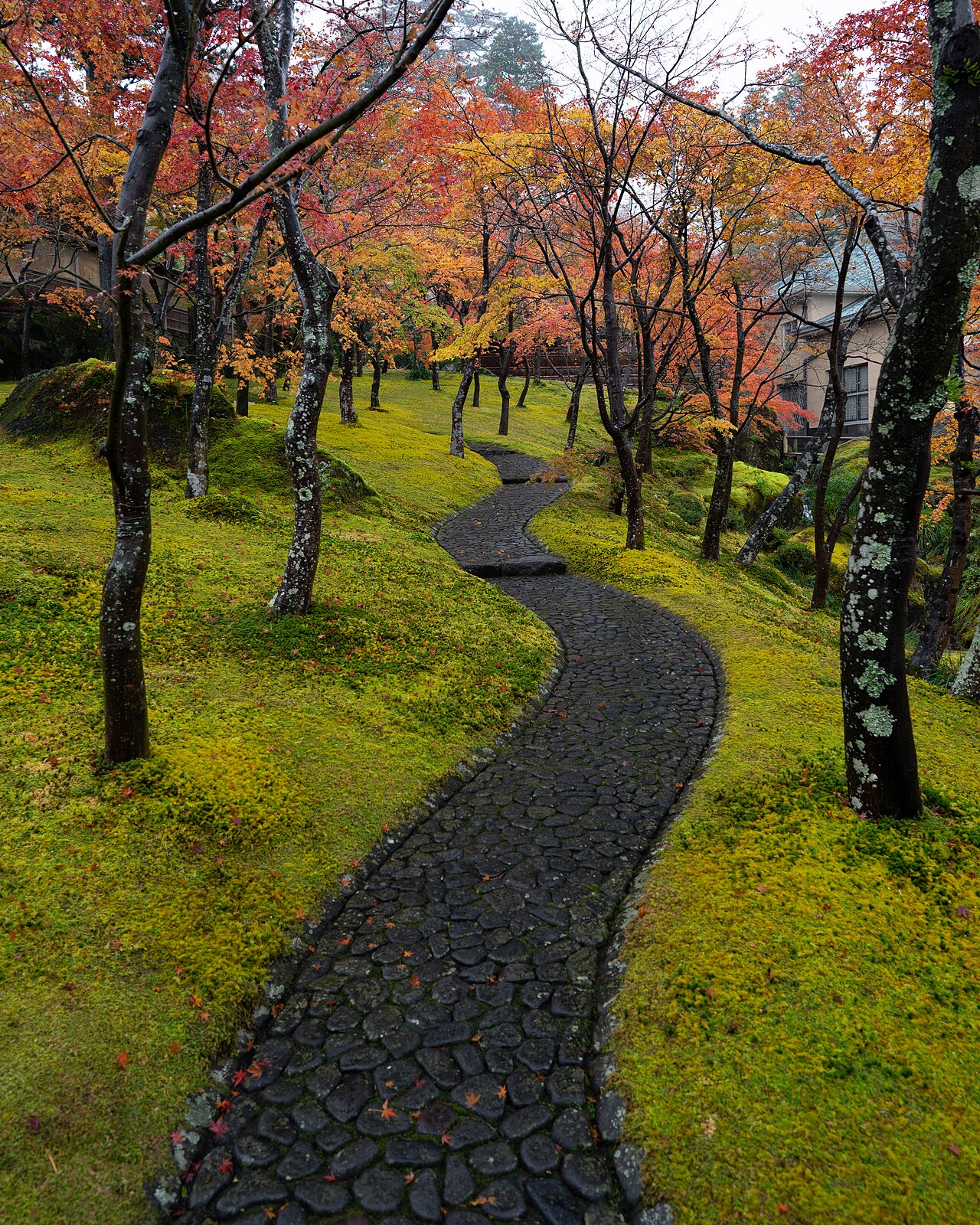
Founded in 1952 with the vision of making Japan a nation that thrived on culture, the Hakone Museum of Art is the longest-standing museum in Hakone. Similarly to the Hakone Open-Air Museum, it makes itself one with nature, sitting within the Shinsenkyō gardens, which include a moss garden that glows red and gold in autumn. As for the works of art featured, the museum focuses on Japanese ceramics, from ancient earthenware to pieces made between the 16th and 18th centuries, which suits the natural surroundings of the Hakone area.
Please note that the Hakone Museum of Art closed for renovation on 7 May 2026. It reopens with a preview from 30 October 2026, holds its grand reopening on 23 December 2026, and is closed on Thursdays.
Its sister museum, the MOA Museum of Art in Atami, carries the same founding vision into its exhibition programme. In 2024 alone it dedicated exhibitions to renowned Japanese artists like Yoshida Hiroshi, Katsushika Hokusai and Utagawa Hiroshige. The MOA Museum of Art is not shy in celebrating modern Japanese culture either, and in 2024 it hosted Pokémon × Kogei, an entire exhibition pairing Pokémon with Kogei crafts. If you’re a lover of Japanese art and culture, the Hakone Museum of Art and its Atami sibling are both worth the trip.
🌐Official Website: https://www.moaart.or.jp/hakone/en/
📍Google Maps: https://maps.app.goo.gl/2NzbBD2XMLkvwRZy5
Hakone Sightseeing Cruise (Lake Ashi)
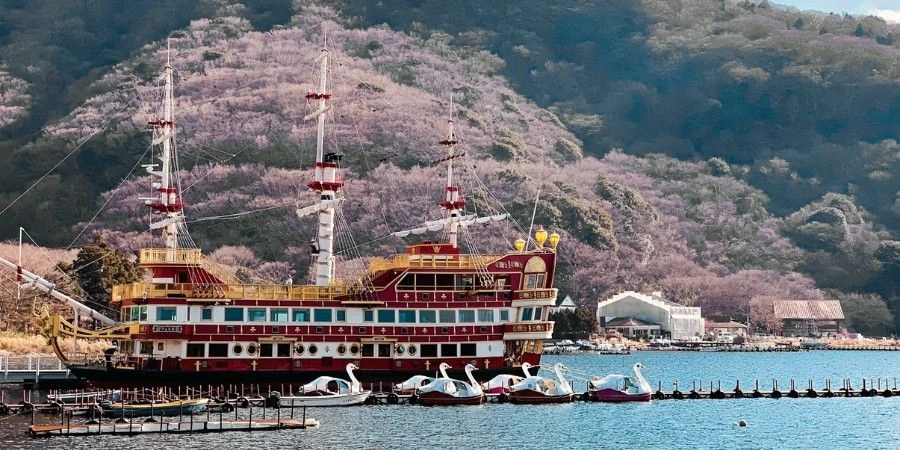
Image credit: Yusheng Deng, via Unsplash
So far, we have been mentioning Lake Ashi as a location you’ll most likely encounter during your day trip, but if you want to fully explore it, the Hakone Sightseeing Cruise is your best option. Designed to be an adventure the whole family can enjoy, this cruise takes the form of a pirate ship and sets sail across the lake. There are three different ships and three ports (Togendai, Hakone-machi and Moto-Hakone) they run between, meaning there is always time to catch one and start your adventure.
As the name suggests, the main goal of this pirate adventure is sightseeing. If you decide to embark on this journey, great views of the Hakone gardens, the red torii gate of Hakone Shrine, and even Mount Fuji will become visible. For that reason, we recommend keeping your eyes wide open and your cameras ready, as you’ll want to remember these views.
Finally, we must mention this cruise is included in the Hakone Freepass, which makes the pass an even better deal.
🌐Official Website: https://www.hakonenavi.jp/hakone-kankosen/
📍Google Maps: https://maps.app.goo.gl/fVQ1NgCoAxm6sF9aA
Owakudani Valley
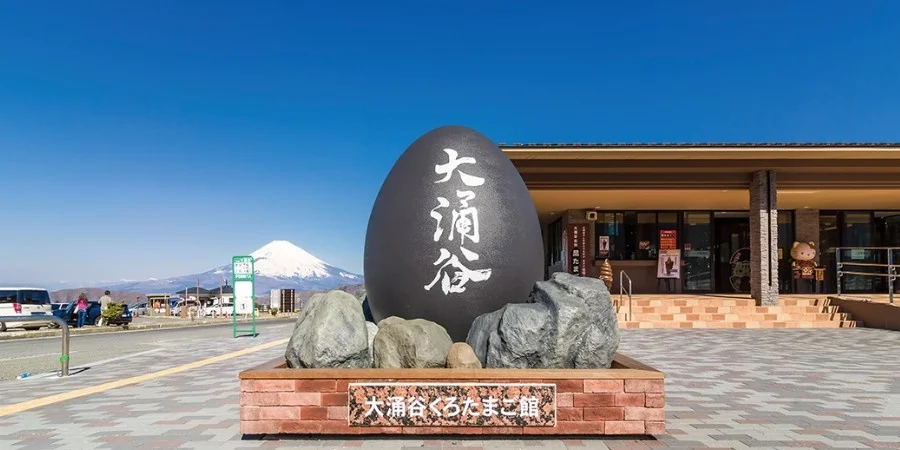
Image credit: Owakudani
Born out of a 3000-year-old volcanic eruption caused by Mount Hakone, the Owakudani Valley is a one-of-a-kind place to visit. Ideal for a Hakone Day trip, Owakudani Valley can be easily accessed as soon as you arrive at the Hakone-Yumoto station. From there, you’ll need to travel to the Gora station, which is a 30-minute train ride. Afterwards, all that is missing is a quick transfer to the Sounzan Station, where you can take the Hakone Ropeway.
Once in the Owakudani Valley, you can shop, eat and explore. Get lost in the taste of a classic Hakone sulphured boiled egg, let the volcanic atmosphere change your perspective on wildlife, and discover some great gifts for loved ones in the Owakudani-eki Shop. Whatever it is, the Owakudani Valley is a place you won’t regret visiting.
📍Google Maps: https://maps.app.goo.gl/DRDqG4TSuTBLggzT6
Hakone Ropeway
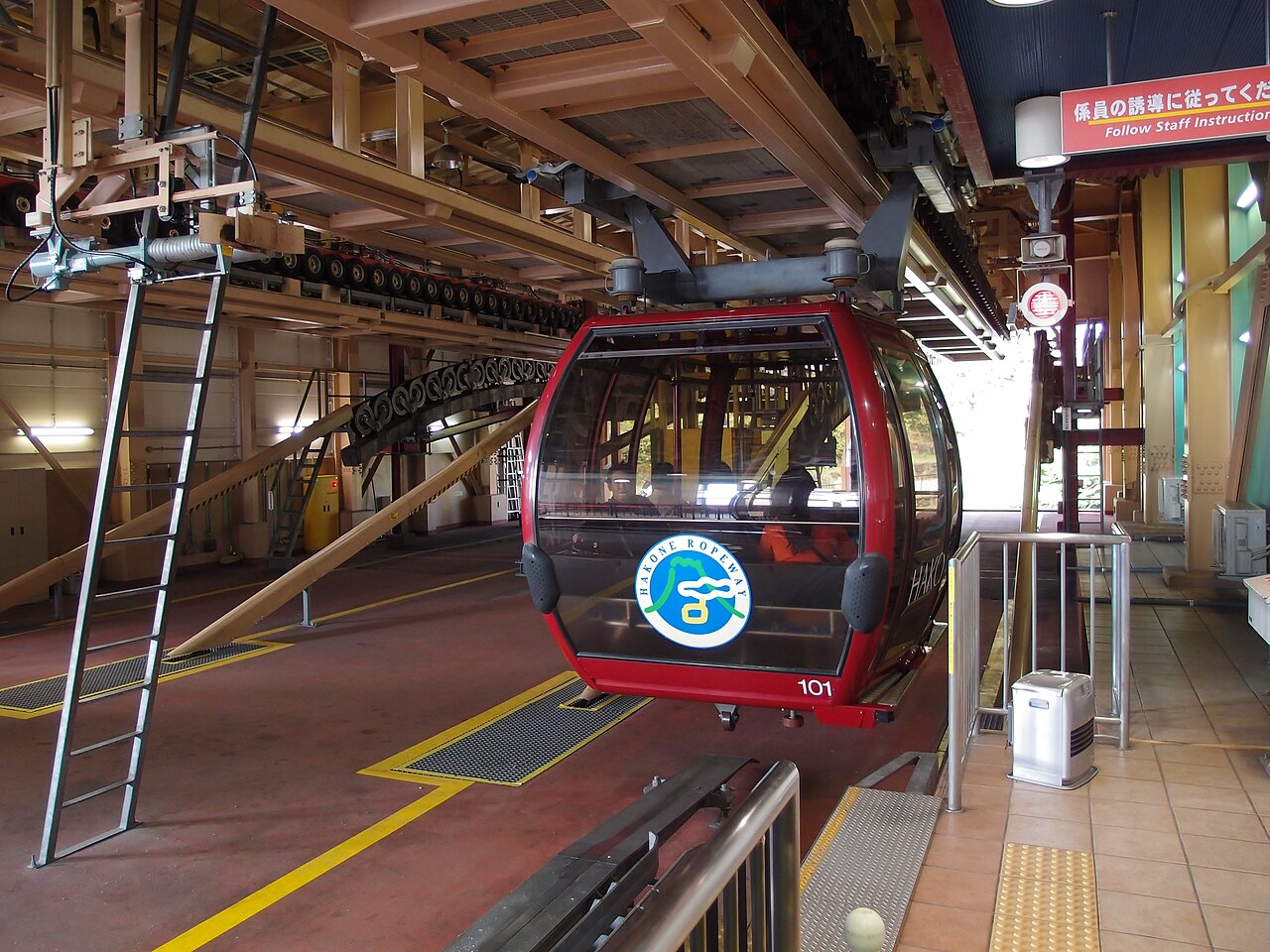
Image credit: Photo: Guilhem Vellut, CC BY 2.0, via Wikimedia Commons
Since our quick mentions of the Hakone Ropeway don’t do the experience justice, we’ve decided to give it a dedicated segment. As a matter of fact, Owakudani Valley is but one stop in this fascinating way to traverse Hakone. Beginning at Sounzan Station (where the Hakone Tozan Cable Car ends), this journey will take you through Owakudani, where everyone changes gondolas, then Ubako, and finally ends at Togendai Station. This last one adds a magnificent final touch to the experience, as it’s located on the shore of Lake Ashi.
The highlight of the Hakone Ropeway is the journey itself. Throughout the ride, you’ll have some fantastic views of the active sulphur hot springs of Owakudani, the clear blue colour of Lake Ashi, and the majestic Mt Fuji. The gondolas carry up to 18 people each and depart roughly every minute, so there are plenty of opportunities to catch this amazing ride. Additionally, since the full length of the Hakone Ropeway takes about 30 minutes, you’ll have plenty of time to visit the other attractions featured on this list.
To conclude this section, we must mention the Hakone Ropeway is included in the Hakone Freepass.
📍Google Maps: https://maps.app.goo.gl/XhCWAWLdXAjawoqVA (Sounzan Station)
Sengokuhara Susuki Field
A simple yet beautiful place, the Sengokuhara Susuki Field is an excellent demonstration of Hakone’s lively natural habitats. Located on the west slope of Mount Hakone, these humble grasses combine to give a spectacle to travellers. Autumn, in particular, is where they truly shine, with their colours turning to a breathtaking silvery gold. This moment is particularly special to the people of Hakone, who celebrate it with the Sengokuhara Susuki Festival.
The other seasons have their own charm, with susuki a lively green in summer and a greenish yellow around September. The grass dies back during the winter, which is why we wouldn’t recommend visiting the fields at that time.
As for you, our dear reader, the wonderful spectacle of the susuki is something you can walk right into. One is able to become one with their dance by walking the wide path Hakone opens for travellers. By doing this, you’ll get an expansive view of the fields, leading to the realisation that susuki grass often sparks: beauty can be found even in the most common of plants.
📍Google Maps: https://maps.app.goo.gl/M2i6Z3DuKJJp2nLNA
Pola Museum of Art
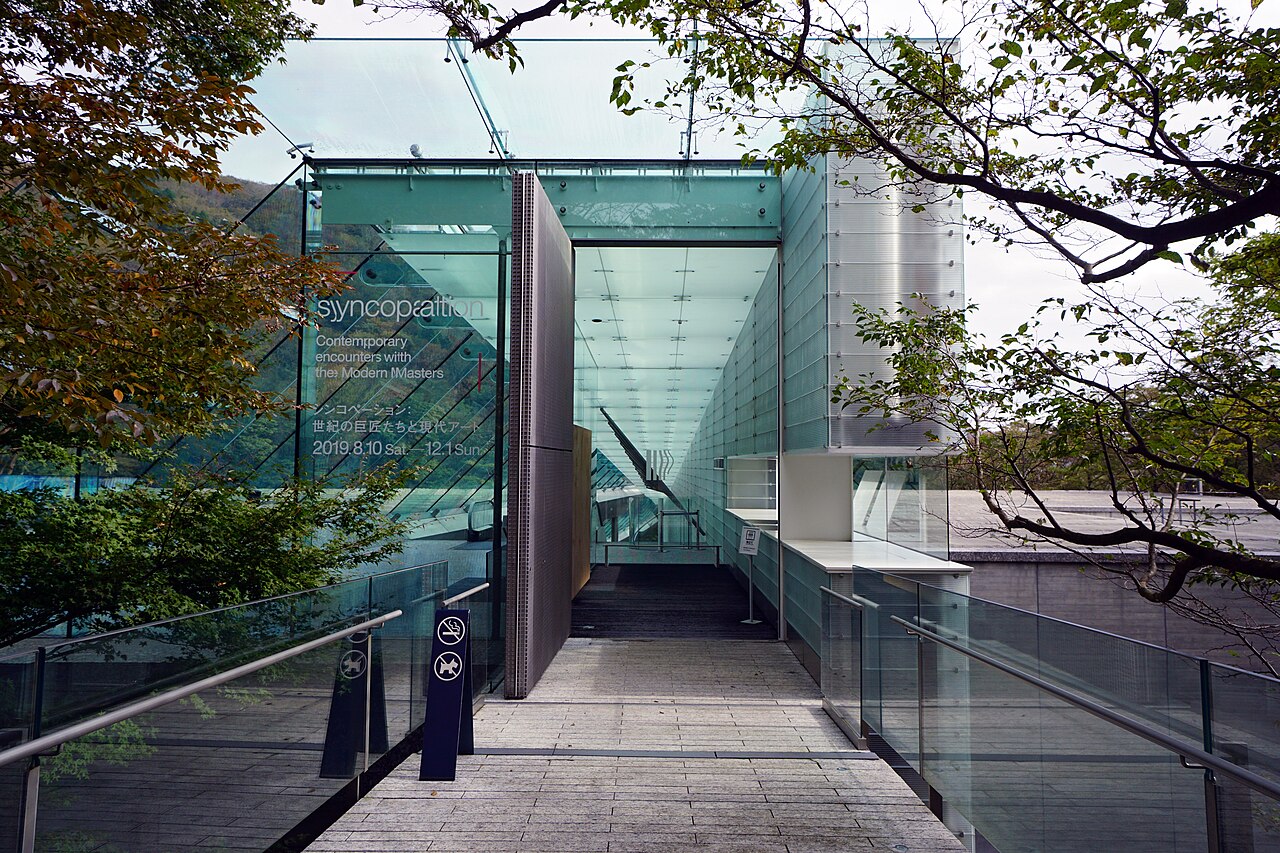
Image credit: Photo: 663highland, CC BY 2.5, via Wikimedia Commons
The last and latest attraction we will discuss on this list is the Pola Museum of Art, one that takes the word symbiosis seriously. Created in 2002, this museum serves as a perfect middle ground between the Hakone Open Air Museum and the Hakone MOA, featuring a vast collection of western and Japanese artists, eastern poetry, glasswork and more.
The Pola Museum of art follows in the footsteps of its predecessor, architecturally speaking, as it was designed to blend into Hakone’s environment. Their approach, however, is quite unique, with many of the buildings being located underground to not damage the natural scenery. For that reason, the Pola Museum feels like another of Hakone’s trees letting its roots be. The only difference is that the roots are decorated with one of the most impressive art collections in Japan. If you’re looking for some impressive art in a place that quite literally is part of the environment, Pola Museum of Art is a fantastic choice.
🌐Official Website: https://www.polamuseum.or.jp/en/
📍Google Maps: https://maps.app.goo.gl/eJosUCLgMvFpLxsF9
Where to eat in Hakone
No good trip, whether it’s for a day, a week, or a month, can be complete with an empty stomach. Lucky for us, Hakone has some amazing places that are guaranteed to satisfy any craving you may have. If you’re looking for a nice cup of coffee to start your trip, a good beer to end the day, something to satisfy your sweet tooth, or a local delicacy, Hakone has something for you. As part of this Hakone Guide, we’ve compiled a list of some of the best restaurants in Hakone. Additionally, our last entry will surprise you, as its unique approach to food is something you won’t want to miss.
Cafés in Hakone
Hakone Hotoriya (Café KOMON)
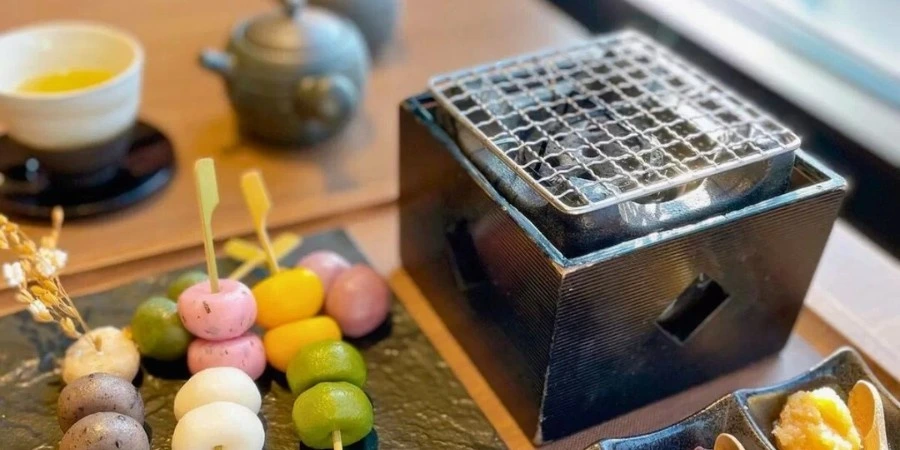
Image credit: Japan Insides
Simultaneously a café and a gift shop, Hakone Hotoriya is great for experiencing the natural beauty of the place under Japanese sensibilities. The first floor (the souvenir store), offers the unique ambience of Edo Period Hakone, with some items that feel straight out of Hakone sekisho. The second floor (Café KOMON), is perfect for a relaxing cup of coffee and tea, as it has some amazing views of Lake Ashi and Mt Fuji.
Directing our attention to Café KOMON, the views are just the beginning, as their amazing food will quickly capture your attention. Among their popular menu items we can find their Shichifuku Dumplings, which come with a special charcoal grill for you to get to your liking; and their fluffy pancakes, with the matcha and red beans flavours being some particular standouts. Add to this their tasty meats for lunch, delicious sweets for desserts, and cold/hot drinks for the season, and this café will fit right into your Hakone day trip itinerary.
Instagram: https://www.instagram.com/chayahonjin_hotoriya/?hl=es
📍Google Maps: https://maps.app.goo.gl/wn5XUaPcXbyRBpyt7
NARAYA Café
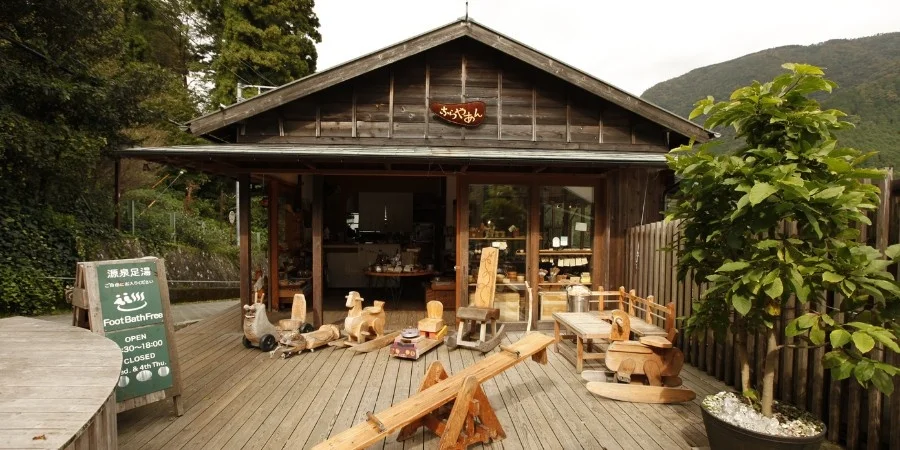
Image credit: Hakone Mag
Located right next to the Miyanoshita Station on the Hakone Tozan Railway, Naraya Café is relaxing in more than one way. The first thing that will surprise you about this establishment is that it is centred around a hot spring; to be specific, a foot bath. That means exactly what you think it does: most tables have a little foot bath incorporated within them. So, while you wait for your food to arrive, the relaxing water underneath will bring you closer to Hakone in a way few things could. Additionally, they have proper saunas, ideal if you want the experience to go beyond your feet.
This all being said, the food itself is delicious and would be worth the wait, even if there wasn’t a foot bath involved. They have some western favourites, like pizza and hot dogs, both of which present in an elegant Japanese way. As for drinks, their broad selections of teas and coffee are guaranteed to get you through a hot or a cold day. If you’re looking for a place that will bring you closer to the soil you’re traversing, while also offering some great foods, Naraya Café is waiting for your arrival.
Instagram: https://www.instagram.com/naraya_cafe_/?hl=es
📍Google Maps: https://maps.app.goo.gl/8aGEQZiSPaFYoLUy6
Café Tune
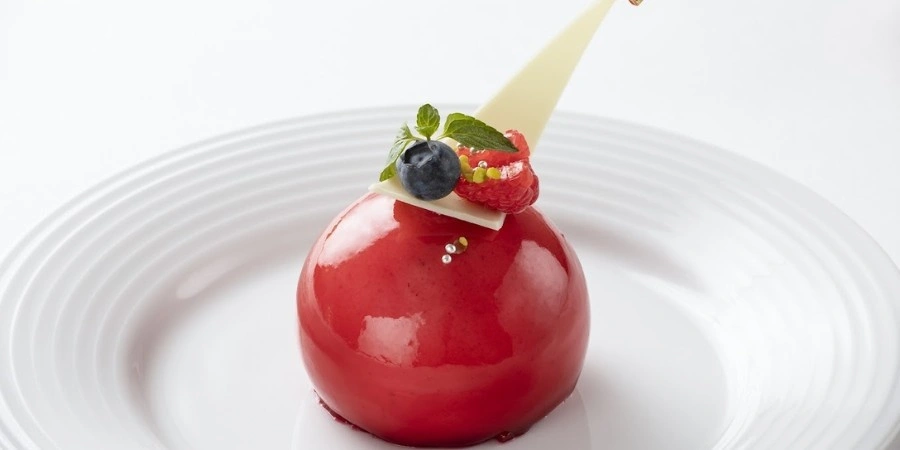
Image credit: Pola Museum
Located in the previously mentioned Pola Museum of Arts, Café Tune is a uniquely lively and artistic café. Taking full advantage of the natural light the museum lets through (despite its underground design), this café is a testament to the Pola’s capacity of incorporating into the Hakone wilderness. It is, as they say so themselves, bright and refreshing, and a perfect spot to rest between expositions.
In terms of the food and drinks they serve, Café Tune takes inspiration from its surroundings, with some treats that are simply works of art. If you’re looking for something sweet, Café Tune has a wide selection which includes: Crepes, Chiffon cake, Chiboust, Mont Blanc, etc. As for salty enjoyers, Café Tune has only one option, but it’s a recipe they have perfected: a ham, bacon, cheese, tomato and pickle sandwich. With every one of their items including a drink for only 600 additional yen, Café Tune has earned its spot on our recommendation for best cafés in Hakone.
📍Google Maps: https://maps.app.goo.gl/9fX32t4d7VhtZcDx9
Best Restaurants in Hakone
Itoh Dining by Nobu
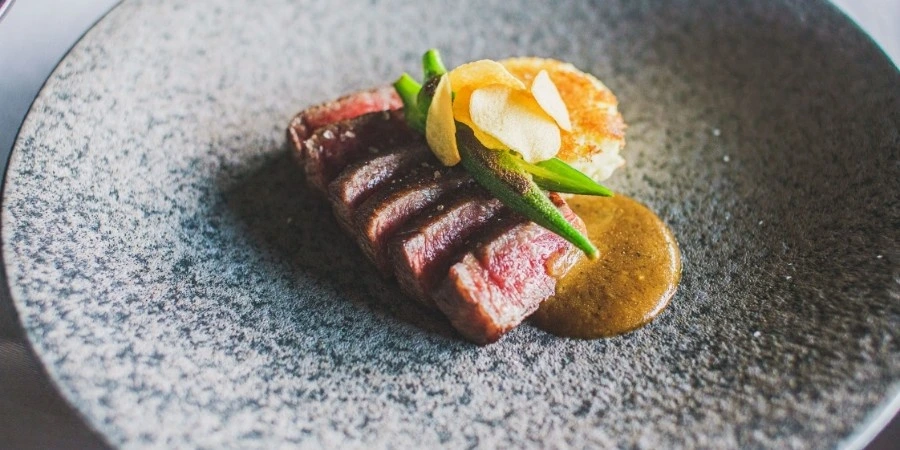
Image credit: Itoh Dining
Born out of a collaboration between local chef Itoh and Nobu Matsuhisa, one of the best chefs in the world, Itoh Dining takes Hakone’s ingredients to the highest level. Located in an area away from many of the sightseeing spots, this restaurant has made a name for itself by choosing to play its cards quietly and subtly.
Case in point, every ingredient they use is carefully selected, from the fresh catch courtesy of Sagami Bay, to the monk fruit they use as a natural sweetener to replace sugar. Of course, ingredients can only get you so far, even the best one, which is where their recipes prove their worth. With the guidance provided by Nobu Matsuhisa, the local ingredients are able to reach the peak of their flavour, making for some fantastic lunches and dinners. If you want a taste of the best of what Hakone can offer, Itoh Dining is the place for you.
Instagram: https://www.instagram.com/itoh_dining_by_nobu/?locale=es&hl=ar
📍Google Maps: https://maps.app.goo.gl/WGfu1upATY5FPwji9
Gora Brewery & Grill
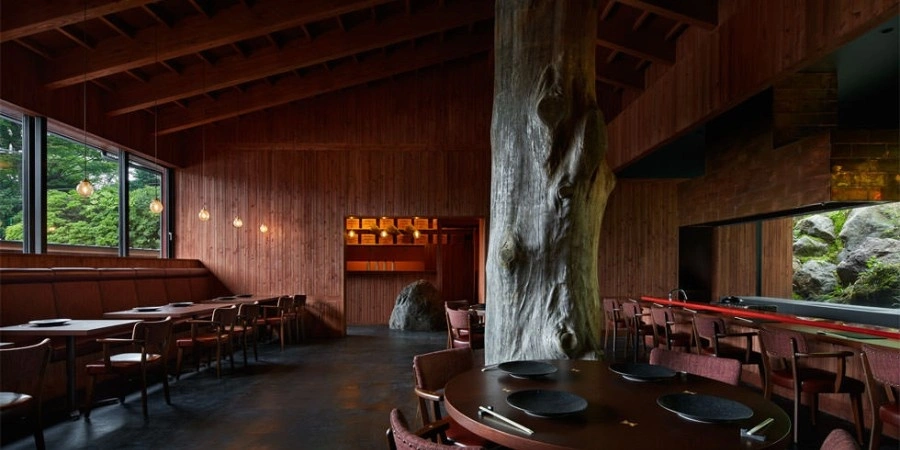
Image credit: Nakam
A place that has captured Hakone’s heart with its quirky atmosphere and delicious food, Gora Brewery & Grill has something for everyone. As the name suggests, this place specialises in grilled foods and craft beers, all of which take advantage of Hakone’s natural resources. Their grilled foods can be both simple and complex, with delicacies such as wagyu beef gyozas served next to classic options like fish and chips, all made with local ingredients. Something similar could be said about their drinks, with their craft beers being made with 100% natural Hakone water.
It should also be noted this restaurant is sister to the previously mentioned Itoh Dining, and often collaborates with Nobu Matsuhisa . As a matter of fact, one of their most popular items is Nobu’s famous black cod miso. This being said, the restaurant doesn’t owe its success to Nobu’s collaboration, rather, it’s a fantastic addition to an already lively and beautiful establishment.
To finish with Gora Brewery & Grill, I would like to address its volcanic interior design. Built around a fallen 300-year-old cedar tree, the restaurant itself serves as a reminder of Hakone’s history. With its locally harvested wood walls and volcanic rocks all around, a meal in Gora Brewery & Grill won’t let you forget you’re in Hakone to explore its wonders.
Instagram: https://www.instagram.com/gora_brewery_grill/?hl=es
📍Google Maps: https://maps.app.goo.gl/8v5uQBsjoqypd4hY6
Soba Kihinkan
A visit to Japan, Hakone or otherwise, would be incomplete without having some good soba noodles, and Soba Kihinkan has some of the best. Like some of the best soba establishments in the country, Soba Kihinkan serves freshly made noodles cold with broth on the side. This is so customers can truly appreciate the wonderful taste of Soba as the main dish, and not the other way around.
Additionally, Soba Kihinkan is a place with quite a history. It was originally an annex of Heitaro Fujita, a Japanese businessman and politician who played a crucial role in the Taisho Era. Currently, it is part of the Hakone Kowakien Ten-yu, meaning it has views to some beautifully arranged Japanese gardens. If you’re looking for a great atmosphere, delicious food, and the unique nostalgia-inducing ambience of the Taisho Era, Soba Kihinkan is the place to go.
Instagram: https://www.instagram.com/hakonetenyu/?hl=es
📍Google Maps: https://maps.app.goo.gl/x1oqcN5WKnQvTbz38
Bar/Izakayas
Karuta Izakaya
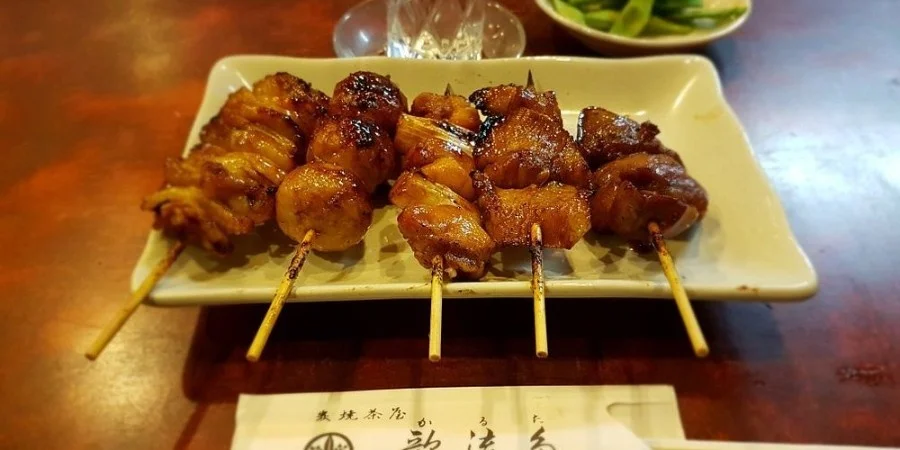
Image credit: Trip Advisor
One of the best Izakayas in all of Hakone, Karuta is perfect for a good drink and a delicious snack to come along with it. Karuta is, in many ways, your typical Izakaya, but it has the unique quirk of being both a yakitori and sashimi place. This means that they offer freshly caught raw fish typical of sashimi; while also surprising their customers with skewered meat and vegetables of Yakitori. The presentation of these two options it’s indicative of their taste, that is to say, immaculately delicious. Add to this the sumo inspired interior design, and Karuta becomes a stop you’ll remember long after your day trips ends.
To conclude this section, it’s important to add they only take cash, so keep that in mind if you’re planning on going.
Facebook Page: https://www.facebook.com/hakoneonsen
📍Google Maps: https://maps.app.goo.gl/BncGknSKbAeRiKZb6
Lounge&Bar Il Lago
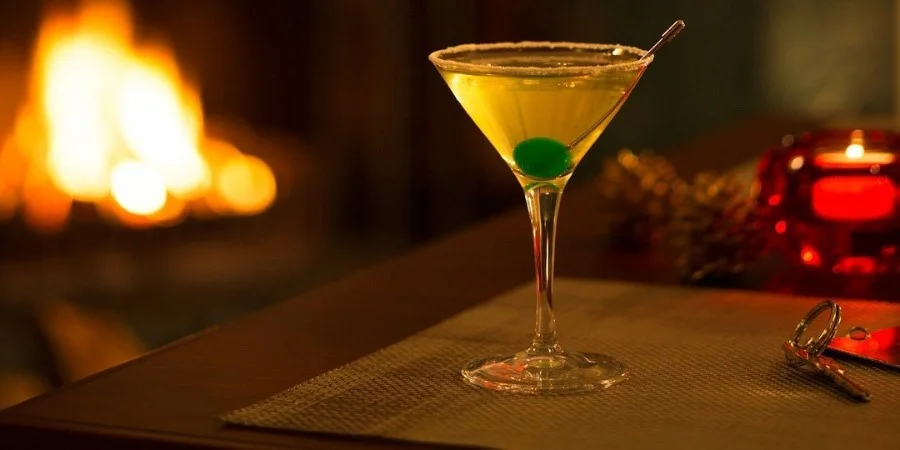
Image credit: Trip Advisor
Located in the Hakone Hotel, this lounge changes during the nights and evenings to become one of Hakone’s best bars. The ambience Il Lago offers is superb, with some fantastic views to Lake Ashi and Mt Fuji, both of which are delightful to see in broad daylight or in the clear night sky; not to mention, always good to appreciate with a beer in hand. Additionally, during the winters this bar lit its fireplace, letting a flame add a warm and sophisticated atmosphere.
As for the drinks, you can have both a simple beer or a cocktail, with the latter being Il Lago’s specialty. If you want to try some of their originals, we recommend the Flow Of Time cocktail, which uses Hakone Gin and Plum wine, making for a fantastic combination. With the moderate price tag it has for such amazing views and delicious cocktails, Il Lago is a must for everyone who enjoys a good drink from time to time.
📍Google Maps: https://maps.app.goo.gl/JTJgP2XCRjCitSFK7
Hakone Tent Bar
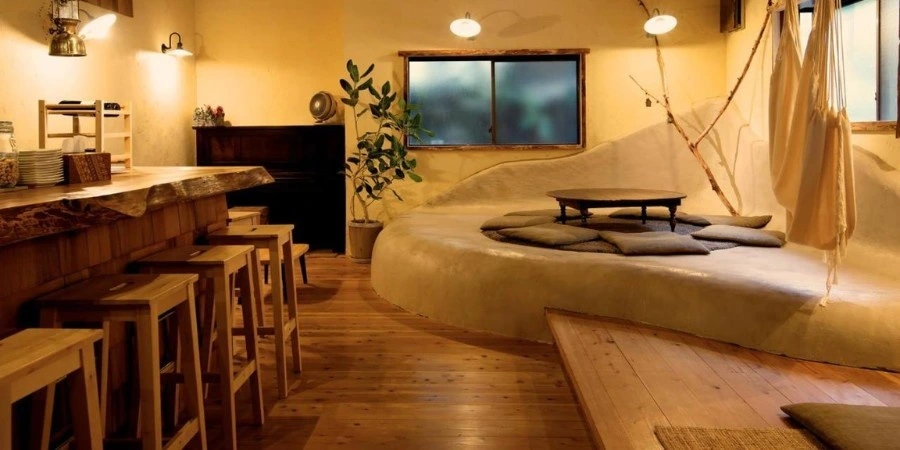
Image credit: Hakone Hotels Site
Part of the Hakone Tent (an onsen guesthouse), the Hakone Tent Bar has made a name for itself with great service and delightful drinks. They have an extensive beverage menu, which includes draft beers, whisky, shochu, sake, rum, gin and much more. This is to say that, whether you’re looking for a familiar or new flavour, Hakone Bar Tent has an option for you.
As for the ambience of the place, this is undoubtedly the cosiest entry on our list. Considering it is part of an onsen guesthouse, the decoration of the bar will make you feel right at home. They are able to achieve this by including a decoration of vinyl music disk, books, stuffed animals, and some unique souvenirs. To finish off this segment, I should also add they have some delicious handmade pizza!
Instagram: https://www.instagram.com/hakonetent/?hl=es
📍Google Maps: https://maps.app.goo.gl/vALBrDiPnbpJEXW28
The Regional Flavours of Hakone
Japanese Cuisine Kadan
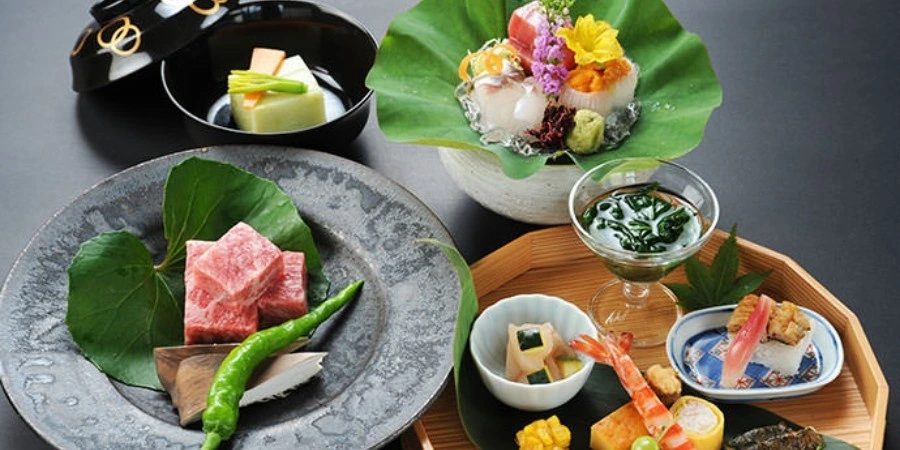
Image credit: Gora Kadan
Located in the previously mentioned Gora Kadan Ryokan, Japanese Cuisine Kadan is a restaurant that brings the seasonal flavours of Hakone to your plate. One of the few establishments that serves Kaiseki meals to day visitors, this restaurant is a perfect stop for your Hakone day trip. To put it simply, it’s a lifetime opportunity to try a Kaiseki meal without staying at a ryokan.
Regarding the food, Japanese cuisine Kadan only chooses ingredients in the peak of their freshness. Their goal it’s for customers to experience the true flavour of foods, something they do in a very mindful way. In short, they approach Kaiseki with care and passion.
True to form, the meals change every month depending on the flavour of the season, so we can’t recommend any specific item. What we can say, however, is that you’re guaranteed to have a wonderful time.
Instagram: https://www.instagram.com/gorakadan/?hl=es
📍Google Maps: https://maps.app.goo.gl/M3hq2k36uyv1WXaQA
Owakudani Kurotamagokan
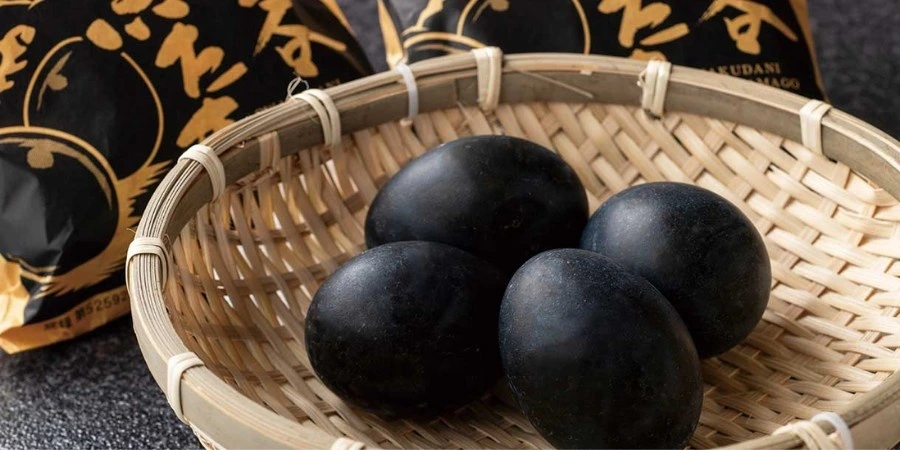
Image credit: Owakudani
Thus far, this article has mentioned Owakudani and their uniquely coloured boiled eggs a couple of times, but we didn’t have a dedicated segment about them until now. This is where Owakudani Kurotamagokan comes in, a store fully dedicated to this Hakone delicacy. Here, you can purchase their sulphur boiled eggs, which are not only perfectly safe to eat; but legend has it that they extend your lifespan by seven years if you eat one.
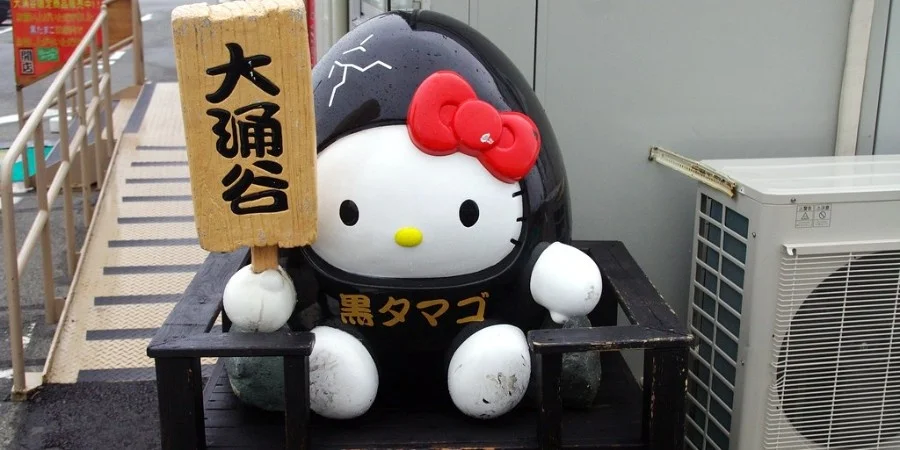
Image credit: Kaz Empson, via Flickr
Of course, the Hakone black egg is not the only item available on Owakudani Kurotamagokan. As a matter of fact, the store is both a café and a gift shop, with the black egg utilised as a central theme. The gift shop, for example, has some unique black egg souvenirs you can only find here, including some Sanrio characters figurines. The café, likewise, runs with the black egg concept, with items like their Black curry bread and their Black pork hot-dog being some fantastic examples. If you’re open to new flavours and presentations, Owakudani Kurotamagokan won’t disappoint you.
Instagram: https://www.instagram.com/owakudani_blackegg_hakone/
📍Google Maps: https://maps.app.goo.gl/1MEfCC3GxcwhACHv5
Hakone Karaage Karatto
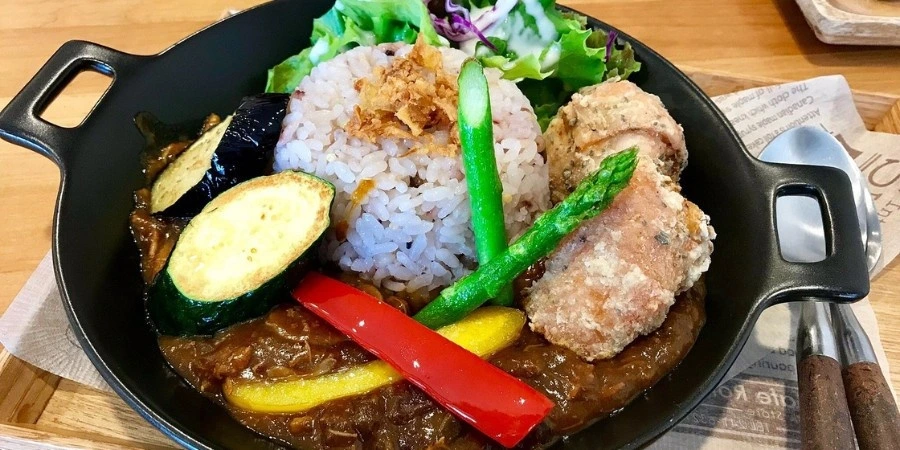
Image credit: Trip Advisor
Perhaps the restaurant that best embodies the regional flavours of Hakone, Karaage Karatto is a place that brings its own spin to fried chicken. Like the name suggests, this place specialises in Karaage chicken, a form of Japanese fried chicken that uses flour, potato starch and a special soy sauce marinade before frying.
However, unlike the traditional Karaage, which is usually served with either rice or shredder cabbage, Karaage Karatto provides new flavours to the mix. In particular, they add soup, beer bread, and homemade salad to the aforementioned rice and cabbage. And this is but one option, as you could have the chicken with some French fries, fruits and even curry. The place is, in short, a bold and delicious approach to Karaage, one that will no-doubt satisfy your appetite.
Instagram: https://www.instagram.com/hakonekaraagekaratto?igsh=MW5sdTk5aGkwc3pyMw%3D%3D
📍Google Maps: https://maps.app.goo.gl/hUittdMCmC7XJ3tc7
Best desserts in Hakone
Chimoto
A place that effortlessly blends tradition with modernity, Chimoto takes the art of Wagashi to the modern times. Wagashi, for those unaware, is a traditional way of making Japanese confectionery, usually using seasonal ingredients and served with tea. Mochi, for example, is one of many Wagashi sweets, and so are Dango and Taiyaki. They’re considered separate from western confectionery, as their elaboration predates the opening of Japan’s borders. And it’s precisely this, the traditional elaboration of Wagashi, that sets Chimoto apart.
One quick glance into the restaurant will take you to the Edo period, while the service and food presentation will constantly remind you of the 21st century. Their food, needless to say, is delicious, and makes for a great dessert after a long walk. If we had to recommend an item, it would definitely be their signature Yumochi, a mochi rice cake with chopped yokan jelly. This sweet is special to the people of Hakone, as it was designed to resemble the rocks of the Hayakawa River. This being said, you can’t go wrong with Chimoto, so just let your appetite decide and experience this beautiful place.
Instagram:https://www.instagram.com/chimoto_hakone/
📍Google Maps: https://maps.app.goo.gl/6tZLpmCwYFoE1Xx2A
Hakone Teramisu
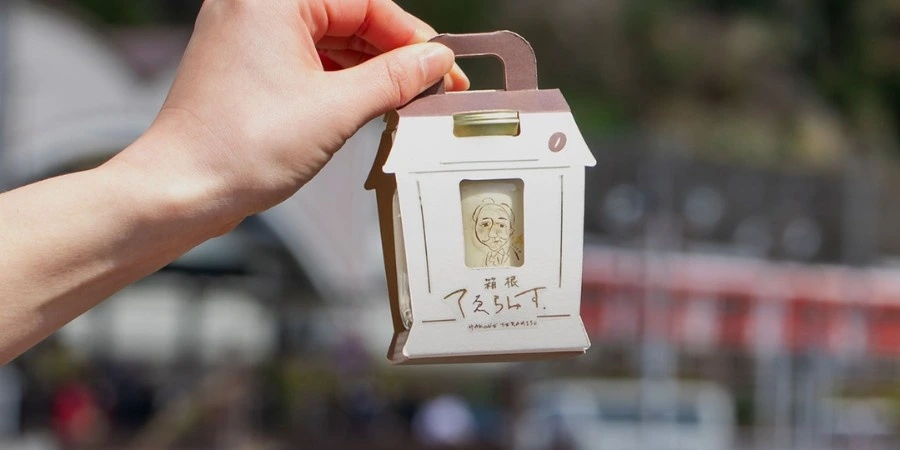
Image credit: Hakone Teramisu
The name Teramisu is a play on terasu, the Japanese verb meaning to illuminate, so this establishment promises to illuminate Hakone. How? The answer is once again found in the name: with tiramisu. With coffee beans roasted in Hakone, freshly made cream, and a soft textured mascarpone cheese, this place has the best tiramisu in all of Hakone.
Additionally, Hakone Teramisu should also be recognised for their unique presentation. Taking full advantage of their “illumination” concept, their tiramisu is packaged in little boxes that resemble lanterns. Beyond this, the many unique flavours they offer (classic, strawberry, match, chocolate, etc), also contribute to the colourfully warm identity of the place. Tiramisu, however, isn’t the only item on their menu, as they also have some soft ice cream for you to try. So, whether it is because of their delicious sweets, or the smile-inducing presentation, Hakone Teramisu is an ideal stop on your Hakone tour.
Instagram: https://www.instagram.com/hakoneteramisu/
📍Google Maps: https://maps.app.goo.gl/VvQgaBxbZXWHfaeXA
Fukuya Kuzuryu Mochi
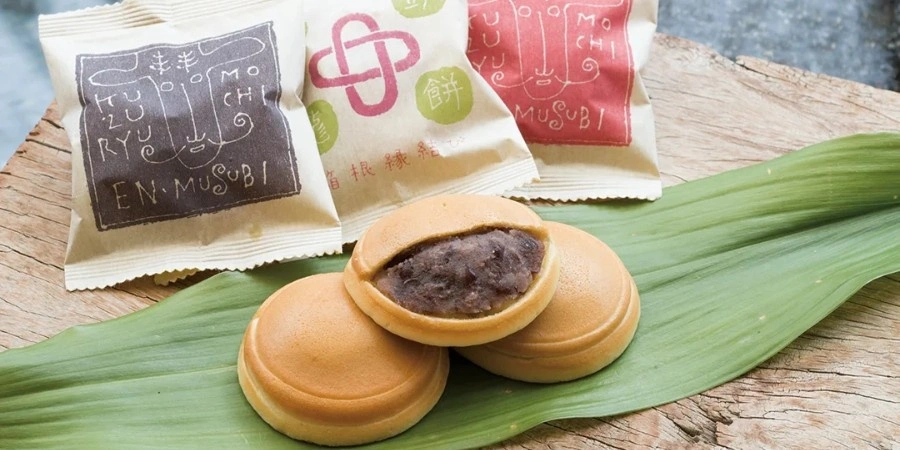
Image credit: Kanagawa Prefecture Tourism Site
For the final entry on this sweet journey through Hakone, we have Fukuya Kuzuryu Mochi, another wagashi store. Unlike our previous entry, Chimoto, this confectionery also serves some famous western sweets, with their Mont Blanc being among their most popular items. This isn’t to say their wagashi specialties are lessened by their inclusion, rather, Fukuya Kuzuryu mochi lets them coexist, getting the best of both worlds. Case in point, their signature mochi, which has a chewy texture and can be filled with a variety of options based on your preference. For our personal Japan Nakama recommendation, we think either the red bean mochi or the Mont Blanc Soft, are fantastic options for you to try.
📍Google Maps:https://maps.app.goo.gl/X7MMuQreg5RjqaXU9
Hakone Kowakien Yunessun
To adequately conclude this food related list, we have a place that is not somewhere to eat, rather, it’s one that takes some popular drinks to the Onsens of Hakone. From its outward appearance alone, Hakone Kowakien Yunessun will immediately catch your eye as a great stop in your Hakone day trip. Located near the centre of Hakone, this is a hot spring theme park that caters to the whole family. However, as you take a proper look, you’ll soon realise Hakone Kowakien Yunessun is a much more exciting stop.
To get directly to the most interesting part, beyond their private baths and traditional hot springs, Hakone Kowakien Yunessun has some exciting bathing options. Mainly, you can have the opportunity to bathe in hot wine, coffee and (on special occasions) even chocolate. The experience is both unique and exciting, with your senses completely activated by the sudden touch of something new. If you’re interested in this one-of-a-kind experience, or simply looking for a relaxing bath, Hakone Kowakien Yunessun is a fantastic option.
Instagram: https://www.instagram.com/yunessun_hakone/
📍Google Maps: https://maps.app.goo.gl/fLzRrUr5BRQYBio2A
Shopping in Hakone
Hakone, being a city whose economy relies on tourism, has plenty of fantastic shops for you to choose from. As tends to happen with these kinds of cities, picking the perfect store can be difficult, as you never know if you’re getting a good deal. For that reason, we’ve compiled a list of some of the best stores in Hakone.
For simplicity reasons, we have divided this list into two different segments: Hakone Shotengai and Yosegi-zaiku. The first one refers to the Hakone shipping district, which has some one-of-a-kind stores you won’t want to miss. Additionally, it is located near the Hakone-Yumoto Station, which makes it an ideal one last stop before finishing the day trip.
The second, Yosegi-zaiku, is the name of a traditional Hakone technique that utilises the natural colours of trees to create elaborate geometric patterns. These are often used on boxes, board games, plates, etc. The reason we’ve decided to have a dedicated Yosegi-zaiku section is to better guide you, dear reader, through some of the best shops of this ancient and beautiful technique. Without further ado, let’s examine some of the best stores in Hakone.
Hakone Shotengai (Shopping district)
Gora Kakutaya
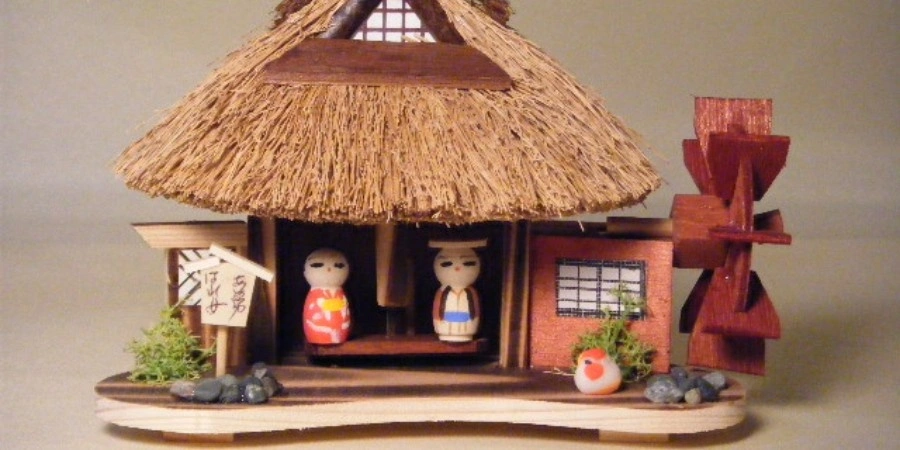
One of the most endearing and curious stores in Hakone, Gora Kakutaya is a place that specialises in Japanese puzzles. One of our personal favourites is the Himitstu-Bako, which refers to a special kind of box with some puzzle mechanisms inside. Its origin dates back to the Edo Period, where samurais used them to send secret messages. As a matter of fact, some translations simply called it a Japanese Puzzle box. And you can get your hands in one of these beautiful puzzle boxes by visiting Gora Kakutaya.
This being said, the Himitsu-Bako is not even the store’s most popular item. That honours correspond to their unique Terifuri weather dolls. This puzzle has the unique quirk, playing with the weather conditions of the environment it finds itself in. Consisting of two dolls (a woman and a man) and a small wooden hut, this souvenir reacts to the moisture conditions in the air. When the moisture levels are high, the man comes outside; if they’re low, it’s the woman’s turn; and, when the conditions are perfect, you can see them both standing still. With their wide variety of puzzles, there is a product in Gora Kakutaya that’s guaranteed to make you smile.
📍Google Maps: https://maps.app.goo.gl/TC6QFK9mTnXJ6ubJ6
Hakone Yumoto Eva-Ya (Evangelion Store)
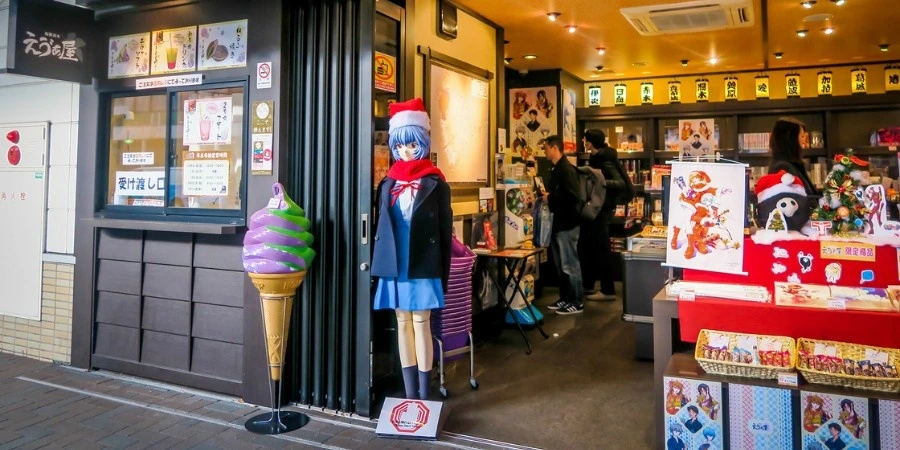
Image credit: Dennis A. Amith
Perhaps Hakone’s biggest contribution to pop culture is being the setting for animated classic Neon Genesis Evangelion. You read that right, the subterranean Tokyo-3 is located underneath Hakone, with most of the fights between the Eva Mechas and Angels being directly set in the city’s mountainous region. You can even see Lake Ashi and Owakudani in the series, something you’ll clearly notice if you rewatch the show with this information. Hakone, in turn, loves Neon Genesis Evangelion, and that’s where Yumoto Eva-Ya comes in.
Despite the fact Evangelion is such a massive cultural force, there are some items you could only find in Yumoto Eva-Ya. Of course, the classic figurines, shirts, cups and stuffed toys can be found here; but you can also find some one-of-a-kind prints of Eva characters walking around Hakone, with some beautiful artwork that makes these characters come to life. Additionally, the store has unique items like the glasses some characters wore, Lego sets, and some earring inspired in the series. So, if you’re a fan of Neon Genesis Evangelion, this store was tailor-made for you.
Instagram: https://www.instagram.com/evangelion_store_tokyo01/
📍Google Maps: https://maps.app.goo.gl/54UZ3QdYCmqWrFwq5
Oriori
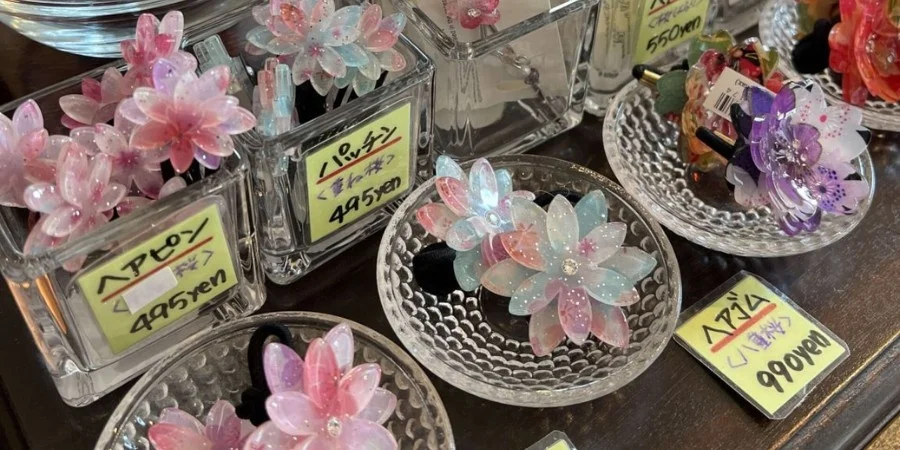
Image credit: Hakone Japan
The perfect last minute stop before finishing your Hakone day trip, Oriori has a wide range of Japanese souvenirs for you to choose from. Their items were designed to cater to both Japanese and Western travellers, with their Tenugui and Kinchaku being some great examples of this. Furthermore, their design philosophy extends to their handkerchiefs, towels, and even perfumes, meaning you can take their elegant approach with you everywhere.
It should also be noted that Oriori, like many stores in Hakone, changes their design depending on the season. To be specific, this means every three months there is something new, which makes the store feel in tune with the nature that surrounds it. Whether you’re looking for something to decorate your house, add a Japanese flare to your everyday life, or a unique souvenir, Oriori is a fine option.
Instagram: https://www.instagram.com/oriori_hakone/
📍Google Maps: https://maps.app.goo.gl/rKW2XjH2WUwzeTnZ7
Yosegi-zaiku
Hamamatsuya
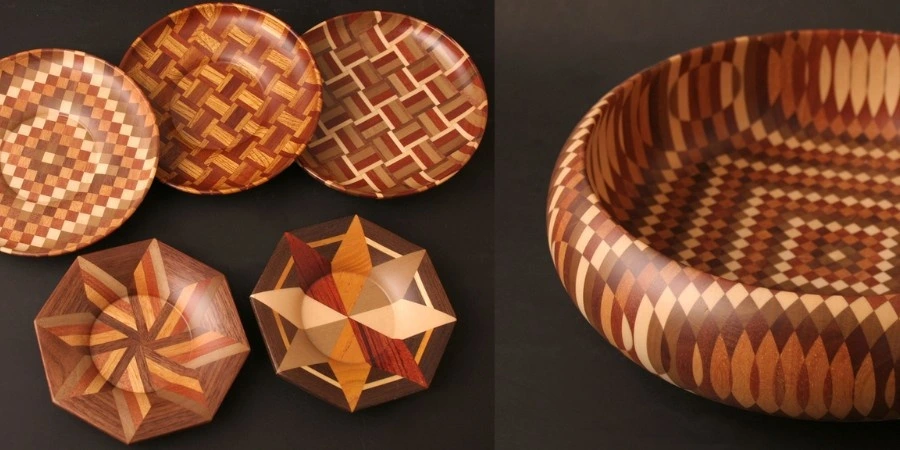
Image credit: Hamamatsuya
Hamamatsuya is one of our favourite Yosegi-zaiku establishments, and that’s because they know how to honour the 200-year-old tradition. Their goal is for the world to appreciate the beauty of this Hakone Technique, which is why they have a visible workshop. In practice, this means customers get to see with their own eyes how a master craftsman works on their piece. This goes in line with their philosophy, as they believe knowledge is experience, and one can best acquire it by meeting a craftsman face to face.
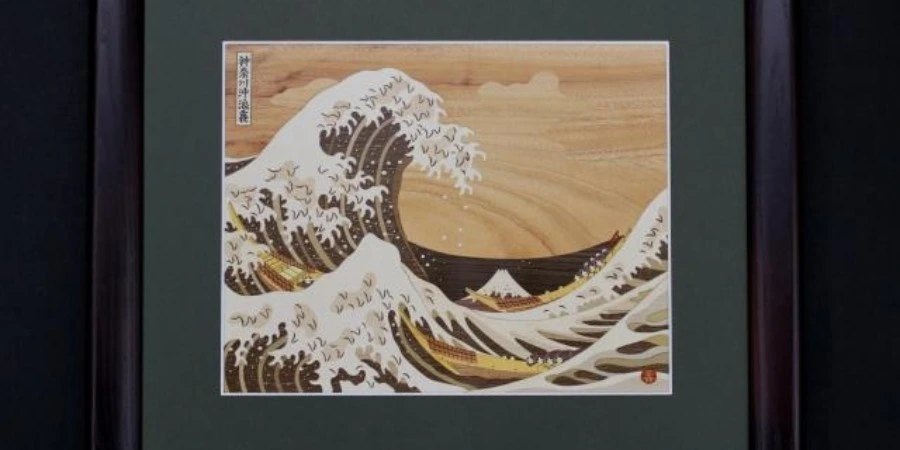
Image credit: Hamamatsuya
In addition to Yosegi-zaiku, Hamamatsuya also specialises in the Wood Inlay technique. This refers to a form of wood painting that utilises the natural hues of the wood in question. Unlike typical painting over wood, this technique uses a special sewing machine saw to inlay the wood with art. Hamamatsuya’s Wood inlay paintings can be as simple as a few butterflies, and as complex as a sight of Mt Fuji with a style reminiscent of Hokusai. This store is, in short, a place where masters work, and where you’re bound to get a fine piece of art.
🌐Official Website: https://www.hamamatsuya.co.jp/shop-english/
📍Google Maps: https://maps.app.goo.gl/WzoKiVRV7qhyU6GM8
Kanazashi Woodcraft
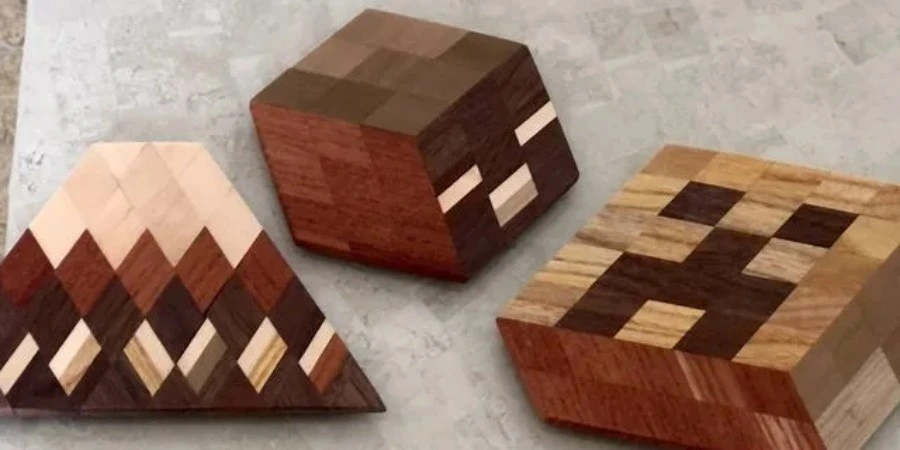
Image credit: Kanazashi Woodcraft
A store that aims to bring the appeal of Yosegi-zaiku to the modern age, Kanazashi Woodcraft is a must-visit place in Hakone. Unlike other stores specialised in this ancestral technique, Kanazashi Woodcraft lets its customers play around with lego-like sets, allowing them to design their own Yosegi-zaiku patterns. This is to say, their approach is comprehensible and accessible, letting everyone partake in this invaluable tradition.
This being said, you can also find traditional Yosegi-zaiku Woodcraft here, made by some of the best in the world. Case in point, their craftsmen are consistently hired to make the Hakone Ekiden championship trophy, which is an honour few can claim. In summary, Kanazashi Woodcrafts have some of the best Yosegi-zaiku there is, making for a perfect parting gift; and, if you want the technique to have more of a personal touch, the store will happily guide you.
Instagram: https://www.instagram.com/kanazashi_woodcraft/?hl=es
📍Google Maps: https://maps.app.goo.gl/R3QPVuTTaAQYeQ8n7
Hakone by Freepass, Hiking Trail and Hot Spring
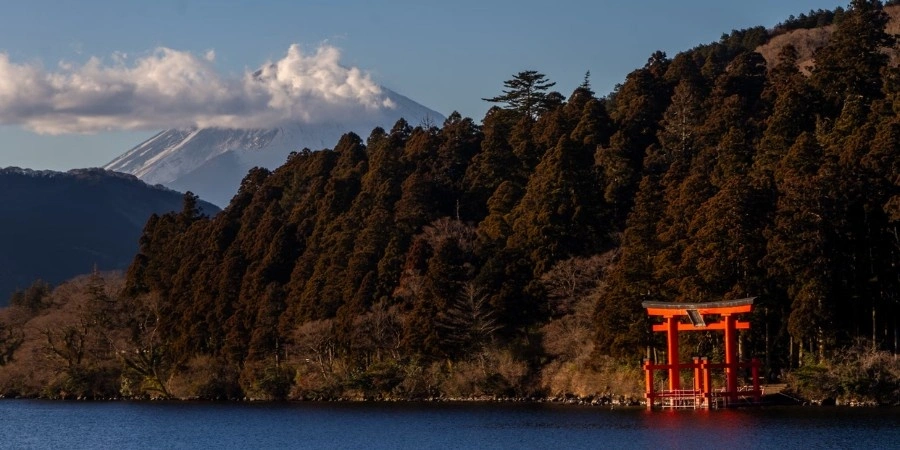
Image credit: Sravan V, via Unsplash
Hakone is a unique and special place that makes for an ideal one-day escapade or a dedicated tour. Very few cities can claim the natural beauty, modern and traditional infrastructure, cultural activities, and relaxing hot springs Hakone provides. It’s a place that is able to offer both a familiar and new side of Japan: where the excellent execution of Japanese craftsmen and architects are in service of becoming one with nature. It is a transitional place, yes, but is also a destination worth getting to know.
With its easy access from Tokyo and the mobility offered by the Hakone Freepass, exploring Hakone is a breeze. Nevertheless, adventurous souls can choose to make their Hakone day trip a challenge by embarking on one of its many hiking trails. In either case, majestic views are guaranteed. And in the end, when the sun has set and the shivering cold of the night seems possible, Hakone answers with a relaxing and warm onsen. No matter the weather, time of the year, season, or length of your stay, Hakone promises an experience you’ll treasure for a long time.