The best things to do in Shinjuku are a free view over Tokyo from the 45th floor of the Tokyo Metropolitan Government Building, yakitori under the train tracks in Omoide Yokocho, a drink in one of Golden Gai’s tiny bars, and a slow walk round Shinjuku Gyoen National Garden. They sit on different sides of Shinjuku’s sprawling station, so the easiest way to plan Shinjuku is by which station exit you leave from.
This guide does exactly that. Hours, prices and rules are taken from each place’s own website or the official Shinjuku and Tokyo tourism sites on 31 October 2026, and each section links to our deeper guides to Kabukicho, Ni-chome and Shinjuku’s jazz cafés.
Shinjuku's Best Sights and Where to Find Them
| Station | Shinjuku Station (JR lines including the Yamanote, Chuo and Saikyo lines; Odakyu; Keio; Tokyo Metro Marunouchi; Toei Shinjuku and Oedo), plus Seibu-Shinjuku and Shinjuku-sanchome nearby |
| Free | Tokyo Metropolitan Government Building observation decks; TOKYO Night & Light projection; the 3D cat screen; Hanazono Shrine |
| Paid | Shinjuku Gyoen National Garden, ¥500 for adults |
| November 2026 | Chrysanthemum show at Shinjuku Gyoen, 1 to 15 November. Tori no Ichi at Hanazono Shrine, 7 and 19 November. Omoide Yokocho Day, 24 November |
| From the airports | Haneda about 55 minutes and Narita about 1 hour 35 minutes by train (GO TOKYO) |
| Best time | Gardens and the observation decks by day; Omoide Yokocho from early evening; Golden Gai after dark |
Shinjuku Station exits: which one to use for what
Most first-time visitors lose time inside Shinjuku Station. Pick your exit before you get off the train:
| Exit or station | Head here for | Walk |
|---|---|---|
| JR Shinjuku, West Exit | Omoide Yokocho; the Tokyo Metropolitan Government Building and its free decks; the skyscraper hotels | Omoide Yokocho is beside the exit; the government building is about 10 minutes |
| JR Shinjuku, East Exit | The 3D cat screen in the East Exit plaza; Kabukicho; Hanazono Shrine | Kabukicho about 5 minutes; Hanazono Shrine about 7 minutes |
| JR Shinjuku, South Exit and New South Exit | Shinjuku Gyoen (Shinjuku Gate); Busta Shinjuku highway bus terminal | Shinjuku Gyoen about 10 minutes |
| Shinjuku-sanchome Station (Marunouchi, Fukutoshin and Toei Shinjuku lines) | Ni-chome; Golden Gai; Hanazono Shrine; Shinjuku Gyoen | Hanazono Shrine about 3 minutes; Shinjuku Gyoen about 5 minutes from Exit E5 |
| Tochomae Station (Toei Oedo Line) | The Tokyo Metropolitan Government Building | Connected directly |
If you are still choosing a base, Shinjuku has the widest spread of hotels in the city, from the west side skyscrapers to Kabukicho; our guide to where to stay in Tokyo compares it with six other areas.

West Exit: free views from the Tokyo Metropolitan Government Building
The twin towers of the Tokyo Metropolitan Government Building, the city hall, each have an observation deck on the 45th floor, 202 metres above the street. Entry is free and needs no booking. Take the dedicated observatory lift from the first floor of the No. 1 Building; on weekends and holidays the second floor entrance is closed, so go in by the main first floor doors.
| South Observation Deck | North Observation Deck | |
|---|---|---|
| Hours | 9.30am to 10pm (last entry 9.30pm) | 9.30am to 5.30pm (last entry 5pm), or until 10pm when the South deck is closed |
| Closed | 1st and 3rd Tuesday of the month | 2nd and 4th Monday of the month |
| Both closed | 29 to 31 December, 2 and 3 January, and building inspection days. If a closing day is a public holiday, the deck opens and closes the next day instead | |
Look west for Mount Fuji. The building’s own guidance says December to February, when the air is cold and clear, gives the most days with Fuji in view. The South deck also has a public piano, the Tocho Omoide Piano, which anyone can play from 10am to 12pm, 2pm to 4pm and 7pm to 9pm. Expect to queue for 20 to 30 minutes for the lift at busy times.
On the way in, the first floor has a Tokyo tourist information centre, and the middle of the second floor displays a giant kumade, the decorated bamboo rake sold at the Tori no Ichi fairs described further down this page.
After dark, stay outside. TOKYO Night & Light projects free light and music shows onto the east face of the No. 1 Building every evening, covering about 13,904 square metres from the 4th to the 32nd floor. Guinness World Records recognised it in February 2024 as the largest permanent projection-mapped display on a building. Showtimes change through the year and are posted on the project’s website each day.
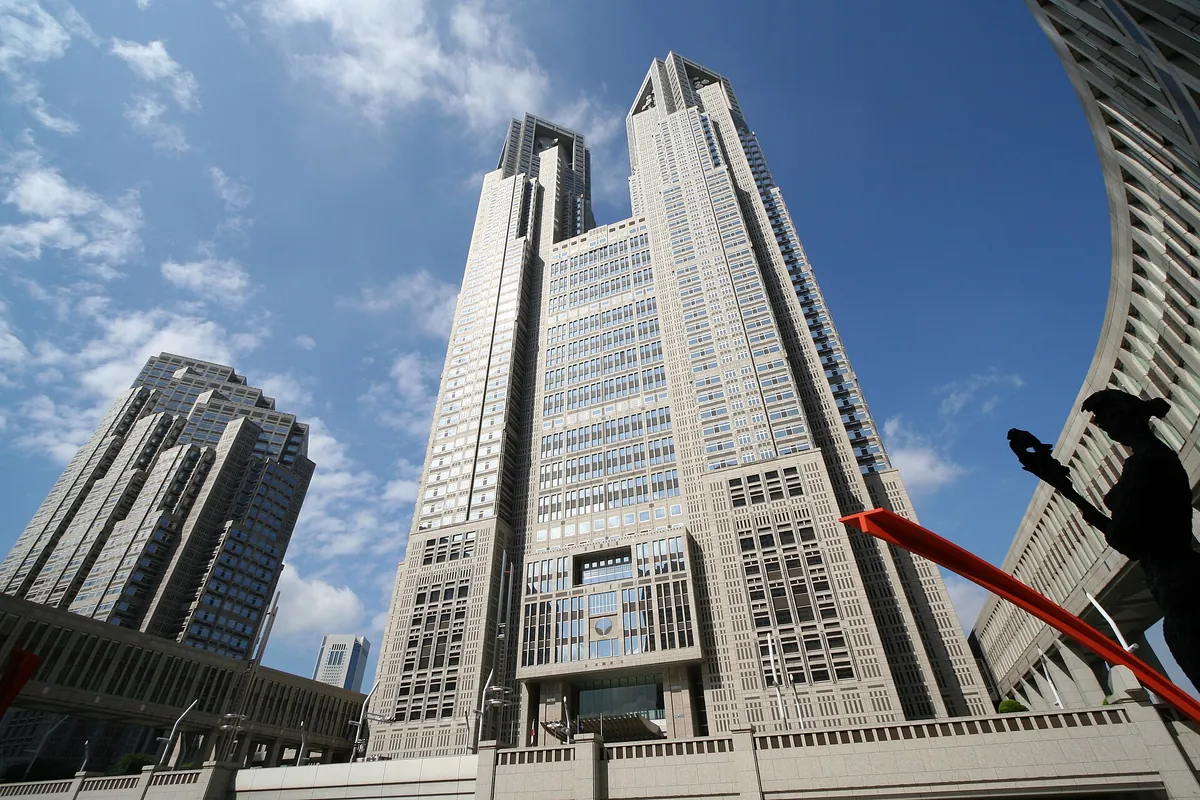
Map of Tokyo Metropolitan Government Building
Omoide Yokocho: 60 counters under the tracks by the West Exit
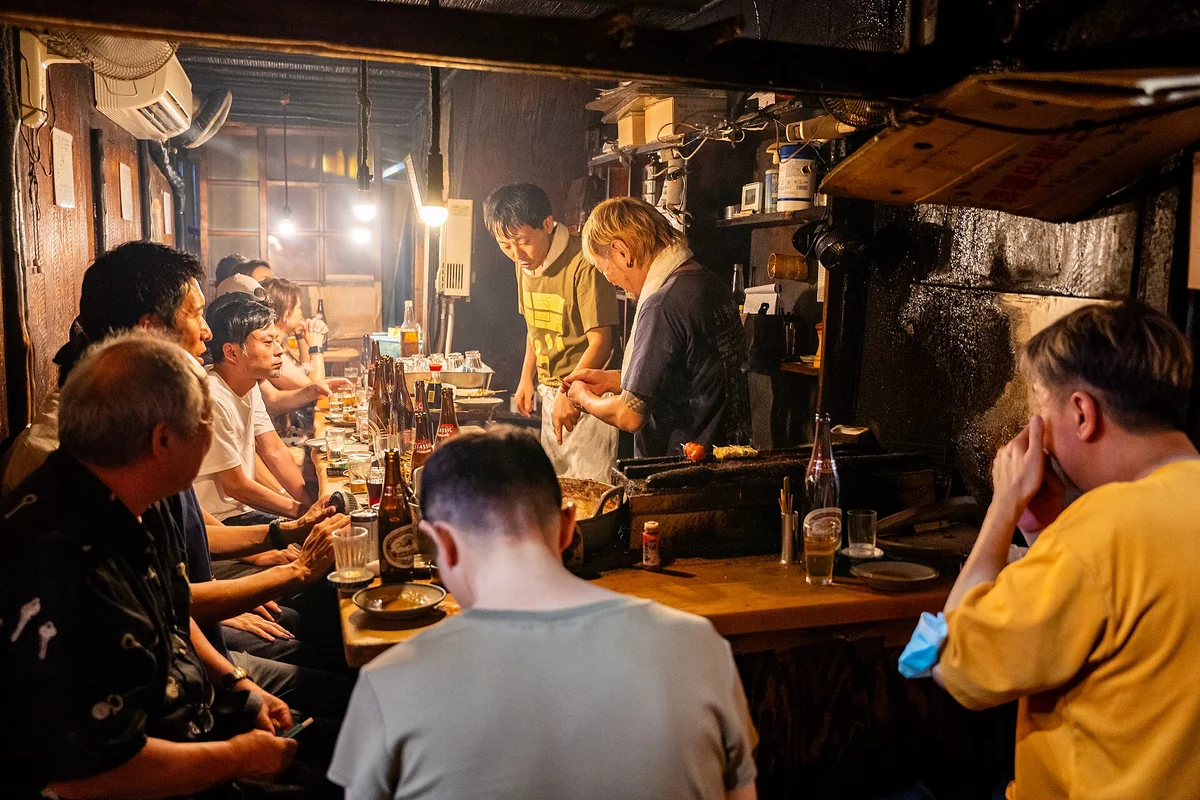
Omoide Yokocho, “Memory Lane”, is a block of narrow alleys right beside the West Exit. According to the alley’s own association, about 80 shops are packed onto roughly 630 tsubo (about 2,080 square metres), about 60 of them places to eat and drink, and more than half of those are yakitori or motsuyaki (grilled offal) counters.
Its roots go back to the street stalls that set up on the burnt-out ground west of the station around 1946, which became a black market known as Lucky Street. Grilled offal took off because it was one of the few foods not covered by rationing controls. When redevelopment arrived around 1959, roughly 300 stalls were cleared and only the stretch that survives today was left.
The chairman of the shopkeepers’ association, who runs the Sushitatsu counter, gives first-timers a few warnings on the official site:
- Shops on the central lane, Naka-dori, have no toilets of their own. Everyone uses the shared block, which was rebuilt in March 2021.
- Many places take cash only. In April 2021 it was around six in ten.
- Some counters have their own rules: a seat charge, one dish and one drink per person, or a 90-minute limit. Kabuto, the eel skewer shop, serves only its set course of different cuts.
- No smoking on the alleys, except inside the few shops that allow it. A fire on 24 November 1999 burned about a third of the alley, and every 24 November is now Omoide Yokocho Day, with a fire drill and a prize draw for regulars.
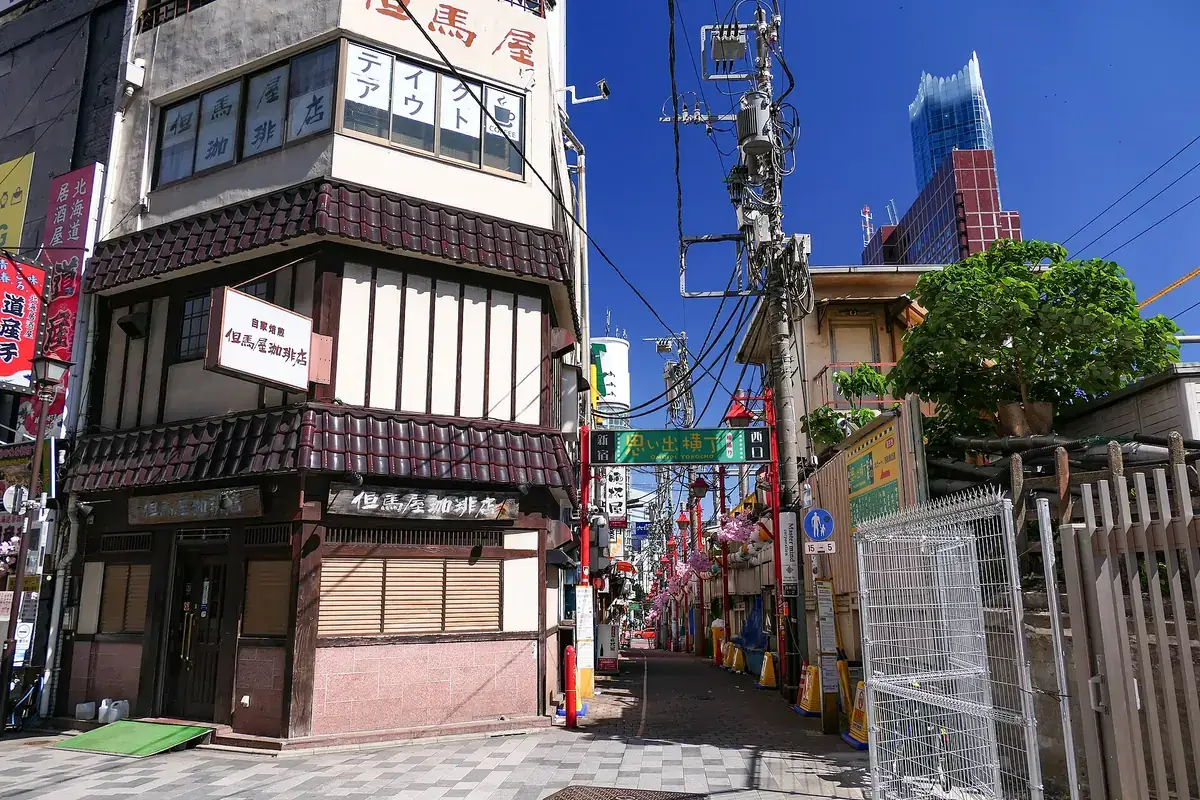
Shinjuku has two famous drinking alleys, and Omoide Yokocho is the one for food. For more alleys like it across Japan, see our guide to yokocho, Japan’s hidden alleyways.


East Exit: the 3D cat, Kabukicho, Golden Gai and Hanazono Shrine
The 3D cat of Shinjuku East Exit
Come out of the East Exit into the station plaza and look up. The curved screen facing the plaza, Cross Shinjuku Vision, became famous in July 2021 for a giant calico cat that seems to lean out of the building. The clip won a string of advertising awards, and its operator, Cross Space, still shows the cat on the screen and posts new versions on its official channel.
Kabukicho
North-east of the station, through the red Kabukicho Ichiban-gai gate, is Kabukicho, one of Tokyo’s biggest nightlife districts, with the Godzilla head on Hotel Gracery and the Tokyu Kabukicho Tower. It is busy and well lit, but the UK Foreign Office warns about touts and drink spiking here, so never follow a street tout into a bar. Our Kabukicho nightlife guide covers the history, the spots worth your time and how to stay safe.
Golden Gai: nearly 300 tiny bars with their own rules
Between Kabukicho and Hanazono Shrine, six narrow lanes of old wooden row buildings hold Golden Gai. The Shinjuku Golden Gai Shopping District Promotion Association counts more than 280 bars, some trading for over 50 years and some for one or two. It describes Golden Gai as a working collection of bars, on private land managed by two shopkeepers’ associations, and asks visitors to keep to a few rules:
- No smoking in the lanes; the buildings are wooden.
- No drinking while walking, and no taking glasses out of the bars.
- Photography and filming need permission. That includes close-ups of shop signs.
- Go in small groups. Many bars seat only a handful, and some turn groups away.
- Check the price system before you sit down. Most bars add a cover charge or an otoshi (a small dish) to the drinks; the association puts the usual range at ¥500 to ¥1,500. More bars now have no cover charge for overseas visitors.
Several of Shinjuku’s surviving jazz cafés, including Narcissus and Shiramuren, are just around the corner in Kabukicho. Our guide to Shinjuku’s jazz kissaten lists nine you can still visit.
Hanazono Shrine and the Tori no Ichi fair, 7 and 19 November 2026
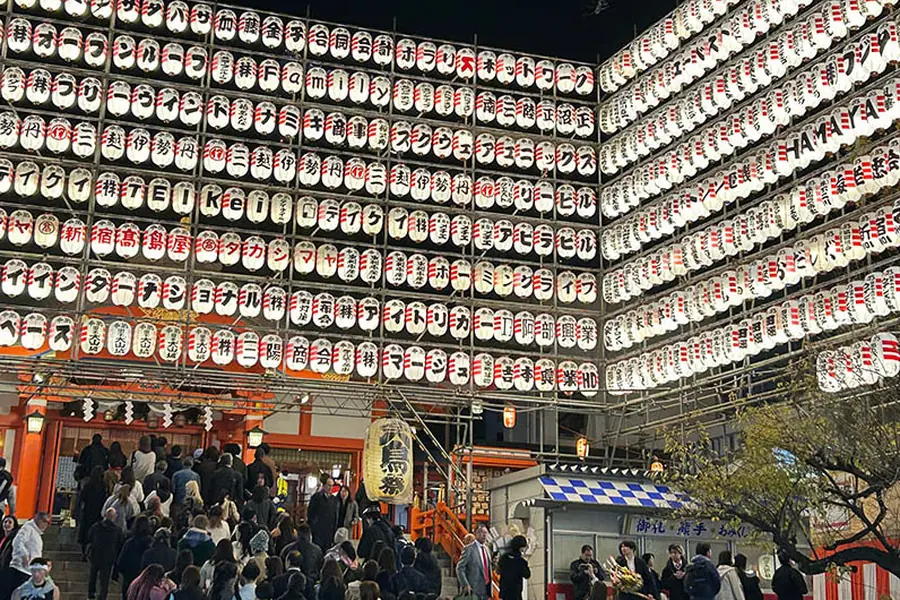
Hanazono Shrine sits at 5-17-3 Shinjuku, three minutes from Shinjuku-sanchome Station and seven minutes from the JR East Exit. It is free to visit and a quiet break from the streets around it. Each November it holds Tori no Ichi, the “rooster day” fair, when stalls sell kumade, decorated bamboo rakes bought for luck in business. According to the Shinjuku Convention and Visitors Bureau, the 2026 fair days are Saturday 7 November and Thursday 19 November, with an eve event at Hanazono Shrine the day before each, on 6 and 18 November.
Shinjuku Gyoen National Garden: hours, the ¥500 ticket and the November chrysanthemums
Ten minutes from the South Exit, Shinjuku Gyoen is a 58.3 hectare national garden run by the Ministry of the Environment, combining a formal garden lined with plane trees, an open landscape garden of lawns and tulip trees, and a traditional Japanese garden. The land was granted by Tokugawa Ieyasu to his retainer Naito Kiyonari in 1590, and the Naito family’s Edo estate gave its name to the old post town of Naito Shinjuku. It was laid out as an imperial garden in 1906, to a design by the French landscape architect Henri Martinet, and opened to the public in 1949.
| Dates | Opening hours | Last entry |
|---|---|---|
| 15 March to 30 September (except 11 June to 31 July) | 9am to 6pm | 5.30pm |
| 11 June to 31 July | 9am to 7pm | 6.30pm |
| 1 October to 14 March | 9am to 4.30pm | 4pm |
- Closed: Mondays (or the next weekday if Monday is a holiday) and 29 December to 3 January. It stays open on Mondays from 25 March to 24 April (cherry blossom) and from 1 to 15 November (the chrysanthemum show).
- Tickets: ¥500 for adults; ¥250 for over-65s and students from high school age; free for junior high school age and under. You can pay with a Suica or PASMO card at the gate, or buy a web ticket in advance.
- Gates: Shinjuku Gate (10 minutes from the JR South Exit, 5 minutes from Shinjuku-sanchome Exit E5 or Shinjuku-gyoemmae Exit 1), Okido Gate (5 minutes from Shinjuku-gyoemmae Exit 2) and Sendagaya Gate (5 minutes from JR Sendagaya Station).
- Rules: no alcohol, no ball games, no drones and no group running. Bring a picnic, not a bottle.
From 1 to 15 November every year, the Japanese garden holds the chrysanthemum show, a tradition the garden traces to the imperial chrysanthemum viewings that began in 1878. The flowers are trained into shapes under purpose-built pavilions, among them the ozukuri style, in which a single plant is grown for more than a year until it carries hundreds of blooms in a half dome.
Shinjuku-sanchome and Ni-chome by day
Just north of Shinjuku Gyoen, the streets of Ni-chome hold the largest cluster of LGBTQ+ bars in Tokyo, but by day they are also full of cafés, a queer bookshop and Pride House Tokyo Legacy, Japan’s first permanent LGBTQ+ centre. Start from Shinjuku-sanchome Exit C8. Our guide to the culture and community of Shinjuku Ni-chome has a half-day route and the etiquette to know, including asking before you take anyone’s photo.
South Exit: highway buses from Busta Shinjuku
On top of the station by the New South Exit, Busta Shinjuku is the city’s main highway bus terminal, with departures from the fourth floor and coin lockers and a convenience store in the waiting room. It is the cheapest way out of Tokyo for a day: buses to Lake Kawaguchi under Mount Fuji leave from here. Our guide to day trips from Tokyo compares the journey times and costs.
A day of things to do in Shinjuku, from 9am to midnight
- 9am: Shinjuku Gyoen as it opens, through Shinjuku Gate.
- Midday: lunch near Shinjuku-sanchome, then a coffee in Ni-chome.
- 2pm: Hanazono Shrine, then the 3D cat at the East Exit.
- 4pm: walk to the Tokyo Metropolitan Government Building for the South deck before sunset.
- After dark: TOKYO Night & Light outside the building, then back to the West Exit for yakitori in Omoide Yokocho.
- Late: a drink in Golden Gai, or a record in a jazz kissa.
Trains stop between about midnight and 1am, so plan the last leg home before you go out.
Things to do in Shinjuku: questions and answers
Is the Tokyo Metropolitan Government Building observation deck free?
Yes. Both 45th floor decks, 202 metres up, are free and need no booking. The South deck opens from 9.30am to 10pm (last entry 9.30pm) and closes on the 1st and 3rd Tuesday of the month. The North deck closes at 5.30pm and on the 2nd and 4th Monday. Expect a 20 to 30 minute queue for the lift at busy times.
How much is Shinjuku Gyoen?
¥500 for adults, ¥250 for over-65s and students from high school age, and free for junior high school age and under. You can pay by Suica or PASMO at the gate. It closes on Mondays, except during cherry blossom (25 March to 24 April) and the chrysanthemum show (1 to 15 November), and from 29 December to 3 January.
Can you drink alcohol in Shinjuku Gyoen?
No. The Ministry of the Environment bans bringing alcohol into the garden, along with drones, ball games and group running. So a cherry blossom picnic here is an alcohol-free one.
What time does Golden Gai open?
Each bar sets its own hours, and most open in the evening and close late. Go after about 8pm for the most bars open. Check the cover charge or otoshi before you sit down, keep to small groups, and do not take photographs of the lanes or signs without permission from the association.
Is Omoide Yokocho cash only?
Many of its counters are. The alley’s association said in April 2021 that around six in ten shops took cash only, so carry yen. Some places also charge a seat fee, ask for one dish and one drink each, or limit stays to 90 minutes. The shops on Naka-dori share one toilet block.
Where is the Shinjuku 3D cat?
On the Cross Shinjuku Vision screen, which faces the JR Shinjuku East Exit plaza. The calico cat first appeared in July 2021 and is still shown on the screen. Its operator, Cross Space, also posts the cat clips and a live camera of the plaza on its official YouTube channel.