Japan runs on many hidden rules. Much of what trips visitors up sits outside the famous etiquette of bowing and business cards, in the small, unspoken habits of daily life: where the bins went, why no one tips, the floor that is missing from the lift. None of it is hard to follow once you know, and it makes sense the moment it is explained. Here are the unspoken rules that shape daily life in Japan.
Quick Facts
- Public bins have been scarce in Japan since the 1995 sarin gas attack on the Tokyo subway.
- Tipping culture does not exist in Japan.
- The number four, shi, in Japan is a homophone for the word death. For this reason, many buildings in Japan skip this floor number.
- Many onsen and sento still have the no-tattoo rule.
- In Osaka, you stand on the right of escalators. In Tokyo, you stand on the left.
- Some chopstick habits are taboo because they mimic funeral rites.
- Slurping noodles loudly is not a sign of bad manners in Japan.
- Outdoor shoes are usually swapped for indoor slippers when entering homes.
Unspoken Japanese Etiquette Rules

Why there are no public bins in Japan
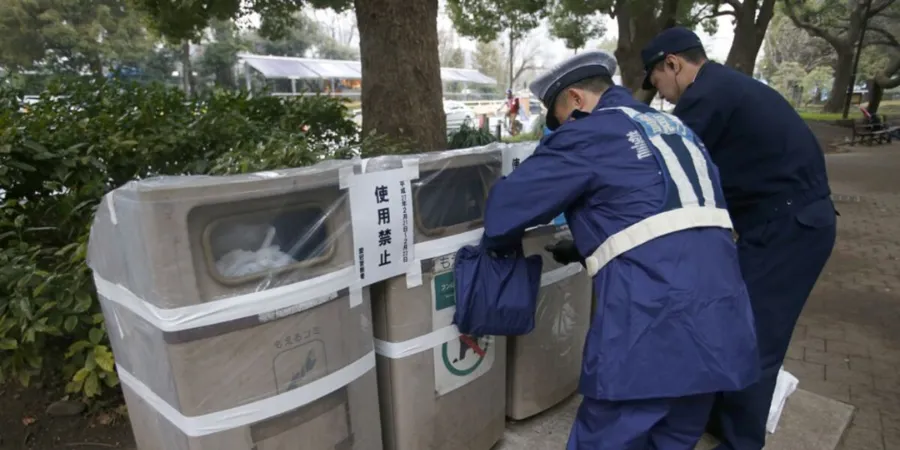
Most visitors notice it within hours of landing. The streets are spotless, yet there is almost nowhere to throw anything away. Public bins were largely removed after the 1995 sarin gas attack on the Tokyo subway, when authorities took them off the streets as a security measure, and many never came back. The Aum Shinrikyo cult carried the sarin onto trains in plastic bags and pierced them with sharpened umbrellas, but bins were seen as an easy place to hide dangerous substances, and the attack reshaped how Japan views public containers.
The expectation now is simple: you carry your rubbish with you until you reach a bin, usually at a convenience store (commonly 7-Eleven, Lawson, or FamilyMart), a station, or beside a vending machine. It’s traditionally considered socially bad etiquette to eat while walking, so bins are typically found where you buy food, not scattered along the street. You can sit down at a store or park bench to finish your snack and dispose of the wrapper properly.
In Shibuya, where visitor numbers have surged, the ward has introduced patrols and fines for littering. On-the-spot fines of ¥2,000 began on 1 June 2026, under a revised ordinance that also requires food and drink shops around Shibuya, Harajuku and Ebisu stations to put out bins.
Why there is no tipping in Japan
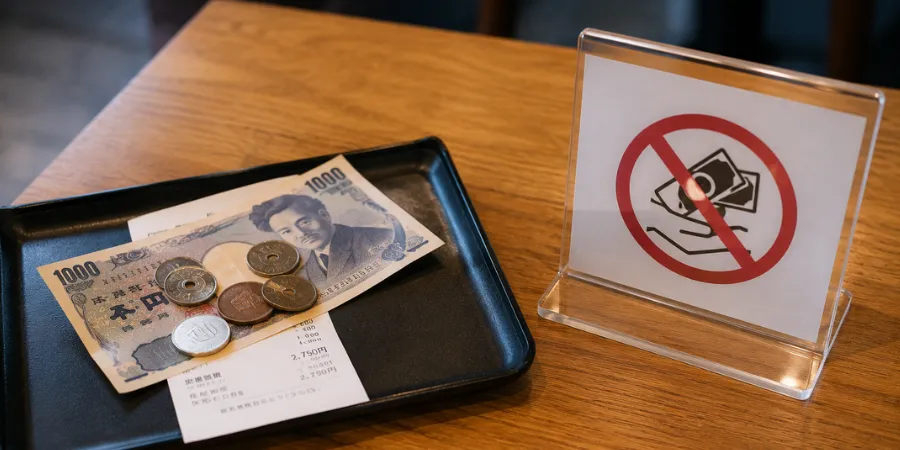
Tipping is not part of Japanese service culture. If you tip, it will usually cause polite confusion. You might also see a member of staff hurry after you to return it. Attentive service is treated as the standard, and not something that earns a bonus. This is an idea rooted in omotenashi, the principle of wholehearted hospitality. When you pay, the staff have already done their job to the best of their ability, and extra money feels like you’re questioning whether they earned their wage.
The rare exception is a high-end ryokan or a private guide. Gratuity is occasionally accepted if it is presented discreetly inside an envelope, never as loose cash. In these cases, a small gift or thank-you note often works better than cash.
Why Japanese buildings skip the fourth floor
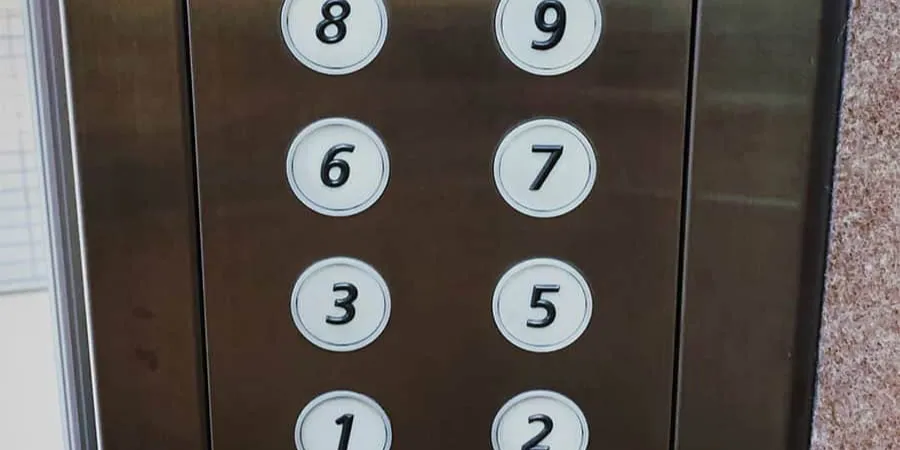
When you step into a Japanese lift, you might notice that the fourth floor is sometimes quietly skipped. The number four, shi, is a homophone for death, so many hospitals, hotels and apartment buildings leave it out. It is the same as when some Western buildings omit the thirteenth. The number nine, ku, which sounds like the word for suffering, is occasionally avoided too.
The same superstition shows up in everyday life, which is why gift sets and crockery rarely come in fours.




Can you go to an onsen with tattoos?
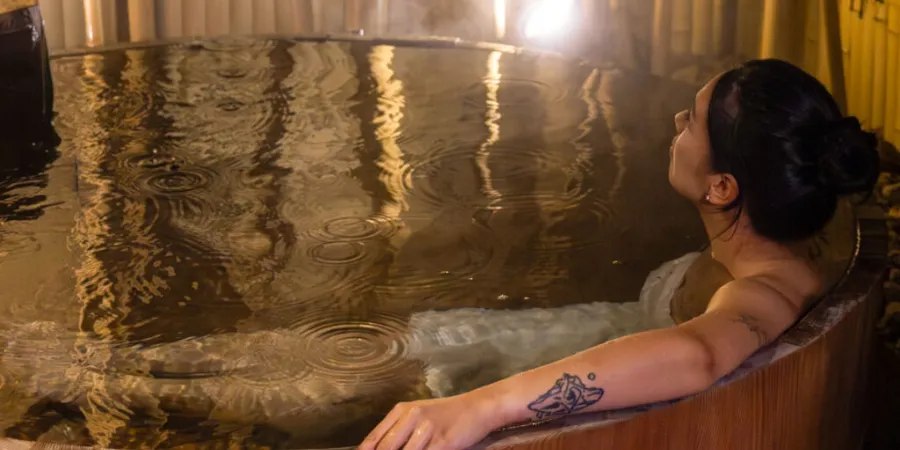
A tattoo can keep you out of a public bath. Since tattoos were historically linked to the yakuza, many onsen and sento still display strict no-tattoo rules to maintain a calm atmosphere for all guests. More than just aesthetics, it’s deeply rooted in Japanese cultural perceptions.
If your tattoo is small, a waterproof cover-up sticker sold at drugstores is usually enough to get you in. Apply it before arriving and check that it stays secure during bathing. For larger pieces, look for a tattoo-friendly onsen. These are increasingly common in tourist areas like Tokyo, Osaka, and popular destinations such as Hakone and Kyoto. In Kinosaki Onsen, all seven public baths accept tattoos of any size without a cover.
You can also book a private bath, known as kashikiri, where the rule does not apply. Many places rent them out for a fixed time slot, which suits couples, families and friends. Before visiting, always check the facility’s website or call ahead to confirm their tattoo policy, as rules vary significantly between locations. Many modern onsen are updating their policies to accommodate international visitors, but traditional establishments remain stricter.
Which side of the escalator to stand on
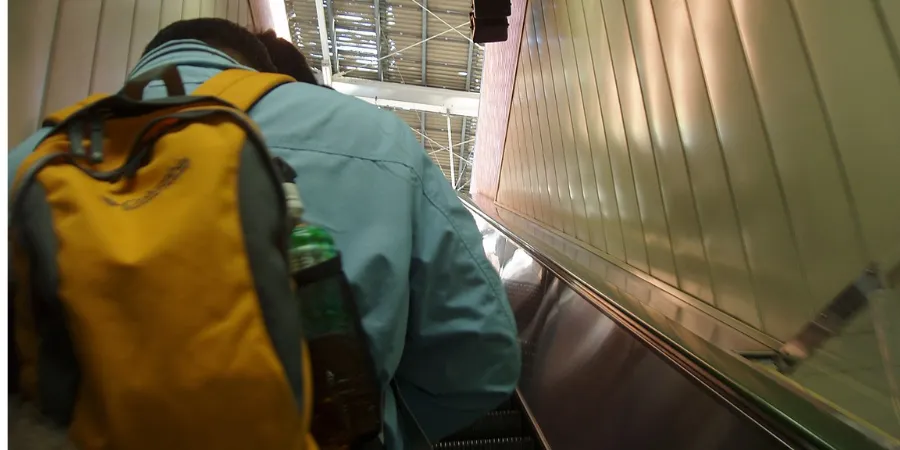
On escalators, you stand on one side and leave the other clear for people walking. However, the sides depend on where you are. In Tokyo and most of eastern Japan, you stand on the left. In Osaka and much of the Kansai region, you stand on the right. Officially, rail operators now ask everyone to stand still on both sides for safety. In summer 2026, 58 railway and transport operators ran a nationwide campaign asking passengers to stand still and hold the handrail, but the regional habit holds firm.
Osaka’s right-side rule is usually traced to an announcement at Hankyu’s Umeda Station in 1967, and the 1970 Osaka World Expo cemented it. Tokyo’s left side became the norm in the late 1980s without any official instruction. Both habits are now deeply set.
Chopstick etiquette and taboos in Japan
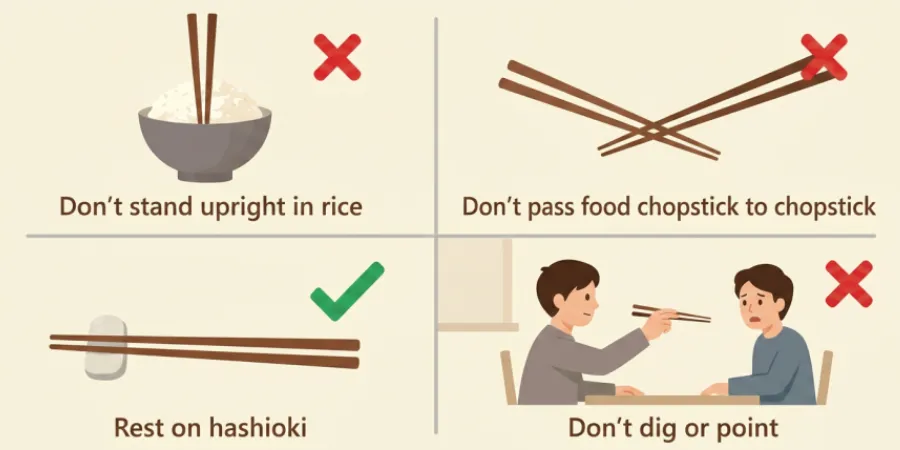
A few chopstick habits are genuine taboos because they echo funeral rites:
- Never stand your chopsticks upright in a bowl of rice, which mirrors an offering made to the dead.
- Never pass food directly from your chopstick to someone else’s, which recalls the ritual of passing cremated bones between mourners.
- Between bites, rest your chopsticks on the small holder, the hashioki, or lay them across the edge of your bowl.
- Don’t dig into food with your chopsticks, or point at people with them.
Why slurping noodles is polite in Japan
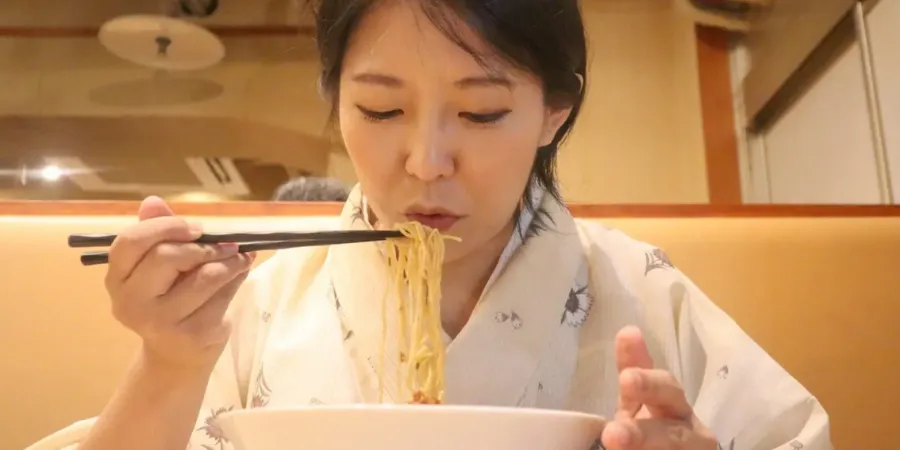
Slurping your ramen or soba is not rude in Japan. If anything, it is encouraged. Drawing the noodles in with a little air cools them, carries the aroma of the broth, and signals that you are enjoying the meal. It also prevents the noodles from getting soggy. The one place to keep it quiet is a Western-style restaurant or a plate of pasta, where the convention does not carry over.
When to take your shoes off in Japan
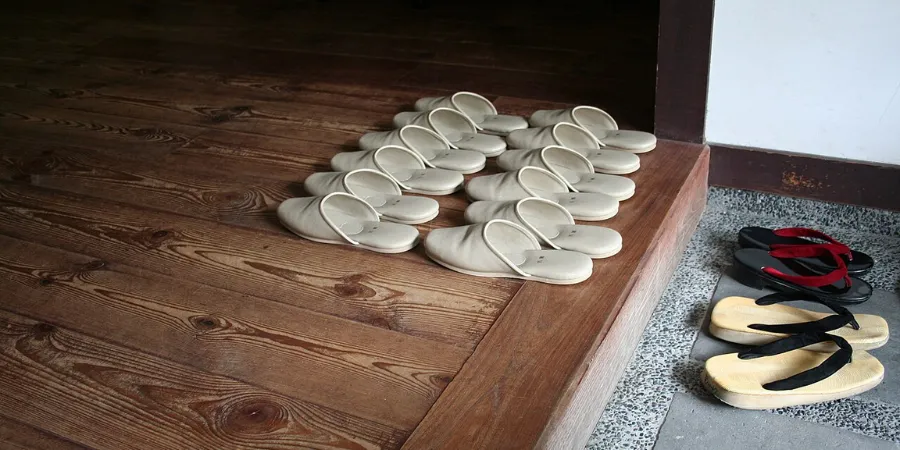
Your shoes may come off more often than you expect. You remove them at the entrance, the genkan, of any home, most ryokan, many temples, and some traditional restaurants and clinics. The step up from the lower entrance to the raised floor marks the boundary between outside and inside. Look out for slippers laid ready for you, a separate pair kept only for the toilet, and the rule that tatami is for socks or bare feet alone. Once your shoes are off, turn them to face the door so they are ready when you leave. In some places, you’ll swap to indoor slippers after the genkan.
Other everyday rules worth knowing
Beyond these big topics, several smaller habits also shape daily life in Japan.
The money tray at shops
When you pay at a store or convenience shop, you don’t hand cash directly to the staff. Instead, you place your money on the small tray near the counter. The cashier retrieves it from there and returns your receipt and change on the same tray. It’s about efficiency and avoiding awkward hand-to-hand exchanges, especially during busy rush hours.
No calls on the train
On trains, quiet is the norm. Avoid phone calls and send messages instead, keep conversations low, and switch your phone to silent. Near the priority seats, rail companies such as Tokyo Metro ask passengers to turn phones off when the carriage is crowded.
No eating while walking
Most Japanese don’t eat while walking. It’s considered poor etiquette to wander with food in hand. Instead, stores provide seating or a small area where you can finish your snack before disposing of the wrapper. Exceptions include festival grounds and some tourist areas.
Blowing your nose in public
Sniffle quietly, but don’t blow your nose openly in public spaces like trains or restaurants. It’s seen as intrusive. Use a restroom if you need to. Carrying a small handkerchief is also common.
Platform queuing
Before trains arrive, queue in marked lines on the platform. Lines are marked by carriage number. When the train stops, people exit first, then you board. Don’t push or block the doorway.
Frequently Asked Questions (FAQs)
Are there any bins at all in Japan, or is it completely bin-free?
Japan isn’t completely bin-free. You’ll find bins at convenience stores, train stations, vending machines, parks, and some public areas. The key is that public street bins are rare. Most are concentrated at purchase points or transit hubs.
Is tipping ever okay in Japan, or is it always wrong?
Tipping is almost always unnecessary and can confuse staff. The only exceptions are high-end ryokan (traditional hotels) or private guides, where a small gift or discreet envelope cash may be accepted. Even then, a thank-you note often works better than money.
What numbers should I avoid in Japan beyond the 4th floor?
Beyond four (shi, which sounds like death), nine (ku, which sounds like suffering) is also sometimes avoided, for example in some hospital room numbers and in gift sets.
Can tattoo stickers guarantee I’ll get into any onsen?
No. Cover-up stickers work for small tattoos at many facilities, but some traditional onsen ban all visible tattoos regardless of size. Always check the policy online or call ahead. Tattoo-friendly bathhouses and private kashikiri options are more reliable for larger pieces.
Does the escalator rule apply to all escalators, or just train stations?
The left/right rule applies to most public escalators: train stations, department stores, shopping malls. However, many stations now officially ask people to stand on both sides for safety. The regional habit still holds firm in daily life.
What’s the actual consequence if I eat while walking in Tokyo?
There’s no legal penalty, but you might receive subtle disapproval: people avoiding you, staff giving you a look. In designated no-walking-eating zones, you could be asked to stop. It’s culturally discouraged, not legally enforced.
Is blowing my nose illegal on trains, or just rude?
It’s not illegal, just socially unacceptable. Public nose-blowing is seen as disruptive and unhygienic. Use a restroom if you need to blow your nose openly.
Do I have to queue in lines on train platforms, or is it optional?
Queuing is strongly expected, not optional. Lines are marked by car numbers, and boarding out of order can cause confusion or delays. During rush hours, staff may enforce it.