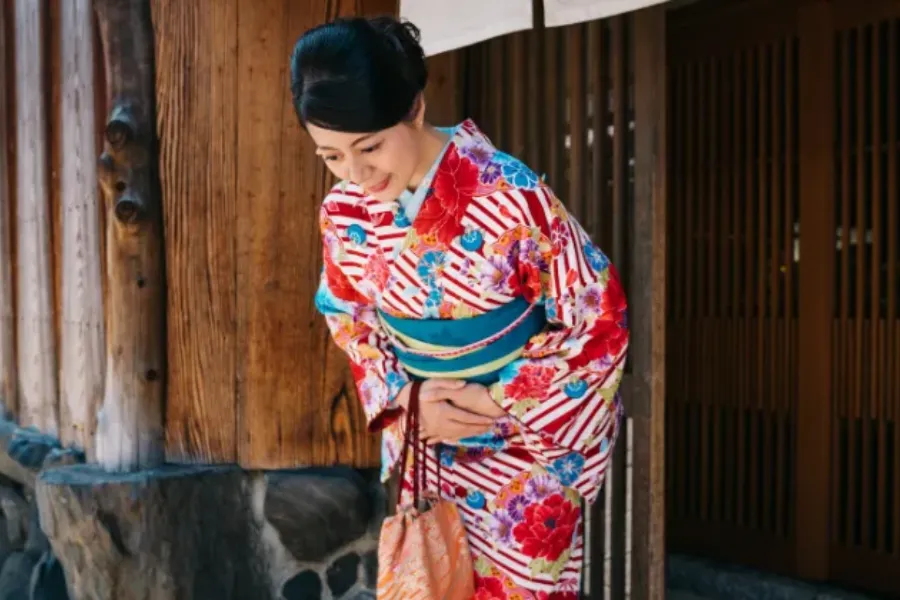
In Japan, New Year’s (oshōgatsu / お正月) is one of the most important holidays of the year. Unlike the party-heavy countdowns common elsewhere, it’s closer in spirit to Christmas in the UK: quiet, family-focused, and full of rituals that mark a clean break between the old year and the new.
Below is a list of the key New Year’s traditions in Japan, from what families eat at home to what happens at shrines, post offices, and even the workplace.
At a glance
1. Oshōgatsu (お正月): the New Year holiday itself

Oshōgatsu refers to the New Year period, typically from 1–3 January, though preparations begin well before midnight on 31 December. Many businesses close, public transport runs on holiday timetables, and families return to their hometowns. Homes are cleaned thoroughly beforehand in a ritual called ōsōji (大掃除), symbolising the removal of bad luck and unresolved problems from the previous year.
For visitors, this period feels noticeably calmer in cities like Tokyo, while regional towns and family neighbourhoods come alive.
Kadomatsu, shimenawa and kagami mochi: the New Year decorations
In the last days of December, homes and shops put up decorations to welcome the toshigami, the god of the new year. Kadomatsu (門松), arrangements of pine and cut bamboo, stand in pairs either side of the entrance, with the evergreen pine standing for long life. A shimenawa (しめ縄), a rope of twisted rice straw hung with white paper streamers, goes over the door to keep misfortune out, often dressed with fern fronds and a bitter orange (daidai), whose name sounds like “generation after generation”. Indoors, kagami mochi (鏡餅), two round rice cakes stacked one on the other and usually topped with a daidai, sits in the tokonoma alcove or on the household shrine. Its name means “mirror rice cake”, after the round bronze mirrors kept as sacred objects in Shinto, and Helen Gunsaulus, writing in 1923, linked its shape to the mirror used to coax the sun goddess Amaterasu out of her cave in Japanese myth. Many families avoid decorating on 31 December itself, since putting everything up at the last minute (ichiya kazari) is thought to be disrespectful to the god.


2. Toshikoshi soba (年越しそば): noodles for longevity
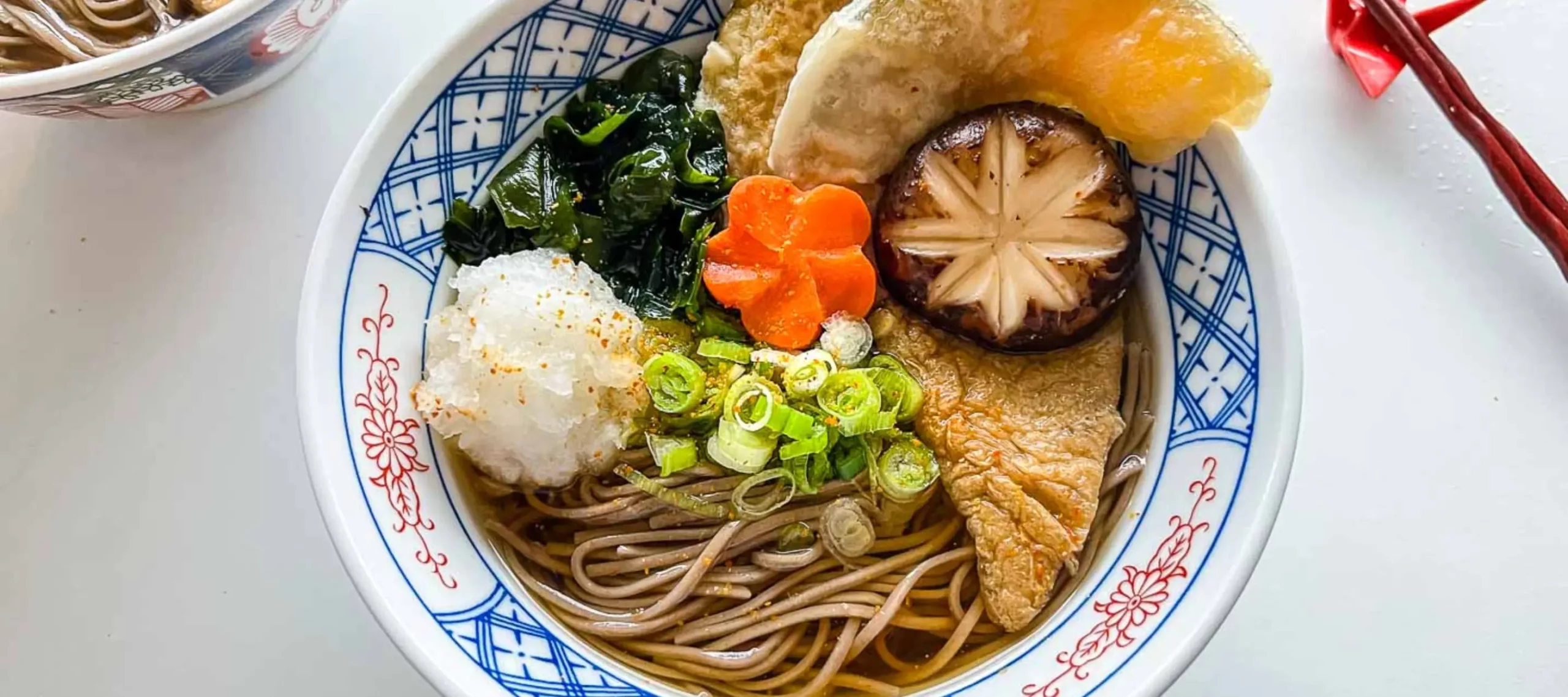
On the evening of 31 December, families eat toshikoshi soba, simple buckwheat noodles served hot in broth or cold with dipping sauce. The noodles’ length represents longevity, while their easy-to-cut texture symbolises letting go of the year’s hardships.
You’ll find soba shops packed late into the night, especially near stations. In Tokyo, neighbourhood soba-ya often stay open until just before midnight.
3. Ozōni (お雑煮): welcoming the year with mochi
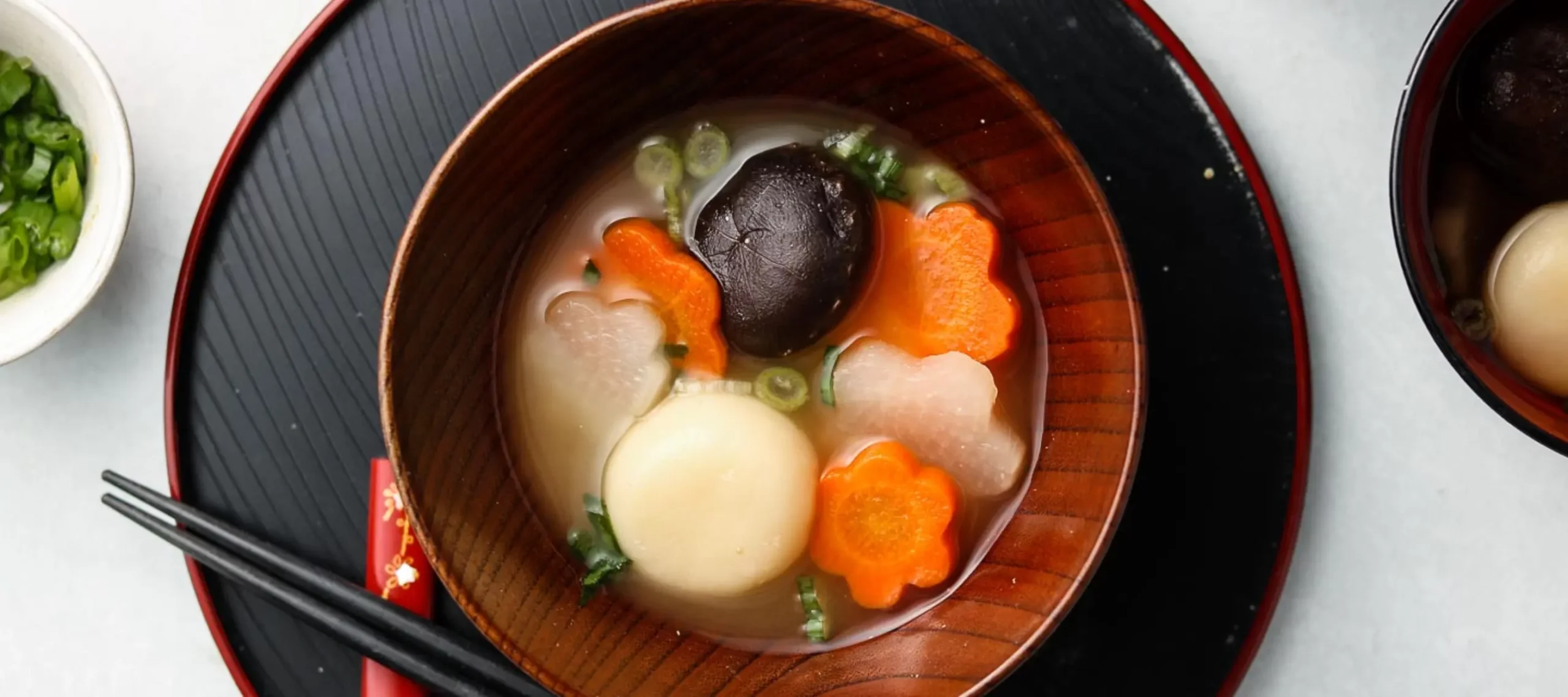
Eaten on New Year’s Day, ozōni is a clear or miso-based soup containing vegetables, chicken or fish, and mochi (餅) rice cakes. The dish varies widely by region: Kanto-style ozōni is usually clear with square mochi, while Kansai versions often use white miso and round mochi.
Mochi stretches as it’s cooked and eaten, symbolising good fortune and continuity into the year ahead.
Osechi ryōri (おせち料理) and toso: the New Year’s Day feast
Alongside ozōni, many families eat osechi ryōri, a spread of mostly cold dishes packed into stacked lacquer boxes (jūbako) and made before the holiday so that nobody has to cook in the first days of January. Each dish carries a wish: sweet black beans (kuromame) for good health and hard work, herring roe (kazunoko) for plenty of children, and prawns, curled like a bent old back, for a long life. Department stores and convenience stores take orders for ready-made osechi boxes from the autumn.
The meal often opens with toso (屠蘇), sake infused with medicinal herbs and spices and drunk on New Year’s morning to ward off illness in the year ahead. Gunsaulus recorded toso being served with ozōni on New Year’s Day and offered at the family shrine first.
4. Otoshidama (お年玉): New Year’s pocket money
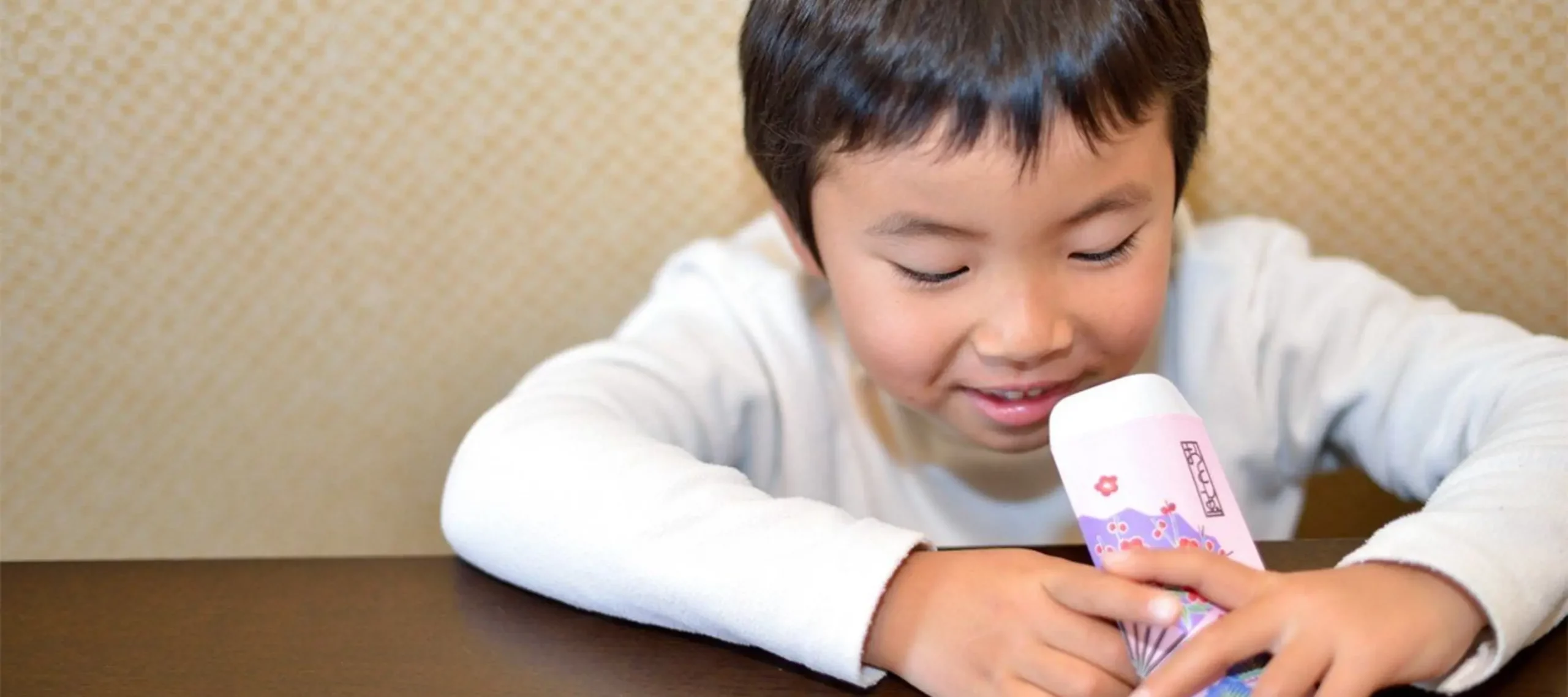
For children, New Year’s means otoshidama: cash gifts from parents, grandparents, and relatives. The money is placed inside small decorative envelopes called pochibukuro (ポチ袋), often illustrated with zodiac animals or playful designs.
Amounts vary by age, but the tradition teaches gratitude and responsibility rather than excess.




5. Hatsumōde (初詣): the first shrine or temple visit
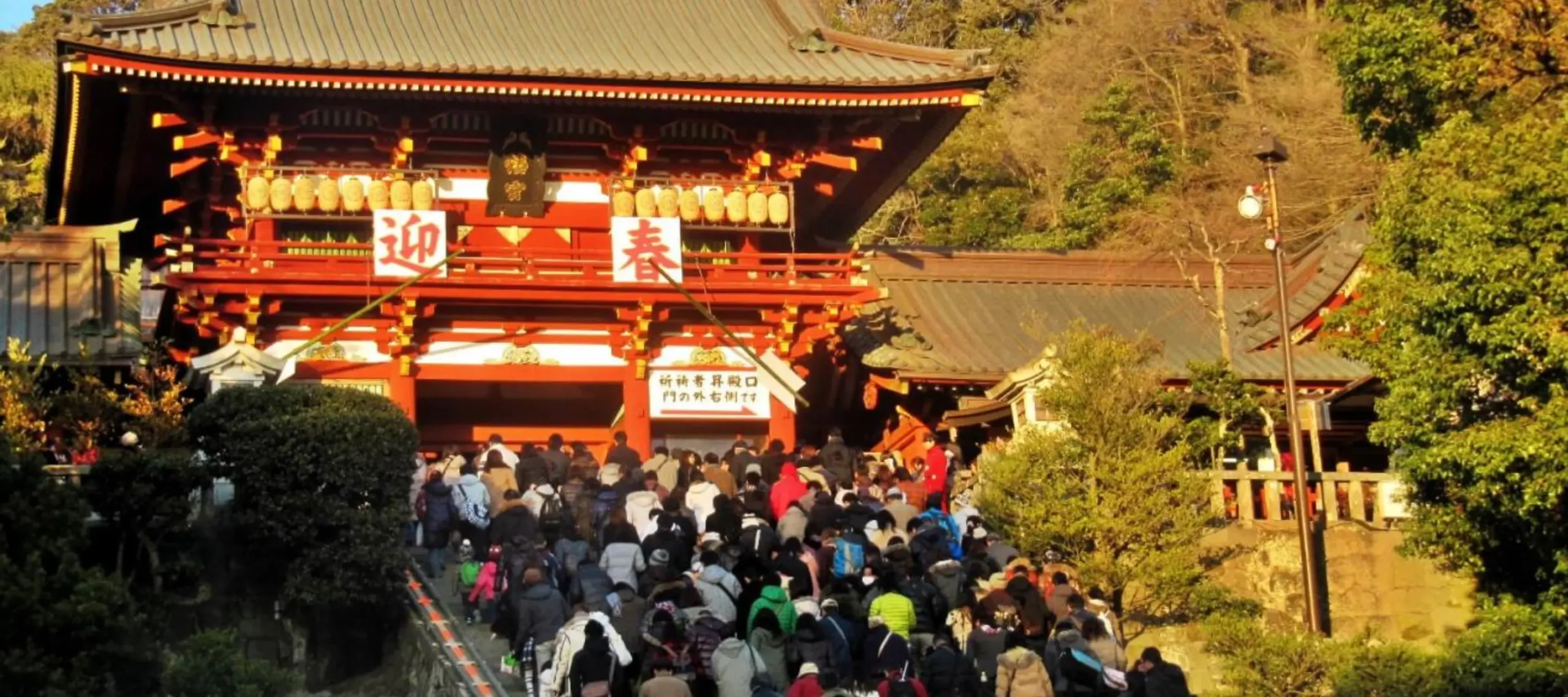
One of the most visible New Year’s traditions is hatsumōde, the first visit of the year to a shrine or temple. Families and friends go to pray for health, happiness, and success. Popular spots like Meiji Jingū (明治神宮) in Tokyo draw millions between 1–3 January.
During hatsumōde, people often:
-
Buy omamori (お守り) protective charms
-
Draw omikuji (おみくじ) fortune slips
-
Return last year’s charms for ritual burning
Queues can be long, but the atmosphere is calm and festive rather than hectic.
6. Joya no kane (除夜の鐘): 108 bells at midnight
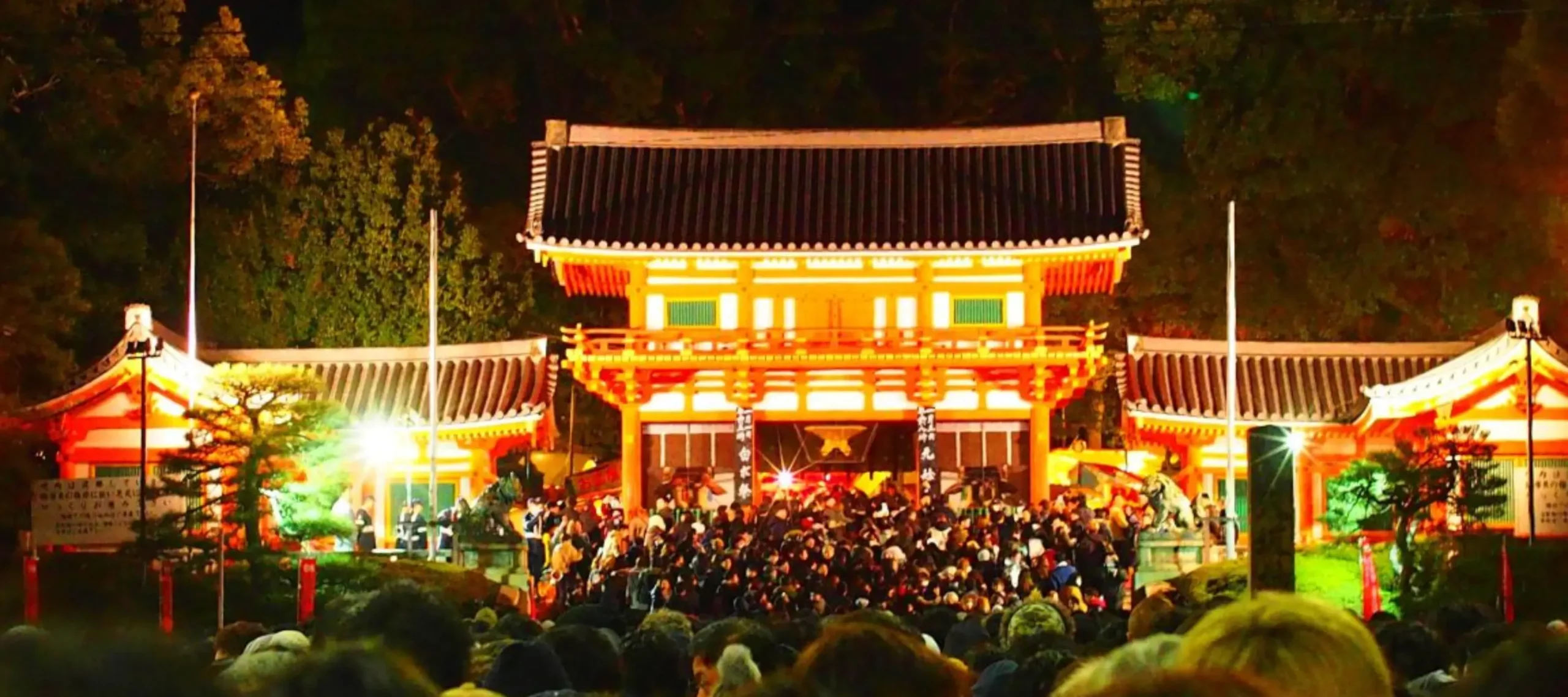
At Buddhist temples across Japan, bells are rung 108 times on New Year’s Eve in a ritual called joya no kane. The number represents the 108 earthly desires in Buddhism, and each bell strike is meant to cleanse one of them.
Some temples allow visitors to take turns ringing the bell themselves, a quietly memorable way to mark the moment the year changes.
7. Nengajō (年賀状): New Year postcards with a twist
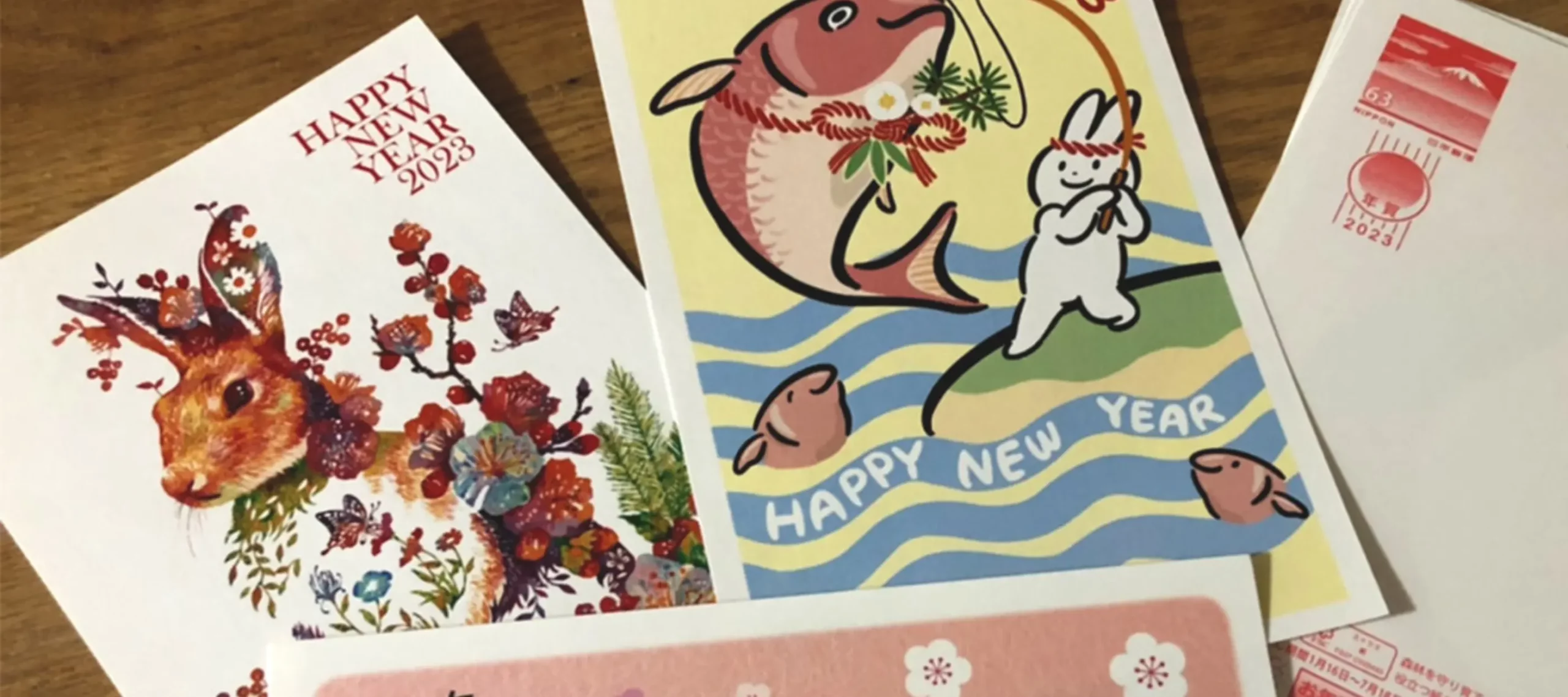
Instead of Christmas cards, Japan has New Year postcards sent to friends, colleagues, and extended family called nengajō. These cards thank recipients for the past year and wish them well for the next.
A distinctive feature is the printed lottery number on each card. Every year, Japan Post runs a draw where winning numbers receive prizes such as cash, stamps, or food items. It’s common for households to check their stacks of cards together after New Year’s Day.
8. Oseibo (お歳暮): year-end gifts of thanks
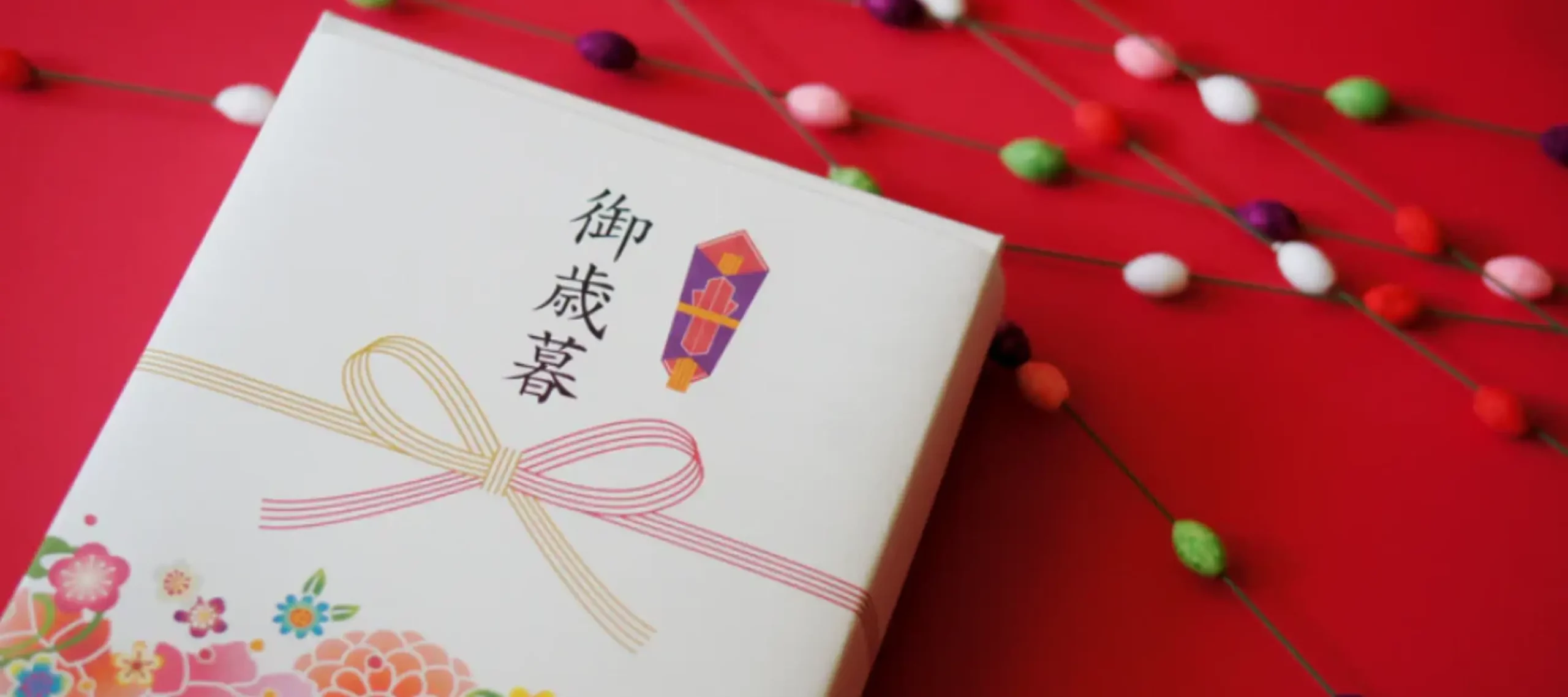
While not limited to New Year’s Day itself, oseibo is closely tied to the season. Given in December, these gifts express gratitude to colleagues, clients, teachers, or family friends.
Typical oseibo gifts range from chocolates and coffee to premium items like A5-grade wagyū beef or seasonal fruit. Department stores dedicate entire floors to oseibo displays from November onwards.
9. Workplace customs during the New Year period
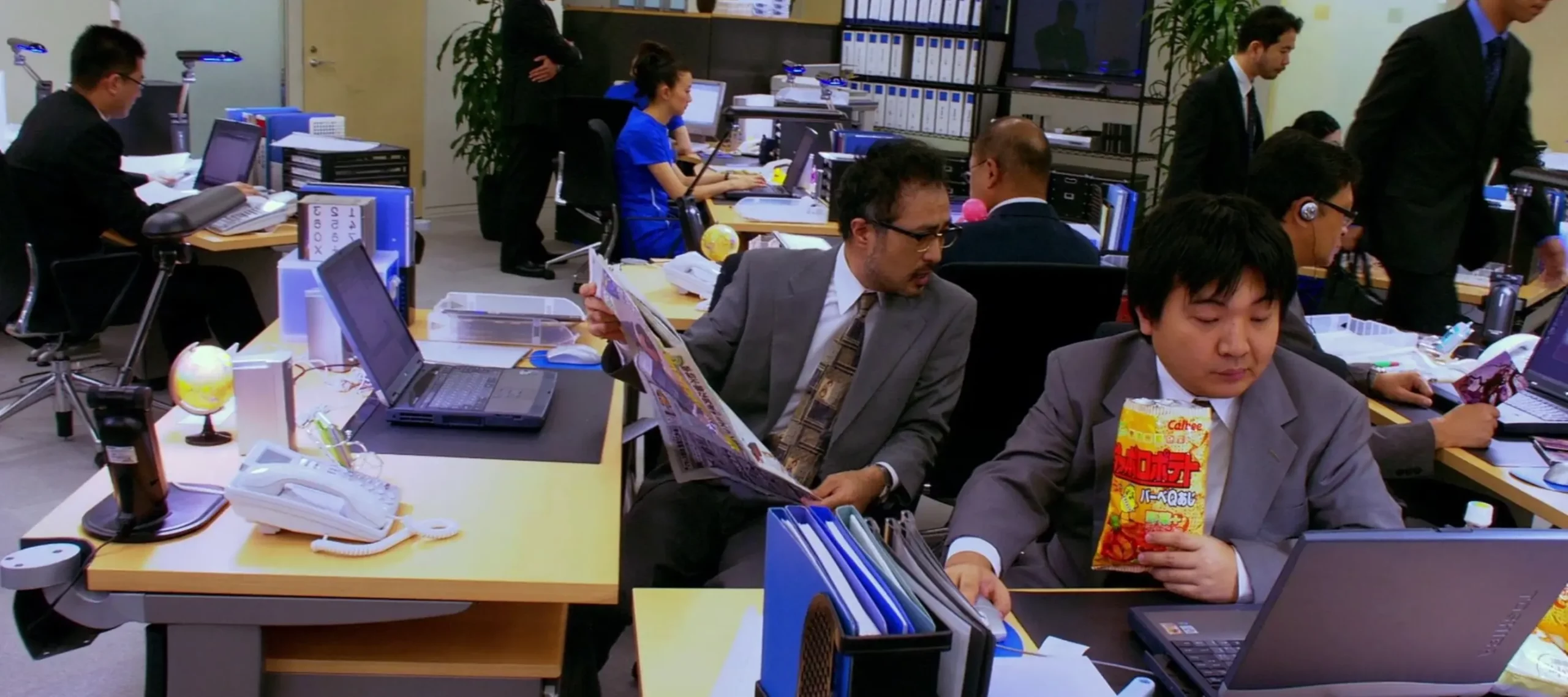
Although offices usually close from late December to early January, New Year’s still carries professional meaning. Nengajō are often exchanged between colleagues, and it’s polite to acknowledge the year’s end with brief messages of thanks.
When work resumes, staff may bring small regional snacks (omiyage / お土産) from their hometown visits to share with the team.
10. A quieter, family-first celebration
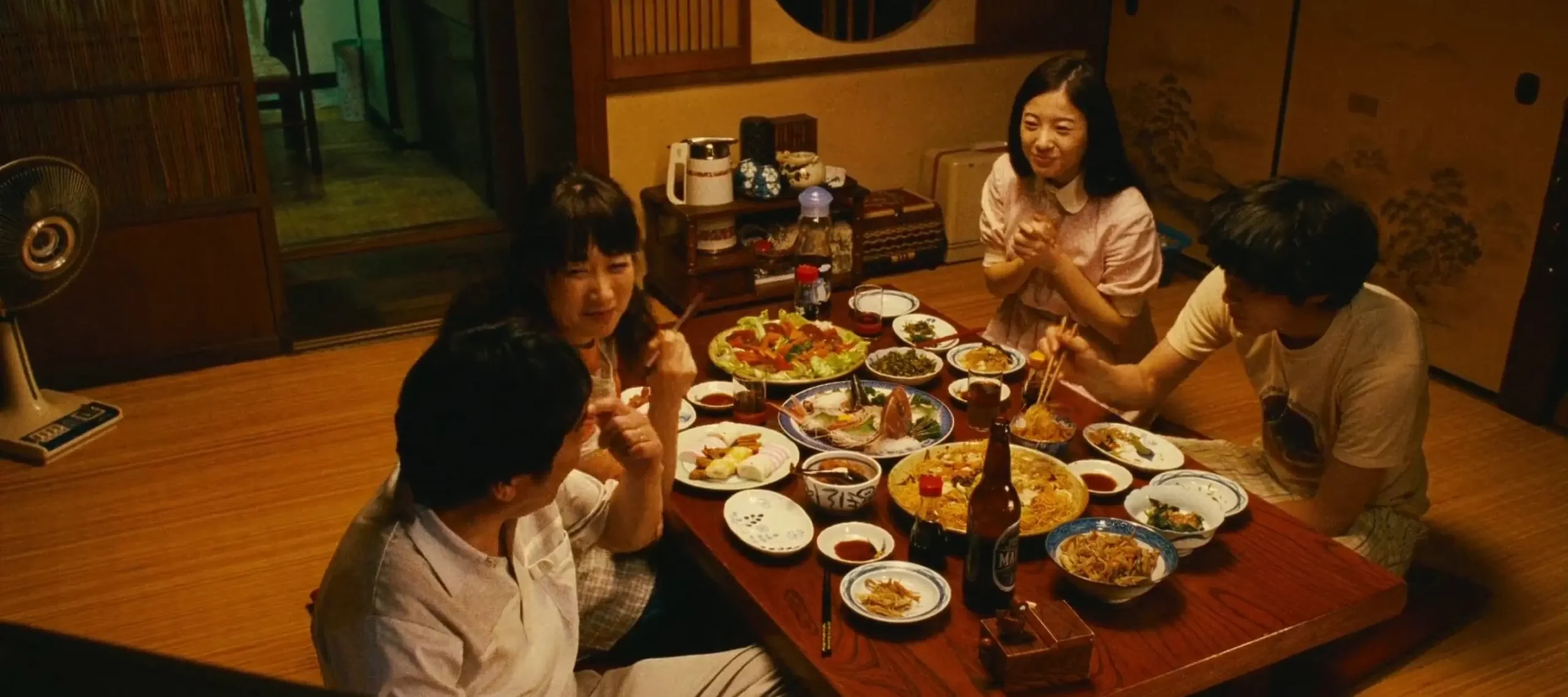
Perhaps the most striking tradition is what doesn’t happen. There are no widespread fireworks, loud countdowns, or late-night parties. New Year’s in Japan values resetting, reflection, and togetherness. Television schedules feature traditional music and variety shows, meals are shared slowly, and the pace softens.
After New Year’s Day: hatsuyume, nanakusa, kagami biraki and dondo-yaki
The New Year season carries on well past 3 January, with a run of smaller customs through the first half of the month.
Hatsuyume (初夢): the first dream of the year
The first dream of the new year, hatsuyume, is said to hint at your luck for the months ahead. Many people count the night of 1 January, while others keep to the older custom of the night of 2 January. The luckiest things to dream of are, in order, Mount Fuji, a hawk and an aubergine, and each carries a pun: Fuji suggests “immortal” (fushi), taka (hawk) suggests rising high, and nasu (aubergine) suggests achieving something (nasu). Gunsaulus noted that people slipped a picture of the treasure ship of the Seven Lucky Gods (takarabune) under their pillow to encourage a good dream.
Nanakusa gayu (七草粥): seven-herb porridge on 7 January
On 7 January, many families eat nanakusa gayu, a light rice porridge cooked with seven spring herbs: seri (water dropwort), nazuna (shepherd’s purse), gogyō (cudweed), hakobera (chickweed), hotokenoza (nipplewort), suzuna (turnip) and suzushiro (daikon). It gives the stomach a rest after days of rich food and is eaten to stay well through the year. Supermarkets sell the herbs in ready-made packs in the days before.
Kagami biraki (鏡開き): opening the mirror rice cake on 11 January
The kagami mochi comes down on 11 January in most of Japan, though some regions keep a different date. It is never cut with a knife, which would suggest cutting ties. Instead the hardened mochi is broken by hand or with a wooden mallet, and the pieces are toasted and added to ozōni or sweet red bean soup (oshiruko).
Dondo-yaki (どんど焼き): burning the decorations around 15 January
Around 15 January, shrines and neighbourhoods light bonfires known as dondo-yaki or sagichō to burn the kadomatsu, shimenawa and other decorations, along with the first calligraphy of the year (kakizome). Burning them sees the toshigami off with thanks, and many people toast mochi on long sticks over the flames, since eating it is said to keep you healthy through the year.
Experiencing New Year’s in Japan as a visitor
If you’re in Japan over New Year’s:
Expect limited opening hours on 1 January
Plan shrine visits early morning or late evening to avoid peak crowds
Book accommodation and transport well in advance
The reward is a rare glimpse into Japanese family life and seasonal customs that locals hold dear.
New Year’s in Japan is a lot about starting clean, eating with intention, and carrying gratitude into the year ahead—one bowl of soba, postcard, and shrine visit at a time.
Sources and further reading
- Helen Cowen Gunsaulus, The Japanese New Year’s Festival, Games and Pastimes (1923)