
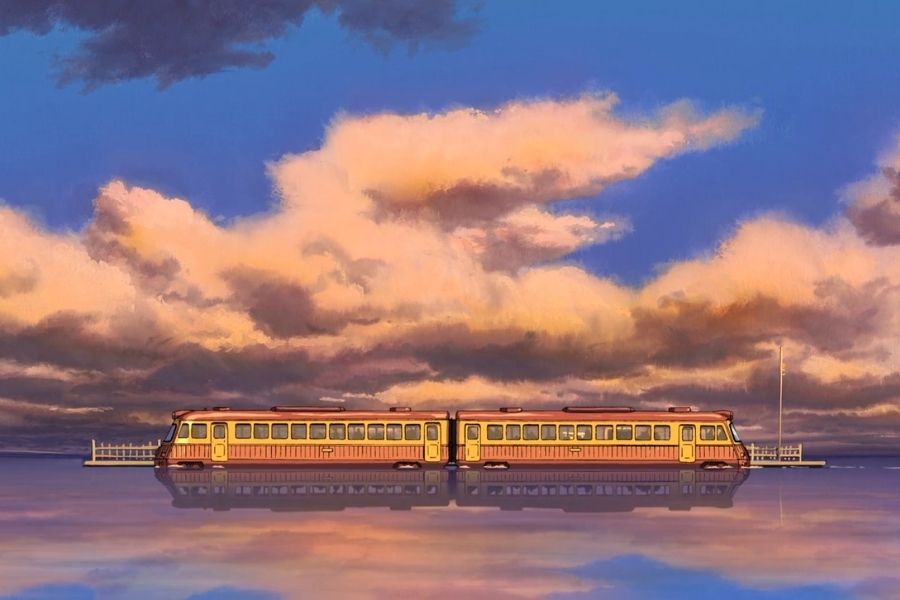
Have you ever watched an anime and thought to yourself, ‘I wish that place was real’? Think of that Spirited Away sea railway scene, where the train is gliding along the ocean and supposedly will never return from where it’s going. Have you ever wanted to be Chihiro at that moment? Or how about the stunning green forest from Princess Mononoke? Did you know you can actually visit it? Real life Studio Ghibli locations have been found to be the inspiration for some of the greatest works of the anime world, and the locations are just as magical as the scenes!

Map of Studio Ghibli Locations in Japan
In this post we will run through just a handful of the different real life Studio Ghibli locations from your favourite animes that you didn’t realise actually existed, ranging from Princess Mononoke on Yakushima island to Shimonada Station from Spirited Away and more!
1. Dogo Onsen, Matsuyama: Spirited Away
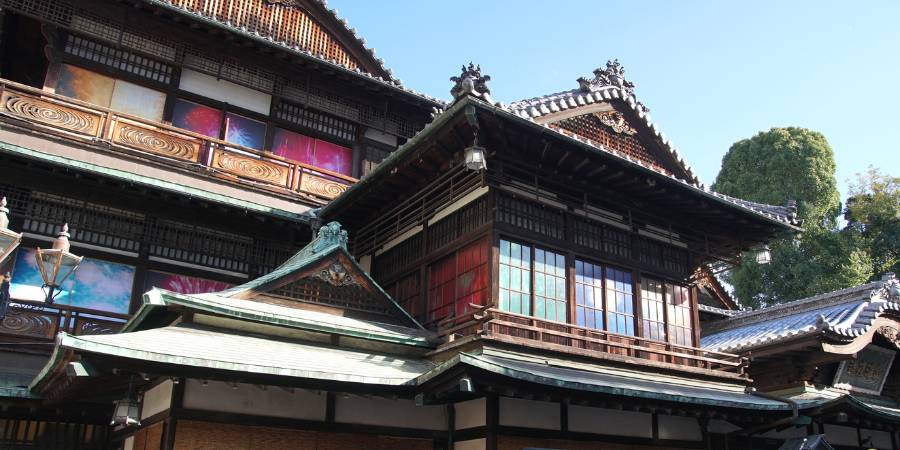
The Dogo Onsen Main Building, a historic Japanese bathhouse known for its intricate traditional architecture. Source: momokota
When we think of the beautiful scenes and backdrops from Studio Ghibli, one movie instantly comes to mind: Spirited Away. Although every scene is a masterpiece, only a handful of real places are linked to it by fans, and Dogo Onsen is one of them.
Where is Dogo Onsen, and what makes it so special? For fans of the animated film, Dogo Onsen is often said to be one of the inspirations for the film’s iconic bathhouse. Known as the “emperor bathhouse,” this historic onsen is located on “sleepy Shikoku,” the smallest of Japan’s four main islands.
You can find this scene from Spirited Away with little trouble, as it is located in Ehime’s main city, Matsuyama. Take the Iyotetsu tram from JR Matsuyama Station and you’ll get there in about 30 minutes.
Although the resemblance isn’t immediately obvious, fans point to the subtle details as the link to the bathhouse in Spirited Away. To fully experience the ambiance, consider staying at a traditional Dogo Onsen ryokan nearby!
2. Hanasaki Line, Kushiro to Nemuro: Spirited Away
Location: 2-chōme-23 Kaizuka, Kushiro, Hokkaido 085-0816, Japan
This list couldn’t resist a Spirited Away scene… But understandably so, as one of the most significant scenes in this Ghibli masterpiece also happens to have a spookily similar location in real life! Located on Japan’s northern island of Hokkaido, the Hanasaki Line is often said to have inspired Hayao Miyazaki’s stunning train scene.
The Hanasaki Line is the name given to the eastern stretch of the JR Nemuro Main Line, which runs between Kushiro and Nemuro stations. When riding a train on this line, you pass wetlands and the coastline that faces the Pacific Ocean, with beautiful reflections cast in the water.
Its serene backdrop makes it one of the most magical journeys on this list, and it is easy to see why fans connect it with the film.
The Hanasaki Line runs a limited number of trains each day, so check the timetable before you go. From Tokyo, you can take a flight to Kushiro Airport, then take the airport bus to JR Kushiro Station, where Hanasaki Line trains start.


3. Sayama Hills, Tokorozawa: My Neighbour Totoro

Scenery of Sayama Hills at Rokudoyama in the spring, showcasing lush greenery and winding paths. Source: goriyan
Location: Japan, 〒359-1153 Saitama, Tokorozawa, Kamiyamaguchi, 雑魚入351
Nicknamed ‘Totoro forest’, this is one of the few Studio Ghibli locations with a confirmed link: the Totoro no Furusato Foundation, which looks after the woodland, says the Sayama Hills inspired My Neighbour Totoro. Sayama Hills is a 3,500 hectare mix of lush greenery, farms, fields, and of course, home to Totoro’s forest.
To get to Totoro’s Forest, you can take a train from Tokyo, either from Ikebukuro Station or Shinjuku Station, and ride to Seibu-Kyujo-mae station. From here, it’s a short 25-minute walk to the forest. The forest stretches across Saitama and Tokyo prefectures. The area is ideal for hiking, with paths winding through thick forests, ponds, and rolling hills, making it feel like stepping into Totoro’s world.
Sayama Hills is a safe family-friendly destination with clearly marked paths, regular maintenance, and occasional guided tours that enhance the experience within Totoro Forest Japan. As you hike around Sayama Hills, do check out Kurosuke’s House, a lovingly preserved old farmhouse cared for by the Totoro no Furusato Foundation, the trust Hayao Miyazaki helped to set up to protect the Sayama Hills. Kurosuke’s House opens on Tuesdays, Wednesdays and Saturdays from 10:00 to 15:00, and is closed on public holidays and over New Year.
Here, you can often find Totoro memorabilia, local crafts, and exhibits that keep the Totoro Forest Spirit alive.
4. Takase, Yamagata: Only Yesterday
Location: Shimohigashiyama, Yamagata, 990-2232, Japan
Now, how about this for a classic Studio Ghibli movie? For fans of Only Yesterday, this lesser-known gem from Studio Ghibli beautifully comes to life in the Takase District of the Yamagata Prefecture. The scenery in this district is almost too similar to the scenes during the countryside holiday of Taeko.
In the Takase District, you will definitely come across vibrant fields of yellow flowers, particularly the lovely safflowers that bloom during the season of July. The beautiful yellow flower fields from Isao Takahata’s movie are accessible to visitors, so make sure you hike through the Takase district of Yamagata to take in the safflower scenery.
Conveniently, this is one of the easier Studio Ghibli locations to access from this list, as Takase is in Yamagata Prefecture. The Yamagata Shinkansen takes about two and a half hours from Tokyo to Yamagata Station, and from there it is a short ride on the JR Senzan Line to Takase Station. As soon as you arrive, you’ll see the striking similarities between the film’s backdrops and the Takase District.
5. Arashiyama Bamboo Forest, Kyoto: The Tale of the Princess Kaguya

A path leading through the iconic Arashiyama Bamboo Grove in Kyoto, lined with woven bamboo fencing. Source: Fynn Geerdsen
Location: Sagaogurayama Tabuchiyamacho, Ukyo Ward, Kyoto, 616-8394, Japan
For fans of Princess Kaguya, the Arashiyama Bamboo Forest provides a serene setting reminiscent of scenes from the film, which reimagines the classic Japanese folk tale The Tale of the Bamboo Cutter. Isao Takahata’s 2013 film opens in a tranquil bamboo forest, where a bamboo cutter finds the tiny princess. So where can you find a forest like it? It’s located right in Kyoto.
The Arashiyama Bamboo Forest or Sagano Bamboo Forest located in Arashiyama, Kyoto, is one of Japan’s most iconic and instagrammed locations, and its towering bamboo is often linked by fans to the forest scenes in Princess Kaguya. Don’t worry too much about getting there either, as it sits only a couple of minutes’ walk away from the Torokko Arashiyama Station.
Beyond the bamboo forest, many visitors also enjoy exploring the area and can try out different activities like the Arashiyama Bamboo Forest Train or the Kyoto Bike Tour: The Bamboo Forest & Arashiyama.
Channel your inner Princess Kaguya and immerse yourself in the lush bamboo pathways of Arashiyama!








6. Shimonada Station, Ehime: Spirited Away
Location: Futamicho Okubo, Iyo, Ehime 799-3311, Japan
Does this train stop look familiar? That’s right, it’s Shimonada Station, a tiny platform facing straight out to sea that fans often compare to the magical sea railway of Spirited Away. Shimonada Station is in Iyo, Ehime Prefecture.
Take the JR Shikoku Yosan Line, which can be boarded at JR Matsuyama Station, and you’ll arrive at the Shimonada Station in less than an hour. For a more luxurious experience, try out the Iyonada Monogatari, a sightseeing train that runs along the Iyo-Nada coast between Matsuyama, Iyo-Ozu and Yawatahama, mainly on Saturdays, Sundays and public holidays.
Though a bit off the beaten path, visiting Shimonada Station is a great opportunity to spend a few days exploring Shikoku, the island made up of Ehime and three other prefectures. For die-hard Spirited Away fans, you’re in luck, because the Shimonada Station and the Dogo Onsen are actually both in Ehime!
As you visit Shimonada Station and Dogo Onsen, you can definitely maximise your Shikoku experience by exploring the beautiful coastline of Seto Inland Sea, cruising through the Naruto Whirlpools, and visiting the remote Iya Valley.
7. Satsuki and Mei’s House, Ghibli Park: My Neighbour Totoro
Location: Japan, 〒480-1342 Aichi, Nagakute, Ibaragabasama, 乙1533−1
Isn’t this one strikingly similar to the original? It might seem like a little bit of a cheat, because this house was built from the film. Satsuki and Mei’s House was first built for the 2005 World Expo in Aichi, and here you’ll truly feel like you are actually in a Ghibli film.
Today the house stands in the Dondoko Forest area of Ghibli Park, inside the Expo 2005 Aichi Commemorative Park in Nagakute. To go inside it you need the O-Sanpo Day Pass Premium, which costs 7,300 yen on weekdays and 7,800 yen on weekends and holidays for adults and covers all five areas of the park. The O-Sanpo Day Pass Standard (3,300 yen on weekdays, 3,800 yen on weekends and holidays) covers only Ghibli’s Grand Warehouse, Mononoke Village and Valley of Witches, so it does not include the house.
The best way to get here is from Nagoya Station. Take the Higashiyama subway line to Fujigaoka and change to the Linimo line for Ai-Chikyuhaku-Kinen-Koen Station, right next to the park. On park opening days, Meitetsu also runs a shuttle bus from the Meitetsu Bus Center at Nagoya Station.
This is as “real” as Studio Ghibli locations can get, but don’t just stop here. Ghibli Park is a magical Ghibli wonderland with five areas: Ghibli’s Grand Warehouse, Hill of Youth, Dondoko Forest, Mononoke Village and Valley of Witches, so be sure to explore what else it has to offer!
8. Yakushima, Kagoshima: Princess Mononoke
Location: Yakushima, Kumage District, Kagoshima, Japan
Any Princess Mononoke fan will have undoubtedly noticed the lush forest we see in the film. This may be the most out of the way location on this list, but it certainly isn’t one to miss. The forest is located on the island of Yakushima, Kagoshima prefecture.
The island of Yakushima, an enchanting and lush UNESCO World Heritage site, is widely said to have inspired the forests of Studio Ghibli’s Princess Mononoke. This ancient forest, with its towering cedar trees and mist-covered landscapes, mirrors the mystical, untouched nature depicted in the film.
There are no direct flights from Tokyo to Yakushima. Yakushima Airport has direct flights from Osaka Itami and Fukuoka, and a flight of about 35 minutes from Kagoshima, and the jetfoil and ferry services to the island also leave from Kagoshima. Kagoshima.
If you’re thinking of spending more than a day, there are hotels in Yakushima Island that you can choose from, such as Sankara Hotel & Spa or the Yakushima Green Hotel.
9. Okinoshima Fort Ruins, Tomogashima, Wakayama: Castle In The Sky
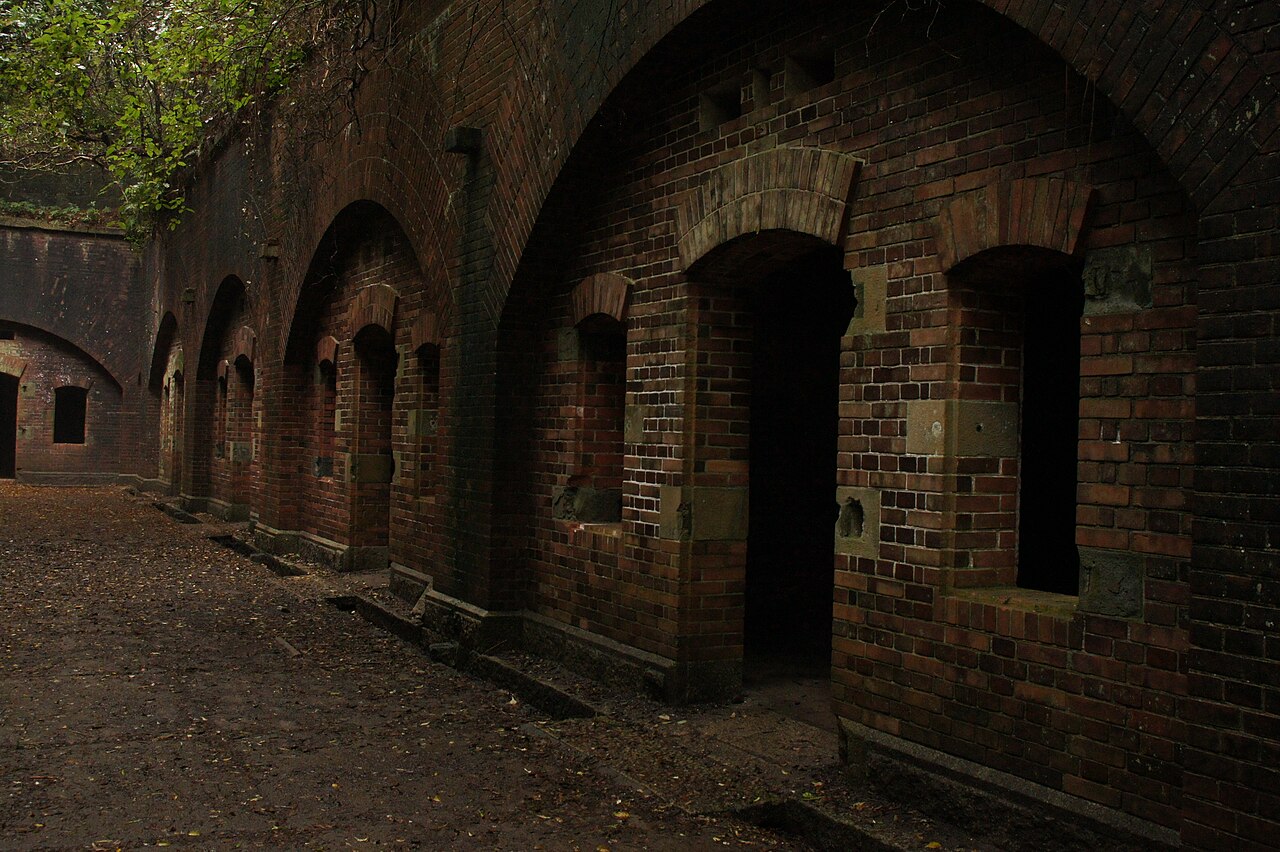
The red brick fort ruins on Okinoshima, Tomogashima. Photo: Kazue Asano, CC BY-SA 2.0, via Wikimedia Commons
Location: Tomogashima, Kada, Wakayama City, Wakayama, Japan
No Studio Ghibli tour would be complete without mentioning Laputa: Castle In The Sky. Tomogashima is a small group of islands off the coast of Wakayama City, and its island of Okinoshima is the place fans compare to Laputa. Make sure you head to Wakayama: this Okinoshima is a different island from the sacred Okinoshima in Fukuoka, which is closed to visitors.
Okinoshima was a military fortress from the Meiji era until World War II, and its red brick gun batteries, tunnels and underground rooms are now slowly being taken over by trees and moss. That overgrown look is why it is often said to resemble the ruins of Laputa, and you will regularly see cosplayers recreating scenes from the film. The No. 3 Battery is the largest of the ruins, with a brick underground facility you can walk through.
To get there, take the Nankai Kada Line from Wakayama-shi Station to Kada Station (about 30 minutes), walk about 20 minutes to Kada Port, then catch the ferry, which takes about 20 minutes. A return ferry ticket costs 2,200 yen for adults. Boats run infrequently and do not sail on some days, so check the Tomogashima Kisen timetable before you go.
10. Kitazawa Flotation Plant, Sado Island: Castle In The Sky
Location: Japan, 〒952-1539 Niigata, Sado, Aikawa Kitazawamachi, 3−2
Another place fans connect with Castle in the Sky is the Kitazawa Flotation Plant on Sado Island. Completed in 1938, the plant processed ore from the Sado mines until 1952, and it is now a historic site filled with abandoned industrial structures reclaimed by nature.
Since the island is about 50 kilometres off the coast of Niigata Prefecture, it can be accessed by ferry through two of its ports: Ryotsu and Ogi.
The Ryotsu route starts from Niigata Port, while the Ogi route starts from Naoetsu Port. Niigata is on the Joetsu Shinkansen from Tokyo. For Naoetsu, take the Hokuriku Shinkansen to Joetsu-Myoko and change to a local train. Take note that the Naoetsu to Ogi route does not operate during winter.
The towering concrete ruins and moss-covered walls of this area are often said to echo the film’s depiction of Laputa, the ancient floating island. The mysterious yet enchanting atmosphere of the Kitazawa Flotation Plant provides visitors an extraordinary experience of adventure and discovery!
If you plan on visiting Sado Island for the Kitazawa Flotation Plant, it’s highly recommended to set your trip in August just in time for Earth Celebration! Sado Island hosts this annual music festival that features several renowned Kodo taiko drummers and dancers.
Combine your visit to the Kitazawa Flotation Plant with the Earth Celebration and you’ve got a rich mix of Studio Ghibli locations, music, and Japanese history!
11. Yufuin Floral Village, Oita: Kiki’s Delivery Service
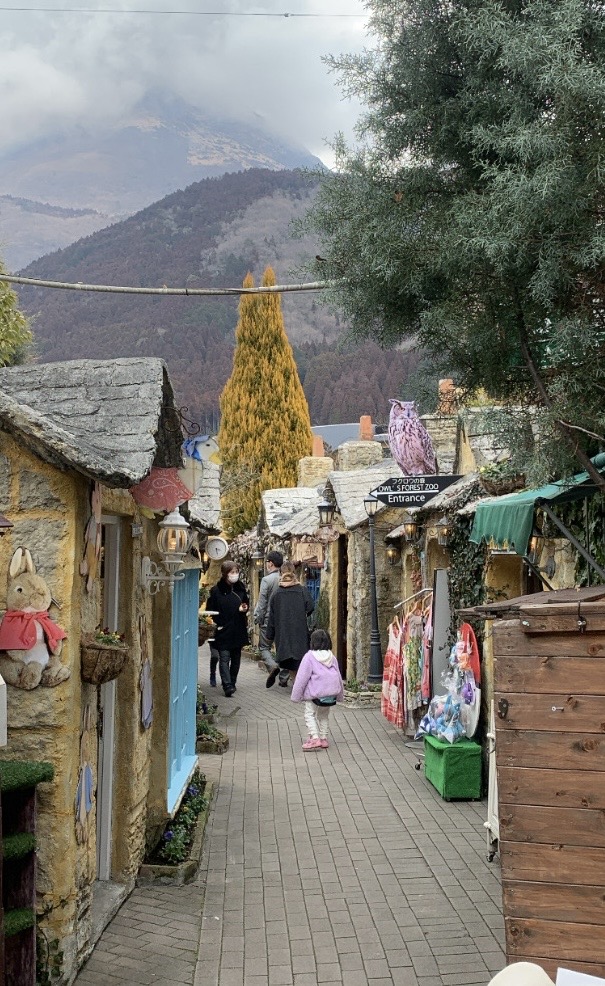
Cotswolds style cottages in Yufuin Floral Village. Photo: Bpcon98, CC0, via Wikimedia Commons
For Kiki’s Delivery Service enthusiasts, this one’s for you! In Yufuin, Oita Prefecture, the Yufuin Floral Village is a quaint little themed village built to resemble the Cotswolds region of England, and its storybook lanes are often compared to Kiki’s seaside town.
The Ghibli stop here is the Kiki’s Delivery Service corner inside the village’s HIGH STREET shop, which sells goods such as pouches modelled on the radio Kiki carries in the film. The same shop has a Totoro corner too. Elsewhere in the village, Owl’s Forest lets you meet owls up close (700 yen for adults, plus 300 yen to hold an owl and have your photo taken), and the Owl’s Photo Studio offers costumes for photos.
The Yufuin Floral Village can be accessed via bus or train from Fukuoka, Beppu, and Kumamoto. All routes lead to JR Yufuin Station, about a 15 minute walk from the village. Of course, Yufuin Floral Village is the destination for fans who want to step into Kiki’s world, but it makes a fun stop on a day in Yufuin even if you’re not a fan of Studio Ghibli.
12. Yamate, Yokohama: From Up On Poppy Hill
Location: Naka Ward, Yokohama, Kanagawa 231-0862
From Up on Poppy Hill is set in the Yamate Area of Yokohama. Known for its Western-style architecture and picturesque landscapes, Yamate resembles the film’s coastal town where Umi and Shun’s story unfolds.
In the film, there are two shops that are found in Yamate; the meat shop and the flower shop. You can imagine how the shopkeepers must feel knowing that their actual stores have been immortalised in this nostalgic and beautiful Studio Ghibli film! Walking along Motomachi Street and through Yamate Park, you’ll encounter tree-lined paths, European inspired architecture, and views of the bay that are all reminiscent of the scenery in the film.
Getting to the Yamate area gives you two options: the Motomachi-Chukagai and Ishikawacho stations. If you want to explore the entire district of Yamate, go to Ishikawacho Station on the JR Negishi Line.
Additionally, you can also visit Negishi Natsukashi Park (The Old House of Yagishita Family), which is often said to resemble Coquelicot Manor, the boarding house overlooking the port in From Up On Poppy Hill.
13. Tokorozawa Aviation Museum, Saitama: The Wind Rises

Tokorozawa Aviation Memorial Park Aviation Museum. Source: FreeBackPhoto
Location: Japan, 〒359-0042 Saitama, Tokorozawa, Namiki, 1 Chome−13 内 所沢航空記念公園
The Tokorozawa Aviation Museum in Saitama is a fitting tribute to the spirit of The Wind Rises, Studio Ghibli’s film centred on aviation, dreams, and the life of aeronautical engineer Jiro Horikoshi. Explore the history of aviation and admire the museum’s exhibits on flight engineering! In fact, the museum showcases real aircraft, flight simulators, and interactive displays that showcase the mechanics and beauty of aviation. Please note that the museum is closed for renovation from 1 September 2025 until the end of March 2027 (planned), so check the official site before you go.
The best way to get to Tokorozawa is by train. If you’re coming from Tokyo, you can ride the Seibu Ikebukuro Line from Ikebukuro Station to Tokorozawa Station in about 30 minutes, then change to the Seibu Shinjuku Line for one stop to Kokukoen Station, which sits beside the park. The Seibu Shinjuku Line from Seibu-Shinjuku Station runs straight to Kokukoen if you’re in Kabukicho.
In The Wind Rises, the film presents Jiro’s sketches that are made up of blueprints of early aircraft models, vintage planes, and other mechanical parts of aeroplanes. You can find similar sketches displayed in the museum, providing a unique opportunity for fans to immerse themselves in the real-life history that inspired Studio Ghibli’s take on aviation.
14. Tomonoura, Fukuyama: Ponyo
Location: Tomo Tomocho, 福山市 広島県 720-0201, Japan
Studio Ghibli’s Ponyo is a tale of a magical fish-girl and her friendship with a human boy set in a mystical seaside village. The setting of Ponyo is often said to be inspired by Tomonoura, a port town about 14 kilometres south of Fukuyama Station in Hiroshima Prefecture.
This picturesque, old-fashioned fishing town takes pride in its charming fishing townscape as well as its chill and laid-back atmosphere. The town’s narrow streets, traditional wooden houses, and boats dotting the harbour embody the peaceful yet mesmerising visuals of Sosuke and Ponyo’s world.
The best way to get to Tomonoura is via bus from Fukuyama Station. Make sure you look out for buses bound for Tomo Port, which stop at the Tomo Port Bus Stop of Tomonoura.
An itinerary in Tomonoura consists of walking along the port, exploring old temples, and even visiting spots fans link to Ponyo, such as the Joyato, the Edo period stone lantern lighthouse that has become the symbol of Tomonoura. Let the calm and serene waters of Tomonoura take you to Ponyo’s world!
15. Ghibli Museum, Mitaka, Tokyo

A sign for the Ghibli Museum in Mitaka, Tokyo, featuring the iconic Totoro character. Source: Max Harlynking
Location: 1 Chome-1-83 Shimorenjaku, Mitaka, Tokyo 181-0013, Japan
This list cannot end without mentioning the Studio Ghibli Museum located at Mitaka, Tokyo. Instead of visiting the Studio Ghibli locations all over Japan, why not let the Studio Ghibli Museum show you in one giant museum full of magic and art?
Tickets are not sold at the door. They go on sale through Lawson at 10:00 Japan time on the 10th of each month for the whole of the following month, each ticket is for a set date and entry time, and adults pay 1,000 yen. The museum is closed on Tuesdays.
Luckily, this location can be easily accessed by taking the JR Chuo Line from Shinjuku Station to either Kichijoji or Mitaka. If you’re coming from Shibuya, take the Keio Inokashira Line to Kichijoji. From here, you can easily walk to the museum. Designed by Hayao Miyazaki himself, this museum presents itself like a storybook, making visitors feel like they’re literally stepping into a story.
Environments from different Ghibli films are incorporated in the museum, like the statue of the Robot Soldier from Castle in the Sky. A giant Catbus replica from My Neighbour Totoro can be found here too! Inside, the museum’s exhibits are a blend of art, animation, and interactive installations that will show you the process of creating Studio Ghibli films and more behind-the-scenes content you can only find within the walls of this quirky museum. Short films made by Studio Ghibli are also shown exclusively in the in-house cinema.
If you’re a fan of Studio Ghibli films in general, let the Studio Ghibli Museum show you glimpses of their most iconic films and experience the inner workings of Japan’s most beloved animation studio. Who knew the magic and whimsy of the Ghibli universe can easily be found in Tokyo?
Planning a Japan Trip Around These Studio Ghibli Locations
Wrapping up our journey as we discover these real-life Studio Ghibli locations, it’s clear that Studio Ghibli’s worlds aren’t as far away as they may seem. From serene coastal towns to mystical forests, the beautiful landscapes of Japan have truly inspired the Studio Ghibli films we all love and enjoy.
On your next Japan trip, use this list as a guide to help you hunt for these Studio Ghibli locations as part of your itinerary! If you are also thinking of bringing Studio Ghibli to your room, you can check out some merchandise here.


