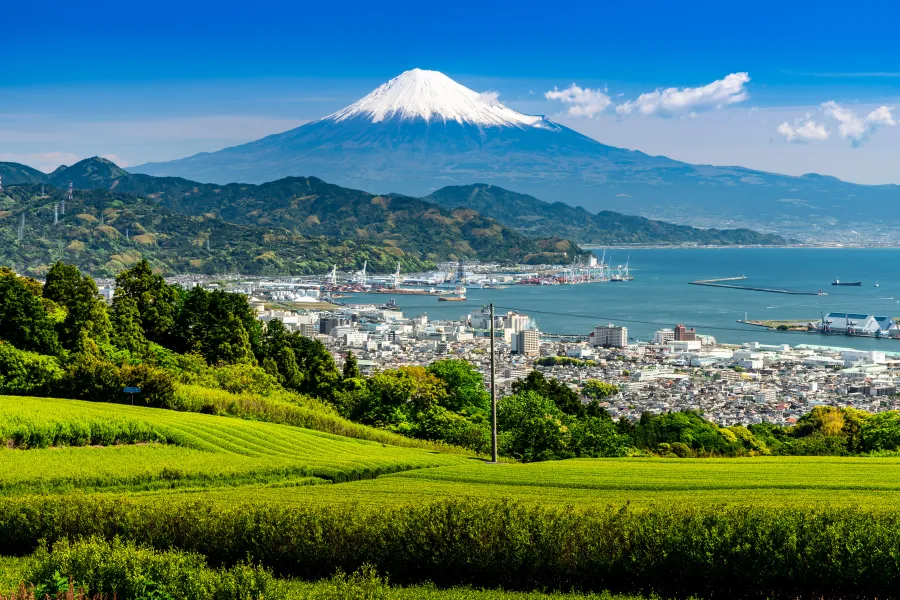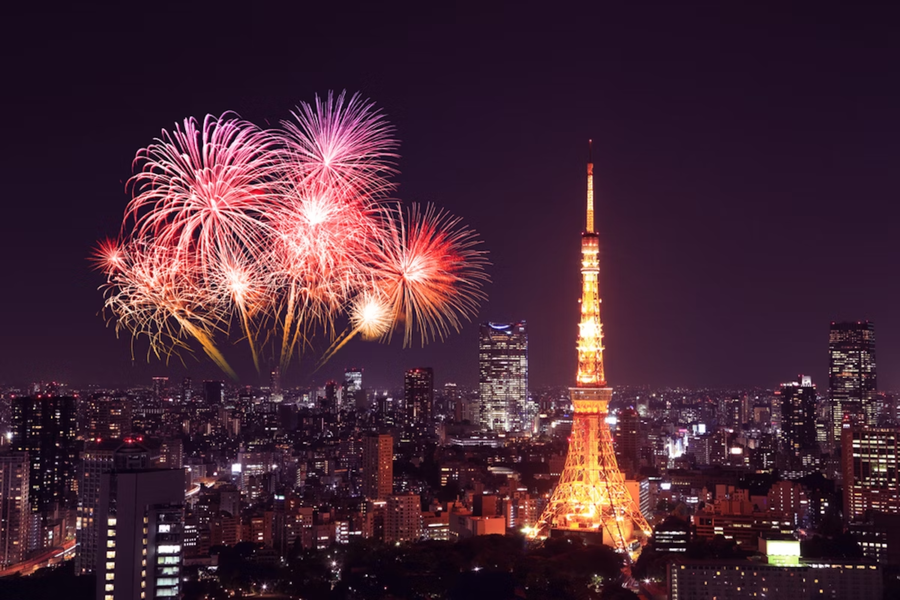
In Japan, renewal shapes January. The New Year sets the tone, but it doesn’t end on January 1st. Rituals, parades, and regional festivals unfold throughout the month. For travellers, it’s a rare chance to see Japan at its most communal, reflective, and energetic. Wondering what a January trip is going to be like? This article gives you an overview.
What to expect
Weather, packing and daylight at a glance
January in Japan is defined by contrast: quiet neighbourhoods after the New Year rush, clear winter skies, and deep snow in the north and mountains. With the right expectations, and a bit of flexibility: it’s an excellent month for festivals, onsen (温泉) stays and crisp city wandering.
Expect the shortest days of the year. Sunset falls roughly between 16:45 and 17:00 in Tokyo and Kyoto, with twilight arriving quickly once the sun dips.
Tokyo / Osaka / Kyoto: 2 to 10°C; cold mornings, bright and dry afternoons.
Tōhoku: –5 to 3°C; heavy snowfall, icy streets, frequent train delays in rural areas.
Hokkaidō: –10 to 0°C; deep powder snow, especially inland and at night.
What to wear
January calls for proper winter layering, especially if you’ll be outdoors for festivals or shrine visits. Start with a thermal base, add a fleece or wool mid-layer, and finish with a windproof, insulated coat. A hat, gloves and scarf are essential after dark, when temperatures drop quickly.
Footwear matters more than in December. Waterproof shoes with good grip, or clip-on ice grips, are strongly recommended outside major cities. Snowy regions such as Akita, Nagano, and Hokkaidō often have compacted ice on pavements. Hand warmers are widely sold at konbini, and coin lockers at stations are invaluable on festival days, so keep a few ¥100 coins handy.
Dry air is common nationwide, so pack moisturiser and lip balm.
Crowds: How the month splits (1 to 3 Jan vs. 4 to 31 Jan)
Crowds peak sharply from 31 December to 3 January. Major shrines and temples, such as Meiji Jingū (明治神宮), Zōjōji (増上寺) and Fushimi Inari Taisha (伏見稲荷大社), can be extremely busy, with managed one-way flows and long queues.
From 4 January onwards, the pace changes dramatically. Cities become calmer, domestic travel drops, and festival crowds are mostly local rather than tourist-heavy. This makes mid-to-late January ideal for regional events, winter landscapes, and relaxed sightseeing, especially if you don’t mind the cold.
If you’re planning New Year shrine visits, arrive very early in the morning or late evening, and allow extra time for transport disruptions and crowd control.


January festivals worth planning around (with travel tips)
Japanese New Year (Shōgatsu 正月): January 1-3
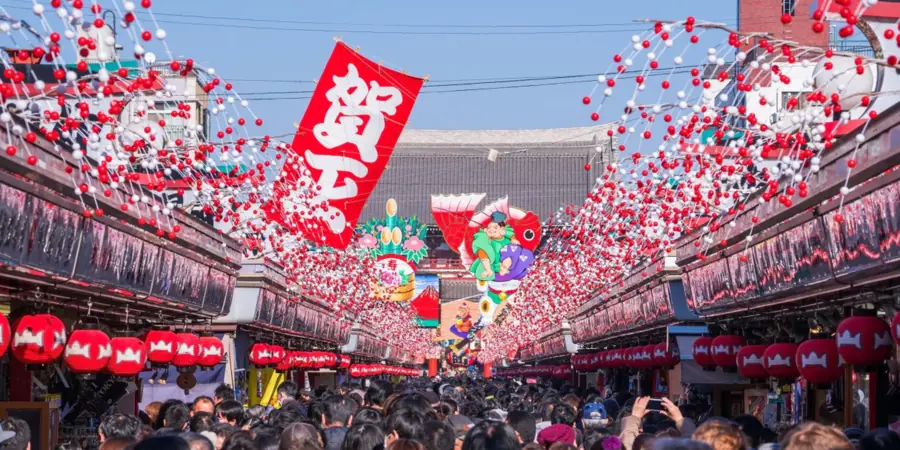
Image credit: Ujido
Location: Nationwide (major shrines and temples across Japan)
Opening Times: Varies by shrine; many open from midnight on January 1
Japan’s New Year is the country’s most important holiday, marked by family gatherings, shrine visits and symbolic meals. Visitors can experience hatsuhinode (初日の出), the first sunrise of the year, and hatsumōde (初詣), the first shrine visit, where people pray for health, luck and success. Streets are calmer than usual, but the atmosphere around temples is lively and deeply communal.
Tip: Public transport runs on holiday timetables, check last trains carefully, especially on New Year’s Eve.
Tamaseseri (玉せせり): Ball-Catching Festival: January 3

Image credit: Visit Fukuoka
Location: 1-22-1 Hakozaki, Higashi Ward, Fukuoka City, Fukuoka
Opening Times: From early afternoon
Held for over 500 years, Tamaseseri pits a land team against a sea team in a ritual contest to claim a sacred wooden ball. The physically demanding match is believed to predict the year’s harvest or fishing fortunes, making it one of Kyushu’s most dramatic New Year events.
Dezome-shiki (出初式) Fire Brigade Parade: January 6
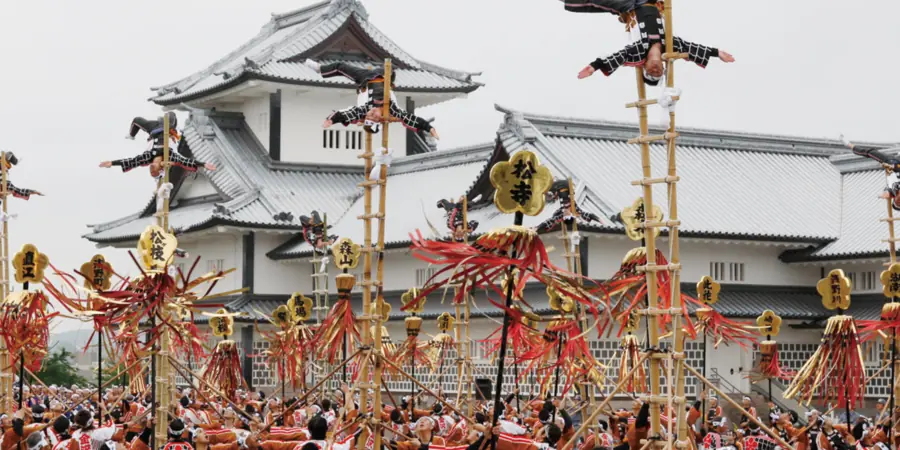
Image credit: Ishikawa Travel
Location: Tokyo Big Sight East Exhibition Building Halls 7 and 8 (10 Ariake 3-chome, Koto-ku, Tokyo)
Time: 9:30-12:00
This ceremonial parade by the Tokyo Metropolitan Fire Department dates back to the Edo period. Alongside modern emergency drills and vehicle displays, the highlight is hashigo-nori (梯子乗り), traditional ladder acrobatics honouring historical firefighters.
Note: Outdoor seating requires an advance lottery application, but the street parade is free and easy to watch without a ticket.
Usokae Festival: January 7

Image credit: Japanistry
Location: Dazaifu Tenmangu, 4-7-1 Saifu, Dazaifu City, Fukuoka
Opening Times: Wooden bullfinches are handed out from around 16:00, the exchange itself begins at 18:00 and runs about half an hour, and the Onisube fire ritual follows from around 19:00
At Usokae (鷽替), visitors exchange wooden bullfinches called uso, symbolically “changing lies” or misfortune for good luck. The ritual centres on honesty and renewal, followed later in the evening by the fiery Onisube Festival.
Tip: The carved bullfinches make meaningful souvenirs, bring cash for small donations.
Maebashi Hatsuichi (前橋初市): January 9

Image credit: Visit Gunma
Location: 2-7-2 Honmachi, Maebashi-shi, Gunma-ken
Opening Times: 09:00 to 21:00
Centred on daruma (達磨) dolls symbolising perseverance, this festival begins with a morning bonfire, during which fulfilled wishes are given thanks. Processions, food stalls, and shopping streets take over the city for the rest of the day.
Tip: Be there before 10:00 to see the daruma burning, the most important moment of the festival.
Tōka Ebisu Festival: January 9 to 11 (8-12 in Kyoto)

Location: Various shrines nationwide (notably Kyoto, Osaka, Hyōgo, Fukuoka)
Opening Times: All day
Dedicated to Ebisu, the god of prosperity, Tōka Ebisu (十日戎) draws hordes of people who pray for business success and financial luck. Shrine maidens known as fukumusume (福娘) sell charms, while food stalls and performances give the festival a lively, celebratory feel.
Coming of Age Day: Seijin no Hi (成人の日): Second Monday of January

Image credit: Web Japan
Location: Nationwide (city halls, civic centres, shrines)
Opening Times: Ceremonies are usually held late morning
Seijin no Hi celebrates those turning 20. Since April 2022 the legal age of adulthood in Japan has been 18, so the ceremony no longer marks that milestone, and many municipalities have renamed it hatachi no tsudoi, the gathering of twenty-year-olds. Women often wear furisode (振袖) kimonos, while men opt for suits or traditional attire. After official ceremonies, friends reunite, and shrine visits follow.
Miyoshi Bondensai (三吉梵天祭): January 17

Image credit: JNTO
Location: 3-2 Akanuma, Hiro-omote, Akita-shi, Akita-ken
Opening Times: Morning onwards
This intense winter festival features bonden, 3.5-metre sacred poles carried and fought over by local teams. The goal is to deliver them to the shrine first, bringing luck, strength, and a good harvest to the year ahead.
Yanagi-no-Okaji & Tōshiya: A Sunday in mid-January
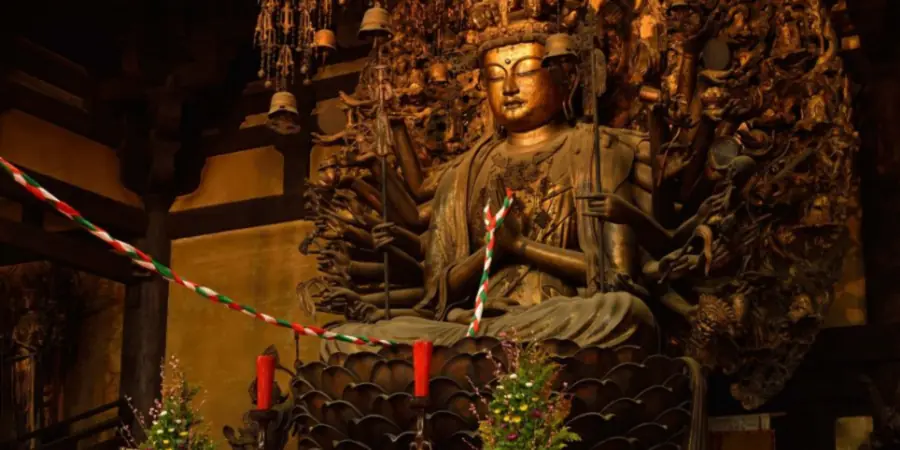
Image credit: Discover Kyoto
Location: Sanjūsangen-dō Temple, 657 Sanjūsangen-dō Mawarichō, Kyoto
Opening Times: Morning to afternoon. The 2026 date was Sunday 18 January
Yanagi-no-Okaji (柳のお加持) is a Buddhist healing rite where worshippers are blessed with water using willow branches. On the same day, Tōshiya (通し矢), a historic long-distance archery contest, takes place along the temple’s 120-metre hall. Visit the temple’s official website for schedules and the ticketing process.
Wakakusa Yamayaki (若草山焼き): Fourth Saturday of January
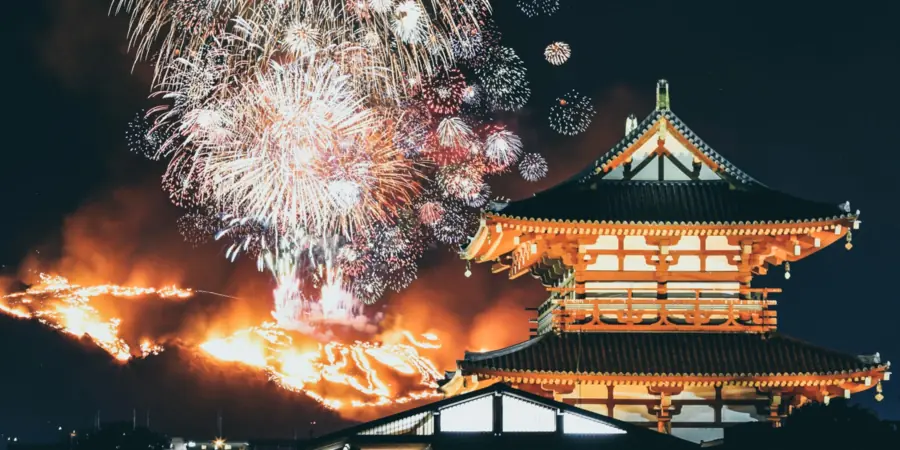
Image credit: Japan Italy Bridge
Location: Mount Wakakusa, Nara Park, Nara
Opening Times: Events from noon; burning from early evening
This dramatic festival sees the grass-covered slopes of Mount Wakakusa set ablaze, a tradition with disputed origins but enormous visual impact. Food stalls and daytime activities lead into an evening of fire and fireworks.
After-hours near key venues: Warm-ups and late bites
Now you’ve filled out your January itinerary. What now? Around festival venues, you’ll still find warm, welcoming places to extend the night.
Near major shrines and events:
- Asakusa & Kōtō City (Tokyo): kissaten (old-school cafés) and casual izakaya open until 22:00 to 23:00, ideal after Dezome-shiki
- Kyoto (Sanjūsangen-dō): small sake bars and cafés around Gojo and Kawaramachi, best reached by bus or taxi after events
- Nara Park: cafés close early, but Nara town offers cosy dining within walking distance of Wakakusa viewing spots
- Fukuoka (Hakozaki / Dazaifu): yatai (屋台) stalls and neighbourhood bars stay lively even in winter
In onsen towns such as Iizaka Onsen, evenings centre on ryokan dining, followed by quiet local bars or hotel lounges rather than nightlife districts.
Souvenirs that make sense in January (and what they cost)

Ramen Shop (2018). Director: Eric Khoo
Now that you’ve seen notable events and places in January, it’s worth noting that it’s also one of the best months for meaningful, low-cost souvenirs.
Top picks include:
- Omamori (お守り): New Year designs sold only in January; prices typically ¥500 to ¥1,000
- Daruma dolls: Excellent value at Maebashi Hatsuichi, with sizes from ¥1,000 upwards
- Uso bullfinch carvings: Distinctive and lightweight souvenirs from Usokae Festivals
- Fukubukuro (福袋): Lucky bags sold after 1 January, excellent value for stationery, sweets and household goods
Temple and shrine amulets purchased in January are culturally appropriate gifts, especially when explained as New Year blessings rather than decorative objects.



Pitfalls to avoid in January
The biggest mistake is treating all of January the same. 31 December to 3 January runs on holiday logic: limited transport timetables, closed shops, and heavy crowd control at major shrines can turn short visits into long waits.
Footwear is another weak point. Even without heavy snow, ice and refreezing slush make pavements slippery, especially in shaded streets and regional cities.
January also punishes overpacked days. Early sunsets and colder evenings shorten sightseeing hours, and many restaurants close earlier than expected. Regional festivals, in particular, reward arriving early and planning. Seating is rare, and signage is often minimal outside big cities.
Next steps: How to plan January well

My Sunshine (2024). Director: Hiroshi Okuyama
Start by choosing one anchor experience, a shrine ritual, winter festival, or onsen town, then build the rest of your days around slower movement and shorter distances. January works best when you prioritise depth over coverage.
Check event calendars and transport notices in advance, especially for snow regions. Even small timetable changes can affect day trips in Tōhoku, Akita, or rural Kansai.
Book accommodation early if your trip overlaps with Coming of Age Day or regional festivals, but stay flexible elsewhere, mid-to-late January often allows last-minute changes with fewer crowds.
Finally, plan your days to finish earlier, not later. An early supper, a warm café stop, or an onsen soak fits the season better than chasing nightlife. January isn’t about seeing more: it’s about starting the year in step with how Japan itself slows, resets, and moves forward.
Mini-itinerary: One perfect January day in Tokyo
If you’re still at a loss on creating the perfect January itinerary, here’s a mini sample you could use as a guide.
06:30 JR Yamanote Line to Harajuku Station.
06:50 to 08:00 Hatsumōde (初詣) at Meiji Jingū (明治神宮); arrive early to avoid one-way crowd controls and long queues.
08:15 Walk back toward Harajuku for a light breakfast café stop; warm drinks are essential in January.
09:30 JR Yamanote Line Harajuku → Shimbashi, then Yurikamome to Tokyo Big Sight (approx. 35 min, ~¥500).
10:30 to 12:30 Dezome-shiki (出初式) fire brigade parade viewing, ladder acrobatics, vehicle displays, emergency drills.
13:00 Casual lunch near Toyosu or Ariake; look for soba or donburi spots popular with office workers.
14:30 Return to central Tokyo; optional stop in Asakusa for shrine browsing and souvenir stalls.
17:00 Early winter supper at an izakaya or noodle shop near your hotel; January evenings wind down quickly.
Final thoughts
The year opens with shared rituals and then loosens into something quieter, regional festivals, winter landscapes, and daily life moving at a steadier pace once the New Year crowds fade. From shrine visits at dawn to fire-lit hillsides in Nara and snowbound streets in the north, each event carries a sense of beginning rather than spectacle.
What tends to stay with travellers are the in-between moments: warming your hands at a food stall after a festival, watching locals queue patiently for blessings, stepping into a café as darkness falls early. Plan around the calendar, dress for the cold, and give each place time to breathe. Japan invites you to start the year by paying closer attention.