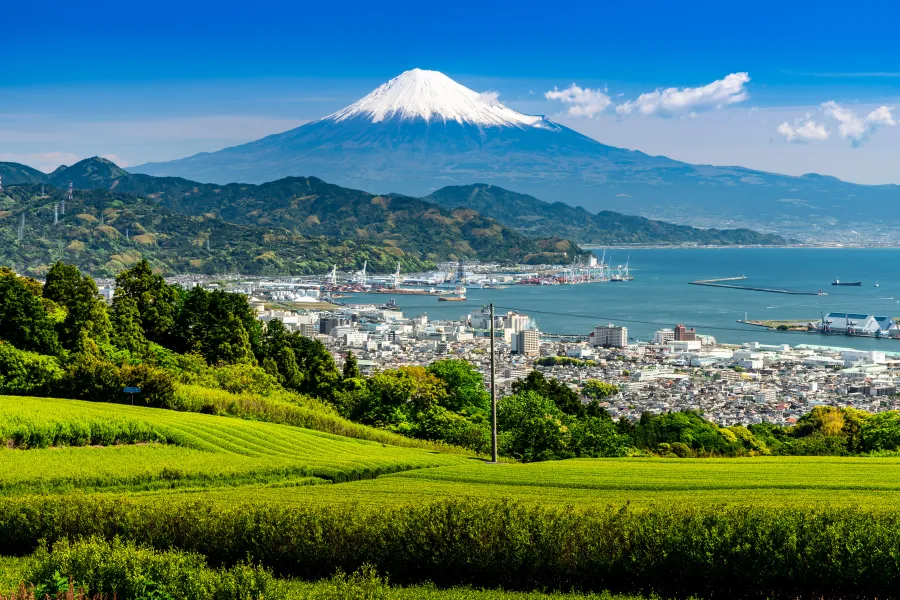
September ushers in Japan’s quietest high-season window: the worst of summer’s heat has passed, school is back in session, and the calendar fills with harvest rituals, urban street parties, and one of the year’s most atmospheric festival periods. For 2026, the month also carries two major planning factors: typhoon risk and a five-day Silver Week holiday (Sep 19 to 23).
Japan in September at a glance
Planning Ahead: Weather, Packing, Crowds

September sits at the hinge between summer and autumn. Early in the month, expect daytime highs of 24 to 30°C (mid-70s to mid-80s°F), with cooler mornings and evenings, especially in the north. Humidity lingers through the first half but eases as the month progresses, making late September particularly pleasant for walking tours and festival-hopping.
September is the month when typhoons are most likely to make landfall in Japan. The Japan Meteorological Agency’s 1991 to 2020 averages give September 3.3 typhoon approaches and 1.0 landfalls, the highest landfall figure of any month. Kyushu and the Nansei Islands see the most approaches, while Honshu sees fewer. Heavy rain and transport disruption are possible even in an average September. Build in a buffer day if you’re travelling through southern Japan, and keep key legs of your trip flexible around major festival weekends.
Packing smart:
- Light, breathable layers for warm days
- A compact umbrella or lightweight waterproof jacket
- Comfortable walking shoes (essential for matsuri routes)
- A light sweater or cardigan if you’re heading to Tohoku or Hokkaido, where nights cool faster
Crowds and Silver Week:
With summer holidays over, September is generally calmer than July and August. However, 2026 brings a five-day Silver Week break from September 19 to 23, creating a domestic travel surge. This overlaps with several headline festivals (notably Kishiwada Danjiri and Aizu Matsuri), so expect fuller trains, busier stations, and higher accommodation prices during that window. If your trip includes the third week of September, book transport and lodging as early as possible.


What to Do in Japan in September 2026
Owara Kaze no Bon, Toyama (September 1 to 3)
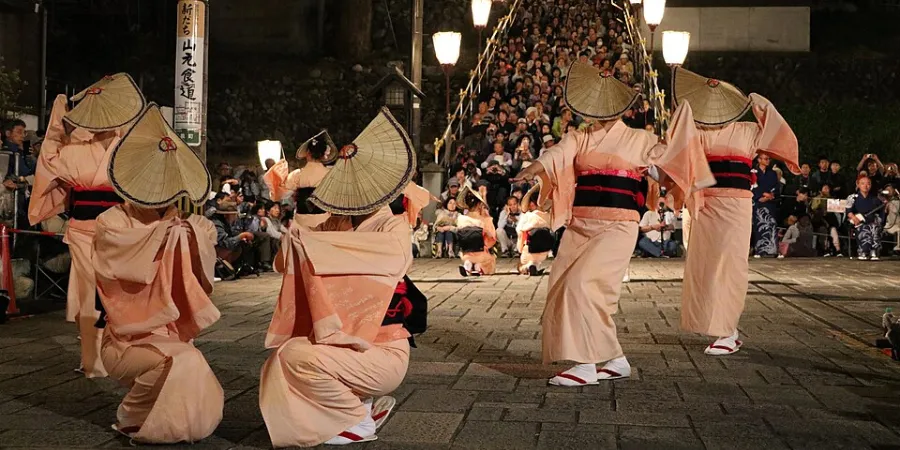
Where: Yatsuo district, Toyama City
Cost: Free (paid viewing seats available)
When: 5pm to 11pm on 1 and 2 September, and 7pm to 11pm on 3 September
Info: Official site
For over three centuries, farmers in Yatsuo have danced to appease the winds that threaten their rice fields. The result is one of Japan’s most hauntingly beautiful festivals: slow, graceful dancers in straw hats weaving through lantern-lit streets, accompanied by the mournful strains of shamisen and taiko.
Owara Kaze no Bon is a rare chance to experience rural Japan’s spiritual relationship with nature. The festival runs on the same dates every year, September 1 to 3, with the first two nights offering the longest processions.
Sasebo Seaside Festival, Nagasaki (First weekend of September)

Where: Sasebo City General Ground, Shiiki-cho, Sasebo, Nagasaki Prefecture
When: Two days of stage events, stalls and sports, with the fireworks finale in the evening. Check the official site for the timetable
Info: Official site
Sasebo’s seaside celebration leans into the city’s maritime identity. Since 2022 it has been held at the Sasebo City General Ground in Ainoura, where two days of stage shows, street performances, sports events and food stalls build up to a wide fireworks finale, staged with help from the Maritime and Ground Self-Defense Forces and the US Navy base at Sasebo. The programme echoes the port’s naval and trading history. Families spread out along the waterfront, children wave glowing toys, and food stalls dish up local favourites like champon noodles and lemon steak.
The festival lands on the first weekend of September each year. In 2026 it ran on Saturday 5 and Sunday 6 September. Confirm the following year’s timings on the official site before locking in travel plans
Kakunodate Matsuri, Akita (7 to 9 September every year)
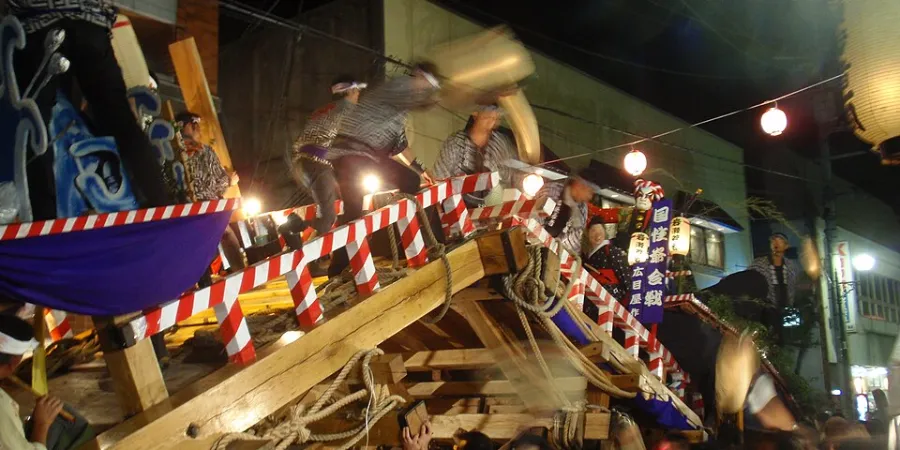
Where: Kakunodate, Akita Prefecture
Cost: Free
When: Floats run from morning into the night. The scheduled tourist yamabuttsuke, the float collisions, starts at 6pm on 8 September
Info: Official site
Set against the backdrop of a preserved samurai town, Kakunodate’s festival turns the streets into a test of nerve. Ornately carved floats parade through historic streets, then meet head on in the yamabuttsuke, where two teams that cannot agree who has right of way push their floats into each other until one gives ground. Visitors can catch the scheduled tourist version from 6pm on 8 September.
With roots stretching back around 400 years, recognition as a National Important Intangible Folk Cultural Property, and a place on the UNESCO Intangible Cultural Heritage list as one of Japan’s Yama, Hoko and Yatai float festivals, this matsuri offers a refined, northern-Japan take on festival energy: equal parts craftsmanship, community pride, and theatrical tension.
Sapporo Autumn Fest, Hokkaido (September 11 to October 3)
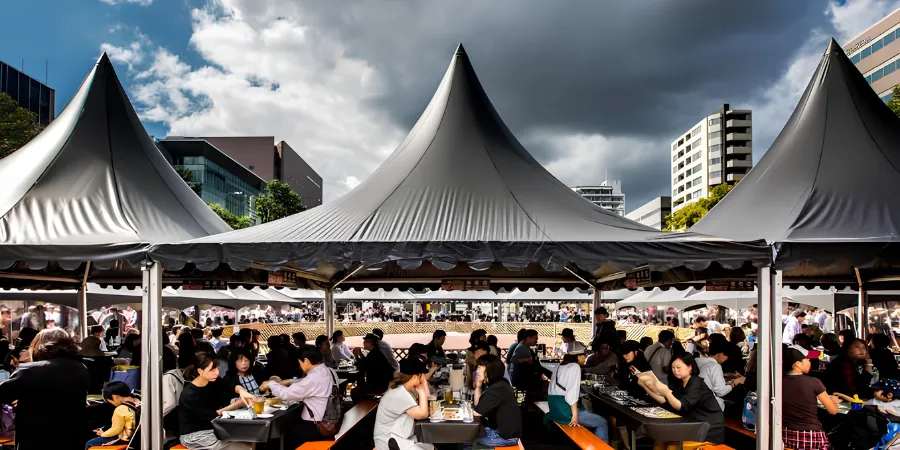
Where: Odori Park, Sapporo
Cost: Free entry; food and drinks priced separately
When: Daily, 10:00 AM to 8:30 PM
Info: Event site
Hokkaido’s answer to a state fair meets gourmet food expo, the Sapporo Autumn Fest turns Odori Park into a sprawling showcase of the island’s culinary identity. Each block is themed: ramen, craft beer, dairy, sweets, seafood, and seasonal produce.
For 2026, the festival ran from September 11 through October 3, and it usually spans a similar three week window, which makes it an easy add-on for anyone passing through Sapporo in mid-to-late September.
Jozenji Street Jazz Festival, Sendai (September 12 to 13)

Where: Jozenji-dori Avenue and surrounding areas, Sendai, Miyagi
Cost: Free
When: Day and evening performances across multiple stages
Info: Official site
What began in 1991 as a local volunteer initiative has grown into one of Japan’s largest free music festivals. Hundreds of acts spanning jazz, rock, folk, and gospel take over 40+ stages along Jozenji-dori and spill into arcades, plazas, and side streets.
The vibe is inclusive and citywide: seasoned pros share bills with student bands, and audiences range from hardcore jazz fans to families out for a stroll. In 2026, the 35th edition is confirmed for Saturday, September 12 and Sunday, September 13.
Kishiwada Danjiri Matsuri, Osaka (September 19 to 20)
Where: Kishiwada City, Osaka Prefecture
Cost: Free street viewing; paid seating available
When: Processions from morning through evening
Info: Official site
Few festivals match the raw intensity of Kishiwada Danjiri. Teams of locals haul multi-ton, intricately carved wooden floats (danjiri) at high speed through narrow streets, executing hairpin turns that look perilous but are executed with surgical precision.
The spectacle is part art, part adrenaline rush, and all Osaka: loud, proud, and unapologetically bold. In 2026, the main September festival takes place on Saturday, September 19 (eve) and Sunday, September 20 (main day), overlapping with Silver Week. Expect heavier crowds and tighter accommodation during this period.
Tsurugaoka Hachimangu Reitaisai, Kamakura (September 14 to 16)
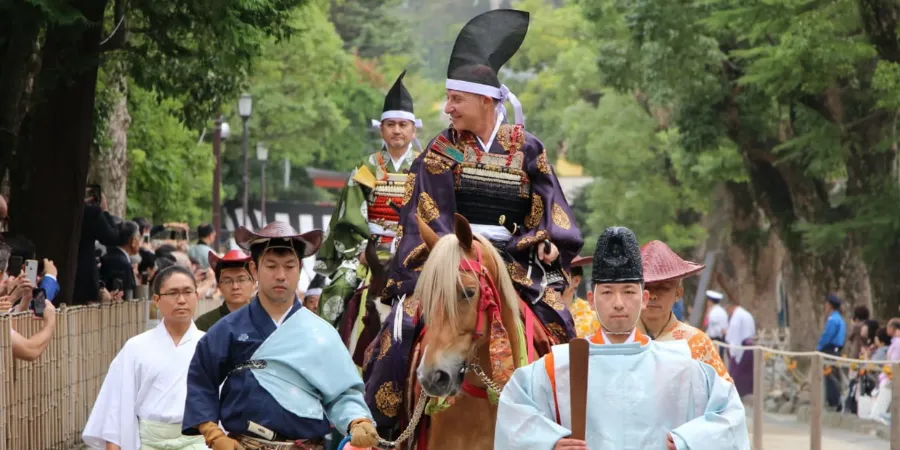
Where: Tsurugaoka Hachimangu Shrine, Kamakura, Kanagawa
Cost: Free
When: Events throughout the day; Yabusame (horseback archery) on September 16
Info: Official site
This annual grand festival honours Hachiman, the Shinto deity of war and protector of Japan. The standout is Yabusame: mounted archers in samurai garb gallop down a track, loosing arrows at wooden targets in a ritual that dates to the Kamakura shogunate.
Alongside the archery, visitors can catch processions, Kagura dances, and shrine rites that bring Kamakura’s warrior past into the present. For 2026, the festival is scheduled for September 14 to 16.
Yokohama Chinatown Mid-Autumn Festival, Chushusetsu (Mid to Late September)
Where: Yamashita-cho Park and the Yokohama Mazu Temple, Yokohama Chinatown, Kanagawa Prefecture
Cost: Moon viewing tickets 3,000 yen, which include three kinds of mooncake, one drink and a glowing handheld lantern. The exhibition, the temple ceremony and the street atmosphere are free
When: Moon viewing 5.30pm to 7pm on Friday 25 September 2026, temple ceremony 3pm to 3.30pm the same day, exhibition 16 to 30 September
Info: Official site
Yokohama’s Chinatown marks Chushusetsu with a ticketed moon viewing gathering in Yamashita-cho Park, a ceremony at the Yokohama Mazu Temple asking for peace in the district and a good harvest, and a street exhibition explaining what the festival is and why mooncakes are eaten, while hundreds of restaurants and shops roll out seasonal menus and festive decor. Mooncakes and other Mid-Autumn Festival specialties feature prominently, blending Chinese tradition with Japan’s urban festival culture.
The moon viewing gathering runs on Friday 25 September 2026 from 5.30pm to 7pm in Yamashita-cho Park, with 300 tickets at 3,000 yen sold from 24 August to 23 September. The Mazu Temple ceremony runs from 3pm to 3.30pm the same day and the public can watch from the piloti. The street exhibition runs from 16 to 30 September, and mooncakes are on sale across the district throughout September, with each shop setting its own dates. Chushusetsu follows the lunar calendar, so the date moves each year. Check the official site for future editions.
Tokyo Grand Sumo Tournament, Aki Basho (September 13 to 27)
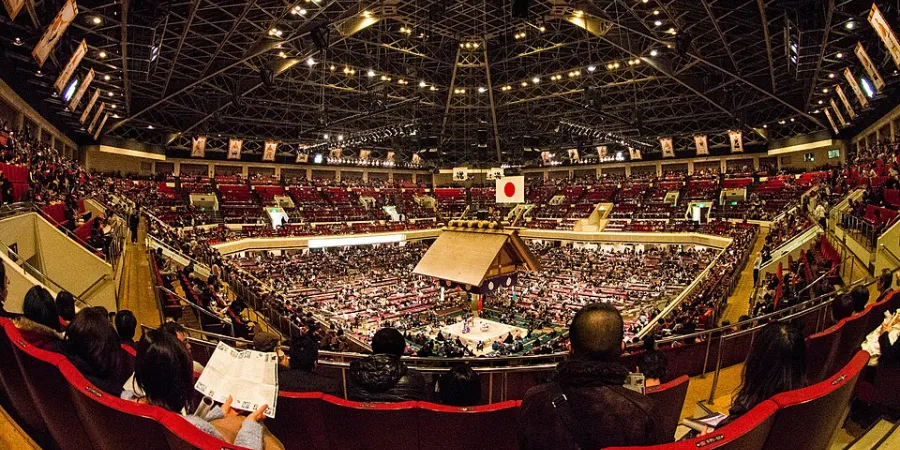
Where: Ryōgoku Kokugikan, Tokyo
Cost: Tickets priced by seat category
When: Matches roughly 8:30 AM to 6:00 PM (main bouts in the afternoon)
Info: Official site
One of six annual grand tournaments, the Aki Basho anchors September in Tokyo’s cultural calendar. Over 15 days, rikishi (wrestlers) compete in a tightly ritualized world of salt-throwing, stomping entrances, and explosive clashes.
For first-timers, it’s an immersive crash course in sumo’s spiritual and sporting dimensions. In 2026, the tournament runs September 13 to 27 at Ryōgoku Kokugikan.
Aizu Matsuri in Aizuwakamatsu, Fukushima (September 19 to 21)

Where: Tsuruga Castle and city centre, Aizuwakamatsu, Fukushima
Cost: Free
When: Events from morning to evening over three days
Info: Event site
Aizu Matsuri is a living tribute to the region’s samurai legacy, especially the Byakkotai (White Tiger Corps), young warriors who fought in the Boshin War. The centrepiece is a grand procession of around 600 participants dressed as samurai, daimyo, and historical figures, which sets off from the honmaru of Tsuruga Castle and marches into the town.
Set against the castle’s imposing silhouette, the festival channels Aizu’s ethos of loyalty and resilience. In 2026, it takes place September 19 to 21, directly overlapping with Silver Week. Plan accordingly for transport and lodging.
Visitor participation in the procession is sometimes possible via advance booking. You can check the event site for details.
Fukuro Matsuri in Ikebukuro, Tokyo (September 26 to 27, Mikoshi; October 10 to 11, Yosakoi)
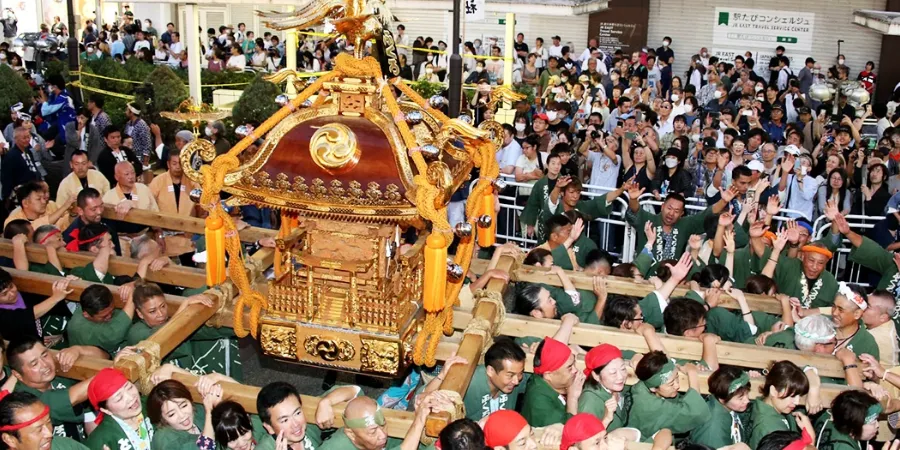
Where: Ikebukuro, Tokyo
Cost: Free
When: Afternoon to evening parades
Info: Official site
Since 1968, Fukuro Matsuri has grown into one of Tokyo’s flagship autumn festivals. The event is now split into two distinct weekends:
- September 26 to 27: “Mikoshi Festival”, portable shrine processions, taiko, and community stalls.
- October 10 to 11: “Tokyo Yosakoi”, a large-scale dance contest with 100+ teams and thousands of performers.
For travellers focused on traditional matsuri energy, the September mikoshi weekend is the priority. The October Yosakoi weekend adds a contemporary, performance-driven layer that appeals to fans of street dance and pop culture.
Making the Most of Japan in September 2026
September rewards travellers who embrace a little uncertainty. The weather is transitional, the festival calendar is dense, and 2026’s Silver Week surge means some weekends will feel distinctly busier than others. You get the tail end of summer energy, the first hints of autumn clarity, and a run of events that range from meditative lantern dances to full-throttle float racing.
For the smoothest trip, the first half of the month is great for northern Japan and Hokkaido, but keep an eye on typhoon updates if you’re heading south. Aim the second half for Honshu’s big-city festivals and cultural highlights, but book transport and accommodation early if your dates touch September 19 to 23.