The Japanese kimono is dubbed the national dress of Japan. When we think of a Japanese outfit, often the Japanese kimono is the first thing that comes to mind. We see it a lot in popular Japanese media. For example, Demon Slayer’s Tanjiro and Nezuko both wear kimonos. Nowadays, we associate it with summer festivals and as an icon of Japanese culture. However, it did not always have the same reputation it has today. Find out the history of the Japanese kimono and how it became so iconic today.
The Japanese Kimono
History of the Japanese Kimono
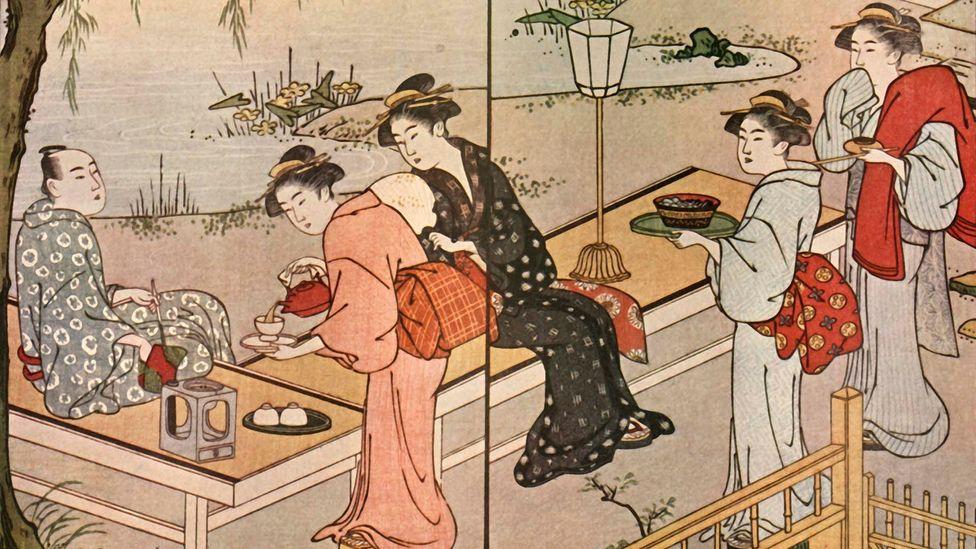
Kimono, in Nihongo, literally means “a thing to wear” – “ki” meaning “to wear”, and mono meaning “thing”. Usually, the kimono is sewn into a T-shape, with many different colors and patterns on it which makes each kimono symbolize different things, depending on its look. However, what we refer to as the kimono today was known as the “kosode” back during the Edo period. The main difference between the kimono and kosode, literally meaning “small sleeves”, was that the latter has smaller arm holes – small sleeves. The kosode was worn by everyone in Japan back then, regardless of gender or wealth.
Of course, the materials that they used were different from each other. The Japanese elites wore kosode made from silk, and they were able to preserve them. The poorer folk wore kosode made from rags, and would often reuse them which eventually wore them down. Eventually, it was during the Meiji period that the kosode would be known as the kimono.
After the Meiji Era opened Japan’s borders to the world, Western culture and style became the popular thing in Japan as it became synonymous with progress and civilization. At the same time as this, Japanese culture, together with the kimono was slightly fading into the background. However, the kimono would eventually bounce back into popularity several times. These events are now dubbed to be the three revivals of the kimono.
The Rokumeikan years: when Western dress nearly replaced the kimono
In the 1880s the kimono came close to being pushed aside altogether. In November 1883 the government opened the Rokumeikan, a Western-style hall in Tokyo designed by the British architect Josiah Conder, where Japanese officials and their wives in the latest Paris fashions danced waltzes and quadrilles with foreign diplomats. In 1886 Empress Haruko appeared in Western dress for the first time, and for a few years women of rank took up bustles and corsets. The fashion did not last. Foreign Minister Inoue Kaoru, the Rokumeikan’s great champion, resigned in 1887 after it failed to win Japan better treaties, and a backlash in favour of national customs followed.
Jukichi Inouye, writing in Home Life in Tokyo (1910), gave the practical reasons women went back to the kimono. A corseted dress made it impossible to kneel on tatami or bow to the floor in the Japanese way, it called for jewellery that a kimono never needed, and a household still had to keep a full Japanese wardrobe alongside it.


Rebirth of the Kimono

The first revival of the kimono took place between the end of the 1800s to the start of the 1900s. The kimonos during this time were characterized by asymmetry and large patterns inspired by the Genroku era. This is because, during this time, the kosode style of the Genroku era of the Edo period was becoming popular. A lot of kimono designs became inspired by this and were being pushed by the department stores of the time. This resurgence was further amplified by the Japanese aristocrats pushing for the revival of the kimono because they feared the loss of national identity. The kimono was a representation of Japan as an “ancient but civilized” nation. This continued until World War 2, where production of the kimono was effectively banned due to shortages of materials.
The second revival of the kimono occurred during the years following the second world war. Following the defeat of Japan, American style and clothing became more popular. By this time, most people in Japan wore Western-style clothing for work, school, and everyday activities. The Kimono began to have its reputation of being a cultural art. Kimono designers transformed from being everyday workers to being celebrated artisans. This was further supported by the government during the 1950s which established the Living National Treasure System in order to preserve Japan’s cultural heritage. Kimonos were used for ceremonial wear and special events like the new year.

The third kimono revival happened around the turn of the 21st century. In essence, the third revival of the kimono is a shift from kimonos being mainly used as traditional and ceremonial wear, to a more everyday, casual commodity. This also caused the kimono to explode in variety. This shift was mainly attributed to two things: the changes in attitude toward clothing and the rise of tourism in Japan.
Back then, expensive clothes were the only good clothes, cheap clothes were, to put it simply, bad. Nowadays, for the regular consumer, clothes need to be cheap and good. The kimono responded to this, it started to become mass-produced, and easy to wear. People started making kimonos from polyester, and other easily washable materials. On the other hand, tourism was booming in Japan at this time, and a lot of kimonos were being offered for rental for tourists. The kimono was one of the pieces which solidified the image of Japan to its tourists. Lastly, it was a way to immerse them even more in the culture. Tourist spots would often make their employees wear kimonos to further solidify this experience.
Japanese Kimono in the Modern Day

The kimono has always had a lot of symbolism. Individually, the different shapes and patterns symbolize different things. For example, cherry blossom (sakura) patterned kimonos are often worn during graduation ceremonies because they symbolize new beginnings. However, as a garment, it has evolved with the nation itself and symbolized a lot of different things through the ages. It has evolved from being a status symbol to a symbol of reassurance, to a symbol of culture. Nowadays, many Japanese people wear kimonos to connect with and express their Japanese history and identity.


Kimonos have seen a lot of love in both Japanese and Western media. In Hollywood, popular movies such as Star Wars and Kill Bill have both featured this dress. Back in Japan, many internationally acclaimed TV shows and movies have also featured kimonos. As mentioned, Nezuko from the popular anime Demon Slayer wears a kimono. Mitsuha from the movie Your Name (2016) by Makoto Shinkai wears a yukata during a festival.
While more traditional kimonos like yukatas are still very popular to this day. We have seen the popularity of many modern-style kimonos rising. Modern kimonos often have a blend of both Japanese and Western styles. For example, the kimono jacket is one such product that is becoming popular today. Together with this, kimono shirts and no-belt kimonos are also popping up. We can’t wait to see what other beautiful forms the kimono appears in!
One bolt of cloth: how a kimono is cut from a tanmono
Every traditional kimono starts as a single bolt of cloth called a tanmono, usually around 36 to 40 cm wide and about 12 to 13 metres long. The bolt is cut straight across into rectangular panels for the body, sleeves, front overlaps and collar, so almost nothing is wasted. The fit comes from how wide the seams are sewn, and any spare cloth is folded into the seams, which means a kimono can be unpicked for washing, re-dyed and sewn back together, or let out for a new owner. Inouye gave the bolt in his day as about eleven inches wide and thirty-five feet long, narrower and shorter than the bolts woven today.
Types of kimono: awase, hitoe and usumono through the seasons, and the kurotomesode
Kimono also change with the calendar. Lined kimono (awase) are worn for most of the year, from October to May. Unlined kimono (hitoe) take over in June and September, and in the hottest months of July and August sheer summer fabrics such as ro and sha, known together as usumono, let the air through. These dates come from tradition, and many wearers now adjust them to the weather.
Formality matters as much as the season. The most formal kimono for a married woman is the kurotomesode: plain black above the waist with a pattern only around the hem, and five family crests (itsutsu mon) on the back, the sleeves and the chest. It is the kimono most often worn by the mothers of the bride and groom at a wedding.
Sources and further reading
- Jukichi Inouye, Home Life in Tokyo (1910)