
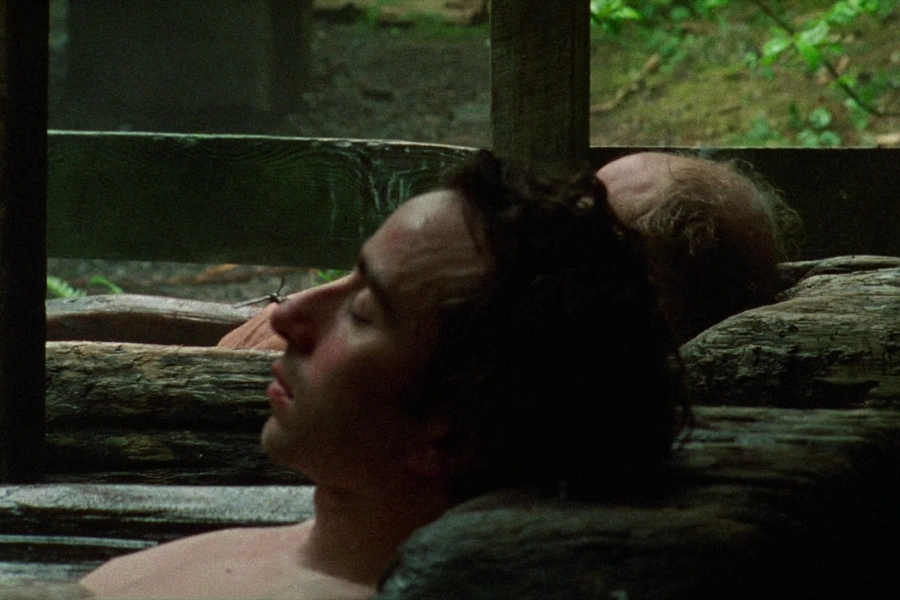
Japan is home to over 27,000 hot springs, or onsen, making it a haven for those looking to relax and rejuvenate. From the bustling city of Tokyo to the remote mountains of Hokkaido, there are onsen to be found all over the country. Each onsen has its own unique characteristics, from the temperature of the water to the minerals it contains. Whether you’re looking for a romantic getaway or a family-friendly experience, there’s sure to be an onsen in Japan that’s perfect for you.
In this article, we’ll take a look at some of the most popular onsen locations in Japan, as well as the different types of onsen that are available. We’ll also provide some tips on how to choose the right onsen for you.
So whether you’re planning your next trip to Japan or simply dreaming of a relaxing getaway, read on to learn more about Onsen and discover the perfect one for you. What’s not to love? The idea of soaking in a naturally heated outdoor lake seems relaxing right? Maybe you’d like to be indoors? Either way, Japan has exactly what you need; the Onsen.
At a glance
A Brief History of Onsens
Dating back at least 3,000 years, the use of onsens in Japan has been the key to cleansing the body and mind for generations, and hence is the core of Japanese relaxation, acting as a place of healing but also connection with others.
There are over 27,000 hot springs in Japan, and the fact that there are over 3,000 onsen towns and 20,000 onsens across the country really highlights the importance of these springs.
One key factor in the onsens’ success is the natural remedies and healing qualities the spring water is said to possess.
Ranging from scientifically proven benefits such as improving blood circulation and metabolism, to beliefs that the minerals in the water can heal ailments such as arthritis and diabetes, it is clear that there is a deep-rooted appreciation for the soothing effect the springs have.


Types of Onsen

An important point to note is that there are actually different types of onsen. Here is a quick run-through:
Sento
Man-made onsens, usually found in the centres of cities or in areas where there are lower concentrations of hot springs. These baths are indoors, and the water is simply heated rather than pumped from a spring. Strictly a sento is a public bathhouse rather than an onsen, since the water carries no mineral content from a spring. You pay per visit at a price the local government caps, ¥600 in Tokyo since August 2026, and regulars turn up often enough that a neighbourhood sento builds its own small community.
Rotenburo
The classic outdoor, natural hot spring onsens that offer the authentic bathing experience as well as stunning views.
Uchiburo
A sort of in between Sentos and Rotenburos, as they are indoors in bathhouses but still use the hot springs to fill the baths. This is the most common type of onsen.
Sunaburo and Ashiyu (sand baths and foot baths)
Sunaburo buries you in volcanic sand heated by the spring below, usually for about ten minutes, and Beppu is the place for it. Ashiyu are free public foot baths, found on street corners all over onsen towns, and they need no towel, no undressing and no etiquette, which makes them a good first taste if communal bathing feels daunting.
1. Kusatsu Onsen Town (Gunma Prefecture)

This world-renowned onsen complex, Kusatsu Onsen, is categorised as a Rotenburo, offering an authentic bathing experience with its outdoor, natural hot spring setting. It is said to cure every sickness except lovesickness and is one of the most popular onsens in Japan. With its stunning views and naturally heated water, Kusatsu provides a perfect blend of relaxation and scenic beauty. For more information, visit the official Kusatsu Onsen website.
Located in Gunma prefecture, Kusatsu Onsen is not too far from Tokyo or Yokohama, making it an accessible destination for a day trip or a longer stay. Gunma Prefecture is renowned for its natural beauty, encompassing mountainous regions, lush forests, and numerous hot springs.
The area is a haven for outdoor enthusiasts, offering activities such as hiking, skiing, and exploring the scenic landscapes. Gunma is also famous for its traditional crafts and local cuisine, providing visitors with a rich cultural experience alongside the rejuvenating benefits of its hot spring waters.
How to Get There from Tokyo
To reach Kusatsu Onsen from Tokyo, follow these directions:
- Take the JR Hokuriku Shinkansen from Tokyo Station to Takasaki Station.
- At Takasaki, transfer to the JR Agatsuma Line and travel to Naganohara-Kusatsuguchi Station.
- From Naganohara-Kusatsuguchi Station, board a bus that will take you directly to Kusatsu Onsen.
The entire journey takes approximately 3 hours, offering a scenic and comfortable ride.
Once there, you can spend the day strolling the local streets and bathing in multiple free admission onsens. The local streets are lined with charming shops and cafes where you can enjoy delicious food. In the winter, nearby skiing locations provide additional activities, while summer offers hiking trails, making a trip here ideal for a couple of days.
2. Beppu Onsen Town (Oita Prefecture)

It’s true that all of these locations have been towns rather than individual onsens and Beppu is no exception! It is actually quite unusual to find singular onsens. This is because hot springs are usually found in groups. The exception of course is the “artificial” Sento. A truly unforgettable and picturesque experience, Beppu onsen is a must-visit location on your trip to Japan, widely regarded as the best onsen town in Japan. For more information, visit the official Beppu Onsen website.
With multiple onsen complexes and outdoor public baths, as well as naturally heated sand and mud baths, Beppu has it all! Beppu city even has wisps of steamy smoke rising over the skyline as the onsens bubble away.
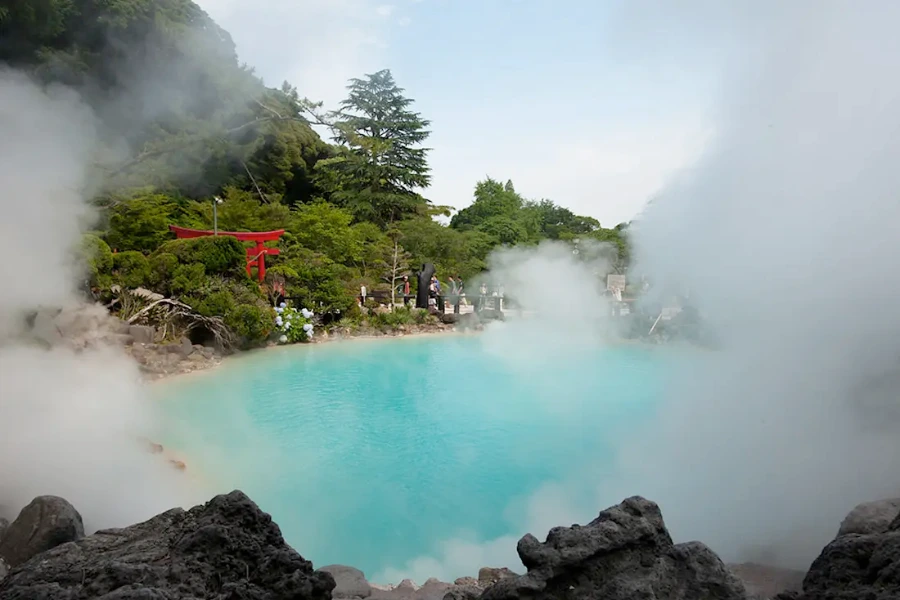 You can take a tour of the ‘hells of Beppu’, seven hot springs for viewing only, since the water sits close to boiling at around 98°C. You can buy snacks cooked in the steam, such as boiled eggs and pudding. A combination ticket covering all seven costs ¥2,400 for adults, or ¥500 for a single hell, and they open 8:00 AM to 5:00 PM every day of the year. Sand bathing is a separate trip: the seafront Sand SPA, formerly Beppu Kaihin Sunayu, charges ¥2,500, which covers the sand burial, the indoor baths, and a towel and yukata.
How to Get There from Tokyo
To reach Beppu Onsen from Tokyo, follow these directions:
- Take the JR Tokaido/Sanyo Shinkansen from Tokyo Station to Kokura Station.
- At Kokura, transfer to the Sonic limited express train and travel to Beppu Station.
The entire journey takes approximately 5-6 hours, providing a comfortable and scenic ride through Japan’s beautiful landscapes.
Once there, you can explore the city, enjoy the various onsen facilities, and indulge in local cuisine. Beppu offers a unique blend of relaxation and adventure, making it an ideal destination for a memorable getaway.








3. Yufuin Onsen Town (Oita Prefecture)

Yufuin Onsen offers a delightful blend of Uchiburo and Rotenburo experiences. Nestled in a picturesque setting, this onsen provides both indoor baths that utilise natural hot spring water and outdoor baths that allow guests to soak while enjoying the stunning views of Mount Yufu. This combination makes Yufuin an ideal destination for those seeking relaxation and natural beauty.
For more information, visit the official Kyushu Travel Guide website.
Oita Prefecture, located in the northeastern part of Kyushu, is renowned for its abundant hot springs, making it a top destination for onsen enthusiasts. The region is home to some of Japan’s most famous onsen towns, including Beppu and Yufuin, offering a variety of hot spring experiences from traditional ryokans to modern spa resorts. Oita’s natural beauty is complemented by its rich cultural heritage, with historic temples, shrines, and local festivals providing a glimpse into the area’s past. Visitors can also enjoy regional delicacies such as Bungo beef and fresh seafood, making Oita Prefecture a perfect blend of relaxation, culture, and gastronomy.
Yufuin has many stores, museums and cafes, so you can’t get bored and can comfortably spend the whole day in the area. Ryokans are open throughout the town at most times of day during most seasons.
How to Get There from Tokyo
To reach Yufuin Onsen from Tokyo, follow these directions:
- Take the JR Tokaido/Sanyo Shinkansen from Tokyo Station to Hakata Station.
- At Hakata Station, transfer to the JR Kyudai Main Line and travel to Yufuin Station.
The entire journey takes approximately 5-6 hours, providing a scenic and comfortable ride through the beautiful landscapes of Kyushu.
Once there, you can explore the charming town, enjoy the various onsen facilities, and indulge in local cuisine. Yufuin offers a unique blend of relaxation and culture, making it an ideal destination for a memorable getaway.
4. Yamanouchi Monkey Onsens (Nagano Prefecture)

Nagano Prefecture, located in central Japan, is renowned for its stunning natural landscapes, including the majestic Japanese Alps. This region is a paradise for outdoor enthusiasts, offering activities such as skiing, hiking, and exploring scenic trails. Nagano is also famous for its rich history, traditional culture, and delicious local cuisine, including soba noodles and apples. With its numerous hot springs and onsens, Nagano provides a perfect blend of relaxation and adventure, making it an ideal destination for travellers seeking both peace and excitement.
This is the one entry on the list where you do not get in the water. Jigokudani Monkey Park is a viewing site: the rotenburo belongs to a troop of wild Japanese macaques, who bathe in it through the winter while visitors watch from a path alongside. Admission is ¥800 for adults and the park opens around 8:30 AM to 5:00 PM, shorter in winter. Getting there means a walk of roughly 30 minutes through the forest from the car park, which is uphill, often snowy, and not suitable for smooth-soled shoes. For more information, visit the official Jigokudani Monkey Park website.One thing to be clear about: this bath is for the monkeys, not for you. Jigokudani is a viewing park, and its own rules are blunt about it. Do not touch the monkeys, do not feed them, do not shout at them, and do not put anything, including a camera, into the water. They are wild animals and they bite. You watch from the path, which is close enough to see everything.
How to Get There from Tokyo
To reach the Yamanouchi Monkey Onsens from Tokyo, follow these directions:
- Take the JR Hokuriku Shinkansen from Tokyo Station to Nagano Station.
- At Nagano Station, transfer to the Nagano Dentetsu Line and travel to Yudanaka Station.
- From Yudanaka Station, board a bus or take a taxi to the Jigokudani Monkey Park, where the onsens are located.
The entire journey takes approximately 4 hours, offering a scenic view of Japan’s beautiful landscapes.
Once there, you can enjoy the unique experience of watching the Japanese Macaques as they relax in the hot spring waters, surrounded by the stunning natural beauty of the region.
Here’s a short clip of the monkeys relaxing in the springs:
The towns on this list are a starting point rather than a ranking, and there are hundreds more across the country, most of them cheap to visit.
As long as you book beforehand and respect the onsens and fellow bathers, there is no doubt you’ll be left wanting to soak in these hot springs again and again.
5. Nozawa Onsen Town (Nagano Prefecture)

Nozawa Onsen offers a charming blend of Uchiburo and Rotenburo experiences. Nestled in a traditional Japanese village, this onsen provides both indoor baths that utilise natural hot spring water and outdoor baths that allow guests to soak while enjoying the scenic beauty of the surrounding mountains. This combination makes Nozawa an ideal destination for those seeking relaxation and a touch of authentic Japanese culture.
For more information, visit the official Nozawa Onsen website.
Nagano Prefecture, located in central Japan, is renowned for its breathtaking landscapes, including the majestic Japanese Alps. This region is a paradise for outdoor enthusiasts, offering activities such as skiing, hiking, and exploring scenic trails. Nozawa Onsen is particularly famous for its ski resort, which attracts visitors from around the world during the winter season. The village itself is steeped in history, with traditional architecture and local festivals that provide a glimpse into the area’s rich cultural heritage.
Nozawa Onsen is also known for its delicious local cuisine, including specialties like oyaki dumplings and nozawana pickles, which can be enjoyed at the many quaint eateries and cafes throughout the town. Visitors can comfortably spend the whole day exploring the charming streets, soaking in the various onsen facilities, and indulging in the local flavours.
How to Get There from Tokyo
To reach Nozawa Onsen from Tokyo, follow these directions:
- Take the JR Hokuriku Shinkansen from Tokyo Station to Iiyama Station.
- At Iiyama Station, transfer to a bus bound for Nozawa Onsen.
The entire journey takes approximately 3-4 hours, providing a scenic and comfortable ride through the beautiful landscapes of Nagano.
Once there, you can explore the traditional village, enjoy the various onsen facilities, and indulge in local cuisine. Nozawa Onsen offers a unique blend of relaxation and adventure, making it an ideal destination for a memorable getaway.
6. Tsubame Onsen (Niigata Prefecture)

Tsubame Onsen offers a unique blend of rustic charm and natural beauty, providing an authentic Rotenburo experience. Nestled in the serene mountains of Niigata Prefecture, this onsen allows guests to soak in open air baths while taking in the breathtaking views of the lush forested landscape. The tranquil setting and mineral-rich hot spring water make Tsubame an ideal destination for those seeking relaxation and a connection with nature.
For more information, visit the JNTO’s page on Tsubame Onsen.
Niigata Prefecture, located on the west coast of Honshu, is renowned for its picturesque landscapes and abundant natural resources. This region is a haven for outdoor enthusiasts, offering activities such as hiking, skiing, and exploring the scenic trails of the Myoko-Togakushi Renzan National Park. Tsubame Onsen is particularly famous for its secluded location and rejuvenating hot springs, which attract visitors looking to unwind and escape the hustle and bustle of city life.
Tsubame Onsen is also known for its delicious local cuisine, including specialties like koshihikari rice and fresh seafood, which can be savoured at the cosy inns and eateries in the area. Visitors can spend the day exploring the natural surroundings, soaking in the therapeutic onsen waters, and enjoying the local flavours.
How to Get There from Tokyo
To reach Tsubame Onsen from Tokyo, follow these directions:
- Take the JR Hokuriku Shinkansen from Tokyo Station to Joetsumyoko Station.
- At Joetsumyoko Station, transfer to a local bus bound for Tsubame Onsen.
The entire journey takes approximately 3-4 hours, offering a scenic and comfortable ride through the beautiful landscapes of Niigata.
Once there, you can immerse yourself in the serene atmosphere, enjoy the various onsen facilities, and indulge in local cuisine. Tsubame Onsen offers a unique blend of relaxation and natural beauty, making it an ideal destination for a memorable getaway.
7. Kinosaki Onsen Town (Hyogo Prefecture)

Kinosaki Onsen (城崎温泉) is a picturesque hot spring town in northern Hyogo Prefecture, celebrated for over 1,300 years of onsen tradition and its distinctive bath-hopping culture. Rather than staying inside one spa, visitors slip into a yukata (浴衣) robe and wooden geta (下駄) clogs, then wander between seven historic public bathhouses set along a willow-lined canal. The result is a deeply nostalgic, old-town atmosphere that feels lifted from another era.
The town is compact and walkable, lined with traditional ryokan, sweet shops, cafés and small eateries. Evenings are particularly atmospheric, when lanterns glow and the streets fill with softly clacking geta. Kinosaki is also well known for being tattoo-friendly, making it one of Japan’s most accessible onsen towns for international visitors without the need to cover ink.
Set close to the Sea of Japan, the wider area offers seasonal appeal beyond bathing. Winter brings prized Tajima crab, while warmer months are ideal for strolling the riverbanks, visiting nearby beaches, or exploring coastal scenery. Staying overnight is highly recommended, as most ryokan provide passes to all seven bathhouses and serve multi-course kaiseki dinners featuring local produce.
More at the Visit Kinosaki official site.
How to Get There from Tokyo
To reach Kinosaki Onsen from Tokyo, follow these directions:
- Take the JR Tokaido Shinkansen from Tokyo Station to Kyoto Station.
- From Kyoto, transfer to the JR Limited Express Kinosaki or Hashidate to Kinosaki Onsen Station.
The journey takes around 3 hours, with the final stretch offering scenic countryside views. From the station, the town centre is just a short walk, making arrival easy even with luggage.
Once there, slow the pace right down. Spend your time soaking in multiple bathhouses, browsing local shops between dips, and enjoying the relaxed rhythm of an onsen town that has changed little over centuries. Kinosaki Onsen is best enjoyed over one or two nights, allowing you to fully embrace its timeless charm and ritual-driven way of life.
8. Kurokawa Onsen Town (Kumamoto Prefecture)
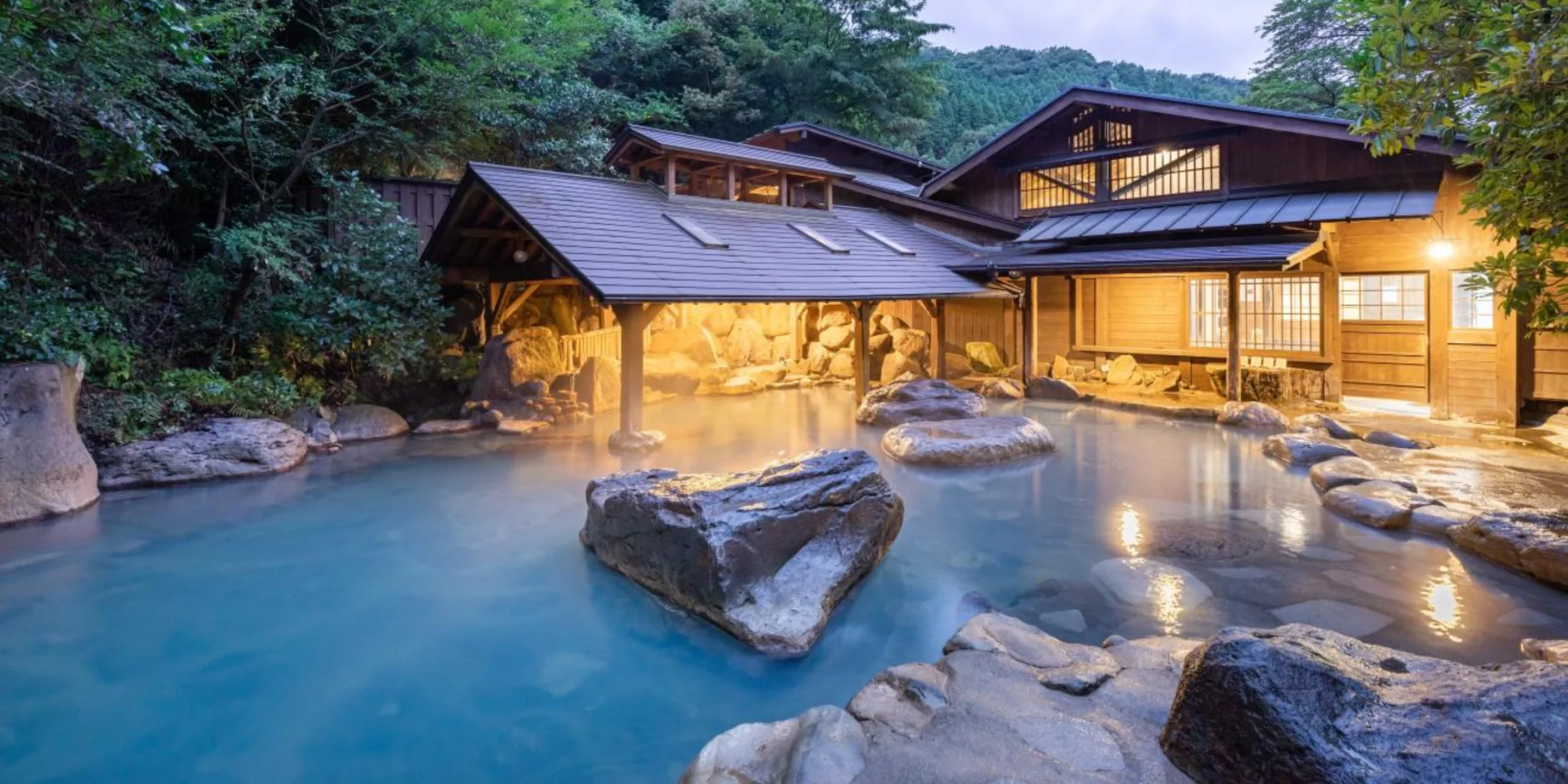
Image credit: Rakuten Travel
Kurokawa Onsen (黒川温泉) is a small, atmospheric hot spring village tucked into a forested valley in Kumamoto Prefecture, Kyushu. Known for its carefully preserved Edo-period aesthetic, the town avoids concrete and neon in favour of wooden buildings, earthen walls, stone paths and wooden bridges. The result is a calm, rustic setting that feels deeply connected to nature and refreshingly removed from mass tourism.
Set within the wider Aso–Kuju National Park area, Kurokawa is especially loved for its rotenburo. One of its signature experiences is onsen-hopping using the Nyuto Tegata (入湯手形), a wooden pass that allows visitors to bathe in three different outdoor baths across participating ryokan, each with its own setting and water qualities.
The village itself is compact and easy to explore on foot. Visitors often stroll the riverside streets in yukata, stopping at traditional sweet shops, cafés, and small stalls selling local treats like croquettes, milk drinks and onsen-boiled eggs. While many people visit on a day trip, staying overnight in a ryokan elevates the experience, offering peaceful evenings, seasonal kaiseki meals and early-morning baths before the town stirs awake.
Find out more information from their official site.
How to Get There from Tokyo
To reach Kurokawa Onsen from Tokyo, follow these directions:
- Take a domestic flight from Tokyo (Haneda or Narita) to Kumamoto Airport (around 1 hour 45 minutes).
- From Kumamoto Airport, take a highway bus bound for Kurokawa Onsen (approximately 2.5 to 3 hours). Advance booking is strongly recommended due to limited services.
Alternatively:
- Take the Tokaido–Sanyo–Kyushu Shinkansen from Tokyo Station to Kumamoto Station (around 5 to 6 hours total).
- From Kumamoto Station, transfer to a highway bus to Kurokawa Onsen.
For the most flexibility, especially if pairing your visit with Mount Aso or nearby hikes, renting a car from Kumamoto Airport or Station is often the easiest option. Once in Kurokawa, the village is compact and best explored on foot.
If you’re seeking a quiet onsen town with strong character, natural scenery and a slower pace, Kurokawa Onsen is an ideal choice, particularly for travellers who value atmosphere as much as the soak itself.
9. Hakone Onsen Town (Kanagawa Prefecture)

Image credit: Agoda
Hakone (箱根) is one of Japan’s most famous onsen towns, set within the scenic Fuji–Hakone–Izu National Park and prized for both its hot springs and mountain landscapes. With more than a dozen hot spring sources, Hakone offers a wide range of bathing experiences, from traditional ryokan baths to open-air onsen with views of Mount Fuji on clear days, making it a favourite escape for Tokyo residents and first-time visitors alike.
One of Hakone’s biggest draws is its variety. Areas like Hakone Yumoto serve as the main gateway, packed with historic inns and easily accessible baths, while Gora and Owakudani showcase the region’s volcanic side via ropeways, steaming vents and the famous black eggs (kuro-tamago) boiled in sulphur springs. Down by Lake Ashi, visitors can stroll the lakeshore, take a sightseeing cruise, and visit the iconic Hakone Shrine, framed by forested hills and torii gates.
Hakone works just as well for a day trip as it does for an overnight stay. Many travellers visit from Tokyo to sample the onsen and scenery in a single day, but staying overnight allows you to enjoy quieter mornings, kaiseki meals, and a more relaxed bathing schedule. Beyond soaking, highlights include the Hakone Open-Air Museum, scenic cable cars, and remnants of the old Tokaido Road at the Hakone Sekisho Checkpoint.
More information is available in the official Hakone travel guide site.
How to Get There from Tokyo
To reach Hakone from Tokyo, follow these directions:
- Take the Odakyu Romancecar from Shinjuku Station to Hakone-Yumoto Station (around 90 minutes).
- Alternatively, take the JR Tokaido Line from Tokyo Station to Odawara Station, then transfer to the Hakone Tozan Railway.
Thanks to its excellent transport links and compact sightseeing loop, Hakone is one of the easiest and most rewarding onsen towns to visit from Tokyo, perfect for combining hot springs, culture and nature in one trip.
10. Gero Onsen Town (Gifu Prefecture)

Image credit: Visit Gifu
Gero Onsen Town is one of Japan’s most celebrated hot spring resorts, often listed among the country’s top three. Set along the Hida River in Gifu Prefecture, it is known for its silky onsen (温泉) waters, rich in alkaline minerals (pH 9.2) that leave skin noticeably smooth, hence its nickname, the “spring for beauty”.
The compact town is easy to explore on foot and blends relaxation with gentle character. Visitors can soak in riverside open-air baths such as Funsen-chi, try public bathhouses, or book a traditional ryokan (旅館) with private baths. Free footbaths dot the streets, making it simple to pause and unwind between strolls past wooden buildings and playful frog mascots, known locally as Gero-chan.
Beyond bathing, Gero offers small pleasures: sweet shops selling local treats, the Gero Onsen Museum for a quick history lesson, and a reconstructed historic village just outside town. With direct access on the JR Takayama Line, it works well as a stop between Nagoya and Takayama, offering a calm, restorative contrast to busier alpine routes.
See more information on their website.
How to Get There from Tokyo
To reach Gero Onsen Town from Tokyo, follow these directions:
- Take the Tokaido Shinkansen from Tokyo Station to Nagoya Station.
- At Nagoya Station, transfer to the JR Takayama Line and ride a limited express or rapid train to Gero Station.
The entire journey takes approximately 3.5 to 4 hours. Gero Station is centrally located, with most ryokan (旅館), footbaths, and the Hida River onsen area just a short walk away, making arrival straightforward and stress-free.
Conclusion
Japan’s onsen culture offers a unique and enriching experience for both locals and visitors alike. From the bustling streets of Tokyo to the serene landscapes of Nagano, the country boasts an impressive array of hot springs, each with its own distinct charm and health benefits. Whether you choose to soak in the open air baths of Kusatsu, explore the vibrant onsen towns of Beppu and Yufuin, or watch the wild macaques take their own bath at Jigokudani, there’s an onsen experience to suit every preference.
The rich history and cultural significance of onsens in Japan highlight their importance as a place of relaxation, healing, and community. As you plan your journey through this captivating country, be sure to include a visit to one or more of these remarkable hot spring destinations. Immerse yourself in the soothing waters, indulge in local delicacies, and take in the breathtaking views that make Japan’s onsen culture truly unforgettable.
So pack your towel, leave your worries behind, and embark on a rejuvenating adventure that will leave you refreshed and inspired. Remember to respect the local customs and enjoy the tranquil moments that only an onsen can provide. Happy soaking!


