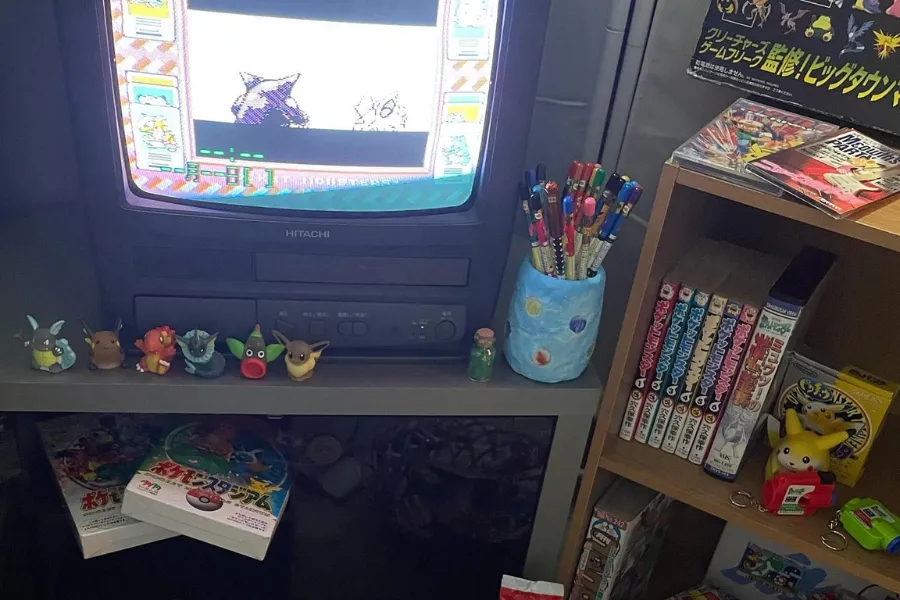
A konbini is a Japanese convenience store: a compact shop, open around the clock, that sells fresh meals and daily essentials and doubles as a bill-payment point, ATM, ticket machine and parcel service. Our next adventure takes us back to basics, as everyday life in Japan is covered with absolute convenience via the multitude of Japanese konbini.
A Japanese cultural bond can be found in many ways throughout this land of authentic traits, many of which we covered. In Japan, the widespread Japanese konbini caters to the public’s day-to-day needs, which is why they have become so popular.
Upon exploring local towns and cities in Japan, it’s hard not to notice the importance of convenience stores or konbini to every man, woman and child. ‘Essential living’ is the game’s name for the folks who depend on konbini stores to operate their 9-5, hectic grind, as nearly every facet of everyday life can be resolved.
For western readers, a trip to a convenience store may include buying hotdogs older than ourselves while waiting in line for an eternity. However, konbini stops in Japan are an entirely different ball game, as the store can be a sightseeing spectacle for tourists visiting Japan for the first time.
How Konbini Define Daily Life in Japan
What’s so great about convenience stores in Japan?

Although most convenience stores are handy for specific items, Japanese konbini emphasises ‘convenience’.
Here are some noteworthy points that open the gap to give you a clear idea of why konbini stores in Japan are way more convenient than our local shops.
Everything is Fresh
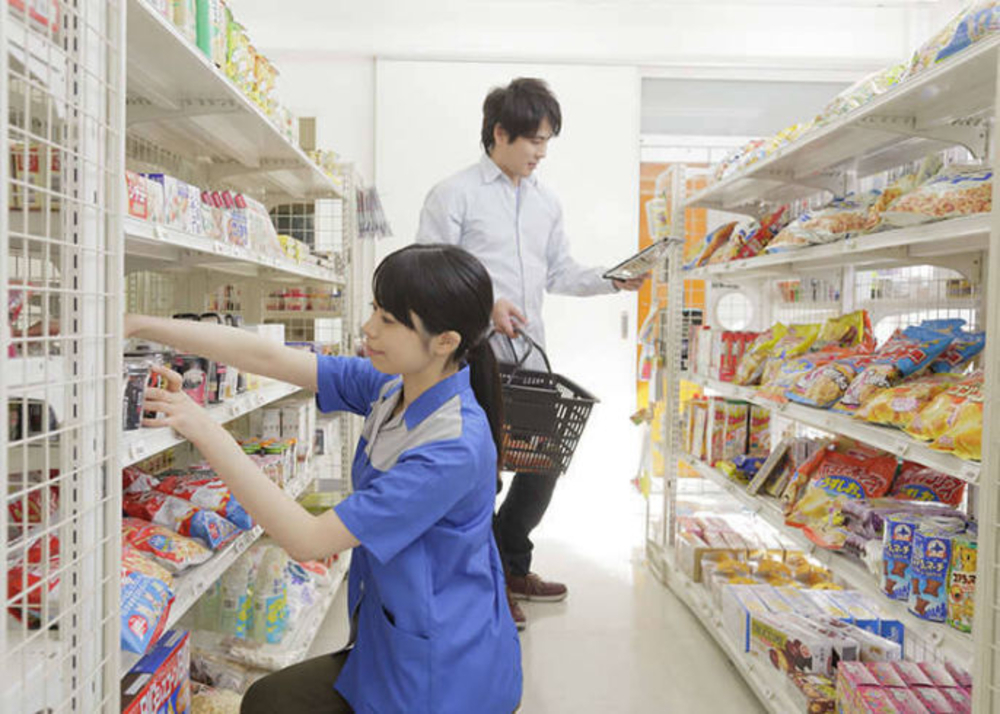
Let’s face it; we’re lucky to find fresh air upon entering our local konbini back home. Japanese konbini are renowned for freshness, and with good reason.
According to Hiroaki Tamamaki, FamilyMart’s general manager of new business development, three daily fresh food deliveries are made to every shop. Enough for customers to cover their three daily meals.
In addition, many city residents live alone in Japan; ready-to-eat meals are more accessible than cooking for one, which allows freshly delivered meals to serve such customers.
It’s no surprise that some people in Japan easily live on Konbini food alone.
Drink Selection (spoiled for choice!)
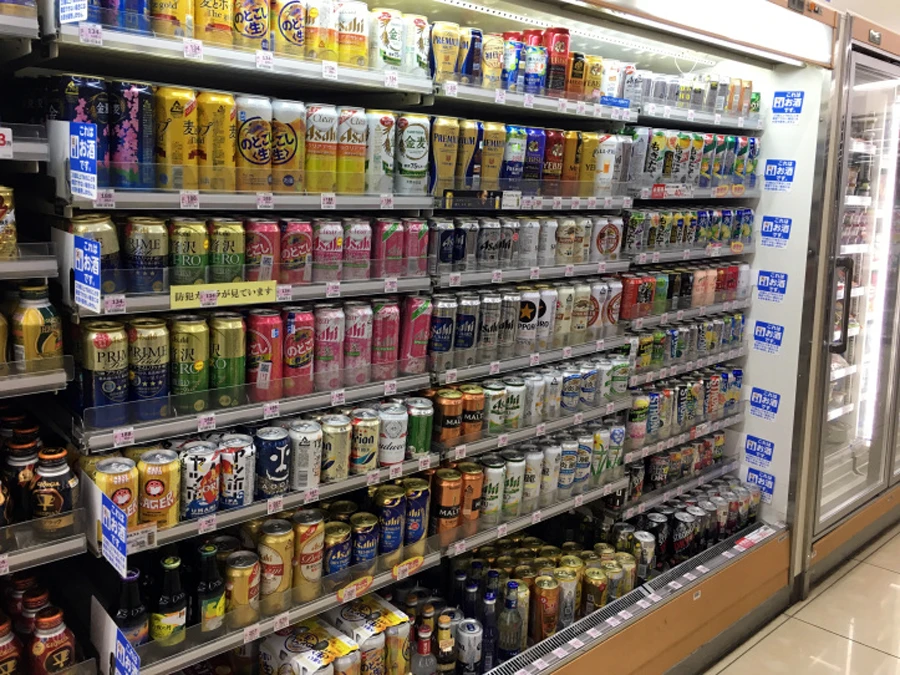
When exploring konbini drinks in Japan, there is an endless variety of teas, sodas, and alcoholic beverages. The alcohol choice alone would match any liquor store this side of the pond, with the bonus of legally being allowed to drink on the streets.
Vending machines across Japan are becoming fewer (although there are still plenty out there), partly due to the diverse selection of drinks sold at the local konbini.
For Japanese coffee lovers like ourselves
konbini coffee isn’t like your typical store beverage. Depending on where you stopped off, service may vary. Coffee may be made and dispensed at most convenience stores by purchasing a branded cup at the register and placing it in a designated coffee machine. In Lawson, staff brew and serve the coffee from behind the counter.
Seven-Eleven sold over 1 billion cups under its Seven Café brand in 2017.
Paying Bills

Whether it’s utility bills, gas, Wi-Fi or tax settlements, paying bills at your local konbini is a piece of cake.
When you get a bill in the mail, take it to your local konbini, hand it to the cashier, pay the necessary amount, and they will give you a receipt. The store handles the remainder, which notifies the utility provider that the bill has been paid.
On most invoices, you’ll see the total owed printed both in the main body of the statement and again on the actual slip (try searching for the yen kanji if you’re having trouble locating the total amount).
Delivery Services
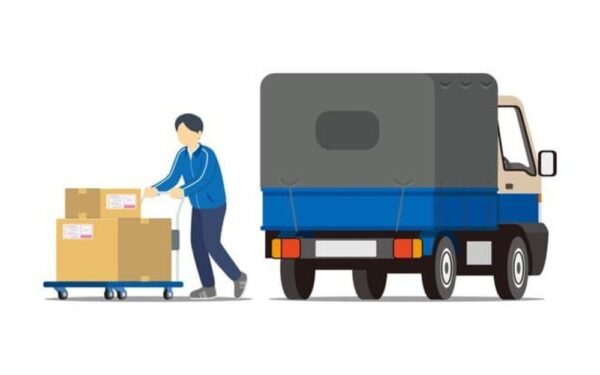
Many Japanese konbini provide package delivery services, including FamilyMart and 7-Eleven. Around 550 Seven-Eleven locations in Tokyo, Hiroshima, and Hokkaido already offer the option of delivering in-store items to people’s homes, offices, and other areas within as little as 30 minutes after receiving an order.
Konbini also provided postage services for both domestic and International delivery.
There are often postal receptacles for smaller parcels when you visit a konbini to drop off a box. Couriers may still transport larger packages, but only up to a particular weight.
7-Eleven hopes to cash in on the explosive growth of online shopping and delivery apps in the wake of the recent coronavirus pandemic. Seven-Eleven expects to have 20,000 locations offering delivery by 2025, covering all prefectures of Japan.
ATMs and foreign cards
For visitors, the konbini cash machine is a lifeline. Every 7-Eleven branch has an ATM that accepts foreign-issued cards, which makes them the most reliable place to withdraw yen at any hour, in any town, when bank ATMs are closed or fussy about overseas cards. The machines run in English, and the daily limits are generous.
The multi-purpose terminal
Tucked beside the magazines is the in-store terminal, the Loppi machine at Lawson or the multicopy machine at 7-Eleven. It prints documents and photos, issues tickets for concerts, attractions and long-distance buses, and registers online-shopping payments. Add free Wi-Fi, clean toilets and round-the-clock opening, and the konbini becomes the most useful building on the street.


History of the Konbini
Japan has around 56,000 convenience stores, roughly one for every 2,200 people. Their pull on visitors keeps growing: the share of overseas travellers stopping at a konbini rose from 73.9 percent in 2019 to 84.1 percent in 2024, the sharpest jump of any retail category. The heavy-hitting convenience store chains in Japan include Lawson, Family Mart and 7-Eleven, all of which function precisely as it says on the tin – (SUPER!) convenient.
By 1980, there were already 10,000 convenience stores established in Japan, which came to fruition during the 1970s. So let’s look at how the big three got based and became such household names in Japan.
7 ELEVEN (株式会社セブン&アイ・ホールディングス)
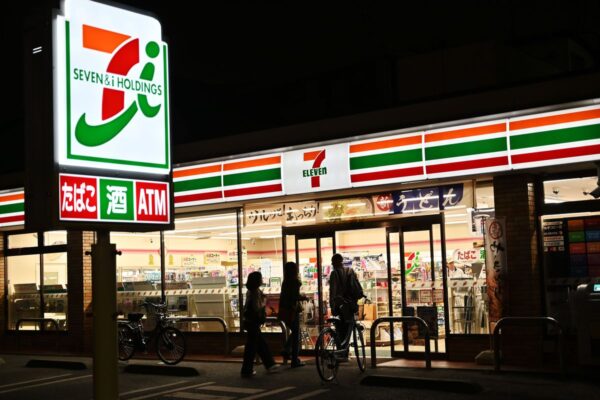
7-Eleven is the most popular convenience store chain in Japan, known as Seven & I Holdings.
In addition, Japan has the most active 7-Eleven stores worldwide, which saw the grand opening of the first 7-Eleven in Tokyo’s Toyosu, Koto Ward neighbourhood, in May 1974.
The Ito-Yokado department store was instrumental in bringing the 7-Eleven and Denny’s franchises from the United States. Throughout 17 countries, 7-Eleven has 71,000 active outlets, with around 30% located in Japan.
LAWSON (株式会社ローソン)

How American brand Lawson blossomed upon Japanese shores dates back to 1975.
Lawson teamed up with a Japanese retail giant, Daiei, to launch a branch in Toyonaka City, and from there, numbers grew to 14,000 stores nationwide.
While Lawson was an American corporation, its parent company’s bankruptcy ended its retail existence in the United States, leaving Japan as the primary nation for operation.
FamilyMart (株式会社ファミリーマート)
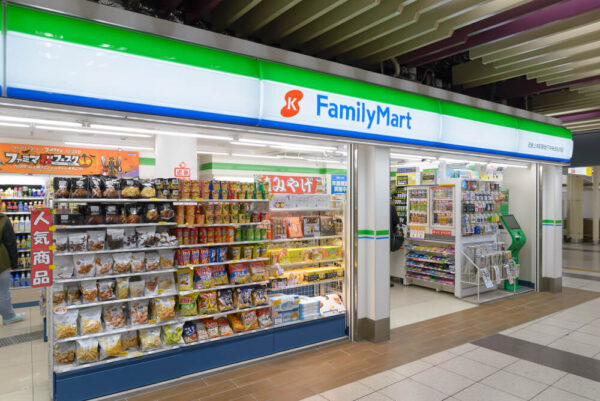
FamilyMart is Japan’s second-largest konbini chain, behind 7-Eleven. Of the three major franchises, FamilyMart is the only one which originated from Japan respectfully.
The franchise opened its doors in 1973 in Sayama, Saitama Prefecture, Japan, and currently stretches to six countries, including China, Vietnam and the Philipines. There are now 24,597 active FamilyMart stores worldwide, with 16,000 in Japan alone.
In addition, FamilyMart was once South Korea’s largest chain but needed to pull out from the Korean market entirely due to royalty and branding disputes. Today, the franchise goes by CU (Convenience for You) in Korea.
The Heartbeat of a Nation
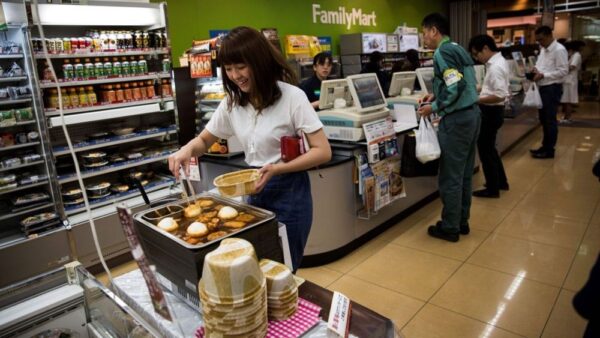
Upon exploring previous topics, we emphasised Japan’s historical craftsmanship of carrying out any job/task with high standards. Convenience stores are no expectation, as one can see when paying bills, using Wi-Fi or popping in for a well-balanced meal.
‘Essential living’ is the game’s name when it comes to the folks who depend on konbini stores to operate their 9-5, hectic grind, as nearly every facet of everyday life can be resolved when paying a visiting
The diverse and iconic konbini snacks and drinks merely dent what makes these heartbeat stores so unique. As the pace of life in Japanese cities never slows down, convenience stores have become the nation’s beating heart, providing an essential functionality service.
Pay a visit on your next trip to Japan to learn what makes Japanese konbini unique.
Japanese Konbini: Frequently Asked Questions
What is a konbini?
A konbini is a Japanese convenience store. The name covers the major chains, 7-Eleven, FamilyMart and Lawson, which sell ready meals, drinks and household basics while also handling bill payments, cash withdrawals, ticket bookings and parcel pick-ups, usually around the clock.
What does konbini mean?
Konbini is the shortened Japanese pronunciation of convenience store, taken from the English and clipped to its first syllables. It refers to the country’s dense network of small, all-hours shops rather than larger supermarkets.
What can you do at a konbini in Japan?
Far more than buy a snack. A typical konbini lets you withdraw yen from an ATM that accepts foreign cards, pay utility bills, buy tickets for concerts and long-distance buses, print documents, send parcels, and pick up a hot meal, all under one roof at any hour.