

Most visitors heading to Mt Fuji go straight to the Fuji Five Lakes area, especially Kawaguchiko, but Mishima offers a quieter alternative for a Mt Fuji day trip from Tokyo. Kawaguchiko is the standard route and is famous for its views, but it can get very crowded. During peak seasons and on weekends, the area is packed with tour groups, expensive tours, and long lines.
For a more relaxed experience, the town of Mishima is a great alternative base near Mt Fuji without the tourist chaos.

Mishima offers Fuji views and easy rail access via Central Japan Railway, serving as an alternative Mt Fuji day trip from Tokyo for travellers who prefer a more peaceful trip that’s still within easy reach of several Fuji-viewing spots, with more local context available from Explore Shizuoka.
Here’s why we recommend Mishima as your starting point when planning a Mt Fuji day trip from Tokyo, from how to get there to making the most of your time both in the city and nearby.
A Different Way to Experience Mt Fuji
Why choose Mishima as your Fuji launchpad

Kawaguchiko (the Classic Route) vs Mishima (the Quieter Alternative)

A Mt Fuji day trip from Tokyo doesn’t have to mean crowded viewpoints. Mishima lies on Mt Fuji’s southeastern side, where Shizuoka’s coastal plains roll into the mountain’s foothills, bringing sea breezes and Suruga Bay vistas alongside classic Fuji views, all without Kawaguchiko’s tour buses and queues.
Kawaguchiko is a lakeside town built around Lake Kawaguchi at the foot of Mount Fuji. It’s the most popular stop in the Fuji Five Lakes area and draws millions of visitors each year. Highlights include postcard views, the Mt Fuji Panoramic Ropeway, the Lake Kawaguchi sightseeing boat, the Kachi Kachi Ropeway, and the nearby Chureito Pagoda. That means packed paths and premium prices, especially during peak travel periods such as Golden Week, summer holidays, cherry blossom season, and autumn foliage season.
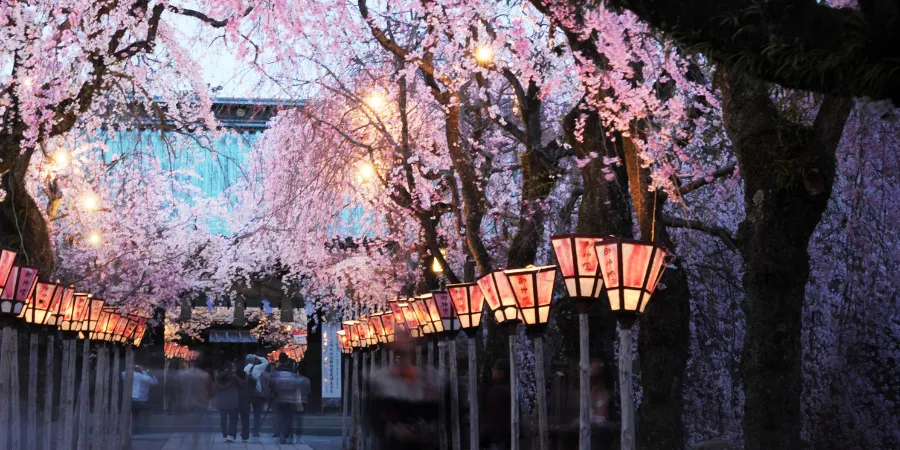
By contrast, Mishima’s 107,000 residents create a local vibe. Mt Fuji spring water surfaces everywhere here through rivers, eel farms, and drinkable fountains. This gives the City of Water its fresh edge near such a major sight.
If you’re heading to Mt Fuji but want somewhere that feels like a real Japanese town rather than a photo park, Mishima is the perfect first stop for a Mt Fuji day trip itinerary from Tokyo.
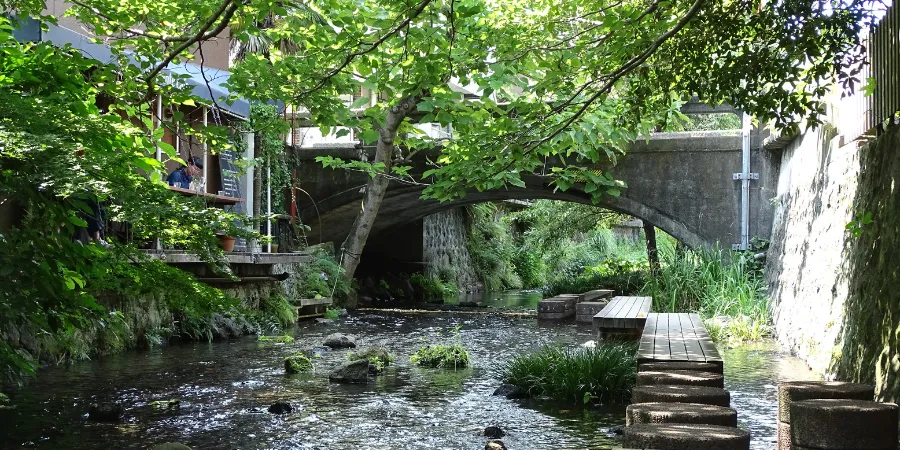
Built on lava-filtered spring water from the mountain, it’s known locally as the “City of Water”, where you can walk along the Genbe River, explore the grand Mishima Taisha shrine, and still be close to the Mishima Skywalk, which offers sweeping Mount Fuji views, all within a short stretch from the station.
Mishima has a long history as a Tōkaidō post town and gateway to the Izu Peninsula and Hakone, so it’s set up for easy access to hot-spring resorts, the Izu coast, and Fuji-Five-Lakes-area sights, but without the same crush of crowds. This makes it an ideal, calm-paced base for day trips instead of heading straight into the busiest Fuji-zone spots.
Mishima vs. Kawaguchiko: Which Route Fits Your Style?
| Aspect | Kawaguchiko | Mishima |
| Annual Visitors | 10M | Local-scale (107k residents) |
| Tokyo Transport | Bus (2hrs, ¥2,000) or Shinjuku Express | Shinkansen (45mins, Kodama non-reserve seat is 4,070 yen、Green Car is 7,270 yen.) |
| Accommodation | ¥15k+/night peak | ¥8-12k/night |
| Main Draw | Lake views, Yoshida Trail | Skywalk, rail hub |
| Vibe | Tour buses, queues | Local |
| Best For | The classic Fuji photo-spot destination with postcard lake views | Less-crowded Mt Fuji views with a calmer, local-vibe base |


How to Get from Tokyo to Mishima by Train
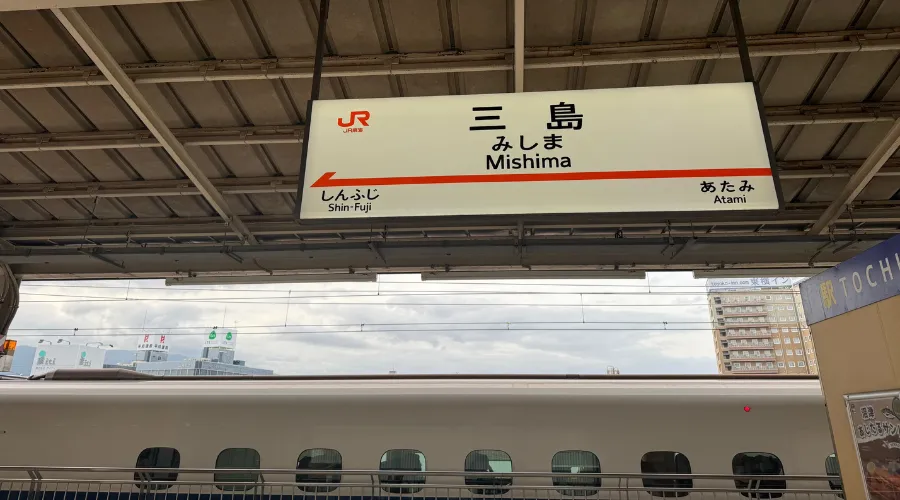
To get from Tokyo to Mishima, take the Tokaido Shinkansen from Tokyo Station or Shinagawa Station as part of this Tokyo to Mt Fuji day trip route. Two Shinkansen (all Kodama and most Hikari) stop at Mishima, and the JR Pass covers the trip.
You’ll reach Mishima Station in about 45 to 60 minutes at speeds up to 285 km/h. Around 30 minutes in, coastal cliffs, springs, and Mt Fuji slowly appear on your right, which is part of why the Tokaido run counts among Japan’s most scenic rail journeys.
From key Tokyo areas:
| Starting Point | Route | Time to Mishima | Cost |
| Shinjuku/Ueno/Shibuya | Yamanote Line to Shinagawa + Shinkansen | 60-70 mins | 4,070 – 7,270 yen |
| Tokyo Station | Direct Shinkansen | 45-50 mins | 4,070 – 7,270 yen |
| Shinagawa | Direct Shinkansen | 35 mins | 4,070 – 7,270 yen |
Seat Options (May 2026)
- Unreserved seats (4,070 yen) offer flexibility but risk standing during peak times.
- Reserved seats (4,400 yen – 5,000 yen) guarantee your spot with extra legroom—ideal for window views or busy trains.
- Green seats (6,670 yen – 7,270 yen) provide spacious first-class comfort compared to ordinary cars.
Ticket Options and Booking
For tickets, we highly recommend that you book your tickets online in advance to avoid any last-minute issues. You can buy your tickets at the official CJR website where you can select preferred seating and even use special discounts. Prices vary by time/date; book via JR Central.
You may also consider purchasing a Japan Rail Pass for unlimited travel on most JR trains across Japan as a cost-effective way to travel long distances and explore the country at your own pace.
From Mishima Station, you can then continue towards Mount Fuji by local JR Tokaido Line trains to stations such as Fuji, Numazu, or Fujinomiya.
Top Things to Do Around Mishima
Scenic & Outdoor Experiences
Mishima is easy to explore on foot, encouraging you to walk around the town so you can get a close-up view of the area full of nature’s sounds, sights, and scents.
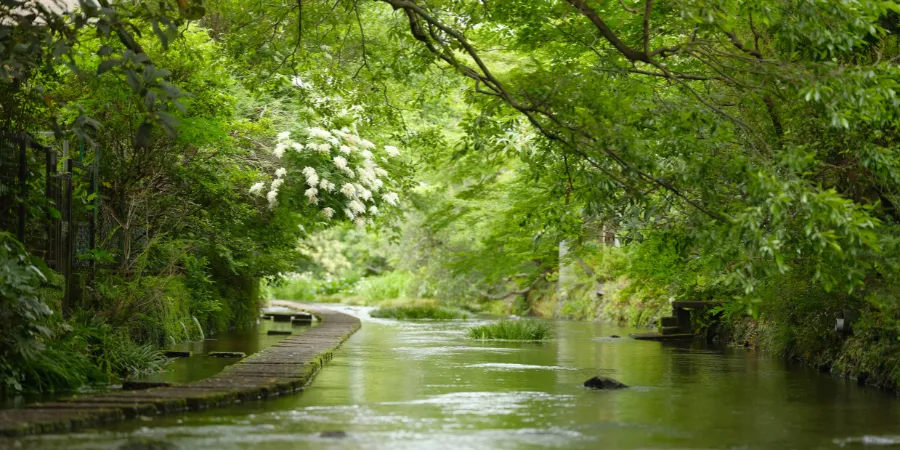
The Genbe River Walk is at the Genbe River, a 1.5 km stream that flows through the heart of Mishima. The path runs from the river’s source at Rakujen Park all the way out to the Nakazato Onsuichi reservoir, which on clear days can offer a quiet and distant view of Mt Fuji.
Another option is to visit Yamanaka Castle Ruins, a national historic site about 30 minutes by bus from Mishima Station. This well-preserved mountain fort is famous for its unique shoji-bori moats and is counted among Japan’s 100 famous castles.
From the park, you get panoramic views of Mt Fuji, Suruga Bay, and the surrounding Izu hills, with one of the best photo spots pairing the moat and the mountain in a single frame. The surrounding grassy areas and seasonal azaleas from late April to mid-May make it a pleasant spot for a relaxed stroll.
Nearby, you can also walk a short section of the forest-lined Old Hakone Highway, once the toughest part of the Edo-era Tokaido Road. The stone-paved path cuts through cedar woods and offers a quiet, historic feel with occasional glimpses of Suruga Bay and Mt Fuji beyond.
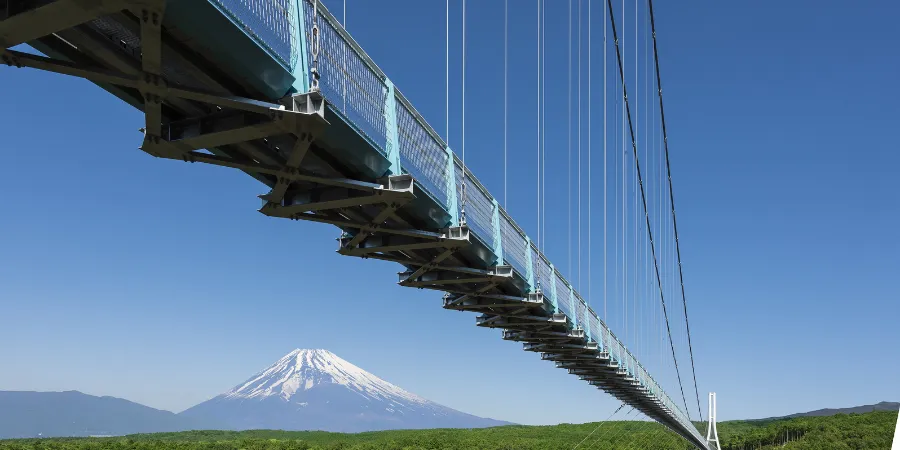
Lastly, the Mishima Skywalk is one of Japan’s longest pedestrian suspension bridge and is located about a 30 to 40 minute bus ride from Mishima Station. From the bridge, you get a 360-degree panorama of Mt Fuji, Suruga Bay, and the Izu Mountains.
Cultural & Spiritual Sites
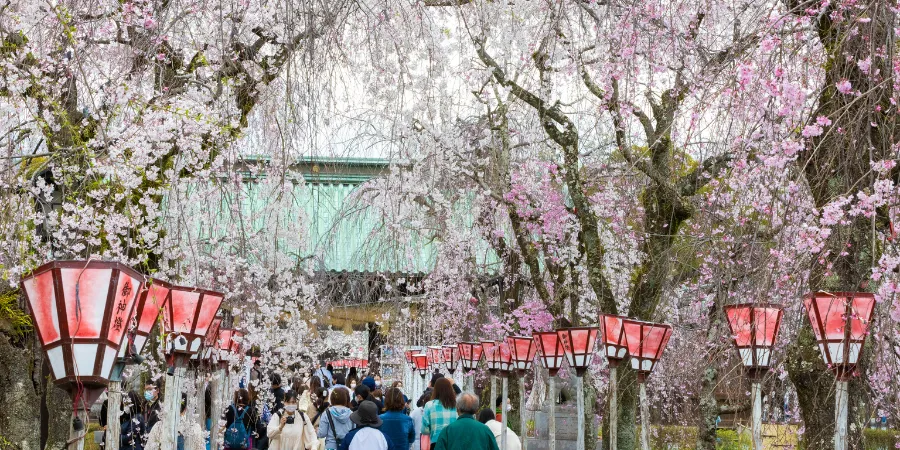
For those who really want to delve into the cultural and spiritual side of Japan, check out the Fujisan Hongu Sengen Taisha in Fujinomiya City at the southwestern foot of Mt Fuji. The shrine complex serves as a starting point for many Mt Fuji climbers and a famous spot for seasonal cherry blossom viewing.
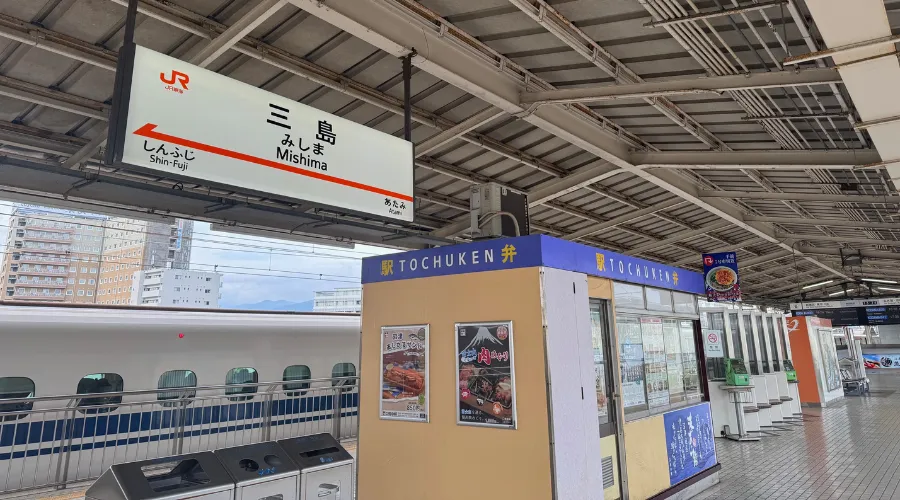
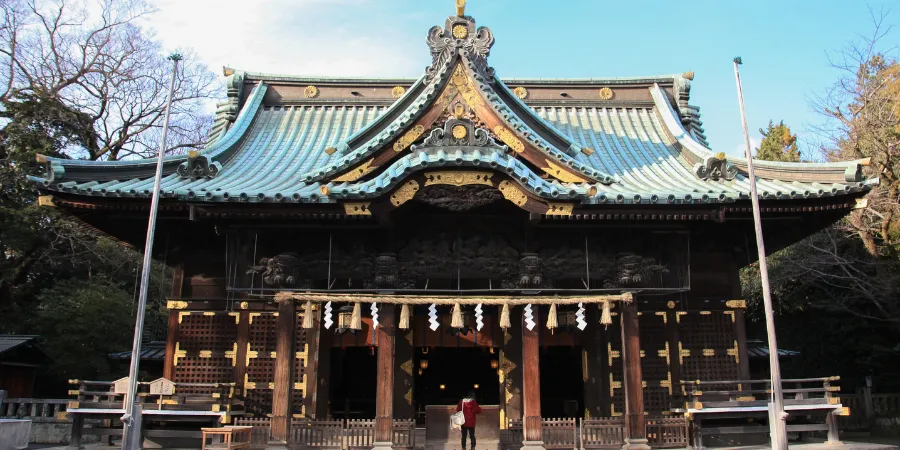
Nearer to Mishima Station is the Mishima Taisha, the grand shrine to water deity Konpira, the guardian of the mountain’s springs. See Mount Fuji alongside red gates, large cedar trees, and torii gates.
Art & Local Experiences
You can learn more about the art scene of Japan by visiting the Sano Art Museum in the Nakata neighbourhood of Mishima. On the museum grounds, you’ll find Ryusen-en, a traditional Japanese garden with spring water originating from Mt Fuji. The museum and garden change with the seasons: cherry blossoms in spring, green in summer, autumn leaves in fall.
Visiting a wasabi farm in the Izu Peninsula is also recommended, to check out as it’s one of the hands-on agricultural highlights in the area. At the farm, visitors can tour fields where wasabi is grown and learn more about the history of Japanese harvesting.
Mishima’s Food & Local Life
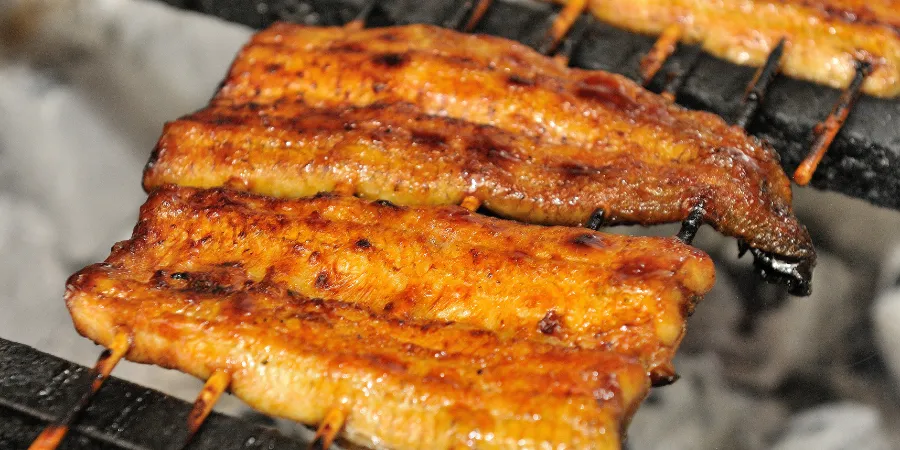
The town excels at grilled freshwater eel (unagi), with dedicated shops like Unagi Bandou and Unagi Sakuraya clustered nearby. Dishes run ¥2,500 to ¥3,500.
Shizuoka tea experiences
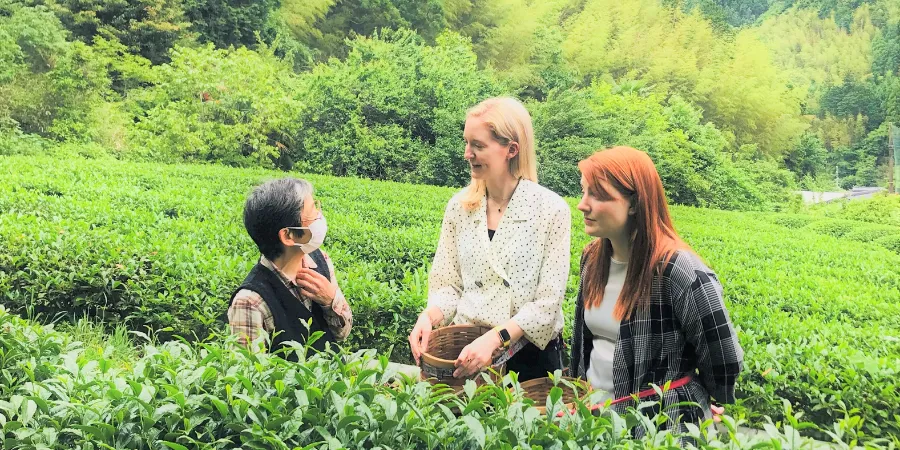
Although not all tea-tasting farms are in Mishima itself, the region is part of the Shizuoka tea belt. One well-known example is Katsumata Tea in Gotemba, a tea production company that allows visitors to tour tea fields, look at the tea-making processes, and try out a guided tasting of freshly brewed tea and other local varieties.
Mishima korokke
Last but not least, Mishima has a local delicacy called the Mishima korokke (croquette), a crisp and deep-fried patty made with 100% local Mishima bareisho potatoes. You’ll find them at cafés, local diners, and even food stalls around Mishima Station selling them at ¥200 to ¥400 per piece.
Izu Fruit Park
Mishima also has a year-round fruit-picking destination called the Izu Fruit Park that offers pick-your-own sessions for strawberries, muskmelons, and mandarin oranges. Beyond the fields, there’s a restaurant where you can enjoy dishes made from the park’s produce.
Pair these places with your Fuji-viewing day as a relaxed and non-crowded alternative to the Fuji-Five-Lakes zone.
Staying Overnight vs. Doing a Day Trip
If you’re weighing whether to stay overnight in Mishima or treat it as a day trip from Tokyo, this quick comparison will help you decide which fits your pace and plans.
| Staying Overnight in Mishima | Day Trip from Tokyo | |
| Pace | Slower, spread over two days. | Faster, one-long day. |
| Best for | Slow-travel town near Fuji. | Tight Tokyo-centric visit. |
| Morning Fuji views | Quieter Skywalk/Genbe River. | Later, crowd-heavier. |
| Evening vibe | Calm, more local feel. | Back in Tokyo. |
| Luggage & flexibility | Leave bags at hotel or send ahead. | All bags back to Tokyo same day. |
| Activities | Full days in Mishima, Numazu, Fuji City. | One Fuji-view stop + maybe Numazu + lunch. |
An overnight (or multi-night) stay in Mishima gives you more time near Mt Fuji, with the flexibility to explore nearby day trips.
If your schedule allows, staying in Mishima for one night is often the sweet spot: you get a slower pace, quieter morning views from the Skywalk or Genbe River, and more time to enjoy the town’s food and water-based walks without rushing back to Tokyo that evening.








Itinerary Ideas: A Mt Fuji Day Trip from Tokyo Beyond Kawaguchiko
If you’re looking for a Mt Fuji day trip itinerary from Tokyo, this route blends Mishima, Fuji City, Numazu, and Fujinomiya into a slower, more local alternative to Kawaguchiko.
When planning your day trip to Mt Fuji from Tokyo via Mishima, you can use the trains to put together a relaxed but rich day that blends Fuji City, Numazu, and Fujinomiya for travellers who want to explore beyond the main Fuji Five Lakes path.
If you’re staying in Mishima, you can spread this same route across two days and pair it with a slower morning at the Skywalk or Genbe River, giving you a deeper, less-rushed version of the same Mt Fuji-focused day trip.
Fuji City
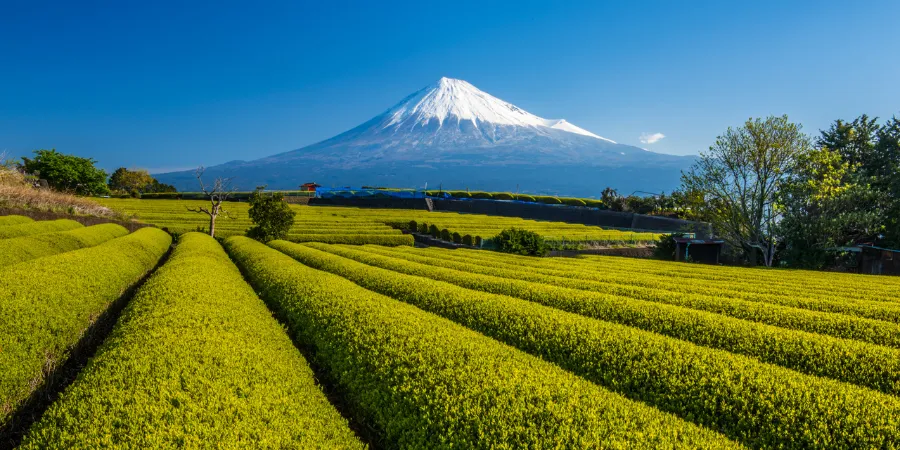
Industrial hub with prime Mt Fuji views from passing Shinkansen windows. Known for green tea fields (Obuchi Sasaba) and gateway to Shiraito Falls (Fuji’s “white silk” waterfall, 150m wide, meltwater threads). Go for uncrowded nature shots with a mountain backdrop.
- From Mishima, take the JR Tokaido Line to Fuji Station, then continue to Fujinomiya Station (around 55 minutes total from Mishima). From Fujinomiya, reach the Shiraito Falls area by bus (about 30 minutes) or taxi (around 20 minutes).
- Walk along the river from the Shiraito Falls Guchi (entrance) area and use the marked viewpoints along the way. These are clearly signposted wooden observation platforms and fenced-off lookout spots built beside and above the river, with railings and steps leading down to the falls.
- From several of these platforms, you can see water cascading in thin white threads over the 150-metre-wide cliff, often with Mt Fuji visible in the background on clear days.
Numazu
Bustling fishing port on Suruga Bay, Izu Peninsula gateway. Famous for deep-sea sashimi, harbour markets, and rare sea-framed Fuji views.
- From Mishima, take the JR train to Numazu, a seaside town on Suruga Bay.
- Stroll along the harbour promenade or the Numazu waterfront to look for Mt Fuji framed by the sea, especially on clear days.
- You can combine this with a quick lunch at the small fish market or harbour-side restaurants, then return by train if you prefer a shorter coastal stop.
Fujinomiya
City at Mt Fuji’s southwest side, climber trailhead. Home to Fujisan Hongū Sengen Taisha, head shrine for Fuji worship (2,000+ years old). Sacred pond mirrors the mountain perfectly.
- Continue by JR Tokaido Line to Fujinomiya, then walk or take a short bus ride to Fujisan Hongū Sengen Taisha.
- The shrine’s pond and surrounding grounds often reflect the mountain on clear days. This route is ideal for readers who want to combine a short religious or cultural stop with a chance to see Mt Fuji without straying far from the main rail line.
The Hokusai Special Train: Fuji Views (2026)
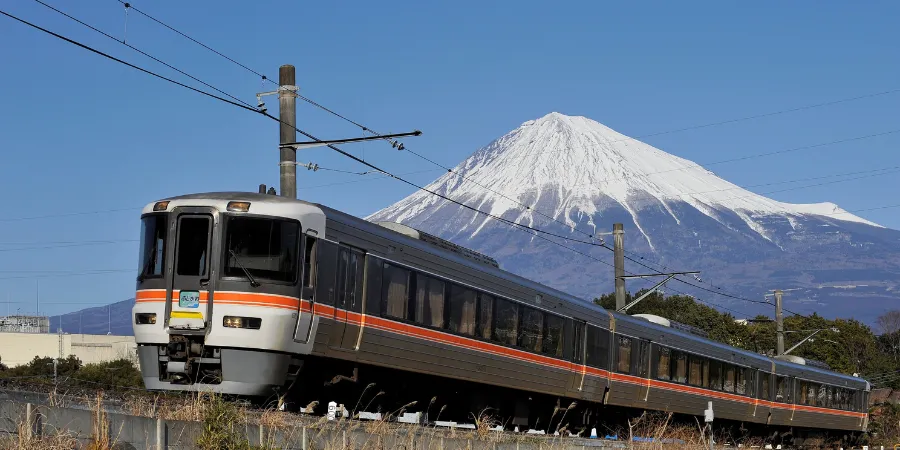
If you want a more curated experience, Sunrise Tours (operated by JTB) and Central Japan Railway Company (JR Central) offer a package tour that includes riding their Hokusai Special Train between Mishima and Fujinomiya as part of a Mt Fuji itinerary.
This exclusive sightseeing train runs directly between Mishima and Fujinomiya stations, bypassing the usual transfer at Fuji Station.
Sunrise Tours and JR Central’s Hokusai train operate special cars lined with the artist’s famous Mt Fuji prints. The train travels at a slower pace to allow for photography and includes English-friendly commentary, making it a relaxed, premium sightseeing option.
Full Day Package (¥28,000/person):
| Step | Experience | Time |
| Tokyo → Mishima | Shinkansen | 45 mins |
| Mishima → Fujinomiya | Hokusai Special Train | 45 to 60 mins |
| Fujinomiya → Fuji Centre | Bus + wasabi farm | 1 to 2 hrs |
| Lunch + return to Mishima | All included | — |
| Mishima → Tokyo | Shinkansen | 45 mins |
- The Hokusai Special Train is included in a tour package as the middle point of the journey from Tokyo to Mt Fuji.
- The journey begins with a Shinkansen ride from Tokyo Station to Mishima Station, followed by the train linking to Fujinomiya.
- After that, you take a bus transfer to Mt Fuji World Heritage Centre, then continue to the Shiraito Falls area for a scenic stop.
As part of the tour package, the Hokusai Special Train requires advance reservations with the ticket price of ¥28,000 per person, as of May 2026. This covers the transportation from Tokyo, the day’s activities, lunch, and transportation back to Mishima Station and Tokyo Station. You can learn more about the full-day Mt Fuji & Shizuoka Wasabi Farm Tour with Hokusai Special Train & Shinkansen (Round-trip from Tokyo) package here.
Best time to go: when to plan your Mt Fuji day trip from Tokyo
For the highest chance of clear Mt Fuji views, late autumn through early spring (roughly November–March) is your best window. Cold, dry air and fewer clouds mean the mountain is more likely to appear sharp and unobscured, especially on crisp winter mornings. Many visibility-tracking sites also show that December to February regularly offers the clearest skies, making this a particularly smart time for a day trip from Tokyo if you’re chasing postcard-perfect photos.
In contrast, summer and the rainy season (June–September) bring more humidity, haze, and passing clouds, so Mt Fuji is visible less often and the surrounding area can feel more crowded. If you travel, then it helps to plan an early-morning train from Tokyo and be ready with backup plans in case the mountain hides behind rain or mist.
Ultimately, Mt Fuji’s visibility is never guaranteed, no matter what month you choose, so treat your Mishima-based itinerary as a chance to enjoy both the mountain and the region’s quieter towns, waterways, and shrines, even on cloudy days.
Travel Tips for A Mt Fuji Day Trip from Tokyo via Mishima
As you embark on a journey from Tokyo to Mt Fuji via the Mishima route, here are some essentials to consider to make the most out of your trip.
- Check the mountain’s visibility index – While winter and early spring give the best odds, Mt Fuji can still vanish behind clouds. Use a visibility-tracking site like Fuji-San to gauge your chances on the day.
- Dress for the season – Around the area, the climate is generally temperate, ranging from 0 to 5°C in winter to 10 to 20°C in spring. Pack layers, a light rain jacket, and comfortable walking shoes, especially if you plan to walk the Genbe River path or climb the steps around Yamanaka Castle or the Skywalk.
- Secure your storage, keep it light – When day-tripping to Mt Fuji from Tokyo, only bring the essentials. For longer stays, you can leave larger luggage at your hotel or use parcel-delivery services (takkyubin) to send bags ahead to your next stop, keeping your schedule flexible.
- Embrace low-visibility days as part of the experience – If Mt Fuji is hidden in clouds or rain, shift focus to the region’s shrines, gardens, and food. Mishima Taisha, Sano Art Museum, and Ryusen-en, and a slow walk along the Genbe River all make rewarding “plan-B” activities that don’t rely on the mountain view.
- Overnight stays in Mishima – If you can fit it into your Tokyo-centric itinerary, spending at least one night in Mishima dramatically improves your odds of waking up to a clear Mt Fuji view and exploring the town’s sights without the pressure of a same-day return to Tokyo.
Frequently Asked Questions
Can you do a Mt Fuji day trip from Tokyo without the crowds?
Yes. While most visitors default to the more visited Fuji Five Lakes area like Kawaguchiko, taking a day trip to Mishima via the Tokaido Shinkansen offers a much calmer alternative. Reached in under 60 minutes via the Kodama bullet train from Tokyo, Mishima provides clear mountain views, spring-fed waterways, and historic sites without the heavy sightseeing crowds.
Is it better to do a Fuji day trip or book an overnight stay?
Sticking to a Fuji day trip is ideal if you want to keep your base in the capital, letting you experience Shizuoka’s scenic spots before heading back to enjoy your evening in Tokyo. However, if you prefer a slower pace, lingering for a night gives you quiet evenings by the town’s spring-fed streams and sets you up for the best window for crisp mountain views the following morning before the daytime haze sets in.
Why the Mishima Route Delivers
Choosing the Mishima route from Tokyo to Mt Fuji is your best bet if you want the best Mt Fuji day trip from Tokyo without the crowds. Start with a swift Shinkansen ride, explore the underrated spots of Mishima, and admire Mt Fuji with fewer crowds and hassle-free itineraries.
Venture beyond the walls of the Fuji Five Lakes region and experience a quieter, more local-life-forward way to see Mt Fuji.


