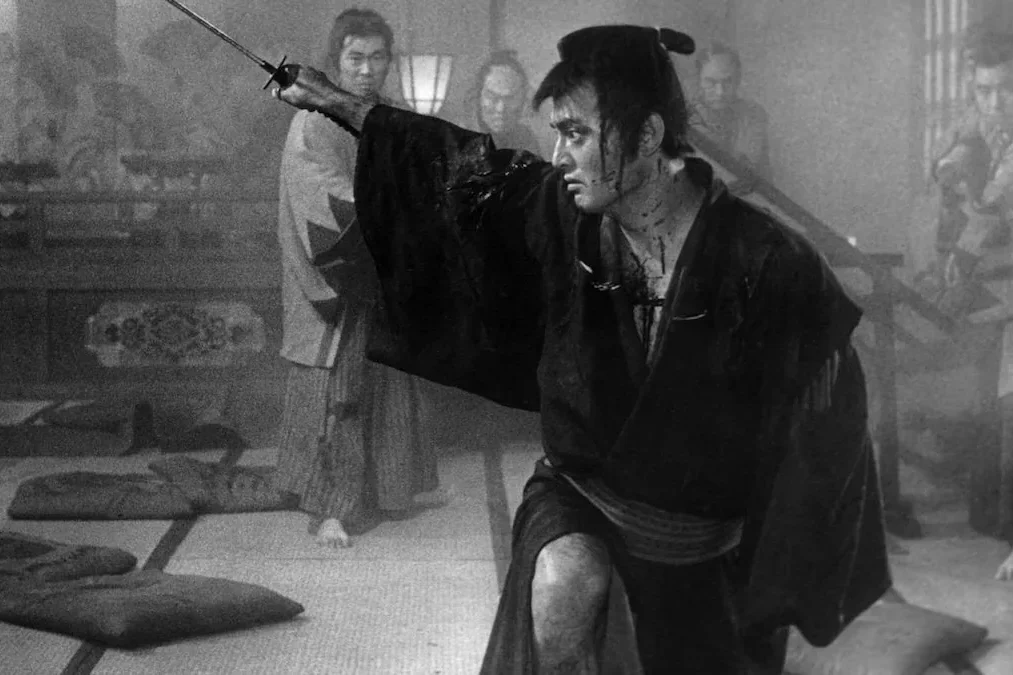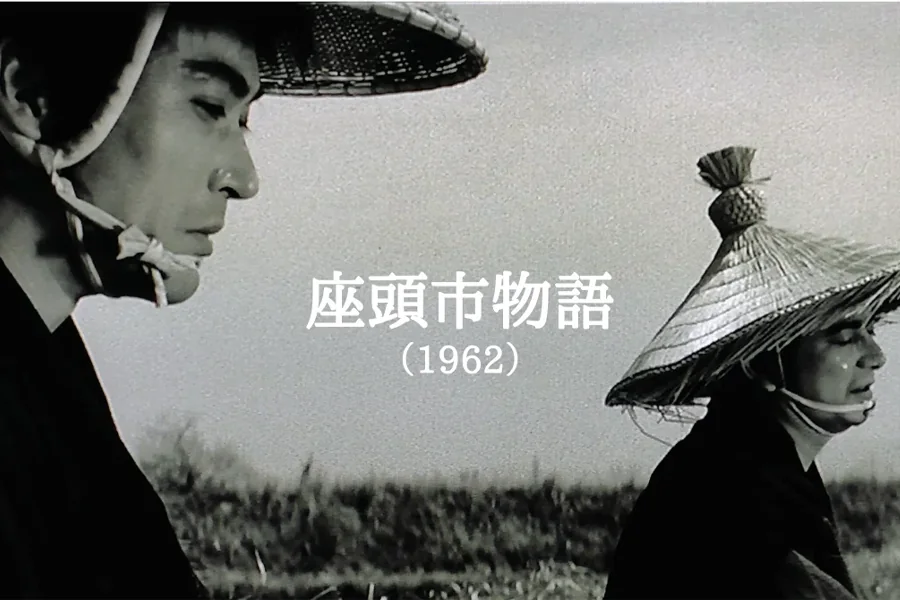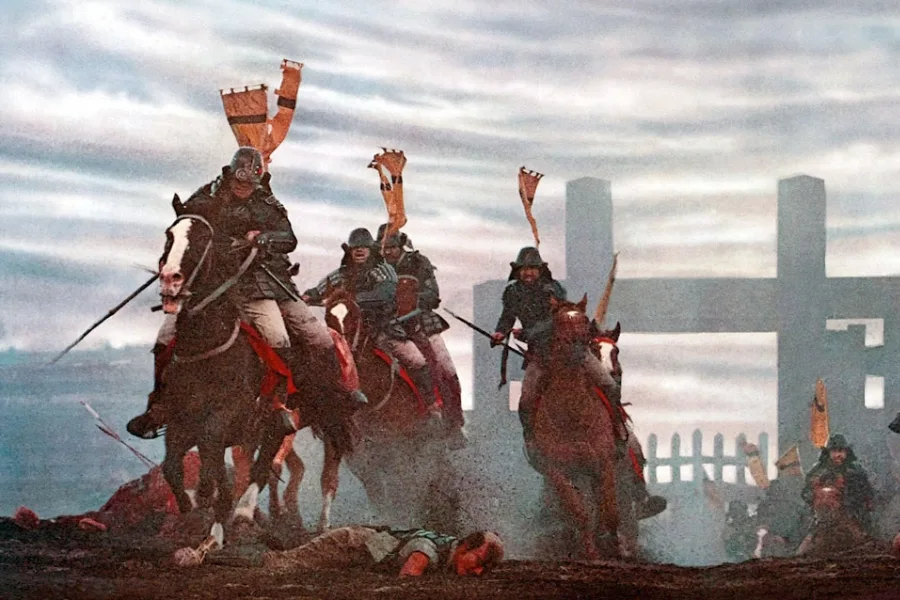
Search for samurai cinema and two entirely different things come back. One is a film genre that ran for most of the twentieth century and reshaped action filmmaking across the world. The other is a black and white display mode in Ghost of Tsushima, named in tribute to the first. This guide is about the films.
Japanese period drama is one of the country’s great cultural exports, and it has been misread in the West almost from the moment it arrived. The handful of titles that travelled, most of them by Akira Kurosawa, represent a sliver of what was made. Behind them sits a century of work: silent films lost to an earthquake, a genre banned outright by an occupying army, musicals with swordfights, and a blind masseur who carried twenty six films on his own.
A Guide to Samurai Cinema
What jidaigeki and chanbara mean

Jidaigeki means period drama. It covers any Japanese film or television drama set before 1868, the year the Meiji Restoration ended the shogunate. Its counterpart is gendaigeki, drama set in the modern world. The dividing line is that single date.
Chanbara is a subgenre inside jidaigeki. It means the swordplay film specifically. The word is onomatopoeic, a contraction of chanchan barabara, the sound of blades meeting and a scuffle breaking out.
The distinction matters because the West has largely collapsed the two into one. Writing for the Yale University series The Sword and the Screen, David Desser calls it both unfair and unfortunate that jidaigeki has become synonymous with chanbara, and that the sword film has in turn become synonymous with a handful of directors and titles (Gerow et al., 2012). Plenty of period films contain no swordfighting at all. Some are romances, some are ghost stories, and at least one is a full musical.
Most jidaigeki are set in the Edo period, from 1603 to 1868. A smaller and considerably bloodier group are set during the Sengoku civil wars of the sixteenth century, and a few reach back to the Heian aristocracy.
Period films were first produced in Japan from around 1908, when Makino Shozo shot Honnoji gassen at a Kyoto temple. The word jidaigeki itself did not come into use until the 1920s.

Why Kyoto became the home of the samurai film

The Japanese studios split their output geographically, and the logic is obvious once you see it. Contemporary drama was made in the Tokyo suburbs. Period drama was made in Kyoto.
Kyoto had been the capital before Edo and it still looked the part. The temples and shrines were standing, the streets had never been rebuilt on a modern grid, and the city kept the craft trades that produced period costume, armour and props. A production could walk out of the studio gate and find a location that needed no set dressing whatsoever.
The neighbourhood that grew into the centre of it all was Uzumasa, in the west of the city, where Bando Tsumasaburo opened a studio in a bamboo grove in 1926. Toei founded its Kyoto studio on that ground in 1951 and has made more than two thousand period films since. From 1956 Toei was Japan’s top earning studio by distribution revenue, and it held the position into the 1960s.
Treat the split as a strong tendency rather than a rule. The majors held facilities in both cities, and a double bill would often pair a Tokyo picture with a Kyoto one.
The silent era and the directors who built the genre
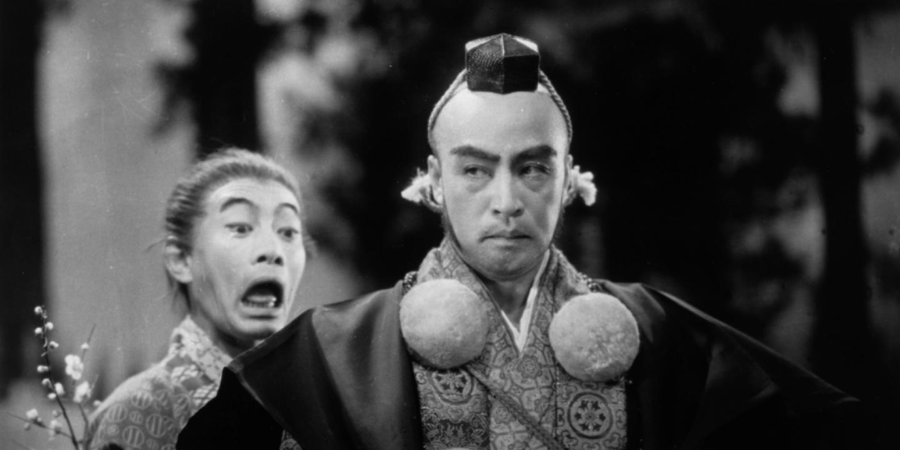
Almost none of it survives. Around seven thousand narrative films were made in Japan between the late 1890s and the early 1930s. The National Film Center holds roughly seventy pre-1930 titles in reasonably complete condition, a survival rate of about one per cent, among the worst anywhere in the world.
The Great Kanto Earthquake of 1923 did most of the damage, levelling Tokyo’s film warehouses and burning whatever the tremors left standing. Nitrate stock did the rest, helped along by Japanese humidity, studio indifference and the firebombing of the war.
What survives points at the scale of what went missing.
Ito Daisuke, born in 1898, directed close to a hundred films between 1924 and 1970, most of them period pieces, and is a founding figure of the modern jidaigeki. His camera almost never stopped moving, and the nickname that followed him was Ido daisuki, a pun on his own name meaning loves camera movement. His protagonists tended to be nihilistic drifters at odds with the society around them, which is why his early work sits alongside the tendency films, the left leaning commercial cinema of the 1920s and 1930s.
Yamanaka Sadao is the genre’s great loss. He directed twenty six films in five years. Three survive. Conscripted on the day Humanity and Paper Balloons premiered, he died of dysentery in a field hospital at Kaifeng in September 1938, aged twenty eight. He worked with actors from the leftist Zenshinza troupe to pull understated, naturalistic performances out of material that had been played in a kabuki register for decades, and the results still look startlingly modern.
Itami Mansaku made The Peerless Patriot in 1932, a comedy about a country bumpkin passed off as a local lord and a masterpiece of what was called nonsense jidaigeki. It parodies the genre’s conventions so sharply that it is sometimes described as an anti-jidaigeki. Only fragments survive, cut together into a twenty four minute digest. His son took the family name at fifty and became the director Juzo Itami.
The Occupation banned 236 films and burned the prints

On 16 November 1945, three months after the surrender, General Headquarters issued a memorandum concerning the elimination of undemocratic motion pictures. It banned 236 features outright, along with a large number of documentaries and newsreels made since the Manchurian Incident of 1931. The charge was that they propagated nationalistic, militaristic and feudalistic concepts, a phrase the directive glossed as conformity to a feudal code, contempt for life, and the creation of the warrior spirit.
The films were hunted down prefecture by prefecture. Negatives and prints were confiscated. Four prints and a negative of each title went to General Headquarters, some of them ending up at the Library of Congress, and the surplus was taken to Yomiuri Airfield on the bank of the Tama River and burned across three days in the spring of 1946.
Six days after the ban, the Civil Information and Education Section published thirteen prohibited themes. Films could not treat revenge as a legitimate motive. They could not present feudal loyalty or contempt of life as honourable. They could not approve suicide, directly or by implication. Combined with a specific hostility to swords, which American officials regarded as inherently crueller than other weapons, the effect was to make the period film very nearly impossible to produce.
Chushingura, the story of the forty seven ronin and the most filmed subject in Japanese cinema, became unmakeable on the grounds of loyalty to a lord. Daiei, the studio most dependent on the genre, was hit hardest, and moved its period stars into contemporary detective pictures to keep them working.
The detail that complicates the story is where the list came from. Eiga Kosha, the Japanese film body, was asked to submit every feature made since 1931 and returned 455 titles. It was then asked to identify which of them had served the war effort, and picked 227. David Conde, who ran the Motion Picture Unit, maintained that he added nothing and simply approved what the Japanese side had chosen, although by the time the directive was issued the number had risen to 236. A great deal of the ban, in other words, was self-censorship (Hirano, 1987).
Restrictions loosened in June 1949, when the industry set up its own regulator, Eirin. Clearance of completed films continued until the Occupation ended in April 1952. Prints of 176 banned titles were returned to the studios that August. A further 483 prints did not come home from the Library of Congress until December 1967.
The irony is that the period film had been a refuge under Japan’s own wartime censors. Setting a story before 1868 let a director slip social criticism past the authorities by claiming the film had nothing to do with the present. Kyoko Hirano’s study of the banning, drawn from the American documents themselves, remains the fullest account of how it worked. There is more on the wider period in our piece on the American Occupation and the rise of Japanese cinema.

Kurosawa and the post-war peak

Rashomon took the Golden Lion at Venice in 1951 and the Western film world discovered Japanese cinema more or less overnight. Nagata Masaichi, who ran Daiei, concluded that the period film should lead the industry’s export effort, which is why Daiei went on to produce Ugetsu two years later.
Kurosawa’s period films are unusual in one specific way, and he said so himself. Most samurai films are set in the Tokugawa era, when the country was at peace and the warrior had become an administrator. Kurosawa kept returning to the sixteenth century civil wars, when the class was still fighting, still mobile, and a peasant could still become a warrior (Prince, 1991).
That choice shapes what the films argue. The bushido most people picture, the code of restraint and loyalty and indifference to wealth, was systematised in the Tokugawa period by Yamaga Soko, long after the wars it claims to describe. In The Warrior’s Camera, Stephen Prince reads Kurosawa as drawing on both halves of that inheritance at once. The warlords of Throne of Blood and Ran embody the greed of the actual past. The heroes of Seven Samurai embody the ideals of the invented one.
Sengoku Japan on screen
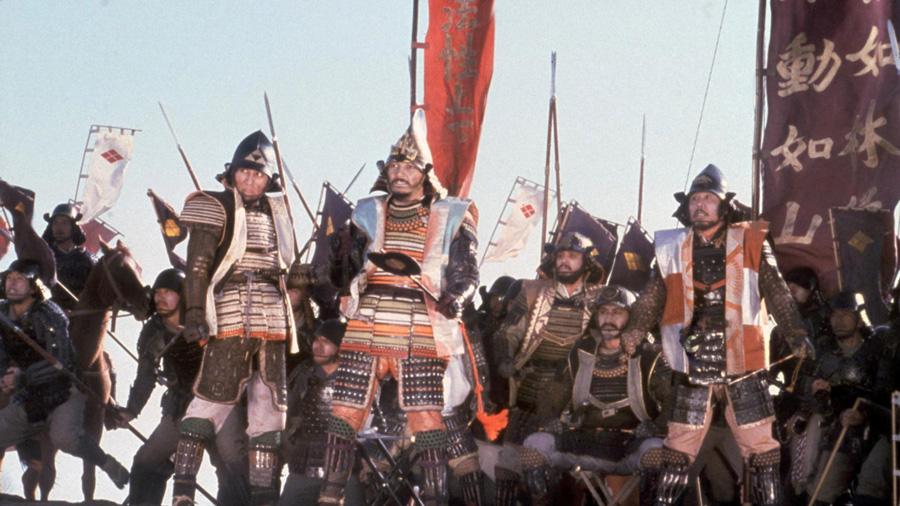
The Sengoku era ran through the sixteenth century and turned the country upside down, with retainers routinely overthrowing the lords above them. Seven Samurai, The Hidden Fortress, Throne of Blood and Ran are all set inside it, and Kagemusha covers its ending, as Japan is unified under Oda Nobunaga, Toyotomi Hideyoshi and Tokugawa Ieyasu.
Firearms are what close the era. In 1543 a Chinese junk carrying two Portuguese adventurers was driven by storm onto Tanegashima, the local lord bought two matchlocks, and a swordsmith named Yaita Kinbee Kiyosada was set to work copying them. By 1549 Oda Nobunaga was ordering guns five hundred at a time. Seven Samurai makes the point without ever stating it. All four samurai who die are killed by gunfire. Not one falls to a blade.
The Edo period

The Edo period ran from 1603 to 1868 and gave Japan roughly two and a half centuries without a major war, under the Tokugawa shogunate founded by Tokugawa Ieyasu. It is also the era that produced the samurai as most films present him, because a warrior class with no war to fight needed a philosophy instead. Shinto and neo-Confucian thought hardened into the codified bushido of the period, and the rituals came with it, including the formal seppuku that films return to again and again. A manual of the ceremony translated by A. B. Mitford in Tales of Old Japan (1871) has the condemned man bathe and change into fresh clothes, and allows wine and food but says these should be cut short so the sentence is carried out quickly.
Yojimbo is set in 1860, right at the end of it, in a town where the shogunate’s authority has already curdled. Sanjuro followed in 1962 and gave the genre the image it never quite recovered from, when the final duel ends in a geyser of blood from a slain samurai’s chest. Kurosawa said in interview that the effect was deliberate, done as an experiment, and complained afterwards that other filmmakers had taken entirely the wrong lesson from it. The widely repeated story that the shot was an accident caused by an over-pressurised hose circulates without a source in any interview or production record.
Chushingura: the 47 Ronin on stage and screen
The Edo period also supplied the genre’s favourite story. In 1701 Asano Naganori, lord of Ako, was ordered to commit seppuku for drawing his sword on the official Kira Yoshinaka inside Edo Castle, and at the end of January 1703 forty seven of his former retainers, led by Oishi Kuranosuke, killed Kira in revenge. Yamaga Soko had taught the samurai of Ako, and Oishi is counted among his pupils. The true story of the 47 Ronin is told in our guide to the samurai.
The ronin were breaking the law as well as avenging their lord. In the Edo period a vendetta was legal only with permission: a samurai needed his lord’s approval, and the revenge had to be reported to the authorities, who recorded it. The Ako men had none, and the shogunate ordered them to commit seppuku. The Meiji government banned vendettas outright in 1873.
The theatre could not show the incident directly, since plays about the ruling warrior houses of the day were forbidden. Kanadehon Chushingura, written by Takeda Izumo, Namiki Senryu and Miyoshi Shoraku and first staged as a puppet play in 1748, moved the story back to the fourteenth century under the shogun Ashikaga Takauji and renamed its people, so that Oishi became Oboshi Yuranosuke. Its title gave the whole story its name. Among the many screen versions are Kenji Mizoguchi’s two-part The 47 Ronin (1941 and 1942), Hiroshi Inagaki’s Chushingura (1962) and Kon Ichikawa’s 47 Ronin (1994).
The Meiji Restoration

The Meiji Restoration of 1868 returned power to the emperor, dismantled the samurai class and opened Japan to the world, and the Meiji era ran to 1912. Anything set after 1868 falls outside jidaigeki by definition, which is why the boundary is drawn there.
Kurosawa’s Red Beard sits in the closing years of the shogunate and turns on a young doctor trained in Ranpogaku, the Dutch medicine studied at Nagasaki, which was the only channel through which Western learning reached the country during the closed centuries. His debut, Sanshiro Sugata, is set in the 1880s as judo displaces the older jujutsu schools, a small institutional change that the film treats as a matter of life and death.
The masters working alongside Kurosawa
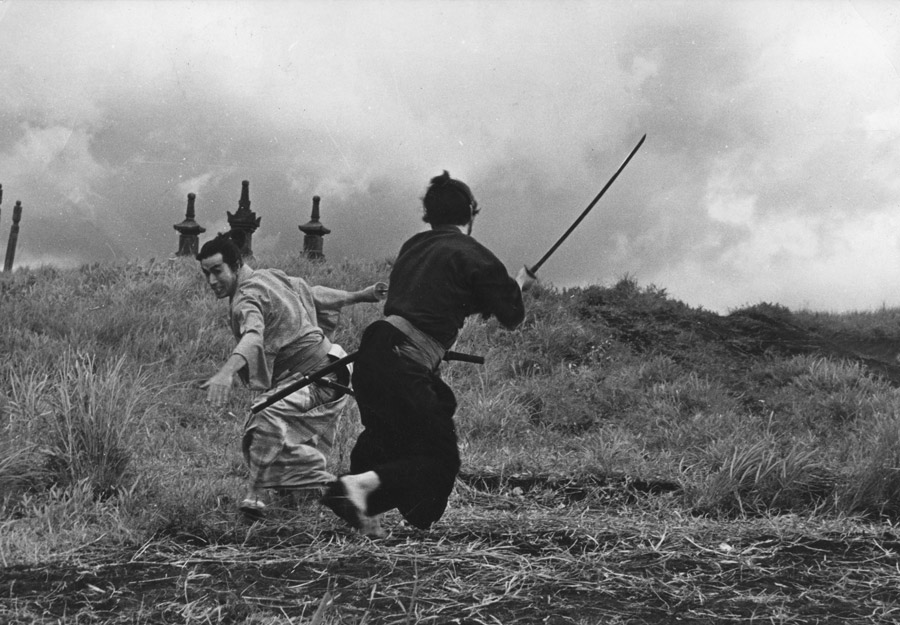
Kurosawa is the name that travelled, and the effect has been to flatten everything around him. Several of his contemporaries made period films that are every bit as good, and in one or two cases considerably angrier.
Masaki Kobayashi is the essential one. Harakiri, made for Shochiku in 1962, uses the ritual suicide of a penniless ronin to take the entire feudal order apart, and it does so with a control that makes the anger land harder. He followed it with Samurai Rebellion in 1967. Anyone who knows his work through The Human Condition will recognise the same refusal to let an institution off the hook.
Kihachi Okamoto made The Sword of Doom in 1966, with Tatsuya Nakadai as a swordsman of no discernible morality at all, a film that ends mid-massacre and declines to resolve. Hideo Gosha debuted with Three Outlaw Samurai in 1964, spun out of his own television series. Uchida Tomu, barely known outside Japan, made more period films across the 1950s and 1960s than Kurosawa did, and his five part adaptation of the Miyamoto Musashi story with Nakamura Kinnosuke has a serious claim to being the definitive one.
Hiroshi Inagaki got there first, with the Samurai trilogy starring Toshiro Mifune, released between 1954 and 1956. The opening film received an Honorary Academy Award as best foreign language film, at a ceremony held before a competitive category for foreign films existed.
Zatoichi and the blind swordsman
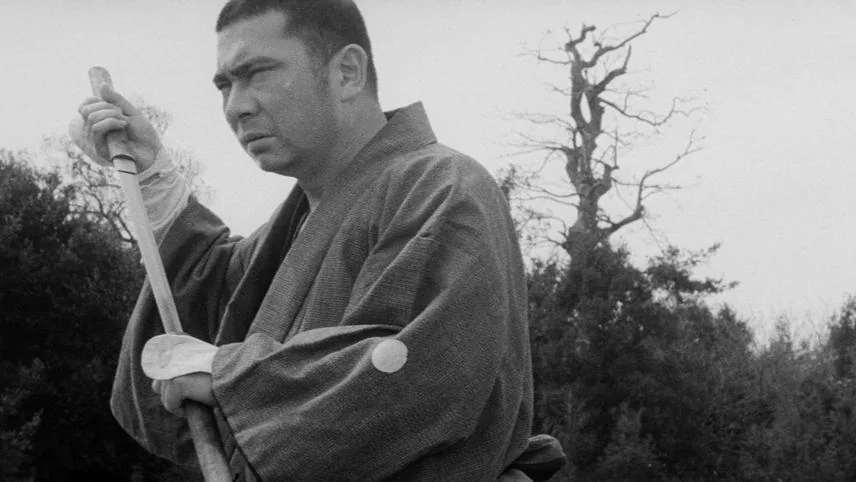
No single figure carried the genre further than Zatoichi. A blind masseur and gambler who happens to be a phenomenal swordsman, he first appeared in 1948 in a short piece by Kan Shimozawa, where he was a minor character. Daiei and the actor Shintaro Katsu rebuilt him almost entirely for the screen.
Katsu played him in twenty five films between 1962 and 1973, the first twenty of them for Daiei, and returned once more in 1989 in a film he directed himself. Two years before the first, he had played a villainous blind masseur in The Blind Menace, a performance critics have since read as a dry run for Ichi.
The character has outlived almost everything around him. Takeshi Kitano took the role for his own Zatoichi in 2003 and won the Silver Lion for Best Direction at Venice with it.
Women in the samurai film
The genre is remembered as relentlessly male, and the audience for chanbara was in fact overwhelmingly male, which shaped what got made. That is not the whole picture.
Flowers Have Fallen, directed by Ishida Tamizo for Toho Kyoto in 1938, unfolds entirely inside a Kyoto geisha house over a single day and night in July 1864, as Choshu forces clash with the shogunate in the streets outside. Male voices are heard off screen. No man ever appears on it. Ishida never repeats a single shot across the film, and the real protagonist is arguably the household itself rather than any one woman in it.
Then there is Misora Hibari, the enka singer, who appeared in sixty three films at Toei’s Kyoto studio between 1948 and 1966 and repeatedly played men. In Detective Hibari: The Case of the Golden Hairpins, made in 1958, her character dresses as a man and joins a kendo dojo to spy on a corrupt lord, and holds her own in the fights. Several of her sword films are also musicals, which tells you how elastic the genre could be when a star’s image demanded it.
Where to start with samurai cinema

Ten films, ordered so that each one opens onto the next rather than by any ranking.
- Seven Samurai (1954, Akira Kurosawa). The obvious entry point and still the deepest, provided you have the afternoon.
- Yojimbo (1961, Akira Kurosawa). A ronin plays two gangs against each other in a dying town. The film Sergio Leone remade without asking.
- Harakiri (1962, Masaki Kobayashi). The angriest film the genre produced, and the one that best rewards a second viewing.
- The Tale of Zatoichi (1962, Kenji Misumi). Where the blind swordsman begins.
- Sanjuro (1962, Akira Kurosawa). Lighter than Yojimbo, and the source of the most copied shot in the genre.
- Three Outlaw Samurai (1964, Hideo Gosha). Lean, fast, and a good demonstration that the genre had range beyond its headline names.
- The Sword of Doom (1966, Kihachi Okamoto). Tatsuya Nakadai as a swordsman with no moral centre at all.
- Samurai Rebellion (1967, Masaki Kobayashi). Toshiro Mifune, late and quiet, until he is not.
- Kagemusha (1980, Akira Kurosawa). A thief stands in for a dead warlord. The Sengoku era ending in real time.
- Zatoichi (2003, Takeshi Kitano). The genre handed to a modern director who grew up on it.
For anyone wanting the wider context first, our guide to the golden age of Japanese cinema covers the studios and the directors either side of the genre, and the piece on Noh in Japanese cinema explains where a lot of the performance style in these films actually comes from.
Frequently asked questions
What is the difference between jidaigeki and chanbara?
Jidaigeki is the whole category of Japanese drama set before 1868. Chanbara is the swordplay subgenre inside it. Every chanbara film is a jidaigeki. Most jidaigeki are not chanbara.
Why were so many samurai films made in Kyoto?
Kyoto was the capital before Edo, so its temples, shrines and streets still read as pre-modern on camera, and the city retained the craft trades that made period costume and props. The studios concentrated period production there and contemporary production in the Tokyo suburbs.
Did the Americans really ban samurai films?
Yes. A General Headquarters directive of 16 November 1945 banned 236 Japanese features, and rules published days later prohibited revenge as a motive, feudal loyalty presented as honourable, and the approval of suicide. Surplus prints were burned in the spring of 1946. Restrictions loosened from June 1949 and the Occupation ended in April 1952.
How many Zatoichi films are there?
Shintaro Katsu made twenty five between 1962 and 1973, then a final film in 1989. Takeshi Kitano directed and starred in a further version in 2003.
Which samurai film should you watch first?
Seven Samurai, if you have three and a half hours. Yojimbo if you have two, and it will tell you within ten minutes whether the genre is for you.
Which 47 Ronin movie should you watch?
In Japan the story is filmed as Chushingura. Hiroshi Inagaki’s Chushingura (1962) is the most approachable telling, and Kenji Mizoguchi’s two-part The 47 Ronin (1941 and 1942) the most austere. The 2013 Hollywood 47 Ronin with Keanu Reeves is a fantasy loosely based on the story, complete with a witch and monsters.
Sources: Prince, S. (1991). The Warrior’s Camera: The Cinema of Akira Kurosawa. Princeton University Press. Gerow, A. et al. (2012). The Sword and the Screen: The Japanese Period Film 1915-1960. Council on East Asian Studies, Yale University. Hirano, K. (1987). The Banning of Japanese Period Films by the American Occupation. ICONICS, 1, 193-208. Mitford, A. B. (1871). Tales of Old Japan. Macmillan.