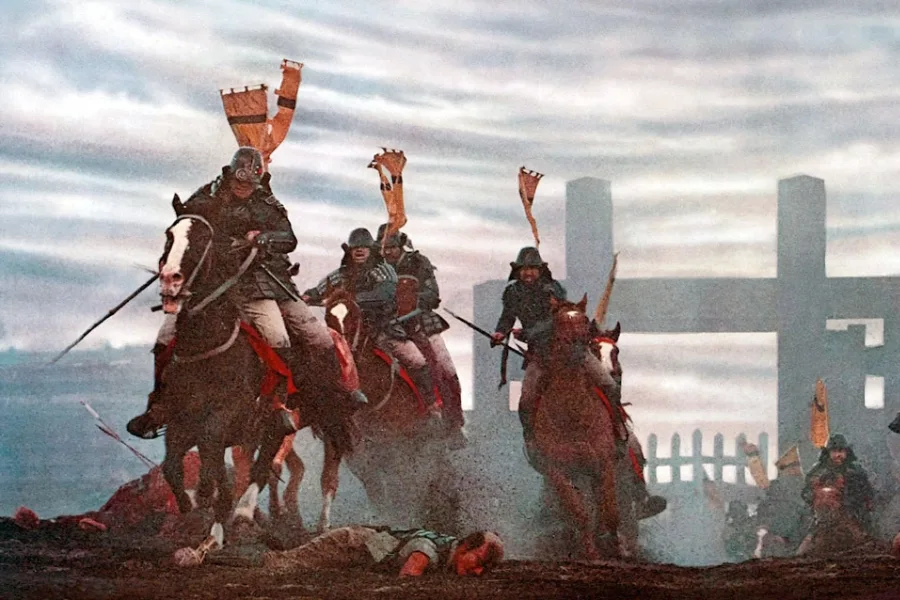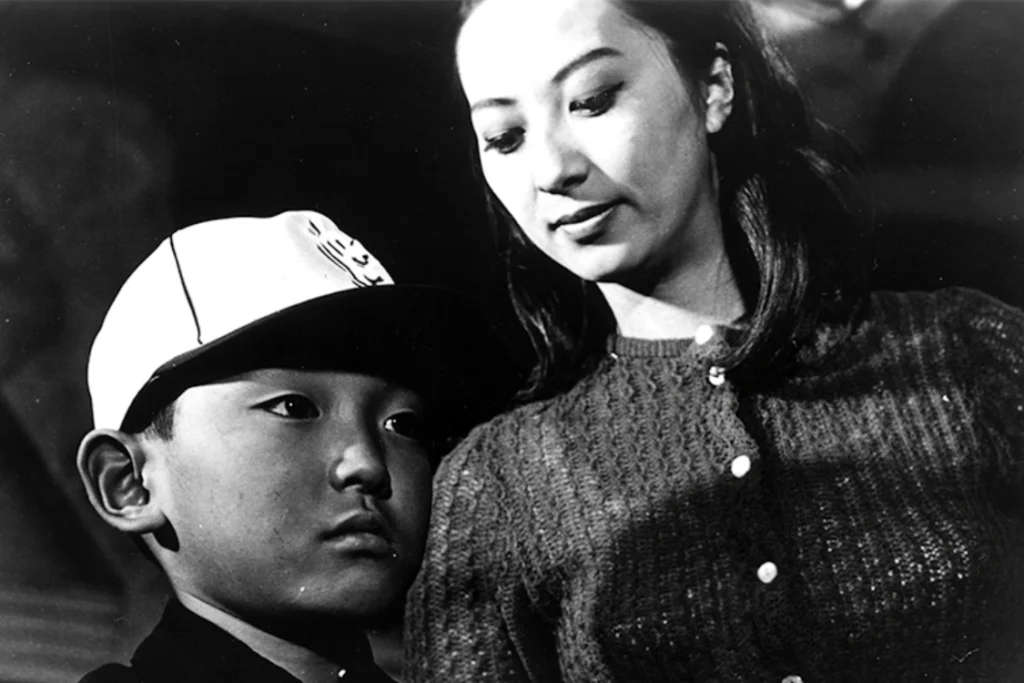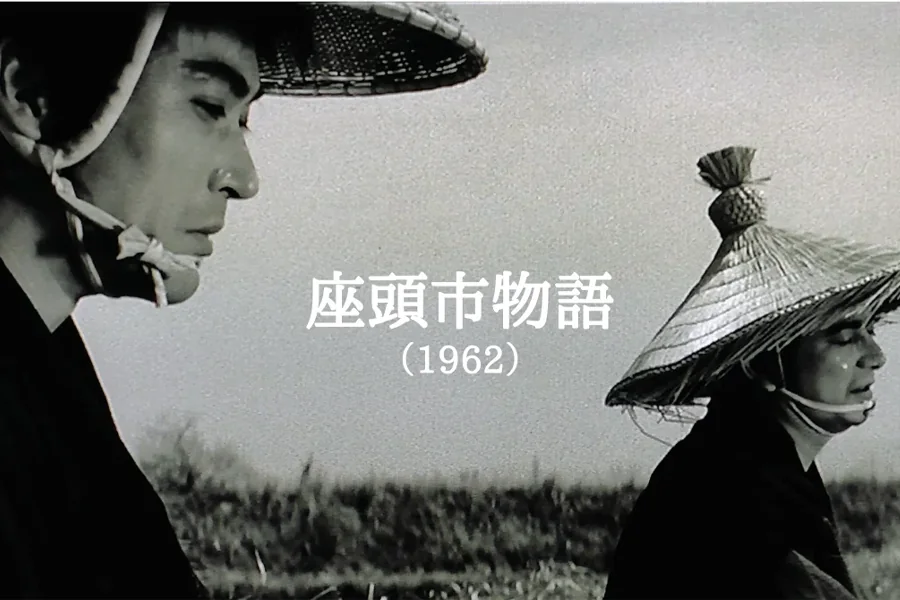
Zatoichi is a blind masseur, gambler and swordsman created by the novelist Kan Shimozawa in 1948 and played by Shintaro Katsu across twenty six films between 1962 and 1989, plus one hundred television episodes. The name is a rank rather than a name. Zato was the lowest of the four grades in the Todoza, the official guild for blind men in Edo period Japan, and Ichi is what he is called, so Zatoichi means something close to low ranking blind man Ichi. He carries a sword hidden inside a walking stick, fights with the blade held backwards along his forearm, and anchors the longest running action series in Japanese film history.
That is the short version. The longer one explains why a character with no rank, no land and no master became the most durable hero the genre produced, and where a newcomer should actually begin.
Everything You Need to Know About Zatoichi
Who Zatoichi Is
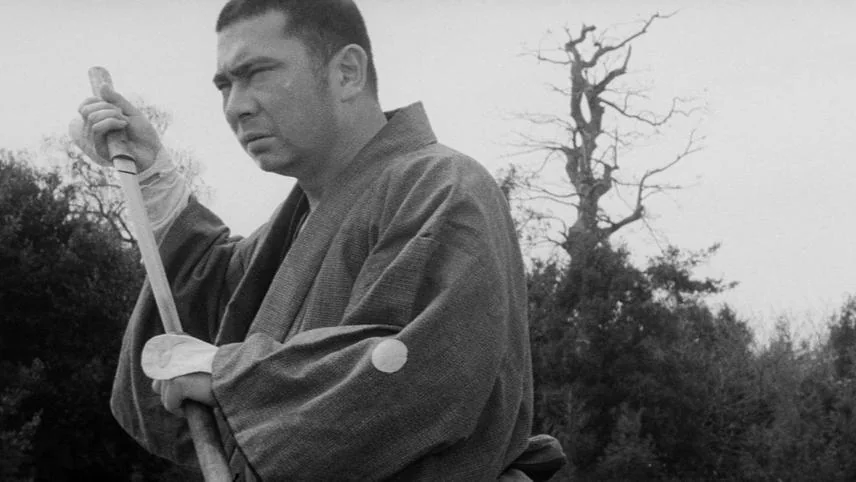
Start with the social position, because everything else follows from it.
Ichi lost his sight to illness as a child. He works as an anma, a blind masseur, and as an acupuncturist, and he gambles. In Edo period Japan blind masseurs were organised into the Todoza, a guild with four official ranks, and zato was the bottom one. Outside the guild the position was worse still. Masseurs of his kind were treated as lesser hinin, the term for people considered to sit outside the four class system altogether.
This is what separates him from almost every other hero in samurai cinema. The genre is full of masterless samurai, and a ronin has fallen from something. He had rank once. Ichi has never had any. He is addressed by his guild grade before anyone learns his name, and the films return again and again to people speaking to him as though he cannot understand them, or bumping him aside in the road, or assuming he can be robbed.
He is also not a saint. He cheats at dice, he drinks, he is vain about his own skill and he kills a great many people. The pattern that runs through the series is that he arrives somewhere as the least significant person present, is underestimated by men who deserve what happens next, and leaves alone.
The Cane Sword and the Reverse Grip
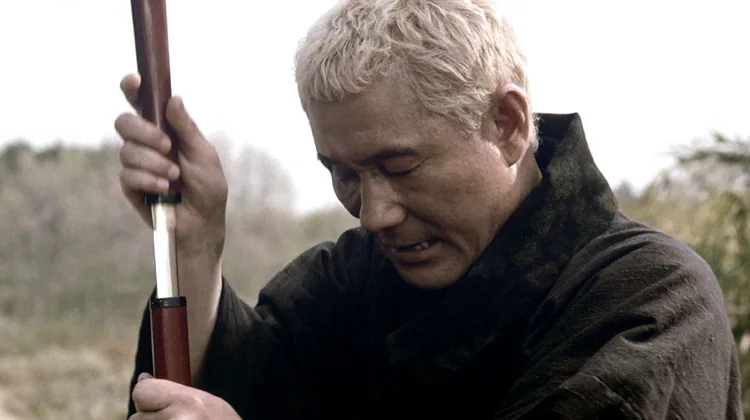
The weapon is a shikomizue, a blade concealed inside a walking cane. For a blind traveller it is unremarkable to carry and it is not a sword in the eyes of the law, which matters for a man of his class in a period when weapon ownership was regulated by rank.
The grip is the part people remember. Ichi draws with the blade running backwards along his forearm rather than out in front of him. There is a practical logic to it for someone working without sight, because a reversed blade covers the body and can be brought round in a short arc without needing to judge distance in advance, and it means the first thing an opponent knows about the sword is that it has already been used.
The films are consistent about how he compensates. He listens. He tracks people by smell, by the sound of breathing, by the shift of weight on floorboards. Several of the best sequences in the series turn on darkness, where he simply puts out the lamp and fights men who are now in the same condition he is in permanently.
Where the Character Came From
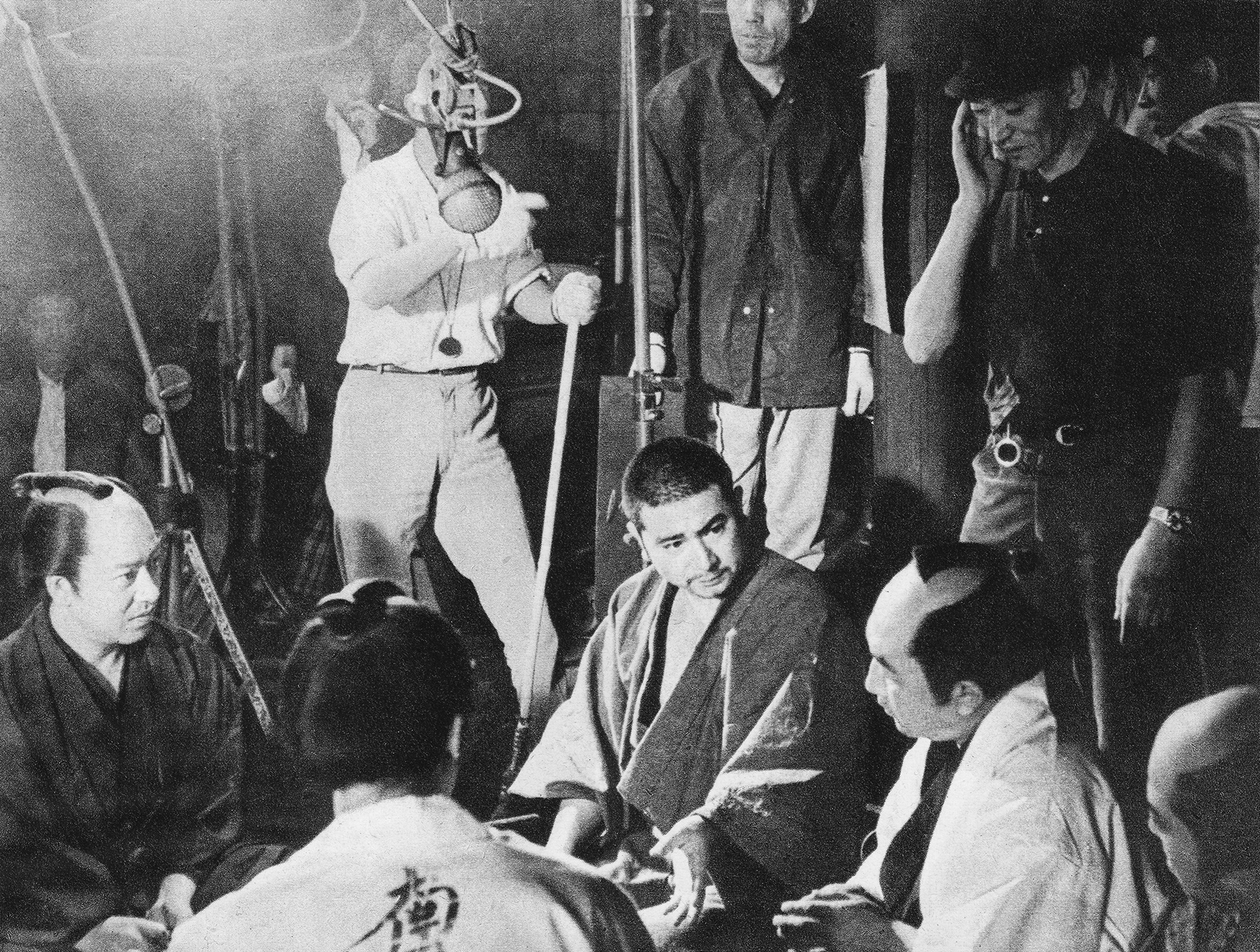
Zatoichi began as a few pages. Kan Shimozawa, a prolific writer of period fiction, published a short piece called Zatoichi Monogatari in 1948 as part of his Futokoro Techo series. It is a sketch of a real sounding local figure rather than a plotted adventure story, and Shimozawa never developed it into a series of his own.
What turned it into a franchise was a performance in a different film. In 1960 Daiei released The Blind Menace, directed by Kazuo Mori, in which Shintaro Katsu plays Suginoichi, a blind masseur who is scheming, treacherous and unpleasant throughout. Katsu had spent years being cast as a handsome young lead and getting nowhere. The Yale study of the Japanese period film cites this ugly role as the seminal performance that laid the foundation for Zatoichi, which arrived two years later. Mori went on to direct the second Zatoichi film himself.
The lesson Daiei drew was that Katsu was compelling precisely when he was allowed to be graceless. The Zatoichi of the films keeps that. He shuffles, he grins at nothing, he tilts his head at an angle no leading man would choose.
Shintaro Katsu
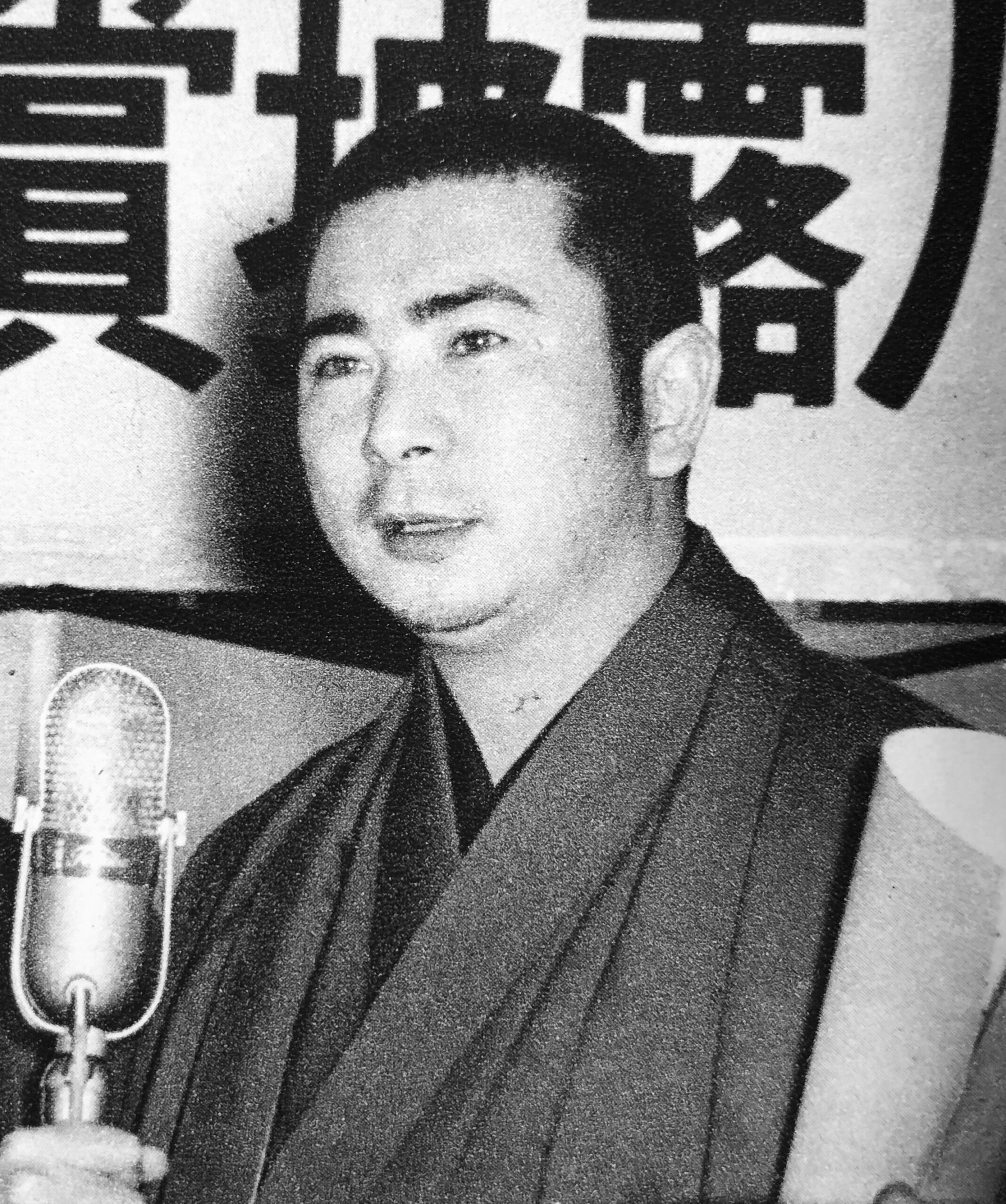
Katsu was born in 1931 and died in 1997. He came from a family of traditional musicians and was an accomplished shamisen player and a recording vocalist in both pop and enka, which is audible in how he handles the rhythm of a scene.
Zatoichi is the role, but it is not the whole career. He carried the Akumyo series through the 1960s and later played Hanzo the Razor, a brutal Edo period detective, in three films from 1972. His elder brother, Tomisaburo Wakayama, is the star of the Lone Wolf and Cub films, which makes the two of them jointly responsible for a remarkable share of the swordplay cinema that reached the West.
He also produced. By the later entries Katsu controlled the series through his own company, which is how a jobbing studio property became something closer to an authored body of work, and eventually how he came to direct the final film himself.
The Films, 1962 to 1989
Twenty five films appeared between 1962 and 1973, the first twenty of them for Daiei. A twenty sixth followed in 1989. At the height of it Katsu was making two or three a year, which is a production rate closer to television than to feature film making, and it shows in the best sense. The series had room to experiment because no single entry had to carry everything.
The switch to colour
Only the first two films are in black and white. The Tale of Zatoichi in 1962, directed by Kenji Misumi, and The Tale of Zatoichi Continues later the same year, directed by Kazuo Mori. From the third, New Tale of Zatoichi in 1963, the series was in colour and stayed there. It is a useful dating tool if you are ever looking at a still and trying to place it.
Zatoichi Meets Yojimbo (1970)
The twentieth film puts Katsu opposite Toshiro Mifune and is directed by Kihachi Okamoto, who also made The Sword of Doom. It is worth being precise about what it is and is not. Mifune plays a character called Daisaku Sasa, whose background and temperament differ from the ronin of Kurosawa’s Yojimbo in most respects. The title does the connecting work. What you are watching is two enormous stars, and two decades of accumulated audience affection, put in the same frame.
The 1989 film and what happened during it
Sixteen years after the twenty fifth film, Katsu returned to direct and star in a twenty sixth, released by Shochiku in February 1989.
A man died making it. On 26 December 1988, during an action sequence, Katsu’s son struck the actor Yukio Kato in the neck with a katana he understood to be a prop. The sword was real and Kato died of blood loss. The police recorded it as professional negligence causing death. It is not a piece of trivia and it should not be repeated as one, but any honest account of the series has to include it, because the film exists and people watch it without knowing.
Takeshi Kitano’s Zatoichi (2003)
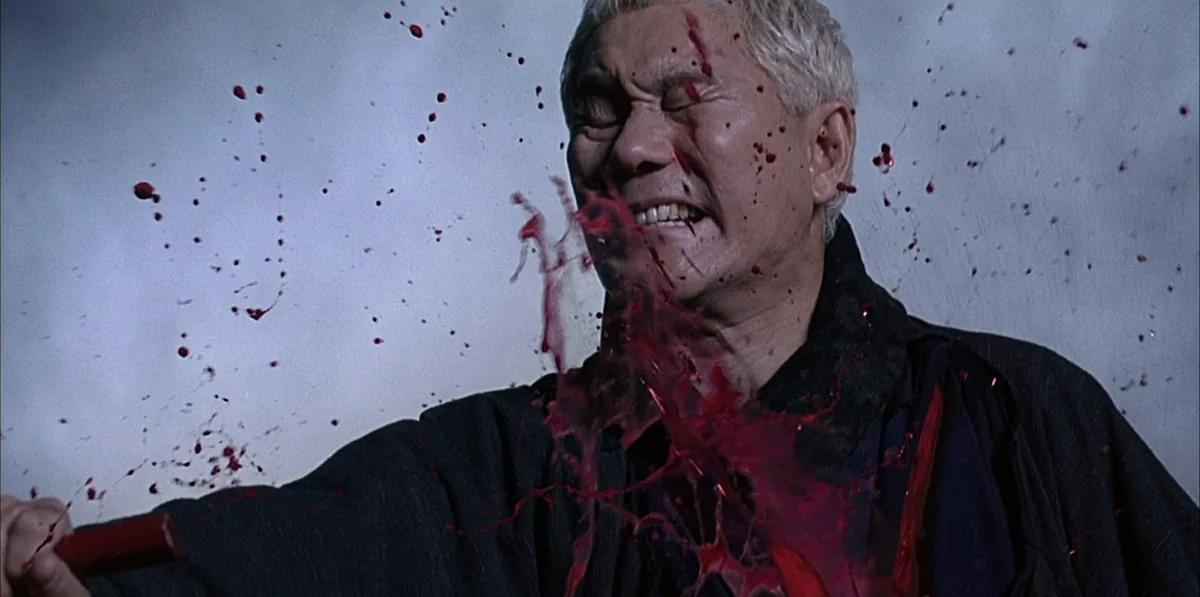
Six years after Katsu’s death, Takeshi Kitano took the character on for his eleventh feature as director, and made no attempt to imitate what had gone before. His Ichi has bleached blond hair, which is never explained and which nobody in the film remarks on.
The violence is faster and more stylised than anything in the Katsu run, with digitally assisted blood that behaves like paint. The score, by Keiichi Suzuki, is built out of the work happening on screen. Farmers hoe in time, labourers hammer in time, and the rhythm eventually stops pretending and resolves into a full tap routine performed by the troupe The Stripes. Venice gave the film the Silver Lion for Best Direction and the Audience Award in the same year.
It sits some distance from the rest of Kitano’s work as well as from the rest of the series, which we look at in more detail in our piece on the signs that you are watching a Takeshi Kitano film.
Where to Start
Twenty six films is an intimidating number and it does not need to be treated as one. The entries are largely self contained, so there is no continuity to fall behind on.
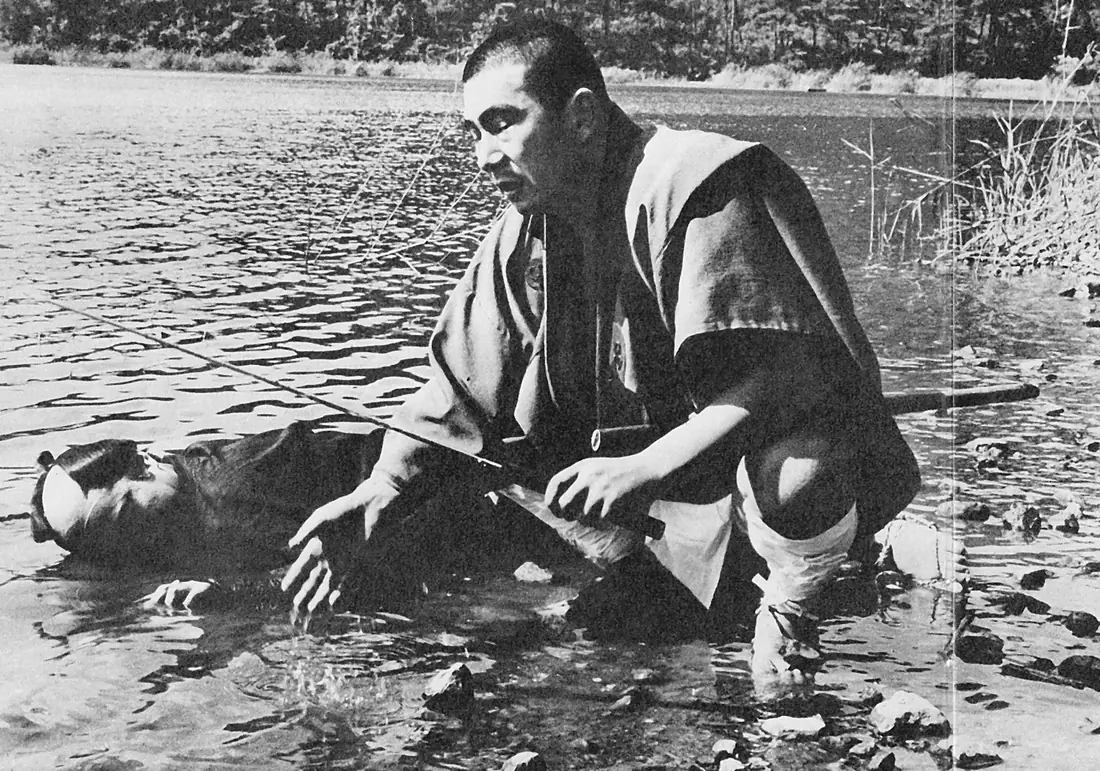
- Start with the first. The Tale of Zatoichi (1962) is the shortest route in and it is a genuinely good film in its own right, quieter and sadder than the reputation of the series suggests. Its centre is the friendship between Ichi and a dying ronin, Hirate Miki, played by Shigeru Amachi, who fish together and then have to fight.
- Then the second. The Tale of Zatoichi Continues (1962) picks up directly and is the last in black and white.
- Then jump. After that the order matters very little. Zatoichi and the Chest of Gold (1964) and Zatoichi Meets Yojimbo (1970) are the usual recommendations for anyone wanting the bigger, louder end of the series.
- Leave Kitano until later. The 2003 film is more rewarding once you know what it is departing from.
For availability, the Criterion Collection has released all twenty five of the 1962 to 1973 films together in a restored box set, Zatoichi: The Blind Swordsman, which also reprints Shimozawa’s original short story. Individual titles surface on streaming services periodically, and the 1989 and 2003 films are handled separately from the box set.
Frequently Asked Questions
How many Zatoichi films are there?
Twenty six with Shintaro Katsu. Twenty five were released between 1962 and 1973, the first twenty of them by Daiei, and a final one arrived in 1989. Takeshi Kitano’s 2003 film is a separate production outside that run. There were also one hundred television episodes across four seasons in 1974, 1976, 1978 and 1979, again starring Katsu.
What does Zatoichi mean?
Zato was the lowest of four ranks in the Todoza, the official guild for blind men in Edo period Japan. Ichi is his name. Put together the word means roughly low ranking blind man Ichi, so he is identified by his position in a hierarchy before he is identified as a person.
Is Zatoichi really blind?
The character is blind, having lost his sight to illness in childhood, and the films never suggest otherwise or reveal it as a trick. Shintaro Katsu was sighted and played the part with his eyes closed or unfocused throughout.
Who played Zatoichi?
Shintaro Katsu, from 1962 until 1989, across the films and the television series. Takeshi Kitano played the character in his own 2003 film, and the role has been taken up occasionally since, but Katsu is the definitive version by a wide margin.
Is Zatoichi based on a true story?
No. The character was invented by the novelist Kan Shimozawa in a short 1948 piece, written in a documentary style that makes him read like a real local figure. That texture is deliberate and has misled plenty of people since.
Do you need to watch the Zatoichi films in order?
Only for the first two, which run on directly from one another. After that the films are self contained and can be watched in any order.
What is Zatoichi’s sword called?
A shikomizue, meaning a blade concealed inside a cane. He draws it in a reverse grip, with the edge running backwards along his forearm rather than pointing forward.