Tatsuya Nakadai was born in Tokyo on 13 December 1932 and died on 8 November 2025, aged 92, of pneumonia. Across a career that ran from 1952 until his death he appeared in more than one hundred and sixty films, including eleven for Masaki Kobayashi and five for Akira Kurosawa. He is the actor at the centre of The Human Condition, Harakiri, The Sword of Doom, Kagemusha and Ran, and he considered himself a stage actor who happened to make films.
There is a neat way to measure the span of it. He is in Seven Samurai in 1954 as an uncredited extra, a ronin who walks past the camera and is gone. Thirty one years later he is carrying Ran. He walks through the beginning of the golden age of Japanese cinema and he is still there to close it.
The Career of Tatsuya Nakadai
Found on the Street
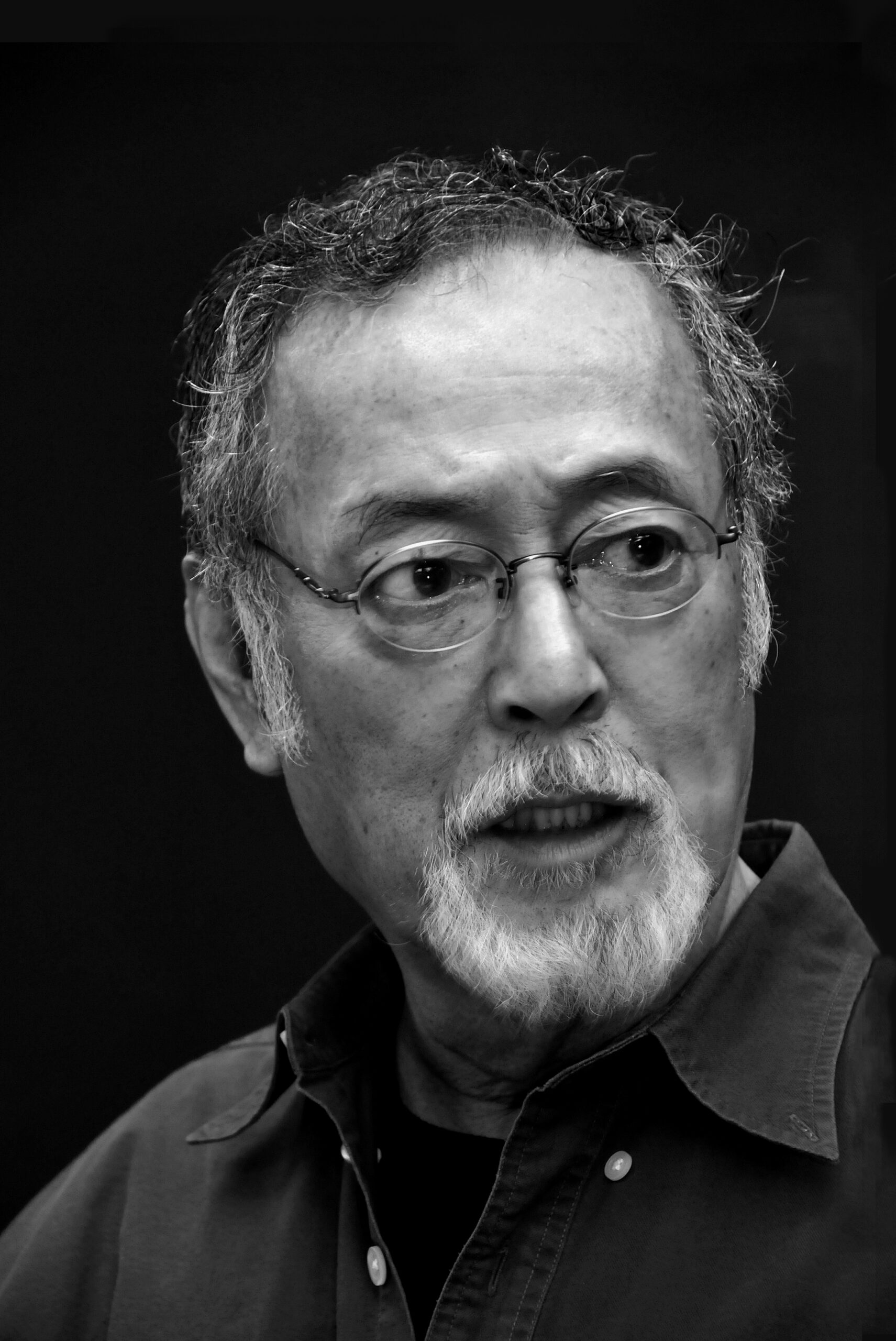
Nakadai did not come up through a studio training scheme or a famous acting family. He was spotted in Tokyo by the director Masaki Kobayashi, who put him in front of a camera and effectively built the rest of his life for him. Nakadai never pretended otherwise. He described Kobayashi as the director who discovered him and made him into the working actor he became.
His first appearance on screen is a footnote he was happy to keep telling. In Seven Samurai, released in 1954, a ronin crosses the frame in an early scene. That is Nakadai, uncredited, a young man with no career to speak of walking through what is now generally held to be the best Japanese film ever made.
What follows is a working actor’s career in the fullest sense. More than a hundred and sixty films across seven decades, made at a pace that leaves no room for precious behaviour, and a face that directors used in completely opposite ways. Kobayashi cast him as the conscience of a country. Kurosawa cast him as its worst instincts.
Eleven Films with Masaki Kobayashi
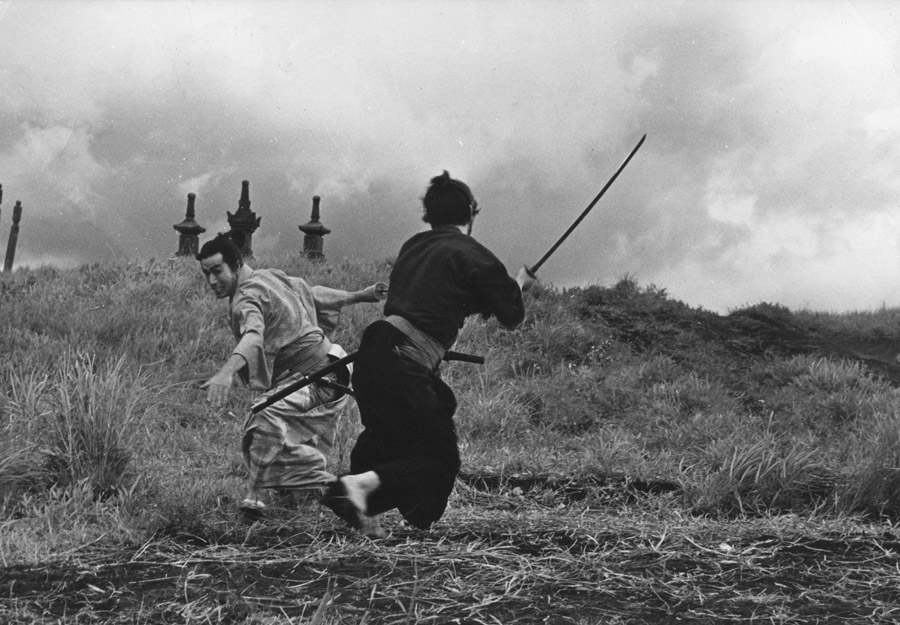
This is the partnership that matters most, and it is the one least known outside Japan.
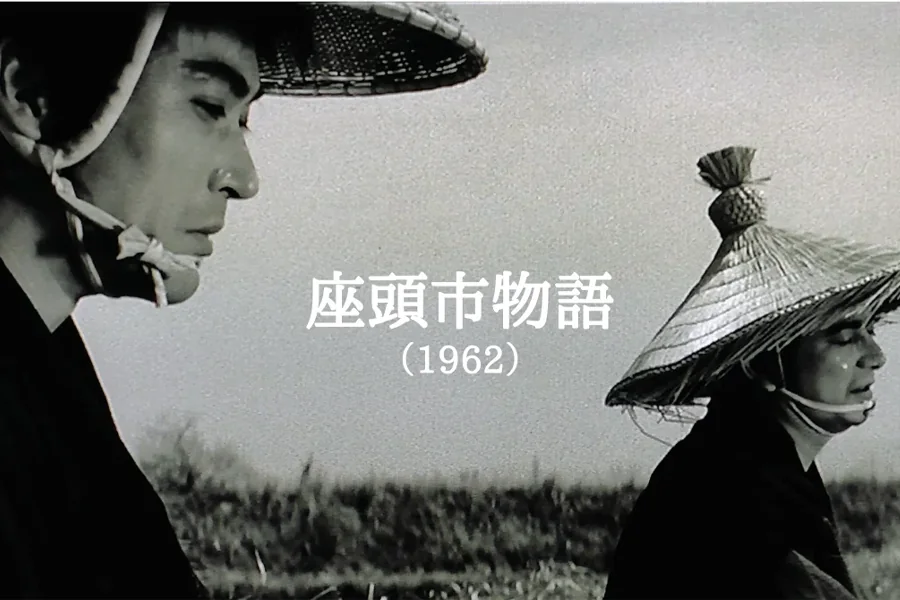
The Human Condition, released as three films between 1959 and 1961 and running to more than nine hours, is Nakadai as Kaji, a Japanese man who tries to behave decently inside the machinery of the occupation of Manchuria and is destroyed by the attempt. Nakadai was in his mid twenties. It remains one of the longest and most punishing performances any actor has given.
Harakiri in 1962 is the other summit. Nakadai plays Hanshiro Tsugumo, an ageing ronin who walks into a clan house asking permission to commit ritual suicide in its courtyard, and then takes the entire afternoon to explain why. It is the most complete demolition of samurai honour the genre has produced, and it works because Nakadai plays the whole thing quietly. The violence arrives late and it arrives as a consequence.
He is also in Kwaidan in 1964, Kobayashi’s set of ghost stories shot entirely on soundstages under painted skies, and in Samurai Rebellion in 1967 opposite Toshiro Mifune. Eleven films in total, and across them Kobayashi used him for one thing consistently: the man who can see what is wrong and cannot stop it.
Five Films with Kurosawa
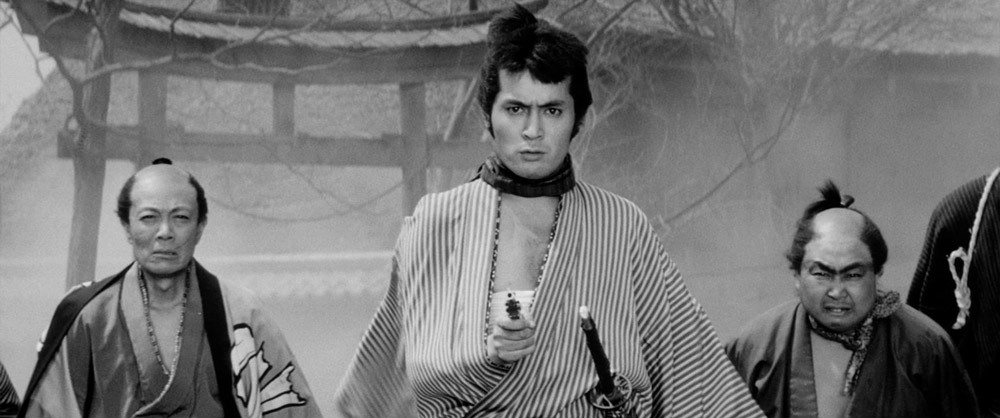
Kurosawa used him for the opposite purpose, and the five films together tell their own story.
In Yojimbo in 1961 he is Unosuke, the young gangster with a revolver. The detail is the whole point. A pistol in the hands of a man with no training beats a lifetime of swordsmanship, and Kurosawa gives that weapon to Nakadai. In Sanjuro the following year he is Hanbei Muroto, and the final duel produces the geyser of blood that changed how swordfights were staged for a generation.
High and Low in 1963 moves him into a modern suit and a police procedural. Then a seventeen year gap, and the two late epics.
In Kagemusha in 1980 he plays both the warlord Takeda Shingen and the petty thief hired to impersonate him after his death, which requires him to play a man impersonating a man he has also played. The performance holds because he makes the thief bad at it to begin with.
The Sword of Doom
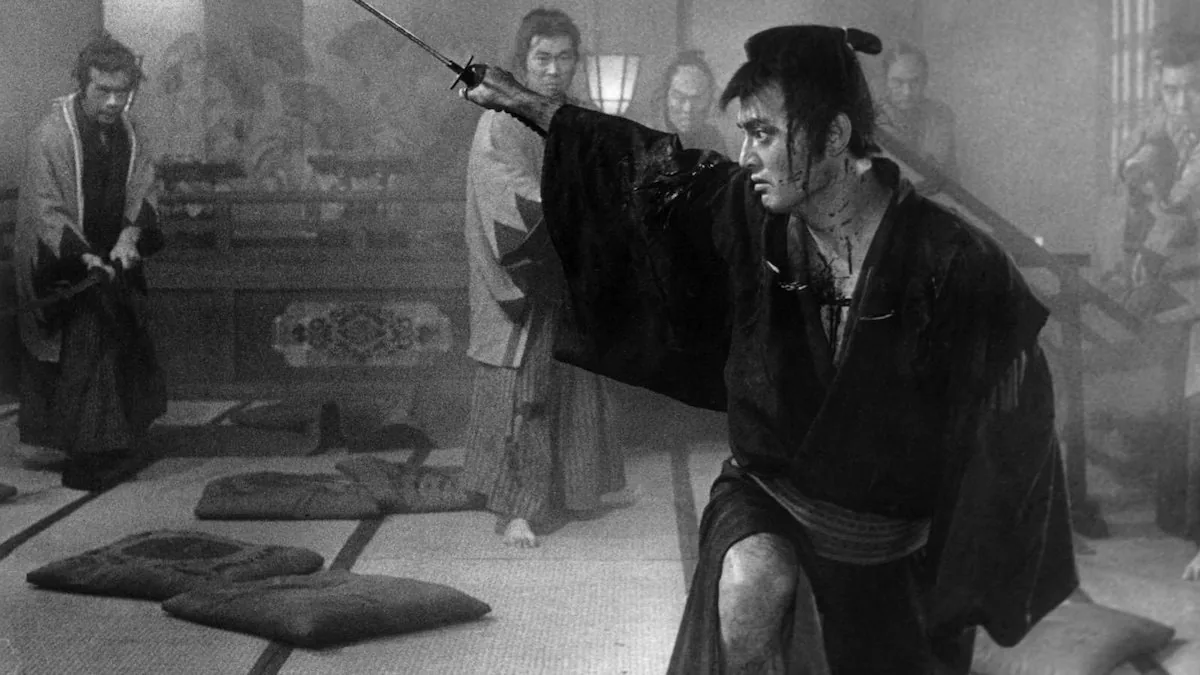
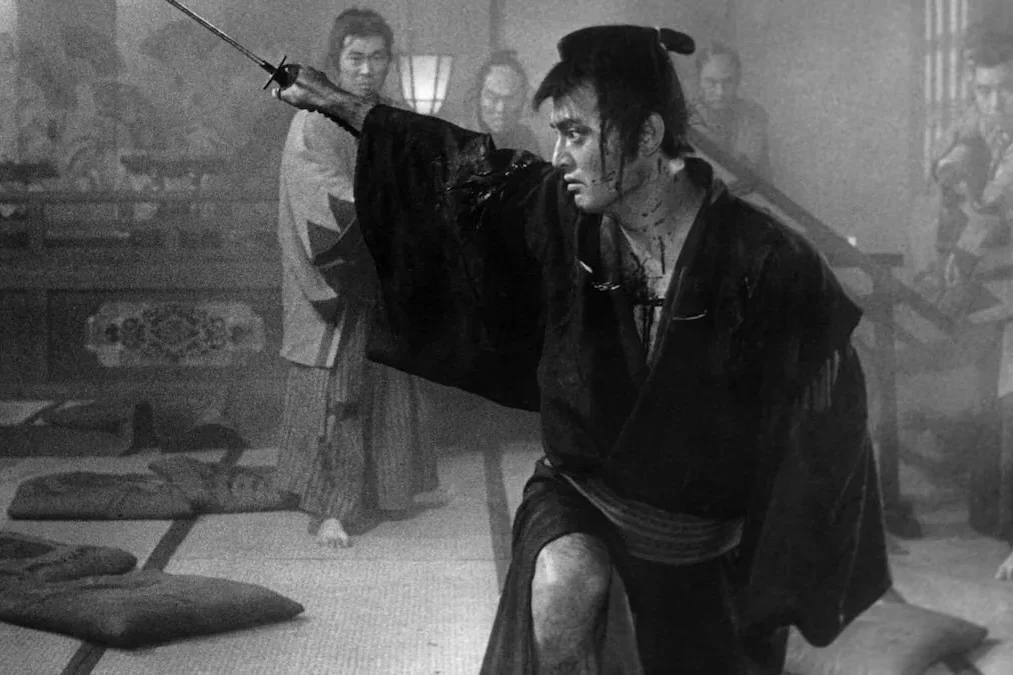
Kihachi Okamoto’s The Sword of Doom, made in 1966, gives Nakadai the role that people who know his work tend to name first.
Ryunosuke Tsukue is a swordsman with no motive. He kills a pilgrim at a shrine in the opening minutes for no stated reason and the film never supplies one. There is no wound in his past to explain him and no arc to redeem him. He simply gets worse.
The film ends mid slaughter, on a freeze frame, with the story unresolved because two planned sequels were never made. That accident has become part of its reputation. Nakadai is left permanently mid swing, and it is the most complete portrait of emptiness in the whole of samurai cinema.
Okamoto used him repeatedly after that, in Kill! in 1968 and Battle of Okinawa in 1971 among others. He also worked with Hiroshi Teshigahara on The Face of Another in 1966, playing a man whose face has been destroyed and rebuilt, which is a strange and clever thing to ask of an actor known for his face.

Ran and the Old Man
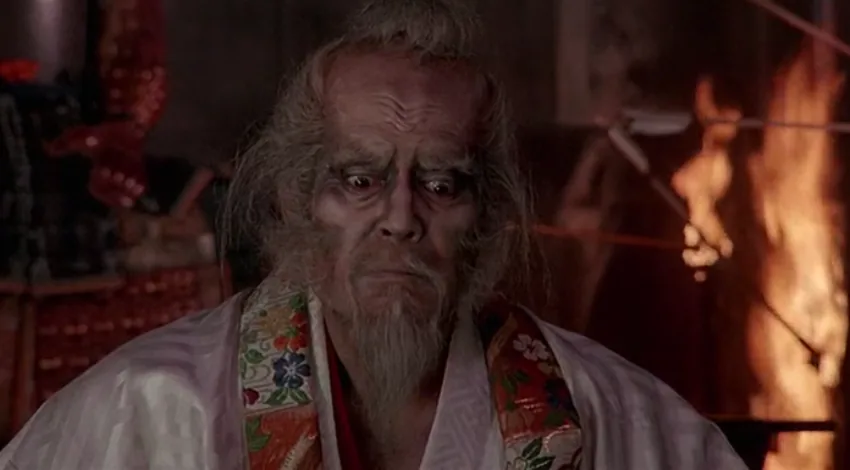
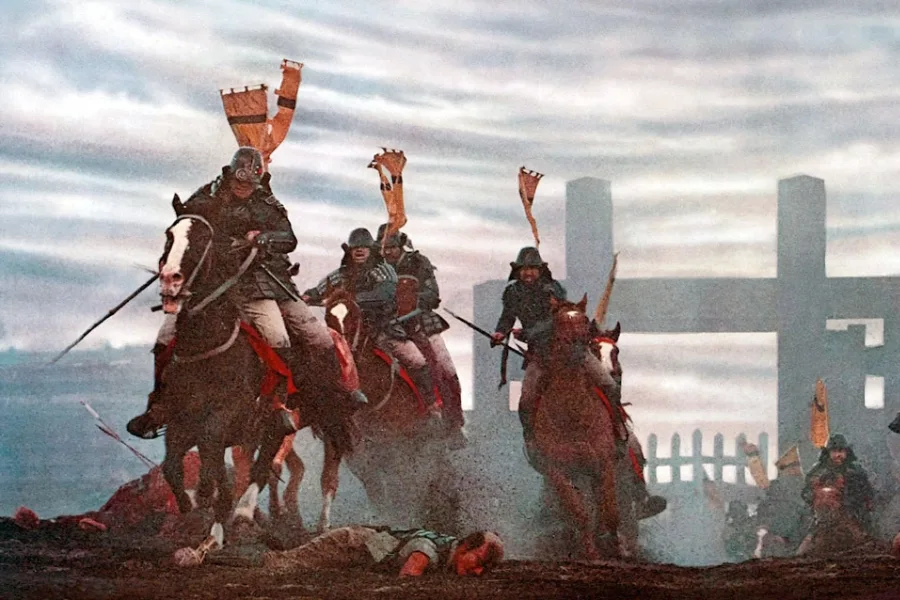
Ran, in 1985, is Kurosawa’s transposition of King Lear into the Sengoku civil wars, and Hidetora is the part.
Nakadai was fifty two and playing a man in his seventies, under makeup so heavy that his face becomes something closer to a Noh mask than a face. That is deliberate. Kurosawa had used the same idea on Throne of Blood thirty years earlier, and the effect is the same. The features stop moving and the audience does the work.
The centre of the performance is the sequence where Hidetora walks out of his burning castle. He does not speak. He comes down the steps through the smoke and out past his own army, and everyone stands aside because nobody can think of what else to do. It is the moment a whole tradition of screen power is shown to be nothing, and it is carried by a man walking slowly in a costume.
Mumeijuku
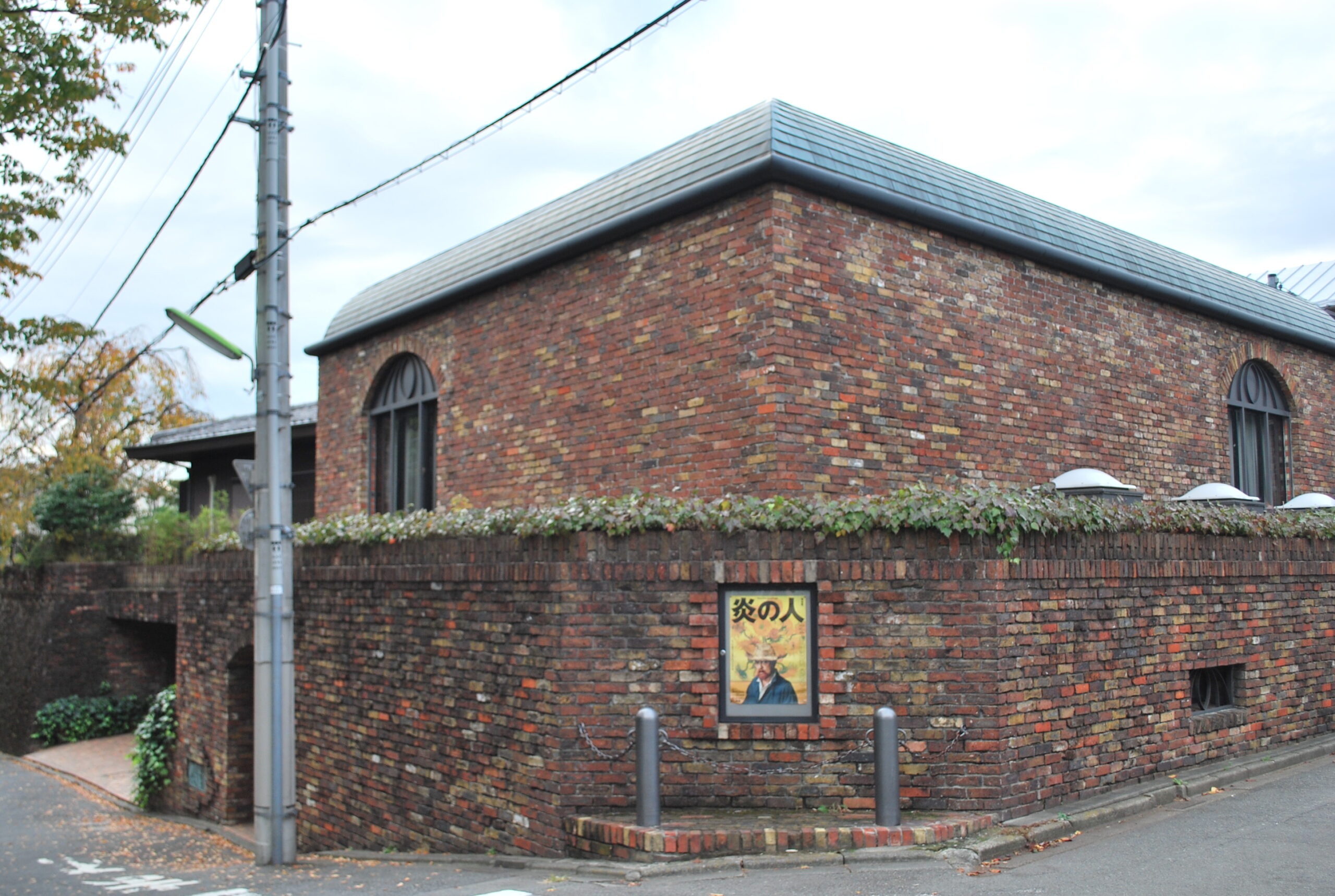
The part of his life that gets left out of the film obituaries is the half he cared about most.
In 1975, with his wife Yasuko Miyazaki, Nakadai founded Mumeijuku, an acting school and theatre company in Tokyo. The name means something like school of no name. He ran it for fifty years, taught in it personally, and put its students on stage rather than simply issuing certificates. Koji Yakusho, later the star of Shall We Dance, Babel and Perfect Days, came through it.
Nakadai went on performing on stage into his nineties and described theatre as his real profession throughout. The films, on his own account, were the other thing he did. It was Mumeijuku, rather than a studio or an agency, that announced his death in November 2025.
Japan recognised the whole of it. He received the Medal with Purple Ribbon in 1996, the Asahi Prize in 2013, and the Order of Culture in 2015, which is about as high as civilian recognition goes.
Where to Start

Five films, in the order that makes the most sense for someone starting from nothing.
- Harakiri (1962). The best single argument for him, and a complete film in two hours. Start here.
- Yojimbo (1961). Watch him play a villain who is genuinely enjoying himself, opposite Mifune at full power.
- The Sword of Doom (1966). The other direction entirely, and the performance that unsettles people.
- Ran (1985). The late masterpiece, and worth saving until the earlier work has given you something to measure it against.
- The Human Condition (1959 to 1961). Over nine hours across three films. Not a casual watch, and the reason he is regarded the way he is in Japan.
Most of these have had restorations through the Criterion Collection and appear on the BFI Player during their Japanese seasons.
Frequently Asked Questions
When did Tatsuya Nakadai die?
On 8 November 2025, at the age of 92, of pneumonia. His acting school Mumeijuku made the announcement a few days later, which is why some reports carry a slightly later date.
Was Tatsuya Nakadai in Seven Samurai?
Yes, as an uncredited extra in 1954. He plays a ronin who walks across the frame early in the film. It was his first screen appearance and he had no dialogue.
How many films did he make with Kurosawa?
Five. Yojimbo in 1961, Sanjuro in 1962, High and Low in 1963, Kagemusha in 1980 and Ran in 1985. He made more than twice as many with Masaki Kobayashi, who is the more important director in his career.
What is Tatsuya Nakadai’s best film?
Harakiri is the usual answer and the easiest one to defend. Ran is the more famous performance and The Human Condition is the more demanding one. All three are him at full stretch.
Did he act with Toshiro Mifune?
Several times, most famously as his opponent in Yojimbo and Sanjuro, and again in Kobayashi’s Samurai Rebellion in 1967. The two of them are often set up as rivals, which oversimplifies a working relationship that ran for years.
What was Mumeijuku?
The acting school and theatre company he founded in Tokyo in 1975 with his wife Yasuko Miyazaki, and ran for the rest of his life. Koji Yakusho is its best known graduate.