Japan has a storied film history. Not only has it been around for over 100 years, but it has been a huge influence on filmmaking as a whole. Japanese cinema has produced a handful of movies that, up until this day, are recognized as top films of all time by many media outlets. This two-decade-long period which started from the 1950s introduced fresh techniques and methods not yet seen in the motion picture scene at the time. At the forefront of this movement were brilliant minds from Japan who’ve even managed to influence today’s top directors. Today we explore the Golden Age of Japanese cinema:
- The Birth of Japanese Cinema
- What the Benshi Actually Did
- The Golden Age of Japanese Cinema
- Kurosawa & Ozu
- Going to the movies during the Golden Age
- Selling the Golden Age Abroad
- Watch Classic Japanese Films on BFI
The Birth of Japanese Cinema
The roots of Japanese filmmaking were established through the release of a short documentary entitled Geisha no Teodori in the year 1899. At the time, filmmaking as a whole was part of what was known as the “Silent Era”. In this era, contraptions that took multiple pictures in a sequence that gave the illusion that subjects were moving. The caveat was that pictures did not create the sound that we know films have now. In the west, photocards which showed dialogue were instead used to paint a picture and have audiences understand the context of the situation and dialogue of characters.
What made Japanese silent era films unique, though, was the employment of what was known as Benshi. Akin to sports commentators, these are people who were employed by Japanese theatres at the time to explain the story and narrate exactly what was happening. Almost like a tour guide, these people would give a brief history of what was going on at the time, complete with musical accompaniment in the background. Very little of that period survives to be watched, although the usual explanation for it is wrong. The single largest loss was the Great Kanto Earthquake of 1923, which destroyed studios, prints and negatives across Tokyo in a matter of hours. Firebombing, unstable nitrate stock and plain neglect accounted for much of the rest. Recordings of benshi performance do exist, and the art has never quite died out.
What the Benshi Actually Did
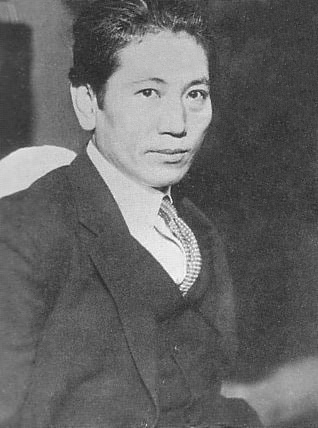
Musei Tokugawa, the most celebrated of the benshi. Public domain.
The comparison to a commentator undersells the job considerably, because for roughly two decades the benshi was the most powerful person in the room.
Start with the format. Foreign films imported into Japan were narrated by one benshi. Japanese films, before the 1923 earthquake, often used several at once. These were the kowairo benshi, and they stood at the edge of the screen voicing individual characters, so the audience heard a cast rather than a narrator. Musical accompaniment came from geza ongaku, the offstage music of kabuki, played on shamisen and taiko. The whole apparatus was borrowed from the theatre next door.
The consequence is the interesting part. Before the earthquake it was the benshi, not the director and not the actors, who determined what a film meant on any given night. Films were therefore built to accommodate them. Close-ups were avoided. Cutbacks were avoided. Intertitles were avoided. All three interrupt a live performer’s rhythm, so Japanese films of the 1910s became successions of long, held takes with the action arranged inside the frame.
Film historians spent decades treating that as backwardness, a national cinema that had failed to learn Hollywood grammar. Itakura Fumiaki makes the opposite argument, and it is the more persuasive one. Those films staged action in foreground and background simultaneously within a fixed frame, and used oblique, angled composition to create depth. It was a coherent visual system built around a live voice, not a botched attempt at somebody else’s.
One more inheritance from kabuki is worth naming. There were almost no actresses. Female roles were played by men, exactly as on the kabuki stage. The exception usually cited is Sendaihagi in 1915, which starred Nakamura Kasen of a women’s kabuki troupe and which some historians call the first appearance of a female star in Japanese cinema.
The system did not end gently. At the close of the 1910s a group of critics, intellectuals and reform minded producers began arguing that Japanese film had to adopt Western technique to be taken seriously. The campaign has a name, the Pure Film Movement, and Aaron Gerow’s work on the history of Japanese film criticism sets out what it was after: films should be judged as films, on whatever cinematic means they used to tell their story, rather than as filmed theatre. Its most visible figure, Kaeriyama Norimasa, wrote the criticism demanding reform and then went and directed films himself to show it could be done. What the campaign was really doing was taking the power to determine meaning away from the man at the side of the screen and handing it to the film itself. The industry reorganised after 1923. When sound arrived the benshi went on strike, as accompanists did everywhere in the world, and lost.


The Golden Age of Japanese Cinema
Approaching the 1920s, a new wave and era of filmmaking was realized, coming from the first touted “master” of Japanese Cinema: Kenji Mizoguchi. His early works sparked what is now known as the Golden Age of Japanese Cinema, with his disposition towards the use of long takes and highly aesthetical camera movement in scenes. His unique use of mise en scène, which refers simply to the arrangement of all the elements shown during a film take, was unique and something that was not seen in Japanese filmmaking before.
The reason it was also called the Golden Age was because prior to when this kind of filmmaking existed, there were still too many leftover vibes of Kabuki theatre, which was heavily exaggerated and not very “artistic” in its story-telling, in the past. Mizoguchi, on the other hand, brought not only modern storytelling, but cinematic techniques to the table. His notable award-winning works include The 47 Ronin, The Story of the Last Chrysanthemums, The Life of Oharu, and Ugetsu.
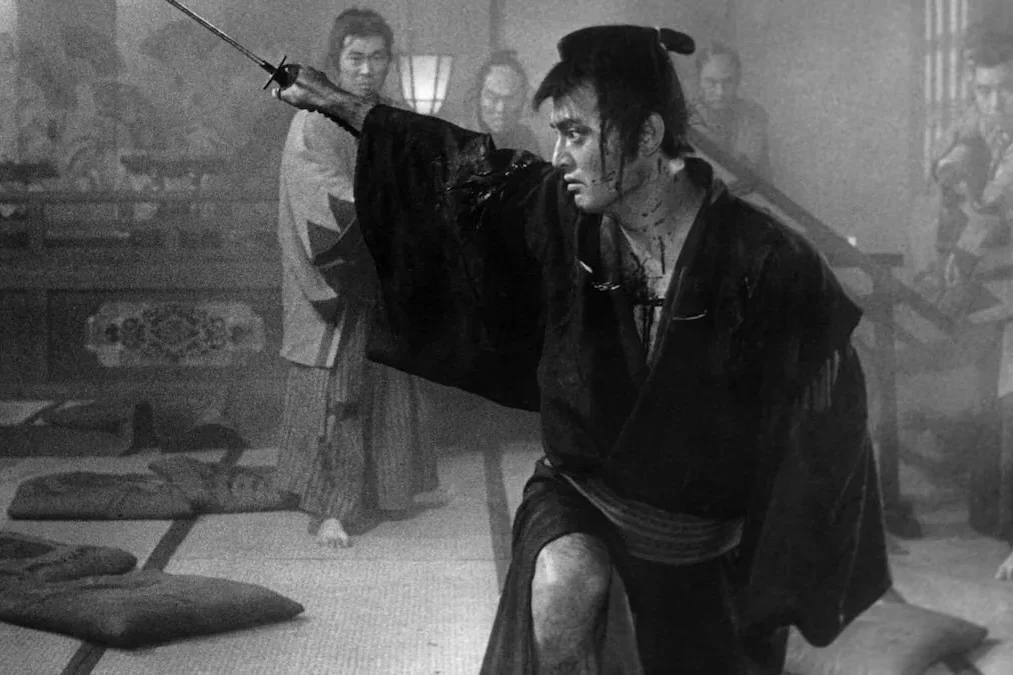
Rashomon (1950)
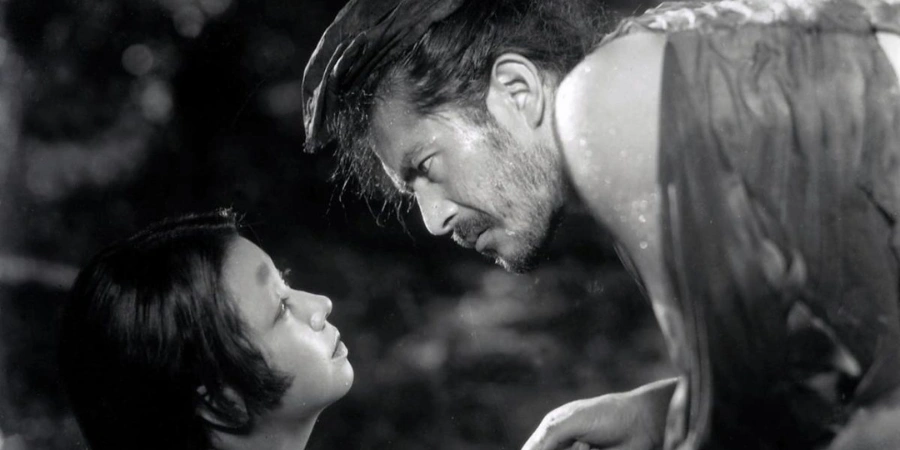
The second master of Japanese Cinema, who also made his mark during the Golden Age of Japanese cinema, was Akira Kurosawa. Cinema in Japan around this time had a lot of propaganda-driven messages, as at this time, films shown were used to show its people of the greatness of the Japanese empire. For example, Hawai Mare oki Kaisen depicted the attack of the Japanese on Pearl Harbor, which was, at the time, a controversially proud moment for the Japanese people.
Kurosawa also wrote the screenplay for Akatsuki no Dasso, or Escape at Dawn, which deals with a comfort woman. He did not direct it. The film was released in 1950 and Senkichi Taniguchi directed, with Kurosawa co-writing from a Taijiro Tamura novel. It is worth being clear about the date, because it belongs to the Occupation years rather than the wartime propaganda described above, and the subject was every bit as difficult then as it is now.
As a result of the events of World War 2 though, the kind of films that were being shown were changed. The American occupation led to a policy where all films shown to the public had to be approved by a foreign body. This is where Akira Kurosawa hit his stride and sparked the Golden Era.
Kurosawa & Ozu
Akira Kurosawa
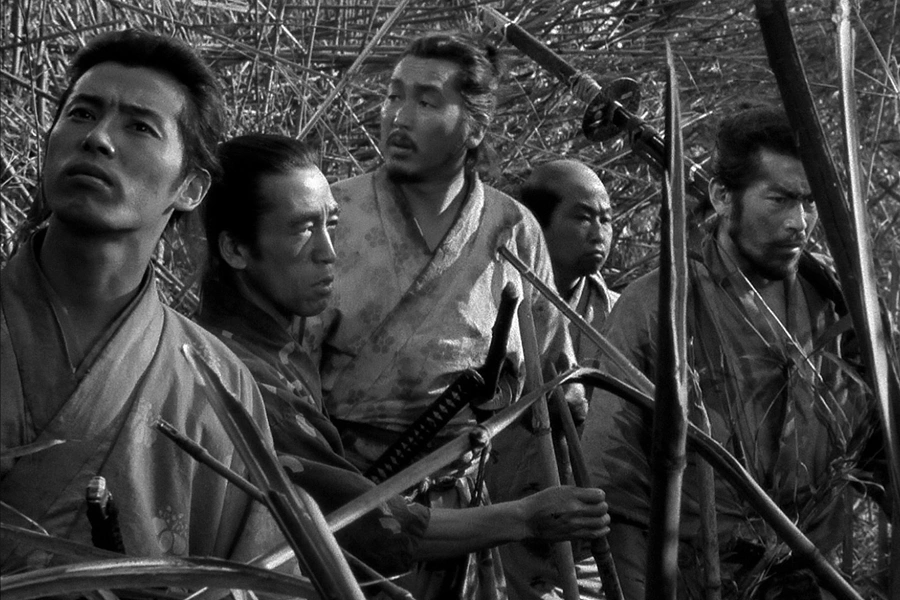
Kurosawa released Academy Award winning classic after classic with Rashomon, Seven Samurai, Throne of Blood, Ikiru, I Live in Fear, Yojimbo, and many, many more. His popularity was on a worldwide scale, as High-profile directors such as Stanley Kubrick, Roman Polanski, George Lucas, and even Steven Spielberg have nothing but respect and admiration for him. They’d even go as far to say he was a major influence for them and many others. Being a truly gifted individual, his involvement in all aspects in the production of his films led to their success. He was a switchblade of sorts; part of the different processes in the making of his films, whether it be in their screenwriting, scriptwriting, and of course videography.
Yasujirō Ozu
Bringing yet another new creative process to the table, Yasujiro Ozu was another heavyweight in the filmmaking period during the Golden Era. His storytelling style in particular was unique, being one not seen at the time. For example, instead of using over the shoulder shots during a dialogue between two people, he would place the shot at the center of the two, placing the viewer in the middle of the conversation. He was able to also capture the emotions of the actions in ways that other films had not with his signature style of framing, placing the viewer in the middle of scenes, eye level with the actors in the film.
Tokyo Story (1953)
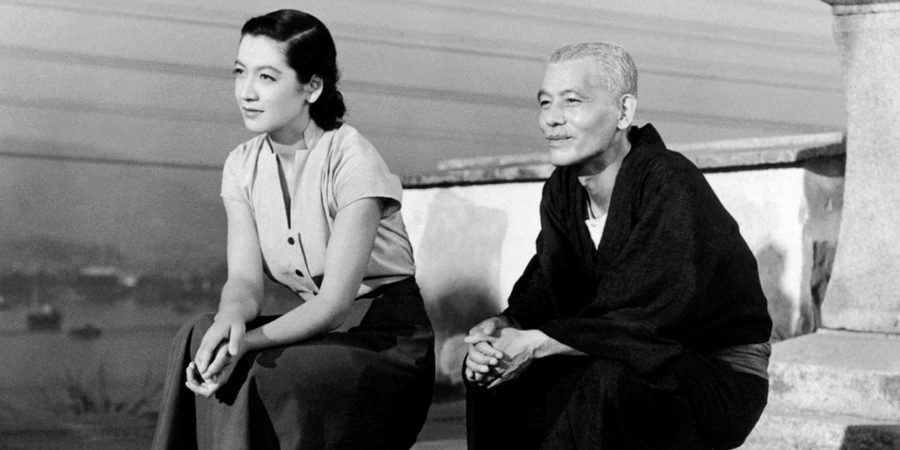
His masterpiece, and maybe the most iconic film during the golden era was the critically acclaimed movie Tokyo Story. This movie was the pinnacle of his overall style, and on top of this, the master element of minimalism. Having been released in November of 1953, this was the film that put him on the map in the west, as Japanese films started gaining traction. This movie, along with previously-mentioned Rashomon, started getting international distribution and screenings.
Going to the movies during the Golden Age of Japanese Cinema
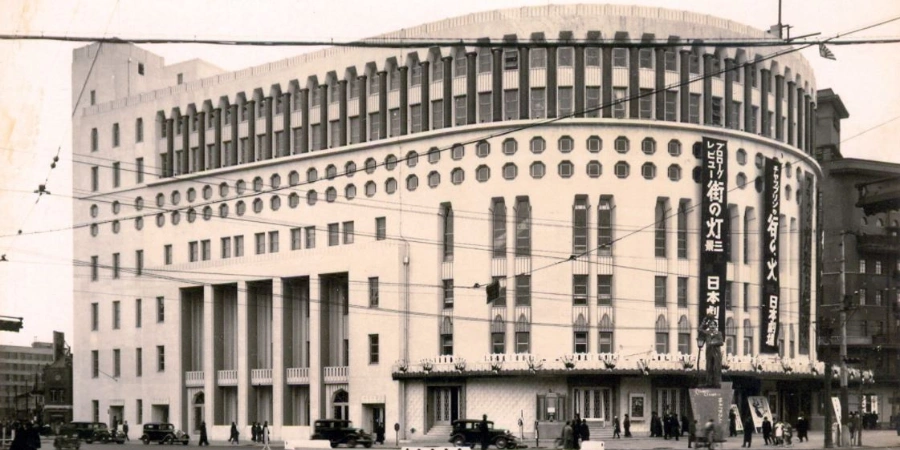
Not only were these movies ahead of their time, but so was the experience of watching them in cinemas. Back in the 1950s, believe it or not, going to the theatres wasn’t just for watching movies. Japanese cityfolk were there to enjoy other facilities as part of the movie watching experience, making going to the theatres into some kind of a daytime resort.
With harsh weather conditions, whether they be during searing summer days or freezing cold winters, movie theaters acted as heating or cooling facilities. Post World War II, the quality of the air also was described as impure by public health standards. Ventilation inside cinemas was reportedly much better than in the shopping areas of Tokyo streets. On top of this, there were other practical inclusions spotted inside these all-in-one multipurpose halls, among them being waiting rooms, tea rooms, and public phones.
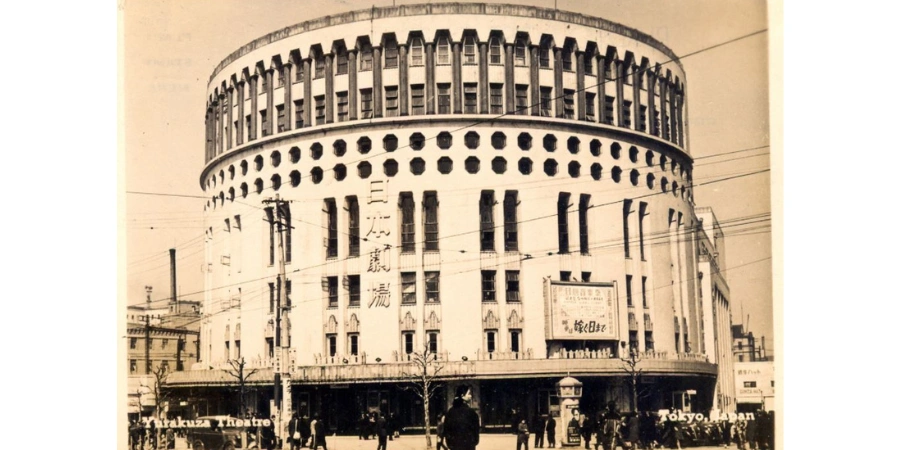
The overall atmosphere, though, was what most people came to theaters for. Aside from a loaded interior clad in all the facilities mentioned above, their outward appearance also aided in attracting audiences. There were also reports that what people went there for were clean and easy to use facilities that would create a romantic and attractive place for any kind of purpose, whether for family or couples. At the end of the day, movie theaters were meant to serve as dream-like experiences for viewers, literally setting aside all worries and getting lost in a movie of their own.
It is worth knowing how many people all this actually meant. Japan has run one of the most productive film industries in the world for a century, turning out somewhere between 300 and 550 features a year since 1920. In 1924 the figure was 875. Donald Richie’s figures, quoted by Alastair Phillips and Julian Stringer, make that the most prolific film industry on earth that year, and Japan held the position for another decade.
By the middle of the 1950s Japanese cinemas were selling around 19 million tickets a week. The peak arrived in 1958, when admissions passed a billion in a single year.
What followed was just as fast. Phillips and Stringer note that by 1963, the year before the Tokyo Olympics gave Japan its great modern coming out party, admissions had fallen by half compared with five years earlier. Television had arrived in the living room, and the Golden Age audience never came back.
The golden age was a great time overall for the Japanese people, as not only did great media come out of it, but also a placement of importance on the self and personal experiences. The creativity of every aspect in the movie experience, through the different aspects of filmmaking shown from the fantastic films released and importance on its viewing to experience these in the best environment possible, makes for one truly golden experience.
Selling the Golden Age Abroad
The international breakthrough was not planned, and for a while it was not even wanted. Yoshiharu Tezuka’s research sets out what happened next, and it is a more deliberate story than the usual one about the world simply discovering Japanese film.
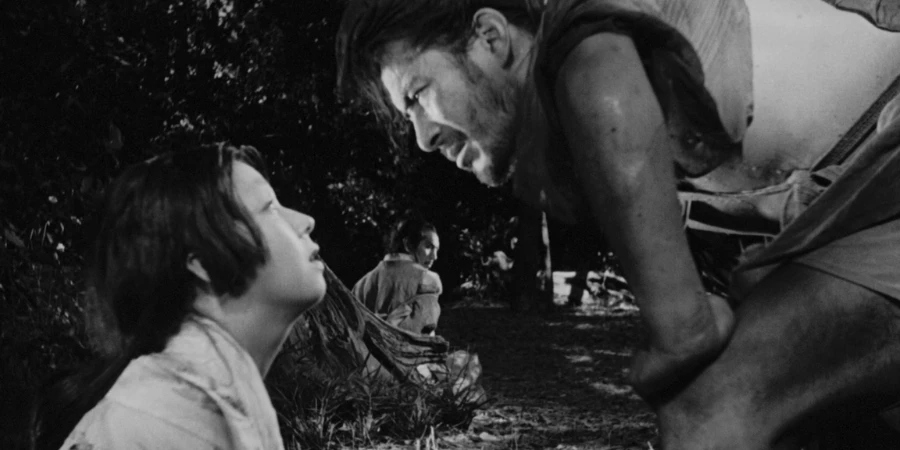
Rashomon (1950), dir. Akira Kurosawa
The industry had been reluctant to send period films to Western festivals at all, on the view that they made Japanese culture look barbarous and feudal. Rashomon reached Venice in 1951 more or less in spite of its own studio, and won.
Masaichi Nagata, the president of Daiei, then reversed position entirely and treated the export of Japanese cinema as a national duty, which in the early 1950s it more or less was. Japan needed things to sell abroad. He sent his filmmakers to the United States to learn current production methods and imported colour technology with the openly stated aim of winning festival prizes. It worked: Gate of Hell (Teinosuke Kinugasa, 1953) took the Grand Prize at Cannes in 1954.
Tezuka’s reading of that is worth sitting with. What Nagata had found was a formula, local subject matter delivered in the newest international technical form, and it became the template for Asian films that succeeded in the West for years afterwards.
He also gives it a name. Self-Orientalism. The strategy works by offering the West a version of your culture that the West already finds exotic and worthy, and seeking recognition on those terms. It won prizes, it built an industry, and it also fixed in place a fairly narrow idea of what Japanese cinema was, which is part of why the golden age abroad is remembered as swords and temples rather than the salaryman comedies and family dramas that Japanese audiences were actually buying tickets for.








Watch Classic Japanese Films on BFI
The existing BFI JAPAN collection available to subscribers of BFI Player, including major focuses on Akira Kurosawa and Yasujirō Ozu, will be updated with new classic and contemporary titles.
Note that BFI Player can also be accessed on Amazon Prime Video, Apple TV, and Roku (US).
References:
Alastair Phillips and Julian Stringer (eds), “Japanese Cinema: Texts and Contexts”, Routledge, 2007.
Aaron Gerow, Fumiaki Itakura and others, “The Sword and the Screen: The Japanese Period Film 1915-1960”, Council on East Asian Studies, Yale University, 2012.
Aaron Gerow, “Critical Reception: Historical Conceptions of Japanese Film Criticism”, in Daisuke Miyao (ed.), “The Oxford Handbook of Japanese Cinema”, Oxford University Press.
Yoshiharu Tezuka, “Japanese Cinema Goes Global: Cosmopolitan Subjectivity and the Transnationalization of the Culture Industry”, PhD thesis, Department of Media and Communications, Goldsmiths College, University of London.