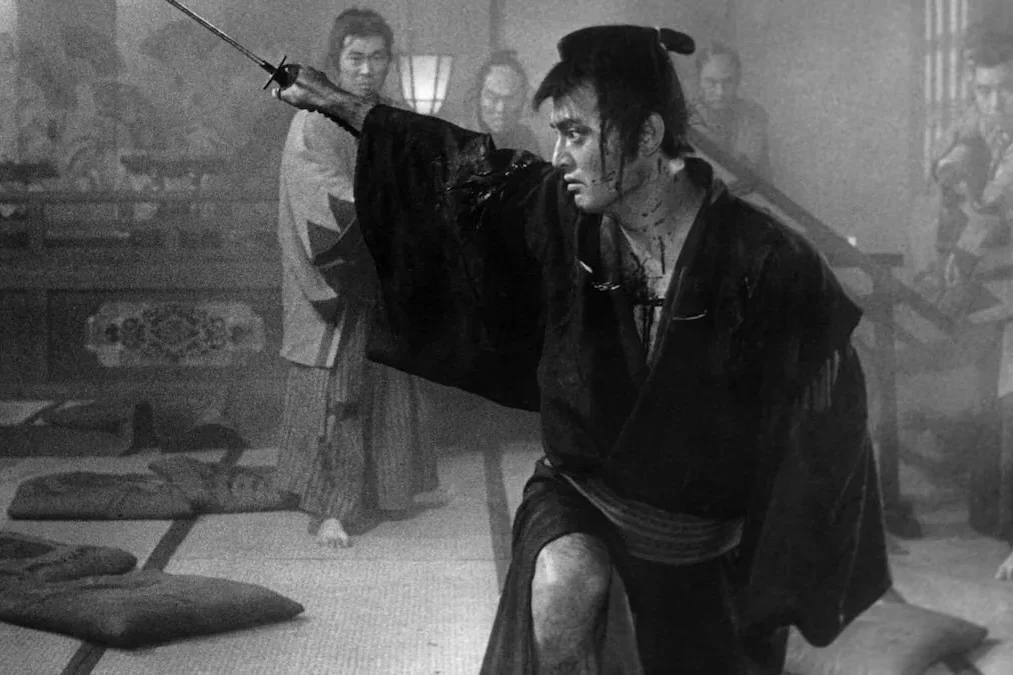
For a full picture of how far the Japanese cinema industry has come, it is important to consider what made it what it is.
It can’t be ignored that the post-war American Occupation had an unparalleled impact on Japan’s burgeoning film industry. Under American occupation, Japanese cinema underwent a complete transformation.
The rise of Japanese Cinema at a glance
Pre-War Japan
With the advent of film, Japanese people were exposed to a wider range of cultures around the world. In the early 1900s up to the 1930s, silent films would be accompanied by a storyteller, the Benshi, that would narrate the lines.
The Benshi played an important role in assimilating foreign films that were sympathetic to Japanese nationalist sentiment and cultural norms of the day. Pre-war films, like Daisuke Ito’s samurai epics, were the norm. From the mid 1930s the industry worked ever more closely with the government, and by the end of the decade that relationship had been written into law.
But when World War II arrived, the film industry was forced to increase its production of war propaganda films.


The Film Law of 1939
Japanese cinema had already lived under one censorship regime by the time the Americans arrived. The studios had spent years being told what they could and could not film, and the machinery for telling them was well established before a single Occupation officer set foot in a screening room.
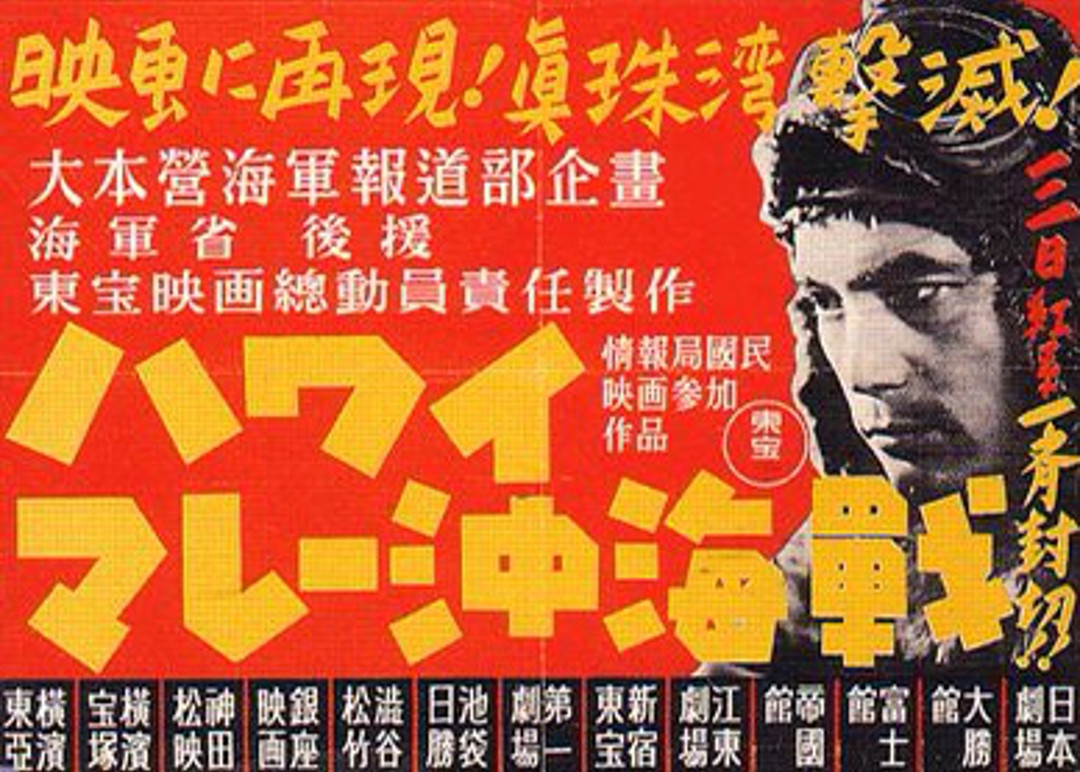
Alexander Jacoby, writing on the director Shimizu Hiroshi, traces how the grip tightened. As early as 1938 the Home Ministry’s Censorship Division issued a list of guidelines for scriptwriters. Drawing on the work of the film historian Peter B. High, Jacoby sets out what those guidelines asked for: celebrations of the Japanese spirit as expressed through the family system, films that would re-educate young people and women whose Westernisation had led them to reject traditional values, and the suppression of the individualism inspired by European and American pictures.
The Film Law followed in 1939. The National Film Archive of Japan sets out what it required: registration of film personnel, advance censorship of scripts, compulsory screening of culture films and newsreels alongside the main feature, and restrictions on foreign films. Bunka eiga, those culture films, were not optional extras. The law put them in front of every audience in the country.
Advance script censorship is the part worth pausing on, because it changed what censorship actually was. Films were no longer being trimmed once they were finished. They were being stopped before a frame was shot. Jacoby notes that the law specifically discouraged slice of life films, films about personal fulfilment and films about the wealthy, which between them covered most of what a studio would otherwise have made.
By May 1941 the Information Bureau had a name for what it wanted instead. Kokumin eiga, People’s Cinema, was defined as film that would loyally serve national policy as an organ of enlightenment and propaganda.
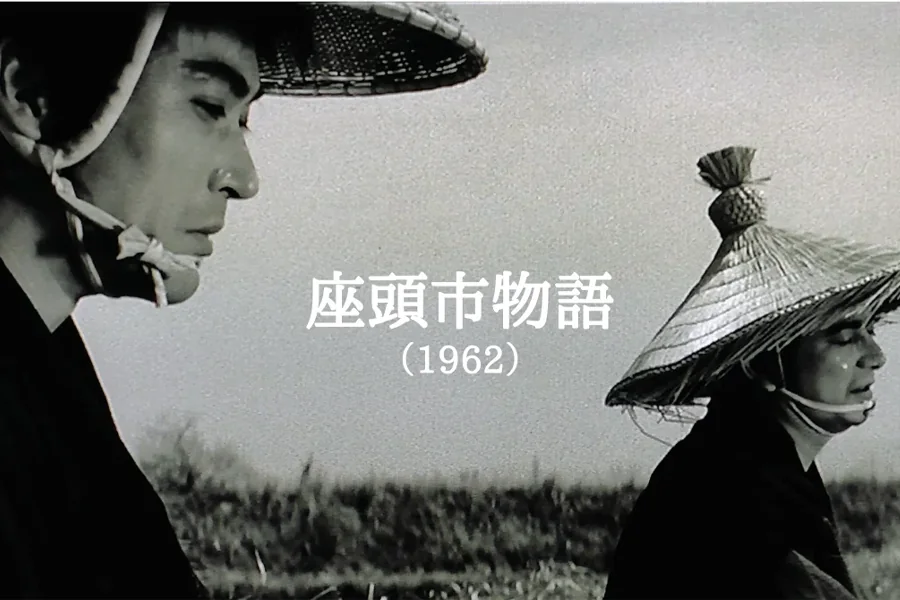
The industry was reorganised to match. Nikkatsu, Shinko Kinema and Daito Eiga were merged into a single new company, Daiei, which two decades later would build much of its business on the Zatoichi series.
So when SCAP called the film companies in three weeks after the surrender, it was handing a new list to an industry with years of practice at reading one.
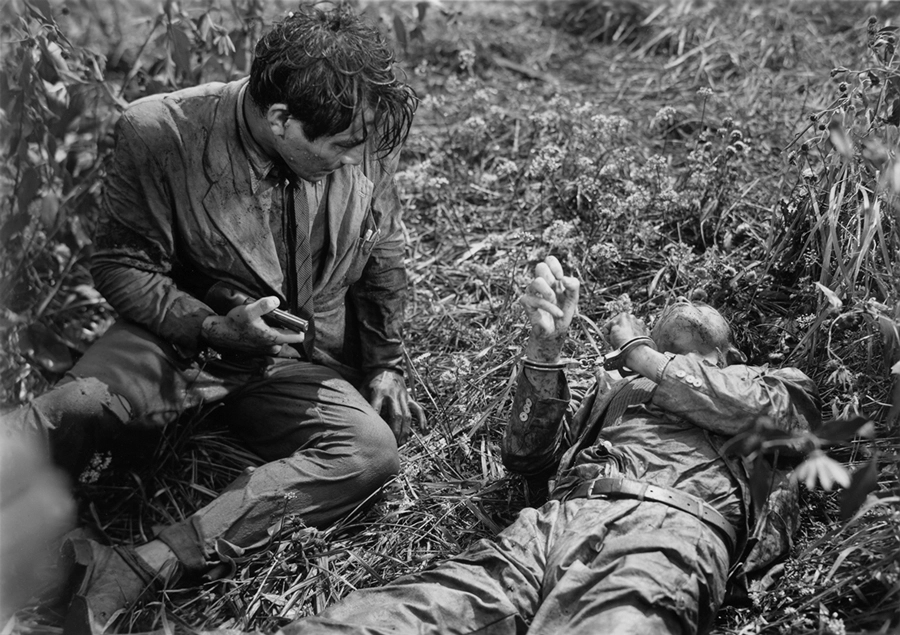
Japanese Films During the American Occupation
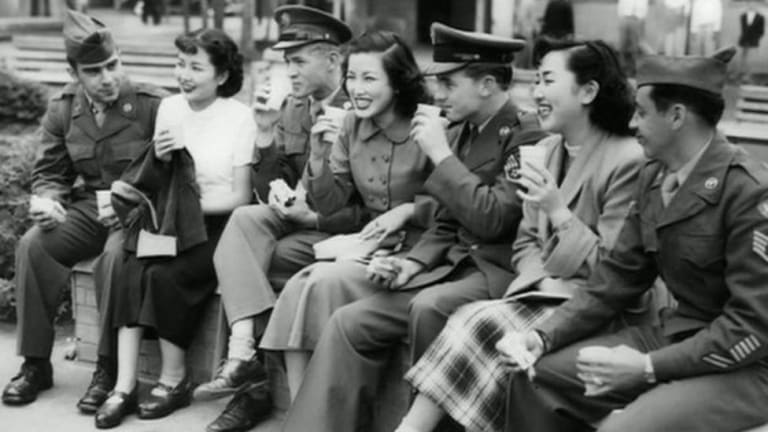
Immediately after World War II, the United States began its military occupation of Japan and the creation of the Supreme Commander of the Allied Powers (SCAP).
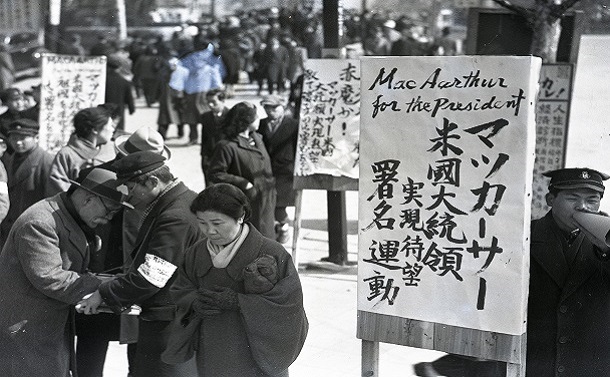
US General Douglas McArthur was tasked with overhauling Japan’s military and constitution during the country’s occupation.
McArthur and other officials helped monitor Japanese cinema by establishing the SCAP (which also referred to the offices of the occupation), which censored and banned films made during the war. The military used the SCAP to stop Japanese films from being shown in order to promote American values.
Promoting Western Ideals
In spite of the fact that big studios were still making local movies, these films were influenced by western influences, adaptations of foreign works, and the censoring of works that didn’t represent western ideals.
As a countermeasure to Japanese propaganda in films, Hollywood pictures depicting Western values were released across Japan. Among the principles advocated by the SCAP were the advancement of female equality.
Film Censorship
During the occupation, the Americans attempted to influence Japanese thought in a variety of ways, including political, economic, social, and educational dimensions.
One of the primary methods was for the SCAP to execute the Memorandum Concerning the Elimination of Japanese Government Control of the Motion Picture Industry, which was intended to modify the Japanese viewpoint through regulating and censoring Japanese films.
Censorship in cinema counselled writers on the anticipated topic matters and demanded revisions to scripts. Other organisations were established, such as the Civil Information and Education Section (CIE), which investigates the substance of films, and the Civil Censorship Detachment (CCD), which reviews prints before they are allowed.
Aside from censoring films, the SCAP produced instructional films that taught people how to watch prohibited films in order to reorient their reactions.
Escapist Entertainment
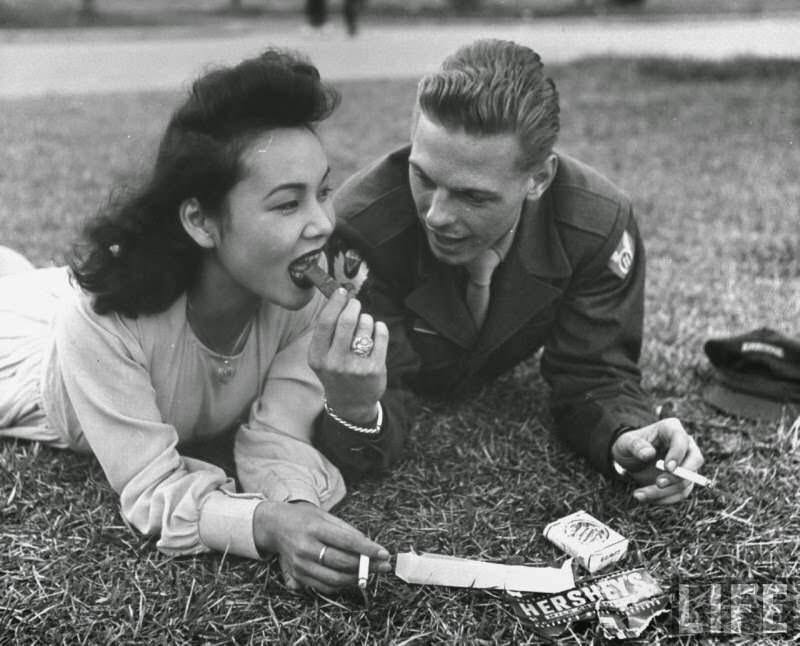
The Japanese cinema industry was in ruins during World War II, but the occupation enabled the country’s economic recovery. Films were a popular form of entertainment during the early American occupation. The Japanese entertainment sector steady grew from 1945, reaching 1.13 billion views in 1958. At the time, there weren’t too many options for entertainment, but movies quickly became a favourite pastime for youngsters.
Women’s Rights
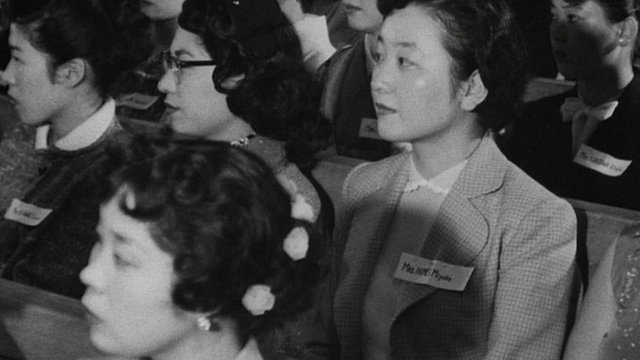
As part of their reconstruction of Japanese society, the SCAP strove to educate the populace about new women’s rights. David Conde of the CIE’s Motion Picture and Theatrical sector advocated for the positive depiction of women in Japanese films. The SCAP also encouraged producers to depict liberated women and eliminate plots that degraded them.
For example, attempts to involve women in cinema were made through the distribution of U.S. films that targeted their audiences like a remake of Little Women and promotional materials that encouraged them to attend screenings.
Despite these efforts, women were in the minority when it came to filming viewers, which suggested the persisting norms of Japanese society towards them.
What SCAP Actually Banned

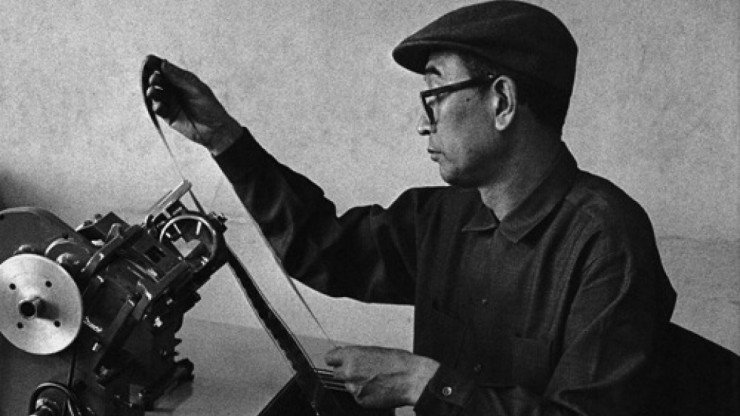
On 22 September 1945 the Civil Information and Education Section of SCAP called in representatives of every Japanese film company and explained what the industry was now for. Films should extol individual freedom and be critical of militarism and feudalism. A list of desirable subjects was supplied.
The detail usually lost in the retelling is that nobody ever issued an order saying that samurai films were banned. What happened was more effective than that.
Kyoko Hirano, whose work on Occupation film policy remains the standard account, lists the prohibited subjects as militarism, feudalistic ideas such as blind obedience to a boss figure, the low status of women, suicide, xenophobia, anti-social behaviour including black marketeering and prostitution, and above all any criticism of the Occupation itself.
Read that list against the period film and the problem becomes obvious. The jidaigeki runs on loyalty to a lord, on revenge, on ritual suicide and on a rigid inherited social order. Almost every load bearing element of the genre sits somewhere on the prohibited list. It was not outlawed by name. It was made unbuildable.
The effect was immediate and practical. Swordfighting scenes went. Stars who had spent their careers in period drama were reassigned to play modern gangsters in contemporary clothes, which is a large part of why postwar Japanese cinema pivots so hard towards crime.
One case shows exactly how it worked in practice. In 1946 Kenji Mizoguchi submitted Utamaro and His Five Women, a film about the woodblock artist Kitagawa Utamaro. SCAP refused to approve it for no reason other than that it was a period film and so, by definition, favoured feudal loyalty.
Joan Mellen records that Mizoguchi went to General Headquarters in person to argue that Utamaro was “a popular democratic painter”, and was allowed to proceed only after promising to make a contemporary film about injustice towards women. Freda Freiberg’s account of the film adds that he also had to guarantee there would be no swordplay in it. Mizoguchi’s own summary of the new rules was that they made it “absolutely impossible to make a period film”.
He was describing a biography of a painter who died in 1806. If that needed arguing in person at General Headquarters, a swordsman picture stood no chance at all.
The encouraged list ran the other way. Hirano records it as biographies of those who had fought prewar and wartime Japanese fascism, advocates of civil rights and of equal rights for women, the promotion of free expression, the agrarian reform that broke up landowners’ estates in favour of their tenants, and the successful repatriation of soldiers into civilian life.
The sharpest illustration of how narrow the space had become is a Kurosawa film. They Who Tread on the Tiger’s Tail, made in 1945, was attacked first by the Japanese wartime censors for failing to treat its kabuki source with sufficient dignity, and then by the American authorities for glorifying feudal ideals. The same film, two regimes, opposite objections, and it sat on the shelf until after the Occupation ended. Even Drunken Angel drew a complaint that its black market material was excessive, which lands precisely on the anti-social behaviour line of the list above.
Prints were destroyed as well as scripts refused. A significant quantity of prewar and wartime film was deliberately destroyed by the Occupation authorities, thinning an archive that earthquake, firebombing and decaying nitrate stock had already reduced. A great deal of Japanese cinema from before 1945 simply does not exist to be watched.
The genre came back the moment the pressure came off. Lars Martin Sorensen, writing on Occupation censorship, describes the swordsman film as having been banned for being feudal and then returning in a flood as controls relaxed towards the end of the Occupation. The San Francisco Treaty was signed in 1951 and took effect the following year, and the period film went straight back to work.








What the Occupation Left in Place
The story usually told about the Occupation is one of transformation. Yoshiharu Tezuka’s work on the Japanese film industry complicates that, and the complication matters for the next fifty years of Japanese cinema.

Start with what was kept. Emperor Hirohito’s position was preserved, and the new democratic citizen was addressed through the machinery of the pre-war imperial system rather than in place of it. John Dower’s phrase for the arrangement, quoted by Tezuka, is that the emperor and the general presided as dual sovereigns.
Tezuka’s argument follows from that. Japan’s pre-war sense of itself as different from the West but senior to the rest of Asia came through the Occupation intact, and was arguably reinforced by it, because cold war policy found that self-image useful. A Japan that saw itself as culturally exceptional and as Asia’s natural leader was a helpful anchor for Western aligned politics in East and Southeast Asia.
Then the money arrived. The Korean War turned American military procurement into demand worth billions of dollars. The Japanese stock market rose by 80 per cent between the outbreak of that war and the end of 1951, and national income was back at pre-war levels by 1955. Sovereignty returned in 1952 under the San Francisco peace treaty.
Film sits right in the middle of that timeline. Rashomon won at Venice in 1951, between the outbreak of the Korean War and the return of sovereignty, and Tezuka reads that international recognition as the thing that re-established the Japanese film industry’s leading position in Asia and its unusual standing in a film world otherwise split between the West and everywhere else.
So the Occupation’s mark on Japanese cinema runs wider than the list of subjects it prohibited. It also left standing the version of itself that the industry would spend the following decade selling abroad.
Akira Kurosawa & The Japanese Movie Golden Age
Whilst Japanese films were still including their culture and identity in films, Akira Kurosawa ushered in the golden era of Japanese cinema with Rashomon (1950), putting the country on the international scene.
Kurosawa used Hollywood flashback methods that created different variations of scenarios. He also showcased western influence in his films by mixing conventional eastern culture with American cultures like Shakespearean literature and pulp fiction.
An example is his films that adapted European literature but are remade into the Japanese context like Kumonosu-jo or Throne of Blood (1957) from the Shakespearean classic, Macbeth. There are also other films like Hakuchi (1951) that was based on Fyodor Dostoyevsky’s book and Donzoko (1957) from a Russian drama by Maxim Gorky.
Today, Akira Kurosawa is a household name of Japanese cinema worldwide because of his jidaigeki or period films like Seven Samurai (1954) and Yojimbo (1961).
Kurosawa’s films discussed western ideology with themes like individualism and human betterment.
Daikaijueiga
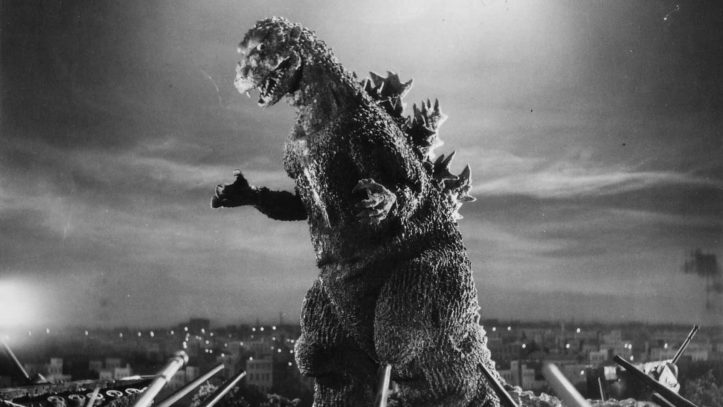
Post-war Japanese cinema also gave birth to a new genre, Daikaijueiga or Kaiju Eiga: a Japanese cinema genre that featured gigantic monsters. The term kaiju also referred to the creatures themselves usually depicted attacking large cities and battling between them and the military or other monsters.
Godzilla (1954) is generally considered to be the first kaiju film. Godzilla, is a metaphor for nuclear weapons, echoing post-World War II Japan’s anxieties in the wake of the atomic bombs of Hiroshima and Nagasaki.
Japanese New Wave
Following the Japanese Golden Age, Japanese filmmaking changed profoundly after the occupation.
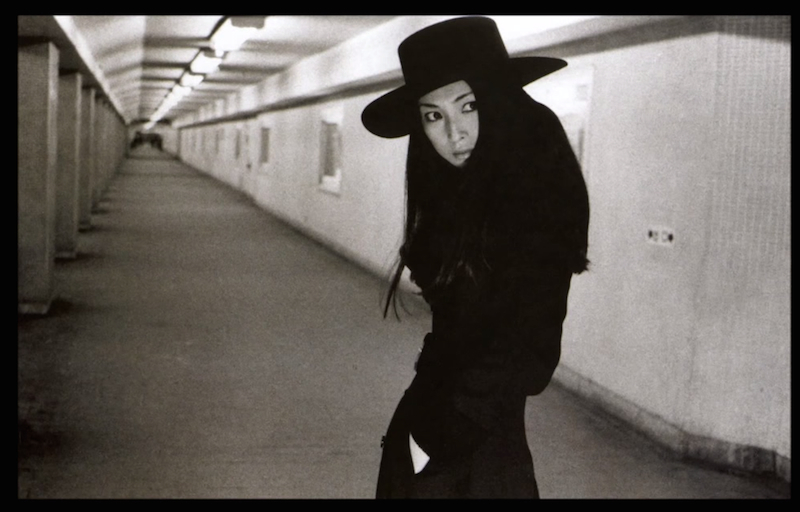
Japanese New Wave cinema symbolized the collated efforts of Japanese directors and cinema to transition to a newer age of films. The movement was evoked by the American occupation, by going against their usual direction and conception of cinema.
After the occupation, censorship was still influenced by the West. But the New Wave served as a time for filmmakers to discuss the post-occupation Japanese cinema that had been influenced by American culture and counter it with their creations. It focused on criticizing the social norms of Japanese society, experimentation with film styles, and resistance against censorship.
New Wave Directors
Nagisa Oshima
The New Wave was sparked by Nagisa Oshima, whose films dealt with social issues and innovation. At the time, the film industry was dominated by themes of Western ideology and the exoticism of Japanese culture. He noted that the occupation had an impact on shaping their films in a way that resembled the West.
In response, Oshima made use of a social realist approach in filmmaking, showcasing a ‘new Japan’ in need of transformation from the occupation and from its imperialist past. His film Death by Hanging (1968), showcased through its documentary form of storytelling, is the lost post-occupation Japan.
Censorship during the occupation also pushed media to suppress themes that were subversive such as the exaltation of militarism and pornography.
Oshima retaliated against this through his film In the Realm of the Senses (1976), with close-up shots of genitalia. His fight against censorship also contributed to the freedom of New Wave filmmakers to present obscenity in their own works.
Shohei Imamura
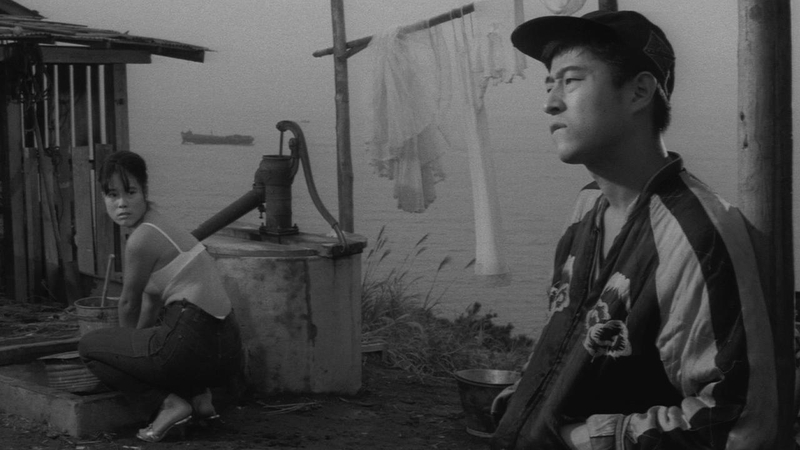
Shohei Imamura depicted the lives of prostitutes and black-marketeers by focusing on the obscene. Using a documentary-style technique, Imamura delved into hitherto unexplored topics in Japanese culture, much like Oshima. He depicted males as ethically ambiguous and altruistic, and women as mistreated yet powerful, in his films.
Women in his films are shown as liberated, even if sexualized, in contrast to the feminist ideals promoted under the occupation. His masculine characters, on the other hand, were portrayed to be morally bankrupt.
Pigs and Battleships (1961) was a reaction to the influence of the West, in which he compared Japanese people to pigs grazing on American leftovers.

From SCAP film censorship to the rebellion of New Wave films against western influence, the American occupation of Japan contributed to the emergence of a new and independent generation of Japanese filmmakers who were better aware of their own identities and had greater freedom to express themselves.
This is in contrast with earlier generations that primarily focused on adapting Hollywood movies for local audiences. The increased independence among young filmmakers was also aided by changes in society such as social movements like feminism, the gay liberation movement, or anti-war protests which fostered change within mainstream cinema itself.
References:
Kyoko Hirano, “Mr. Smith Goes to Tokyo: Japanese Cinema Under the American Occupation, 1945-1952”, Smithsonian Institution Press, 1992.
Matthew Fullerton, review of Lars-Martin Sorensen’s “Censorship of Japanese Films During the U.S. Occupation of Japan: The Cases of Yasujiro Ozu and Akira Kurosawa”, Film International, January 31, 2017. http://filmint.nu/sorensons-censorship-occupation/
Joan Mellen, “History Through Cinema: Mizoguchi Kenji’s The Life of O-Haru”, in Alastair Phillips and Julian Stringer (eds), “Japanese Cinema: Texts and Contexts”, Routledge, 2007.
Alexander Jacoby, “Country Retreat: Shimizu Hiroshi’s Ornamental Hairpin”, in Alastair Phillips and Julian Stringer (eds), “Japanese Cinema: Texts and Contexts”, Routledge, 2007.
Alastair Phillips and Julian Stringer (eds), “Japanese Cinema: Texts and Contexts”, Routledge, 2007.
Freda Freiberg, “Utamaro and his Five Women”, Senses of Cinema, March 2003. https://www.sensesofcinema.com/2003/cteq/utamaro/
“Nihon Eiga: The History of Japanese Film”, National Film Archive of Japan. https://www.nfaj.go.jp/english/exhibition/historyofjapanesefilm/
Michael Maher, “From Godzilla to R2D2: Japan’s Influence on Modern Cinema”, Premium Beat, September 9, 2015. https://www.premiumbeat.com/blog/japans-influence-on-cinema-after-wwii/
Jennifer Coates, “Cultural memories of occupation in the Japanese cinema theatre, 1945–52”, Bloomsbury Academic 2021. https://www.bloomsburycollections.com/book/visual-histories-of-occupation-a-transcultural-dialogue/ch3-cultural-memories-of-occupation-in-the-japanese-cinema-theatre-1945-52
Dan Geary, “Butts, Blood, and Bombs: The American Occupation’s Effect on Japanese Cinema”, Grand Valley State University, April 21 2020. https://scholarworks.gvsu.edu/cgi/viewcontent.cgi?article=1183&context=cine
“Akira Kurosawa Biography (1910–1998)”, April 2, 2014. https://www.biography.com/filmmaker/akira-kurosawa
Tadao Sato, “Kurosawa Akira Japanese film director”. https://www.britannica.com/biography/Kurosawa-Akira
Akira Kurosawa Biography, Anaheim University. https://anaheim.edu/student-videos/225-akira-kurosawa-school-of-film/750-akira-kurosawa-biography.html
AKIRA KUROSAWA (1910-1998). September 26, 2015. World History. https://www.worldhistory.biz/contemporary-history/75921-akira-kurosawa-1910-1998.html