When thinking of the Noh (能) theatre influence in Japanese cinema, one might be tempted to say it’s just a stylistic addition. Masks as props and ghosts as narrative devices that, if present at all, are merely there as a reference or for aesthetic purposes. The reality, however, couldn’t be further from that statement. Noh helped to build the foundation on which Japanese cinema stands, effectively shaping how films move, pause, and build tension.
Principles of Noh such as Ma (間), Yūgen (幽玄), and Jo-Ha-Kyū (序破急) slipped from the traditional stage onto the silver screen, informing filmmakers from the Japanese Cinema Golden Age to today. We can see it clearly in the stillness of Ozu, the rhythmic chants of Kurosawa, the reality blurring tales of Suzuki, and the aesthetic dread of J-horror.
In today’s article, we explore how Noh’s language became Japanese cinema’s enduring grammar.
Noh Theatre, an Introduction
So what exactly is Noh theatre? Well, Noh is part of a larger tradition of Japanese theatre known as Nōgaku (能楽), which dates back to the Muromachi period (1336-1573). Essentially, Noh is a dance-drama and a chanted-drama, with many of its plays adapting widely known tales and legends of the time. Consequently, it is a highly regulated tradition that places heavy emphasis on form and is kept under the Iemoto (家元) (Grandmaster) system. This is one of the reasons it has remained relatively unchanged for centuries.
Getting into the specifics, Noh stories usually (but not always) follow a supernatural being who takes human form and narrates the story. We then follow a set of actors through the narrative, who usually fall under two categories: the Shite (仕手, シテ) or protagonist, and the Waki (脇, ワキ), its foil.
Performers utilize a variety of props on stage, most notably the nō-men masks (能面), which are used to represent roles such as ghosts, women, and Hannya (般若) demons. Because of the masks and the lyrical nature of the play, emotions in Noh are communicated through stylized, controlled movements, designed to evoke a subtle and profound beauty. Dialogue is, consequently, poetic, delivered either by singing or chanting, to the rhythm or silence of the music
This deep commitment to formal expression and the stillness of form is articulated through three core principles that became central to Japanese cinematic grammar.
The Principles of Noh

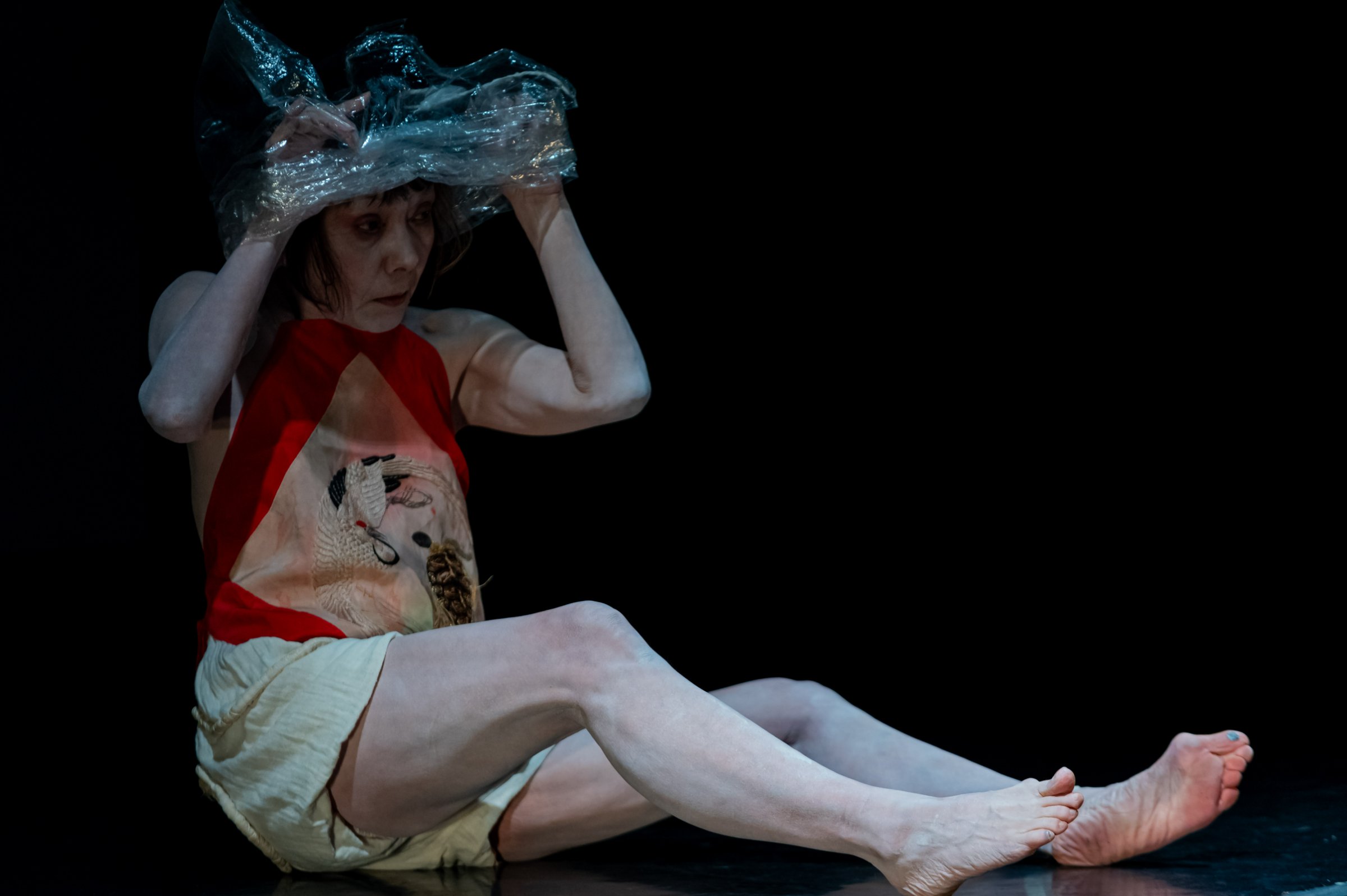
Image credit: The Straits Time, performer Mayuko Kashiwazaki.
1. Yūgen (幽玄): Felt Beauty. Yūgen is, essentially, an aesthetic ideal; an invisible beauty that is felt rather than seen. Noh performers constantly aimed to capture Yūgen, which is why, for as stylized as their movement is, the moves themselves represent conventional gestures. The effect achieved is one of reflective melancholy, where the audience can recognise their own human experience within the performances.
2. Ma (間): The charged pause. Ma, which translates to “pause” or “interval,” refers to the intentional stillness present in many aspects of Noh. We can find it in silences between musical notes, gaps between movements, and even empty spaces on stage. These, although it may seem ironic, are considered the most important elements, as Noh rightfully recognises that this “empty” space is the most reflexive one. It’s a pause that is charged with tension, allowing the audience to feel their nerves wracking alongside the character, strengthening Yūgen.
3. Jo-Ha-Kyū (序破急): The Rhythmic Structure. Jo-Ha-Kyū is the underlying structure that ties these concepts together. It can be translated as introduction-development-climax, but unlike the similarly framed western standard, the climax doesn’t alleviate tension, it elevates it. It’s always an intense, abrupt finale, which immediately contrasts with the stillness and relative calm of the beginning. It’s a rhythmic framework built to maximize the effects of Yūgen and Ma.
Noh and the Golden Age of Japanese Cinema (1940s-1960s)
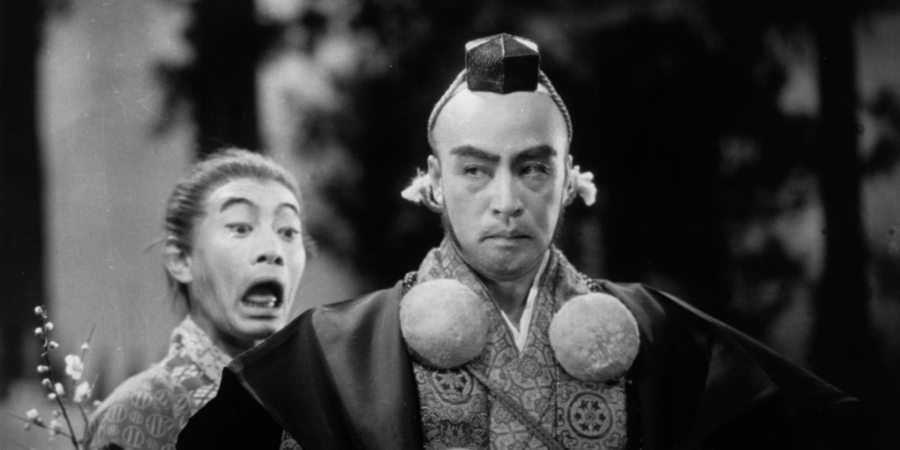
The Men Who Tread on the Tiger’s Tail (1952), directed by Akira Kurosawa.
Having understood the principles of Noh, we should now focus on when they were first implemented into the cinematic language: The Golden Age of Japanese Cinema (1940s-1960s). A time where filmmakers forged a new style out of the post-war rubble.
What makes this period special is not just the quality of the films and directors, but the fact they were unapologetically Japanese. The Western world found in these movies not only fascinating stories, but unique stories rooted in the Japanese psyche. And, for as crucial as that was, the stories had universal appeal, reaching a human core that anyone could relate to. Getting to this level of filmmaking mastery required a complex net of inspirations and unique ideas, with Noh fundamentals playing a crucial role.
Japanese directors of this time period took both subtle and overt inspiration from Noh theatre in their films. And, aided by their creative vision, reached never-before-seen highs in filmmaking. With that in mind, let’s explore some examples.
Akira Kurosawa
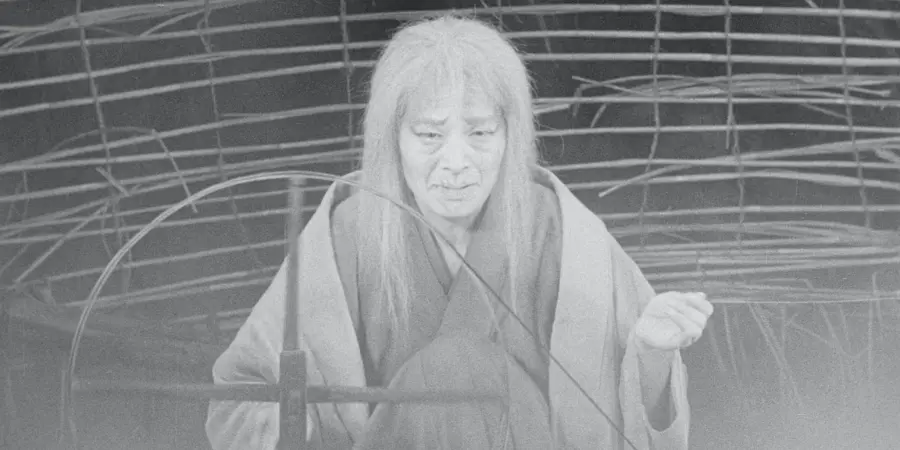
Throne of Blood (1957), directed by Akira Kurosawa.
Born in Tokyo in 1910, and having lived a creatively charged life until his death in 1998, much can be said about Akira Kurosawa (黒澤 明). We’ve, in fact, already covered a lot of it in different articles: his pioneering work in Japanese period-dramas, the creation of the buddy cop genre, and his unique artistic lens. Getting into the roots of Kurosawa’s genius is a difficult task, but looking at theatre can give us some guidance.
Akira Kurosawa was a notable theatre enthusiast, and while many know about his love for Shakespeare, his love for Noh was just as pronounced. This can be seen in films such as The Men Who Tread on the Tiger’s Tail (虎の尾を踏む男達, shot 1945; released 1952). This is a film adaption of the Kabuki play Kanjinchō, which is in turn based on the Noh play Ataka. Its contribution to this discussion is how it translates Jo-Ha-Kyū into film, creating an intense final scene. Here, the samurai’s disguise is nearly broken as they enter into unfriendly territory, creating a visceral, Yūgen inducing conclusion.
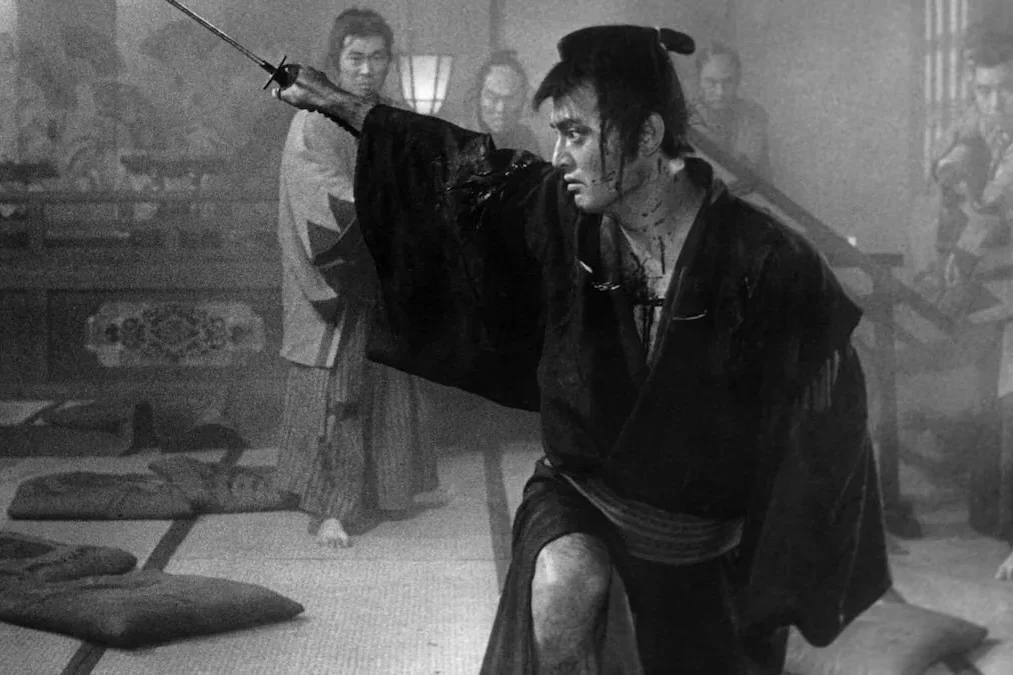
However, perhaps the most interesting example is Kurosawa’s 1957 classic Throne of Blood (蜘蛛巣城). Fans might know this film solely as an adaptation of Shakespeare’s Macbeth, but the Noh elements present set the movie apart. It, for one, replaces the three witches with an evil spirit, whose subtle movements and rhythmic voice mirrors the delivery of a Shite. There’s also the character of Lady Asaji (the film’s Lady Macbeth equivalent, played by Isuzu Yamada). She delivers a haunting, expressionless performance, with micro-shifts of emotions that creatively mimic the restraint of nō-men masks. To give an example, there’s the scene where she tells her husband she is expecting a child, with the dialogue implying an outburst of rage, but her face remaining frozen.
For another Noh inspired scene, we could look at the ending. Unlike Macbeth, Throne of Blood doesn’t end with the equivalent of Malcolm being crowned, but with the protagonist’s agonizing demise. Just as Kyū would dictate, the finale is abrupt, tension is felt until the last second and then, silence. A haunting chant leads the viewers into the credits, encouraging contemplation. Ma and Yūgen in tandem, at last, on the silver screen.
Kenji Mizoguchi
Kenji Mizoguchi (溝口 健二) is perhaps the most prolific director to come out of the Japanese Cinema Golden Age. In between the 1920s and 1950s, Mizoguchi directed roughly 100 films, constantly renewing himself as a Japanese auteur. And, as such, Mizoguchi delved into the principles of Noh for some of his films with great success.
The best example is none other than Mizoguchi’s 1953 fantasy-period drama, Ugetsu. Set in the Japanese civil war of 1568–1600, the film follows a potter who is seduced by Lady Wakasa (played by Machiko Kyō), a noblewoman who is later revealed to be a vengeful spirit, yūrei (幽霊). For this reason, the film follows a specific subset of Noh known as Mugen Noh (Phantasmal Noh) (夢幻能), where the presence of the supernatural is dictated by a dreamlike logic. As such, Lady Wakasa was specifically designed to appear with a mask-like face, combining Noh signifiers with the aristocratic aesthetic of the time.
Beyond the ghostly presence, Ugetsu also dives into the principles of Noh to make its point stronger. Lady Wakasa’s manor, for example, is almost empty, something the editing places emphasis on, so as to convey the powerful stillness of Ma in her presence. In the scene when she meets the protagonist, her seductive actions are carried by slow intervals, allowing tension to build up. The final, peaceful realisation of the ghostly presence is filmed with an unnerving calm, demonstrating that this profound, restrained beauty Yūgen can coexist with a ghostly theme in film format.
Kaneto Shindō
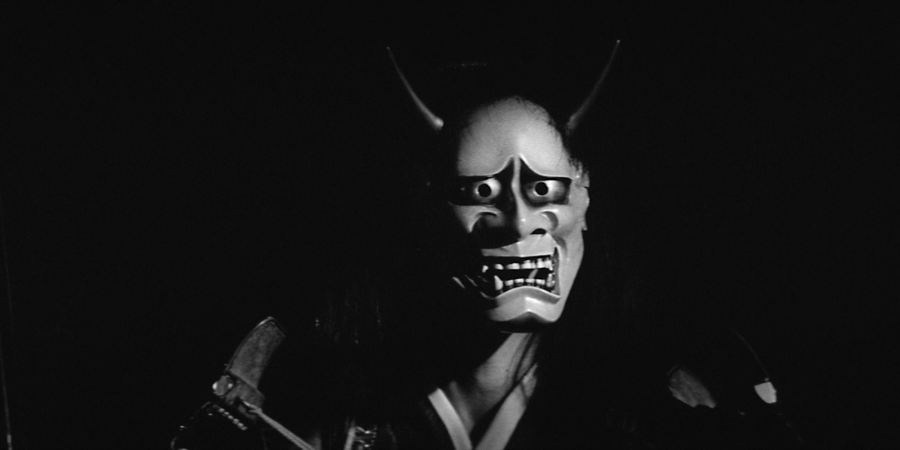
Onibaba (1964), directed by Kaneto Shindō.
Another director of the golden age who we can’t overlook in this discussion is Kaneto Shindō (新藤 兼人), the undisputed father of Japanese horror. He gave the tales of ghosts and spirits that lived in Japan’s psyche a cinematic shape, allowing the world to understand the appeal of the legends of Japan’s past. And, of course, he learned to do this from Noh. Shindō depicted how the rising tension could be terrifying, how the subtle movements could be haunting, and how an expressionless mask could be screaming for help.
The best example is Shindō’s 1964 masterpiece Onibaba (鬼婆), which roughly translates to “Demon hag.” Here, we follow a woman who, jealous of her widowed daughter-in-law having an affair, decides to scare her using a demon mask. A mask, it should be noted, modelled after a Noh Hannya Mask, associated with a vengeful female spirit.
When she is wearing the mask, her movements are stylised and her voice is rhythmic, utilizing the signifiers of Noh to convey a supernatural entity. In the end, she is unable to take the mask off, and her movements become erratic in despair, but her lack of expression betrays her emotions. When she finally takes it off, her face is disfigured, signifying she has become the demon she set out to be.
Shindō utilizes Jo-Ha-Kyū to create rising tension, one that doesn’t dissipate after the credits roll. But, unlike Kurosawa, this is not used for meditative reflection, rather, the effect achieved is of a lingering melancholy, mirroring many Noh plays where there’s an aftertaste of unease. What Shindō took from Noh is that the beauty conveyed by Yūgen doesn’t necessarily have to look “beautiful” to be there.
Yasujirō Ozu
The last Golden Age director we’ll be discussing is none other than Yasujirō Ozu (小津 安二郎). Although he began in the early days of silent cinema, Ozu’s work would gain global recognition during Japan’s reconstruction years, when he dedicated his life to the subject of change. Ozu is a nostalgic director, constantly lamenting the bygone era of what life (especially in Tokyo) once was. But, crucially, he doesn’t disdain what’s new; rather, views the changing present with complex uncertainty, something Noh principles helped him achieve.
As a prime example, we can look at “pillow shots,” a technique Ozu pioneered. These are seemingly random cutaway shots to snippets of reality: a mountain, a train, clothes on the clothesline slowly drying. Just like the silence between notes in a Noh play, this expression of Ma is the beating heart of Ozu’s filmmaking. These shots significantly shape the meaning of the upcoming or ongoing scene by playing with the pacing. The character’s emotions are, in turn, translated to these shots, and while they may be comforting, they remain melancholic (Yūgen).
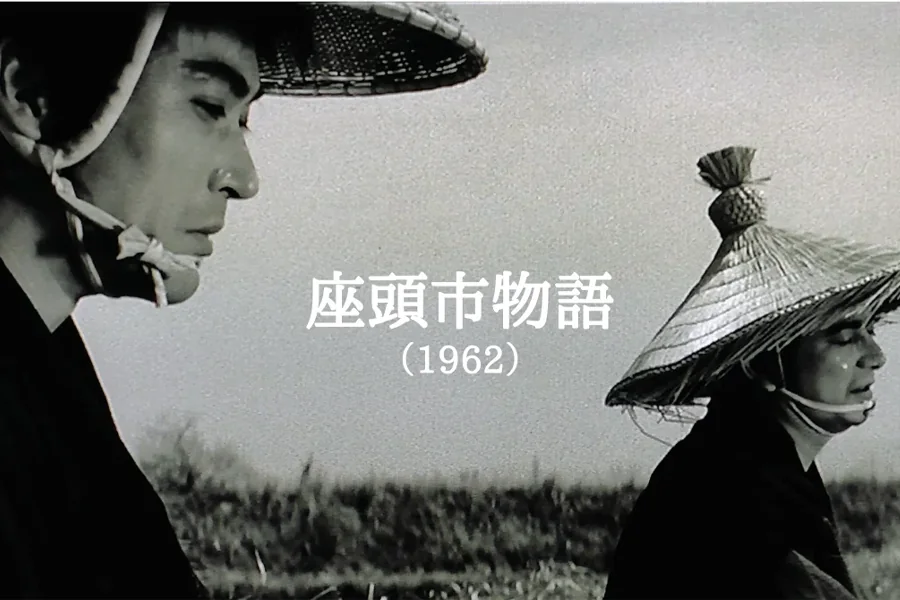
The best example of this is, of course, Ozu’s undisputed masterpiece: Tokyo Story (東京物語). The tale of an old married couple visiting their family in Tokyo, just to be ignored and neglected. No hard feelings between them, just life being life, getting in the way of what was supposed to be a happy reunion. The distance between the characters grows larger as conversations shrink with each moment of silence. The movements may not be as stylized as Noh, but their principle of being relatable and conventional remains in Ozu’s artistic vision.
The pillow shots then project that sensation onto Tokyo itself: if the city is changing too, what would become of us? In the end, the melancholic aftertaste remains, but one can’t help but acknowledge, just like a great Noh play, that the execution was beautiful.

The Four Masks of Throne of Blood
The clearest single case of Noh entering a film is Throne of Blood (1957), and Kurosawa’s method on it was unusually literal. Rather than describe a performance to his actors, he showed each of them a photograph of the Noh mask closest to their role and told them that the mask was the part. What he wanted was not imitation of Noh acting but the stillness of a carved face, held until it breaks.
Four masks carry the film, and naming them correctly matters, because each one arrives with several centuries of fixed meaning already attached.
Heita, for Toshiro Mifune as Washizu. Heita is a warrior’s mask, the face of a seasoned fighting man, used in Noh for the ghosts of soldiers. It is a face built for a man who is already, in some sense, finished.
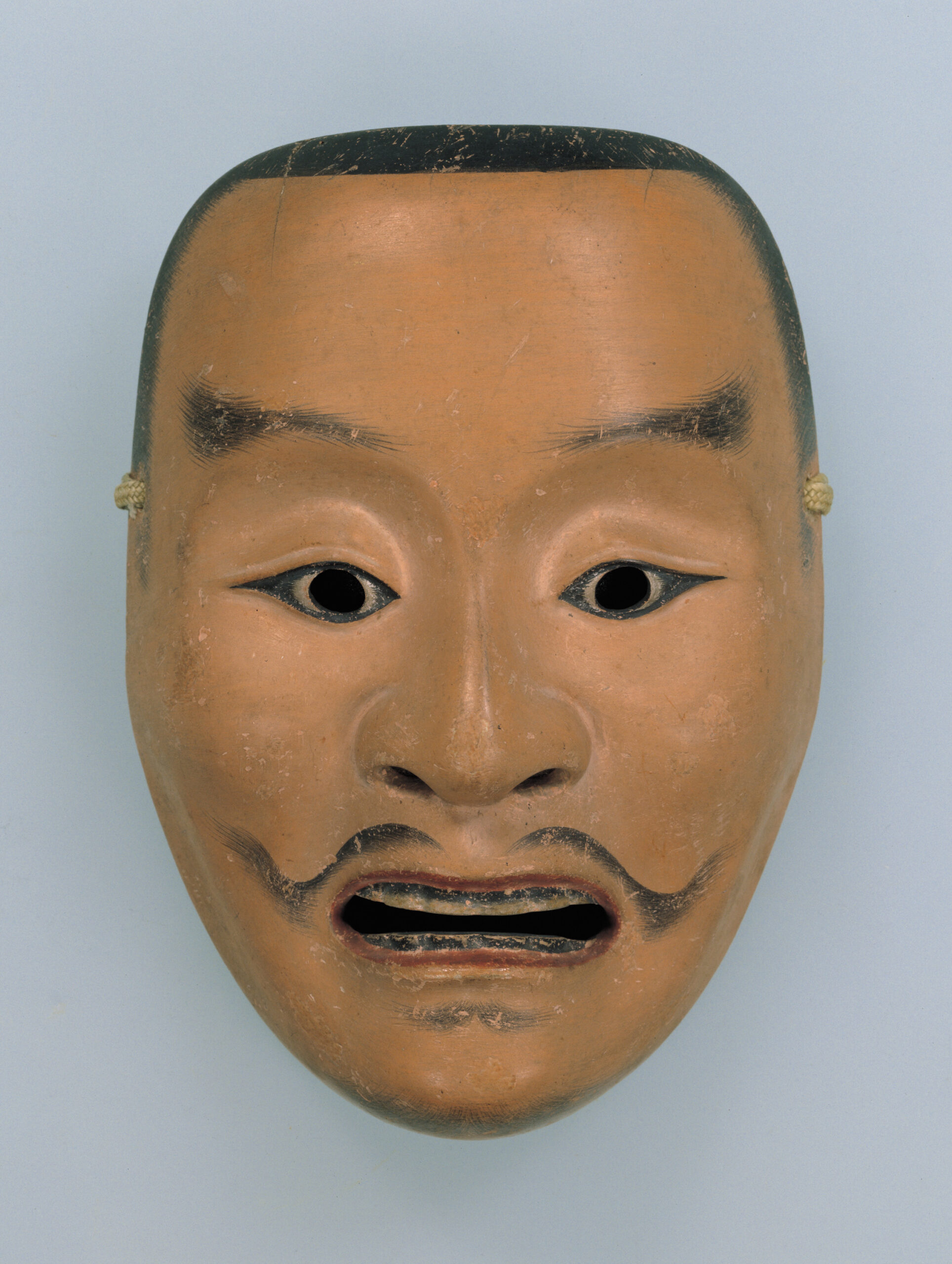
Heita, the warrior. Tokyo National Museum, public domain.
Shakumi, for Isuzu Yamada as Asaji. Shakumi is the mask of a woman no longer young who is about to lose her mind. It is not a villain’s face and it is not a beauty’s face. It is the face of someone whose composure is a held position rather than a natural state, which is precisely what Yamada plays.
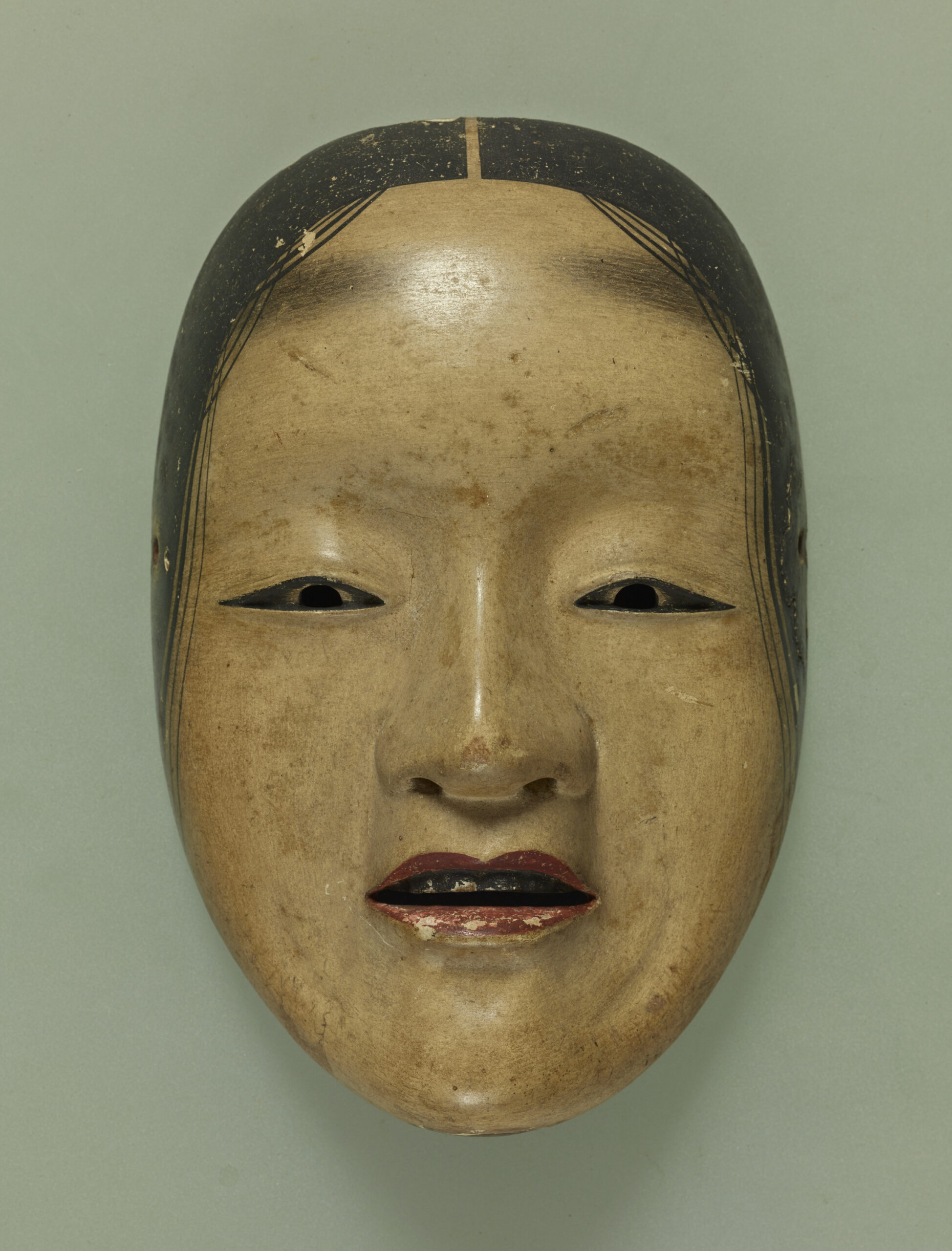
Shakumi, the woman on the edge of madness. Tokyo National Museum, public domain.
Chujo, for the murdered lord when he reappears. Chujo is the face of a high ranking nobleman and military commander, the mask reserved in Noh for aristocratic ghosts. Giving it to a murdered lord is not decoration. It places him in a category the audience already understands.
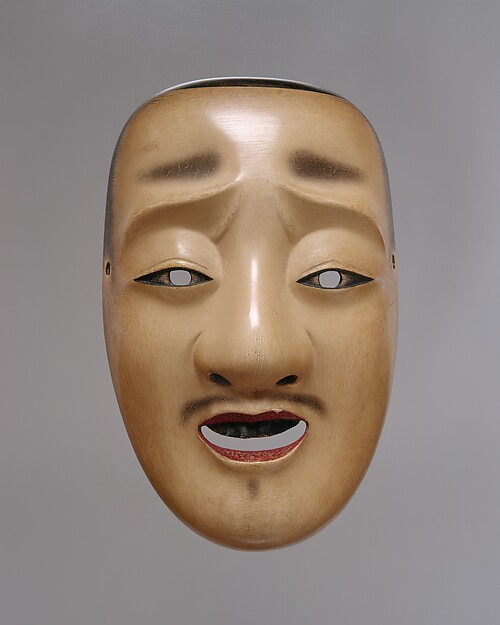
Chujo, the noble commander, carved by Genkyu Michinaga in the eighteenth century. The Metropolitan Museum of Art, accession 1993.341.2, public domain.
Yamanba, for the spirit in the forest. Yamanba is the mountain crone, an old woman who lives beyond the edge of settled society and is neither reliably good nor reliably evil. She is the reason the forest scene feels less like a witch scene from Macbeth and more like an encounter with something that was there before anyone arrived.

Yamanba, the mountain crone. Tokyo National Museum, public domain.
What this produces on screen is an effect Noh audiences would recognise immediately. A carved face does not change, but the angle of the head against the light does, and the viewer supplies the emotion. Yamada plays Asaji almost entirely without expression, and the performance is read as terrifying anyway, because the film has trained the audience to do the work.
Noh in Late 20th Century Japanese cinema (1970s-1990s)
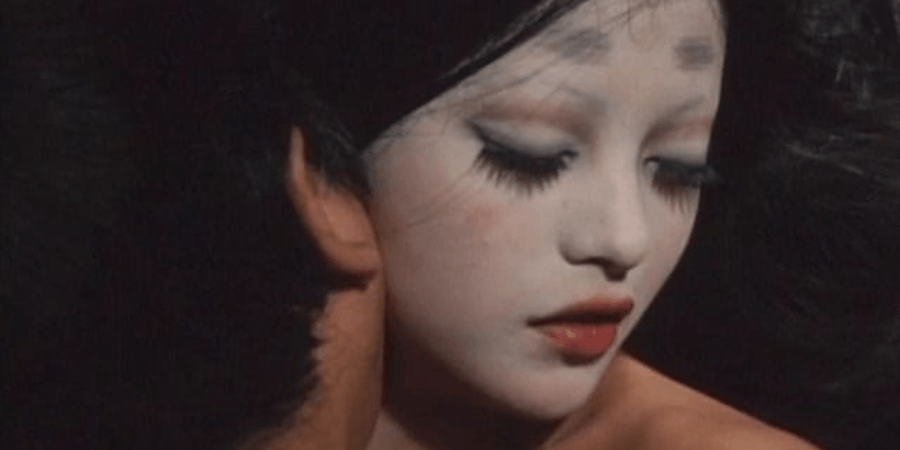
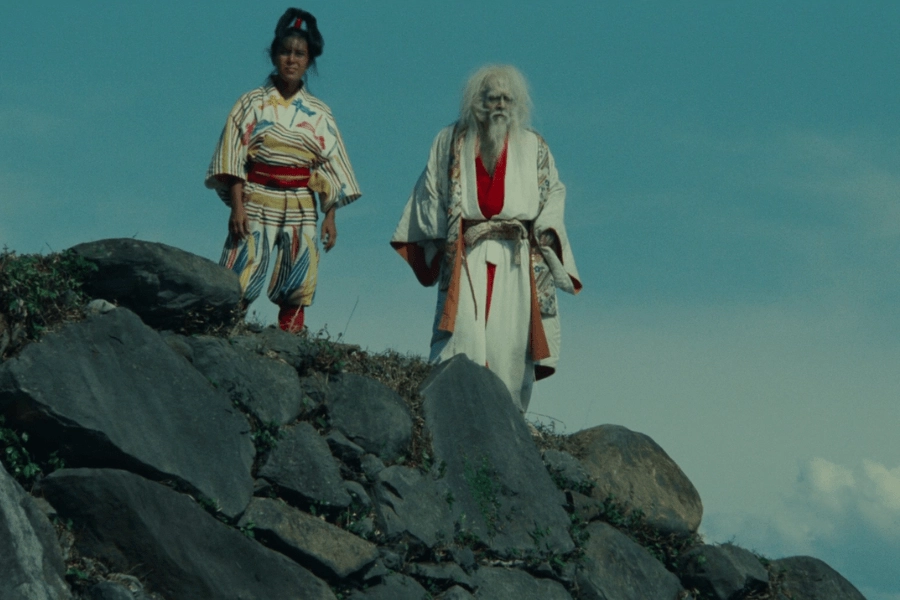
Kanawa (1972), directed by Kaneto Shindō
The Golden Age of Japanese cinema correlates with the successful post-war efforts to revitalize the country. It was, in short, a time of building new foundations; and what came after was a time of reaping the reward created by them.
Here, Japan established itself as a technology leader in the 1970s, lived a precarious and colourful party life in the 1980s, and faced the consequences of the bubble’s burst during the 1990s. What’s relevant to this article is that Japanese cinema expanded its influences as the country went global. Because of this, Noh’s presence began to appear in subtler and more internalized ways, allowing filmmakers to maintain a uniquely Japanese aesthetic in the face of American cinema (which was becoming popular at the time). It was, however, harder to distinguish, and to notice it one must look with attentive eyes, using the lens of Ma, Yūgen, and Jo-Ha-Kyū.
The Return of the Old Guard
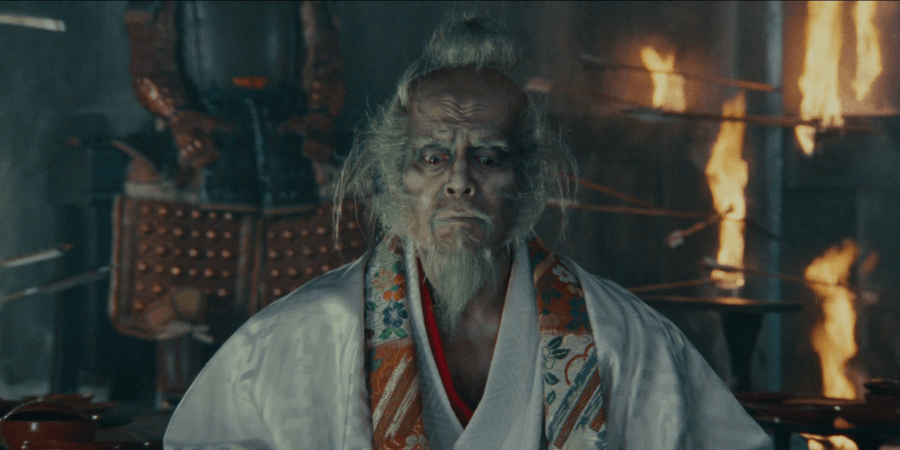
Ran (1985), directed by Akira Kurosawa.
Before addressing the new talent, it is worth noting certain Golden era directors brought their Noh influence into some significant films of this time period. Mainly, Akira Kurosawa and Kaneto Shindō, whose late career saw them developing new, interesting ways related to Noh.
In Akira Kurosawa’s case, we have his 1985 epic Ran (乱), which once again is based on a Shakespeare play, in this case, King Lear. Here, we follow Hidetora Ichimonji (played by Tatsuya Nakadai), an elder warlord who divides his wealth among his three sons. However, the eldest son, Taro (Akira Terao), prompted by his wife, Lady Kaede (Mieko Harada), decides to take full control of the clan’s power, beginning a civil war. Hidetora, trapped in the crossfire, becomes mad.
Both Hidetora’s madness and Lady Kaede’s ruthlessness stand out for utilizing Noh acting techniques. Kurosawa favored slow, deliberate movements punctuated by abrupt actions typical of Noh (utilizing the principles of Jo-Ha-Kyū), to emphasize these characters’ nature. Moreover, Hidetora’s appearance changes slowly as he falls mad, manifesting in ghost-like make-up that strongly resembles a Noh mask.
As for Kaneto Shindō, we see him directly tackling Noh by adapting the play Kanawa (鉄輪) in 1972. The film follows the story of the Noh original, with a woman plotting revenge against her husband for leaving her for a younger woman. However, what’s interesting is how Shindō adapts this play to modern times, with the husband being a car salesman, the woman a typist, and her revenge being enacted via stalker-like phone calls (in the original, the husband is haunted by nightmares). Unlike the classic Noh play, in Shindō’s adaptation there is no explicit supernatural element, as the woman doesn’t turn into a demon. There is, however, heavy make-up used to give the impression of a ghostly presence, using Noh signifiers to make the lines blur between what’s real and what’s not.
Seijun Suzuki
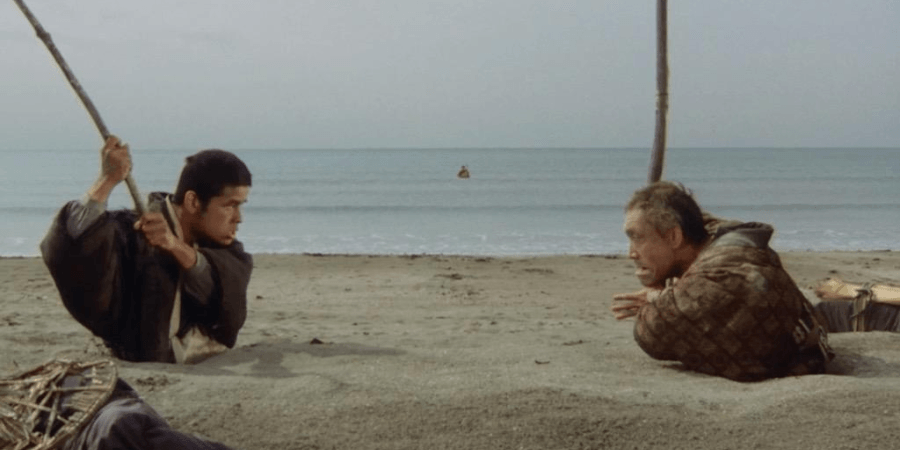
Zigeunerweisen (1980), directed by Seijun Suzuki.
Although Seijun Suzuki (鈴木 清順) began his career in the 1950s, he is mostly remembered as a late twentieth century Japanese filmmaker. This is because he made a significant shift towards the 1970s, focusing on a more minimalistic, almost theatrical style, where form became his priority. His lighting and composition turned skeletal, and his actors’ performances stylized and rigid, reflecting the charged empty space of Ma. Suzuki now aspired to Yūgen as his aesthetic ideal, and Noh became a source of inspiration.
Suzuki would go on to fully embrace Noh’s aesthetic and themes with his most critically acclaimed work, the Taishō trilogy. This was a loose connection of psychological dramas based on the Taishō period (1912-1926). The first of these, Zigeunerweisen (ツィゴイネルワイゼン) (1980), is a perfect case study for the subtle Noh influences of the time.
Zigeunerweisen is based on the novel Disk of Sarasate, by Hyakken Uchida (内田 百間), and follows a Japanese German professor who gets haunted by a record of the orchestral Zigeunerweisen (Gypsy Airs). Unlike a director like Shindō, Suzuki doesn’t aim to make horror, rather, a surreal ghost story that blurs reality and asks metaphysical questions. Ghosts in Zigeunerweisen exist only in memory, but their presence is as tangible as any other. Because of this, the film (just like Ugetsu before it) reflects Mugen Noh, with dream states intersecting with the present. Yūgen is, in turn, manifested as a melancholic longing, an elusive ambience, with Ma central to its interpretation.
What Suzuki shows, on a broader level, is that the aesthetic and structural themes of Noh could set Japanese cinema apart, especially in this globalized world.
Noh’s Mark on J-horror
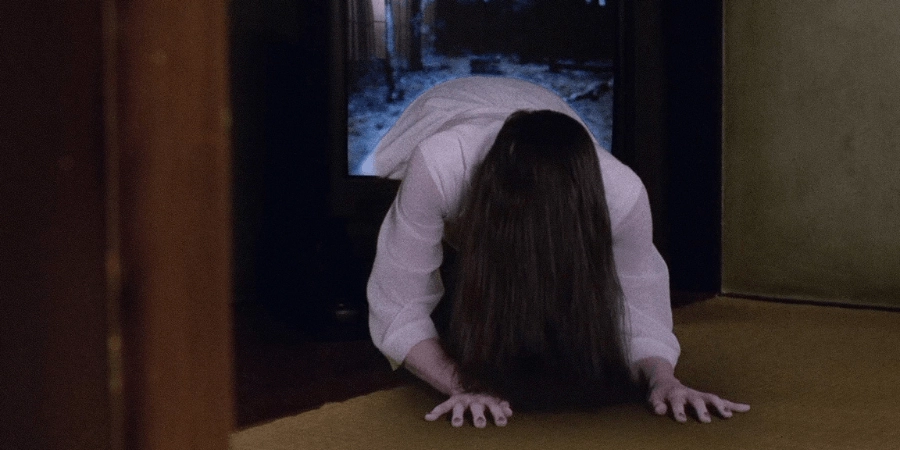
Ringu (1998), directed by Hideo Nakata.
While arthouse directors (like Seijun Suzuki) were utilizing Noh themes and storytelling mechanisms, horror directors looked directly at their narratives and archetypes. As scholars have demonstrated, the J-horror genre drew heavily on traditional Japanese theatrical forms. One such scholar is Yau Shuk-ting Kinnia, whose paper, A “Horrible” Legacy: Noh and J-horror, argues that the religious, dream-like qualities displayed in Noh have, in direct, subtle, or thematic ways, influenced directors working in the genre. Moreover, she (in a much narrower sense) shares the sentiment of this article, presenting Noh and other styles of Japanese theatre (such as Kabuki), as endless sources of inspiration filmmakers will likely continue to use for years to come.
To give a concrete example, we could look at Hideo Nakata’s (中田 秀夫) 1998 box-office hit Ringu (リング). This is the story of a haunted videotape that makes whoever watches it die within 7 days. The film is undoubtedly inspired by the then established supernatural genre of horror found in American cinema, which is why it was easily made into an American remake, The Ring (2002). However, scholars like Valerie Wee Su-Lin have argued that Ringu borrows a lot from Noh to create its aesthetic and narrative, citing that the traditional tales of yūrei (vengeful female spirits) have been a part of Noh stories for centuries. Through this archetype, she states, “Ringu reflects Japanese cinema’s enduring link to classical art forms such as Kabuki and Noh theatre.”
Noh in Twenty-First Century Japanese Cinema (2000s-Today)
The twenty-first century has seen Japan become a juggernaut of cultural exports, with anime, manga, and video games gaining a massive global audience. The Noh influence in these new artistic mediums does exist, but getting into the specifics of it is an article for another time. For now, we’ll say that one of the most successful anime series, Demon Slayer (Kimetsu no Yaiba), uses loose Noh imagery and has even been adapted to a Noh play. The success of which confirms Noh’s enduring classical relevance when paired with contemporary narrative.
As for Japanese cinema, much of what has found mainstream success in this period has been in line with the popularity of anime and manga. A quick glance at the highest grossing Japanese films, both domestically and internationally, makes this evident. Traces of Noh still exist, particularly through the use of Jo-Ha-Kyū, but the impact is generally less noticeable. However, even in this time period, there are still some directors that decided to heavily lean on Noh principles for their films, with two fantastic examples worth examining.
Paired Flowers (2021)
The first and only short film in this article, Paired Flowers (2021) doesn’t just take inspiration from Noh, it portrays it in order to tell a unique story. Directed by Hannah Bon, the film is a unique reading of the Noh play Takasago. In the original play, a priest arrives at Takasago (the city) and hears a poem of the legend of paired pine trees that, in spite of hardship, will remain forever intertwined. The poem is explained to be about marital relationship, but the priest comments that it is an ideal many relationships fall short of achieving. In Bon’s film, the pine trees are replaced by flowers, the priest is removed and the focus is placed on the relationship, which is no longer marital, but one of mother and daughter.
The film begins with a character telling the story of two flowers forever connected, followed by comments about her mother. Then, abruptly, the scenery changes completely (a Jo-Ha-Kyū style transition) and we’re in the middle of a Noh play, where a masked dancer is performing alongside a musician. The film then jumps back and forth between these two framings until arriving at a neon, compressed and sensual scene in which a character (presumably the daughter) explains what Hana is. Hana (or, more accurately, Makoto no Hana), is a Noh term that translates to “flower”, but it refers to the beauty achieved by a great performance. After this explanation, the Noh performer takes her mask off, and it’s revealed to be the mother.
Paired Flowers depicts the story of a generation connected by performance art. The older generation practiced Noh, while the younger did filmmaking. While completely different art mediums, the film argues that both strive towards Makoto no Hana and, for that reason, they are forever intertwined. This connection is then directly linked with the mother-daughter relationship, thus strengthening their bond beyond blood, with no distance (physical or emotional) capable of erasing it. In Hannah Bon’s film, Noh is not only shown and explained, but is also used to tell a contemporary story about art’s endless pursuit of beauty.
Perfect Days (2023)
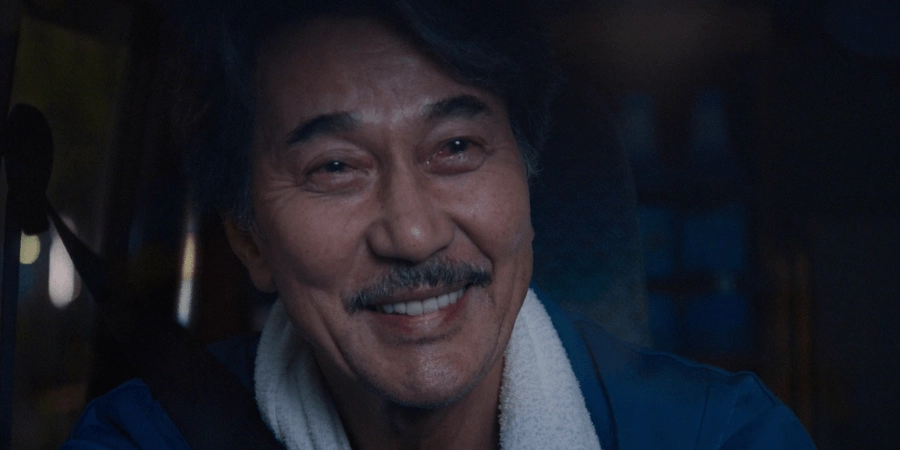
Perfect Days (2023), directed by Wim Wenders.
The last film we’ll be discussing in this article is none other than Perfect Days, Wim Wenders’ 2023 masterpiece. Wenders, although a German director, has a close relationship with Japan, one which we have explored at length in a different article. In any case, what’s important to note is that Wenders considers himself a disciple of Yasujirō Ozu. Indeed, he has talked at length about how Ozu is not only his favorite director, but the one whose style he aspires to. This, intentional or not, meant Wenders kept looking for Ma and Yūgen when filming, and Perfect Days is perhaps the best example of it.
Perfect Days is a glimpse into the life of Hirayama (played by Kōji Yakusho), a cleaner employed by the Tokyo Toilet Project. The first half of the film shows Hirayama going about his week with serenity, cleaning toilets with care, reading, cycling and taking pictures. Overall, despite having a job many would consider degrading, he is a happy man. Past the halfway point, the conflict begins when his niece, Niko (Arisa Nakano), suddenly arrives after escaping home. Hirayama goes about his days normally with Niko’s company, but tension implodes when his sister, Keiko (Yumi Aso), comes to pick her up. The siblings exchange a few words, and we later see Hirayama struggle to maintain the serenity he once showed.
The film, willingly or not, closely follows a Jo-ha-kyū structure: an uneventful beginning, a developing middle and a rushed, tension-imploding ending where melancholy endures. Moreover, the film excels at its use of pillow shots and, therefore, Ma. Silent contemplation, for Hirayama, is what allows him to find beauty in his everyday life. Even as his world crumbles, the lasting emotional state is of tranquil melancholy, a manifestation of Yūgen. The Noh influence in Perfect Days may or may not be intentional, but through Wenders unwitting love for Japanese cinema, is nonetheless present. To him, these characteristics are what set this beautiful art form apart.
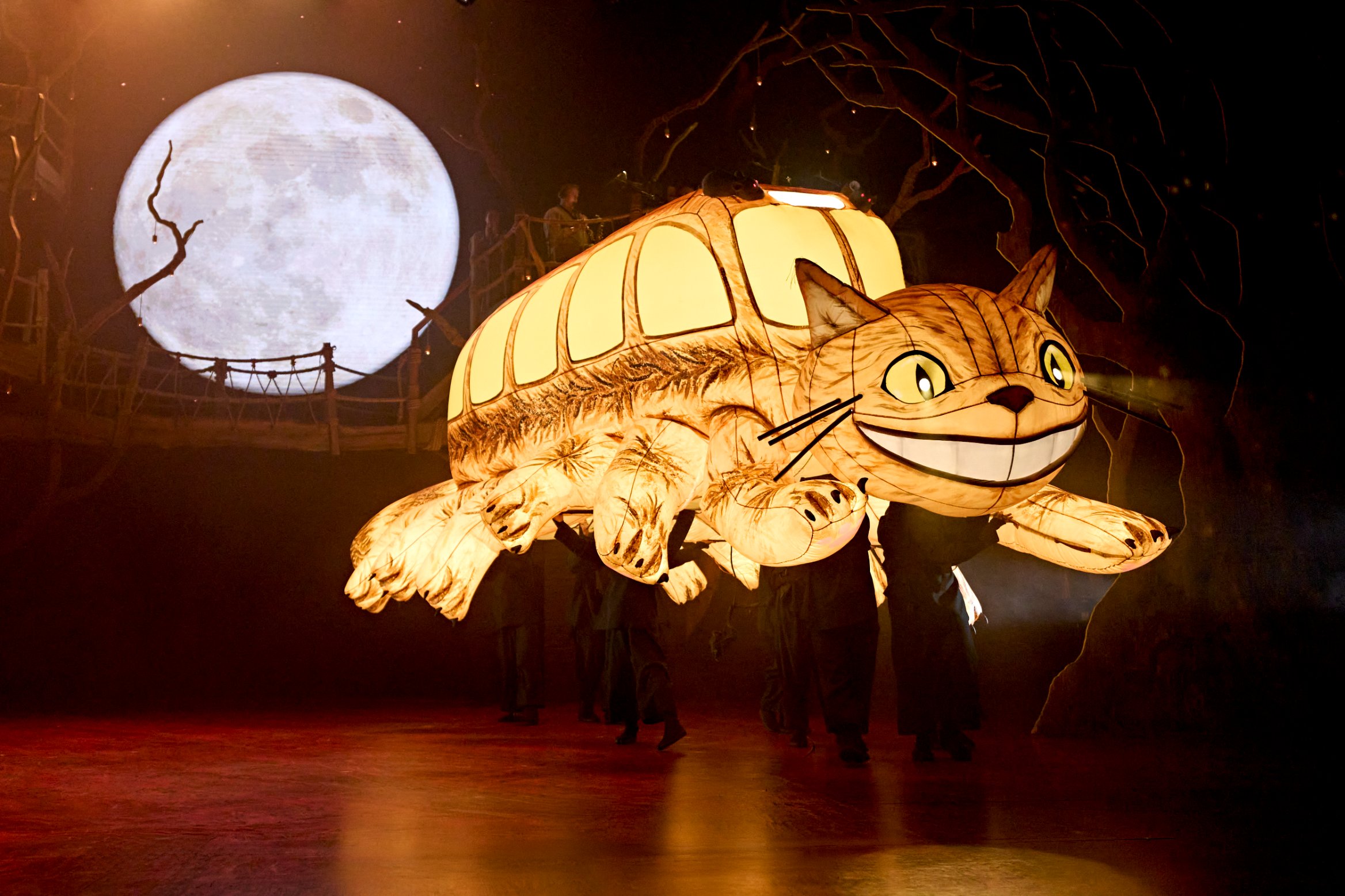


How to Spot the Influence of Noh
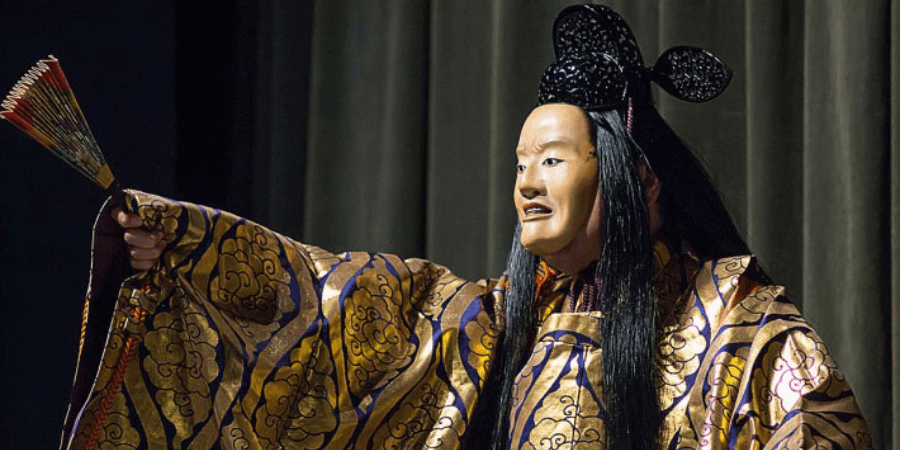
Image credit: NC State University.
As a quick summary of this article, here are some points that will help you recognize the influence of Noh in Japanese cinema moving forward:
- The pacing: Noh influenced films follow a Jo-ha-kyū cadence, with a narrative (or scene) structure that builds slowly, develops, and ends with an abrupt or unresolved climax. Tension doesn’t dissipate, it lingers indefinitely.
- The performances: Actors are directed to follow a mask-like acting, showing emotion by restraining it, and only occasionally switching out of it in big outbursts. Additionally, when conveying the supernatural, their delivery is given in a rhythmic chant.
- The aesthetic: Films that follow Noh’s example aspire to Yūgen as an aesthetic ideal, looking for an elusive beauty, often accompanied by deep melancholy or spiritual unease.
- The sound: The scores in Noh-inspired films usually rely on drum and chant textures, building tension despite the frequent lack of visible action on screen.
- Ma as a place: The camera-work intentionally focuses on gaps, silence, long static takes (like pillow shots), to convey stillness.
- Mugen Noh Logic: When the story is of a ghost, characters speak like memories, blurring the lines of what’s real and what’s not.
Last Words
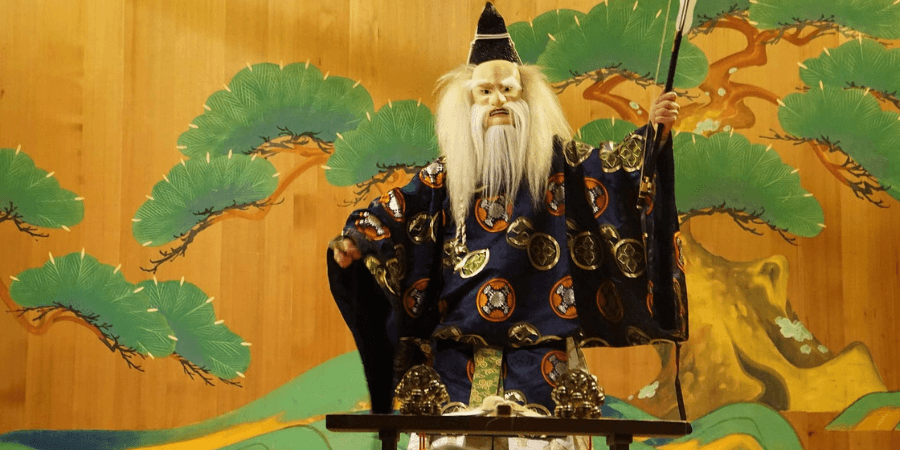
Image credit: Ray 5100, via Photo AC.
Noh theatre is more than a stylistic device Japanese filmmakers have used. The influence of this beautiful tradition goes beyond the use of masks and narrative tales of supernatural beings. Noh theatre, through principles like Ma and Yūgen, and structures like Jo-Ha-Kyū, helped lay the foundation of Japanese cinema.
When the art form was beginning, Noh theatre provided a strong base many filmmakers could rely on. As it developed, it helped Japanese cinema stand out among other cultural exports. And, finally, when Japan became a media importing juggernaut, its presence turned into a gateway into Japan’s rich history, for international and Japanese fans alike.
Noh theatre is, at the end of the day, a celebration of traditional Japanese performance art. And, just like we’ve shown throughout this article, films are but another showcase of that tradition. Who knows what the future of Japanese filmmaking would be, let alone the future of Japanese media in this rapidly developing world. What we can anticipate is that, in that future, Japanese artists will no doubt look to their country’s past for inspiration, and Noh theatre will be there to offer enduring guidance.
From the Stage to the Screen
Noh is one strand in a larger story, and the larger story is worth knowing, because Japanese cinema did not arrive as a blank new form and then start borrowing from the theatre. It was organised around the theatre from the beginning.

Momijigari (1899), dir. Tsunekichi Shibata. One of the earliest surviving Japanese films, and a kabuki performance filmed more or less as it stood
Alastair Phillips and Julian Stringer note that Japanese audiences in the early 1900s understood film as a new form of theatre, and the industry arranged itself accordingly. Film companies split their releases between pictures drawn from kabuki convention and pictures following shinpa, the new school of contemporary urban melodrama that had grown up in the late Meiji period.
The kabuki derived strand was called kyuha, meaning old school drama. It was usually shot in Kyoto, and it was full of samurai characters and swordfighting. By the 1920s that division had hardened into the one still used today, between jidaigeki, period drama, and gendaigeki, contemporary drama.
Two further inheritances are worth naming. The oyama, the female impersonator, played women’s roles on screen exactly as on the kabuki stage, and it took years for actresses to displace them. And rensageki, chain drama, put live performance and projected film together in the same show, so that for a while a night out was part theatre and part cinema without any clear line between them.
So the traces of kabuki, shinpa and Noh all sit inside Japanese film, and they got there because the people making the films had been working in the theatre the week before.
And it never really stopped. A hundred and twenty six years after Momijigari, Kokuho put a kabuki actor at the centre of a major Japanese feature and filmed long stretches of performance more or less straight, exactly as Shibata had.

Kokuho (2025). Image credit: © SHUICHI YOSHIDA / ASP, © 2025 Kokuho Film Partners
References:
Alastair Phillips and Julian Stringer (eds), “Japanese Cinema: Texts and Contexts”, Routledge, 2007.
Source: the-noh.com.