Nagisa Ōshima was rarely a filmmaker interested in presenting a comfortable image of Japan. A key figure of the Japanese New Wave, his films repeatedly took aim at the institutions, social conventions and national myths which shaped postwar Japanese society. Yet Boy (Shōnen, 1969) is surprisingly restrained in comparison to some of his more confrontational films.
Based on a notorious true story, Boy follows a ten-year-old child forced by his father and stepmother to take part in a travelling scam in which members of the family pretend to have been struck by cars before demanding money from the unfortunate drivers. What initially resembles an unusual crime story gradually becomes a portrait of a child trapped within a family in which affection, money and survival have become almost impossible to separate.
The film is currently being screened at London’s ICA as part of Cinema and State: Films by Nagisa Ōshima, a nine-film programme running from 1 August to 1 September 2026 and focusing particularly on work Ōshima made through his own production company during the 1960s and early 1970s.
The Story of Boy
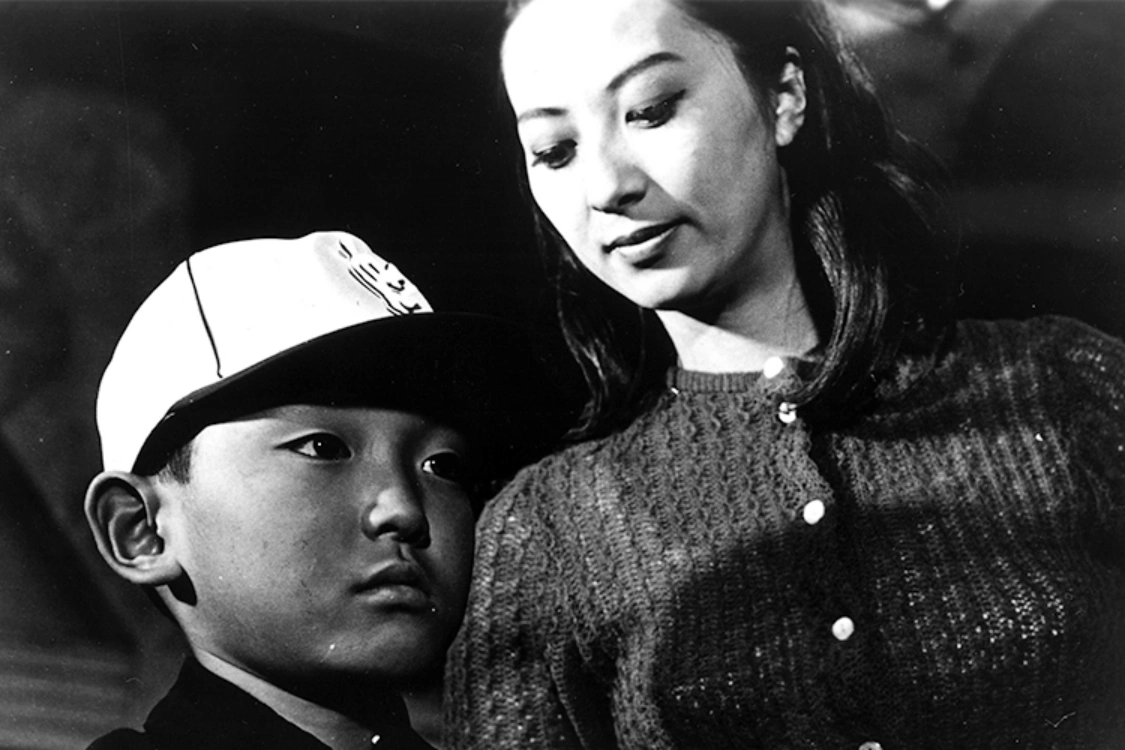
The unnamed Boy (Tetsuo Abe) lives with his disabled war-veteran father (Fumio Watanabe), his stepmother (Akiko Koyama) and his much younger step-brother. Unable, or perhaps unwilling, to earn money through conventional employment, his father forces the family to participate in increasingly dangerous fake hit-and-run incidents, intimidating the drivers into handing over money. Eventually, the Boy himself is made to take the fall.
The family constantly moves from one city to another, both looking for new victims and staying ahead of the police. The result is a strange inversion of the traditional road movie. They travel across Japan, but there is no freedom in their movement. Every train, hotel room and unfamiliar street simply carries the Boy further into a life he has never chosen. The Japanese Film Database fittingly describes it as a road trip movie which replaces the genre’s normal sense of freedom with one of oppression.
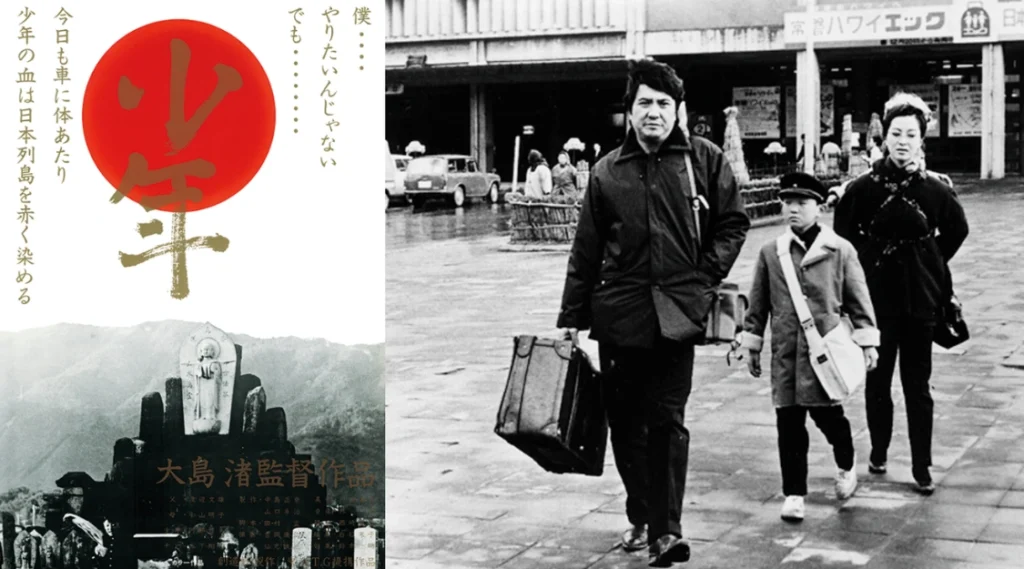
Against this bleak reality, the Boy retreats into imagination. He invents stories about aliens and monsters and shares them with his little brother, creating a private universe in which other possibilities might still exist. These moments of fantasy are touching precisely because they never provide a genuine escape. Eventually the real world always returns.
On the Road Across Japan
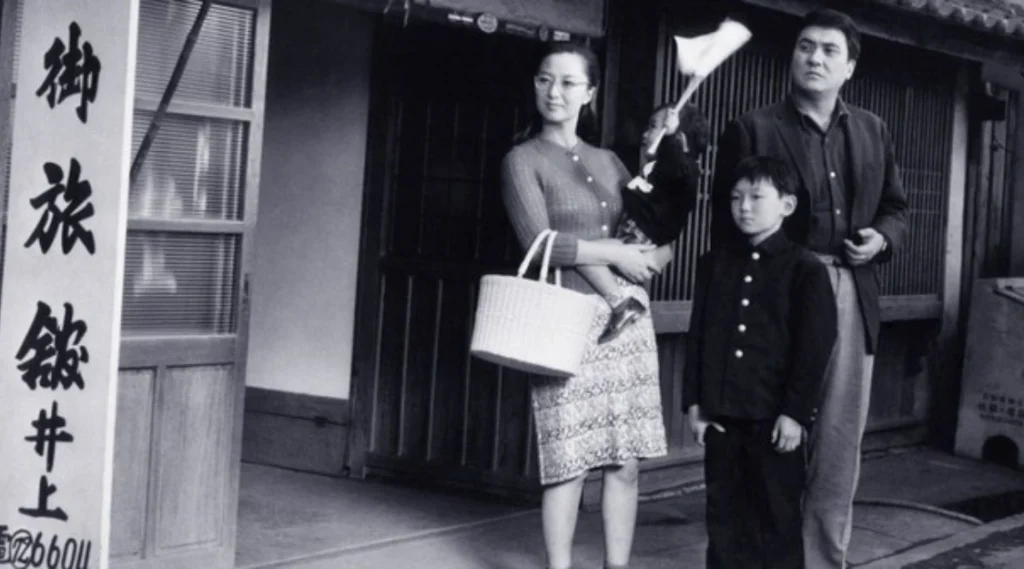
The family’s seemingly endless journey was also built into the physical production of Boy. Rather than recreating their travels in a studio or limiting the story to a handful of locations, Ōshima shot the entire film on location as the production travelled across Japan. The script came from his regular collaborator Tsutomu Tamura, with Yasuhiro Yoshioka and Seizo Sengen sharing cinematography duties and Hikaru Hayashi composing the score.
The real family who inspired the film had moved through the country carrying out their scam, and Ōshima deliberately traced their footsteps. The parents behind the real case were arrested in Osaka in September 1966 after dozens of staged accidents across the country, and the story was widely reported in the Japanese press. His characters travel from Kyushu in the south all the way to Hokkaido in the north, while the production company similarly moved from town to town during filming. The official Nagisa Ōshima website describes it as an all-location shoot made on a shoestring budget as the crew travelled across Japan.
This gives the film’s landscapes an unusual authenticity. The journey is not simply represented by a few establishing shots; the changing towns, transport systems, weather and geography become part of the experience of watching the film. By the time they reach Hokkaido, the family have travelled to what feels like the edge of Japan. The final snow-covered sequence was filmed in Otaru, where the white landscape provides one of the film’s most haunting visual contrasts: a beautiful, almost dreamlike environment surrounding a story of exploitation and unhappiness.


The Other Side of the Economic Miracle
Boy was released in 1969, during Japan’s period of rapid postwar economic growth. Ōshima himself connected the crimes which inspired the film with this transformation, observing that this kind of crime had emerged around 1960 at a time of high economic growth when the number of cars on Japanese roads was increasing. That makes the family’s scam more than a convenient plot device. It is a crime made possible by modern prosperity itself. Cars signify mobility and the increasingly consumer-orientated world surrounding the family, yet for the Boy they become objects against which he must literally throw his body. The imagery creates an uncomfortable collision between a child living at the margins of society and one of the most visible symbols of Japan’s transformation.
Money also infects the family’s personal relationships. At one point the Boy’s stepmother buys him a wristwatch in an attempt to win his affection. Critic Adam Bingham sees such moments, alongside the film’s repeated emphasis on eating and consumption, as part of Ōshima’s wider critique of consumer capitalism. The father’s status as a disabled war veteran adds another layer. Japan may be moving rapidly towards a wealthy, modern future, but the legacy of the Second World War remains physically present within the household. Ōshima would return to the war itself, and to the pressures of Japanese masculinity it produced, fourteen years later in Merry Christmas, Mr. Lawrence.
Generational conflict was particularly significant in Ōshima’s films of this period. Boy arrived amid the politically turbulent late 1960s, an era which Ōshima addressed much more explicitly elsewhere. Boy approaches dissatisfaction from a quieter angle. Its protagonist is too young to join a revolution or articulate a political ideology. He simply knows that the adult world has failed him.
Ōshima’s Compassion for the Boy
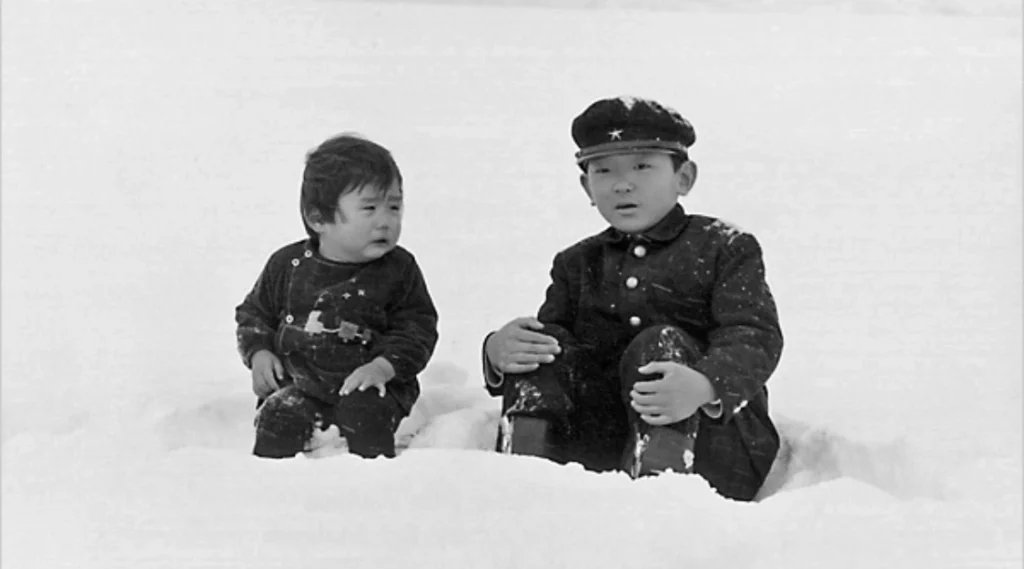
For a film built around cruelty, Boy is remarkably compassionate.
Ōshima never excuses the parents, nor does he turn the Boy into a simple symbol of innocence. Instead he presents a child gradually learning the rules of an adult world in which survival often seems to depend upon exploitation.
To me, this is what makes the film’s criticism of postwar Japan so effective. The economic miracle is never attacked through speeches or political slogans. Instead Ōshima asks us to look at the people that prosperity has failed to carry with it. The decision to shoot across Japan makes this point even more powerful. The family passes through the physical landscape of a rapidly changing nation, but they remain permanently on its margins. Their constant travelling is movement without progress.
There are films in Ōshima’s career that are louder, stranger and considerably more provocative, but Boy may be among his most emotionally devastating. Beneath its beautiful cinematography is a deeply unsettling question: what happens to a child when the people who are supposed to protect him teach him that his own body is simply another way to make money? More than fifty years after its release, that question has lost little of its force.
Where to Watch Boy
Boy screened at the Institute of Contemporary Arts (ICA), London, on Saturday 22 August 2026 and returns on Sunday 6 September at 4pm in Cinema 1.
The screenings form part of Cinema and State: Films by Nagisa Ōshima, a nine-film retrospective which opened on 1 August and explores the anti-establishment spirit and formal radicalism running through Ōshima’s cinema, with a particular focus on his independent work of the 1960s and early 1970s. The season also includes Ōshima’s own documentary, 100 Years of Japanese Cinema, on Saturday 29 August.
Away from the cinema, Boy is included in Radiance Films’ Radical Japan: Cinema and State Blu-ray box set, which gathers the same nine films as the ICA season, and Janus Films distributes the film in the United States.