
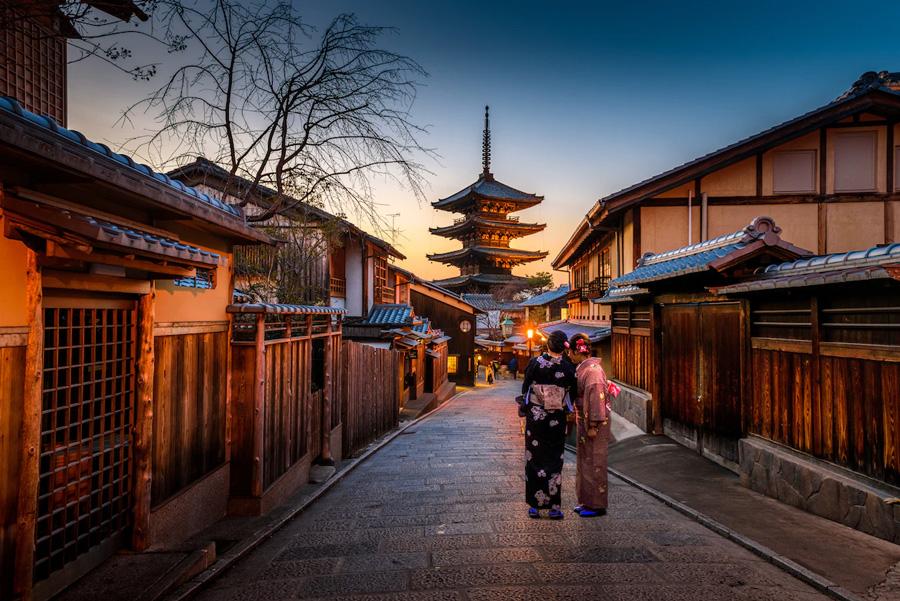
First-time visitors to Japan are often torn over which city to see first. Should it be Tokyo, with its neon lights, nightlife and towering skyscrapers? Or should it be Kyoto, Japan’s imperial capital from 794 to 1868, with its temples, shrines and slower pace? For anyone who loves history and tradition, the answer is easy. Even if you are not a big culture buff, Kyoto suits anyone who likes quiet mornings and beautiful views.
If you prefer to have everything planned for you so you can focus on enjoying the journey, try booking a Japan trip package. If you would rather avoid the crowds, choose a tour that takes in some of Kyoto’s quieter corners. Not sure where to start? Here are our favourites.
Kyoto’s Hidden Gems at a Glance
| Place | Area | What it is | Entry | Hours | Nearest stop |
|---|---|---|---|---|---|
| Funaoka Onsen | Murasakino, Kita Ward | 1923 public bathhouse, a national Tangible Cultural Property | 550 yen, cash only | 3pm to 11.30pm (from 8am Sundays), closed Tuesdays | Senbon Kuramaguchi, Kyoto City Bus 206, 5 minutes’ walk |
| Kuya no Taki | Kiyotaki, Mount Atago | 15 metre waterfall and ascetics’ prayer site | Free | Daylight hours advised | Kiyotaki, Kyoto Bus from Arashiyama, then 30 to 40 minutes on foot |
| Tenryuji | Arashiyama | Zen temple and Sogenchi Pond Garden, World Heritage Site | Garden 500 yen, buildings 300 yen more | 8.30am to 5pm | Randen Arashiyama Station, 5 minutes’ walk |
| Nonomiya Shrine | Arashiyama | Shrine with a black torii, linked to The Tale of Genji | Free | 9am to 5pm | Next to the bamboo grove, a few minutes from Tenryuji |
| Kurama-dera | Mount Kurama | Mountain temple linked to the tengu legends | 500 yen mountain entry | Main Hall 9am to 4.15pm | Kurama Station, Eizan Railway, 30 minutes from Demachiyanagi |
Kyoto Hidden Gems: Funaoka Onsen, Kuya no Taki, Tenryuji, Nonomiya and Kurama-dera
Funaoka Onsen, a 1923 Bathhouse in Murasakino

Image Credit: Thirteen-fri / Wikimedia Commons, CC BY-SA 4.0
After a long-haul flight, few things beat a long soak in hot water, and in Japan bathing is a social ritual as much as a way to get clean.
Japanese bathing comes in two main forms. An onsen is fed by natural hot spring water, usually in volcanic areas, while a sento is a neighbourhood public bathhouse that heats ordinary water. Within the city of Kyoto, the classic bathing experience is usually a sento.
The etiquette is the same at both. Men and women bathe on separate sides, everyone washes thoroughly at the taps before getting into the shared water, and towels stay out of the bath. Mixed bathing, known as konyoku, survives only at a few rural hot springs. Once you are in, you can simply sit back, or chat with the locals unwinding beside you.
Despite its name, Funaoka Onsen is a sento. It opened in 1923 as the bathhouse of a restaurant inn, and in 2003 it became the first working bathhouse in Kyoto to be registered as a national Tangible Cultural Property. The changing room ceiling carries a wood carving of the young Minamoto no Yoshitsune with a tengu, the carved transoms show scenes from the Aoi Matsuri and the Kamigamo Shrine horse race, and the washroom walls are covered in majolica tiles. The men’s and women’s baths, including an outdoor bath built from Kibune stone, swap sides each day.
Funaoka Onsen is in Murasakino, Kita Ward, about five minutes on foot from the Senbon Kuramaguchi stop on Kyoto City Bus 206 from Kyoto Station. It opens from 3pm to 11.30pm (from 8am on Sundays) and closes on Tuesdays. Adult entry is 550 yen, cash only.

Funaoka Onsen
Kuya no Taki Waterfall Walk from Kiyotaki

Image Credit: Zenzai-Doji / Wikimedia Commons, CC BY-SA 3.0
If you want a walk in the forest, pack your hiking shoes for Kuya no Taki, a waterfall on the southern slopes of Mount Atago that drops about 15 metres down a sheer rock face. Tradition says it was opened as a sacred site in the 10th century by Kuya, the wandering monk who founded Rokuharamitsu-ji in Kyoto, and mountain ascetics still come here to pray, so treat the shrine area at its base with respect.
The walk starts in Kiyotaki, a riverside hamlet reached by Kyoto Bus from Arashiyama. From the village, a forest road climbs gently through cedar woods for about 25 minutes, then a short trail follows a stream into the ravine below the falls, so allow around 30 to 40 minutes each way. The path can be muddy after rain, but the shaded gorge stays cool even in summer.
Kuya no Taki


Tenryuji Temple and the Sogenchi Pond Garden

Image Credit: ttshr1970 / Wikimedia Commons, CC BY 3.0
Tenryuji was founded in 1339 by the shogun Ashikaga Takauji in memory of Emperor Go-Daigo, with the Zen master Muso Soseki as its first abbot. It is a major temple of the Rinzai school of Zen Buddhism, still ranks first among Kyoto’s Five Mountains, and forms part of the Historic Monuments of Ancient Kyoto World Heritage Site. Look up inside the Hatto (Dharma Hall) and the Cloud Dragon, painted across the ceiling by the nihonga artist Kayama Matazo in 1997, seems to stare back at you from wherever you stand. The hall opens on Saturdays, Sundays and public holidays, and every day during the spring and autumn special exhibition periods, with its own 500 yen ticket.
The highlight for many visitors to Tenryuji Temple is the Sogenchi Pond Garden. Muso Soseki laid it out nearly 700 years ago, it borrows the Arashiyama hills as its backdrop, and it was the first place in Japan to be designated by the government as both a Special Historic Site and a Special Place of Scenic Beauty. The temple opens from 8.30am to 5pm. Garden entry is 500 yen, the temple buildings cost 300 yen more, and the north gate leads straight out to the Arashiyama bamboo grove.
Tenryu-ji
Nonomiya Shrine and Its Black Torii Gate

Image Credit: nnh / Wikimedia Commons, public domain
Nonomiya Shrine sits beside the bamboo grove in Arashiyama. It began as a place of purification for the Saio, the imperial princess chosen to serve at Ise Shrine on the emperor’s behalf, who stayed here to prepare before leaving for Ise. Its black torii gate, made from sawtooth oak with the bark left on, and its brushwood fences are described in the Sakaki (Sacred Tree) chapter of The Tale of Genji, the tenth of its 54 chapters and one of the earliest novels in the world.
Today most visitors come to pray for a good match in love, for a happy marriage or for safe childbirth. Beside the small Nonomiya Daikokuten hall sits the Turtle Stone, and legend says that if you stroke it while you pray, your wish will come true within a year. The moss garden adds to the calm, though the shrine is on one of the busiest walking routes in Arashiyama, so it is quietest early in the morning.
Kurama-dera, the Mountain Temple of the Tengu

Image Credit: KENPEI / Wikimedia Commons, CC BY-SA 3.0
Kurama-dera stands on Mount Kurama in the hills north of Kyoto. The temple traces its founding to 770, when Gantei, a disciple of the Chinese monk Ganjin, built a hermitage on the mountain, and Kurama has long been linked with tengu, the long-nosed mountain spirits of Japanese folklore. Legend says the young Minamoto no Yoshitsune, then called Ushiwakamaru, was taught the arts of war by tengu in the valley of Sojogadani while he lived at the temple as a boy.
Kurama Station is a 30-minute ride on the Eizan Railway from Demachiyanagi. From the main gate, the winding Tsuzuraori path climbs to the Main Hall in about 30 minutes, or a small cable car covers much of the way for a 200 yen donation. Entry to the mountain costs 500 yen, and the Main Hall is open from 9am to 4.15pm. Keen walkers can carry on over the mountain past the Maoden hall and down to Kibune Shrine, which the temple puts at about 50 minutes on foot from the Main Hall.
Kurama-dera
Planning Visits to Arashiyama, Kiyotaki, Kurama and Murasakino
These five places fall into three easy groupings. Tenryuji and Nonomiya Shrine are a few minutes apart on foot in Arashiyama, and Kiyotaki is a short bus ride further into the hills, so Kuya no Taki can share the same day with an early start. Kurama-dera needs its own half day in the mountains to the north. Funaoka Onsen, in Murasakino not far from Kinkaku-ji, is best saved for the evening, when a long soak rounds off a day of walking.
A Three-Day Route Through Kyoto’s Quieter Corners
- Day 1, Arashiyama and Kiyotaki. Arrive at Tenryuji for the 8.30am opening (7.30am from 14 to 30 November 2026, when the temple opens the Sogenchi Pond Garden early for the autumn colours). Leave by the north gate into the bamboo grove, walk on to Nonomiya Shrine, then take the Kyoto Bus from Arashiyama up to Kiyotaki for the walk to Kuya no Taki.
- Day 2, Kurama. Take the Eizan Railway from Demachiyanagi to Kurama, climb to Kurama-dera’s Main Hall, and continue over the mountain to Kibune Shrine, about 50 minutes on foot from the Main Hall. Our seven-day Kyoto itinerary covers the same Kurama to Kibune walk as a full day.
- Any evening, Murasakino. Finish a day near Kinkaku-ji with a soak at Funaoka Onsen, open until 11.30pm (closed Tuesdays).
Staying near Kyoto Station or Demachiyanagi keeps both rail lines close; our guide to where to stay in Kyoto compares hotels, hostels and ryokan across the city.
Kyoto Hidden Gems: Questions and Answers
Five quieter places reward the effort: Funaoka Onsen, a 1923 bathhouse in Murasakino; Kuya no Taki, a waterfall on Mount Atago reached from Kiyotaki; Tenryuji’s Sogenchi Pond Garden in Arashiyama; Nonomiya Shrine with its black torii; and Kurama-dera, the mountain temple of the tengu legends north of the city.
No. Despite its name, Funaoka Onsen is a sento, a neighbourhood bathhouse that heats ordinary water rather than drawing it from a natural hot spring. It opened in 1923 and in 2003 became the first working bathhouse in Kyoto registered as a national Tangible Cultural Property. Entry is 550 yen, cash only, and it closes on Tuesdays.
Yes. They are a few minutes apart on foot in Arashiyama, with the bamboo grove between them. Enter Tenryuji when it opens at 8.30am, walk the Sogenchi garden, then leave by the north gate straight into the grove and on to Nonomiya Shrine. Randen’s Arashiyama Station is a 5 minute walk from Tenryuji.
From Kurama-dera’s Main Hall, the path continues over Mount Kurama past the Maoden hall and down into Kibune, which the temple puts at about 50 minutes on foot. Reach the Main Hall from Kurama Station by the Tsuzuraori path, about 30 minutes, or by the small cable car for a 200 yen donation. Mountain entry is 500 yen.
Allow 30 to 40 minutes each way from Kiyotaki, the riverside hamlet reached by Kyoto Bus from Arashiyama. A forest road climbs gently through cedar woods for about 25 minutes before a short trail follows a stream to the falls. The path can be muddy after rain, so wear proper shoes.
At opening time. The Sogenchi Pond Garden opens at 8.30am, and from 14 to 30 November 2026 it opens at 7.30am so visitors can see the autumn colours in early morning light. Arriving at opening also gets you into the bamboo grove through the north gate before the day trippers.


