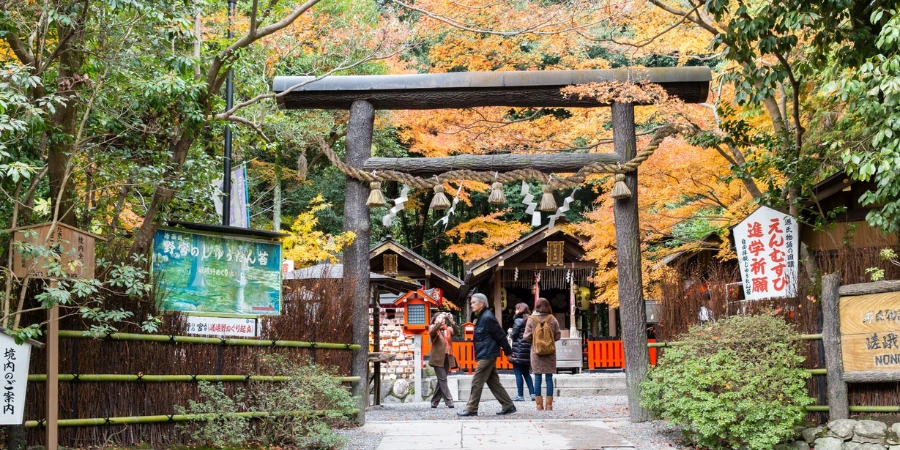
Nonomiya Shrine (野宮神社, Nonomiya-jinja) is a Shinto shrine long associated with purification, love, and imperial rituals. Unlike the vermilion gates at most shrines, Nonomiya is recognised at once by its kuroki torii, built from sawtooth oak with the bark deliberately left on. It is the oldest torii style in Japan, and it sets a solemn tone before you have stepped onto the grounds.
Overview
An Overview of Nonomiya Shrine

The site is more intimate than Kyoto’s larger shrines, yet it remains a spiritual landmark thanks to its connections to courtly traditions and literary heritage. It is also one of the best known shrines in Kyoto for matchmaking.


History and traditions of Nonomiya Shrine
The shrine has a deep imperial past. The Saiō was the priestess sent to serve at Ise Grand Shrine as the emperor’s deputy, chosen from among imperial princesses and other women of the imperial house. Before she travelled to Ise she spent a year here in purification, which tied the court at Kyoto to one of Japan’s most sacred shrines. The custom was abandoned during the wars between the Northern and Southern Courts in the fourteenth century.
The Saigū Gyōretsu still re-enacts that departure every year on the third Sunday of October, which falls on 18 October in 2026. The procession leaves Nonomiya at noon in Heian costume, with the Saigū-dai carried in a sōkaren palanquin and attended by officials, court ladies and children, and walks by way of JR Saga-Arashiyama to the Togetsukyo Bridge. At around 14:00 the purification rite takes place at the northern boat landing, where the Saigū-dai casts a paper katashiro into the Ōi River to carry away impurity, followed by an offering of gagaku court music.
Who is the god of Nonomiya Shrine?
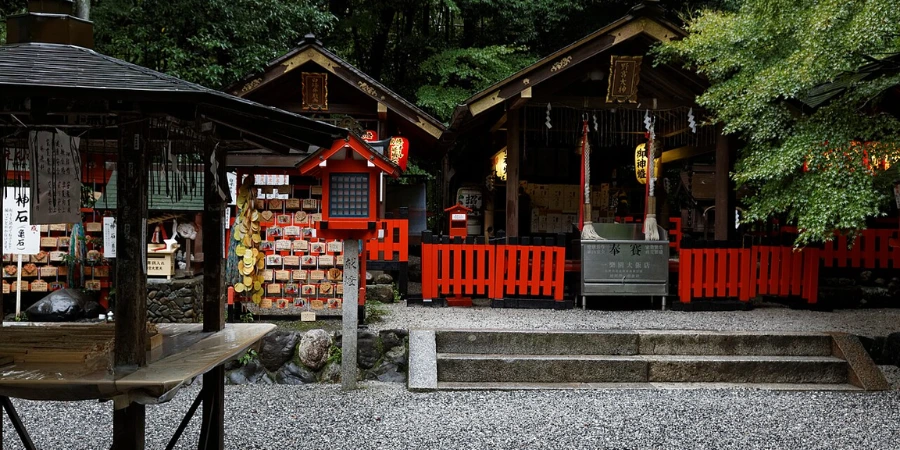
The shrine enshrines Amaterasu, the sun goddess of Shinto, but worship here often centres on earthly blessings. People visit to seek blessings for relationships, fertility, and marriage. Over time, Nonomiya has become one of Kyoto’s best-known places of worship for those hoping to find love or strengthen a bond.
What is the purpose of Nonomiya Shrine?
Beyond matchmaking, many worshippers pray here for safe childbirth. Smaller shrines set around the garden cover marriage, childbirth, the arts and business, so visitors often work their way round several in one stop. The moss garden behind the main hall deepens the atmosphere of calm and places Nonomiya in Kyoto’s wider tradition of moss-covered temples and shrines.
Literary legacy
Nonomiya appears in The Tale of Genji. In chapter ten, “The Sacred Tree”, Genji comes here to see Lady Rokujō, who is staying at the shrine with her daughter Akikonomu, newly chosen as Saigū and about to leave for Ise. It is one of the few places in the novel a reader can still stand in, which is why it draws people working their way round the Genji sites in Kyoto.
Visiting information
- Entrance fee: Free
- Open hours: Daily, 9:00 to 17:00, with the reception desk closing at 16:30
- Address: 1 Sagano Miyamachi, Ukyo Ward, Kyoto 616-8393
How to get to Nonomiya Shrine
From Kyoto Station, take the JR San’in Line to Saga-Arashiyama (approx. 15 minutes), then walk 10 minutes through bamboo-lined paths. Alternatively, use the Hankyu Line to Arashiyama Station and cross the Togetsukyo Bridge. Both routes take you in past the bamboo, which is much of the appeal of arriving on foot.
Nearby attractions
Nonomiya is often paired with:
- The Arashiyama Bamboo Grove, which begins a few steps from the shrine gate.
- Tenryu-ji Temple, a UNESCO World Heritage site since 1994, whose Sogen Pond garden was the first place in Japan to be designated a Historic Site and Place of Scenic Beauty.
- The quieter lanes of Sagano north of the grove, where the crowds thin out within a few minutes’ walk.
Spring blossom and autumn maples are the two busiest windows, and in November Arashiyama draws crowds matched only by Kiyomizu-dera. If you are coming then, arrive close to the 9:00 opening: the shrine sits on the main path through the bamboo, so it fills as the day goes on.








Nonomiya Shrine Map
Final reasons to visit
Nonomiya is more than a stop on the way to the bamboo forest. Its kuroki torii, literary fame, imperial rituals and atmosphere of quiet devotion set it apart from the usual tourist trail. As one of the key shrines in Sagano-Arashiyama, it balances accessibility with depth, offering travellers both cultural insight and personal reflection.