Planning a Japan ski trip shouldn’t be a puzzle. This guide zeroes in on what matters: the best months for reliable powder, where to base yourself (headline hubs vs quieter villages), and the simplest door-to-door routes.
You’ll get clear airport-to-lift transfers, realistic pass prices, and straightforward rail maths after the JR Pass price rise, plus powder-ready kit advice, onsen (温泉) etiquette, and two ready-made itineraries (a Hokkaidō week and a Nagano long weekend).
A Japan ski day: early lifts, birch glades and an onsen
Japan does winter with purpose: early lifts, quiet birch glades, hot ramen, and an onsen to end the day. We’ll help you link those pieces: set dates, choose the right mountain for your group, and move smoothly between them, so the skiing stays centre stage.
Siberian storms and Japan Sea snow: the best months to ski
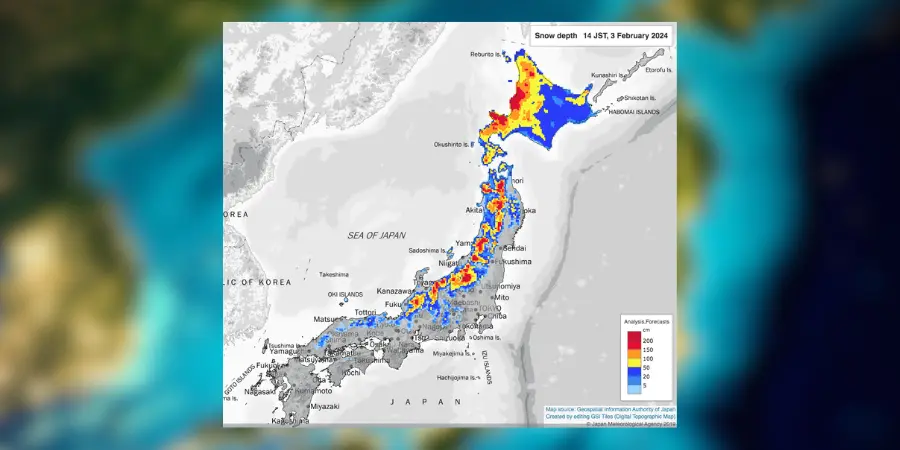
Map showing the snow depth across Japan on 3 February 2024 (JST), with concentrations over Hokkaido and the Japan Sea coast.
Source: Japan Meteorological Agency (JMA)
Japan’s storms arrive in a steady rhythm through the winter. Cold air slides off Siberia, drinks moisture over the Sea of Japan, and dumps light, dry snow on Hokkaidō and Honshū’s Japan Sea side. Practically, that means two things for skiers:
- January to February are your most dependable months for soft landings and top-ups.
- Early March is the connoisseur’s window: still-cold nights, more blue pauses between fronts, and thinner lift queues.
We suggest building a plan that stays put for a few nights in one area and lets the weather come to you. You’ll collect repeat powder mornings without chasing the entire archipelago.
Crowds at Christmas, New Year and Lunar New Year
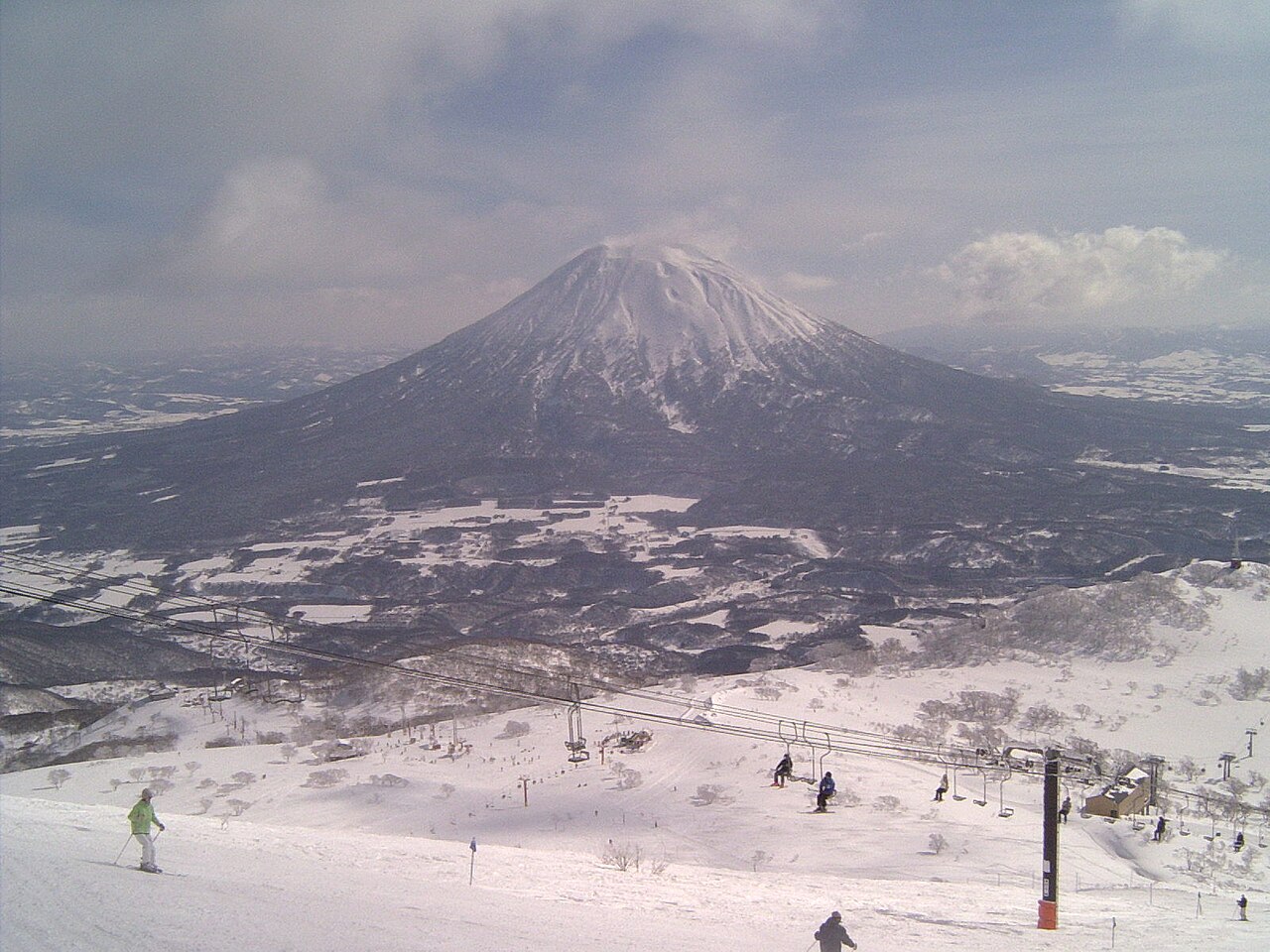
Skiers on the upper slopes of Niseko Grand Hirafu, with Mount Yōtei across the valley.
Photo: T DMY, CC BY 3.0, via Wikimedia Commons
Holiday weeks such as Christmas, New Year and Lunar New Year are the busiest. Travel and ski midweek where possible, arrive on a Tuesday or Wednesday, and start early.
Use flexible multi day passes so you can sit out wind and save your days for clear windows. When a headline area is busy, move to a neighbouring zone or switch to tree lines while the main lifts thin.
Early March often brings colder nights, steadier weather and fewer people, which makes planning easier and days smoother.

Where to base yourself: Niseko, Hakuba, Kagura and quieter villages
Start with your arrival city and dates. Then match snow reliability, crowd level, budget, terrain mix, and language support.
Decide whether you want nightlife or a quieter onsen town, and whether you prefer car free access or a rental car. With those filters set, choose from the options below.
Niseko, Hokkaidō
Niseko is ease in four acts: Grand Hirafu, Hanazono, Niseko Village, and Annupuri. English-speaking staff, frequent refills, groomers that re-powder by lunch, and when the gates are open the countryside that turns a morning into a story.
Grand Hirafu offers the biggest spread of pistes and the most night skiing. Hanazono adds modern lifts and guided powder options.
Niseko Village links hotel bases with long fall line runs. Annupuri is a little quieter with wide pistes and access to sidecountry gates when open. Night skiing usually runs through the main season in multiple areas.
Niseko’s location on Mount Annupuri
Niseko sits on Mount Annupuri in south west Hokkaidō, about 100 kilometres south of Sapporo. The four areas share one mountain: Grand Hirafu, Hanazono, Niseko Village and Annupuri. Top elevation is about 1,308 metres.
Niseko terrain for beginners, intermediates and sidecountry riders
Ability splits at Niseko Village are roughly one third beginner, one third intermediate and one third advanced.
Beginners get wide, gentle lower slopes and extensive night skiing. Intermediates find long groomers that refresh often. Advanced skiers and riders look to the gate system for sidecountry laps when conditions allow.
Niseko snow and January temperatures
Expect frequent top ups and very cold days. In nearby Kutchan, typical January daytime highs sit around minus two to minus three degrees and nights drop near minus ten. That is why low light lenses and face protection help.
Niseko United lift passes and night skiing
You can buy area specific tickets or an all mountain pass that covers the four zones. For the 2026/27 season, an adult Niseko United All Mountain Pass costs 13,500 yen for one day and 52,500 yen for four days at peak rates, and Grand Hirafu and Annupuri are scheduled to open from 28 November 2026 to 5 May 2027. Night skiing operates across Hirafu, Hanazono, Village and Annupuri in the main season and Hirafu often lights the largest network. Check current times and dates before you travel.
New Chitose Airport to Niseko by coach and train
Coach from New Chitose Airport.
The simplest option is a reserved ski coach to the Hirafu Welcome Center. Journey time is about two and a half to three hours, and the adult fare is 6,000 yen one way. For winter 2026/27 the airport to Niseko service runs daily from 1 December 2026 to 30 March 2027. Book through Hokkaido Resort Liner or check the Niseko Access page for operators and schedules. If you arrive late, confirm the day’s last departure or plan an airport hotel.
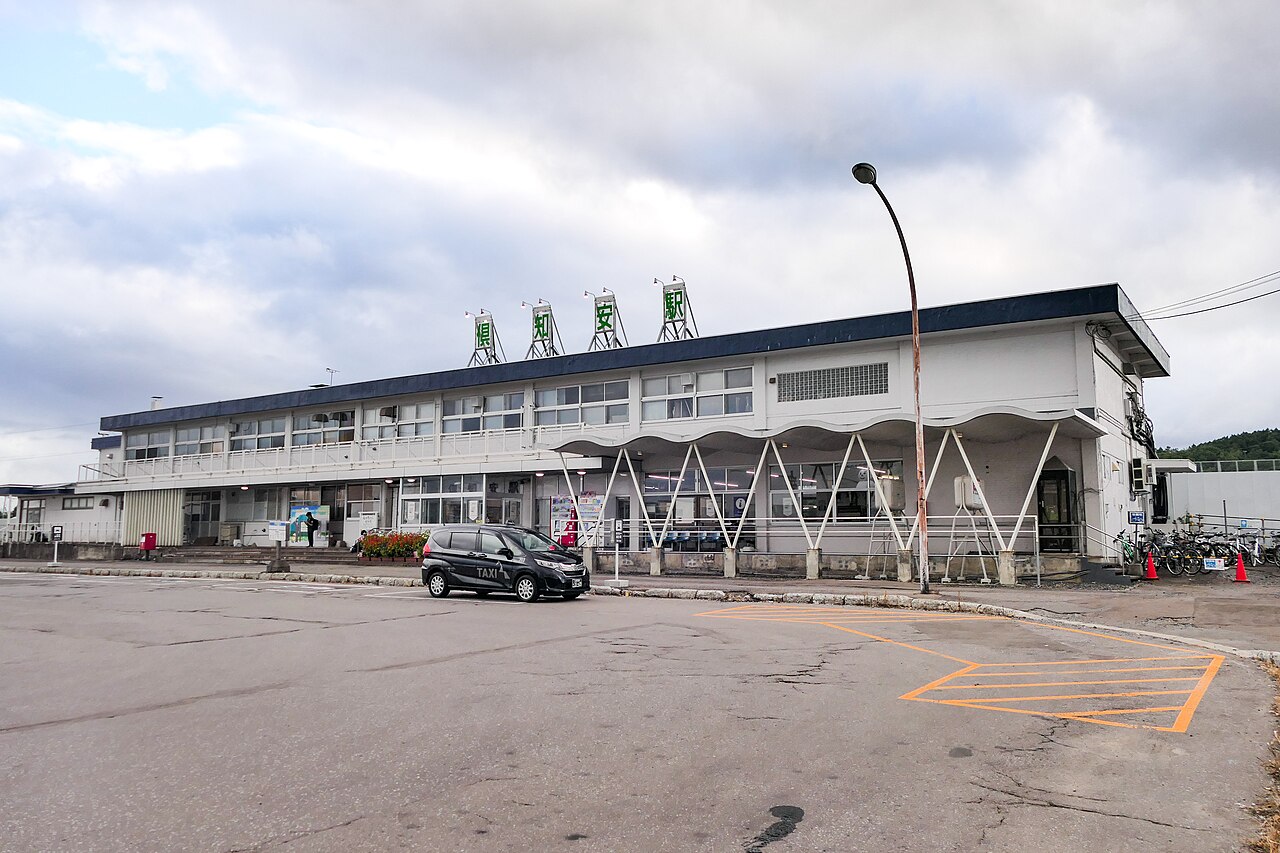
Kutchan Station on the JR Hakodate Line, the rail stop for Niseko Grand Hirafu.
Photo: MaedaAkihiko, CC0, via Wikimedia Commons
Train from New Chitose Airport.
Take JR from New Chitose Airport to Otaru, continue to Kutchan, then a short local bus or taxi to Hirafu. Allow about three to four hours door to door. Plan with the JR Hokkaido timetable and fare search. For local buses around Kutchan and Hirafu, see the current Kutchan line timetable (PDF).
From Tokyo by rail.
Travel entirely by train if you prefer. Take the Hokkaidō Shinkansen to Shin Hakodate Hokuto, change to the Hokuto limited express as far as Oshamambe, then take a local train on the Hakodate Line to Kutchan and a short bus or taxi to Hirafu. Typical total time is seven to nine hours depending on connections, as local trains between Oshamambe and Kutchan are infrequent. Cross-check segments with JR Hokkaido’s route search.
Hakuba Valley, Nagano
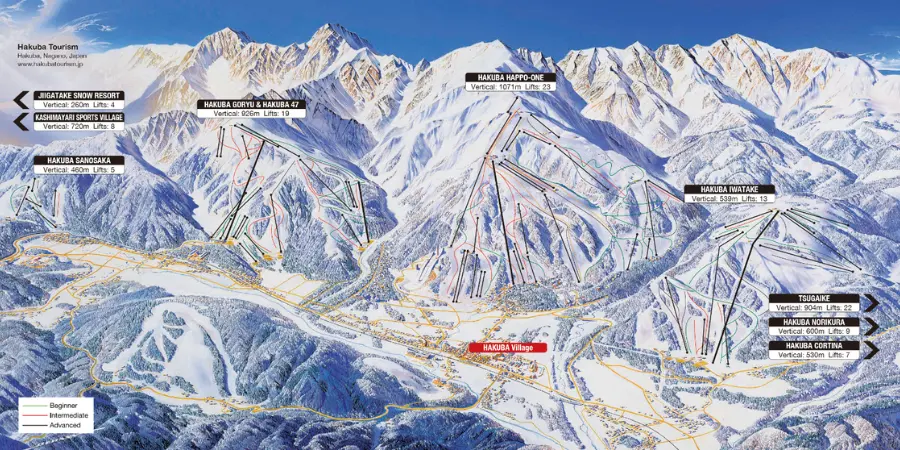
The official map of Hakuba Valley, Nagano, showing the interconnected ski resorts and terrain, including Happo-One, Goryu, and Cortina.
Source: Go NAGANO 長野県公式観光サイト
Hakuba sits below the Northern Alps with ten ski areas on one valley pass. You get mellow family bowls, long groomers, terrain parks and steeper lines, all linked by easy transport. The main mountains are Happo One, Goryu, 47, Iwatake, Tsugaike, Cortina, Norikura, Sanosaka, Kashimayari and Jigatake.
Hakuba’s location below the Northern Alps
Northern Nagano Prefecture in the Japanese Alps. The valley sits below the Northern Alps ridgeline, including Mount Shirouma at 2,932 metres. Resorts run north to south from Cortina to Jigatake around Hakuba town.
Hakuba terrain from Iwatake to Cortina
All abilities. Beginners and families will be happy on the wide pistes of Iwatake and Tsugaike.
Intermediates get long linking groomers at Goryu and 47. Advanced riders look to storm days at Cortina and to steeper sections on Happo One when conditions are right. The valley pass lets mixed groups split and still meet for lunch.
Hakuba snow and January temperatures
Expect mid winter cold. Typical January values in Hakuba show average lows well below freezing and daytime highs around minus one. Pack low light lenses and proper face protection for storm days.
Hakuba Valley pass prices and validity
A one day Hakuba Valley All-Mountain pass costs ¥11,100 for adults in 2026/27, with multi day passes valid over extended windows, for example a six day pass (¥63,900) used within eleven days. This lets you plan around the weather. Check individual resort night operations before you travel.
Pro tip: Use the multi day validity window on the Hakuba Valley pass to sit out wind or chase a bluebird day.
Tokyo to Hakuba by Shinkansen and ALPICO bus
From Tokyo by rail. Take the Hokuriku Shinkansen from Tokyo Station to Nagano. Typical journey time is about one hour twenty five to one hour forty. At Nagano Station East Exit, board the ALPICO bus to Hakuba from Bus Stop 26. The ride to Hakuba Happo Bus Terminal takes about seventy minutes and the adult fare is 2,900 yen. Many hotels can collect you from Happo if arranged in advance.
Seasonal alternative. On selected days there are Azusa limited express options via Shinjuku that connect to the Ōito Line. Check the current timetable before you choose this route.
Kagura Ski Resort, Niigata
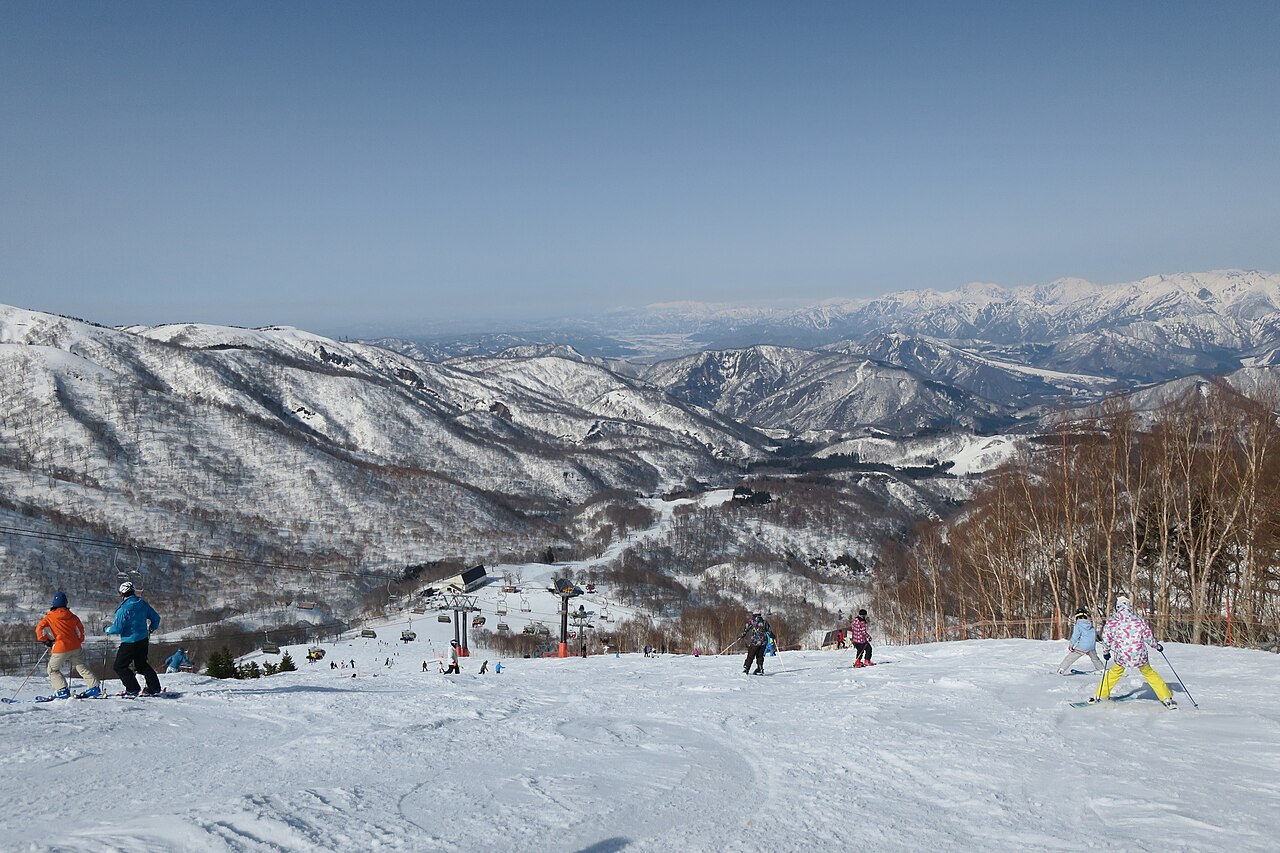
A groomed run at Kagura Ski Resort above Yuzawa, Niigata.
Photo: senngokujidai4434, CC BY 2.0, via Wikimedia Commons
Kagura is a high snow sure playground above Yuzawa with a long winter and quick access from Tokyo. The ski area has three zones that ride as one, Kagura, Tashiro and Mitsumata. The top of the resort sits at 1,845 metres, which keeps the snow cold and dry.
Kagura’s location in the Mikuni Mountains
Yuzawa in Niigata Prefecture, set in the Mikuni Mountains on the border with Gunma. The ski area sits above the town across the Kagura, Tashiro and Mitsumata zones on the Naeba ridge, with upper lifts well above 1,700 metres to keep the snow cold.
Kagura terrain for beginners and powder seekers
Beginners and intermediates have plenty of on piste mileage and gentle link runs across the three zones.
Powder seekers find ungroomed lines, gladed sections and permitted sidecountry and backcountry access when conditions allow. If you want an introduction to deeper snow near Tokyo, Kagura is a solid pick.
Kagura snowfall and temperatures
Kagura has a reputation for generous totals, with around ten metres of snowfall in a typical season and colder conditions at the top keeping quality high. Expect true mid winter temperatures on the upper lifts and plan goggles and layers accordingly.
Kagura lift tickets
Tickets cover Kagura, Tashiro and Mitsumata, and children aged 12 and under ride free. An adult one day Kagura ticket was ¥7,500 in 2025/26. Confirm the current season prices and first to last lift times before you go, as these vary across the long operating window.
Tokyo to Kagura via Echigo Yuzawa
From Tokyo by rail. Ride the Jōetsu Shinkansen from Tokyo to Echigo Yuzawa. The trip is about seventy five to ninety minutes. From the station, take a short local bus to Mitsumata or Tashiro base for Kagura.
Plan and tickets. Use JR East timetables for trains. For lift operations and on site access notes, see the Kagura official page. Weekends attract many day visitors from Tokyo, so starting early helps keep queues down.
Quieter alternatives: Nozawa Onsen, Shiga Kōgen and Myōkō Kōgen
If your instinct is to swim away from the crowd, three names earn the detour:
- Nozawa Onsen (野沢温泉) A real hot spring village with free public baths. Adult day tickets cost ¥7,800, and the 2026/27 season runs from 19 December 2026 to 28 March 2027. Terrain suits most levels.
- Shiga Kōgen (志賀高原) Big, high and well linked. An adult all mountain day pass costs ¥9,500 in 2026/27, sometimes with lunch bundles.
- Myōkō Kōgen (妙高高原) Several areas and frequent snowfall. Base in Akakura for easy shuttle access and a classic town feel.
All three are well known, and they keep a distinctly Japanese pace with small eateries and clean, family run guesthouses.
Lift passes, rail tickets and powder gear
-
- Ski passes: Expect adult day tickets from about ¥7,800 to ¥13,500 depending on resort and date. In Hakuba, multi-day passes are valid over a longer window: you can sit out a windy day and still use every day you paid for.
- Rail maths: After the nationwide pass price rise (7-day Ordinary ~¥50,000), most ski itineraries are cheaper on point-to-point tickets or regional passes. If you’re Tokyo ↔ Nagano return or CTS ↔ Niseko return, buy exactly that and spend the difference on dinner.
- Gear prep before you fly: Sort your kit before you travel so it suits deep, dry conditions. Think wider skis or a powder friendly board, low light goggle lenses, waterproof mitts and solid face protection. Getting a tune, wax or mounting done at a trusted shop means less stress on arrival and more time on snow. If you need new kit, you can shop for ski gear.
Wide skis, low light lenses and avalanche kit for Japan powder
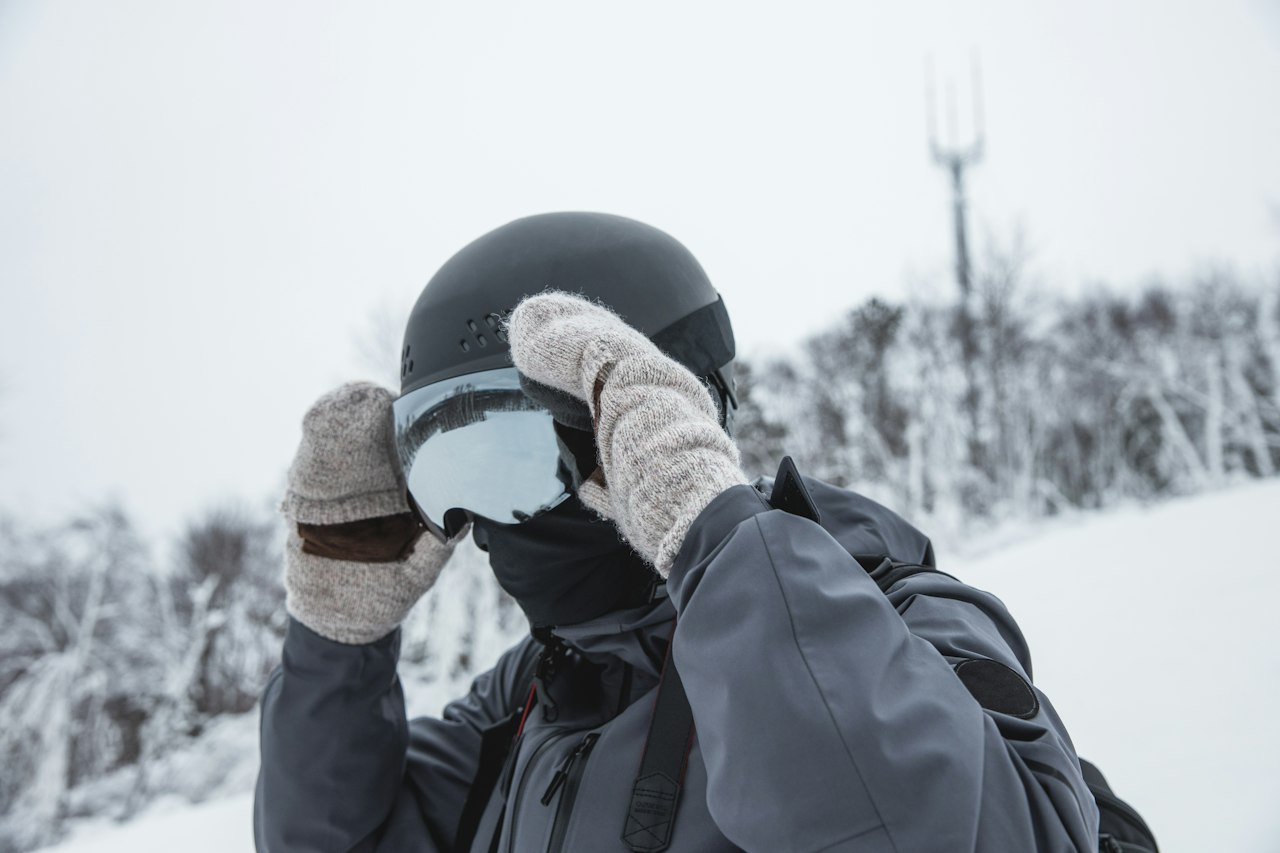
Goggles, a face cover and warm mitts make cold Japanese chairlifts far more comfortable.
Photo: Ethan Walsweer on Unsplash
If you own skis, bring something with width and rocker. Renting? Pre-book powder models, as the best ones go fast after a storm day. Pack low-light lenses (you’ll use them constantly) and a thin balaclava for chairlifts that feel like North Pole cameos. Anything outside the ropes? Hire a guide, carry avalanche kit, and obey gates. In Japan, rope lines are firm rules, so only leave the piste through an open gate.
Ski trip costs: buses, coaches and where to sleep
Think in ranges. A Nagano ↔ Hakuba bus costs 2,900 yen, and a CTS ↔ Niseko coach is 6,000 yen, about the cost of a good izakaya night. Lodging spans tidy pensions with breakfast, self-catering apartments, and ryokan (旅館) with kaiseki dinners and private baths. Want value? Travel mid-January or early March, or sleep just off the headline resort and ride in.




Onsen etiquette: washing, towels, tattoos and Nozawa’s soto-yu
The bath is the bow on the day. Wash thoroughly at the shower stations, no swimwear, keep the small towel out of the water, and move quietly. Tattoos are increasingly accepted but not everywhere, so ask first or reserve a kashikiri (private) session. In Nozawa Onsen, the free public soto-yu baths are community spaces: soak quietly and keep cameras away.
Holiday crowds, wind holds and a Rusutsu day trip
A little planning goes a long way. Arrive midweek, ideally on a Tuesday. When Niseko swells on a holiday, detour to Rusutsu for a day. If lifts pause in wind, wait it out with coffee; the first hour after a hold often skis better than the first chair. Keep your plan slightly loose and your legs slightly fresh.
Two itineraries: a Hokkaidō week and a Nagano long weekend
One-week Hokkaidō loop
Fly into Sapporo (CTS) on a weekday afternoon. Coach to Hirafu, eat early, sleep deep. Days 1 to 2: warm up on groomers, dip into trees as visibility allows, soak long. Day 3: Rusutsu for playful glades if the coast is firing. Day 4 to 5: shift to Furano for a slower town rhythm and often clearer skies. Final night in Sapporo, soup curry, a walk through Odori Park, and a painless airport run.
Indicative costs: CTS ↔ Hirafu coach ¥6,000 one way; day tickets about ¥7,800 to ¥13,500 depending on resort/date.
Long-weekend Nagano
Land at Haneda, train to Tokyo Station, then Hokuriku Shinkansen to Nagano (~1 h 30). ALPICO Bus Stop 26 → Hakuba Happo (~1 h 10, ¥2,900).
Pre-fit wider skis at a rental shop that stocks powder boards.
Day 1: bowls and tree lines at a mellow area.
Day 2: step up. Departure day: detour to Zenkō-ji in Nagano for a short temple walk before your train. You’ll be back in Tokyo in time for a late flight or a late izakaya.
Storm timing, onsen and quiet villages: planning a Japan ski trip
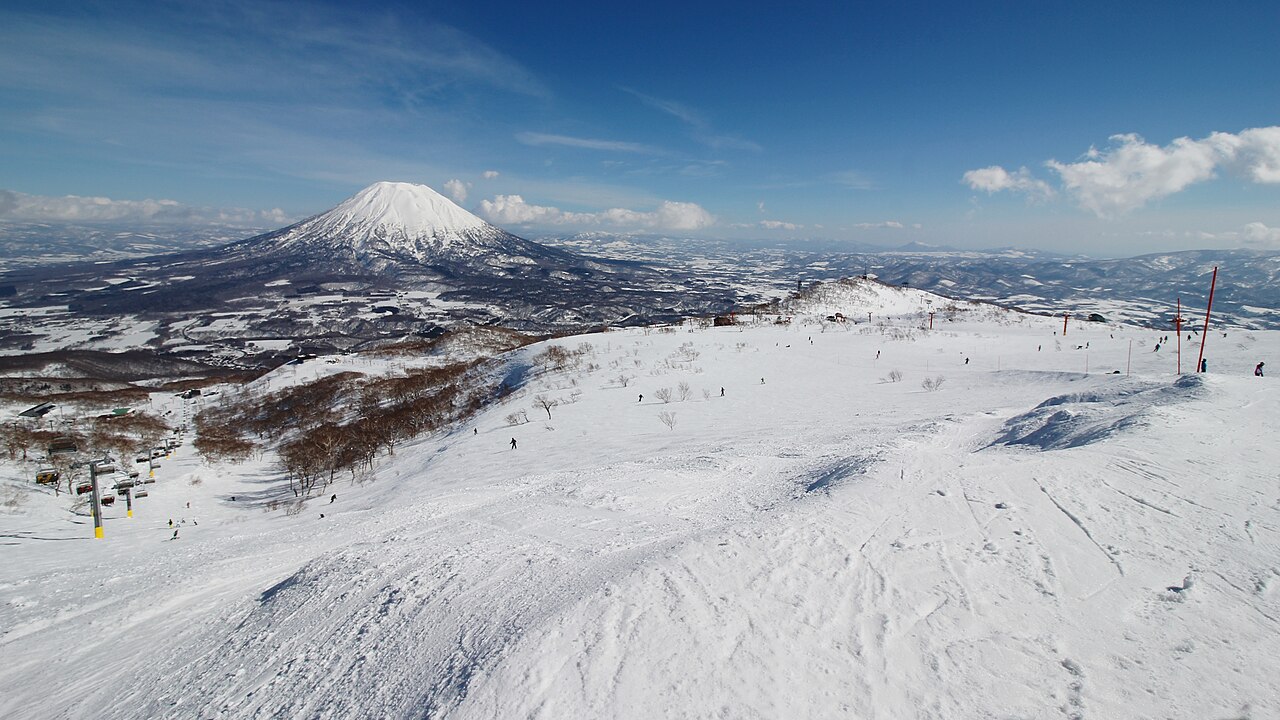
Mount Yōtei seen from the upper slopes of Niseko Annupuri in Hokkaido.
Photo: MIKI Yoshihito, CC BY 2.0, via Wikimedia Commons
There are two kinds of ski trips: the one that relies on luck, and the one that puts luck to work. Japan rewards the second.
Choose dates that fit the way storms breathe. Pick a mountain for how it feels to ride. Travel in a way that lets you arrive and exhale. Book the onsen before the bar. Then, when a fresh layer hushes the village and your tracks vanish behind you, it won’t feel like logistics at all. It’ll feel like you and the hill, getting on with it.
Quick reference: best months, prices, stations and etiquette
- Best months
January and February for reliability. Early March for more space and steadier weather. - Core prices
Adult day pass about 7,800 to 13,500 yen. Nagano to Hakuba bus 2,900 yen. New Chitose Airport to Hirafu coach 6,000 yen. - Key stations and stops
Tokyo Station to Nagano on the Hokuriku Shinkansen. Nagano Station East Exit Bus Stop 26 to Hakuba Happo Bus Terminal. New Chitose Airport to Hirafu Welcome Center. - Etiquette
Wash before entering the onsen, no swimwear, keep voices low. Ask about tattoo policy or book a private bath.