Among Kyoto’s many treasures, Tenryu-ji (天龍寺) stands apart as both a spiritual centre and a landscape masterpiece. Located in the heart of Arashiyama, this grand Tenryu ji temple is one of Kyoto’s most important Zen institutions and a cornerstone of Japan’s cultural heritage. As a UNESCO site, it offers an exquisite fusion of architecture, nature, and philosophy that captures the essence of Kyoto itself.
Overview
Located in Kyoto’s scenic Arashiyama district, Tenryu-ji traces its origins to 1339, when shogun Ashikaga Takauji commissioned Zen master Muso Soseki to establish a temple embodying the spirit of Zen philosophy. As the principal temple of the Rinzai sect’s Tenryu-ji school, it has long served as both a place of meditation and a symbol of Japan’s cultural legacy.
Designated a UNESCO World Heritage Site as part of the Historic Monuments of Ancient Kyoto, Tenryu-ji is most renowned for its Sogen Pond Garden, a centuries-old landscape composition that seamlessly blends water, stone, and the distant Arashiyama hills into a vision of natural harmony. Open daily from 8:30 a.m. to 5:00 p.m., admission ranges from ¥500 for garden access to ¥800 including the temple buildings, with modest, respectful clothing encouraged within sacred spaces.
A temple born from history
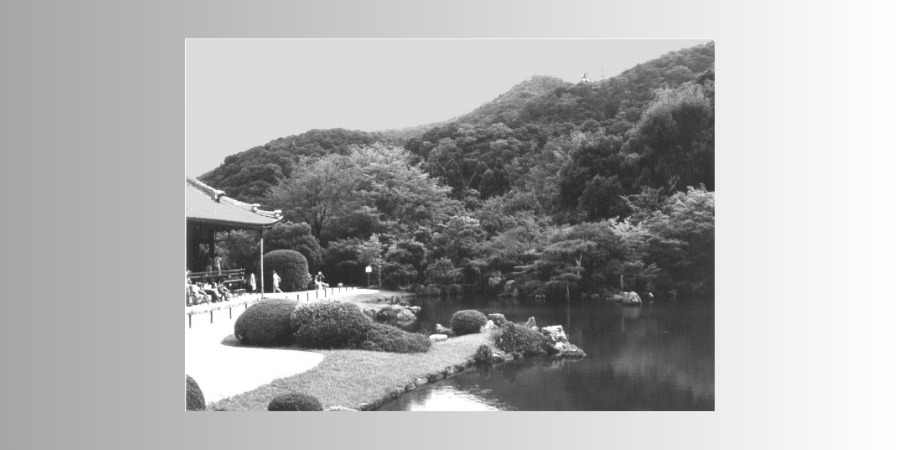
A historical view of the inner garden of Tenryu-ji Temple, demonstrating the Japanese technique of “borrowed landscape” (circa 1900s). Source: ResearchGate
The Tenryu-ji history begins in 1339, when shogun Ashikaga Takauji ordered the temple’s construction to appease the spirit of Emperor Go-Daigo after civil conflict. Designed under the guidance of Muso Soseki, the celebrated Zen monk and landscape architect, the temple became the first of Kyoto’s “Five Great Zen Temples.”
Though many of its original structures were lost to fires and wars, the temple’s spiritual and aesthetic core has endured through centuries of Tenryu-ji restoration and rebuilding. Its balance of power, humility, and nature reflects the Zen philosophy that guided its creation.
Today, Tenryu-ji Kyoto remains an active monastery and one of Japan’s most visited Kyoto heritage sites.



The garden of Sogen Pond
The highlight for most visitors is the Tenryu-ji garden, a masterpiece of design dating back to the 14th century. Created by Muso Soseki, it’s among the oldest surviving examples of Japanese Zen landscape architecture. The garden’s focal point, Sogen Pond, reflects the surrounding Arashiyama hills, employing the technique of shakkei (borrowed scenery) to merge art and nature seamlessly.

The Sogenchi Garden at Tenryu-ji Temple, featuring its central pond and a demonstration of borrowed landscape, with autumn foliage visible on the hills. Source: GaijinPot
Rocks, moss, and a graceful Tenryu-ji rock waterfall complete the composition, while curved bridges cross still waters mirroring maple and pine trees. The Tenryu-ji ponds and rocks symbolise harmony and impermanence, key tenets of Zen.
During Tenryu-ji autumn foliage, the hills glow in fiery hues, while spring brings cherry blossoms mirrored in the pond, making it a highlight of any Kyoto garden tour. The garden alone justifies spending at least an hour on the temple grounds.
Architecture and spiritual life
Though rebuilt many times since the 14th century, the current Tenryu-ji temple complex retains the spirit of its original design. The Tenryu-ji architecture combines traditional wooden halls with open verandas overlooking the gardens. The Hojo (Abbot’s Quarters) features stunning fusuma (sliding screen) paintings, while the Hatto (Dharma Hall) houses the celebrated Tenryu-ji cloud dragon painting, an awe-inspiring ceiling artwork symbolising enlightenment and power. The hall runs on its own ¥500 ticket and opens only on Saturdays, Sundays and national holidays, plus designated special viewing periods in spring and autumn, so time your visit around a weekend if the dragon is high on your list.
A visit here offers insight into Zen practice as well, from peaceful meditation sessions to quiet garden walks. The temple hosts occasional Tenryu-ji temple events and seasonal Tenryu-ji zen experiences, such as mindfulness sessions led by resident monks.

The entrance to Shigetsu, Tenryu-ji Temple’s renowned Zen vegetarian cuisine (shōjin ryōri) restaurant. Source: Tenryu-ji Official Website
Nearby stands Tenryu-ji restaurant Shigetsu, a Michelin-recommended vegetarian restaurant serving shojin ryori (Buddhist cuisine). Dishes crafted from seasonal Kyoto vegetables embody the same sense of calm balance found in the gardens themselves.
UNESCO recognition
As part of Kyoto’s World Heritage ensemble, the Tenryu-ji world heritage designation underscores its historical and cultural value. Alongside other Kyoto temples Arashiyama, it symbolises the evolution of Zen aesthetics that influenced Japanese art and architecture for centuries.
The site’s preservation highlights Kyoto’s ongoing commitment to its cultural identity, maintaining ancient temples amid a modern cityscape.




Visiting Tenryu-ji
For travellers wondering how to get to Tenryu-ji, the closest stop is the Randen tram terminus at Arashiyama Station (Keifuku Line), around five minutes on foot from the entrance. From JR Saga-Arashiyama Station (Sagano Line) allow roughly 13 minutes, and from Hankyu Arashiyama Station about 15 minutes. Kyoto City Bus routes 11, 28 and 93 and Kyoto Bus routes 61, 72 and 83 all stop at Arashiyama Tenryuji-mae, directly outside the temple.
Public transport options are plentiful, and the Tenryu-ji access routes are clearly signposted around Arashiyama. If using Google Maps, search “Tenryu-ji Arashiyama” for the exact walking route.
A useful routing tip: the temple has a north gate that opens directly toward the Sagano bamboo grove, and tickets are sold at that entrance too. Entering from the main gate and leaving through the north gate lets you take in the garden and the bamboo grove in one continuous walk.
Once there, visitors can follow a gentle temple walk Kyoto path through bamboo groves and subtemples. Many enjoy extending their trip to nearby Arashiyama attractions, including the famed Arashiyama Bamboo Grove, the Togetsu-kyo Bridge, and riverside cafés.
Entrance and visiting details
- Garden admission: ¥500 for high school age and older, ¥300 for elementary and junior high pupils, preschool children free
- Temple buildings: ¥300 on top of the garden fee
- Cloud Dragon painting (Hatto): separate ¥500 ticket, open on weekends, national holidays and designated spring and autumn periods
- Opening hours: 8:30am to 5:00pm daily, last admission 4:50pm
- Suggested time: 1 to 2 hours to enjoy both gardens and subtemples
- Facilities: Wheelchair accessible in main areas, restrooms, and a gift shop
- Parking: around 100 spaces at ¥1,000 per car, gates open 8:30am to 5:00pm, no reservations taken
- Dress code: Casual but modest clothing recommended for temple interiors
Nearby attractions

The atmospheric main path leading through the Arashiyama Bamboo Grove. Source: Canva Licensed Image
The Arashiyama Tenryu-ji area is one of Kyoto’s most scenic neighbourhoods. After exploring the temple, stroll through the nearby Arashiyama Bamboo Grove, one of Japan’s most photographed landscapes. A short journey away, Pontocho Alley offers a contrast, narrow lantern-lit streets filled with restaurants and traditional machiya houses.
For culture seekers, nearby museums in Kyoto, such as the Kyoto City KYOCERA Museum of Art, complement Tenryu-ji’s historical side with modern exhibitions.
Tenryū-ji (天龍寺)
How long to spend
A leisurely visit to Tenryu-ji gardens Kyoto and the temple interiors takes roughly 90 minutes. Add another hour if you plan to explore Tenryu-ji subtemples or continue into the bamboo grove. Many travellers include it in a half-day Kyoto temple garden itinerary combining nature and architecture.
Tenryu-ji frequently asked questions
How much does Tenryu-ji cost to visit?
Garden entry costs ¥500 for visitors of high school age and older and ¥300 for elementary and junior high pupils, with preschool children free. Entering the temple buildings adds ¥300, and the Cloud Dragon ceiling painting in the Hatto has its own ¥500 ticket.
When can you see the Cloud Dragon painting?
The Hatto opens on Saturdays, Sundays and national holidays, plus designated special viewing periods in spring and autumn. Check the official temple website before you travel, as the hall also closes for ceremonies without much notice.
What are the opening hours?
The temple opens daily from 8:30am to 5:00pm, with last admission at 4:50pm. There are no regular weekly closing days, though individual buildings occasionally close for ceremonies and maintenance.
Can you walk from Tenryu-ji into the bamboo grove?
Yes. The north gate opens directly toward the Sagano bamboo grove, so most visitors pair the two in a single morning. Tickets are sold at the north gate as well, so the route works in either direction.
Final reflections
To discover Tenryu-ji is to encounter Kyoto’s essence distilled, a harmony between spiritual depth and natural design. The Tenryu-ji landscape design, shaped by Muso Soseki, remains as meditative today as it was 700 years ago.
From the serenity of Sogen Pond to the brushstrokes of the cloud dragon painting, this Tenryu-ji Kyoto masterpiece reminds visitors that beauty lies not in grandeur, but in balance. For anyone exploring Kyoto travel Tenryu-ji is not just a stop: it’s a state of mind.