Located on the western outskirts of Kyoto, Arashiyama (嵐山), whose name translates as Storm Mountain, is centred on the Katsura River and the wooded hills that rise on either side of it. Its landscapes, temples, shrines and long history make it a favourite with visitors and locals alike.
With its historic sites, local food, shopping and places of pilgrimage, Arashiyama is one of Kyoto’s busiest sightseeing districts. It sits well away from the hustle and bustle of central Kyoto, and much of its appeal lies in the natural scenery that surrounds it.
| Where | Western edge of Kyoto, on both banks of the Katsura River (called the Oi River here) |
| From Kyoto Station | JR Sagano Line to Saga-Arashiyama, about 15 minutes, around ¥240 |
| Free | Bamboo grove path, Togetsukyo Bridge, Nonomiya Shrine grounds |
| Paid | Tenryu-ji garden ¥500, Monkey Park ¥800, Okochi Sanso ¥1,000 with matcha, Hozugawa river boat ¥6,000 |
| Best time | Early April for cherry blossom, mid November to early December for autumn leaves, and early mornings all year |
| Time needed | One full day for the bamboo grove, Tenryu-ji, the bridge and Monkey Park; a second half day for the Romantic Train and river boat |
Arashiyama Bamboo Grove, Togetsukyo and Shrines
A Brief History of Arashiyama
When the Imperial family and court nobles began building retreats here during the Heian period (794 to 1185) to enjoy Arashiyama’s scenery, the area grew in popularity, especially with the nobility. In the 13th century, the retired Emperor Go-Saga (1220 to 1272) had several hundred cherry trees brought from Mount Yoshino in Nara and planted here when he built his Kameyama palace, turning Arashiyama into a cherry blossom destination. Neighbouring Mount Ogura became known for its autumn colours and its deer.
Arashiyama also played a part in the development of classical literature. Because nobles and courtiers visited so often, the area inspired poems about the changing seasons and the landscape. The red, orange and yellow foliage of autumn and the pink and white cherry blossom of spring made Arashiyama a favourite image for poets who wanted to express strong emotion.
See below for places not to miss in Arashiyama.


Getting to Arashiyama From Kyoto and Osaka
Three railway lines run into Arashiyama from central Kyoto, and each drops you at a different end of the district. Pick the one that matches where you want to start: the JR line for the bamboo grove, the Randen tram for Tenryu-ji, or Hankyu for the river and Monkey Park.
| From | Line and station | Time and fare | Arrives near |
|---|---|---|---|
| Kyoto Station | JR Sagano Line to Saga-Arashiyama | About 15 minutes, around ¥240 | Bamboo grove and Tenryu-ji north gate |
| Shijo-Omiya (central Kyoto) | Keifuku Randen Arashiyama Line to Arashiyama | About 20 minutes, around ¥250 | Tenryu-ji main gate, the shopping street |
| Kyoto-Kawaramachi or Karasuma | Hankyu Kyoto Line, change at Katsura for Hankyu Arashiyama | About 20 minutes, around ¥240 | South bank, Togetsukyo Bridge, Monkey Park |
| Osaka-umeda | Hankyu Kyoto Line to Katsura, then Hankyu Arashiyama Line | One change at Katsura | South bank, Togetsukyo Bridge |
| Osaka Station | JR Kyoto Line to Kyoto, then JR Sagano Line | One change at Kyoto | Saga-Arashiyama |
The JR Sagano Line is covered by the Japan Rail Pass, but the Randen and Hankyu lines are private railways and the pass does not apply. Rental bicycles are sold near the stations for around ¥1,000 a day and are the easiest way to reach the quieter temples of Sagano to the north. Driving in is a poor idea: traffic jams build quickly on busy days and parking is scarce.
A route that works well on foot starts at Saga-Arashiyama Station, walks the bamboo grove early, enters Tenryu-ji through its north gate, comes out on the main street and crosses Togetsukyo Bridge for Monkey Park on the far bank.
Nonomiya Shrine
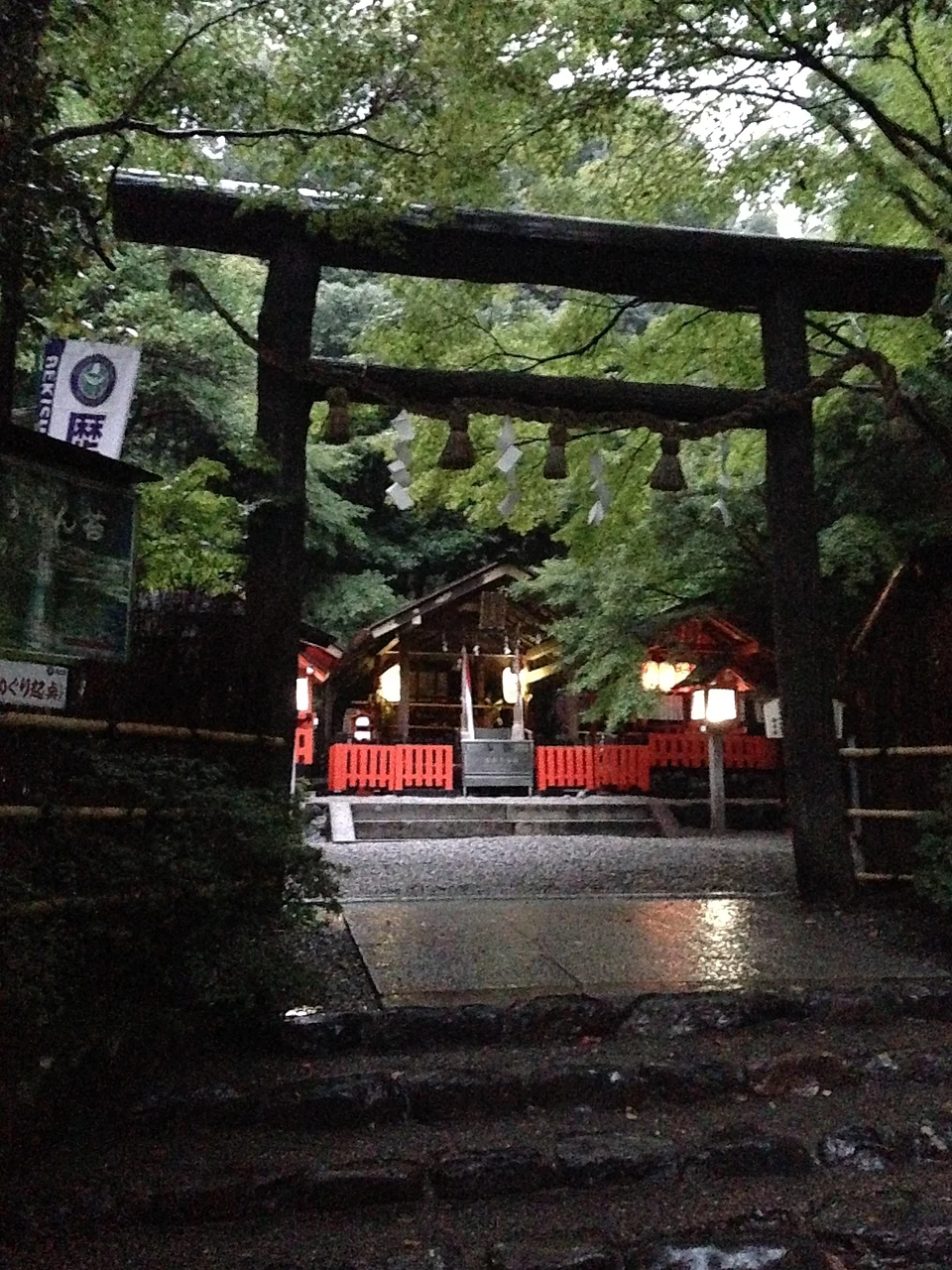
Located a short walk from Tenryū-ji temple, Nonomiya Shrine is surrounded by the bamboo groves of Arashiyama. The shrine is a popular stop on the Sagano walking route, which leads through the bamboo grove and up towards the Arashiyama hills. Despite its small size, the shrine has a long history. It was a place of purification for imperial princesses chosen to serve as priestesses of Amaterasu-Omikami, the sun goddess, at Ise Shrine in Mie Prefecture.
Nonomiya Shrine also appears in The Tale of Genji, one of Japan’s most celebrated 11th-century novels. Set in the Heian period, the book follows Hikaru Genji, the son of an emperor, and his relationships with a number of noble women. In the Sakaki chapter, Genji visits his former lover, Rokujō no Miyasudokoro, at Nonomiya, where she is staying with her daughter, who has been chosen to serve the sun goddess at Ise. Their bittersweet farewell takes place by moonlight.
Nonomiya Shrine has an unusual black torii gate known as a kuroki torii, made from sawtooth oak (kunugi) with the bark left on. The shrine describes it as the oldest style of torii in Japan, and it looks very different from the lacquered vermilion gates seen at most shrines. A brushwood fence (koshibagaki) made from kuromoji wood surrounds the shrine and gives it a rustic feel.
Arashiyama Bamboo Grove (Sagano Bamboo Forest)
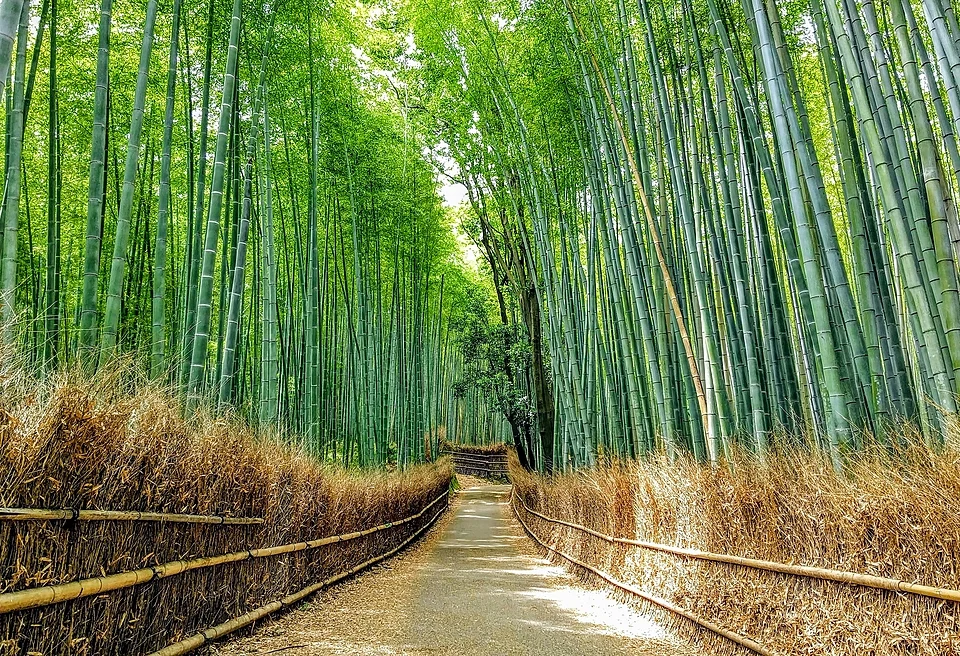
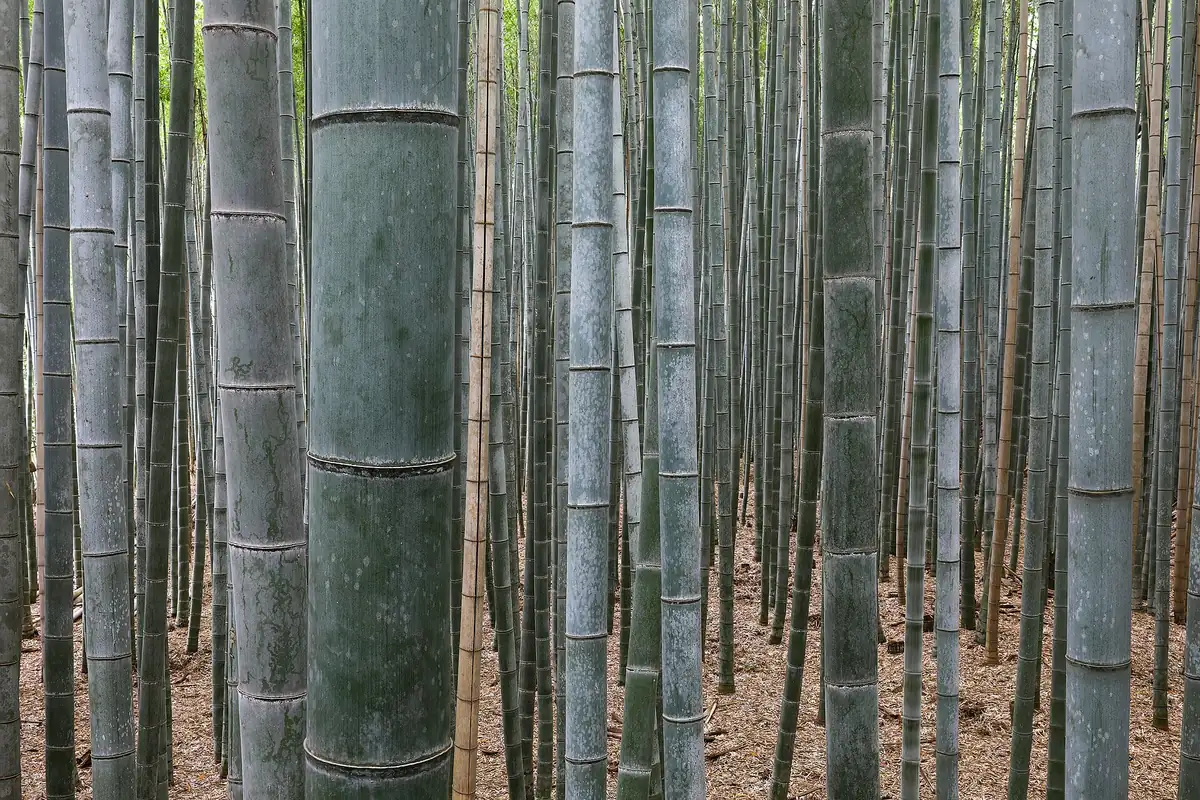
Growing tall on the outskirts of Kyoto, the Arashiyama Bamboo Grove, also called the Sagano Bamboo Forest, is a peaceful spot that is now often crowded with visitors. If you can get away from the camera shutters and chatter, you can hear one of Japan’s officially recognised soundscapes: the rustling, creaking and swaying of the bamboo. The grove was among the 100 Soundscapes of Japan chosen by the Ministry of the Environment in 1996.
The grove lies in the Sagano area of northwest Kyoto, close to Tenryū-ji temple. Trains on the JR Sagano Line reach Saga-Arashiyama Station from Kyoto Station in under 20 minutes, yet the bamboo path feels a world away from the busy city around it.
The bamboo stalks rise high above the path and lean in to form a canopy. When the wind blows through them, the rustling leaves, creaking stems and knocking trunks create a calm, almost meditative sound.
Walking the path costs nothing. There is no gate and no ticket for the lane itself; the only paid stops along it are Tenryu-ji’s garden at one end and Okochi Sanso at the top. Japan’s national tourism organisation calls the walk short but immersive, and the grove’s name changes depending on who you ask: Arashiyama Bamboo Grove, Sagano Bamboo Forest, or simply the Kyoto bamboo forest.
Getting to the Bamboo Grove From Saga-Arashiyama and Arashiyama Stations
- JR Sagano Line to Saga-Arashiyama Station: the grove is about a 10 minute walk, according to the Japan National Tourism Organization. This is the line from Kyoto Station.
- Randen (Keifuku Arashiyama Line) to Arashiyama Station: Tenryu-ji, whose north gate opens onto the grove, is a 5 minute walk. Head back towards Randen Saga Station afterwards and you pass a row of shops selling bamboo crafts.
- Hankyu Line to Arashiyama Station: about 15 minutes to Tenryu-ji, crossing Togetsukyo Bridge on the way.
- Bus: Kyoto City Bus 11, 28 or 93, or Kyoto Bus 61, 72 or 83, to the Arashiyama Tenryuji-mae stop.
- Sagano Scenic Railway: Torokko Arashiyama Station sits close to the bamboo path, so the grove fits neatly before or after a ride on the open-air train.
Into the Grove Through Tenryu-ji’s North Gate
The most rewarding way in is through the temple. Tenryu-ji’s Sogen Pond garden opens from 8:30am to 5:00pm (last entry 4:50pm), and garden admission is ¥500 for high school students and adults and ¥300 for elementary and middle school pupils. Walk the garden, then leave by the north gate, which opens onto the bamboo path. Tickets are also sold at the north gate, so the route works in reverse. From 14 to 30 November 2026 the temple opens the garden at 7:30am for the autumn colours, which makes the north gate one of the earliest ways into the grove with something to see on either side.
Okochi Sanso, the Film Star’s Garden at the Top of the Grove
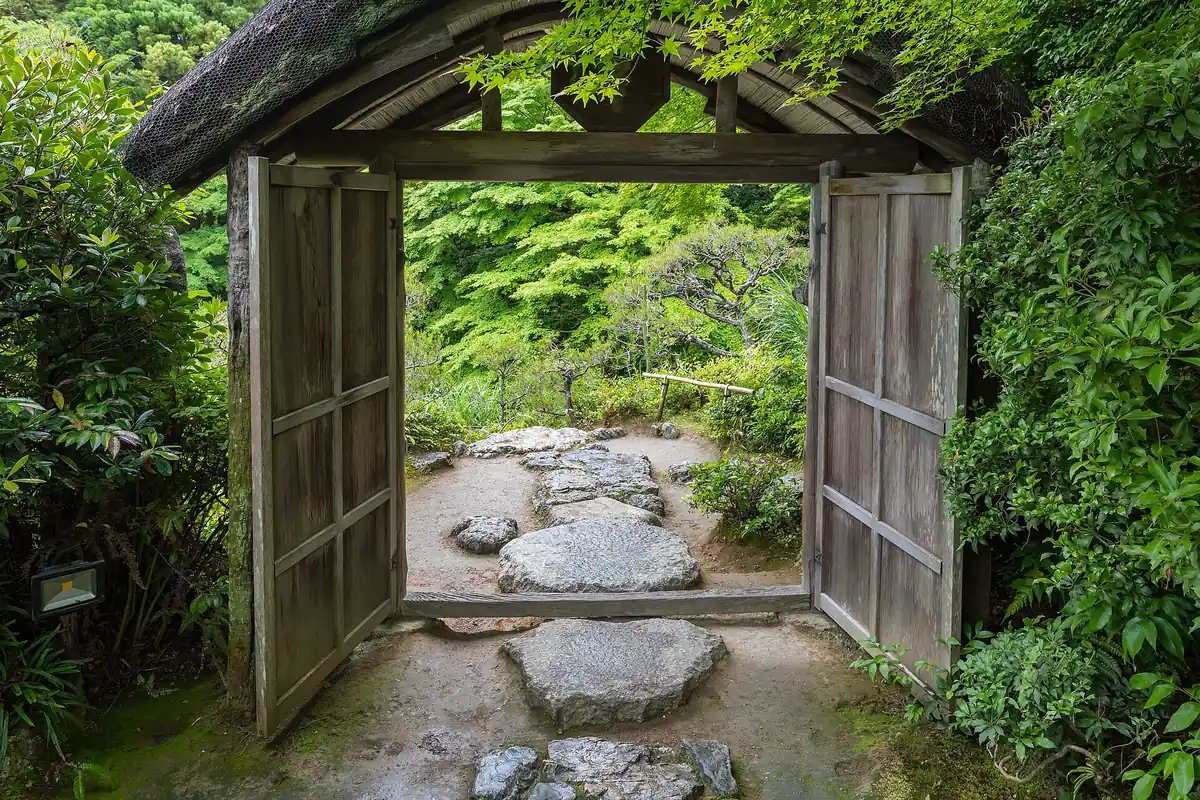
Beyond the densest stretch of bamboo, the path climbs a slope to Okochi Sanso, the hillside villa and garden of Denjirō Ōkōchi, a star of Japanese period films. Kyoto Prefecture records that he designed it himself and built it steadily from the age of 34 until his death at 64. The garden looks out to Mount Hiei and across Kyoto, with Arashiyama rising behind, and four of its structures, including the Daijōkaku hall and the Tekisui-an teahouse, are registered cultural properties.
Admission is ¥1,000 for adults and ¥500 for elementary and junior high school pupils, and it includes a bowl of matcha and a sweet in the teahouse. It opens daily from 9:00am to 5:00pm, with last entry at 4:30pm. Japan’s national tourism organisation notes that the villa is generally free of crowds, which is reason enough to make the climb when the path below is busy.
Best Time to Visit the Arashiyama Bamboo Grove
Because the lane has no gate, the quietest hour is the first one after sunrise, well before Tenryu-ji opens at 8:30am. Arashiyama as a whole is at its busiest around early April and in the second half of November, when cherry blossom and autumn leaves draw the biggest crowds, so on those dates early is the only calm option. A breezy day is worth waiting for: the creaking and knocking of the stalks is the sound that earned the grove its place among the 100 Soundscapes of Japan.
After dark in autumn 2026, the path hosts Arashiyama Tsukitouro, a bamboo light-up running every evening from 30 September to 8 November 2026, 6:00pm to 9:00pm (last entry 8:40pm). Tickets cost ¥1,500 in cash on the night, or ¥2,000 online with guaranteed entry, and children aged 12 and under go free. The ticket booth is inside the bamboo path, and the event is cancelled in bad weather, according to Kyoto City’s official tourism listing.
Rules for the Bamboo Grove
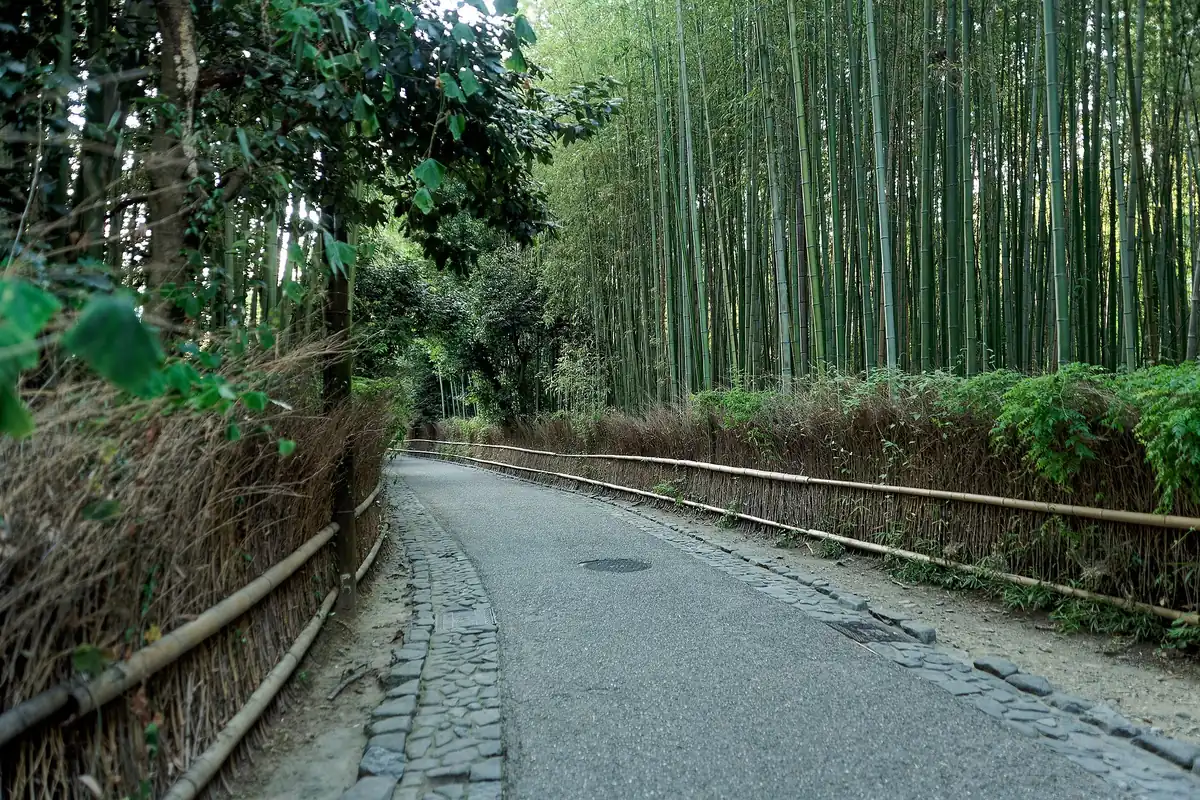
The bamboo stands behind brushwood fences for a reason. In September 2025 the Kyoto City Tourism Association asked visitors to stop damaging the grove, after graffiti carved into the stalks harmed individual plants and the look of the whole path. Never carve, write on or scratch the bamboo, and stay on the paved lane. Rickshaw drivers run tours along the same path, so step to the side when one comes through.
For a full day out, cross the Katsura River to Arashiyama Monkey Park, where wild macaques live on the hillside above the city, or follow the Arashiyama day in our seven-day Kyoto itinerary. Studio Ghibli fans often link the grove’s tall stalks with the opening of The Tale of the Princess Kaguya, in which a bamboo cutter finds a tiny princess inside a glowing stalk.








Tenryu-ji, Arashiyama’s 1339 Zen Temple
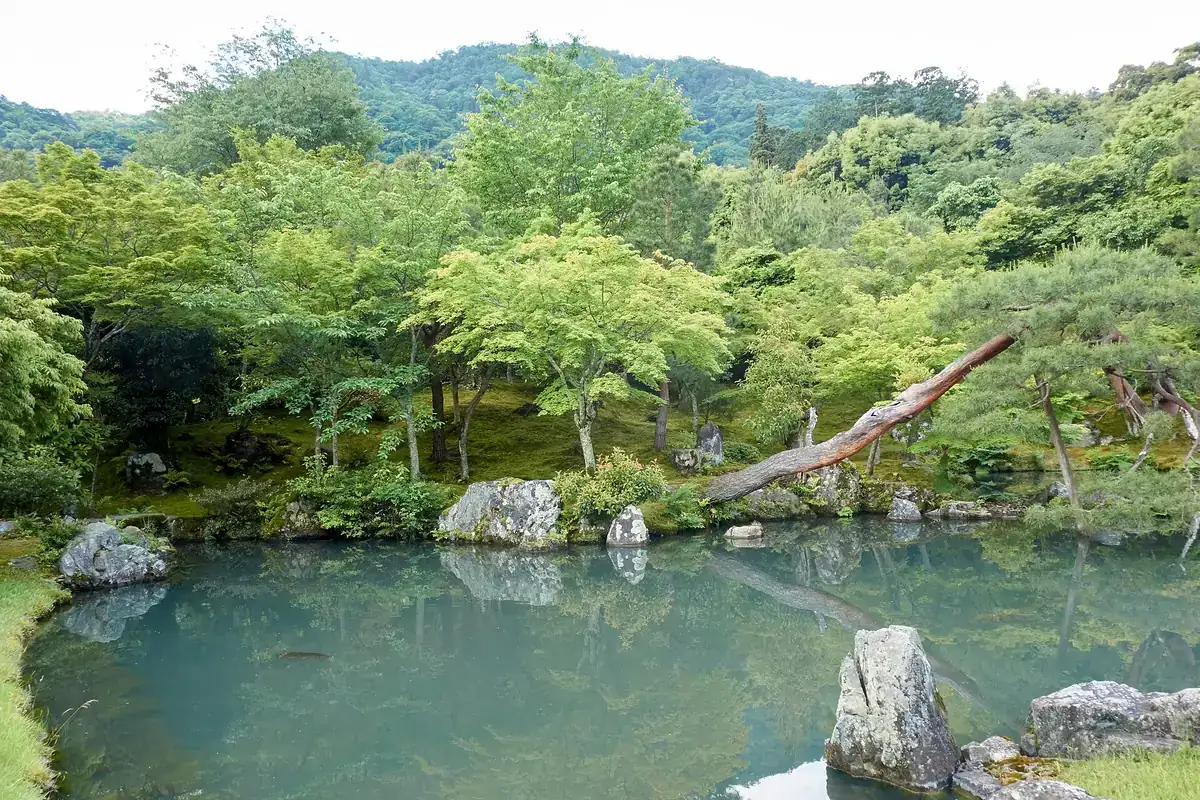
Tenryu-ji stands on the site of the Kameyama palace that Emperor Go-Saga built in the 13th century, the same retreat whose cherry trees made Arashiyama famous. The shogun Ashikaga Takauji founded the temple in 1339 in memory of Emperor Go-Daigo, with the Zen master Muso Soseki as its first abbot, and it still ranks first among Kyoto’s five great Zen temples. It is part of the Historic Monuments of Ancient Kyoto UNESCO World Heritage Site.
Fire has destroyed the temple eight times, and most of today’s halls date from 1899 onwards. The garden is what has lasted. Muso Soseki laid out the Sogen Pond garden nearly 700 years ago, and it was the first site in Japan designated a Special Place of Scenic Beauty by the national government. It borrows the slopes of Arashiyama as its backdrop, and a woodblock print from 1799 shows it looking much as it does now.
- Garden: ¥500 for high school students and adults, ¥300 for elementary and middle school pupils, 8:30am to 5:00pm. Add ¥300 to enter the halls.
- Cloud Dragon in the Dharma Hall: a separate ¥500, open on Saturdays, Sundays and public holidays, plus set periods in spring and autumn. The nihonga artist Kayama Matazo painted the dragon on the ceiling in 1997, in a style where its eyes seem to follow you from every corner of the hall.
- Shigetsu: the temple’s Zen vegetarian restaurant serves set meals from 11:00am to 2:00pm, at ¥3,800, ¥6,500 or ¥9,000, plus the ¥500 garden fee. Book two or three days ahead.
For the history, the halls and how long to allow, read our full guide to Tenryu-ji.
Togetsukyo Bridge
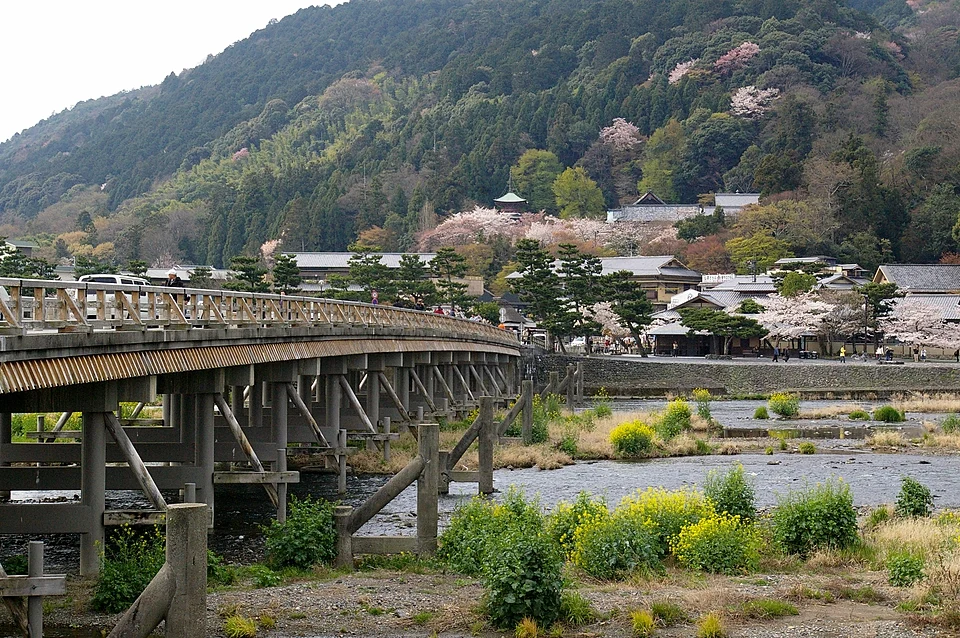
One of Kyoto’s most recognisable sights, Togetsukyo (渡月橋) is a 155 metre bridge across the Katsura River, which is called the Oi River along this stretch through Arashiyama. A bridge has stood here since 836. The current one was completed in 1934 with reinforced concrete piers and beams, and its cypress wood railings are the reason it still looks like a wooden bridge.
The name translates as “moon crossing bridge”. It is credited to Emperor Kameyama, who in the 13th century watched the full moon during a boating party on the river and remarked that it seemed to be crossing the bridge.
Togetsukyo has since become a lasting image in Japanese poetry and art, and the views around it live up to that reputation. Cherry blossom colours the hillside pink in spring, the maples turn fiery red in autumn, and when snow covers the peak in winter it looks like a scene from an ink landscape painting. It is a sight you will not want to miss in Arashiyama.
Arashiyama Monkey Park Iwatayama
The entrance to Monkey Park Iwatayama is on the south bank, a few minutes from the end of Togetsukyo Bridge. About 120 wild Japanese macaques live on the hillside, and it takes around 20 minutes to climb to the clearing where they gather, the first stretch being a flight of 120 steps. At the top, people go inside a meshed rest house to feed the monkeys, who wait outside, and the view runs across the whole of Kyoto.
Admission is ¥800 for anyone 16 and over and ¥400 for children aged 4 to 15, cash only. The gate opens at 9:00am and closes at 4:00pm. Rules, feeding and the best time of day are in our guide to Arashiyama Monkey Park.
Sagano Romantic Train Through the Hozu Gorge
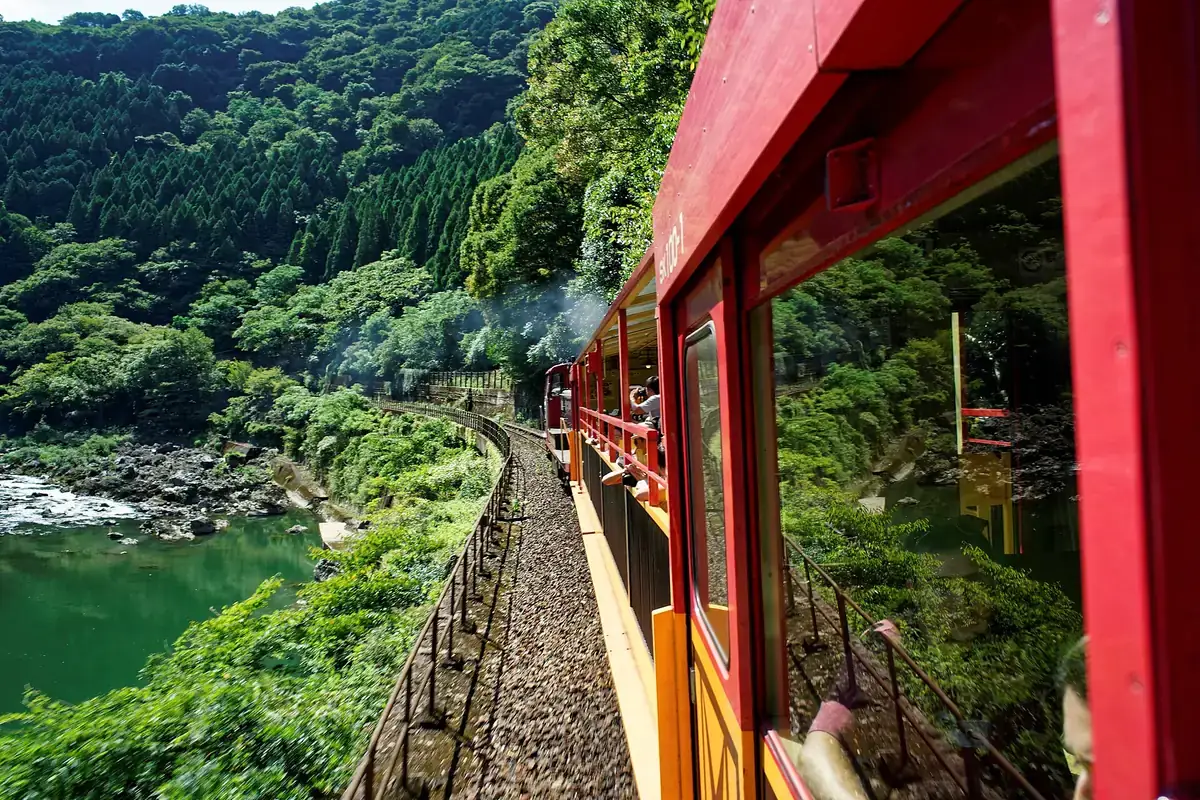
The Sagano Romantic Train runs 7km along the Hozu River gorge between Arashiyama and Kameoka in about 25 minutes, roughly the speed of a bicycle, which is the point. The Sagano Scenic Railway was set up in 1990 to use a stretch of the JR San-in Line left empty when the main line moved to a new double track. A diesel locomotive pulls five wooden-seated carriages with bare light bulbs, and car No. 5, the “Rich” car, has no glass in its windows, so you get the breeze and the sound of the river.
- Stations: Torokko Saga, Torokko Arashiyama (close to the bamboo grove path), Torokko Hozukyo and Torokko Kameoka. Torokko Saga to Torokko Arashiyama is about a 20 minute walk if you miss the train.
- Tickets: every seat is reserved. Seats go on sale on the official Sagano Scenic Railway site from midnight Japan time, one month before the day you ride, and the fare is the same whichever stations you use. When seats sell out, standing tickets are sold on the day at the stations, except Torokko Hozukyo.
- Rail passes: the Japan Rail Pass is not valid on this train.
- Window seats: A and D. Heading to Kameoka, seats C and D face forward.
Hozugawa River Boat Ride From Kameoka to Arashiyama
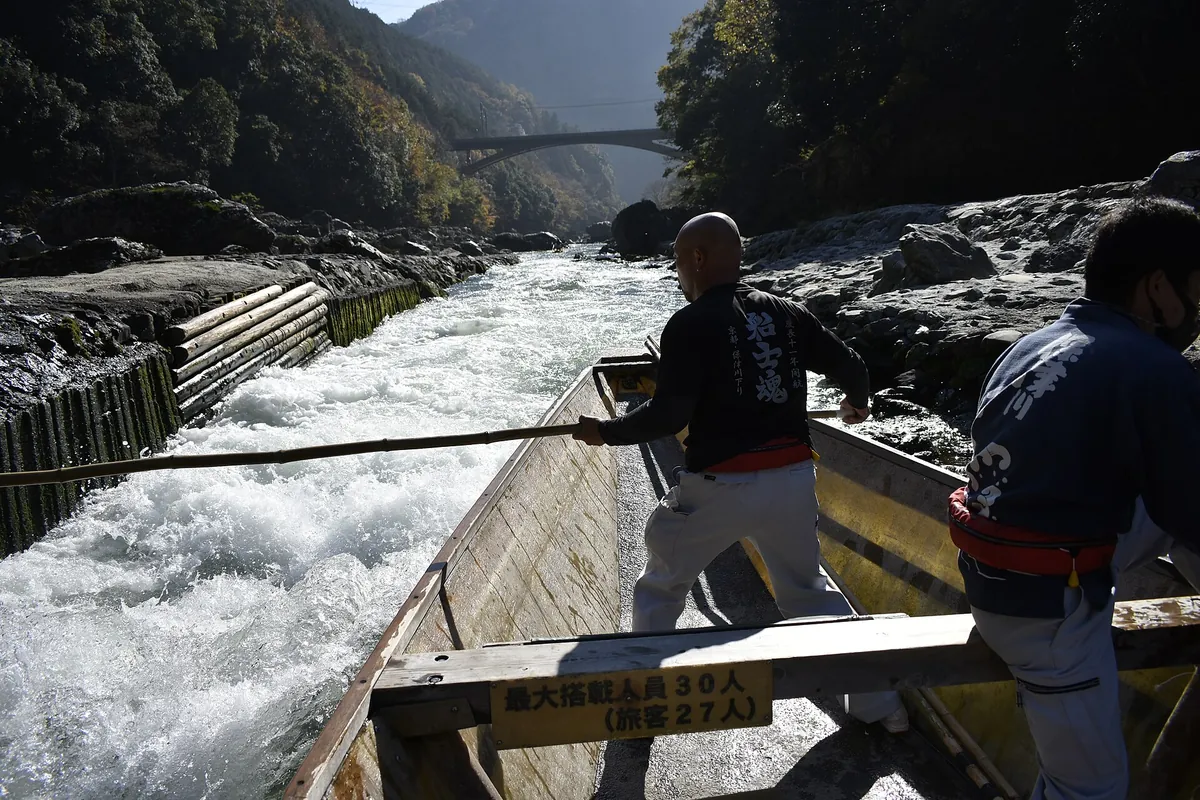
The classic Arashiyama loop goes out by train and comes back by boat. Boatmen steer flat wooden boats with poles and oars down the Hozu River from Kameoka through the gorge, finishing in Arashiyama close to Togetsukyo Bridge, a trip of about two hours. The route exists because the Kyoto merchant Suminokura Ryoi cut a navigable channel through the rocks from 1606 to carry goods from Tanba to the capital. Tourists followed, among them the Prince of Wales, who rode the rapids in 1922 on his state visit to Japan.
- Fare: ¥6,000 for adults and ¥4,500 for children on the regular shared boats, which carry up to 24 people. Book on the Hozugawa River Boat Ride website.
- Season: boats run from 9:00am to 3:00pm until 13 December 2026, and from 10:00am to 2:30pm between 5 January and 9 March 2027, when the boats are heated. There are no sailings from 29 December to 4 January.
- From the train: the Hozugawa Kudari counter inside Torokko Saga Station sells same-day boat tickets and books the shuttle bus, taxi or horse carriage from Torokko Kameoka Station to the boarding point.
Matsuno’o-Taisha
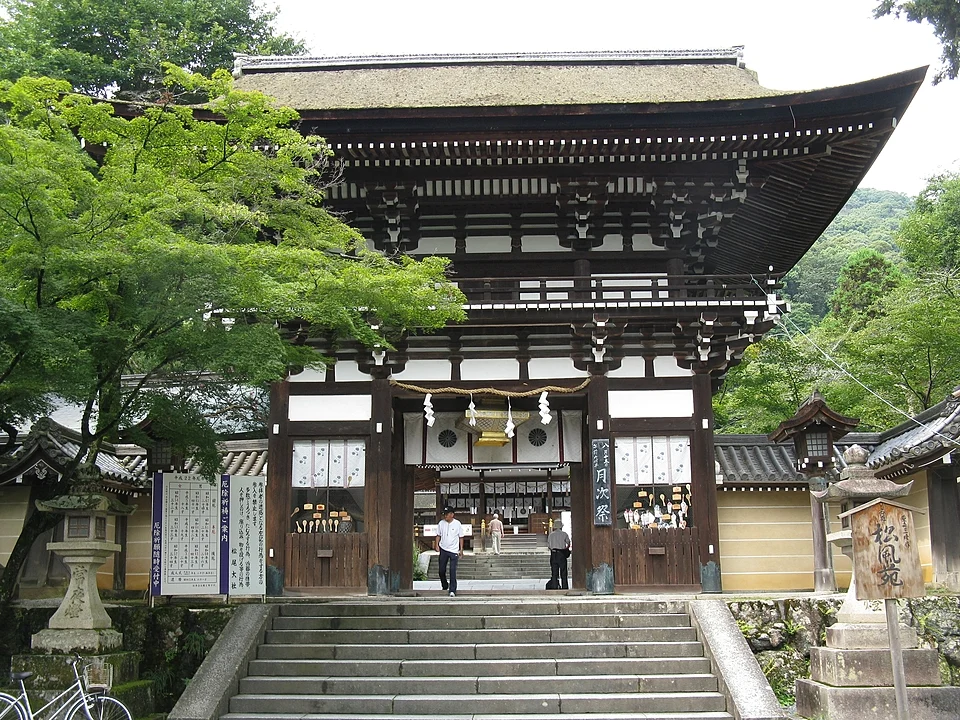
Matsuno’o Taisha was founded in 701 by the powerful Hata clan, almost a century before Kyoto became the capital in 794, which makes it one of the oldest Shinto shrines in the city. It sits a short distance south of central Arashiyama. Its main hall dates from the Ōei era (1394 to 1428) and was extensively restored in 1542. Having survived the fires that destroyed so many of Kyoto’s old wooden buildings, it is now an Important Cultural Property and one of the oldest buildings in the city.
The large grounds include a big torii gate at the entrance, a two-storey romon gate, a sacred waterfall and three gardens by the garden designer Shigemori Mirei, all completed in 1975 as his final work. A small statue hall between the gardens holds 21 sacred statues. The most important are three large Heian period wooden figures of the shrine’s deities, Ōyamakui no Kami, Ichikishimahime no Mikoto and Tsukiyomi no Mikoto, which are among the oldest and best-preserved Shinto statues in Japan.
Turtles appear all over the grounds, as they are regarded as messengers of Ōyamakui no Kami, the mountain god enshrined in the main hall. The Kame no I, or Tortoise Well, sits near the sacred waterfall. Sake and miso makers have long drawn water here when praying for success in business, and it is said that anyone who drinks from the well will enjoy a long and healthy life.
Arashiyama Through the Seasons
| Season | When | What to see | Crowds |
|---|---|---|---|
| Spring | Late March to early April | Cherry blossom along the riverbank park by Togetsukyo and on the hillside, seen best from the Romantic Train | Very busy around early April |
| Summer | July to late September | Cormorant fishing (ukai) on the river in the evenings, viewed from sightseeing boats by Togetsukyo | Hot and humid; the bamboo grove gives shade |
| Autumn | Mid November to early December | Maples at Tenryu-ji, Okochi Sanso and along the Hozu gorge | Busiest in the second half of November |
| Winter | December to early March | Quiet paths, heated boats on the Hozu River from January | The calmest time to visit |
Whatever the season, the rule is the same: arrive before the day trippers, start at the bamboo grove and work down to the river. If you would rather wake up close to the temples than ride in from the city, our guide to where to stay in Kyoto compares hotels, hostels and ryokans for every budget.
Arashiyama and the Bamboo Grove: Common Questions
Yes. The path through the bamboo has no gate or entrance fee. Tenryu-ji’s garden (¥500 for adults) and Okochi Sanso (¥1,000 including matcha) charge admission, and the autumn evening light-up, Arashiyama Tsukitouro, is ticketed at ¥1,500 on the night in 2026.
JR Saga-Arashiyama Station on the Sagano Line, about a 10 minute walk away, is the closest stop from Kyoto Station. Randen’s Arashiyama Station is a 5 minute walk from Tenryu-ji, whose north gate opens onto the grove, and Torokko Arashiyama Station of the Sagano Scenic Railway sits close to the path.
Go at sunrise, before Tenryu-ji opens at 8:30am and before the day trippers arrive. Avoid early April and the second half of November if you can, as Arashiyama is at its busiest during cherry blossom and autumn leaf season. A windy morning brings out the grove’s famous creaking sound.
Yes. Sagano is the area of north-west Kyoto where the grove grows, next to Arashiyama, so Sagano Bamboo Forest, Arashiyama Bamboo Grove and Kyoto’s bamboo forest all describe the same path between Tenryu-ji, Nonomiya Shrine and Okochi Sanso.
Take the JR Sagano Line, also called the San-in Line, from Kyoto Station to Saga-Arashiyama. The ride takes about 15 minutes and costs around ¥240, and the Japan Rail Pass covers it. From Saga-Arashiyama Station the bamboo grove is about a 10 minute walk and central Arashiyama five to ten minutes.
Allow one full day for the bamboo grove, Tenryu-ji, Togetsukyo Bridge and Monkey Park at a relaxed pace. Adding the Sagano Romantic Train and the two hour Hozugawa river boat needs a second half day, so many visitors do the train and boat on their own morning and the temples another day.
No. The Sagano Scenic Railway is a separate company and does not accept the Japan Rail Pass or the Seishun 18 ticket. Book seats on its own website from midnight Japan time one month before you ride. The JR Sagano Line to Saga-Arashiyama is covered by the pass.
¥6,000 for adults and ¥4,500 for children on the regular shared boats in 2026. The trip runs from Kameoka down the Hozu gorge to Arashiyama in about two hours. Boats operate from 9:00am to 3:00pm until 13 December 2026, then 10:00am to 2:30pm from 5 January to 9 March 2027.
Yes. Take the Hankyu Kyoto Line from Osaka-umeda and change at Katsura for the short Hankyu Arashiyama Line, which arrives on the south bank by Togetsukyo Bridge. With a JR Pass, take the JR Kyoto Line to Kyoto Station and change to the JR Sagano Line for Saga-Arashiyama. Start early, as the bamboo grove fills by mid-morning.
Winter is Arashiyama’s quietest season. The bamboo grove, Tenryu-ji and Monkey Park stay open, and the Hozugawa river boats run in heated boats from 5 January to 9 March 2027. Snow on the hills above Togetsukyo is occasional, so a cold clear morning is the most reliable way to have the paths almost to yourself.