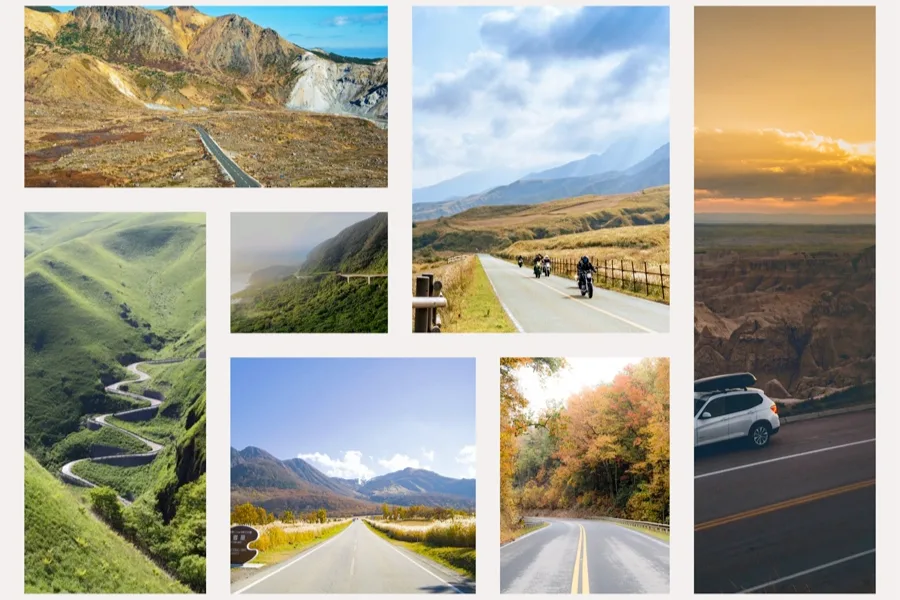
You don’t often hear “Let’s go to Fukushima Prefecture” floated across a Tokyo izakaya table. This is a real shame, as the prefecture, which sits just about an hour and a half from Tokyo by bullet train (Shinkansen), is home to a wealth of fantastic locations, scenery, sightseeing opportunities and activities. Fukushima Prefecture should be a consideration for your next trip to Japan. From serene lakes and lush forests to hot springs and ancient castles, there’s no shortage of beauty to explore, and a road trip is the best way to experience it all.
At a glance
Cities, volcanoes, onsen and castles of Fukushima Prefecture
Aizuwakamatsu, Iwaki, Shirakawa and Fukushima’s other cities
Fukushima Prefecture (in the Tōhoku region of Honshu) is the third largest in Japan, and across its 13,784 square kilometres (about 5,300 square miles) are 13 cities. The road trip below takes you through six of them.
No matter which one you find yourself in, there won’t be a lack of things to see and do; whether it’s the historical city of Aizuwakamatsu, the dynamic coastal city of Iwaki, or the rural splendour of Shirakawa; they all offer a different atmosphere with unique surroundings.
It’s worth exploring each one to visit their unique landmarks, trying the local cuisine, and getting a feel for its character, and that’s above all the usual amenities and attractions like gardens and museums, spas and shopping opportunities that most offer.

Mount Bandai, Azuma-kofuji and the Bandai-Azuma Skyline
Here is what makes a Fukushima road trip so appealing: Fukushima Prefecture consists of, and sits among, numerous mountain ranges, vast lakes and forested hillsides.
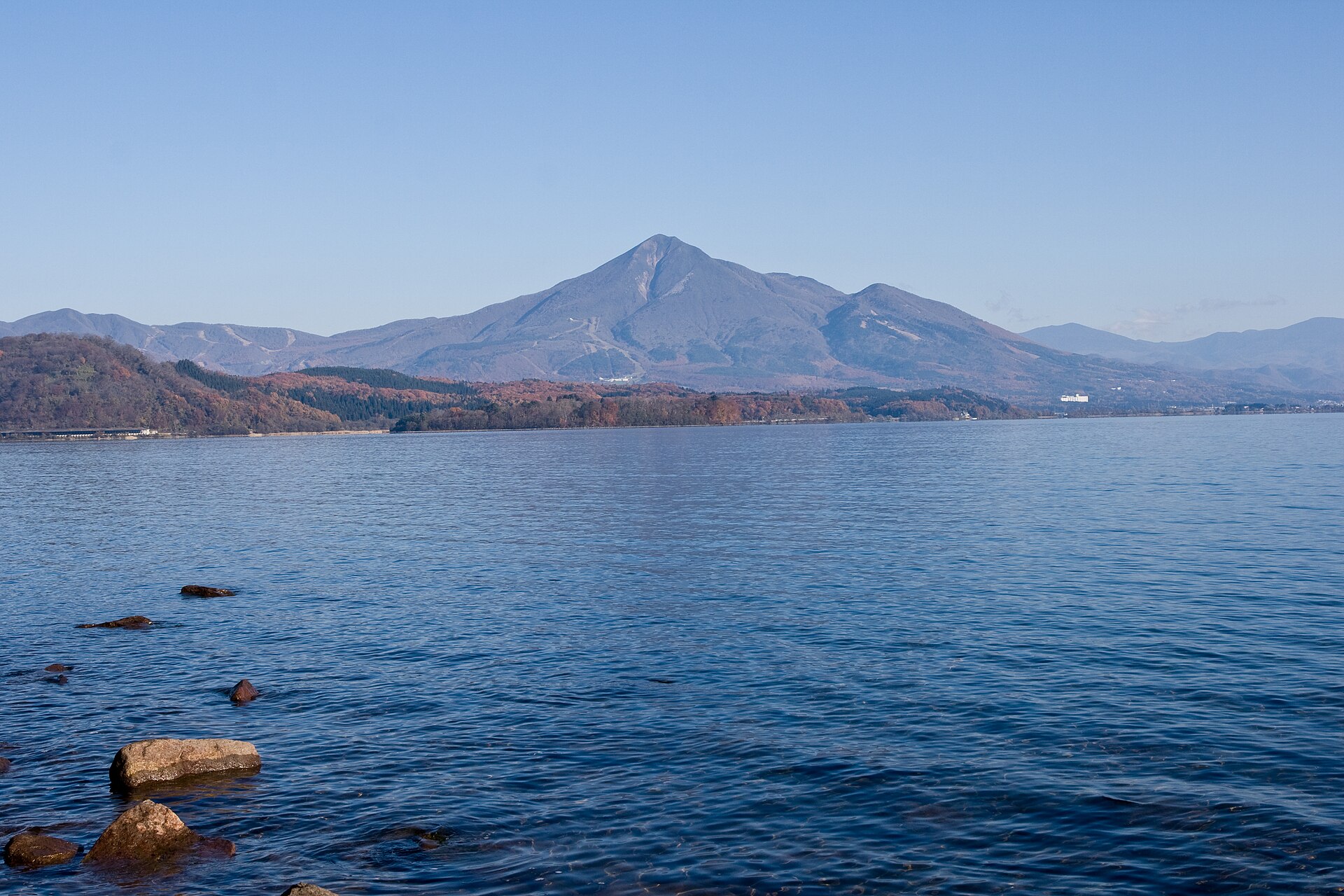
In the north rise Mount Bandai and Azuma-kofuji, both classed as active volcanoes. Around them sit lakes well worth exploring, and together they make up some of the finest natural scenery in Japan. The Bandai-Azuma Skyline, the mountain road that crosses this landscape, has been named one of Japan’s 100 best roads. Just don’t plan on driving it in winter, when it is closed.
Further south also has its fair share of mountainous terrain which the roads constantly wind between, and their forested coverings will never cease to amaze no matter what season you arrive in.
The brilliant thing is that most of these locations and spectacles, if not all of them, have designated hiking routes and trails; observation points; or camping grounds to allow you to fully experience their beauty, and only a car can get you to these.
Onsen towns, Ouchi-juku and a 1,000-year-old cherry tree
Beyond the cities and landscape of Fukushima Prefecture, there is plenty more to discover.
Thanks to its volcanoes, the prefecture has a wealth of onsen (hot springs). Higashiyama Onsen in Aizuwakamatsu and Takayu Onsen Tamagoyu just outside Fukushima City are two of the best, but there are plenty of others to try.
There’s also the famous spot of Ouchi-Juku, the brilliantly preserved Edo period town that will send you back 400 years. It’s also where you can try negi-soba, buckwheat noodles eaten with a whole leek in place of chopsticks.
There are also two rebuilt castle keeps (Tsurugajo in Aizuwakamatsu and Komine in Shirakawa), countless shrines and temples, and a weeping cherry tree thought to be over 1,000 years old.



Driving in Fukushima: back roads, permits, tolls and car hire costs
Japan’s trains are excellent, but taking Fukushima’s back roads is a whole other experience. Turn off your screen and drive by feel: the slow climb from Fukushima City into sulphur-scented air and bright mountain light; the drop into Urabandai, where lakes, wetlands and birch woods link up with easy boardwalk walks; then the straight run east as the land flattens and opens towards the sea.
A car connects the places trains miss. Lay-bys turn into photo stops. Roadside fruit stalls turn into conversations. A family-run ryokan (旅館) makes sense again when it’s ten minutes beyond the last bus stop.
If you’re visiting for a short term, driving is easy to arrange. Most travellers can use their home licence with an International Driving Permit issued under the 1949 Geneva Convention. Licences from Switzerland, Germany, France, Belgium, Monaco or Taiwan need a JAF Japanese translation instead. You’ll drive on the left.
Ask for an ETC card so you can pass through toll gates without stopping, and look at the Tōhoku Expressway Pass if you plan to travel long distances. Compact cars usually cost about ¥5,000 to ¥13,000 per day, depending on the season. From December to March, and in cooler mountain areas, check that the car has winter tyres.
Renting a car in Japan
Being able to drive in Japan, as well as the process of renting a car, is fairly straightforward. However there are a few requirements and procedures that you need to be aware of, primarily the fact that owning a driving licence in your home country is not enough for rental companies to lend you a vehicle.
Getting a 1949 International Driving Permit before you travel
There are a few steps that you must take before arriving in Japan to ensure that you are eligible to rent a car.
Unless you already own a full Japanese driving licence; in order to drive in Japan, you are going to need an international driving permit (IDP). The key thing to know about an IDP is that you cannot acquire one in Japan, so you must apply for one before arriving in the country. Alongside that you have to get the right IDP. Despite all this, it’s actually quite easy to get hold of the right one.
First things first, there are three kinds of IDP: 1926, 1949, and 1968.
Japan requires the International driving permit 1949.
Applying for one can vary by country. In the UK, you can apply for an IDP in person from certain shops that have PayPoint, more details: Gov.uk. Or, in America by visiting the American Automobile Association (AAA) for example. In the UK the permit is issued over the counter, while the AAA can issue one up to six months before your trip and asks you to allow five business days plus postage for online applications. A 1949 IDP is valid for one year from the date of issue.
If your home country is among France, Germany, Switzerland, Belgium, Monaco or Taiwan, then things are a little different. You will have to apply for a Japanese translation of your own driving licence through the Japan Automobile Federation.
Rental companies, and picking up in Fukushima City or Tokyo
Once you have your IDP, the rental car option is open to you. There are plenty of rental car companies in Japan that offer very reasonable prices, even if you are renting for several days to a week. A few good options to check out are Nippon Rent-A-Car, Toyota rent-a-car, and Rentalcars.com.
Now there is a bit of a choice to make if you decide on a Fukushima road trip.
You could either:
Take the Shinkansen straight to Fukushima City, which takes about an hour and a half, and then pick up a rental car outside the station (which is where you will find a lot of car rental companies in Japan).
Or:
Rent a car from Tokyo and make it a real road trip by driving all the way up to Fukushima Prefecture yourself. It will be much easier to rent a car in Tokyo due to the amount available, however, you would also have a three to four hour drive ahead of you to begin with.
Either way, there are some other things to bear in mind.
While most of the time you will probably want to return the car to the same place, you don’t actually have to do so. In Japan you can return the car to a different outlet (for a fee). Another factor is making sure that the car is fully fuelled on return.
And that’s pretty much all you need to know about renting a car in Japan. (By the way, they drive on the left.)
Ready? Let’s get into your Fukushima itinerary.
Your Fukushima road trip itinerary
This route works best as a relaxed loop from Fukushima City, mixing mountain roads, historic towns and the long pull to the Pacific. Start early, keep plans loose, and let the landscape set the pace.
Morning: Fukushima City to Takayu Onsen and the Bandai-Azuma Skyline
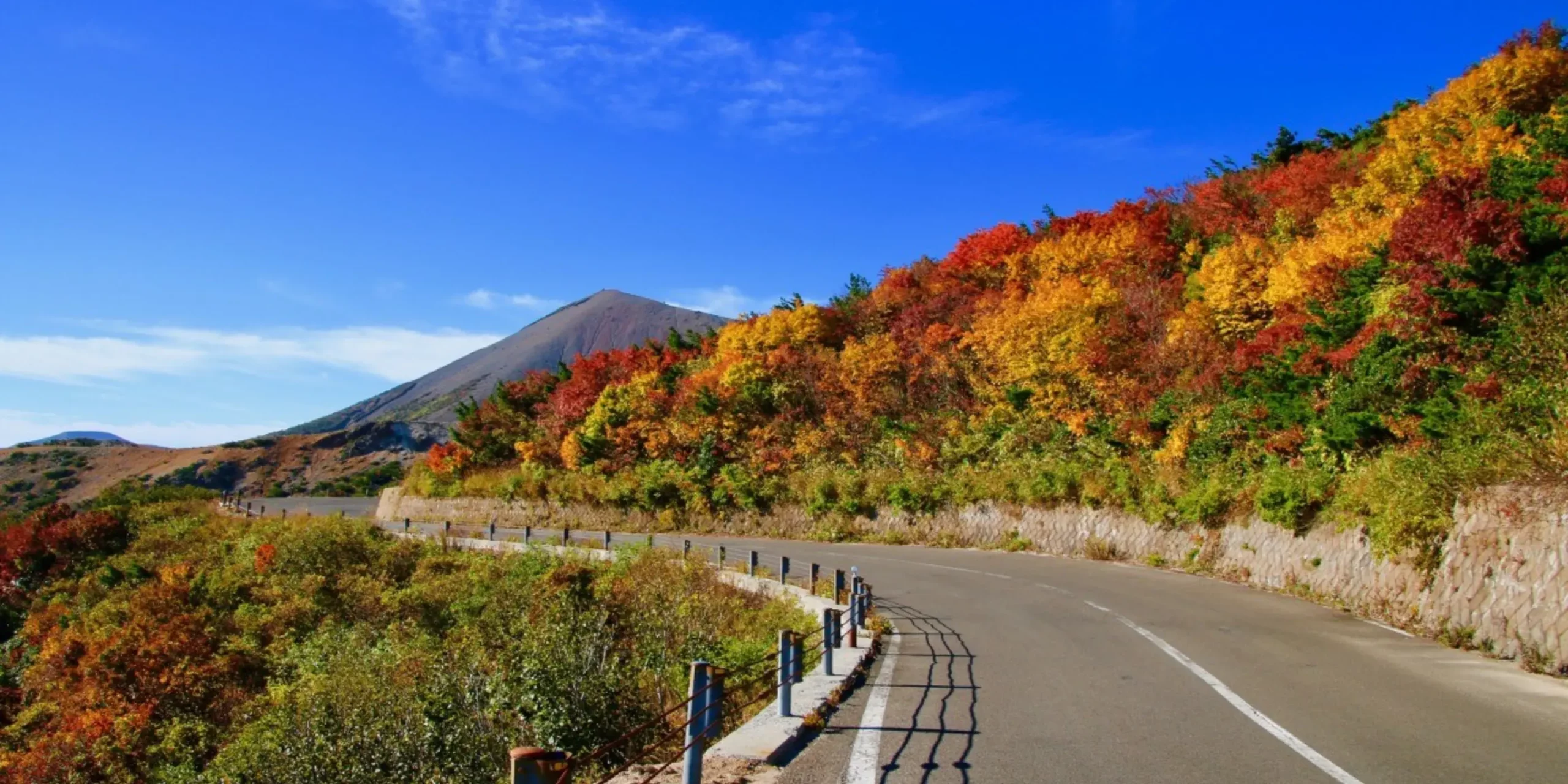
Leave Fukushima City early and the suburbs fade quickly into cedar forest and tight bends. As you climb, the air cools and the smell of sulphur creeps in around Takayu Onsen (高湯温泉). Even a short soak here shifts your body clock to mountain time.
Continue uphill and the trees thin out, replaced by grey pumice and patches of green lichen. Park at Jōdodaira and walk for ten minutes to reach the rim of Azuma-Kōfuji (吾妻小富士). If you want a longer walk, head towards Mt. Issaikyō, where small turquoise ponds sit quietly beside the trail.
If the Bandai-Azuma Skyline is closed (usually mid-November to early or mid-April), take the lower roads instead. Tsuchiyu Onsen (土湯温泉) is a good alternative, with traditional inns and a simple riverside footbath. You miss the volcanic scenery, but gain sheltered valleys and a calmer drive in bad weather.
Late morning: Urabandai and Lakes Akimoto, Onogawa and Hibara
From the high point, descend into Urabandai, where the scenery softens into wetlands, reeds and still water shaped by past eruptions. Lakes Akimoto, Onogawa and Hibara sit close together, making this an easy loop of short drives and gentle walks.
Boardwalks take you across marshland, and roadside pull-ins invite frequent stops. On Lake Hibara’s north shore, look for the peninsula locals call the “dragon’s tail”. On a calm day, the reflection is almost perfect. Visitor centres around the lakes have toilets, maps and free or low-cost parking.
Lunch stop: Kitakata
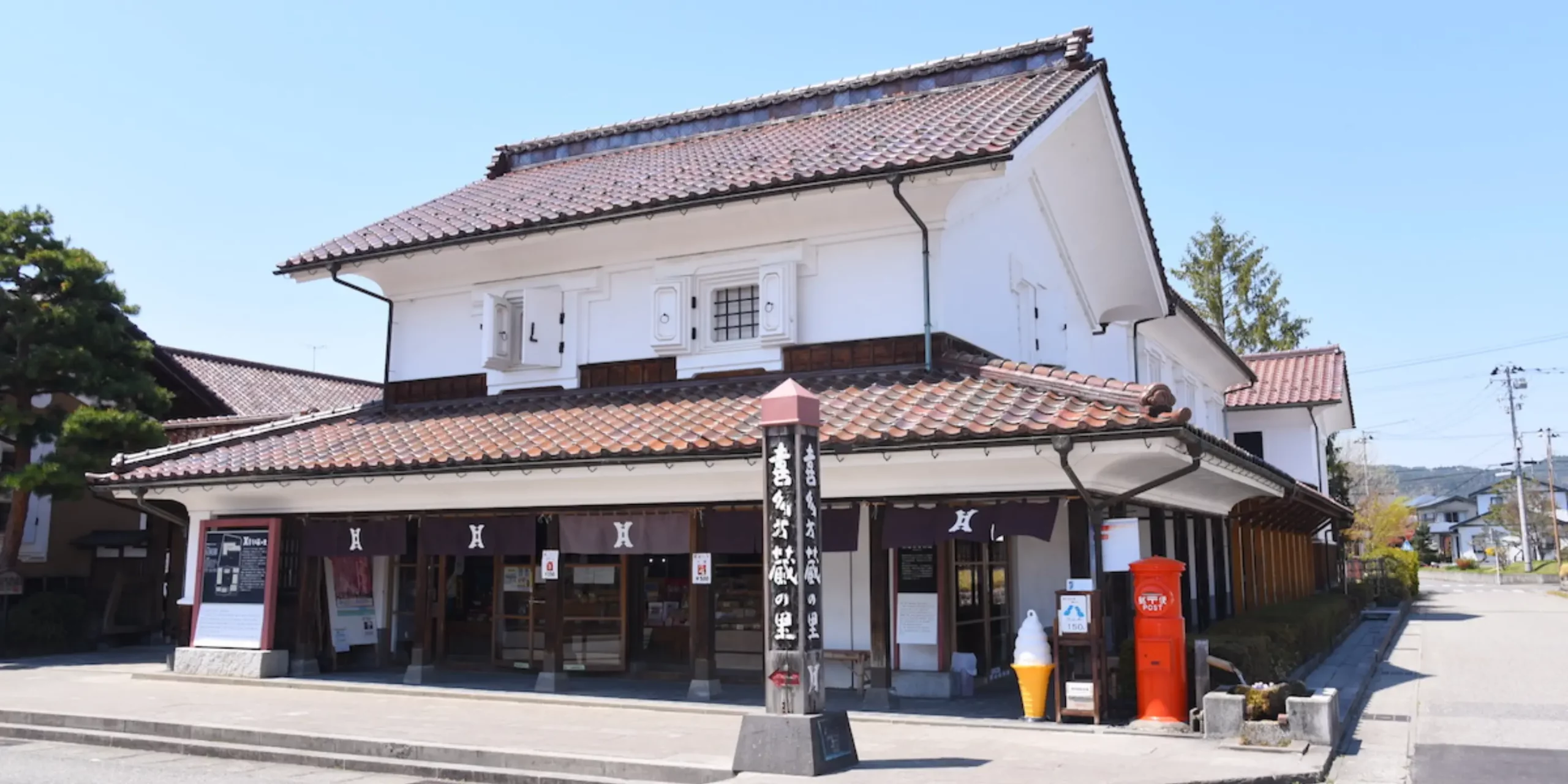
When hunger hits, head west to Kitakata, a small town obsessed with ramen. There are around ninety shops serving a population of fifty thousand, and the local habit of asa-ra (朝ラー), ramen eaten in the morning, means no one finds it odd to eat noodles before noon.
Expect thick, wavy noodles and a soy-based broth. It’s filling, comforting, and sets you up well for the afternoon.
Afternoon: Aizuwakamatsu and onsen time
From Kitakata, it’s a short drive to Aizuwakamatsu. The white walls of Tsurugajō (鶴ヶ城) rise above the town, clean and orderly against the sky. The castle grounds are free to enter; the keep houses a museum worth visiting if you want context. Entry is ¥410 for adults and includes rooftop views that help make sense of the town’s layout.
If you need a quieter break, wander Oyakuen, a historic herb garden nearby. Later, drive to Higashiyama Onsen (東山温泉) for a soak. The water smells faintly of minerals, the wooden buckets are old-fashioned, and the pace slows again. Parking around the castle is paid by the hour.
Day two: Ōuchi-juku and river cliffs
South of Aizu, the road winds into the hills and delivers you to Ōuchi-juku (大内宿), a preserved Edo-period post town. Thatched roofs line the main street, and modern wires are kept out of sight. It’s popular, but still atmospheric.
Lunch here is negi-soba (葱そば), buckwheat noodles eaten with a whole leek instead of chopsticks. It’s messy, awkward, and part of the fun. Walk uphill behind the shrine for the classic view of the street. Parking costs ¥500 for standard cars.
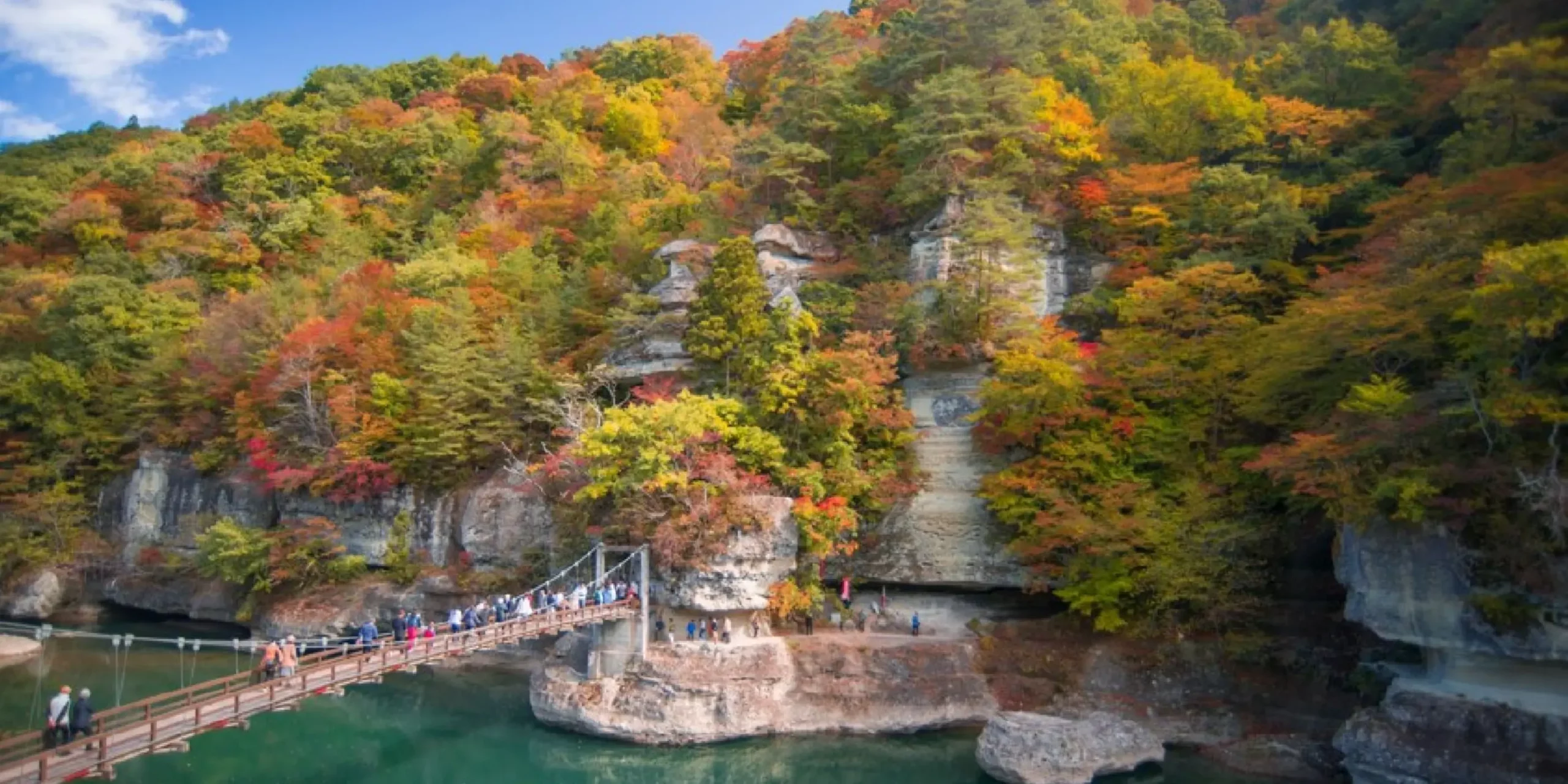
On the way out, stop at Tō-no-hetsuri (塔のへつり). Layered rock formations rise above a green river, and a short suspension bridge adds a bit of wobble and a lot of smiles.
Eastbound: Shirakawa, Iwaki and the Pacific coast
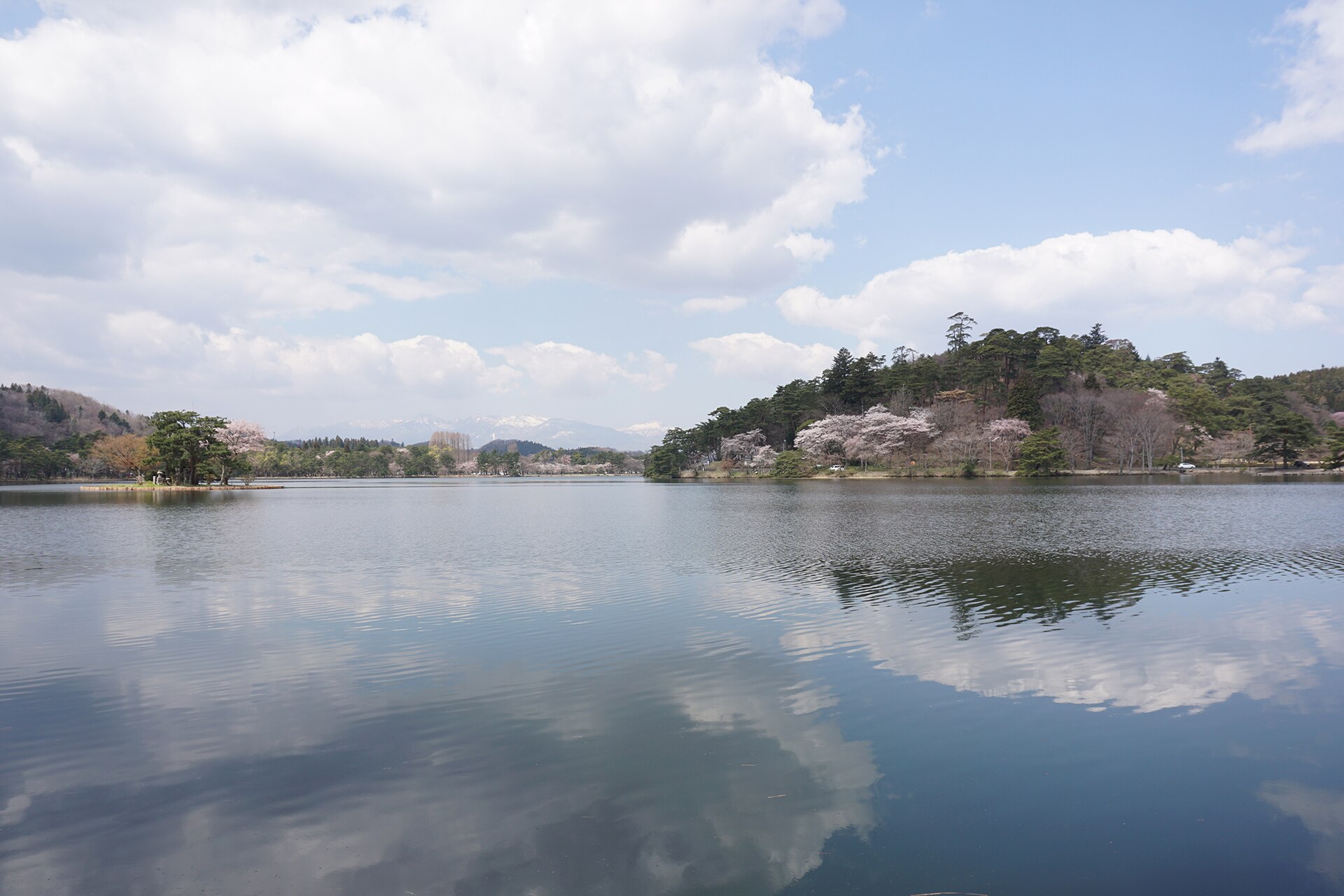
Turn east and the mountains slowly relax into farmland. Shirakawa makes a good pause, with the calm paths of Nanko Park, laid out in 1801, and the rebuilt wooden keep of Komine Castle.
From here, continue to Iwaki, Fukushima’s coastal city. Distances are long and sights are spread out, another reason a car helps. Drive to Shioyazaki Lighthouse for wide Pacific views, then head to Iwaki Marine Tower for a higher view where the city and sea meet. If the weather turns, Spa Resort Hawaiians is an easy indoor option.
Kōriyama, Miharu Takizakura and Mount Shinobu
On the return drive, aim for Kōriyama, a tidy city with good cafés and large parks. If you’re visiting in April, detour to Miharu Takizakura (三春滝桜). This weeping cherry tree is thought to be over 1,000 years old and usually peaks in mid-April. Expect crowds at peak bloom and a small entry fee that supports maintenance.
Back in Fukushima City, keep the car until the end. North of town, orchards make the prefecture’s “Fruit Kingdom” nickname feel well-earned, especially in season. For a final look, drive up to Mount Shinobu, where the view stretches across rooftops and river bends.
Return the car full-to-full unless your rental agreement says otherwise, and start planning when you can come back.








Fukushima road trip FAQs: permits, insurance, road rules, winter driving and budgets
Do I need an International Driving Permit (IDP) to drive in Japan?
Yes, most short-term visitors need an IDP based on the 1949 Geneva Convention, carried alongside your home licence and passport. Drivers from Switzerland, Germany, France, Belgium, Monaco or Taiwan use a Japanese translation from JAF rather than an IDP.
What’s the minimum age and experience for renting a car?
Most agencies rent to drivers 20+ with at least one year of driving history; under-age driver surcharges are uncommon in Japan but some classes (e.g., luxury/large vans) may require older ages or more experience. Bring a credit card for the deposit.
Automatic or manual?
Almost all rentals are automatic. If you want a manual, pre-book well in advance.
Should I reserve an ETC card and the Tōhoku Expressway Pass (TEP)?
Yes. ETC lets you glide through toll gates; the TEP offers flat-rate motorway use across the region for a set number of days. Ask the rental desk to add an ETC card and book the TEP period that matches your itinerary.
Are one-way rentals possible (e.g., Fukushima pick-up, Kōriyama drop-off)?
Yes, most companies allow one-way returns within the region for a fee. It’s common to start near Fukushima Station and return at Kōriyama or the reverse.
What insurance do I need?
Standard rentals include mandatory liability. Add Collision Damage Waiver (CDW) and consider NOC (Non-Operation Charge) waivers to reduce out-of-pocket costs if the car needs towing/repair. Windscreen/tyre coverage is often an extra.
Which side of the road does Japan drive on? What are the speed limits?
Japan drives on the left. Typical limits: 50 km/h in built-up areas, 60 km/h on ordinary roads, and ~100 km/h on expressways (posted signs rule). Expect speed cameras on expressways and near towns.
Any road rules that catch visitors out?
- Zero tolerance for drink-driving. Don’t.
- Seatbelts are mandatory for all seats; child seats required for children under 6.
- At railway crossings, be prepared to slow right down; some require a full stop.
- No phones in hand while driving.
- ETC lanes are for cars with an ETC card inserted; without one, use the 一般/現金 (cash) lanes.
How do I pay for fuel, and which type do I use?
Fuel types are Regular (レギュラー), High-octane (ハイオク) and Diesel (軽油). Most compacts take Regular. Many stations are self-service; follow the colour coding on the pumps. Rural stations may close early at night.
Navigation tips that actually help?
- Japanese sat-navs accept phone numbers or MAPCODEs, which is handy for rural car parks and trailheads.
- Keep coins for small car parks and rural vending machines.
- Download offline maps; some valleys have spotty signal.
What about parking?
In cities, use coin car parks (times) and always check the tariff; in the countryside, expect free or low-fee lots at major sights. Illegally parked cars can be ticketed or towed; avoid parking on narrow lanes.
Winter driving in Fukushima/Tōhoku, what’s sensible?
From December to March, request winter tyres with your rental. Mountain routes may post chain/tyre controls during heavy snow; check daily road advisories. Keep distances shorter, carry snacks/water, and avoid the Bandai-Azuma Skyline during its winter closure (typically mid-Nov to early/mid-April).
Is the Bandai-Azuma Skyline open year-round?
No. It’s usually closed in winter due to snow. Visit in spring for the short-lived snow corridor or in autumn for peak colour.
Are the roads busy?
Outside city centres, traffic is light. Expect slower holiday weekends (Golden Week, Obon, New Year) and leaf-peeping days in October.
Can I rely on service areas?
Expressways have Service Areas (SA) and Parking Areas (PA) every 15 to 50 km with toilets, food, and fuel at SAs. They’re clean, convenient, and a good place to regroup.
What should I do after a minor accident or breakdown?
- Move to a safe spot, switch on hazards, place the warning triangle if supplied.
- Call 110 (police) and, if needed, 119 (ambulance/fire).
- For roadside help, many rentals partner with JAF; from mobile, dial #8139 for JAF road service information.
- Contact your rental company’s emergency line immediately.
Any wildlife or local hazards?
Deer and small mammals are active at dawn/dusk in forested areas; slow down on blind bends. After heavy rain or snowmelt, watch for fallen rocks on mountain roads.
How much should I budget, realistically?
- Car (compact): roughly ¥5,000 to ¥13,000/day depending on class/season.
- Fuel: varies with distance and car type; compacts are economical.
- Parking: many rural lots are free; sights like Ōuchi-juku charge ~¥500 for standard cars; town centres are metered.
- Sights: Tsurugajō keep ¥410 (adult) as a guide.
Good regional add-ons if I have extra days?
- Urabandai hikes and lake kayaking in season.
- Aizu craft stops (lacquerware, sake breweries).
- Abukuma-do limestone caves (Tamura, east of Kōriyama).
- Coastal detours south into Ibaraki for seafood markets if you’re already in Iwaki.
What’s the best season overall?
You can drive year-round, but the sweet spots are April (sakura, Skyline re-opening) and October to early November (autumn colour).