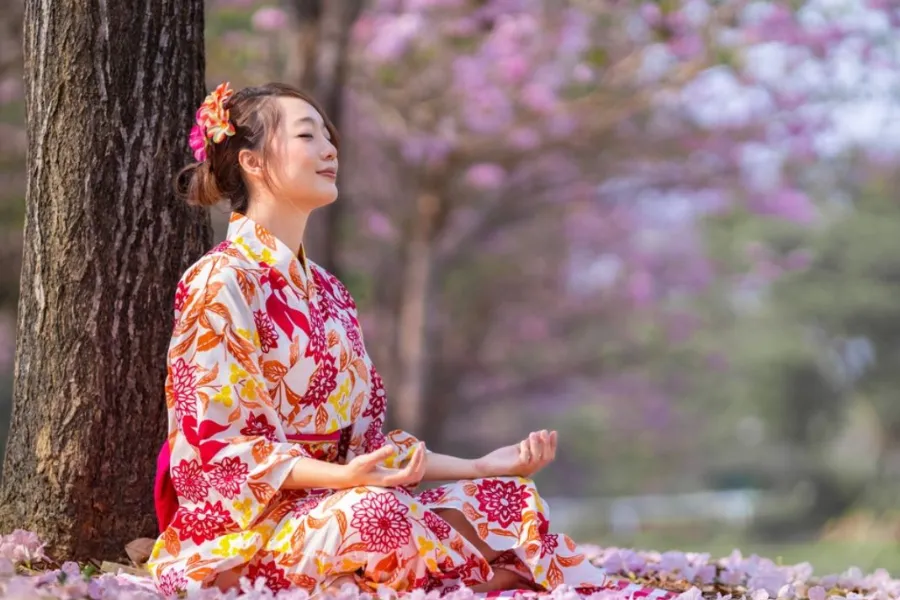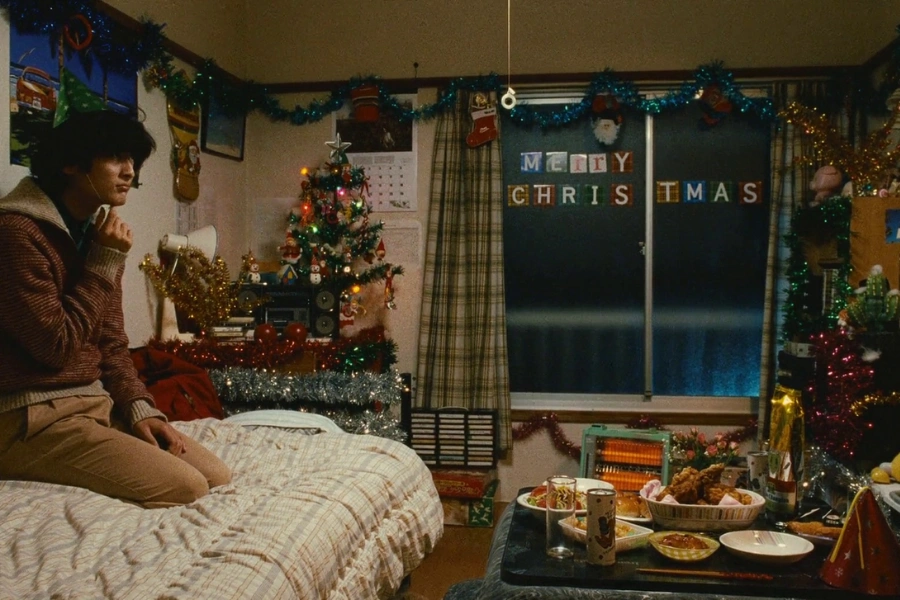
Japanese traditions are the customs, ceremonies, and seasonal rituals that have shaped life in Japan for centuries, from the tea ceremony and cherry blossom viewing to New Year shrine visits, and many are still part of daily life today. Unfortunately, some people’s obsession with Japan goes hand in hand with the reality that the cultural traditions of many Western countries have faded through time.
Yet, the main pillars of Japanese life are built with contrasting ideas. Moreover, the nation has emerged since the 1950s as a global economic and technological powerhouse whilst preserving its intricate, complex, and ancient cultural traditions. So, yes: although Sushi, Mount Fuji, and Sumo wrestling are all great subjects to dive into independently, many other ancient Japanese traditions are still alive and in practice today. Here are nine you may not be too familiar with as of yet.
Kabuki Theatre

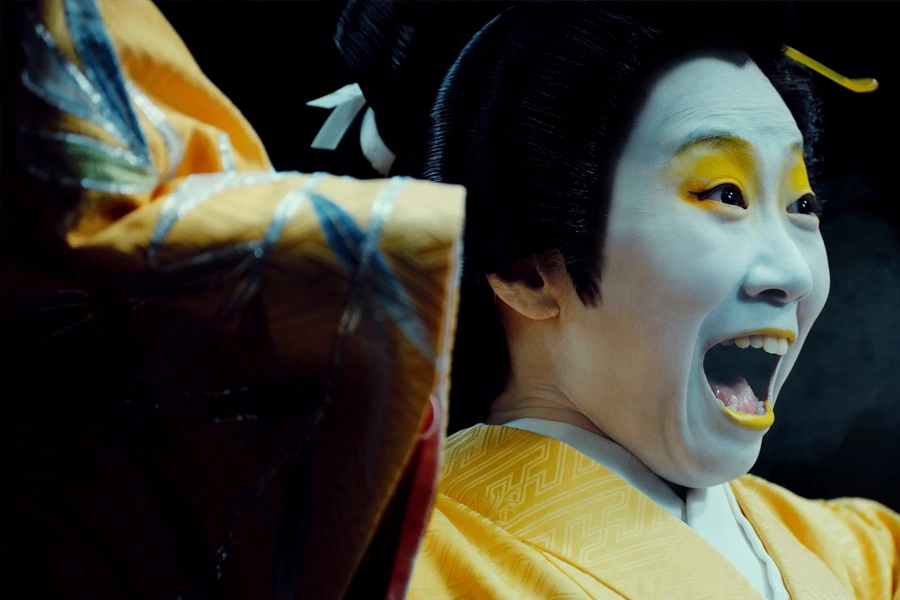
Kabuki is Japan’s classical theatre, a stylised and highly visual form of drama performed since the early 1600s, known for elaborate make-up, exaggerated movement and all-male casts. If you are a theatre enthusiast, you’ve heard of Kabuki. If not, then you’re welcome! Kabuki theatre is an ancient form of Japanese art that can be dated back to early 1600s.
It is a colourful, decadent form of drama in which actors take on almost operatic characters to recount tales of love, conflict, and family values. Kabuki used to be performed only by women until the Tokugawa Shogunate banned females from acting, which resulted in men taking up the roles literally. Even now, men dominate this theatrical convention which emphasises Japanese traditions.
In the world of Kabuki, actors can still be seen to follow strict schedules, performing 11 months of the year, many of them daily from 11.00 AM to 10.30 PM. Moreover, as was practised in the Edo period, Kabuki actors are found in distinct families, some more well known than others, such as the highly-renowned Ichikawa family. Many times, specific roles in Kabuki storylines are inherited.
What is kabuki? Izumo no Okuni, the 1629 ban and the onnagata
Kabuki traces its start to 1603, when Izumo no Okuni, a performer said to have been a shrine maiden from Izumo, danced a new style of dance drama with her troupe on the dry bed of the Kamo River in Kyoto, near Shijō. The name comes from the verb kabuku, to lean or to be out of the ordinary, which suited a daring, fashionable show. After the shogunate banned women from the stage in 1629, troupes of young men took over in what was called wakashu kabuki, until they too were banned in 1652. From then on only adult men could perform, and specialist actors called onnagata developed the art of playing women. The tradition is still strong: the onnagata Bandō Tamasaburō V was named a Living National Treasure in 2012.
Kumadori make-up: red for heroes, blue for villains
The bold painted faces kabuki is known for are called kumadori. They belong mostly to the larger-than-life aragoto style developed by the Ichikawa Danjūrō line of actors, and Zoë Kincaid, in Kabuki: The Popular Stage of Japan (1925), noted that its conventions were handed down by word of mouth from one Danjūrō to the next. Coloured lines are painted over a white base to exaggerate the muscles and veins of the face, and the colour tells the audience who they are watching. Red marks a brave and righteous hero, blue marks a villain, and brown marks a demon or other supernatural being.
Kanadehon Chūshingura: the 47 rōnin on the kabuki stage
Some of the best-loved plays retell real events. Kanadehon Chūshingura, the story of the 47 rōnin who avenged their lord in 1703, was first staged as a puppet play (bunraku) in 1748 and taken up by kabuki soon after. To get past the shogunate’s censors, the writers moved the story back to the 14th century and changed the names. It remains one of the most performed works in the repertoire, and an English translation of the full play by Jukichi Inouye was published in 1917.
Kabuki dance travels well beyond Japan. In London, dancer Suleiman Suleiman performs scenes from the kabuki dance Yasuna between songs from Schubert’s Winterreise in A Kabuki Winterreise at Wigmore Hall.
New Year Fires

New Year fire rituals are purification ceremonies held around the turn of the year, where shrines burn old amulets and decorations to send off the year’s deity and invite good fortune.
When thinking of fires in the context of New Year, one may be limited to memories of fireworks booming throughout the night sky. However, in Japan, the night sky in many areas is illuminated by bonfire flames in traditions to grant those participating good luck in the coming year.
Various fire festivals (many under different names) occur during and particularly near the end of the year. These can be traced back to the Heian period, as members of the royal families and nobility burned bamboo for purification and divination.
Decorations and amulets are burnt at Shinto Shrines due to Kakizome (the first calligraphy done in the New Year) to send off Toshigami, the God of New Year, gracefully. Throwing them away, on the other hand, would be viewed as highly disrespectful. Therefore, this practice of “burning” the artefacts brings good fortune in the New Year to all who participate!


Chabashira

Chabashira, meaning tea pillar, is a Japanese superstition: a tea stalk floating upright in your cup is read as a small sign of good luck.
Traditions don’t have to be coupled with actions; they are also beliefs passed down from generation to generation. In Japan, there are several superstitious beliefs that the average tourist knows little about. Maybe, you’ve done or experienced something that was said to bring you a terrible fate or magnificent fortunes without even realising it!
Noticing a stalk pointed upright, similar to a small pole, in your cup while drinking tea is believed in many areas of Japan to bring good luck. This is known as Chabashira, meaning “tea pillar”.
Chabashira originated from the idea that poles are monumental for structure-building, to support homes and towers, so it is good luck to notice one when you’re drinking tea!
Adopting Adult Men

Adult adoption is a long-standing Japanese practice where a family adopts a grown man, often a son-in-law or trusted employee, to carry on a family business or name, and it still accounts for most adoptions in Japan. In 2017, 98% of all Japanese adoptions were of adult men rather than children, most of them taken in to carry on a family name or business. In Japan, an ancient tradition stems from the nation’s civil code stipulating that the heir of a family business would be the son of the said family.
Therefore, if a family only had female offspring, it would be expected for the woman’s husband to be adopted for the business to remain within the domestic sphere. It is also not uncommon that trusted members of staff are adopted to handle family assets as well.
After World War II, this code changed, but the tradition continued. One of the past heads of Suzuki Corporation, the late Osamu Suzuki, was the 4th adopted son of the Suzuki family.
This kind of adopted son-in-law has its own name, muko yōshi. As Jukichi Inouye explained in Home Life in Tokyo (1910), a man with daughters but no son would adopt a young man as his eldest daughter’s husband, the adoption and the wedding could take place at the same time, and the husband took his wife’s family name and in due course became head of the household. Osamu Suzuki was a muko yōshi himself: born Osamu Matsuda, he took the Suzuki name when he married into the founding family.
Tetraphobia: The Fear of Four
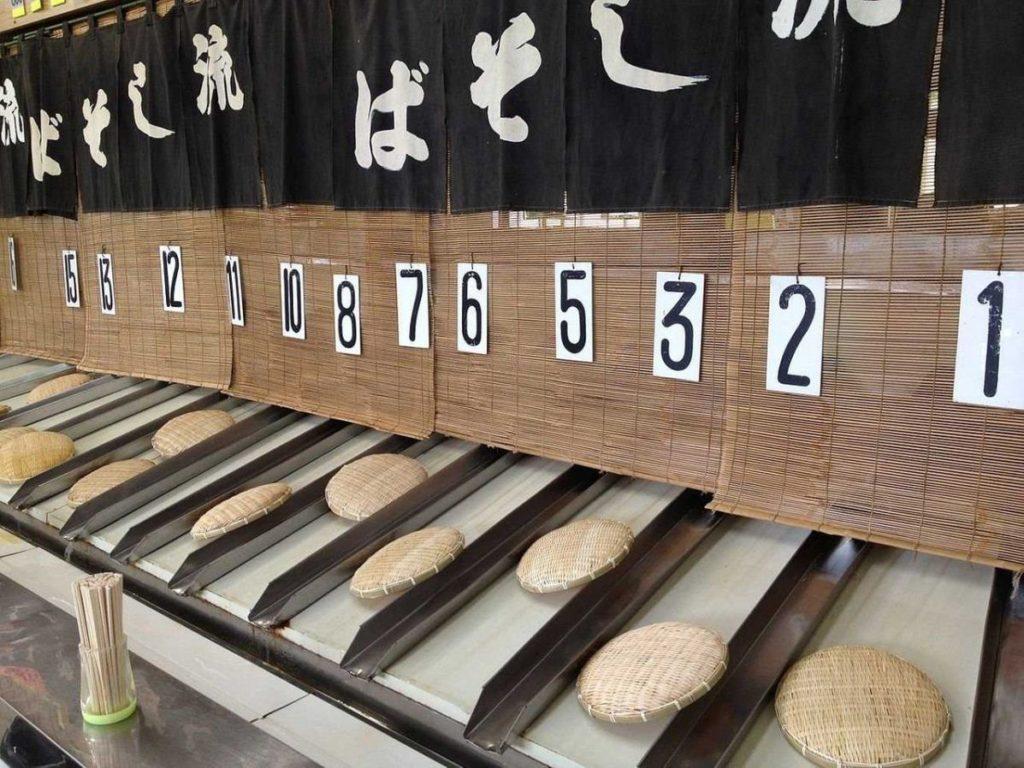
Tetraphobia is the avoidance of the number four in Japan because the word for four, shi, sounds like the word for death, so buildings and product sets often skip it. Japan, like many other East Asian countries, has a long-standing superstition around the number four. The Japanese number chart has two common words for four, shi and yon, and yon is generally preferred in everyday use.
In daily life, four is often avoided where practical. Food or drink sets may be arranged to avoid groups of four, and some apartment buildings and office towers omit floor 4, or even 40 to 49.
A BMJ study, “The Hound of the Baskervilles effect: natural experiment on the fourth-day mortality of Chinese and Japanese Americans,” examined mortality patterns around the fourth day of the month and reported a short-term rise in cardiac deaths among Chinese and Japanese Americans. The study found a 13% increase in cardiac deaths on the fourth day overall and a 27% increase in California, rather than specifically “heart failure” in Japan.




Coming of Age Day (Seijin no Hi)

Coming of Age Day, or Seijin no Hi, is a national holiday on the second Monday of January that celebrates young people reaching adulthood, marked by formal ceremonies and traditional dress. Although Japan lowered the legal age of adulthood to 18 in 2022, the holiday still centres on those turning 20.
Eligibility follows Japan’s school and fiscal year, which runs from April to March rather than the calendar year. Each January ceremony therefore honours everyone who turns 20 between April of the previous year and March of that year, so a person’s exact birthday decides which year they take part. The ceremonies are held at local and regional government offices across the country. Women typically wear traditional kimono, while men opt for traditional dress or, increasingly, business attire such as shirts and suits.
Coming of Age Day dates back to the Edo period, though it was not declared a national holiday until 1948.
Salt Tossing
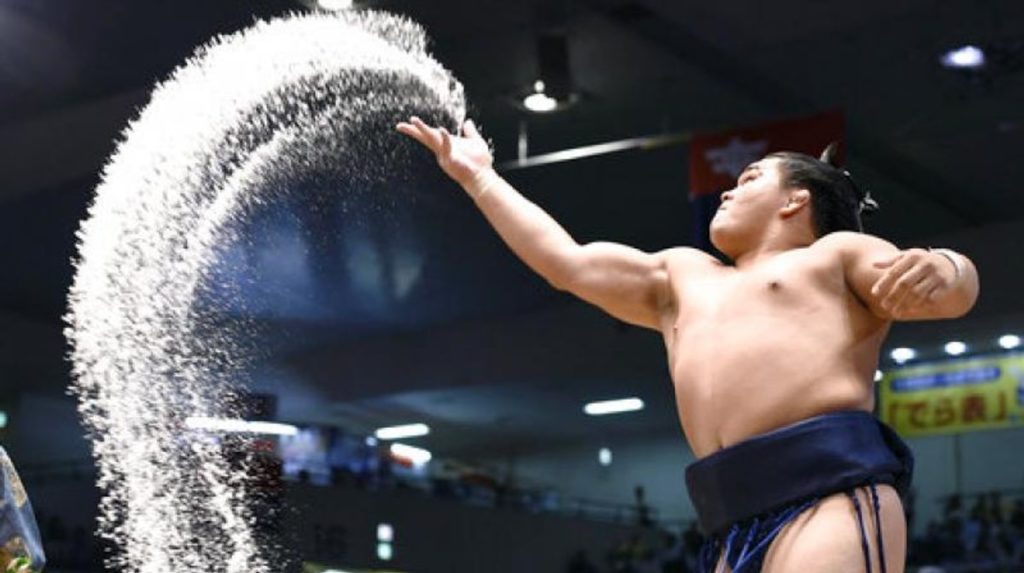
Salt tossing in sumo is a Shinto purification ritual where wrestlers scatter salt across the ring before a bout to cleanse the space and ward off evil spirits.
Anyone who attended wrestling bouts during their visits to Japan may have noticed both wrestlers tossing salt across the ring while preparing for combat. The Basho tournaments, which take place over 15 days in January, March, May, July, September, and November, characterise Japan’s best Sumo wrestlers.
Salt has been thought to have cleansing qualities since ancient times. As they prepare for competition, both wrestlers toss salt into the air, cleansing the area as a sacred space. They also use the ring to ward off evil spirits and drink water to purify their bodies. Every action is a holy act, dating back to the sports original beginnings.
The same belief reaches well beyond the sumo ring. W. G. Aston, in Shinto: The Ancient Religion of Japan (1907), recorded that relatives purified themselves after a funeral and that salt was used to avert evil influences. Mourners today are often handed a small packet of purifying salt (kiyome no shio) to sprinkle over themselves before going back into their homes, and some restaurants and shops set small cones of salt (morijio) by the door to keep misfortune away and welcome customers.
Sumo has ancient roots stretching back many centuries, with ritual and courtly forms documented early in Japanese history.
Hari-kuyo (Broken Needle Memorial)

Hari-kuyo is a Japanese memorial for broken and bent sewing needles, held at temples and shrines, where worn needles are laid to rest in soft tofu as thanks for their service. It reflects a gentle sense of gratitude toward everyday tools and the idea that even small objects deserve respect.
The ritual is usually observed by people who sew, such as kimono makers, tailors, and home seamstresses, who bring needles that have become dull, bent, or broken over the past year. Placing them in tofu or another soft offering symbolises rest after hard work, while prayers are offered for better sewing skills and safe, careful craft in the year ahead.
Yakudoshi (Unlucky Years)

Yakudoshi are specific ages considered unlucky in Japan, when many people visit a shrine for purification to ward off misfortune. The belief is tied to the idea that certain life stages can bring extra vulnerability, so people often mark the year with prayers and cleansing rituals.
The most commonly cited yakudoshi ages are 25, 42, and 61 for men, and 19, 33, 37, and 61 for women, with 42 and 33 seen as especially unlucky. In modern Japan, the practice is often less about strict superstition and more about taking a reflective pause and seeking protection during a potentially difficult year.
These ages are counted the traditional way, known as kazoedoshi, in which a baby is one year old at birth and everyone gains a year on New Year’s Day. A man’s 42nd year therefore usually falls when he is 40 or 41 by Western counting. Inouye noted in Home Life in Tokyo that the years either side of the main unlucky year also call for care, and shrines still list these as maeyaku (the year before) and atoyaku (the year after), so the most serious yakudoshi stretches over three years. The two worst ages carry grim puns: 42 can be read shi-ni, “to death”, and 33 sanzan, “terrible”. Shrines publish a chart of the birth years affected each year, and the exact ages vary a little from one shrine to another.
Japanese Traditions: FAQs
What are Japanese traditions?
Japanese traditions are the long-held customs and rituals that shape social life in Japan, including the tea ceremony, seasonal festivals, shrine and temple visits, and etiquette around bowing, gift-giving and removing shoes indoors. Many sit alongside modern life rather than being replaced by it.
Which Japanese traditions are still practised today?
Plenty remain part of ordinary life. Hatsumode, the first shrine visit of the New Year, draws millions each January. Hanami fills parks every spring, seasonal matsuri run throughout the year, and the tea ceremony is still taught and performed across the country.
What is the most important tradition in Japan?
There is no single answer, but New Year, or shogatsu, is the most widely observed, marked by family gatherings, shrine visits and specific foods. Respect for the seasons and for social etiquette underpins many of the others.
Sources and further reading
- W. G. Aston, Shinto: The Ancient Religion of Japan (1907)
- Jukichi Inouye, Home Life in Tokyo (1910)
- Takeda Izumo and others, translated by Jukichi Inouye, Chushingura, or The Treasury of Loyal Retainers (1917)
- Zoë Kincaid, Kabuki: The Popular Stage of Japan (1925)