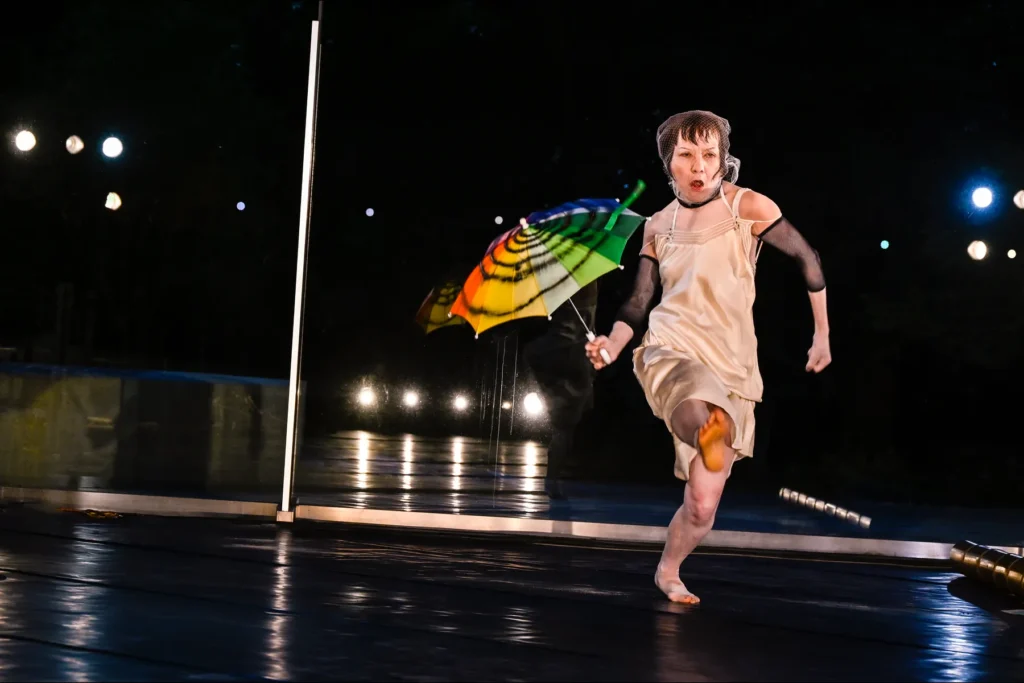
Mezzo-soprano Fleur Barron brings A Kabuki Winterreise: ‘Spring Snow’ to Wigmore Hall on Sunday 11 October 2026 at 7:30pm. The performance lasts about 75 minutes without an interval, and it sets songs from Schubert’s Winterreise between scenes from Yasuna, a kabuki dance about a young nobleman driven out of his mind by grief.
Barron sings with pianist Jong Sun Woo, who replaces the originally announced Julius Drake, alongside the dancer Suleiman Suleiman and the Tsugaru shamisen player Hibiki Ichikawa. Wigmore Hall describes the evening as “a meditation on sound and silence, solitude and communion, love and loss”.
A grieving lover from kabuki and Schubert’s lonely winter traveller, sharing one stage for an evening
Yasuna, the kabuki dance of a lover lost in spring
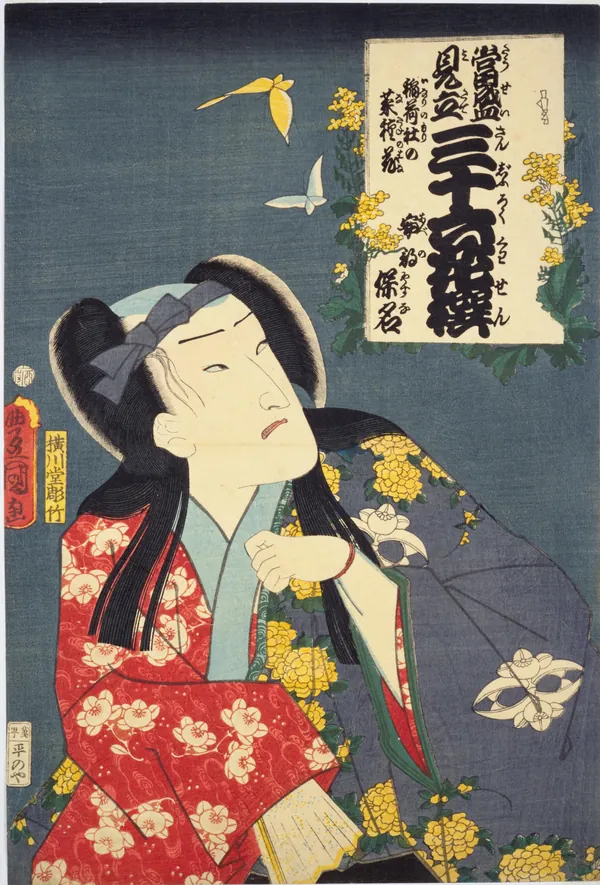
Yasuna is a dance from the kabuki repertoire, performed to Kiyomoto narrative singing. It was first staged in Edo in 1818 at the Miyakoza theatre, and it grew out of a much older puppet play, Ashiya Dōman Ōuchi Kagami, first performed in Osaka in 1734.
The story is simple and very sad. Abe no Yasuna is engaged to Sakaki-no-Mae, the daughter of a court astronomer. When she dies, Yasuna loses his mind and wanders the countryside in spring, among the cherry blossom, holding her short sleeved silk robe and wearing the purple headband kabuki uses to show madness. He treats the robe as if it were Sakaki herself, until the illusion finally breaks. The Kabuki21 guide to Yasuna tells the full story and its stage history.
In the kabuki theatre, Yasuna belongs to the shosagoto, the dance plays. Zoë Kincaid, in Kabuki: The Popular Stage of Japan (1925), explains that these dances are set to one of three styles of narrative music that grew up in Edo: Nagauta, Tokiwazu and Kiyomoto. The Kiyomoto singers kneel behind lacquered book stands, usually on a raised platform at the side or back of the stage, with the shamisen as their only instrument. Kincaid adds that the dance plays took much of their plot and music from the older Noh theatre, and her book reproduces a print of the actor Ichimura Uzaemon XIII as Yasuna, in what she calls a posture dance of a man driven out of his mind by loss.
At Wigmore Hall the dance is split intothree kabuki scenes, called Preserve, Seek and Illusion, with a short butterfly interlude near the end.

Twelve songs from Schubert’s Winterreise
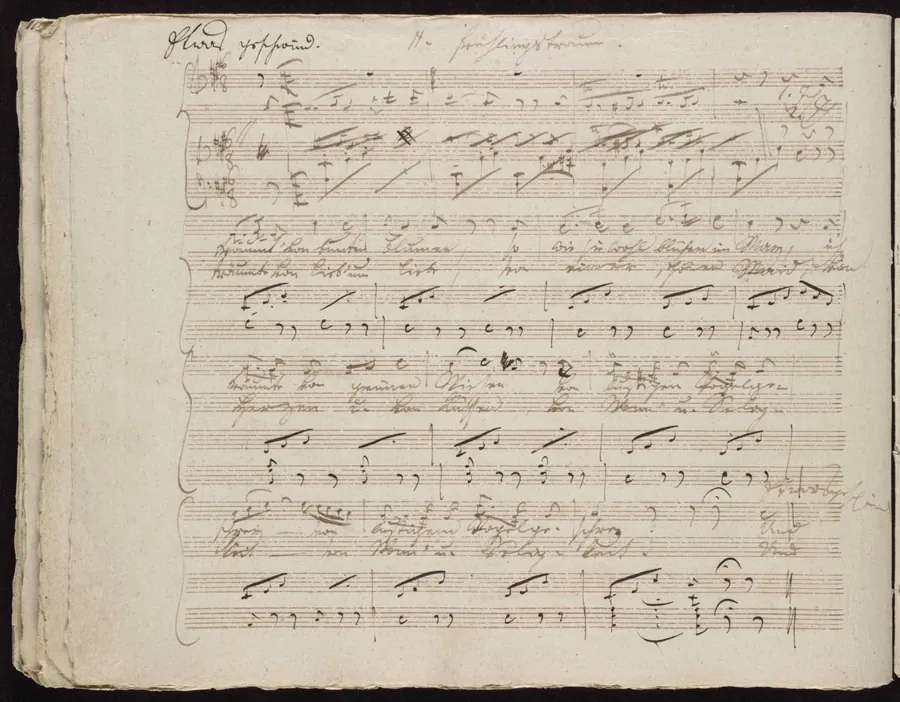
Schubert wrote Winterreise in 1827, a cycle of 24 songs setting poems by Wilhelm Müller about a rejected lover walking alone through a frozen landscape. Both works are about grief and a journey taken alone, and they were written only about a decade apart. Pairing Japanese stagecraft with Western classics has a long history, which our guide to Japanese theatre adaptations of Western classics traces from the Meiji period onwards.
This performance uses 12 songs from the first half of the cycle, woven between the kabuki scenes. It opens with “Der Leiermann”, the song that normally ends Winterreise, and closes with the same song played on the piano alone. In between come songs including “Gute Nacht”, “Der Lindenbaum”, “Auf dem Flusse” and “Frühlingstraum”, the dream of spring. Wigmore Hall’s Kabuki Winterreise podcast talks through how the two stories fit together.
Fleur Barron, Jong Sun Woo, Suleiman Suleiman and Hibiki Ichikawa
- Fleur Barron, mezzo-soprano, who leads the project and has taken it from its first performance in 2024 to the Royal Northern College of Music in January 2025 and Schloss Elmau in Bavaria
- Jong Sun Woo, piano
- Suleiman Suleiman, dancer, a London-based actor trained at Goldsmiths and the Mozarteum University in Salzburg who specialises in kabuki
- Hibiki Ichikawa, Tsugaru shamisen, a London-based player and teacher with more than 20 years of experience
- Misa Koide, Aigorō Hanayagi and Sophie Daneman, movement directors
- Lifeng Liao, costume designer
At Wigmore Hall the music for the kabuki scenes comes from Hibiki Ichikawa’s Tsugaru shamisen. The style takes its name from the Tsugaru district in the west of what is now Aomori Prefecture, where it was first played by blind travelling musicians known as bosama. It uses a shamisen with a very thick neck, and the player strikes the plectrum against the skin of the body for a sharp, percussive sound, as Ethnomusicology OnLine’s introduction to the Tsugaru shamisen explains.
Tickets and getting to Wigmore Hall
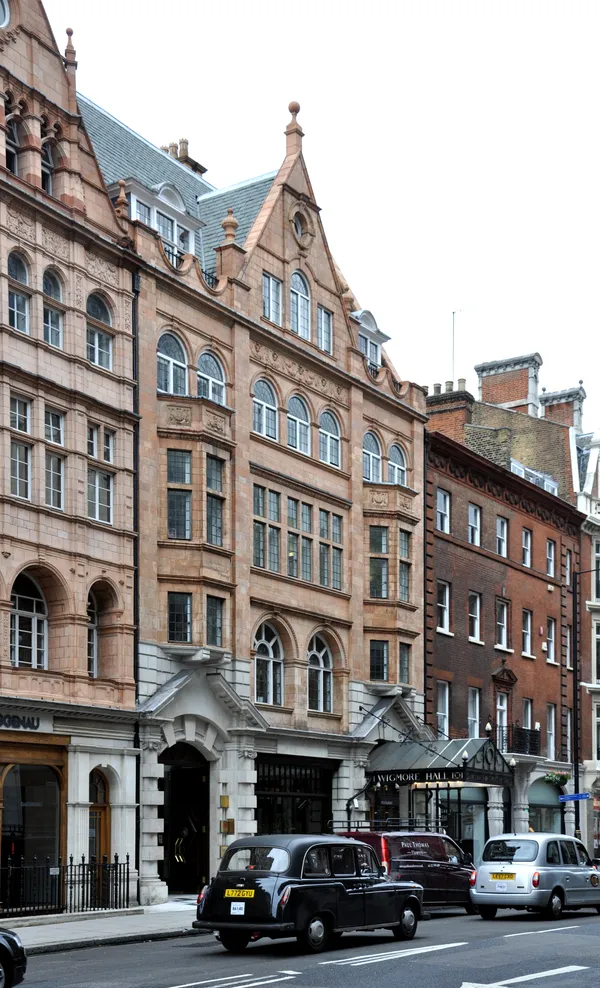
Tickets cost £18, £27, £33, £37 and £40, with a £4 booking fee per transaction. Wigmore Hall also sells £5 tickets to under 35s, and a limited number of free tickets are available to people aged 16 to 24 through the CAVATINA Chamber Music Trust.
Wigmore Hall is at 36 Wigmore Street, just north of Oxford Street. Bond Street station, on the Central, Jubilee and Elizabeth lines, is about 0.2 miles away, with step free access from the Marylebone Lane exit. Oxford Circus is about 0.4 miles away.
More Japanese dance follows in London on 13 and 14 November, when the Rebellious Bodies butoh festival brings three generations of Kazuo Ohno’s dancers to The Place.

Wigmore Hall
Seats can be booked on Wigmore Hall’s A Kabuki Winterreise page or through the box office on 020 7935 2141.