

Disclosure: this article contains affiliate links to MagicalTrip. If you book through them, Japan Nakama may earn a commission at no extra cost to you. Tour details were checked on MagicalTrip’s website on 30 October 2026.
A Kyoto tea ceremony makes more sense once you know where Japanese tea came from. MagicalTrip’s Kyoto Gion Tea Ceremony and Wabi-sabi Walking Tour is built on that idea. In 3.5 hours a local guide walks you through Gion to Kennin-ji, the Zen temple founded by the monk who brought tea seeds back from China, then past a tea utensil shop and a quiet local temple to a tea ceremony led by a tea master.
MagicalTrip used to run a tea tour around Kiyomizu-dera. That route is no longer listed, so this guide covers the Gion tour that replaced it, with a practical box on Kiyomizu-dera further down for anyone who wants to add the temple on the same day.

Kennin-ji, Wabi-sabi and a Kyoto Tea Ceremony
MagicalTrip’s Gion tea tour at a glance
- Tour name: Kyoto Gion Tea ceremony & Wabi-sabi Walking Tour, run by MagicalTrip
- Length: 3.5 hours with an English-speaking local guide
- Price: from US$80.22 for adults (16 and over) and US$58.34 for children aged 6 to 15 on a shared tour. Private bookings are priced by group size on the booking page.
- Group size: up to seven guests
- Meeting point: in front of the statue of Izumo no Okuni, right outside Exit 5 of Gion-Shijo Station on the Keihan Line. The guide holds an orange “Magical Trip Tour” sign.
- Route: a tea shop in Gion, Kennin-ji, a tea utensil shop, a quiet local temple, then the tea ceremony
- Included: the tea ceremony with matcha and a small seasonal sweet, entry to two temples, the guide, and photos taken by your guide and emailed after the tour
- Good to know: not open to children under 6; some stops are not accessible by wheelchair or stroller; the tour starts on time and latecomers cannot join, reschedule or get a refund
- Cancellation: full refund if you cancel at least 24 hours before the start, and free rescheduling up to 24 hours before, subject to availability


Kyoto, Japan’s capital from 794 to 1868

Kyoto was the seat of the imperial court from 794 to 1868, more than a thousand years. Its name, 京都, simply means “capital city”, and over the centuries it was also called Heian-kyō (“Capital of Peace and Tranquillity”), Miyako (“The Capital”) and Saikyō (“West Capital”). Tokyo, then called Edo, was a small settlement for much of that time and only grew into a major city after Tokugawa Ieyasu made it the seat of his shogunate in 1603.
Tokyo has been rebuilt more than once since it became the capital in 1868, after the Great Kantō Earthquake of 1923 and the air raids of 1945. Kyoto largely escaped wartime bombing, which is a big part of why so much of its older townscape survives, and why Kyoto is still the place to see old temples and wooden streets side by side.
Meeting at the Izumo no Okuni statue by the Kamo River

The tour meets at the statue of Izumo no Okuni, right outside Exit 5 of Gion-Shijo Station on the Keihan Line, a fitting place to start a walk about Japanese culture. Okuni was a ritual dancer attached to the great shrine at Izumo, and Zoë Kincaid’s history of kabuki credits her with founding the popular theatre around 1596, when she began performing on the dry bed of the Kamo River in Kyoto (Kincaid, Kabuki: The Popular Stage of Japan, 1925, chapter VII). Kabuki grew from those riverside performances into the theatre still staged across the city today.

Kennin-ji, the Zen temple where Eisai’s tea story begins

From the river the guide leads you into Gion, stopping at a well-known matcha shop before reaching Kennin-ji. The temple calls itself the oldest Zen temple in Kyoto, and its founder, the monk Eisai, is the reason it belongs on a tea tour. Kennin-ji was founded in 1202, and the temple honours Eisai as the founder of tea in Japan.
Tea was known in Japan long before him. Kakuzo Okakura’s The Book of Tea records the Emperor Shōmu serving tea to a hundred monks in 729, but it was Eisai, returning from China in 1191 after studying Zen, who brought the Song dynasty style of tea and new seeds. One of the places those seeds were planted, Okakura notes, was the Uji district near Kyoto, still famous for its tea (Okakura, The Book of Tea, 1906, chapter II). Kennin-ji’s own account adds that Eisai wrote the two-volume Kissa Yōjōki, a guide to tea as medicine, and sent seeds to the monk Myōe at Toganoo, the start of the tea that later spread to Uji.

Every year on 20 April, Eisai’s birthday, Kennin-ji holds the Yotsugashira tea ceremony, a Zen tea ritual that Kyoto City registered as an intangible folk cultural property in March 2012. Your tour ticket covers temple entry, but if you come back on your own, entry is ¥800 for adults and ¥500 for school pupils, rising to ¥1,000 for adults on 1 January 2027. Kennin-ji opens from 10:00, takes its last entry at 16:30 and shuts its gates at 17:00. It is closed to visitors all day on 15 November 2026 for a memorial service.




Tea bowls and a dry garden: wabi-sabi before the tea

The middle of the walk is about wabi-sabi, the idea of finding beauty in imperfection and in things that do not last. At a traditional pottery and tea utensil shop your guide shows you wabi-sabi tea bowls, the kind of uneven, hand-made pieces a tea host chooses with care. The next stop is a quiet local temple with Japanese paintings and a karesansui, a dry landscape Zen garden, where the same idea is laid out in raked gravel and stone.
MagicalTrip’s featured guide for this tour, Akiko, has studied the tea ceremony since her teens, and the tour is designed so that you have seen and handled these ideas before you sit down to drink.
A Kyoto tea ceremony with a tea master

The walk ends at the tea ceremony itself, led by a tea master. You choose a tea bowl to suit the season and your own taste, then drink matcha with a small seasonal sweet. It is a hands-on version of the ritual that grew out of Zen temple tea, which Sen no Rikyū reshaped in the 16th century; our guide to chanoyu, the story of Japan’s tea ceremony, follows that history in full.

If the ceremony leaves you wanting to make matcha at home, the Japan Nakama shop stocks Japanese tea sets and teas.
Booking MagicalTrip’s Gion tea tour
Book directly on MagicalTrip’s tour page, which shows available dates, start times and the price in your chosen currency. On 30 October 2026 the tour carried a five-star average from 14 reviews, and MagicalTrip had won Tripadvisor’s Best of the Best award in 2024 and 2025.
A few practical points before you book. Arrive early at Exit 5 of Gion-Shijo Station, because the group leaves on time. Bring layers: MagicalTrip warns that Kyoto summers now reach 40°C and winters drop to minus 5°C. You do not pay for your guide’s food or drinks, and you may share the tour with other guests unless you book a private group.
Izumo no Okuni statue, Exit 5 of Gion-Shijo Station
Kiyomizu-dera practical box: hours, entry fee and the Otowa Waterfall
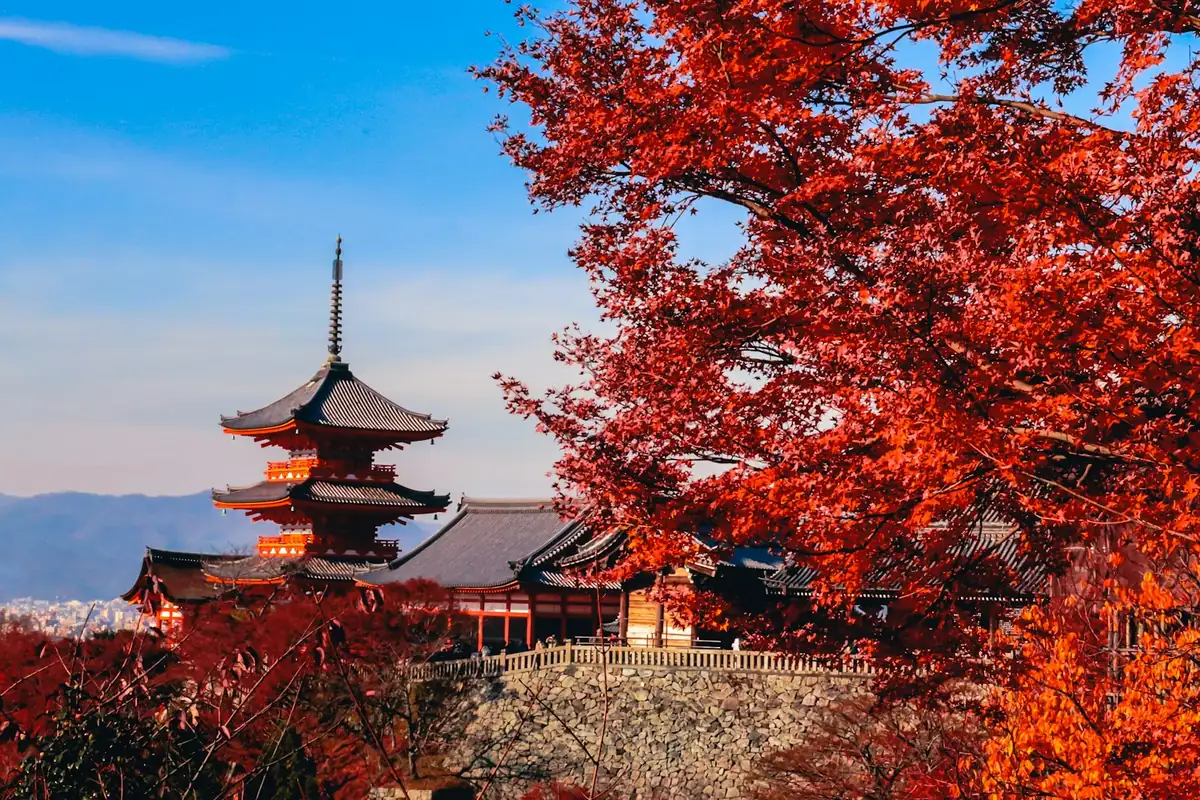
The Gion tour does not go to Kiyomizu-dera, but the temple sits on the same eastern side of the city and many visitors pair the two in one day.
- Founded: 778, on the slopes of Mt Otowa in the Higashiyama hills. Most of today’s buildings date from 1633.
- Opening hours: from 6:00 every day. Closing time changes with the season and with the special night viewings, so check the temple’s opening hours page before you go.
- Entry: ¥500 for adults and ¥200 for primary and junior high school pupils, the rates since 1 April 2024. Night viewings are charged separately.
- Getting there: about 20 minutes on foot from Kiyomizu-Gojo Station on the Keihan Line, or City Bus 206 or 100 from Kyoto Station to Gojozaka, then about 10 minutes uphill on foot.
- The stage: the wooden stage in front of the Main Hall covers about 200 square metres and stands on pillars more than 13 metres tall. Its floor was relaid with 166 hinoki cypress boards during a 12-year restoration that began in 2008.
- The Otowa Waterfall: the spring the temple is named after. Kiyomizu means “pure water”, after the clarity of this waterfall.
- On the way up: the small temple of Yasaka Koshindo, formally Kongō-ji, is known for its kukuri-zaru, brightly coloured cloth monkey charms that visitors write a wish on and hang in the grounds.
- Etiquette: the temple bans tripods, monopods and drones, asks visitors to eat and drink only in its cafes and tea houses, and asks for quiet in the grounds.
Kyoto tea ceremony tour: questions and answers
On 30 October 2026 MagicalTrip listed the shared tour from US$80.22 for adults aged 16 and over and US$58.34 for children aged 6 to 15. That covers the 3.5 hour walk with a guide, entry to two temples, and the tea ceremony with matcha and a seasonal sweet. Private groups are priced separately on the booking page.
Children aged 6 and over can join MagicalTrip’s Gion tea tour, at the child rate up to age 15. The tour is not available for children under 6. Some stops on the route cannot be reached with a stroller or wheelchair, so families with very young children or anyone with limited mobility should contact MagicalTrip before booking.
Kennin-ji was founded in 1202 by the monk Eisai, who returned from China in 1191 with Zen teaching and tea seeds. He wrote the Kissa Yōjōki, a two-volume book on tea and health, and Kennin-ji honours him as the founder of tea in Japan. The temple still holds the Yotsugashira tea ceremony every 20 April, on his birthday.
Entry to the paid area of Kiyomizu-dera, including the Main Hall, costs ¥500 for adults and ¥200 for primary and junior high school pupils, the rates since 1 April 2024. The temple opens at 6:00, and its closing time changes through the year. Special night viewings in spring, summer and autumn are charged separately.
MagicalTrip starts every tour on time out of respect for the other guests. If you miss the group at the Izumo no Okuni statue outside Exit 5 of Gion-Shijo Station, you cannot join late, reschedule or get a refund. To change plans, cancel or reschedule at least 24 hours before the start time.


