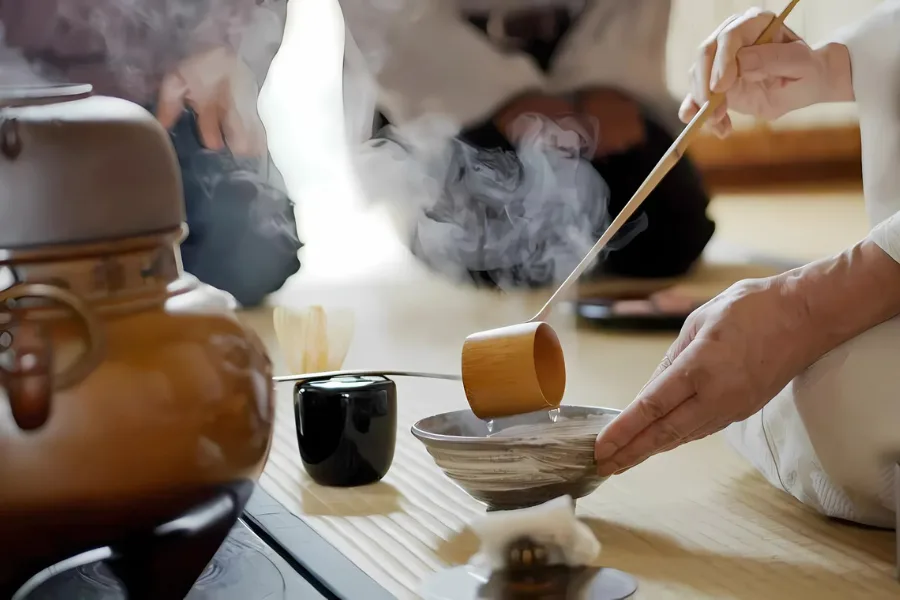
Tea has long since become a daily ritual around the world — a stop for caffeine, a marker of a meeting, or a quiet moment alone. But when tea first took root in Japan, it served a very different set of needs. Unlike casual afternoon teas, Japan’s tea ceremony looked quite different at that time as it was shaped by changing systems and beliefs. Explore the Japanese tea culture by looking back at how everything began and eventually transformed into one of the most practiced traditions today.
Japan’s Tea Ceremony
The Political History of Chanoyu
Tea had been known in Japan from at least the 8th century, but it was the monk Eisai (1141–1215) who reintroduced it in a sustained way, bringing tea seeds and Rinzai Zen back from Song China and laying the groundwork for tea cultivation in Japan. From the late 12th century onwards, a succession of military commanders known as shōgun held de facto political power in Japan, while the imperial line remained the formal head of state. In practice, the shōgunate ran the country, even though shōgun were nominally subordinate to the emperor. By the late 15th century, with the Ōnin War (1467–1477) shattering the Ashikaga shogunate’s authority, Japan had entered the Sengoku Jidai, or Warring States period.
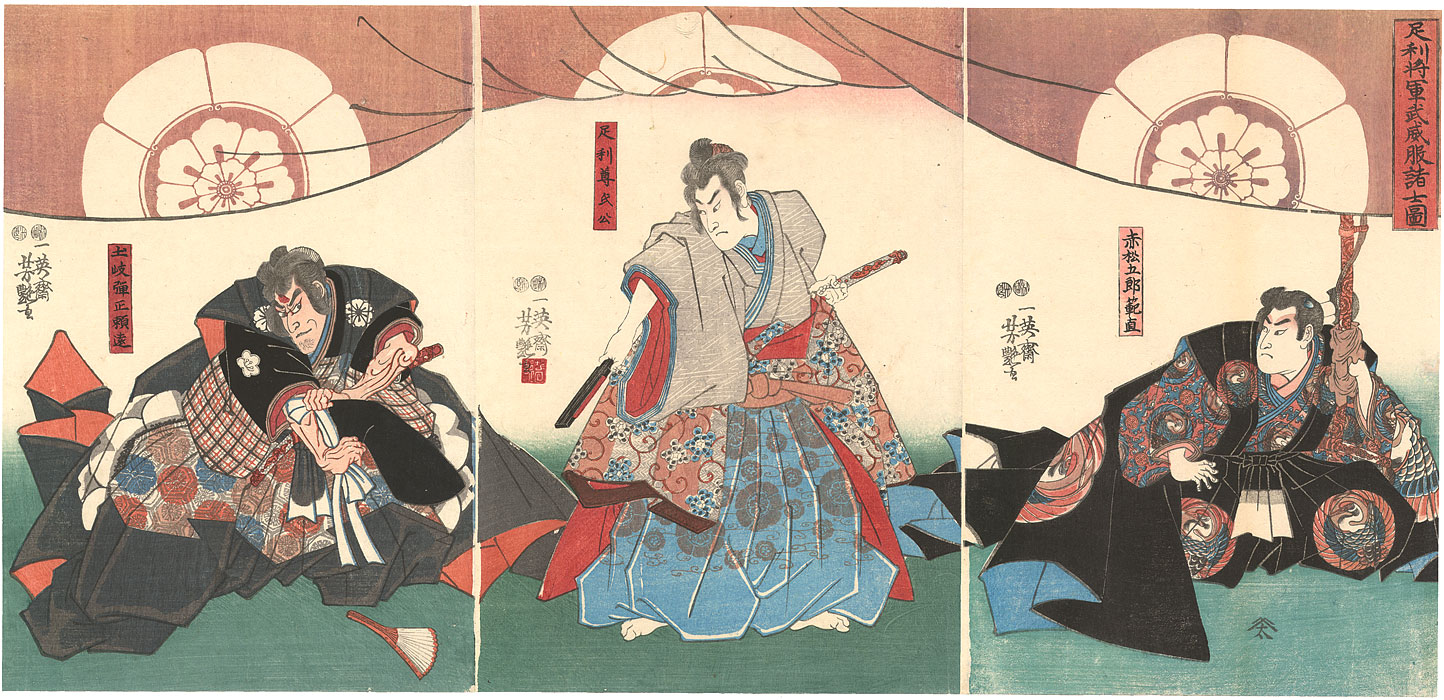
Ashikaga Takauji. Image Credit: The History of Fighting
The daimyo, or local lords, came to hold control. They were keen to increase their status and influence by both military and cultural means. Takauji, the founder of the Ashikaga shōgunate, emphasised the importance of both military and civil cultivation during his reign. This shifted attention to elements such as tea which fall under civil arts. With the imperial line increasingly ceremonial, the shogunate sought new ways to project authority — and tea, increasingly intertwined with Zen Buddhism, became one of those tools.
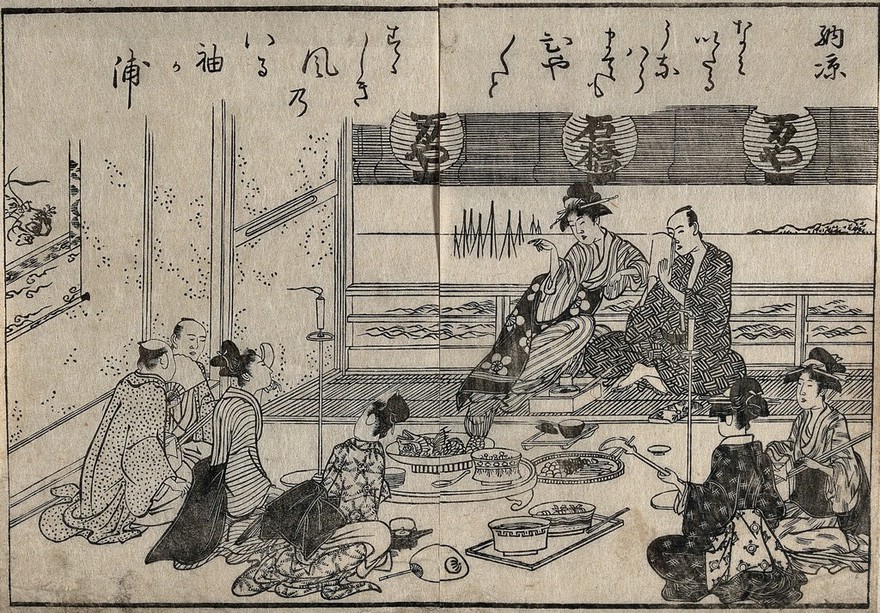
Image Credit: Welcome Collection
Chanoyu: Japan’s Tea Ceremony
The “chanoyu” or Japanese tea ritual took shape in the fifteenth century, when the tea master Murata Jukō developed the simple wabi style of tea, and reached its height in the sixteenth century. It was a form of aristocratic art that gave the ruling class of Japan, the warrior elite, and affluent merchants a forum to create and strengthen social bonds. Although tea was used in Japan in a variety of ways, the imperial or shōgunal circle at the top of society used the tea culture to elevate their status among their contemporaries. The shōgun always received the first harvest from the best tea growers he supported. Fancy tea parties were used by rulers like Oda Nobunaga and Toyotomi Hideyoshi to strengthen their positions of authority and build relationships with the daimyos (feudal lords). These rituals evolved into a method for measuring allegiance and preserving political stability.


Sen no Rikyū and the New Ceremony Style
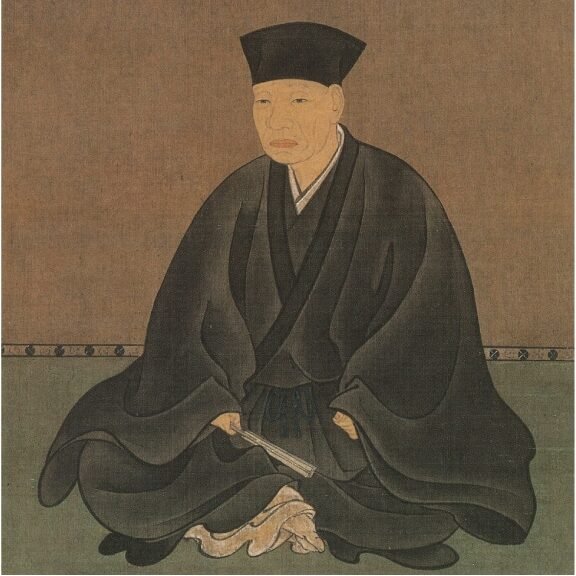
Sen no Rikyū (L) and Toyotomi Hideyoshi (R) Image Credit: Osaka.com
In the Sengoku era, tea culture brought enormous influence on both the shōguns and the warlords. Toyotomi Hideyoshi, the samurai daimyō who would later unify Japan, and Sen no Rikyū, a wealthy merchant turned tea master from the port city of Sakai, are the clearest illustration of this dynamic. Even when Rikyu’s tea advice went against custom or his own preferences, Hideyoshi cherished them. When performing chanoyu for Hideyoshi and his entourage, Rikyu was observed to veer away from the standard usage of the daisu shelf, which has a rich history in the tea ritual.
Rikyu’s style of chanoyu as a means of subtly enhancing the reputation of tea practitioners of the merchant class can be observed through a comparison between Toyotomi Hideyoshi’s overbearing opulence and Rikyu’s modesty. For Hideyoshi, admiration from military power was not enough, and chanoyu’s reputation would be a valuable asset in his effort to take over as de facto ruler of Japan. He did this, among other things, by hosting a massive tea party in the fall of 1587. Hideyoshi insisted that everyone who practices tea in the Kyoto region come to the “Kitano Grand Tea Party” in order to demonstrate the power and cultural authority he so desperately craved.
The Kitano Grand Tea Party, or Kitano Ōchanoyu, is one of the best-known events in the history of the Japanese tea ceremony. It was held in the pine grove at Kitano Tenmangū shrine on the first day of the tenth month of 1587, a few months after Hideyoshi’s successful campaign in Kyushu. Notices invited anyone who loved tea, whatever their rank, and Hideyoshi served tea himself alongside the three leading tea masters of the day, Sen no Rikyū, Tsuda Sōgyū and Imai Sōkyū. His portable golden tea room was set up in the shrine grounds, in sharp contrast to the simple shelters, giant umbrellas and portable pavilions that guests put up under the pines. The gathering was announced for ten days, yet it was called off after the first, and the reason has never been settled. Attendance figures vary: Frank Brinkley’s A History of the Japanese People (1915) recorded over 360 guests, while modern accounts put the number of tea booths at 800 or more.
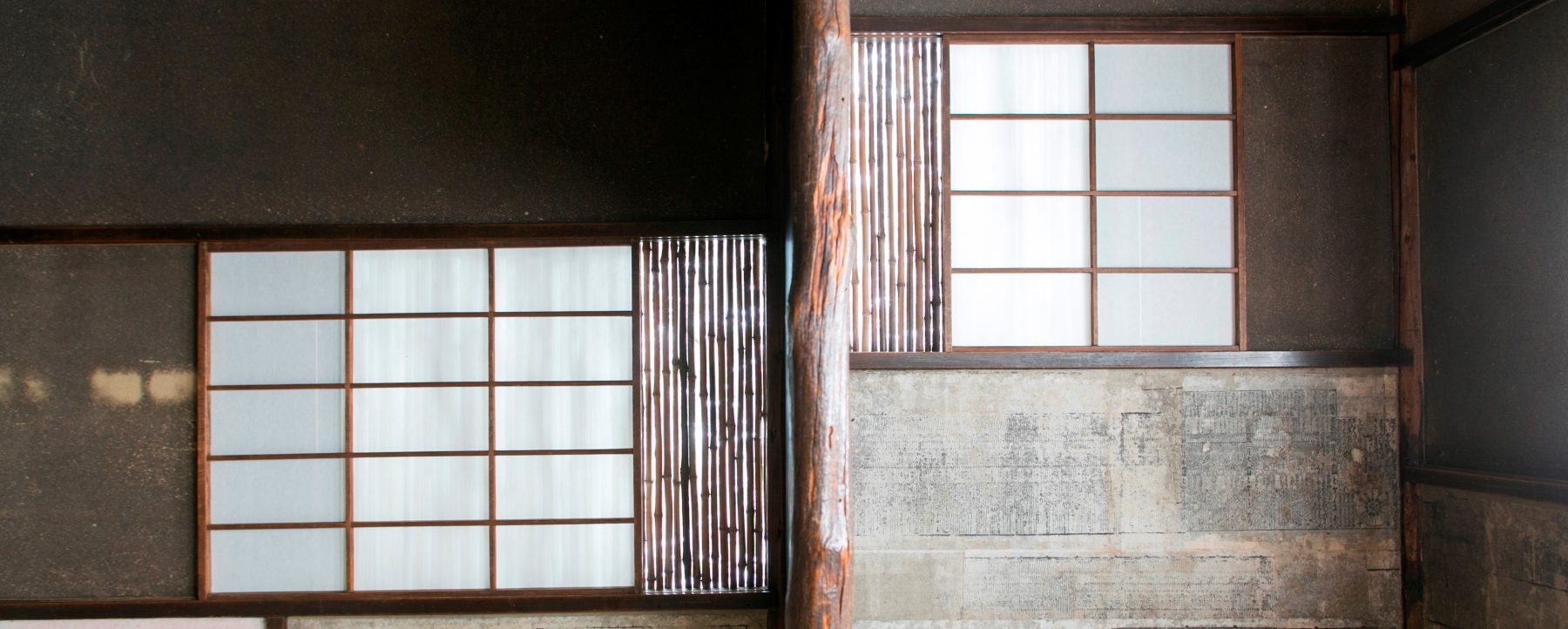
Tea room layout inspired by Sen no Rikyū (Design by Architect Rei Mitsui) Image Credit: Window Research Institute
Rikyu’s Intimate Approach
In contrast, Rikyu’s ceremonies are known to be much more modest, rustic, and affordable. In basic, rustic cottages with minimal tools, he made tea and shared it with a few visitors, sometimes just one at a time. Instead of being a lavish party, it evolved into a method to comprehend the intricacies of life, how hosts and guests can interact without words, and discover important facts about one another. He incorporated seasonal decorations like flowers and plants into his tea room design and used natural light and vistas to create a peaceful ambiance as connection to nature was an important part of his philosophy. His emphasis on creating an intimate atmosphere enabled meaningful connections amongst a small group of visitors, fostering an atmosphere where participants could completely connect with their fellow guests and the moment at hand.
The Japanese Tea Room: Four and a Half Mats, Taian and the Nijiriguchi
The Japanese tea room, or chashitsu, had long been built around four and a half tatami mats, a space just under three metres square. Rikyū took the idea further. Okakura Kakuzō’s The Book of Tea (1906) credits him with the first independent tea house, a small building with its own waiting shelter (machiai), a room for preparing the utensils (mizuya) and a garden path (roji) leading guests to the door, with the tea room itself meant for no more than five people.
The smallest tea room linked to him survives at Myōki-an temple in Ōyamazaki, just south of Kyoto. Taian measures only two tatami mats and is the oldest of the tea houses designated as National Treasures in Japan. Tradition says Rikyū designed it, although scholars point out that there is no firm proof. Guests enter through a nijiriguchi, a crawl-through doorway about 70 centimetres high, so everyone has to bow low to come in, samurai included. Rikyū is widely credited with making this humble entrance a standard feature of the tea house. Visits to Taian are by advance reservation only.
Following Buddhism and Zen Ideals
Buddhism had become well-established in Japan in the 8th century. But Zen only took root after the monk Eisai returned from China in 1191, bringing Rinzai Zen and tea seeds with him. It then took centuries for tea and Zen to reach the popularity they enjoyed in the 16th century. The deliberate efforts of Sen no Rikyū and his peers wove the principles of Zen Buddhism and chanoyu inseparably together. The tea masters’ chanoyu was crafted to feel deliberately understated, grounded in Zen philosophy and an emphasis on modesty.
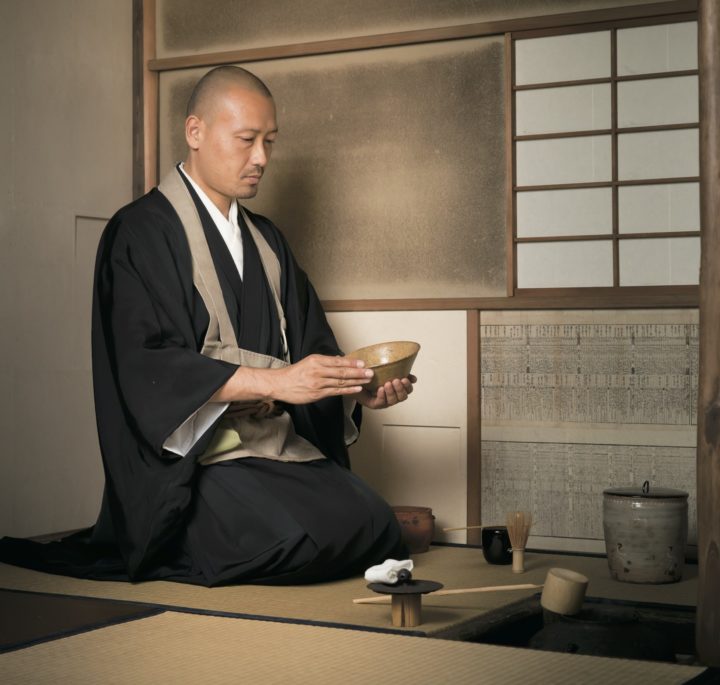
Image Credit: Traditional Kyoto
Rikyu emphasised Zen philosophy in his chanoyu beliefs, appealing to the existing warrior class. Zen’s principles of impermanence and discipline resonated with the samurai. They sought enlightenment through meditation and direct mind-to-mind transmission, not fasting or scripture study.
The Zen concept “Ichigo Ichie” guides tea hosts and guests to value each moment and encounter. It teaches gratitude, presence, and genuine respect for all, regardless of status. This ethos promotes equality among tea practitioners.
Sen no Rikyū’s Death in 1591 and His Last Tea
The partnership between Hideyoshi and Sen no Rikyū ended badly. In 1591 Hideyoshi ordered the tea master, then around seventy, to take his own life, and Rikyū died by seppuku in Kyoto on the 28th day of the second month. Historians still debate why. The explanation most often given is Hideyoshi’s anger at a wooden statue of Rikyū placed in the upper storey of the Sanmon gate at Daitoku-ji temple, a gate Hideyoshi himself would have to walk beneath. Others point to the high prices Rikyū was said to charge for his services and for the tea utensils he approved.
Okakura Kakuzō closed The Book of Tea (1906) with a dramatised account of Rikyū’s final gathering. In his telling, Rikyū serves his closest disciples one last bowl, gives each of them a piece of his tea equipment as a keepsake and breaks the bowl he drank from, saying: “Never again shall this cup, polluted by the lips of misfortune, be used by man.” Okakura wrote this more than three centuries after the event, so the scene is best read as a literary retelling.
Social Class and Material Culture
Optimal tea-making instruments vary based on tea type and prevailing styles of the time. While Japan’s tea wares diverged from China’s, the idea of esteem elevation persisted. Before the Sengoku era, importing or mimicking Chinese artefacts marked high culture in Japanese elite tea circles.
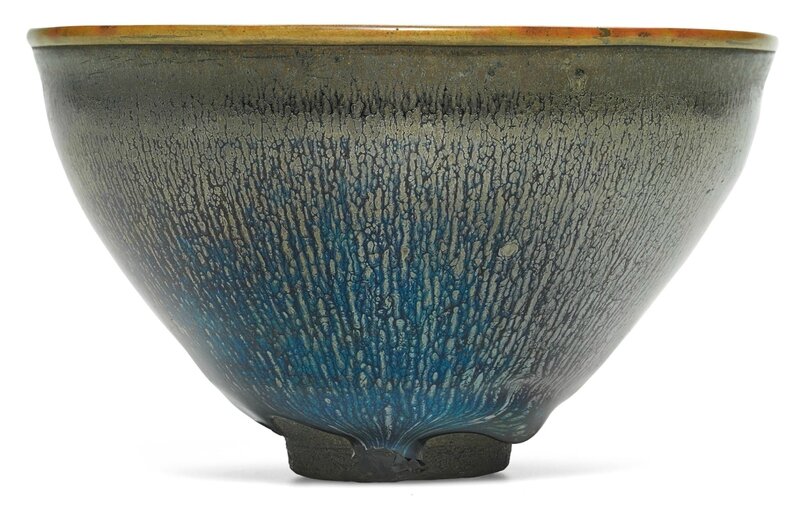
Image Credit: Alain Truong
From the 13th to 16th centuries, Japan loved Tenmoku wares. By the 16th century, Japanese kilns made replicas. Initially, people thought China made this bowl. Yet, Seto and Mino regions in Japan produced similar designs. The Tenmoku style remained popular during the Sengoku era. Rikyu preferred humbler materials, challenging this trend.
Recognising Hidden Value in Imperfection
In the realm of material culture, this is where wabi-sabi (the appreciation of imperfection, asymmetry and impermanence) takes hold. Rather than seeing imperfections as flaws, Rikyu and his peers elevated humble, rustic pieces — often handmade and weathered — against the polished status objects of the day, including the prized Tenmoku wares imported from China. It’s a testament to the depth of appreciation that even items appearing worn-out or deemed worthless harbour a concealed value. This understanding belongs to seasoned practitioners — those who can recognise and elevate such pieces, setting themselves apart from anyone unfamiliar with the cultural prestige that mastering tea brings.
Raku ware is the clearest example. These tea bowls are shaped by hand without a potter’s wheel and finished in a thick, soft glaze, and they were first made for Rikyū by Chōjirō, a Kyoto tile maker. Hideyoshi is said to have presented Chōjirō’s son Jōkei with a seal bearing the character raku, meaning enjoyment, and Raku became the family name. Stewart Dick’s Arts and Crafts of Old Japan (1904) repeated an older account that credited the first bowls to a Kyoto potter called Ameya, but modern histories name Chōjirō as the founder of Raku ware.
Although chanoyu began as an exclusive practice that reinforced the gap between elite and commoner, it has since developed into an intimate gathering centred on humility, appreciation and togetherness. The culture endures as an expression of Japanese identity — not just for its distinctive aesthetic, but for the values its practitioners continue to live by.
Sources and Further Reading
- Okakura Kakuzō, The Book of Tea (1906)
- Frank Brinkley with Dairoku Kikuchi, A History of the Japanese People (1915)
- Stewart Dick, Arts and Crafts of Old Japan (1904)