In medieval Japan, bridges were thought to be watched over by hashihime (‘bridge princesses’), spurned lovers turned guardian deities that resided in rivers, ready to protect their chosen bridges. While there are probably an uncountable number of these fearsome spirits across the country, by far the most celebrated is the hashihime of Uji.
Protecting what is believed to be one of the oldest bridges in Japan, this hashihime has inspired poets and novelists for centuries. In the final quarter of The Tale of Genji (源氏物語), the titular character’s son travels to Uji and, struck by the bridge’s beauty, composes the waka poem: ‘Wet are my sleeves as the oars that work these shallows. For my heart knows the heart of the lady at the bridge.’
If you follow in his and travel down to Uji, it’s likely you too will be charmed by its beauty. Explore its countless tea shops, a Nintendo museum, the splendour of Byōdō-in, be awed by traditional fishing techniques and, of course, sample some of Uji’s famous matcha.
Spend a Day in Uji
Uji in a Day: Step by Step Itinerary
Getting to Uji

Ideally situated in southern Kyōto prefecture, Uji is a convenient train ride away from Kyōto and Nara, and there are plenty of ways to get there via public transport. From Kyōto or Nara, use a local JR-Nara train for a hassle-free twenty-minute journey to Uji station in the centre of town. A one-way journey costs ¥240. Coming from Osaka instead, ride the Keihan Main Line from Yodoyabashi, change at Chushojima for the Keihan Uji Line, and you reach Keihan-Uji Station, on the far bank of the river from the JR station, about 15 minutes after the transfer. Make sure to get there early to beat the late-morning crowds flocking to Uji for a warm bowl of matcha.

Once you’re in Uji, walk down the high street and follow the signs to Byōdō-in (平等院), one of Japan’s most famous temples whose iconic hall is featured on the ¥10 coin.
Byōdō-in and the Phoenix Hall

About a ten-minute walk from Uji station at the far end of the high street sits Byōdō-in, a Buddhist temple built in 1052, nearly 1,000 years ago and now a UNESCO World Heritage site. Its centrepiece, the Phoenix Hall (Hōō-dō 鳳凰堂), features a deep red central hall adorned with phoenix statues and two great wing corridors that jut out from its sides. The Phoenix Hall is so well-loved by the locals that in 2000 the city’s station was renovated to evoke its design. Surrounding the main hall is a tea-green moat and gardens that change dramatically with the seasons. In spring, deep purple wisteria sprouts all around the temple and in summer the grounds are a lush green. In autumn, Byōdō-in becomes a popular spot for viewing autumn leaves (kōyō紅葉), and at night the temple is lit up and opened well past sundown.

Byōdō-in is open every day from 8:45 to 17:30, and tickets range from ¥300 for elementary-school students to ¥700 for adults, giving you access to the garden and the Byōdō-in museum. For an extra ¥300, you can enter the interior of the Phoenix Hall to get a glimpse at the statue of Amida Buddha surrounded by painted walls and bathed in semi-darkness. Interior visits run as small timed groups every 20 minutes between 9:30 and 16:10, with same-day tickets sold inside the garden from 9:10, so collect yours early on busy days. The grounds also house a tea room open Thursday to Sunday and offering local produce and, of course, Uji’s famous tea.
Uji Matcha Tasting with Wagashi
After taking in the Phoenix Hall, go back to the main street and into one of Uji’s many tea shops to sample some Uji-cha (宇治茶). Most tea shops in Uji offer a tasting menu featuring professionally prepared matcha that offers quiet respite from the hustle and bustle of the busy streets. The matcha is served in lacquered bowls and usually accompanied by wagashi (和菓子), traditional sweets made from beans and rice flour whose shape and flavour changes depending on the season. Their soft, chewy consistency and slight sweetness pairs perfectly with the creaminess of the matcha, making a traditional tea-tasting session an absolute must in Uji. A tea-tasting session costs around ¥1200 for the tea and wagashi, and it’s the perfect chance to taste matcha as it has been prepared and drunk for centuries.
Three names anchor Uji’s tea heritage. Tsuen, at the east end of Uji Bridge, has traded since 1160 and is often called Japan’s oldest tea shop. Nakamura Tokichi Honten, a tea merchant since 1854, runs a much-loved cafe in its converted tea factory near the station, while Itoh Kyuemon, founded in 1832, draws queues for its matcha parfaits. For the most formal setting, the municipal Taihoan tea house beside Byōdō-in serves whisked usucha with a seasonal sweet for ¥1,500, open 10:00 to 16:00.
Types of Uji Tea
If you want to explore more of the tea that Uji has to offer, or take some home, Uji’s teahouses are stocked full of teas ranging in price and quality. This variety can be overwhelming, however, so here’s a handy guide to distinguish the main types of Uji tea:
- Sencha (煎茶): Japan’s most popular tea. Sencha leaves are grown under the sun and are lightly steamed before being rolled and dried, giving it a fresher and more herby flavour compared to other green teas. Prices range from ¥800 to ¥1500 per 100 grams.
- Gyokuro (玉露): One of Japan’s most expensive teas. The leaves are grown under a cover and are hand-picked. Unlike sencha, the leaves are not steamed, lending the brew a smoother taste with sweet undertones. Prices range from ¥2000 to ¥5000 per 100g
- Matcha (抹茶): The pride of Uji. Made from tencha leaves ground into a powder using a granite stone. When whisked properly, matcha, properly whisked, is a slightly milky, smooth drink that is rich in vitamins and high in caffeine. Prices can vary wildly depending on quality, but a 30g can of ceremony-grade matcha usually costs around ¥2000 to ¥4000.
Two other common types include genmaicha (玄米茶), a combination of green tea leaves and roasted brown rice; and hōjicha (ほうじ茶), made from roasted green tea leaves. If you’re looking to buy some Uji tea for yourself, going in armed with this knowledge will help massively in narrowing down what you’re after.
Tale of Genji Museum

Loaded with tea and appropriately caffeinated, head further down the main street until you meet the Uji river, straddled by the bridge that Genji’s grandson wrote about. Uji is central to The Tale of Genji’s last acts, and as such you’ll find by the bridge a statue of the novel’s author, Lady Murasaki Shikibu seated and poring over a scroll. Continue across the bridge to get to the Tale of Genji Museum, which recreates scenes from what is considered to be the world’s first novel. Tickets are ¥600 for entry, the museum runs 9:00 to 17:00 (last entry 16:30) and closes on Mondays, and most of the explanatory notes are solely in Japanese.
Ujigami Shrine
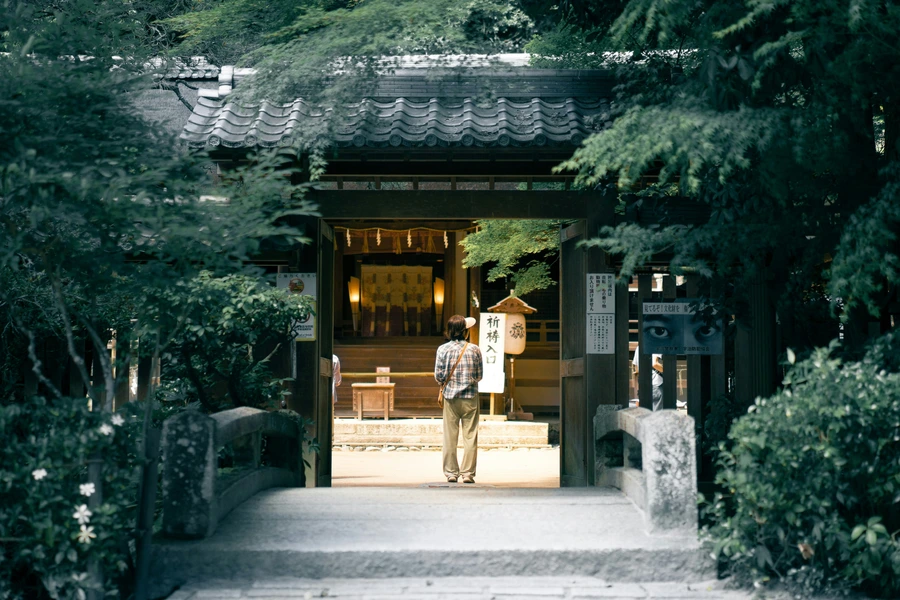
Just up the hill from the museum stands Ujigami Shrine (宇治上神社), believed to hold the oldest surviving shrine building in Japan and part of the same UNESCO World Heritage listing as Byōdō-in, which it historically served as guardian shrine. Its modest scale makes it easy to walk past, yet the honden dates from the Heian period. Entry is free and the grounds are open 9:00 to 16:20, with last entry at 16:10, making it a short, worthwhile detour before the walk back across the bridge.
Nintendo Museum
If your preference lies closer to the modern era, one of Uji’s newest attractions is the Nintendo Museum, a space dedicated to the past, present and future of the video-game giant. Taking you from Nintendo’s origins as a hanafuda card manufacturer to the creator of so many iconic characters and franchises, the museum offers visitors the chance to play interactive games and see how core design philosophies evolved. Due to its immense popularity, tickets are sold through a random draw system, and you can apply for entry three months prior to your visit. Tickets cost ¥3300 for adults and ¥1100 for children, and the museum is open until 8pm, making it the perfect evening stop.
Ukai Fishing (seasonal)
While Uji is a great place to visit any time of year, on the warm clear nights that characterise Kyoto’s summers the Uji river lights up and changes into a launching ground for Uji’s cormorant fishermen (鵜飼). Running from 1 July to 30 September, with the boats resting on Wednesdays, these fishermen continue a millennium-old tradition. Reception opens from around 17:30, and sailings depart at 19:00 in July and August and 18:30 in September. Donning all-black dress, they set out on small boats with a bonfire in one hand and six birds attached to ropes in the other. Cormorants are able to hold fish in their throats without eating them, so they’re used like fishing rods and recalled back to the boat once their mouths are full of fish. Watching it, everything pitch black apart from the flames dancing off the water’s surface, is mesmerising, and the birds diving in and out of the water is one of the best spectacles Uji has to offer. Tickets can be bought at the launching-off point just past Byōdō-in, and securing a spot on the shared viewing boat costs ¥2,700 for adults and ¥1,200 for children, although you can watch from afar for free on the river front. Sailings are called off when the river runs high, so check the Uji tourism association’s site on the day.


Summary
At just a stone’s throw from central Kyoto and with enough World Heritage sites, history and matcha as you can cram into one day, Uji is the perfect day trip for anyone looking to escape the crowds of Kiyomizu-dera or Fushimi-inari Taisha. Try some matcha-flavoured snacks, get cosy in one of the city’s teahouses, and bask in the beauty of Byōdō-in, but don’t forget your 10-yen coin.
A perfect day in Uji
- 9:00: Arrive at JR Uji
- 9:30: Byōdō-in garden and museum
- 11:00: Uji tea tasting
- 14:00: River walk, Tale of Genji Museum and Ujigami Shrine
- 15:00 Nintendo Museum
- 17:30 Cormorant fishing in summer, Byōdō-in illumination in winter
- 19:00 Back to Kyoto/Nara