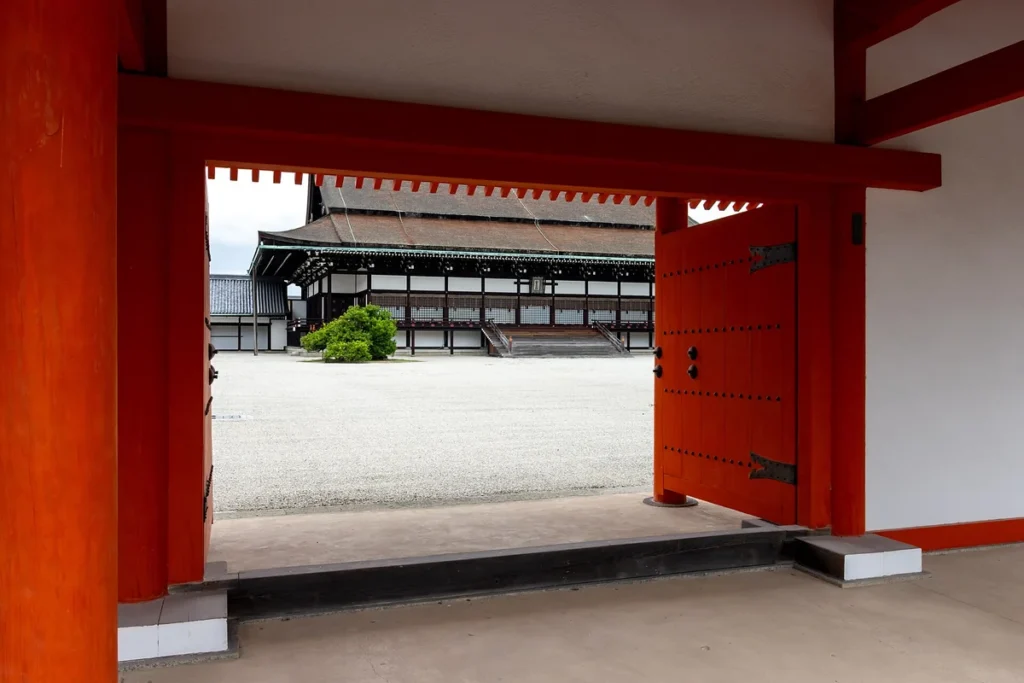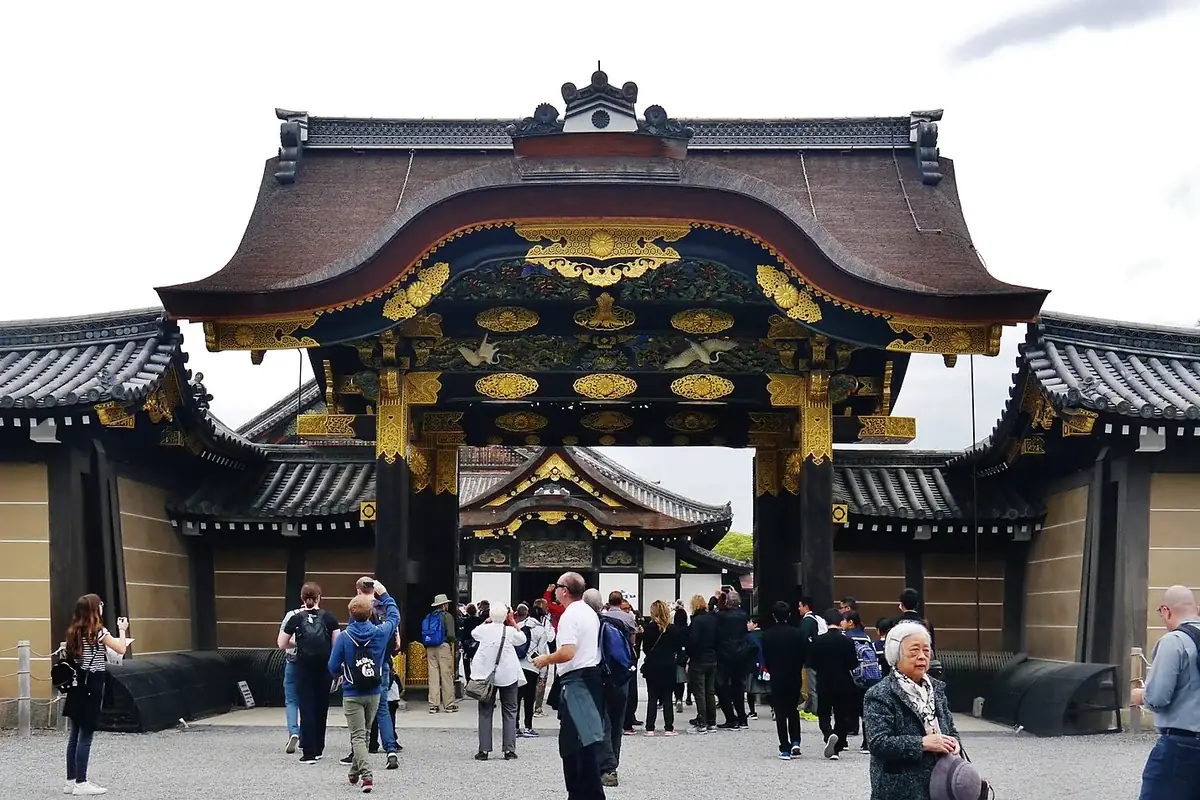
Nijo Castle (Nijo-jo) is the castle Tokugawa Ieyasu completed in central Kyoto in 1603, and the place where the last shogun gave power back to the emperor in 1867. Entry costs ¥1,300 for adults if you want the grounds and the Ninomaru Palace, which is the building everyone comes for. Gates open at 8:45am, the last ticket is sold at 4pm and the grounds close at 5pm.
The famous “nightingale floors” in that palace do chirp as you walk, but the castle’s own curators say the old story about them being an intruder alarm is a mistake. More on that below, along with the Honmaru Palace booking, the route the castle recommends and what is on in late 2026.
Nijo Castle Tickets, Palaces and Gardens
| Address | 541 Nijojo-cho, Nijo-dori Horikawa Nishi-iru, Nakagyo-ku, Kyoto |
| Hours | 8:45am to 5pm, last entry 4pm (Ninomaru Palace last entry 4:10pm) |
| Tickets | ¥800 grounds only, ¥1,300 grounds and Ninomaru Palace, Honmaru Palace ¥1,000 extra and booked online |
| Closed | 29 to 31 December. Ninomaru Palace also shuts on Tuesdays in January, July, August and December |
| Nearest station | Nijojo-mae on the Tozai subway line, a short walk from the east gate |
| Time needed | 1 to 1.5 hours for the Ninomaru Palace and garden, 2.5 to 3 hours with the Honmaru Palace |
Nijo Castle tickets: grounds, Ninomaru Palace and Honmaru Palace
There are three tickets to understand, and most visitors only need the middle one. These are the official castle prices for 2026.
| Ticket | Adult | Junior high and high school | Primary school |
|---|---|---|---|
| Castle grounds only | ¥800 | ¥400 | ¥300 |
| Castle grounds and Ninomaru Palace | ¥1,300 | Not listed separately | Not listed separately |
| Honmaru Palace (grounds ticket also needed) | ¥1,000 | ¥300 | ¥200 |
| Painting Gallery (grounds ticket also needed) | ¥100 | ¥100 | ¥100 |
Children below primary school age go free. If you buy the grounds ticket and change your mind at the door of the palace, the Ninomaru Palace can be added at the Information Desk inside for ¥500. The ticket office beside the Higashi Ote-mon (east gate) takes cash, major credit cards, transport IC cards and the main QR code apps.
The Honmaru Palace works differently. Its tickets are sold online only, from 30 days before your visit, with a small number of same-day tickets at the General Information Desk inside the castle and none at the ticket office. Purchases cannot be changed or refunded. Groups of about 15 go in together, watch an 8-minute introduction film, then walk the rooms at their own pace for about 40 minutes. Allow 15 to 20 minutes on foot from the east gate to its entrance, which sits about 850 metres inside the walls.
The castle also runs an hour-long official guided tour in English at 10am and 12pm daily, at ¥2,500 a person on top of the ¥1,300 ticket. It covers the Ninomaru Palace and an area closed to general visitors, but not the Honmaru Palace.


Nijo Castle opening hours and the days each palace closes
The castle grounds are open every day except 29 to 31 December. The two palaces have their own closing days, and these catch people out:
- Ninomaru Palace: closed every Tuesday in January, July, August and December, and from 26 to 28 December and 1 to 3 January. If the Tuesday is a public holiday it opens and closes the next day instead.
- Honmaru Palace: closed on the third Monday of every month and the day after, and from 26 to 28 December and 1 to 3 January. Its viewing hours are 9:30am to 4pm.
- Sunday 6 December 2026: last entry to the grounds is 12pm and to the Ninomaru Palace 12:10pm, because of the procession marking 400 years since the imperial visit of 1626. The castle still closes at 5pm. Details are on the castle’s notice for that day.
Photography and filming are not allowed inside either palace. Outdoors you can photograph freely, though monopods and tripods are banned across the castle. If you are planning a full central Kyoto day, the Kyoto travel guide sets out how the city’s sights open and close by the hour.
Getting to Nijo Castle: Nijojo-mae Station on the Tozai Line
Nijojo-mae Station on the Tozai subway line is a short walk from the castle’s east gate. From Kyoto Station, take the Karasuma Line six minutes north to Karasuma Oike, change to the Tozai Line and ride two minutes west. From Sanjo Keihan Station it is six minutes direct on the Tozai Line.
City buses 9, 50 and 101 and the 111 express (which links Nijo Castle and Kinkaku-ji) reach the Nijojo-mae stop from Kyoto Station in about 16 minutes. From Shijo Karasuma, buses 12 and 101 take about nine. JR Nijo Station on the Sagano Line is five minutes from Kyoto Station but leaves you a 17-minute walk.
Kyoto City’s subway one-day pass and the subway and bus one-day pass both take ¥100 off an adult grounds ticket on the day you use them. Karasuma Oike, where you change trains, is also the station for the Kyoto International Manga Museum, a good indoor pairing on a wet afternoon.
Map of Nijo-jo Castle

Ninomaru Palace: 3,600 wall paintings and the nightingale floors
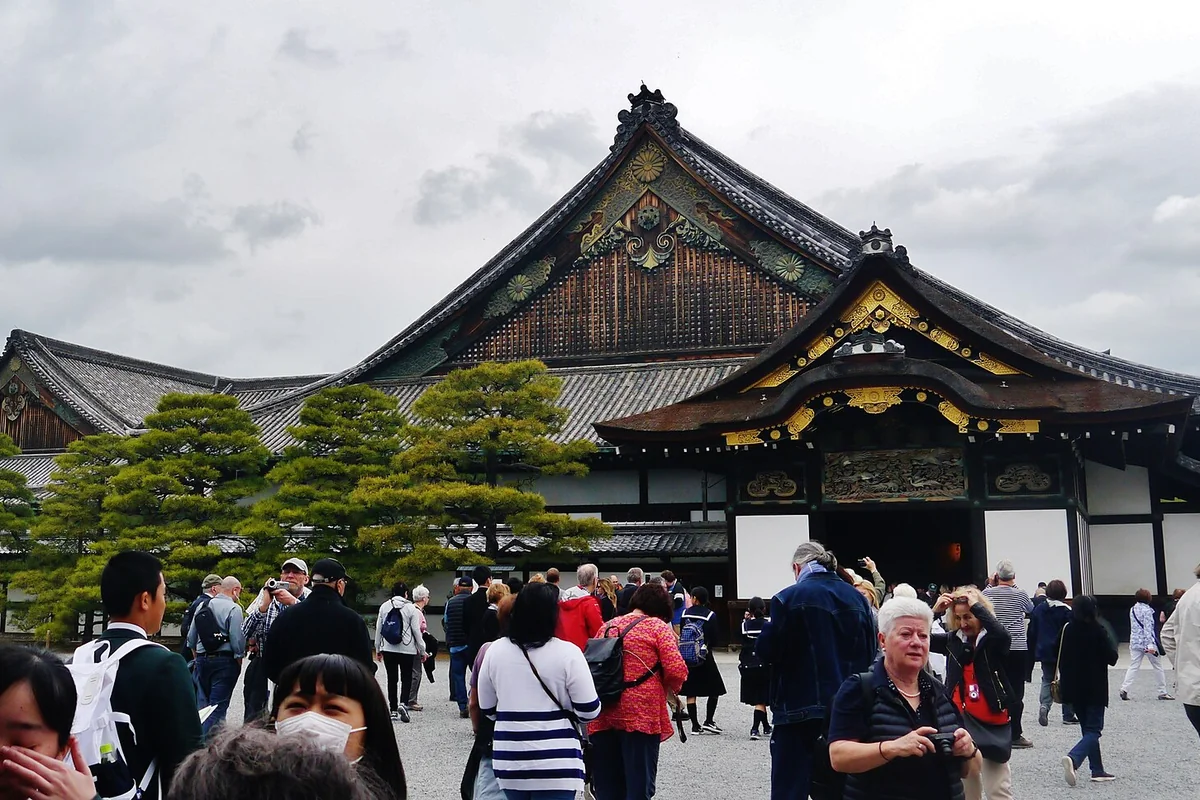
The Ninomaru Palace is six linked buildings in the shoin style perfected in the early Edo period, and it is a National Treasure because it is the only fortified palace complex of its kind to survive. More than 3,600 wall paintings decorate it, and 1,016 of them are registered Important Cultural Properties, many painted by the young Kano Tan’yu when the castle was remodelled for the emperor’s visit in 1626.
What makes the nightingale floors sing
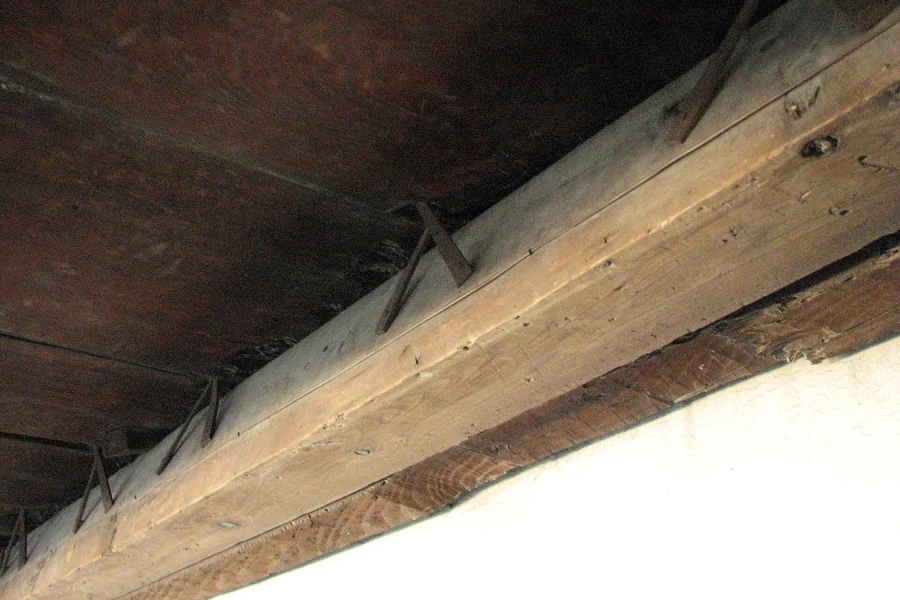
Walk the corridors and the boards chirp under every step, which is why they are called uguisubari, nightingale floors. Japan-guide, Designer Journeys and most tour sellers say this was an alarm to warn guards of intruders. The castle’s own description of the palace says the sound comes from metal clamps moving against the nails driven into the beams below, and that the intruder story is mistaken.
Tiger rooms, the Ohiroma and the shogun’s seat
The route takes you through the palace in the order a visiting lord would have seen it. The Tozamurai rooms come first, painted with tigers on gold to make the shogun’s authority obvious before anyone reached him. The Ohiroma, the Grand Hall, is where the shogun received feudal lords, and its fourth room holds the Matsutaka-zu, a hawk on a huge pine that the castle calls the most famous painting in the palace. Further in, the Kuro-shoin was painted with cherry trees by Tan’yu’s brother Naonobu, and the Shiro-shoin, believed to be the shogun’s private rooms, switches to calm ink landscapes of China’s West Lake.
Not every original panel is still on the walls. The castle moved many of them to its Painting Gallery, opened in 2005, which shows about 30 at a time in rotating exhibitions. The Ohiroma’s First Room is on show until 8 November 2026, and the Kuro-shoin’s cherry blossom rooms follow from 19 November 2026 to 17 January 2027, according to the gallery’s 2026 schedule.
The pond garden on the west side of the Ohiroma is a Special Place of Scenic Beauty, reworked for the 1626 visit by officials who included the tea master Kobori Enshu. Kakuzo Okakura names Nijo among the notable examples of Enshu’s work in The Book of Tea (1906, chapter seven, “Tea-Masters”).
Honmaru Palace: an imperial prince’s residence, reopened in 2024
The inner citadel’s original palace burned in the great Kyoto fire of 1788. What stands there now was moved in 1893 and 1894 from the Katsura-no-miya princely family’s residence inside the Kyoto Imperial Palace grounds, and it is the only large palace of an imperial family branch surviving from the Edo period. It reopened on 1 September 2024 after 18 years of repairs.
Inside you will find the Shiki-no-ma, four rooms painted with the four seasons, and the Otsune-goten living quarters with Kano Eigaku’s pine and crane screens. One carved transom repeats a pattern found at another Katsura-no-miya property, today’s Katsura Imperial Villa, so the two make a satisfying pair if you are booking both.
A two-hour route through Nijo Castle, gate by gate
The castle publishes three model courses. This is the two-hour version it recommends:
- Higashi Ote-mon, the east gate, where you buy tickets
- The Bansho guardhouse and the Tonan Sumi-yagura, the south-east corner turret
- The Kara-mon gate, carved and gilded, leading to the palace forecourt
- The Ninomaru Palace, then the Ninomaru Garden
- The Honmaru Palace and garden (with a booked ticket)
- The base of the old keep tower, for a view over the grounds
- Across the West Bridge and back east past the Waraku-an teahouse
- Seiryu-en Garden and the Koun-tei, a building moved from the former residence of the merchant Suminokura Ryoi
- The Painting Gallery, then out through the east gate
| Time you have | What to cover |
|---|---|
| 1 hour | Kara-mon, Ninomaru Palace, Ninomaru Garden, Seiryu-en, Painting Gallery |
| 2 hours | The route above, including the Honmaru Palace |
| 2.5 hours | Adds the Minami-mon gate and, from mid February to early April, the south route through the plum and cherry groves |
Nijo Castle sits on Day 4 of our 7-day Kyoto itinerary, after the moss garden at Saiho-ji and the Katsura Imperial Villa.
From Tokugawa Ieyasu in 1603 to the end of the shogunate in 1867
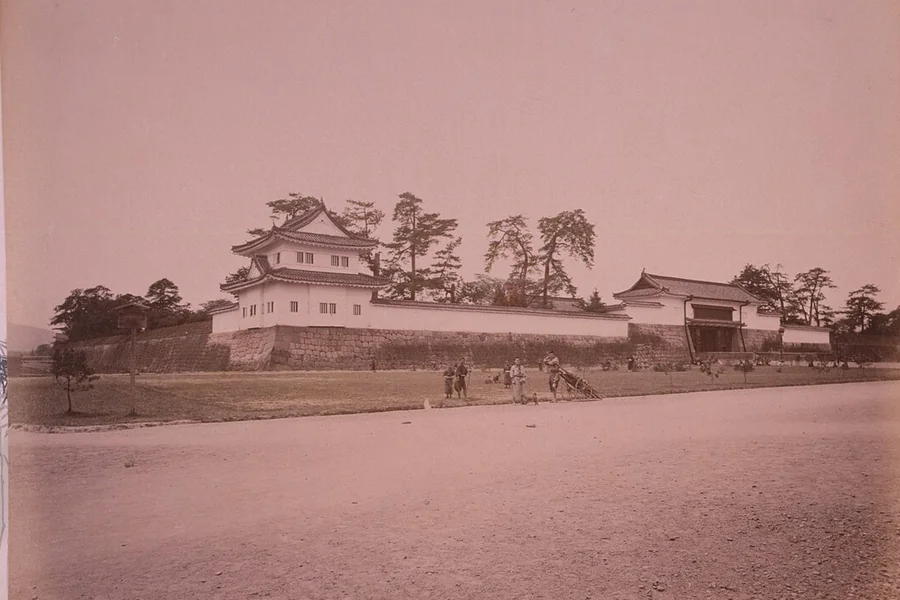
Ieyasu won the Battle of Sekigahara in 1600, was named shogun in 1603, and came to the newly completed Nijo Castle to announce it to the feudal lords. The castle served as the shogun’s Kyoto residence on his rare visits, guarded the rest of the time by samurai sent from Edo.
In 1611 Ieyasu met Toyotomi Hideyori, the 17-year-old heir of his old rival Hideyoshi, at Nijo Castle. Frank Brinkley’s A History of the Japanese People (1915, chapter 38, “The Tokugawa Shogunate”) records that Ieyasu was struck by how capable the young man seemed and afterwards felt like “a man who, having still a long distance to travel, finds himself enveloped in darkness”. Three years later Ieyasu set out from Nijo for the siege of Osaka Castle that ended the Toyotomi line.
The third shogun, Iemitsu, enlarged the castle from 1624 for the five-day visit of Emperor Go-Mizunoo in 1626, adding the keep and the first Honmaru Palace. After 1634 no shogun stayed here again until 1863. Then, in 1867, the fifteenth shogun Tokugawa Yoshinobu summoned senior retainers from 40 domains to the Ohiroma and announced that he would return political authority to the emperor, the event known as Taisei Hokan, according to the castle’s history page.
Not every visitor was impressed. The British diplomat Ernest Satow, in Kyoto early in 1868 while Owari troops held the castle, wrote that it “struck me as insignificant compared with many a fortress belonging to a small Fudai daimiô” (A Diplomat in Japan, 1921, chapter 27). Eliza Scidmore, a decade or so later, found the Tokugawa crests everywhere covered by the imperial chrysanthemum and grumbled about “a hideous Brussels carpet, a round centre-table, and a ring of straight-backed chairs” in the audience rooms (Jinrikisha Days in Japan, 1891, chapter 25, “The Palaces and Castle”). The castle had become an imperial villa by 1884 and passed to the city in 1939.
Cherry blossom light-ups, the autumn festival and the 1626 anniversary
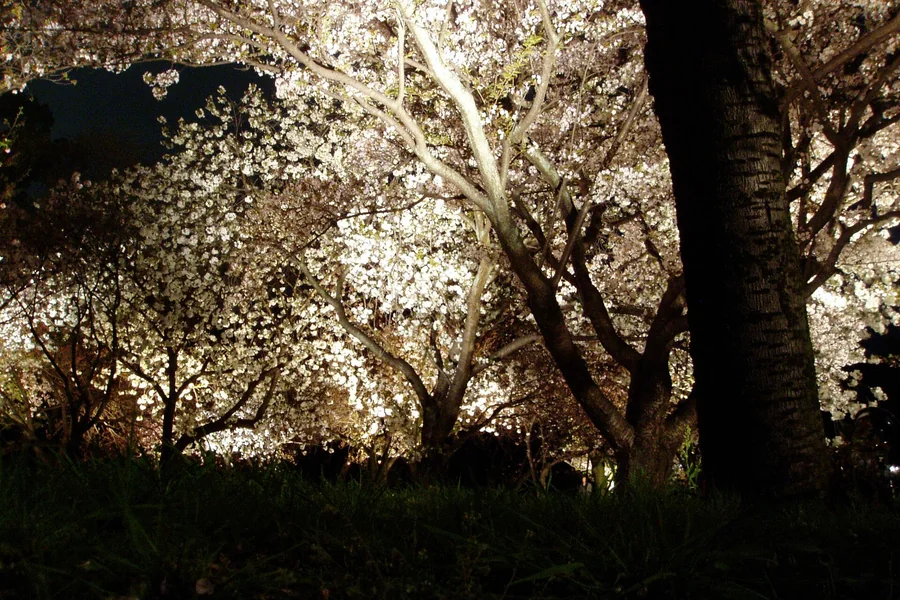
About 300 cherry trees of nearly 50 varieties bloom across the grounds from late March to mid April. In 2026 the Nijo Castle Sakura Festival ran from 19 March to 19 April, with daytime entry at the usual ¥1,300 and an evening light-up from 6pm to 10pm (last entry 9pm) on a separate ticket costing ¥2,400 to ¥3,200 for adults, depending on the day and how early you booked. The castle had not announced 2027 dates by the end of October 2026.
Autumn has its own season. The Nijo Castle Festival 2026 runs from 23 October to 6 December with a Kyoto crafts and food fair, stage performances and an autumn leaves stamp rally. The night illumination, NAKED meets Nijo-jo Castle 2026, runs from 23 October to 5 December, 6pm to 10pm, and tells the story of Tokugawa Masako, the shogun’s daughter who married Emperor Go-Mizunoo. Same-day tickets go on sale at the castle ticket office from 6pm.
The year closes with the 400th anniversary of the 1626 imperial visit, marked by a re-enacted procession on 6 December 2026. If you are combining the castle with lunch, Nishiki Market is two stops east on the Tozai Line and a ten-minute walk south from Karasuma Oike.
Nijo Castle questions answered
How much is the Nijo Castle entrance fee?
Adults pay ¥800 for the castle grounds or ¥1,300 for the grounds and the Ninomaru Palace, which is the ticket most visitors want. Junior high and high school students pay ¥400 for the grounds and primary pupils ¥300. The Honmaru Palace is a further ¥1,000 for adults, booked online, and the Painting Gallery is ¥100.
Do you need to book Nijo Castle in advance?
No booking is needed for the grounds or the Ninomaru Palace. You can buy on the day at the east gate ticket office or online. The Honmaru Palace is the exception: tickets go on sale online 30 days ahead, only a few same-day tickets are sold inside the castle, and no purchase can be changed or refunded.
How long do you need at Nijo Castle?
The castle says the Ninomaru Palace and its garden take one to one and a half hours. Add the Honmaru Palace and garden and it becomes two and a half to three hours, depending on your pace. Its recommended two-hour route covers both palaces, the keep base, Seiryu-en Garden and the Painting Gallery.
Why do the floors squeak at Nijo Castle?
The corridors of the Ninomaru Palace chirp because metal clamps under the floor rub against the nails holding the boards to the beams. They are known as nightingale floors. The castle itself says the popular story that they were built as an alarm against intruders is mistaken.
Can you take photos inside Nijo Castle?
Not inside the Ninomaru Palace or the Honmaru Palace, where photography and filming are banned to protect the paintings and keep the narrow corridors moving. You can photograph the gardens, gates and walls freely, but monopods and tripods are not allowed anywhere in the castle. The Painting Gallery allows photos without flash.
How do you get to Nijo Castle from Kyoto Station?
Take the Karasuma subway line six minutes to Karasuma Oike, change to the Tozai Line and ride two minutes to Nijojo-mae, a short walk from the east gate. City buses 9, 50, 101 and the 111 express also stop at Nijojo-mae, taking about 16 minutes from Kyoto Station.