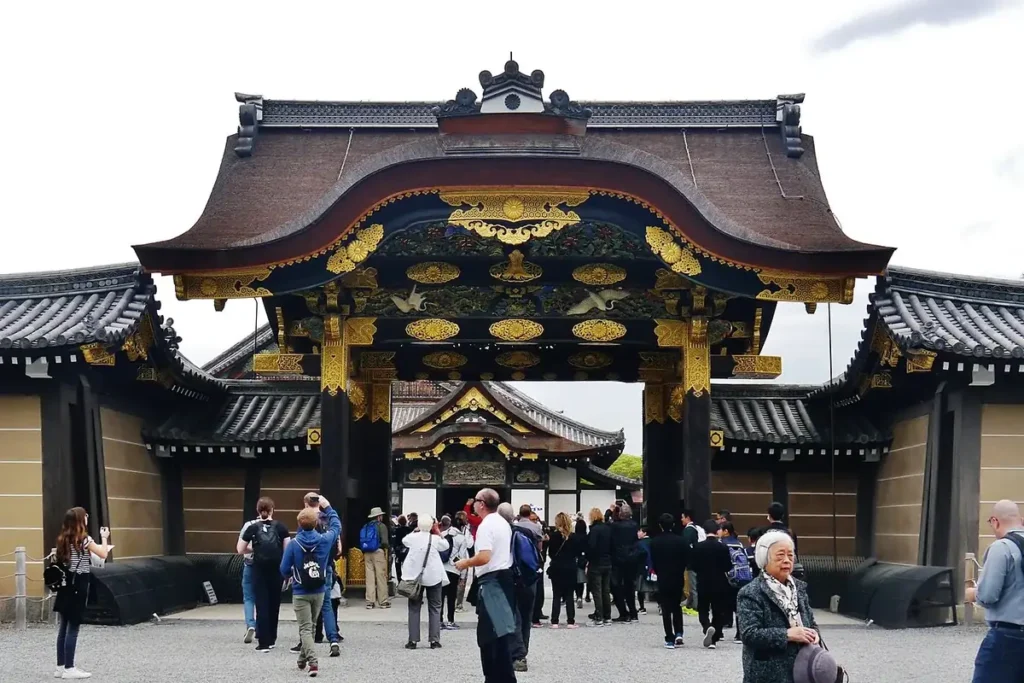
The Kyoto Imperial Palace (Kyoto Gosho), where Japan’s emperors lived for about 500 years until 1869, is free to visit and needs no booking. You walk in through Seishomon Gate, pass a bag check and follow a set route past the throne hall and gardens. It opens at 9am on every day except Mondays, and the last entry is between 3:20pm and 4:20pm depending on the month.
Three different places share the name, and they have three different sets of rules. The palace itself is walk-in and free. The Sento Imperial Palace next door is free too, but can only be seen on a timed guided tour that you apply for. And the huge park around both, Kyoto Gyoen, is a public garden you can walk into at any hour of the day or night.
Visiting the Kyoto Imperial Palace: Hours, Tours and Gardens
| Address | 3 Kyoto Gyoen, Kamigyo-ku, Kyoto |
| Entrance | Seishomon Gate, on the west side, with a security check |
| Hours | From 9am. Last entry 3:20pm (October to February), 3:50pm (March and September), 4:20pm (April to August) |
| Closed | Mondays (Tuesday if Monday is a holiday), 28 December to 4 January, and some court event days |
| Price | Free, no booking |
| English tour | Free, 10am and 2pm, about 50 minutes (10am only in July and August) |
| Nearest station | Imadegawa on the Karasuma subway line, 5 minutes on foot |
Kyoto Imperial Palace opening hours by month
The Imperial Household Agency, which runs the palace, publishes its times inside the calendar on its visitor page rather than in the text. Laid out by month, they look like this:
| Months | Opens | Last entry | Everyone out by |
|---|---|---|---|
| October to February | 9am | 3:20pm | 4pm |
| March and September | 9am | 3:50pm | 4:30pm |
| April to August | 9am | 4:20pm | 5pm |
The palace closes on Mondays, or on the Tuesday when Monday is a public holiday, and from 28 December to 4 January. It also shuts on days with court events, and the agency warns it can close at short notice for bad weather or a visiting dignitary, so check the calendar the evening before. It stays open in the rain unless visitors’ safety is at risk, and any closure for a typhoon is announced on its notices page.
Twice a year the agency holds a short special opening, “Introduction of Court Culture”, with displays inside the halls. In 2026 these ran from 25 to 29 March and from 8 to 12 October. Dates for 2027 had not been announced by 31 October 2026.


Free guided tours in English, and the audio guide app
You can walk the route on your own, but the free tours led by agency staff are the better way to understand what you are looking at. Gather at the visitors’ rest area before the start time. No registration is needed, though the agency says this may change when it is crowded, and groups should contact the office in advance.
| Language | Start times | July and August |
|---|---|---|
| English | 10am and 2pm | 10am only |
| Chinese | 10am and 2pm | 10am only |
| Japanese | 9:30am, 10:30am, 1:30pm and 2:30pm | 9:30am and 10:30am only |
Each tour lasts about 50 minutes, which is also how long the agency says a self-guided visit takes. The summer cut is to protect visitors from heatstroke. If the times do not suit you, the agency’s free audio guide app covers the route in English, Chinese, Korean, French and Spanish as well as Japanese, and printed pamphlets come in five languages.
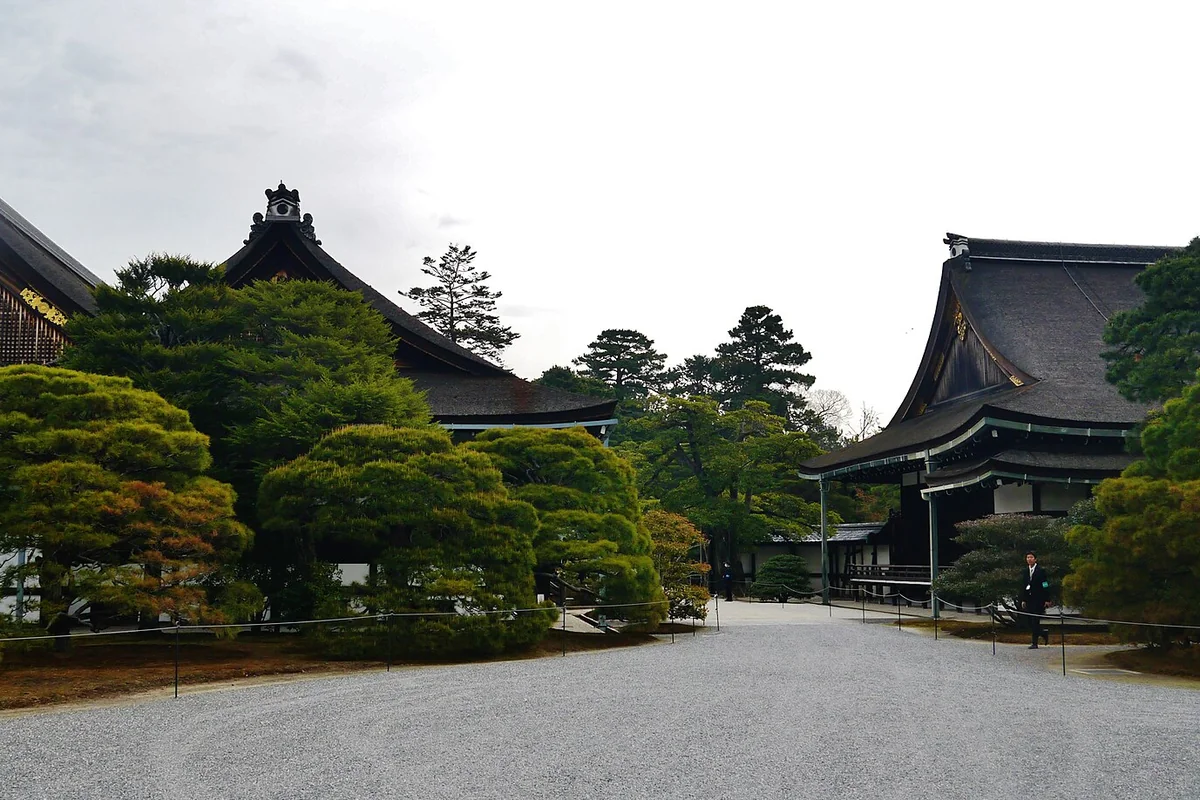
The Shishinden, the Seiryoden and the Oikeniwa garden
None of the palace buildings can be entered. The route takes you through the gates and courtyards, and the outer doors of the Shodaibu-no-ma, the Seiryoden and the Kogosho are partly opened so you can see into the rooms.
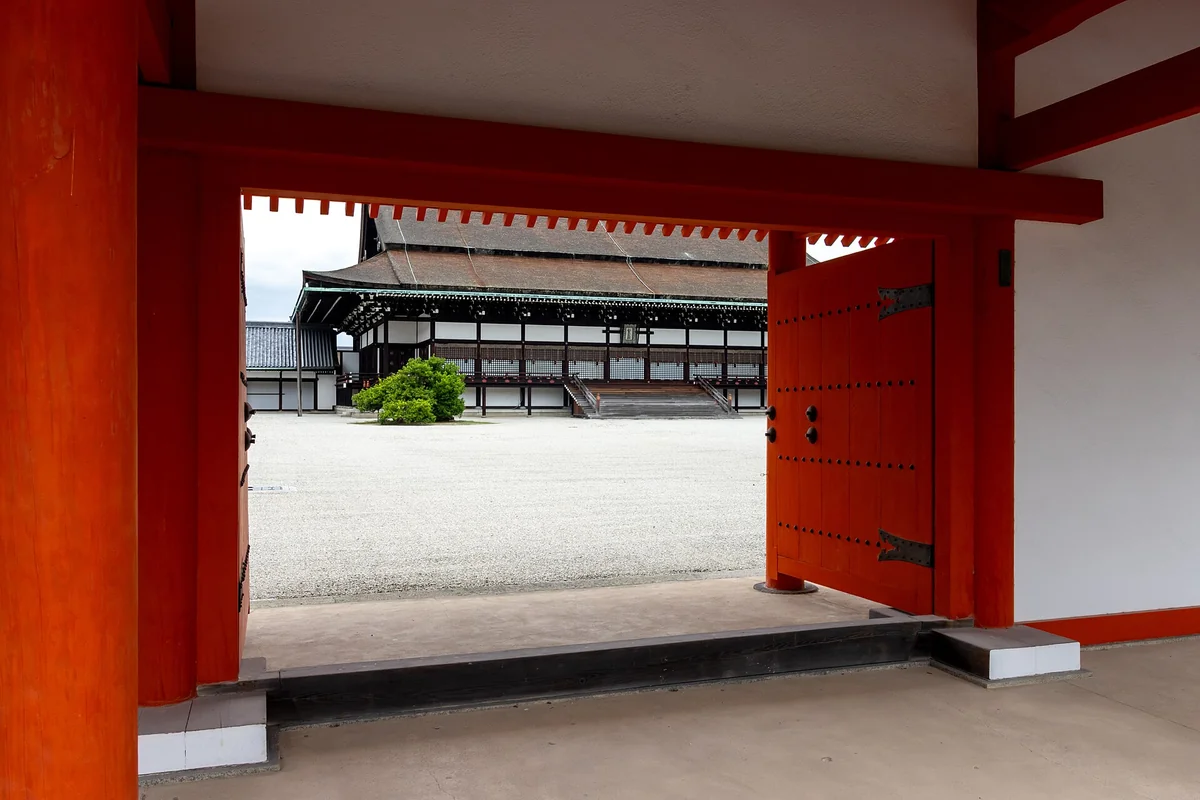
- Shishinden: the main ceremonial hall, seen across a court of white gravel through a vermilion gate. The agency’s own video below shows the Takamikura throne inside it. The Ministry of the Environment notes that the enthronements of Emperor Taisho and Emperor Showa were held at this palace even after the court had moved to Tokyo.
- Seiryoden: one of the halls with its doors opened for visitors. Each season agency staff change its furnishings, a ritual called koromogae that the agency films for its YouTube channel.
- Kogosho and Ogakumonjo: two halls that stand beside the Oikeniwa garden.
- Oikeniwa: the pond garden beside the Kogosho, with tall pines and clipped shrubs along the water.
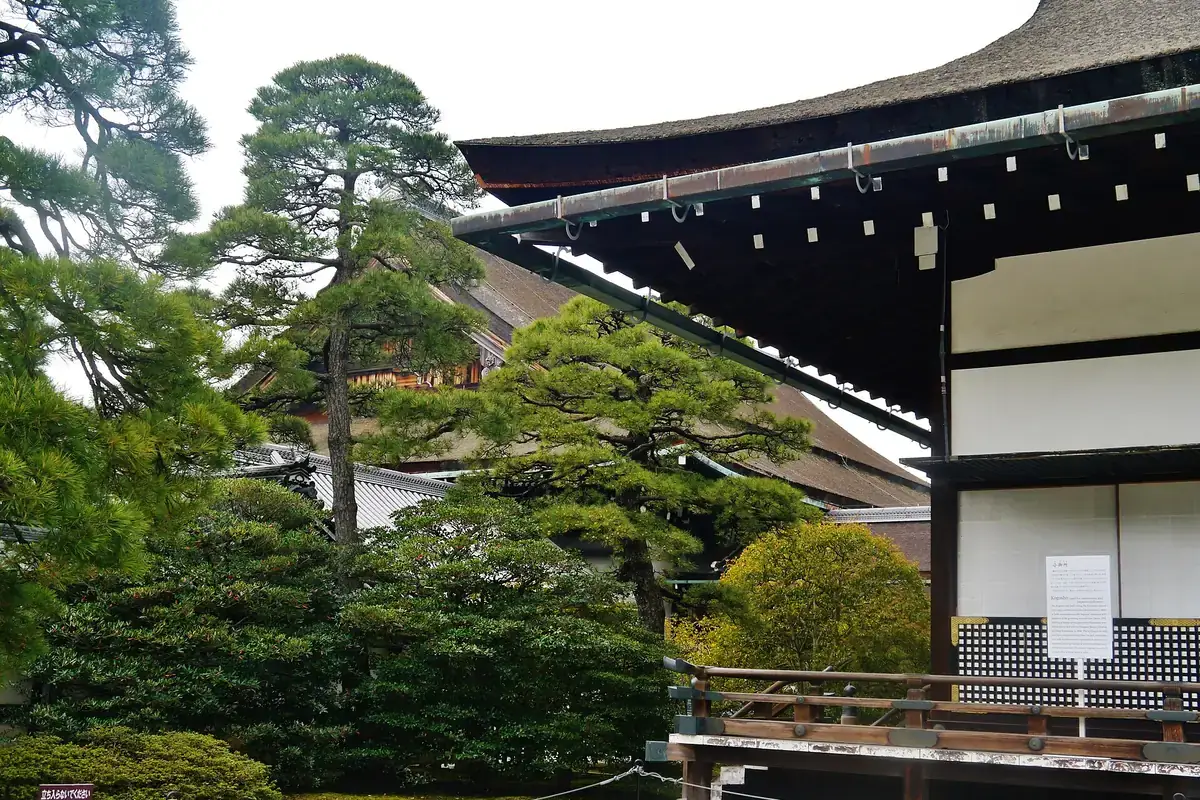
Photography is allowed everywhere on the route. Professional-size cameras, tripods and ladders are not. Smoking, alcohol and eating are banned inside, and the route is one-way, so you cannot double back once a building is behind you. The paths are gravel, so wear comfortable shoes.
From 1331 to 1855: how the palace came to stand here
This is not where the first imperial palace in Kyoto stood. When Emperor Kanmu moved the capital to Heian-kyo in 794, his palace lay about 2 kilometres west of the present park, according to the Ministry of the Environment’s history of the site. The present palace grew from the Tsuchimikado Higashi no Toin-dono, one of the temporary residences emperors used after fires. It became the permanent palace when Emperor Kogon came to the throne in 1331, and from 1392, when the Northern and Southern courts were reunited, it was the main seat of the emperor for about 500 years.
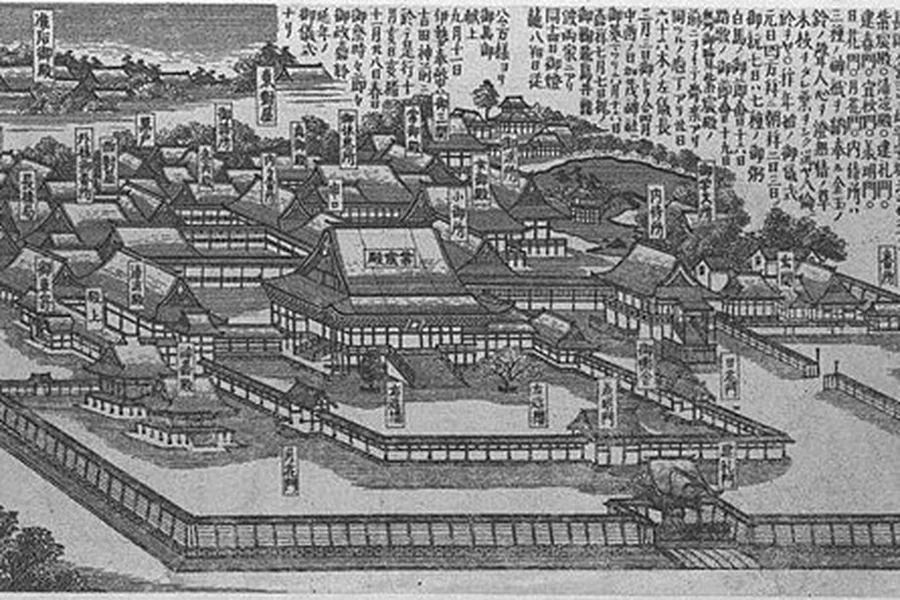
Those centuries were not all grand. Frank Brinkley’s A History of the Japanese People (1915, chapter 33) describes how, after the wars that began in 1467, Emperor Go-Nara (reigned 1526 to 1557) “was reduced to earning his own living” by selling copies of the classics in his own hand, while the palace was fenced only with bamboo and children played in its garden.
The great Kyoto fire of 1788 burned the palace with much of the city. Brinkley’s chapter 41 records that the shogun’s chief minister, Matsudaira Sadanobu, had it rebuilt on plans “modelled on the old lines” of the tenth century. It burned again in 1854, and the buildings you see today date from the rebuilding of 1855, which the Ministry of the Environment says was designed to resemble the palace of the Heian period.
When the Emperor Meiji moved to Tokyo in 1869, the palace and the court nobles’ houses around it fell into disrepair. Visiting was still hard work in the 1880s. Eliza Scidmore needed “the elaborate official permit, obtained by his legation from the Imperial Household Department of Tokio”, before she was led through by a suspicious guard (Jinrikisha Days in Japan, 1891, chapter 25). Today the whole of that ceremony comes down to a bag check at Seishomon Gate.



Sento Imperial Palace: free guided tours, booked by lottery
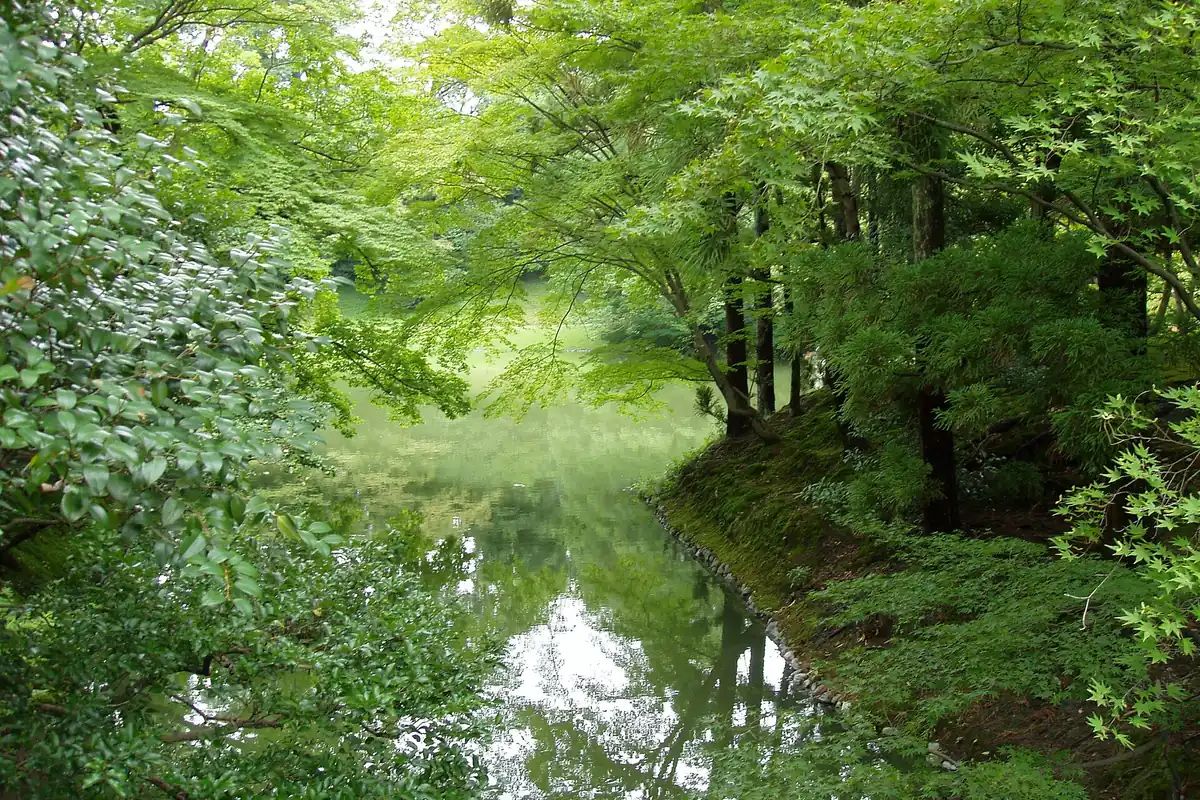
South-east of the main palace, the Sento Imperial Palace was built in the early 17th century for Emperor Go-Mizunoo after he gave up the throne. Its palace buildings were lost to repeated fires, and today the visit is to its stroll garden around a north pond and a south pond, which the Ministry of the Environment says was laid out in 1636 by Kobori Enshu and reworked by Go-Mizunoo in 1664. Enshu’s other work in the city includes the garden at Nijo Castle.
The rules here are much stricter than at the main palace. From the agency’s application guidelines:
- Guided tour only, in Japanese, at 9:30am, 11am, 1:30pm, 2:30pm and 3:30pm, about 60 minutes. In July and August the 9:30am, 11am and 3:30pm tours run first. Free audio guides in English and four other languages are lent in limited numbers.
- Free of charge. 250 places a day, 50 per tour.
- 18 and over only. Children, toddlers and babies cannot enter. Everyone must show a passport.
- Online applications open at 5am Japan time on the first day of the month, three months ahead, and close at 11:59pm three days before the visit. If a day is oversubscribed, a lottery is drawn and the result is emailed within three working days. One applicant can add up to three companions.
- Walk-in places: 50 a day, 10 per tour, plus any unclaimed online places, handed out first come first served from 8:40am at the Sento Palace entrance.
- The route is about 1 kilometre, with stone bridges without handrails, big steps and stepping stones.
The same agency and the same online system handle the Katsura Imperial Villa tour, so if you are applying for both, do it in one sitting.
Map of Kyoto Sento Imperial Palace
Kyoto Gyoen: the park that is open at all hours
Kyoto Gyoen is the 100-hectare national garden that surrounds both palaces. It was the district of court nobles’ houses until the capital moved. At Emperor Meiji’s wish the empty plots were cleared and planted as the palace’s outer garden, a project completed in 1883, and it opened as a national garden in 1949. The Ministry of the Environment’s own guide says you can enter freely at any time, through nine gates and five other entrances.
- Weeping cherries at the Konoe residence site: about 60 large trees in the north-west corner, the first cherries in the park to bloom, usually past their best by mid-March.
- Plum grove: about 200 red and white plum trees, best from mid-February to mid-March.
- Peach grove: about 40 trees near Hamaguri Gomon, the gate named for the fighting of 20 August 1864, flowering from mid-March to early April.
- Kujo residence site: a mid-Edo garden with the Shusui-tei tea house.
- Kan-in no Miya residence site: an exhibition on the park’s history with a virtual reality theatre, a good first stop.
The Nakadachiuri rest house by Nakadachiuri Gomon has a restaurant open from 8am to 6:30pm. The palace grounds themselves have no café and you cannot bring food in, so eat in the park. Kyoto Gyoen is also where the Jidai Matsuri procession sets off every 22 October, with paid seats in the park, and the ministry counts the Aoi Matsuri in May as the other great festival tied to the park’s history.
Getting to the Kyoto Imperial Palace
- From Kyoto Station: the Karasuma subway line to Imadegawa takes about 10 minutes. Walk 5 minutes to Inui Gomon, the park’s nearest gate, then follow the signs to Seishomon Gate.
- By bus: Karasuma Imadegawa stop, then 7 minutes on foot.
- From Gion or Kawaramachi: the Keihan Line to Jingu-Marutamachi (limited expresses do not stop), then about 12 minutes west on foot to the Tominokoji entrance. Or take the Hankyu to Karasuma, change to the subway at Shijo and ride four minutes to Imadegawa.
- For the Sento Palace: Marutamachi Station exit 1 on the Karasuma line, then 15 minutes on foot.
There is no parking or bicycle parking at the palace. The park has paid car parks at Nakadachiuri and Seiwa-in. Large suitcases are not allowed in the palace, though lockers in the visitors’ rest area take day bags. Electric-assist wheelchairs can be borrowed at the entrance, and there are accessible toilets near the entrance and by Kenshunmon Gate.
Map of Kyoto Imperial Palace
The Kyoto International Manga Museum is two stops south on the same subway line at Karasuma Oike, the easiest indoor pairing on a wet afternoon.
Kyoto Gosho or Tokyo’s Imperial Palace?
The emperor has lived in Tokyo since 1869, and the Tokyo Imperial Palace is the working palace today, seen on a guided grounds tour booked through the same agency or through its East Gardens. Kyoto is the place to see the old court laid out on its Heian-period plan, with no booking and on your own timetable. If your trip covers both cities, do both: they are different visits.
For the rest of the day, the Kyoto travel guide sets out what is nearby by district, from Shimogamo Shrine north of the park to Nishiki Market and Nijo Castle to the south and west.
Kyoto Imperial Palace questions answered
Do you need a reservation for the Kyoto Imperial Palace?
No. The palace is open to walk-in visitors with no application, and entry is free. You enter at Seishomon Gate after a bag check. Only the Sento Imperial Palace, Katsura Imperial Villa and Shugakuin Imperial Villa need advance applications through the Imperial Household Agency, and all three are guided tours.
What are the Kyoto Imperial Palace opening hours?
It opens at 9am. Last entry is 3:20pm from October to February, 3:50pm in March and September and 4:20pm from April to August, and everyone must be out 40 minutes later. It closes on Mondays (Tuesdays after a Monday holiday), from 28 December to 4 January and on some event days.
Is there an English tour of the Kyoto Imperial Palace?
Yes. Free English tours led by agency staff start at 10am and 2pm and last about 50 minutes, with only the 10am tour in July and August. Meet at the visitors’ rest area before the start. A free audio guide app covers the route in English, and printed pamphlets are available in English too.
Can you go inside the buildings?
No. Visitors walk the gravel courtyards and paths, and the outer doors of the Shodaibu-no-ma, the Seiryoden and the Kogosho are partly opened so you can look in. The interiors are shown during the short spring and autumn special openings, which in 2026 ran in late March and early October.
How do you visit the Sento Imperial Palace?
Only on a free guided tour in Japanese, for visitors aged 18 and over with a passport. Apply online from three months ahead (a lottery decides busy days), or queue from 8:40am for one of 50 walk-in places. Tours run at 9:30am, 11am, 1:30pm, 2:30pm and 3:30pm and last about an hour.
Is Kyoto Gyoen open at night?
Yes. The Ministry of the Environment says the park can be entered freely at any time, through nine gates and five other entrances. Only the palaces inside it keep set hours. The rest houses and restaurants close in the early evening, so bring water if you walk through late.