Osaka Castle stands as one of Japan’s most recognisable landmarks, yet many visitors find themselves unexpectedly confused by its complex grounds, museum layout, and access points. Unlike the serene temples of Kyoto or the organised chaos of Tokyo’s attractions, Osaka Castle reflects both its original purpose as a defensive fortress and its modern reinvention as a concrete reconstruction housing a museum.
The castle’s immense grounds (approximately 106 hectares) feature multiple moats, gates, and walls that once protected feudal lords but now inadvertently disorient tourists. This confusion stems from a landmark that has transformed from a medieval defence structure to an urban park and a museum, with each layer adding complexity to the visitor experience.
<strong>Osaka Castle at a glance</strong>
Entering Osaka Castle
Despite its central location, the park creates a sense of space and calm that feels removed from the surrounding city.
The current castle is an eight-floor concrete reconstruction that houses a museum inside. While it is not the original structure, the interior provides context through exhibits on the castle’s history, armour, and Sengoku-period figures associated with it.

Historically, Osaka Castle is closely linked to Toyotomi Hideyoshi, the warlord who commissioned its construction in the late 16th century. It stands as a powerful symbol of Japan’s unification after decades of civil war and remains one of the country’s most recognisable landmarks.
Ideal for
- History enthusiasts interested in Japan’s feudal era
- Photography enthusiasts seeking iconic castle views
- Visitors who appreciate panoramic city views
- Park lovers wanting to combine natural spaces with cultural sites
Be prepared for
- Significant walking distances across the expansive grounds
- Queues and crowds, especially during cherry blossom season
- Modern museum experience rather than historical immersion
- Multiple entry points that can be confusing without planning


Getting to Osaka Castle

The very first challenge in visiting Osaka Castle begins with deciding which train station to use. This seemingly simple choice significantly impacts your energy level and time efficiency.
Where to enter
Osakajokoen Station (大阪城公園駅) on the JR Osaka Loop Line seems like the obvious choice based on name alone. However, this station deposits you at the north-eastern edge of the enormous park grounds, on the opposite side from the castle’s historic main entrance (Otemon Gate), leaving a 15 to 20 minute walk through the park.
A better entry point is Tanimachi 4-chome Station (谷町四丁目駅) on the Tanimachi and Chuo subway lines. Exit 1B leads directly to the castle’s southeastern corner near the Otemon Gate, cutting your walking distance nearly in half.
The Multi-Gate Approach System
Osaka Castle Park features multiple historic gates, each creating a different visitor experience. The Otemon Gate (大手門) serves as the historical main entrance and provides the most direct route to the castle tower. For visitors with mobility concerns, this approach minimises uphill walking, while other gates may require navigating more elevation changes, a design feature originally intended to exhaust attacking samurai.
Navigating the Castle Grounds & Park
Osaka Castle’s grounds feature multiple moats, walls, and gardens, creating a beautiful yet potentially confusing experience for first-time visitors.
The Moat System & Bridge Checkpoints
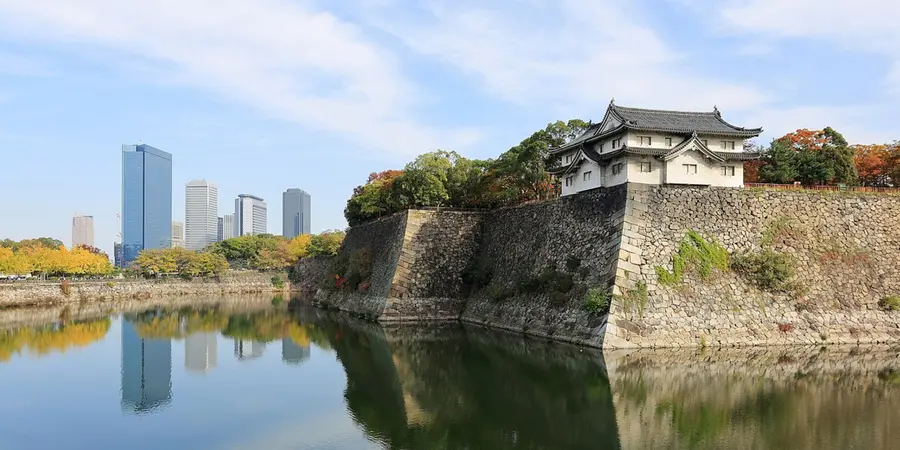
The castle’s defensive design includes two moats and multiple walls that continue to function as natural barriers. The Gokurakubashi Bridge (極楽橋) spans the inner moat and often creates a bottleneck during peak times. Rather than immediately crossing after entering through Otemon Gate, consider exploring the outer bailey area first, including the Osaka Castle Nishinomaru Garden to the west, which holds around 300 cherry trees, mostly Somei-yoshino.
The Megaliths

If you want a fun activity to add to your visit, try locating the massive foundation stones that demonstrate the castle’s impressive construction. The most notable are the “Octopus Stone” (Tako-ishi (タコ石)) and “Tiger Stone” (Tora-ishi (トラ石)), both of which you can see along the path leading to the main keep.
These enormous stones, some weighing over 100 tons, were transported from quarries over 100km away, from quarries in what is now Okayama Prefecture during the original construction. The Tako-ishi is particularly impressive, measuring approximately 5.5 × 11.7 metres and featuring a carved family crest identifying which feudal lord provided it. These megalithic blocks represent some of the oldest authentic stonework visible above ground in the complex.
The Toyotomi Stone Wall Museum
Since April 2025 the grounds hold a genuinely new reason to visit. The Osaka Castle Toyotomi Stone Wall Museum takes you underground to stone walls from Hideyoshi’s original castle, buried when the Tokugawa rebuilt the fortress on top and uncovered by excavation in 1984. Entry is included in the main tower’s ¥1,200 ticket and it keeps the same hours as the tower, so it slots naturally into any visit.
Timing & Crowds: Managing the Flow

Osaka Castle receives over 2.8 million visitors annually, with dramatic seasonal variations that directly impact your experience.
The Opening Hour Advantage
The castle tower opens daily at 9:00 AM, but the surrounding park grounds are accessible from sunrise. Arriving at the castle tower entrance at 8:45 AM positions you at the front of the first admission group. This saves potentially hours throughout your visit by avoiding the queue cascades that develop later.
Seasonal Crowd Patterns
The castle experiences distinct visitor patterns:
- Cherry Blossom Season (late March–early April): Extreme crowds focus primarily on the outer grounds rather than the castle interior.
- Golden Week (early May): The castle interior becomes extraordinarily congested as domestic tourism peaks.
- August: Despite summer vacation, the intense heat reduces overall visitor numbers, especially during midday hours.
- Mid-January: The post-New Year period sees the lowest visitor numbers while still offering clear winter views.




Inside the Castle: Museum Strategy & Experience
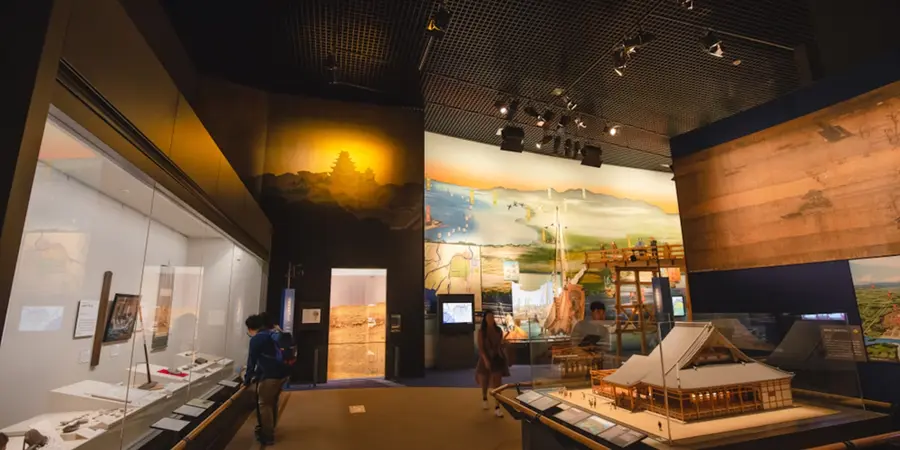
The interior of Osaka Castle surprises many first-time visitors: it’s a modern concrete building housing an eight-floor museum with elevators and air conditioning.
Viewing Strategy
The standard visitor flow, entering on the first floor, viewing exhibits sequentially, and ending at the observation deck, creates congestion. Instead, implement what locals call the “reverse flow” approach: immediately upon entering, take the lift to the 5th floor, which is as high as it goes on general admission, then climb the stairs to the 8th-floor observation deck and work back down through the exhibits in reverse order. The 6th floor is closed to the public.
This strategy works effectively because most visitors cluster on the lower floors first. By starting at the top, you enjoy panoramic views with fewer crowds and then descend through progressively less congested exhibit floors.
Interactive vs. Static Exhibits

The museum’s exhibits vary across its floors:
- The 7th floor houses dioramas of the Summer War of Osaka
- The 5th floor displays armour and weapons
- The 4th floor offers the most interactive elements, including the Samurai Daisho Armour Experience (侍大小甲冑体験) where visitors can take a commemorative photo wearing samurai armour (¥1,000).
Understanding this distribution helps prioritise time. If historical armour interests you most, focus on the 4th and 5th floors. If you prefer battle dioramas, the 6th and 7th floors deserve more attention.
Osaka Castle
Planning Your Day: A Mini Itinerary

The Castle-Museum-River Route
This sample itinerary combines Osaka Castle with the Osaka Museum of History and the Osaka River Cruise:
- Visit Osaka Castle early morning (9:00 to 11:00 AM)
- Walk 10 minutes southwest to the Osaka Museum of History (11:30 AM to 1:00 PM)
- Take the Osaka River Cruise from nearby Osakajo Pier (大阪城ピア) (departures throughout afternoon)
This sequence allows you to see the castle from three perspectives: inside its walls, from the museum’s observation deck, and from the water. The river cruise continues to the Dotonbori entertainment district, connecting two major Osaka highlights without retracing steps.
Hotel Positioning
Accommodations near Osaka Castle offer strategic advantages for certain travel styles. The Hotel New Otani Osaka (ホテルニューオータニ大阪) and DoubleTree by Hilton Osaka Castle border the castle park, providing easy castle access.
However, for travellers planning to explore Osaka beyond the castle, consider staying in the Umeda area instead, such as at Hotel Granvia Osaka. This places you at a major transport hub with direct train access to the castle while keeping you connected to dining and entertainment options for evening activities.
You can explore more neighbourhood and hotel recommendations in our full guide to where to stay in Osaka.
Photography & Views: Beyond the Obvious Angles
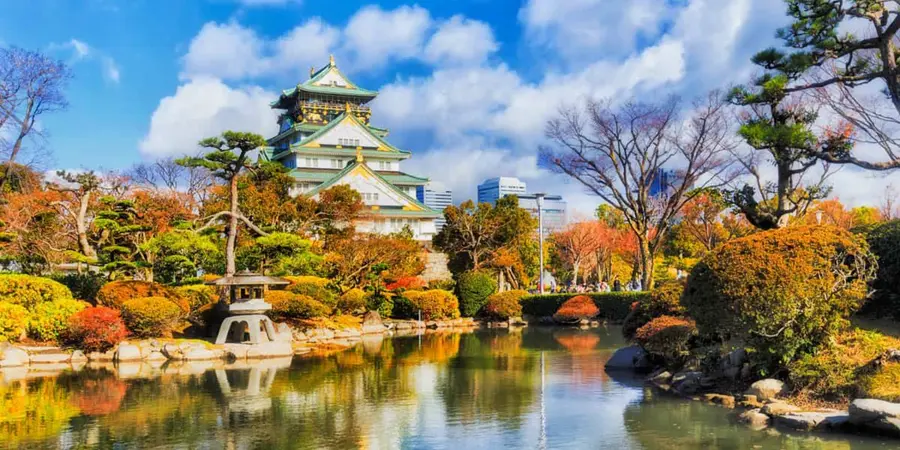
You might want to commemorate your visit with photos. If you’re looking to create a truly memorable piece to look back on, know the best locations and compositions for photos you can take in the castle.
The Secret
Rather than struggling for unobstructed photos from within the crowded castle grounds, visit the 10th-floor observation deck of the adjacent Osaka Museum of History (大阪市立歴史博物館). This viewing platform offers the iconic “Castle + Moat + Skyline” composition that’s impossible to capture from within the park itself.
The museum’s observation platform provides an elevated vantage point looking directly at the castle across the outer moat. Professional photographers often choose this location for sunset shots when the castle’s white walls take on golden hues.
Seasonal Photography Planning
Cherry blossom season (late March to early April) transforms the castle into one of Japan’s premier sakura viewing locations, particularly in the Nishinomaru Garden. For photographers seeking cherry blossoms with fewer crowds, the less-visited eastern side along the inner moat offers similar compositional opportunities.
For illuminated night views, the winter Osaka Castle Illuminage (大阪城イルミナージュ) event (December to February) lights up Nishinomaru Garden.
Osaka Castle Frequently Asked Questions
How much does Osaka Castle cost?
The main tower costs ¥1,200 for adults, and since April 2025 that ticket also covers the Toyotomi Stone Wall Museum. High school and university students pay ¥600 with ID, and children of junior high school age and under enter free with proof of age. The surrounding park costs nothing.
What are Osaka Castle’s opening hours?
The main tower opens 9:00am to 6:00pm with last admission at 5:30pm, closing only from 28 December to 1 January. The park itself is open from early morning, which is the quietest time to walk the grounds.
Is Nishinomaru Garden worth the extra ticket?
At ¥200 (free for junior high age and under), yes in spring especially: its lawns hold around 300 cherry trees with the tower rising behind them. It opens 9:00am to 5:00pm (4:30pm November to February), closes Mondays, and runs extended hours in cherry blossom season.
Which station is best for Osaka Castle?
Tanimachi 4-chome Station, Exit 1B, gives the shortest approach to the Otemon Gate and suits the Museum of History pairing. Osakajokoen on the JR Loop Line works better if you want the park walk first or are arriving from Osaka Station.
Final Words
Visiting Osaka Castle requires adjusting expectations from purely historical immersion to appreciating a modern museum housed within a reconstructed historical shell. By understanding its dual nature, visitors can appreciate what it offers.
The castle’s value lies not in authentic medieval architecture (for that, visit nearby Himeji Castle), but in its comprehensive historical exhibits, panoramic views, and the beautiful park that surrounds it. The reconstructed exterior provides a window into Osaka’s past glory while celebrating Toyotomi Hideyoshi’s legacy as the great unifier of Japan.
In Japan, even reconstructed history serves an important cultural purpose: connecting modern citizens with their heritage. Approach Osaka Castle not as a perfectly preserved relic, but as Japan’s way of making history accessible, educational, and relevant for contemporary visitors.