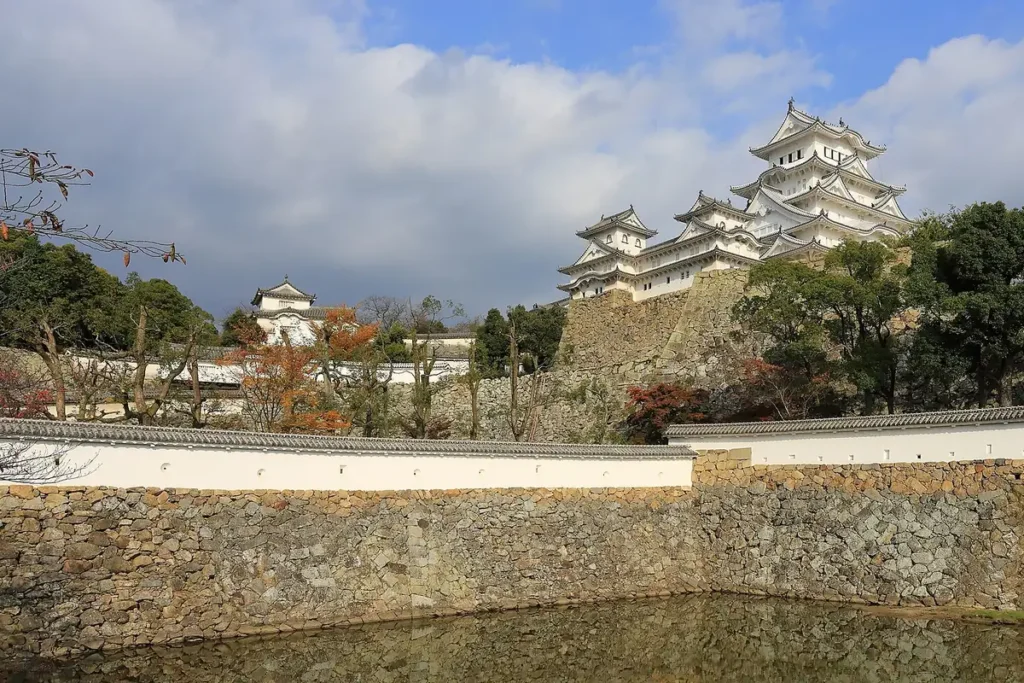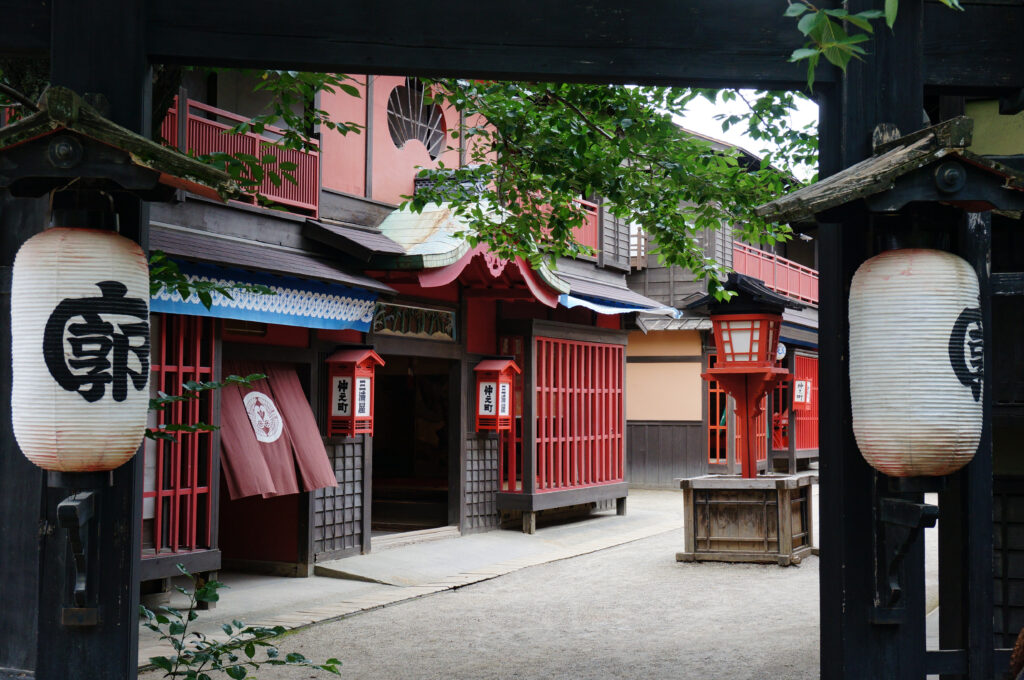
Gion is Kyoto’s best-known geisha district, the streets of teahouses, restaurants and wooden townhouses between Yasaka Shrine and the Kamo River. Higashiyama is the hillside district above it, where Kiyomizu-dera, the Yasaka pagoda and the preserved slopes of Sannenzaka and Ninenzaka lead down into Gion. Walked together, from the temple at the top to the Shirakawa canal at the bottom, they make Kyoto’s most rewarding half-day on foot.
They are also places where people live and work, and the residents have written down exactly how they would like visitors to behave. Those rules come first in this guide, followed by the route, what is open after dark this season and how to get home.
Walking Gion Kyoto: Route, Rules and Evening Stops
| Route | Kiyomizu-dera, Sannenzaka, Ninenzaka, Nene-no-michi and Kodai-ji, Maruyama Park, Yasaka Shrine, Hanamikoji, Kennin-ji, Shirakawa |
| Distance and time | About 25 minutes of walking from Kiyomizu-dera to Maruyama Park on Kyoto City’s timings, then Gion itself. Allow 3 to 4 hours with stops |
| Best time | Start at Kiyomizu-dera when it opens at 6am, or walk from mid-afternoon into the evening |
| Costs | Streets, Yasaka Shrine and Maruyama Park are free. Kiyomizu-dera ¥500, Kennin-ji ¥800 (¥1,000 from 1 January 2027) |
| Nearest stations | Gion-Shijo (Keihan), Kyoto-Kawaramachi (Hankyu), Higashiyama (Tozai subway) |
| The rule that matters most | Do not stop, follow, touch or photograph geiko and maiko without permission |
The Gion rules, in the residents’ own words
In January 2024 the Southern Gionmachi council, the district south of Shijo-dori that includes Hanamikoji, published a message to visitors through Kyoto City’s official tourism site. It is signed by the Gion Kobu teahouse association, the Gion geiko association, Kennin-ji and the council itself, and it begins: “This is therefore not a theme park, but a place where people live their daily lives.”
It lists five kinds of behaviour to avoid, and the penalties under Japanese law or city ordinance that the council attaches to each:
| Please do not | Penalty the council cites |
|---|---|
| Stop, touch, follow, or take unauthorised photos or videos of geiko and maiko | Obstructing someone’s path or stalking: detention of under 30 days or a fine of under ¥10,000. Pulling someone’s hand or clothes: up to six months’ imprisonment or a fine of up to ¥500,000 |
| Enter temples, shrines or private property (anywhere other than shops and roads) without permission, or damage it | Trespass: up to three years’ imprisonment or a fine of up to ¥100,000. Damage: up to three years or ¥300,000 |
| Block the road or pavement by loitering, stopping for photos or stepping into the road | Obstructing traffic: a fine of up to ¥50,000 |
| Drop litter | Up to ¥30,000 under city ordinance |
| Make loud noise | No penalty listed; the council calls it a serious nuisance to residents |
The council adds that a report from a resident may lead to the police being called. Kyoto City’s own etiquette guide adds three smaller points for Gion: no tripods on the street, do not touch the lanterns outside teahouses, and do not lean on fences. If a lane entrance carries a no-entry or no-photography sign, treat it as private and walk on.
Respecting all this costs you nothing. A maiko you see in the street in full dress is on her way to an engagement and, as Kyoto City puts it, is not a mascot. If you want to watch maiko dance, the council points visitors to Gion Corner, covered below, where photos with a maiko are part of the winter show.


A walking route from Kiyomizu-dera down to Gion
Kyoto City recommends walking this district between Higashiyama Station and Kiyomizu-dera rather than taking a bus, and publishes the walking times between each stop. This route runs the same streets downhill, which is easier on the legs and ends in Gion as the lanterns come on.
| Stop | What is there | On foot to the next stop |
|---|---|---|
| 1. Kiyomizu-dera | The wooden stage and Otowa Waterfall. Opens 6am, ¥500 | 10 minutes down Kiyomizu-zaka and into Sannenzaka |
| 2. Sannenzaka | Stone steps and wooden shops, part of a preservation district since 1976 | 5 minutes |
| 3. Ninenzaka | The gentler slope below, with a view up to the Yasaka pagoda | 5 minutes |
| 4. Nene-no-michi and Kodai-ji | A paved lane named after Nene, the widow of Toyotomi Hideyoshi, and the temple she built to mourn him | 5 minutes |
| 5. Maruyama Park | The large public park behind Yasaka Shrine | A few minutes west through the park |
| 6. Yasaka Shrine | The shrine at the head of Shijo-dori, open 24 hours | A short walk west along Shijo-dori |
| 7. Hanamikoji | Gion’s main teahouse street, running south from Shijo-dori to Kennin-ji | The length of the street |
| 8. Kennin-ji | Kyoto’s oldest Zen temple. Last entry 4:30pm | Back north across Shijo-dori |
| 9. Shirakawa | The willow-lined canal and the teahouses of Gion Shinbashi | End of the walk |
The walking times for stops 1 to 5 are Kyoto City’s own. Kennin-ji closes at 5pm, so on an afternoon walk go there first, or swap it for the evening light-ups listed below.
The top of the walk has its own guide: our Kiyomizu-dera guide covers the temple’s 2026 hours, night viewings and the weekend bus from Kyoto Station.
Sannenzaka, Ninenzaka and the Yasaka pagoda
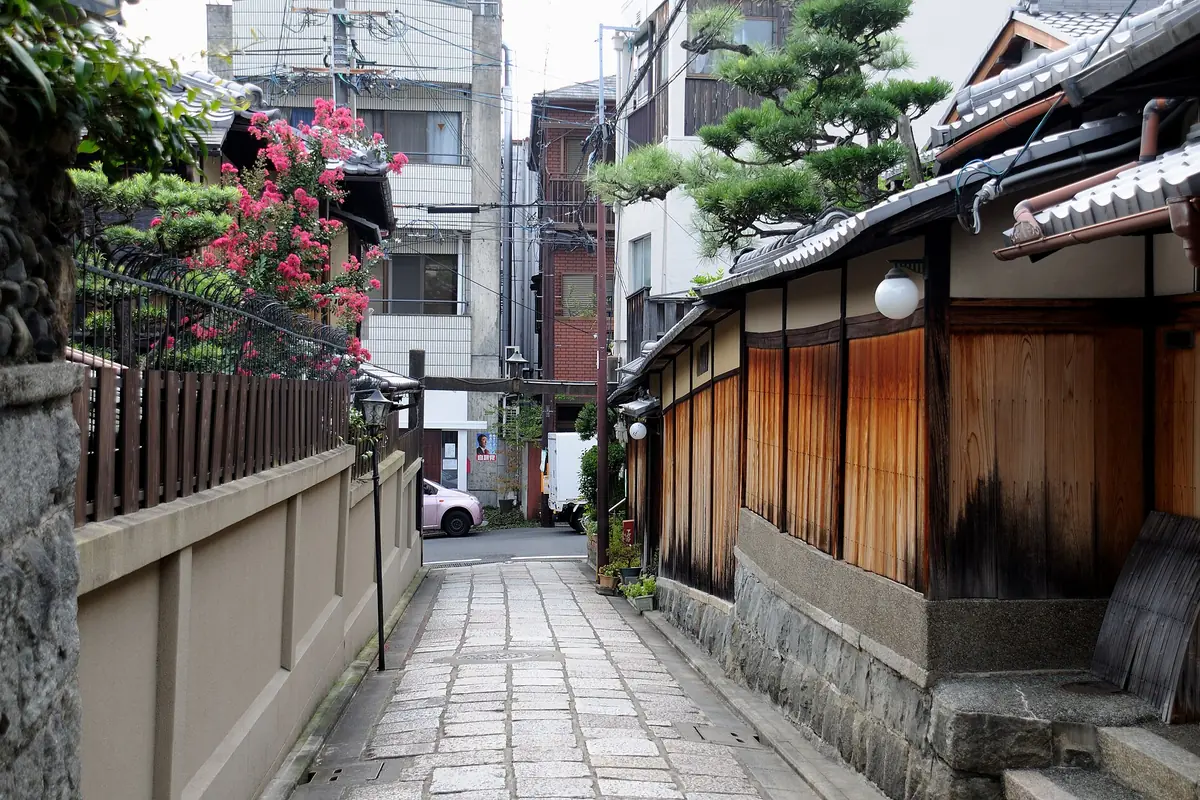
The slopes below Kiyomizu-dera were selected on 4 September 1976 as one of Japan’s first preservation districts for groups of traditional buildings. Kyoto City’s description of the Sannenzaka district says it began as a gate town serving Kiyomizu-dera, the Yasaka pagoda and Yasaka Shrine (then called the Gion shrine), and filled with houses along the paths between them from the middle of the Edo period.
The Yasaka pagoda, formally Hokan-ji, rises five storeys above the rooftops between Ninenzaka and Yasaka Shrine. Kyoto City’s guide gives its height as 46 metres. Eliza Scidmore saw it in the 1880s, “with its five stories of curving roofs and gables hung with old bronze bells”, and thought it most beautiful “against a glowing orange sky” late in the afternoon (Jinrikisha Days in Japan, 1891, chapter 23). The late afternoon light still works.
Kyoto City asks visitors on these slopes not to smoke in the street, to take litter home, and not to spend a long time photographing in the way of other people.
Kodai-ji, Maruyama Park and Yasaka Shrine
Nene-no-michi is the paved lane named after Nene, also known as Kitanomandokoro, the wife of Toyotomi Hideyoshi, who spent the last years of her life here. Kodai-ji, on its east side, is the temple she built to mourn him. In autumn 2026 it holds a special night viewing with illuminations from 23 October to 13 December.
The lane ends at Maruyama Park. Walk through it to the west and you reach the back of Yasaka Shrine.
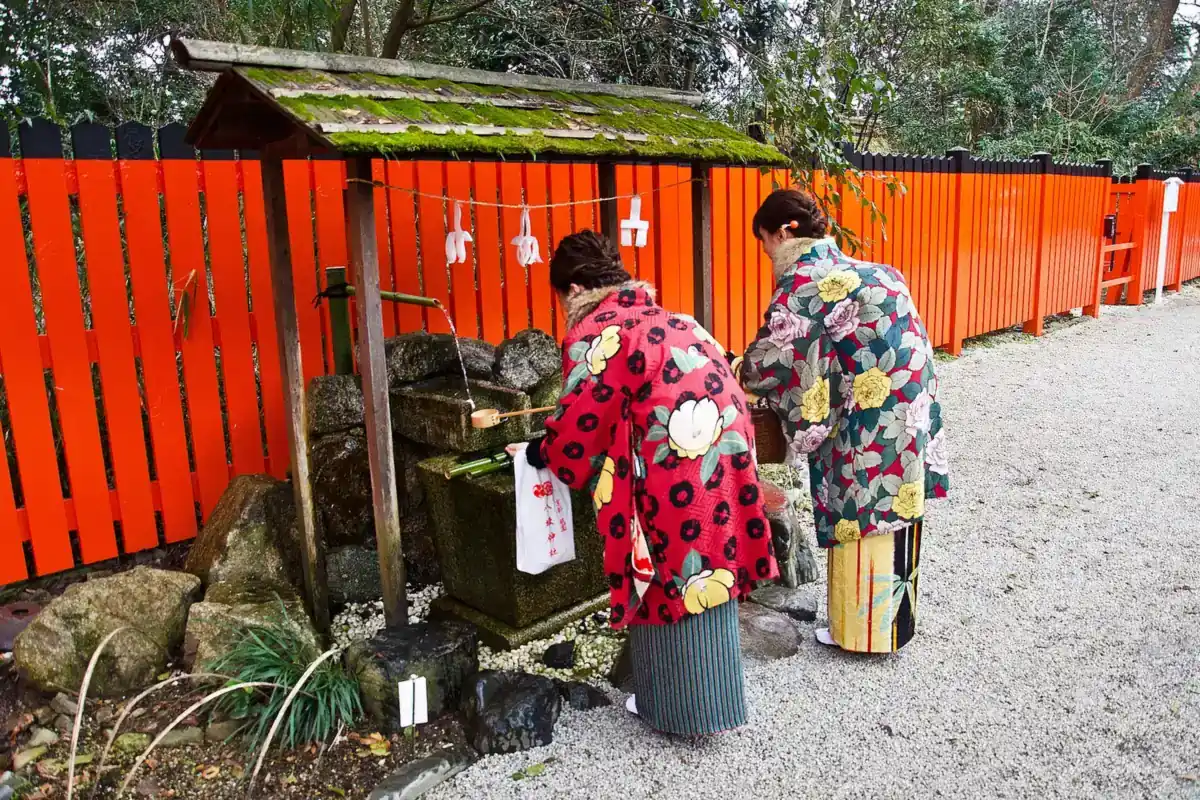
Yasaka Shrine is open for worship 24 hours a day and charges nothing to enter. Its office, which issues charms and goshuin, works from 9am to 5pm. The shrine’s own history gives two possible beginnings, in 656 and in 876, and its main hall is a National Treasure, with 29 other buildings registered as Important Cultural Properties. The vermilion tower gate facing down Shijo-dori is the one everyone photographs, but the shrine points out that its real main gate is the south gate, facing the main hall. The Gion Matsuri belongs to this shrine, and its portable shrines leave for the city on the night of 17 July and return on 24 July.





Hanamikoji and the evening in Gion Kobu
Hanamikoji runs south from Shijo-dori to Kennin-ji through Gion Kobu, the largest of Kyoto’s five geisha districts. There is no separate pavement: Kyoto City explains that different stones are laid along the sides of the street so that people walk there, leaving the middle for cars, and it has a live camera on the street if you want to check the crowds first.
Gion Corner, near the south end, puts on an hour of traditional arts every evening at 6pm and 7pm, including Kyomai dance by maiko of Gion Kobu, tea ceremony, koto music, ikebana, bugaku court dance and kyogen comedy. Its current prices are ¥5,500 for adults, ¥3,850 for 16 to 22 year olds and ¥3,300 for 7 to 15 year olds, with premium seats at ¥6,600. From 1 December to 11 March it runs a shorter winter programme from Tuesday to Friday, when you can be photographed with a maiko after the show. It closes from 26 December to 4 January.
For a fuller performance, the geiko and maiko of Gion Higashi stage the Gion Odori at the Gion Kaikan theatre from 1 to 10 November 2026, the only one of the five districts’ main dances held in autumn. Tickets cost ¥6,000, or ¥7,000 with a tea ceremony, from the Gion Kaikan box office. Gion Kobu’s own Miyako Odori follows every April. The history of both dances, and of Ichiriki, the teahouse at the top of Hanamikoji, is in our longer read on Gion’s geisha quarter.
Kennin-ji, Kyoto’s oldest Zen temple
At the south end of Hanamikoji, Kennin-ji was founded in 1202 by the monk Eisai, who brought Zen teaching and tea seeds back from China. The temple calls itself the oldest Zen temple in Kyoto and honours Eisai as the founder of tea in Japan; Kyoto City notes a stone “tea monument” in its garden. It is one of the four signatories of the Southern Gionmachi rules.
- Hours: 10am to 5pm, last entry 4:30pm
- Entry: ¥800 for adults and ¥500 for school pupils, rising to ¥1,000 for adults on 1 January 2027
- Closed: all day on 15 November 2026 for a memorial service
Its link with tea is the starting point for the Gion tea ceremony walking tour, which leaves from Gion-Shijo Station and stops at Kennin-ji before a tea ceremony with a tea master.
Shirakawa and Gion Shinbashi after dark
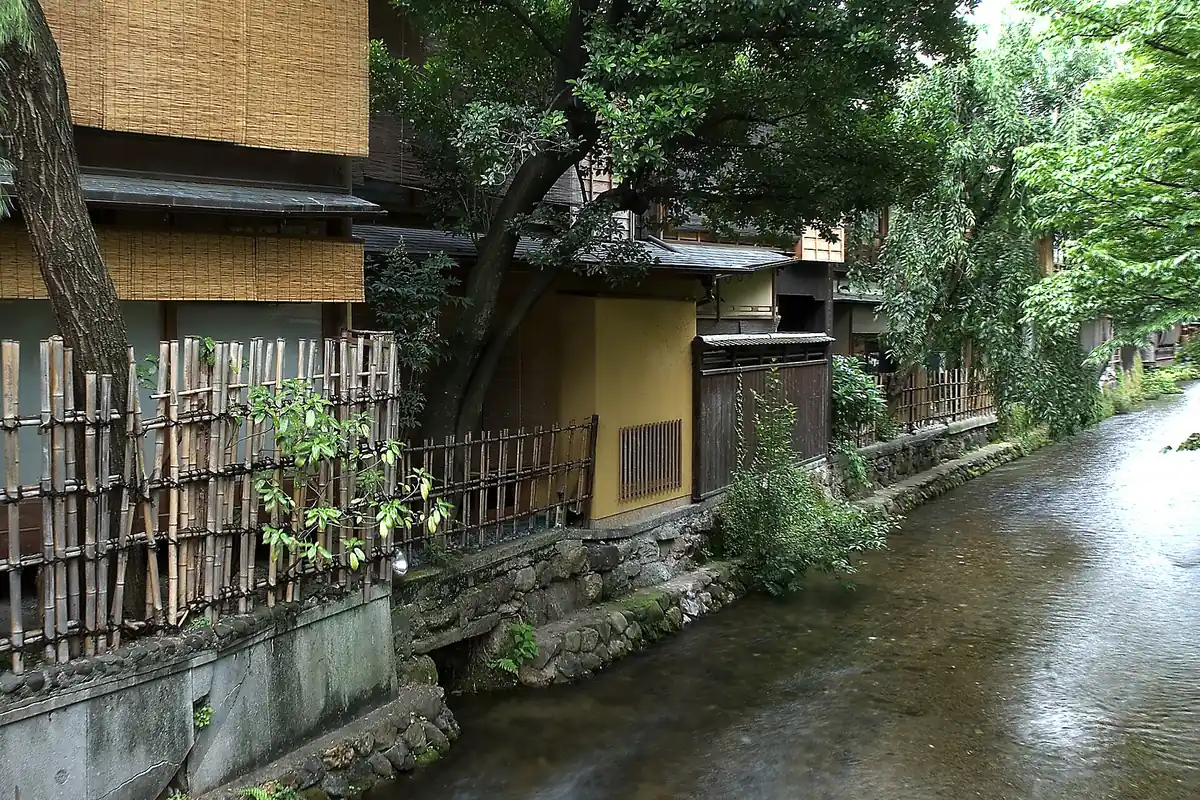
North of Shijo-dori, the Shirakawa canal runs past the back rooms of teahouses, under willows and small stone bridges. The streets around it make up the Gion Shinbashi preservation district, selected on the same day as Sannenzaka in 1976 and classed as a teahouse district. At about 1.4 hectares it is small enough to walk end to end in a few minutes, which is why it is the best place to finish.
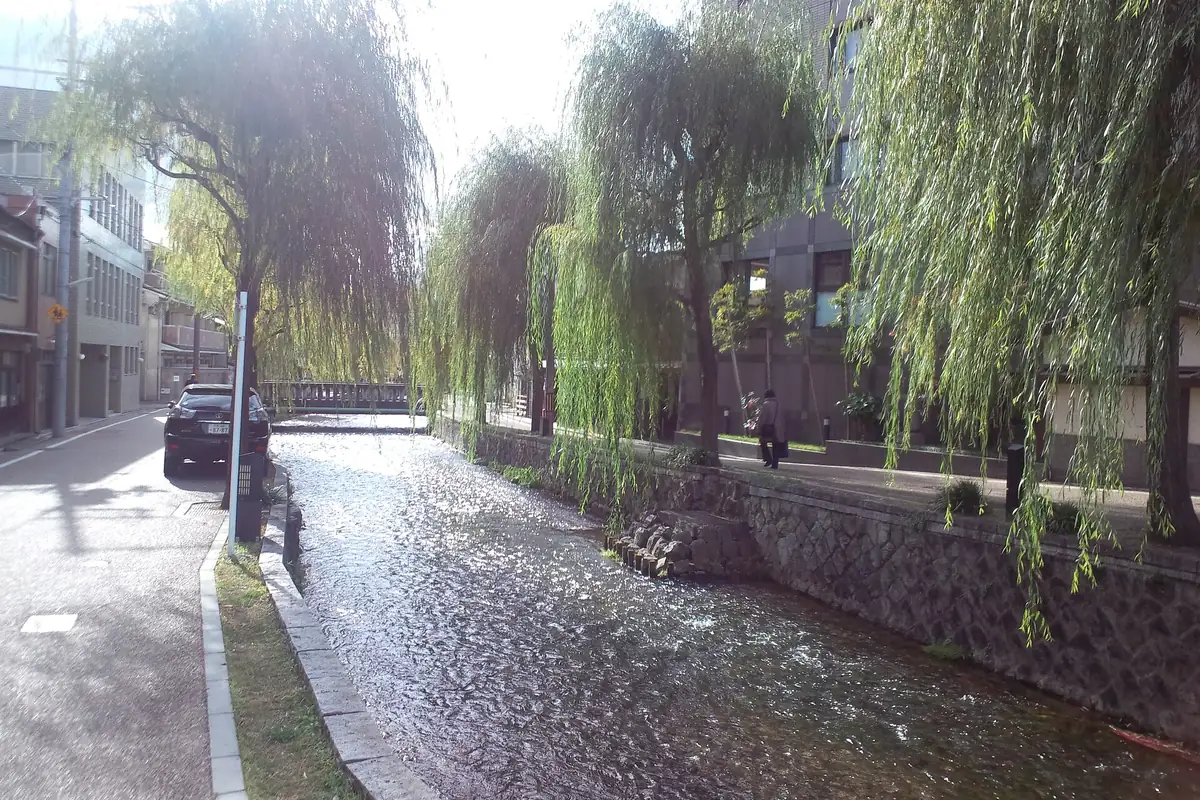
This is also the part of Gion where people most often wait for geiko and maiko to pass. Watch from the side of the street, give way, and keep your camera down. Our 7-day Kyoto itinerary ends its week here, with Hanamikoji between 8pm and 9pm and a last walk along the canal.
What is lit up in Higashiyama this season
Autumn is the busiest evening season in the district. These are the special openings Kyoto City lists for the Gion and Kiyomizu area in late 2026:
| Place | Dates | What happens |
|---|---|---|
| Kodai-ji | 23 October to 13 December 2026 | Special autumn night viewing and illumination |
| Gion Kaikan (Gion Higashi) | 1 to 10 November 2026 | Gion Odori dance, ¥6,000 |
| Shoren-in | 7 November to 6 December 2026 | Special evening opening |
| Chion-in | 17 November to 6 December 2026 | Autumn illumination |
| Kiyomizu-dera | 21 to 30 November 2026 | Night viewing to 9:30pm, and the Jojuin garden opening |
| Shoden Eigen-in (Kennin-ji) | 21 November to 6 December 2026 | Special autumn exhibition of temple treasures |
Spring brings its own light-ups around cherry blossom time, and Kiyomizu-dera’s spring night viewing in 2026 ran from 27 March to 5 April.
Getting to Gion and back at night
- Gion-Shijo Station (Keihan Line): at the west end of Gion, on Shijo-dori by the river.
- Kyoto-Kawaramachi Station (Hankyu Line): on the west bank. Kyoto City puts Yasaka Shrine about 13 minutes’ walk east along Shijo-dori.
- Higashiyama Station (Tozai subway line): about 15 minutes from Kyoto Station, changing at Karasuma Oike, and the start of Kyoto City’s recommended walk south to Kiyomizu-dera.
- Buses from Kyoto Station: City Bus 206 to Gion, or on Saturdays, Sundays and holidays the EX100 Sightseeing Limited Express, which stops at Gion on its way to Ginkaku-ji (¥500, or free with the ¥1,100 one-day pass). Shijo-dori traffic often slows buses down.
- Going home late: the Gion Yoru Bus runs from Gion to Kyoto Station every 10 minutes between 8pm and 9:30pm, at the normal ¥230 city bus fare.
Map of Yasaka Shrine
Across the Kamo River from Gion-Shijo, Nishiki Market is about ten minutes’ walk west and makes a good morning start before an afternoon in Higashiyama. For everything else in the city, district by district, see the Kyoto travel guide.
Gion and Higashiyama questions answered
Can you take photos in Gion?
You can photograph the streets, but not geiko or maiko without their permission, and not on private property. The Southern Gionmachi council asks visitors not to stop, follow, touch or photograph geiko and maiko, not to enter private property other than shops and roads, and not to block the street for photos. It cites fines under Japanese law for obstruction and trespass.
Is there a fine for taking photos in Gion?
The council’s published rules attach legal penalties to behaviour around photography rather than to a camera itself. Obstructing or following someone carries detention of under 30 days or a fine of under ¥10,000, trespass on private property up to ¥100,000, and blocking traffic up to ¥50,000. A resident’s report may bring the police.
What is the best time to see geiko and maiko in Gion?
Evenings, when they travel to engagements at teahouses, and especially around Hanamikoji and Shirakawa. Kyoto City reminds visitors that a maiko in full dress is on her way to work. The respectful way to see maiko perform is at Gion Corner, nightly at 6pm and 7pm, or at a district dance such as the Gion Odori in November.
How long does it take to walk from Kiyomizu-dera to Gion?
About 25 minutes from Kiyomizu-dera to Maruyama Park and Yasaka Shrine by Sannenzaka, Ninenzaka and Kodai-ji, using Kyoto City’s walking times. From Yasaka Shrine, Hanamikoji and Shirakawa are a short walk west. With stops at temples and shops, most people take three to four hours over the whole route.
Is Yasaka Shrine open at night?
Yes. Yasaka Shrine is open for worship 24 hours a day and is free. Its office for charms and goshuin works from 9am to 5pm. The lanterns make it a good evening stop on the way from Higashiyama down to Gion.
What is the difference between Gion and Higashiyama?
Higashiyama is the ward and hillside district on the east side of Kyoto, home to Kiyomizu-dera, the Yasaka pagoda and the Sannenzaka slopes. Gion is the geisha district inside it, around Shijo-dori between Yasaka Shrine and the Kamo River, including Hanamikoji and Shirakawa.