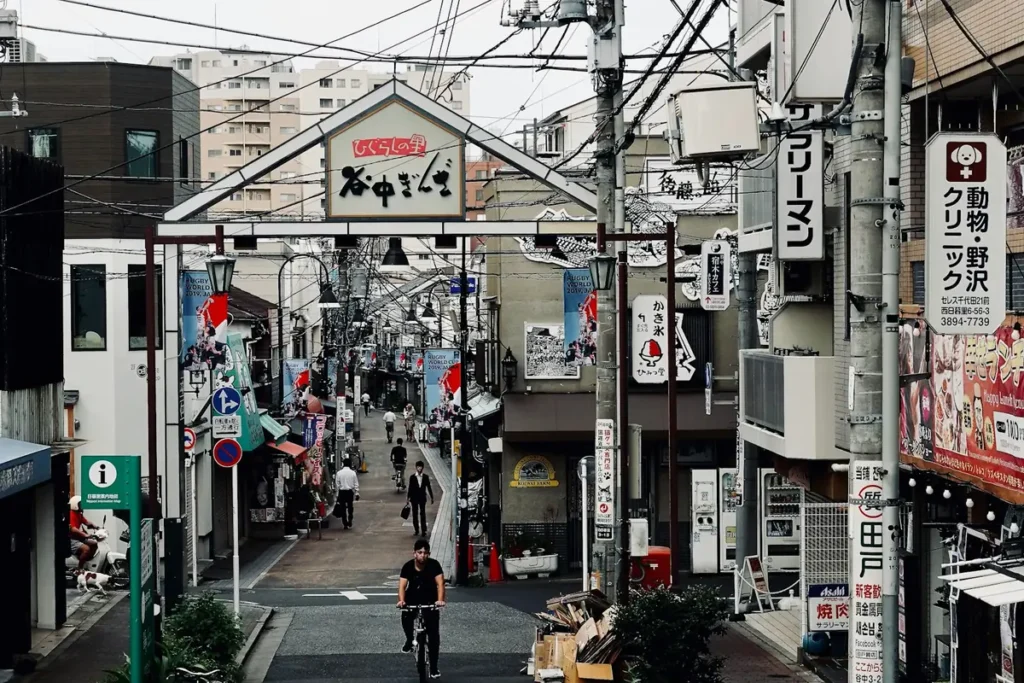
Takayama is a mountain town in the Hida region of Gifu Prefecture, known for its preserved merchant streets and a float festival held every April and October. Two days suits most trips: one for the old town and the morning markets, and one for Shirakawa-go, about 50 minutes away by bus.
This guide covers the sights in the order most people walk them, what each costs in 2026 and 2027, where to eat Hida beef, which sake breweries sit in the old town, and how to get in from Nagoya and on to Shirakawa-go.
Planning Takayama: Markets, Festivals and Day Trips
| Takayama Festival | Spring: 14 and 15 April. Autumn: 9 and 10 October. Same dates every year |
| Morning markets | Every day, 7am to noon from April to November, 8am to noon from December to March |
| Old town | 12 minutes on foot from JR Takayama Station |
| Shirakawa-go | About 50 minutes by Nohi Bus, ¥2,800 one way |
| Accommodation tax | ¥100 to ¥300 per person per night |
| Days needed | Two, or three with an overnight stay in Shirakawa-go |
Sanmachi Suji: Takayama Old Town
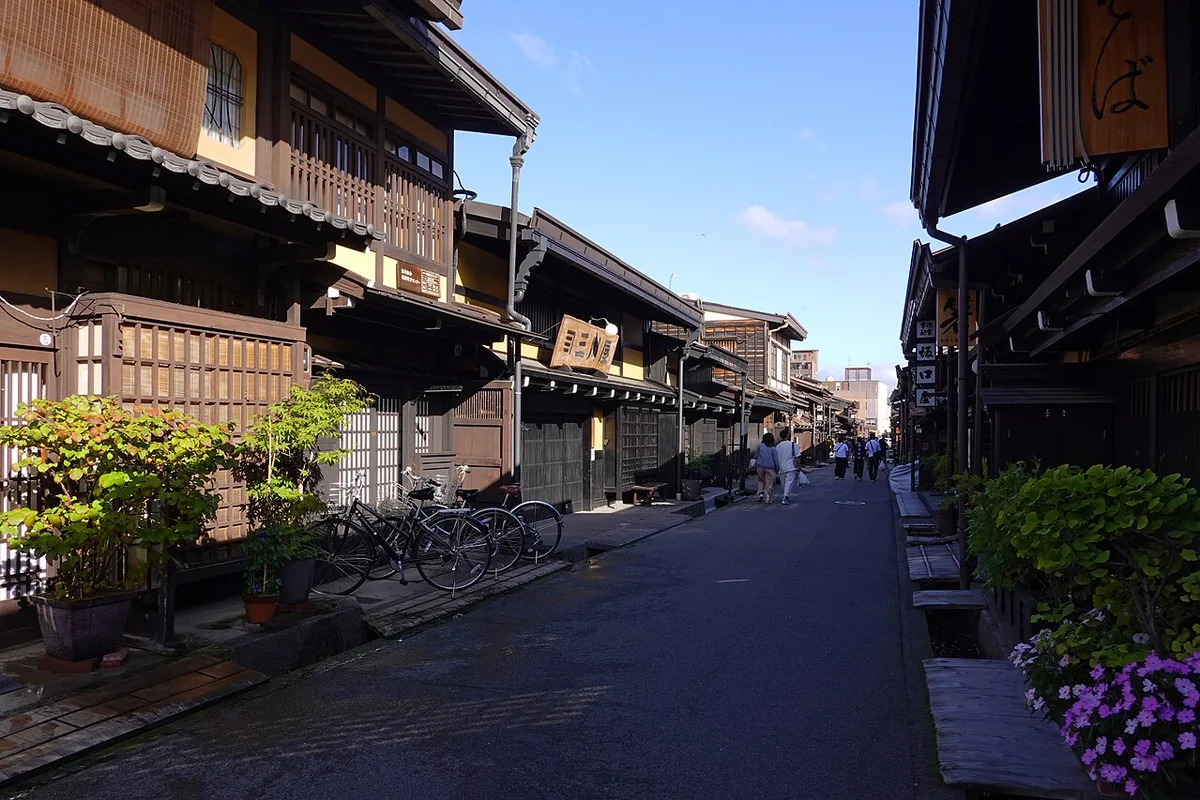
The old town is the Sanmachi Traditional Buildings Preservation Area, a few parallel streets called Kamiichinomachi, Kamininomachi and Kamisannomachi. Takayama’s tourism office describes it as the area that flourished as the town’s commercial centre, with unbroken wooden lattice fronts, clear water running in channels under the eaves, and sake breweries marked by balls of cedar leaves hung over their doors. It is a 12 minute walk from JR Takayama Station.
In the neighbouring Shimoninomachi-Ojinmachi preservation area, two merchant houses show how the wealthiest families lived, and both are Important Cultural Properties. The Kusakabe Folk Museum, built in 1879, has deep, low eaves made for heavy snow and a huge earth-floored hall; entry is ¥500. Next door, the Yoshijima Heritage House of 1908 was a sake brewery and is known for the light that falls through its high window onto the beams. Both close on Tuesdays from December to February, according to Takayama’s tourism site.


Map of Sanmachi Traditional Buildings Preservation Area
Takayama Morning Markets: Miyagawa and Jinya-mae
Takayama runs two morning markets every day of the year. From April to November they open from 7am to noon, and from December to March from 8am to noon, according to the city’s tourism office.
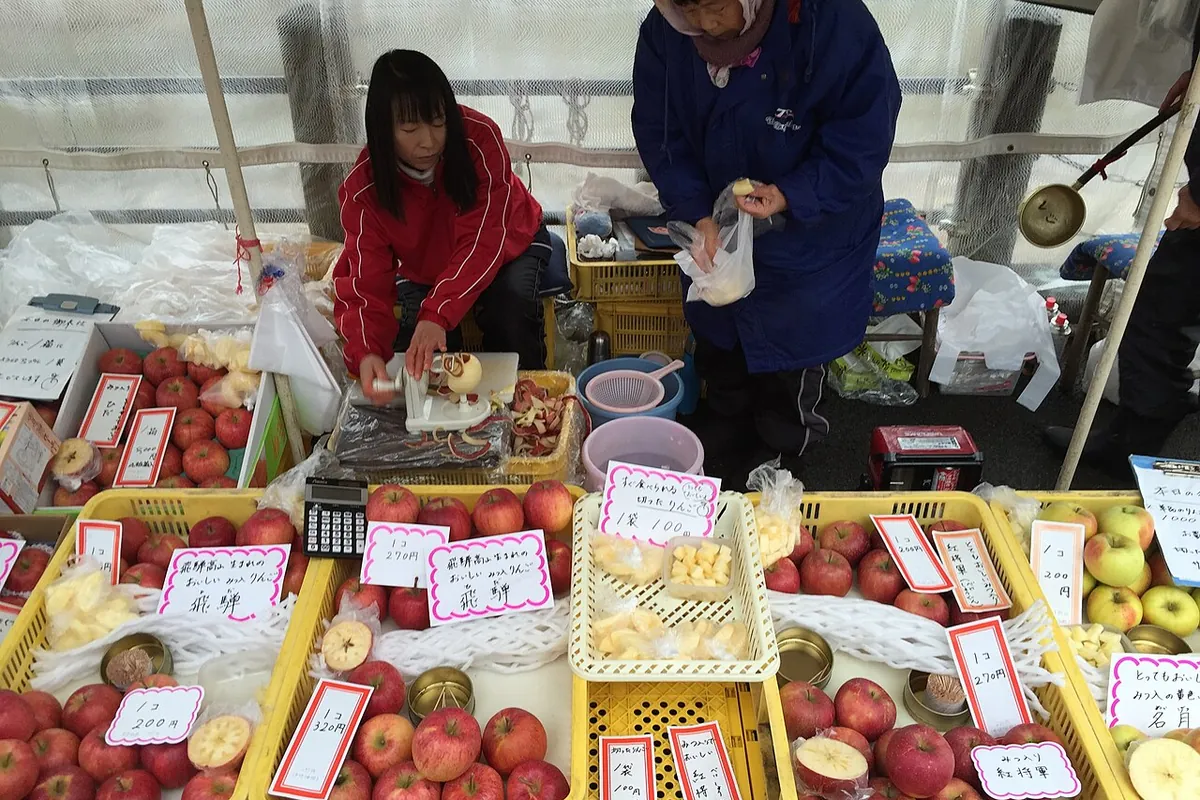
Miyagawa Morning Market, along the river
The bigger of the two runs for about 350 metres along the Miyagawa River between Kaji-bashi and Yayoi-bashi bridges, with about 60 stalls and shops. The riverside stalls sell vegetables, fruit, pickles and spices, and the shops opposite sell Japanese sweets and crafts, including sarubobo, the faceless red good luck dolls, and Ichii Itto-bori wood carving. In rain or in winter the number of stalls can fall to about ten.
Jinya-mae Morning Market, in front of the old government house
The smaller market fills the square outside Takayama Jinya, and it is the older of the two: the tourism office dates it back more than 300 years, to silk farmers selling mulberry leaves. The rule from then still stands, and only farmers may run a stall. Look for things you rarely see on sale, such as potato stems, carrot leaves and wild mountain vegetables, and ask the growers how to cook them.
Takayama Jinya: the Last Edo Government House, ¥500
Takayama Jinya was the local governor’s office when the Tokugawa shogunate ruled Hida directly. Japan once had more than 60 buildings like it, and this is the only one left. It was in official use from 1692 to 1969, and the complex includes offices, living quarters and the storehouses for rice paid as tax. The shogunate wanted the region for its timber and its mines of gold, silver, copper and lead.
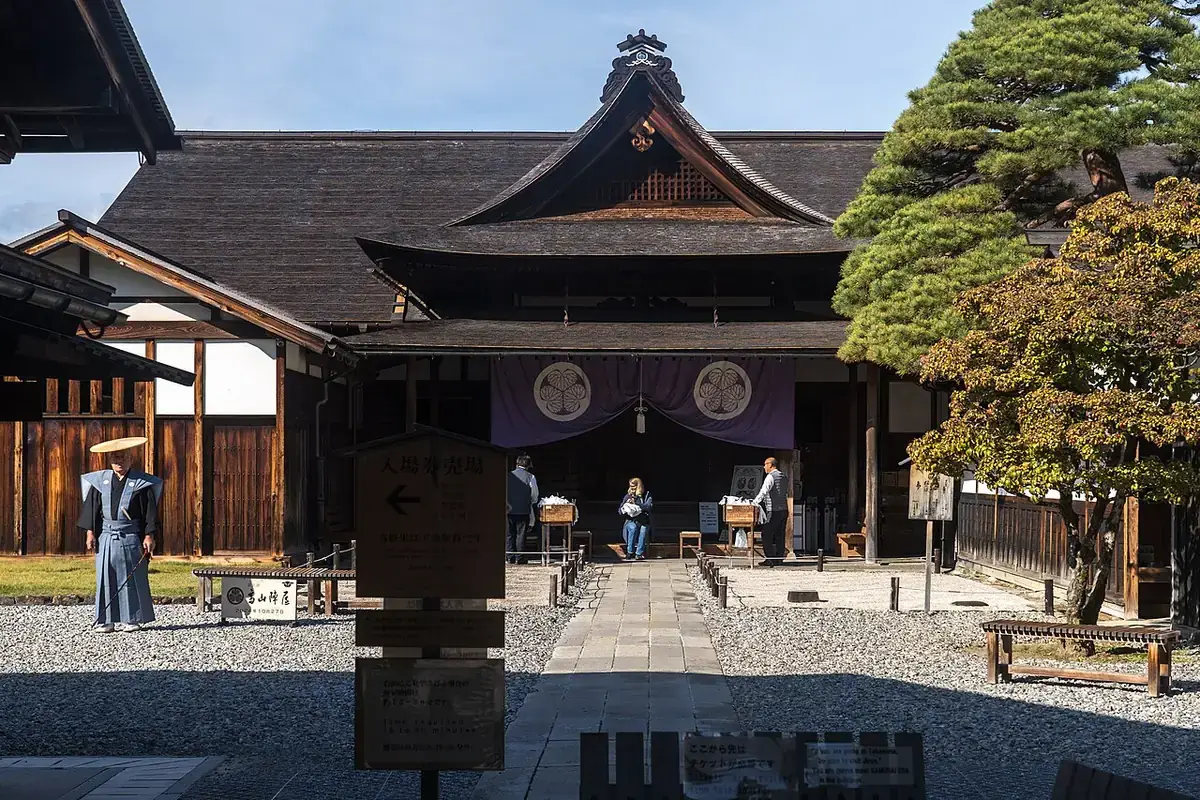
Entry rose to ¥500 for adults on 1 April 2026, and high school students and younger go in free. From 1 April to 31 October it opens from 8.45am to 5pm (last entry 4.30pm), and from 1 November to 31 March from 8.45am to 4.30pm (last entry 4pm). It closes over the New Year holiday, and a visit takes about 30 minutes, according to Takayama Jinya’s opening hours page. It is 15 minutes on foot from the station, so combine it with the Jinya-mae market.








Takayama Festival 2027: 14 and 15 April, 9 and 10 October
The Takayama Festival is two festivals belonging to two shrines, and they happen on the same dates every year. The tourism office calls it one of the three most beautiful festivals in Japan, and says it began between the late 16th and the 17th century.
| Festival | Dates | Shrine and area | Floats |
|---|---|---|---|
| Spring (Sanno Matsuri) | 14 and 15 April | Hie Shrine; the streets south of Yasugawa-dori | 12 floats, three with puppet shows |
| Autumn (Hachiman Matsuri) | 9 and 10 October | Sakurayama Hachimangu; the Shimomachi streets north of Yasugawa-dori | 11 floats, one with a puppet show |
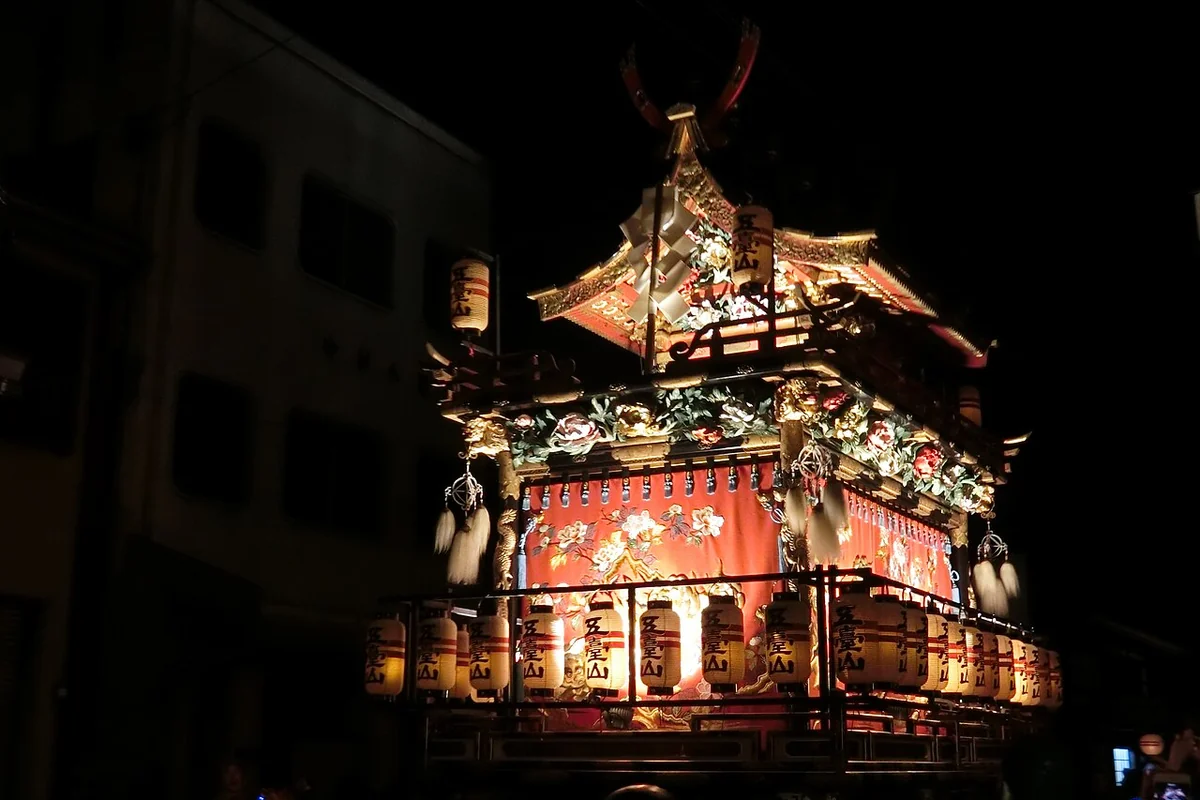
The floats are called yatai. Each one belongs to a neighbourhood and has its own carving and metalwork. On the first evening of both festivals about 100 lanterns are lit on every float and they are drawn through the streets after dark. The karakuri puppets, worked by six to eight puppeteers pulling dozens of strings, were added to the floats between 1804 and 1830. In spring the Sanbaso, Ryujin-tai and Shakkyo-tai puppets perform twice a day on both days at Takayama Jinya, and in autumn the Hotei-tai puppets perform in the grounds of Sakurayama Hachimangu, according to the tourism office’s spring and autumn festival pages.
Book rooms early for both festivals. If your trip is built around one of them, our guides to what else is on across Japan in April and Japan in October help fill the rest of the itinerary.
Yatai Kaikan: Real Festival Floats on Show All Year
If your dates miss the festival, the Takayama Festival Floats Exhibition Hall (Takayama Matsuri Yatai Kaikan) in the grounds of Sakurayama Hachimangu is the only place where real Takayama festival floats are on permanent display. It holds the autumn festival’s floats and shows four at a time, changing them in late March, late July and mid November, according to the shrine’s own site. Since 12 July 2026 the line-up has included Hotei-tai, the float whose puppets need 36 strings and nine puppeteers.
The hall opens from 9am to 5pm from March to November and from 9am to 4.30pm from December to February. The tourism office lists entry at ¥900 for adults, and the hall is about 20 minutes on foot (1.3km) from the station.
Hida Beef in Takayama: Where to Eat It
Hida beef (Hida-gyu) is the name for beef from Japanese Black cattle raised in Gifu Prefecture for at least 14 months and graded to a set standard; beef that misses the grade is sold as Hida wagyu. Takayama’s tourism office traces today’s brand to a bull called Yasufuku, which a local farmer came across in 1981 and which sired about 39,000 calves. The tourism office suggests steak cut from the sirloin or fillet, or thin slices for sukiyaki, shabu-shabu and yakiniku.
- Kyoya: a Hida country cooking restaurant in a farmhouse moved from Niigata, and a designated Hida beef seller. Order charcoal grilled Hida beef, sukiyaki or the Hida beef hoba miso set. Open 11am to 2pm and 5pm to 8pm, closed Tuesdays. 1-77 Oshinmachi, 15 minutes on foot from the station. Source: Kyoya’s own site.
- Ajikura Tengoku: a Hida beef yakiniku restaurant with its own butcher’s counter, at 4-308 Hanasato-machi. Open 11am to 2.30pm and 5pm to 9.30pm, closed Tuesdays and the second and fourth Wednesdays. Source: Ajikura Tengoku’s own site.
The rules on what can be sold as Hida beef, and its 2023 listing as a protected Geographical Indication, are covered in our guide to regional dishes worth travelling for.
Other Takayama food to try
- Takayama ramen (chuka soba): thin curly noodles in a soy broth, made by boiling the broth and the seasoning base together in the pot.
- Mitarashi dango: grilled rice dumplings on a skewer, basted in Takayama with unsweetened soy sauce. The tourism office points out that most other regions add sugar.
- Hoba miso: miso, spring onion and shiitake grilled on a dried magnolia leaf over a small tabletop stove.
- Red turnip pickles: the town’s best known pickle, sold at both morning markets.
All four are described on the tourism office’s local food page.
Takayama Sake Breweries in the Old Town
Takayama has brewed sake on a large scale since around the 17th century, and the tourism office says the town once had more than 60 breweries. Cold winters and water from the Northern Alps are the reasons it gives. The breweries that remain sit inside Sanmachi, and you can find them by the cedar ball (sugidama) over the door. Several pour tastings; some are free and some charge, so check at the counter.
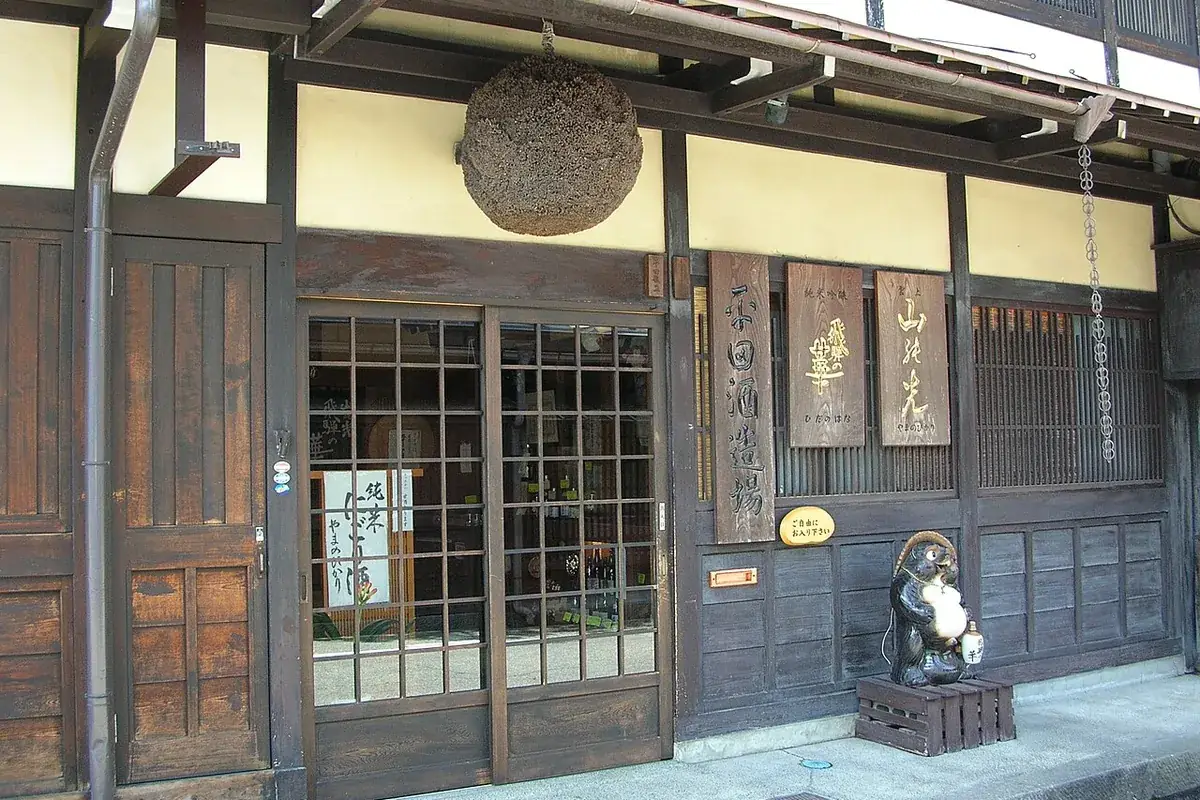
| Brewery | Address | Known for |
|---|---|---|
| Hirase | 82 Kamiichinomachi | The oldest in Takayama, first recorded in 1623; Kusudama sake. Free tasting |
| Harada | 10 Kamisannomachi | Sansya, made since 1855 |
| Funasaka | 105 Kamininomachi | Free tasting |
| Oita | 67 Kamisannomachi | Free tasting |
| Kawashiri | 68 Kamininomachi | Aged sake made only from local Hidahomare rice. Tasting ¥500 |
| Hirata | 43 Kamininomachi | Started brewing in 1895; Hida no Hana sake |
| Niki | 40 Kamininomachi | Paid tasting |
Addresses and tasting details come from the tourism office’s local sake page.
Hida Folk Village: 30 Old Farmhouses on One Hillside
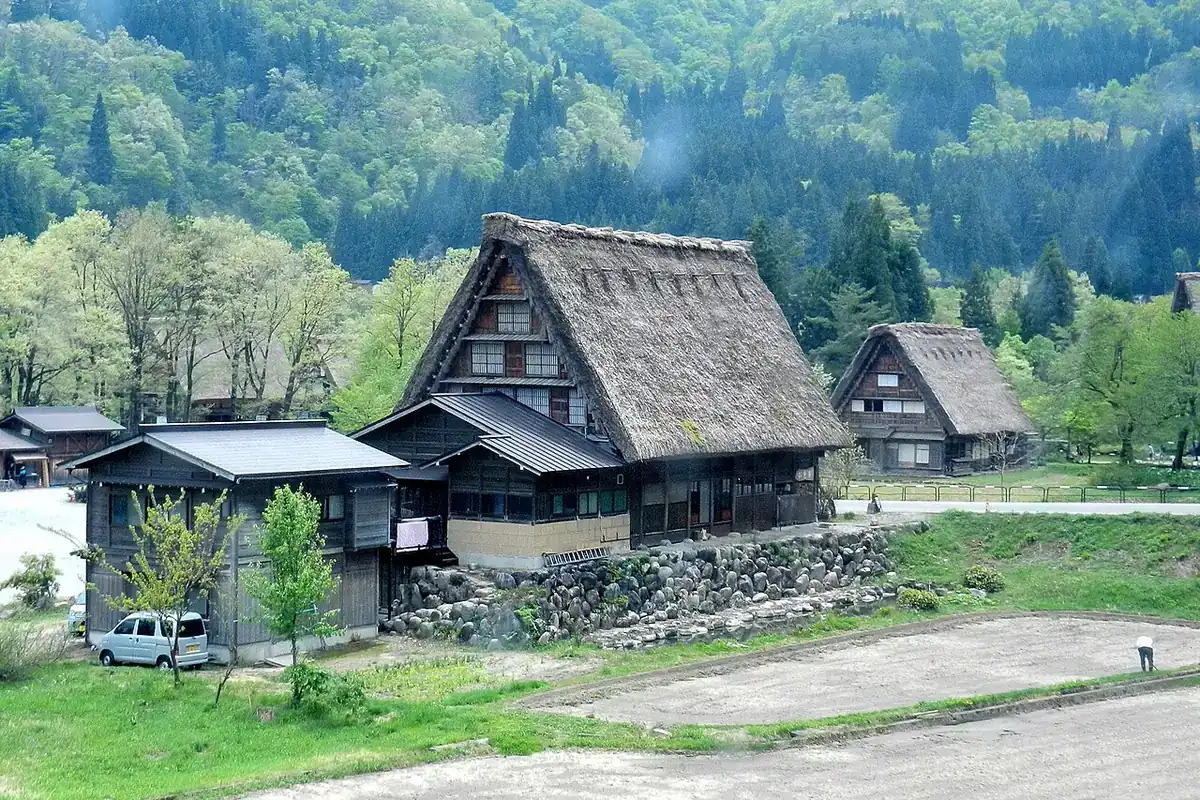
Hida Folk Village (Hida no Sato) is an open-air museum on a site of about 99,000 square metres. More than 30 farmhouses and other buildings, several of them National Important Cultural Properties, recreate an old Hida mountain village, many with steep thatched roofs. Inside, the houses show the tools of mountain farming life, and craftspeople demonstrate Hida lacquerwork, weaving and dyeing.
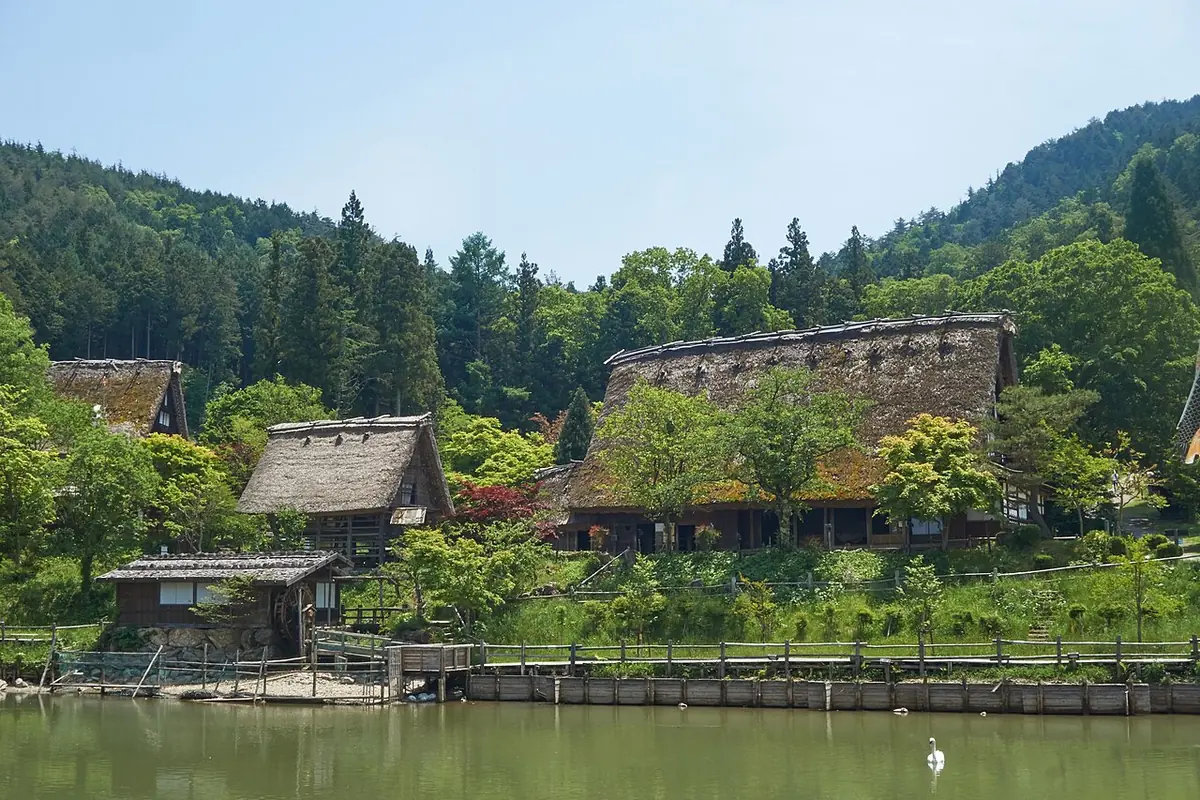
It is open every day from 8.30am to 5pm. Entry is ¥700 for adults and ¥200 for primary and junior high school children, according to the tourism office. The Sarubobo Bus from the Takayama Nohi Bus Center takes about 10 minutes; get off at Hida-no-Sato-Shita. If Shirakawa-go will not fit into your trip, this is the nearest place to Takayama to see thatched farmhouses up close.
Takayama to Shirakawa-go by Nohi Bus: 50 Minutes, ¥2,800
Shirakawa-go is the village of Ogimachi, where 114 gassho-zukuri farmhouses with steep thatched roofs still stand and are still lived in, and which was listed as a UNESCO World Heritage Site in 1995 together with Gokayama. Nohi Bus runs 16 return services a day from the Takayama Nohi Bus Center, beside JR Takayama Station, and the trip takes about 50 minutes.
| From Takayama Bus Terminal to | One way fare |
|---|---|
| Shirakawa-go | ¥2,800 |
| Takaoka Station or Shin-Takaoka Station | ¥3,300 |
| Toyama Station | ¥3,800 |
| Kanazawa Station | ¥4,200 |
Some services are reservation only, and others take mobile tickets bought in advance. Nohi Bus warns that delays of two hours or more can happen when traffic queues for the village car parks, in heavy snow or when the expressway closes, so leave slack before an onward train. You can also carry on from the village to Kanazawa, which turns the day trip into a route; that leg costs ¥2,800.
The winter light-up nights are the busiest of the year. In 2027 they fall on 11, 17, 24 and 31 January, and every visitor needs a reservation; our guide to Japan in December explains how the booking works. For the farmhouses you can go inside, and how Shirakawa-go compares with neighbouring Gokayama, see our guide to Japan’s best preserved villages.
Getting to Takayama From Nagoya, Tokyo and Osaka
Takayama sits on the JR Takayama Line between Nagoya and Toyama. The Limited Express Hida runs direct from Nagoya, and since July 2022 it has used JR Central’s HC85 trains, the first hybrid trains in Japan to reach 120km/h. From Tokyo or Osaka, take the shinkansen to Nagoya and change to the Hida. From 25 December 2026 to 5 January 2027 every seat on the Hida is reserved, so book a seat even if you hold a rail pass.
On the way, Gero Onsen sits on the same line and makes an easy overnight stop between Nagoya and Takayama.
| Route | Option | Notes |
|---|---|---|
| Nagoya to Takayama | JR Limited Express Hida | Direct; all seats reserved 25 December 2026 to 5 January 2027 |
| Nagoya to Takayama | Nohi Bus highway bus via Gujo-Hachiman | 2 hours 45 minutes, reservation required |
| Matsumoto to Takayama | Nohi Bus via Hirayu Onsen | 2 hours 20 minutes, reservation required |
| Takayama to Kanazawa | Nohi Bus via Shirakawa-go | ¥4,200 one way |
If you are doing Nagoya, Takayama, Shirakawa-go and Kanazawa in one loop, look at the Takayama-Hokuriku Area Tourist Pass: five consecutive days for ¥19,800 (child ¥9,900), covering non-reserved seats on JR trains between Nagoya and Toyama, the Hokuriku Shinkansen between Toyama and Tsuruga, and the Nohi Bus Shirakawa-go routes, with some services needing a reservation.
Where to Stay in Takayama and the Accommodation Tax
Stay near JR Takayama Station if you are taking the early bus to Shirakawa-go, or between the station and Sanmachi if the morning markets are the priority. Both are within a 15 minute walk of each other. For a countryside stay, the thatched farmhouse ryokan Wanosato sits in a forested valley just outside town.
Takayama has charged an accommodation tax since 1 October 2025, per person per night, according to the city’s notice. Children are exempt until the 31 March after their 12th birthday.
| Room rate per person per night (excluding meals and consumption tax) | Tax per night |
|---|---|
| Under ¥10,000 | ¥100 |
| ¥10,000 to ¥29,999 | ¥200 |
| ¥30,000 or more | ¥300 |
Winter drivers take note: the city asks visitors not to drive rental cars on normal tyres to Takayama in the snow season.
Takayama Questions and Answers
How many days do you need in Takayama?
Two days covers it well. Spend the first on Sanmachi, the morning markets, Takayama Jinya and the Yatai Kaikan, and the second on Shirakawa-go, 50 minutes away by Nohi Bus. Add a third day for Hida Folk Village and the old town sake breweries, or for a night in Shirakawa-go.
When is the Takayama Festival in 2027?
The spring Takayama Festival (Sanno Matsuri) is on 14 and 15 April 2027 and the autumn festival (Hachiman Matsuri) on 9 and 10 October 2027. The dates are the same every year. The floats parade by lantern light on the first evening of each, and the karakuri puppets perform on both days.
What time do the Takayama morning markets open?
Both markets, Miyagawa by the river and Jinya-mae outside Takayama Jinya, open every day of the year. From April to November they run from 7am to noon, and from December to March from 8am to noon. In rain or winter the riverside market can shrink to about ten stalls.
How do you get from Takayama to Shirakawa-go?
Take the Nohi Bus from the Takayama Nohi Bus Center next to JR Takayama Station. It takes about 50 minutes and costs ¥2,800 one way, with 16 return services a day. Some buses are reservation only, so book ahead, especially in autumn and during the January light-up nights.
Can you do Shirakawa-go as a day trip from Takayama?
Yes. With 16 return buses a day and a 50 minute journey, a morning bus out and an afternoon bus back leaves several hours in the village. Allow extra time on the way back, because Nohi Bus warns of delays of two hours or more in heavy traffic or snow. You can also continue to Kanazawa instead.
Where can you eat Hida beef in Takayama?
Kyoya, a country cooking restaurant in a farmhouse moved from Niigata, serves charcoal grilled Hida beef, sukiyaki and a Hida beef hoba miso set and closes on Tuesdays. Ajikura Tengoku, a yakiniku restaurant with its own butcher’s counter, closes on Tuesdays and on the second and fourth Wednesdays.
How much is Takayama Jinya?
Adult entry is ¥500 since 1 April 2026, and high school students and younger go in free. It opens from 8.45am to 5pm between April and October and to 4.30pm between November and March, with last entry 30 minutes before closing. A visit takes about 30 minutes.