
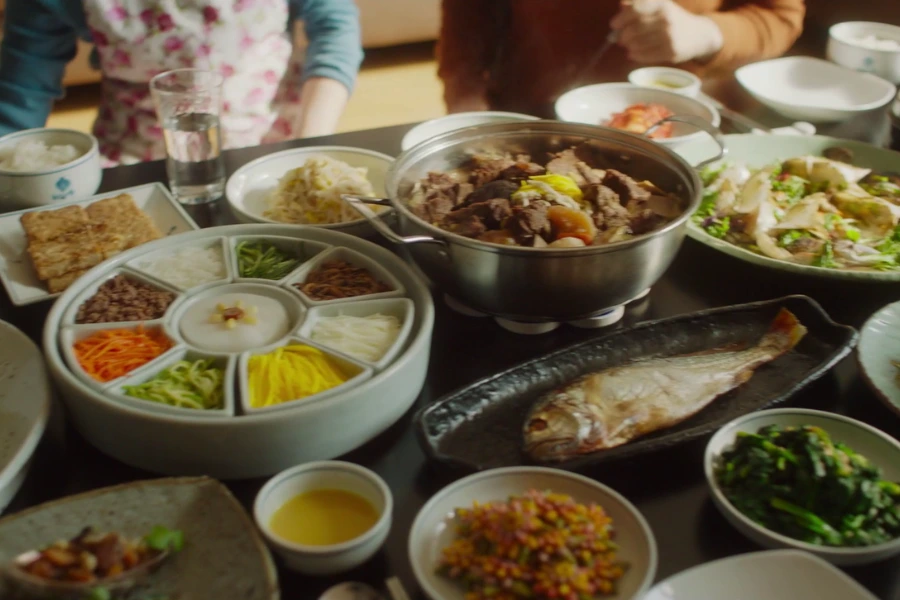
From sushi to ramen, Japan is celebrated worldwide for its food, from tempura and yakitori to udon. Beyond these famous dishes, Japan’s regions are full of local specialities that rarely reach menus abroad, and they show just how varied local food in Japan can be.
In this Japan food travel guide, we take you on a regional food tour to ten local favourites off the beaten track. If you’re planning a food trip to Japan or simply curious about the country’s regional cooking, these lesser-known dishes show the best of Japan off the beaten path.
Tokyo: Kichijoji-Age

Satsuma-age, the family of fried fish cakes that Kichijoji-age belongs to. Image Credit: Sakurai Midori / Wikimedia Commons (CC BY 2.5)
If you’re looking for the best food in Kichijoji, Kichijoji-age is a must-try snack. It was created in this west Tokyo neighbourhood, and the shop that invented it still makes it fresh every day.
What is Kichijoji-Age?
Kichijoji-age is a deep-fried fish cake. Tsukada Suisan, a fish cake maker trading on Kichijoji’s Daiya-gai arcade since 1945, developed it in 2014 by mixing fish paste with shrimp or scallop and frying it into a crisp cutlet. The word “age” (揚げ) means fried in oil, as in satsuma-age, the wider family of fried fish cakes.
Kichijoji-age is a local favourite, and it’s easy to see why. It’s simple, packed with flavour and small enough to eat as you walk.
Where To Eat Kichijoji-Age
Buy Kichijoji-age straight from the counter at Tsukada Suisan, a few minutes’ walk from Kichijoji Station. The shop also sells dozens of other fish cakes and oden ingredients, and it opens daily from 10:00 to 18:30, closing only from 1 to 3 January.
Located in: Daiya Shopping Arcade
Address: 1 Chome-1-8 Kichijoji Honcho, Musashino, Tokyo 180-0004, Japan
TIP: Make a Kichijoji food walk of it with two more neighbourhood favourites: Kichijoji Corn Valley, a cafe that cooks with vegetables from local Musashino farms (closed on Tuesdays), and Tsukemen Enji Kichijoji, a dipping noodle shop a minute’s walk from the station’s Park Exit.
Osaka: Kushikatsu
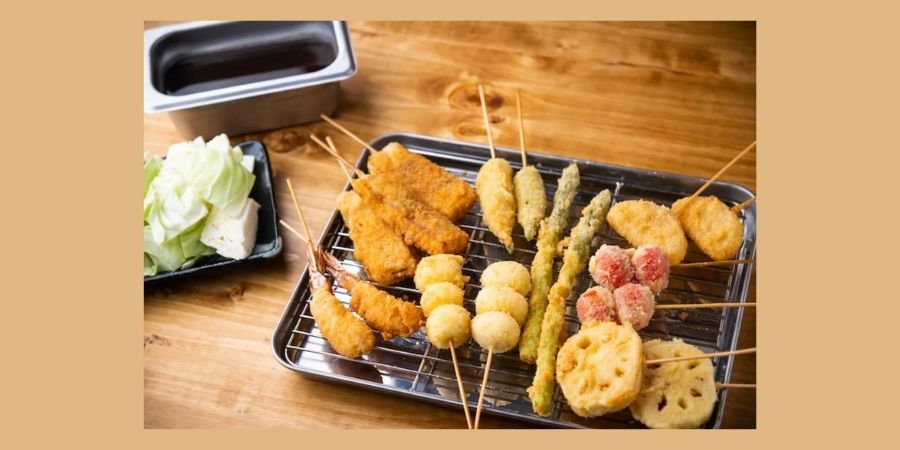
A classic serving of Kushikatsu. Source: Japan Travel
When it comes to food in Osaka, few dishes capture the city’s lively food culture quite like kushikatsu. This must-eat Osaka dish is made of skewered meat, vegetables and seafood, coated in fine breadcrumbs and deep-fried until golden.
Kushikatsu and the No Double-Dipping Rule
Kushikatsu has an addictive crunch, and the fillings run from pork and onion to more adventurous bites. In Osaka’s casual kushikatsu bars, a shared tin of thin, savoury sauce sits on the counter for everyone to use. That means no double-dipping! Dip each skewer once, and only once.
Where To Eat Kushikatsu
For a more refined take, head to Kushikatsu Bon in Kitashinchi, a high-end kushikatsu restaurant that serves a set course of skewers made with ingredients such as wagyu and foie gras. It opens from 17:00 to 23:00, with last entry at 21:30, and is open on Sundays and public holidays too. Access your navigation app with Jetpac to easily find this Osaka favourite!
Located in: Dojima Merry Center Building (basement floor)
Address: 1 Chome-3-16 Dojima, Kita Ward, Osaka, 530-0003, Japan


Kyoto: Kaiseki

The lantern-lit entrance of Kinmata, a kaiseki restaurant in a Kyoto townhouse. Image Credit: joka2000 / Wikimedia Commons (CC BY 2.0)
Kyoto’s culinary scene is known for its elegance and its haute cuisine. One of the most notable dining experiences in Kyoto is kaiseki, a traditional multi-course meal built around fresh seasonal ingredients, careful preparation and refined presentation.
Kyoto Kaiseki for Less at Lunchtime
Kaiseki shows Kyoto food at its most elegant. The city is home to some of Japan’s most prestigious kaiseki restaurants, and the most affordable way to try one is usually at lunch, when many of them serve shorter courses at lower prices.
Where to Eat Kaiseki
Kaiseki Kinmata opened in 1801 as an inn for travelling medicine merchants from Omi Province, and today it serves Kyoto kaiseki in a townhouse registered as a Tangible Cultural Property of Japan. Lunch is the best value: a shorter seven-course kaiseki costs 10,000 yen and the full lunch kaiseki 15,000 yen, both including tax, with a 15% service charge added. Many ingredients come from nearby Nishiki Market. Kinmata closes on Wednesdays and some other days, so check its calendar before you go.
Address: 407 Dainichicho, Nakagyo Ward, Kyoto, 604-8044, Japan
Okinawa: Jef

The storefront of Jef Sunrise Naha, one of four Jef branches in Okinawa, with banners for its goya burger. Image Credit: Abasaa / Wikimedia Commons (public domain)
Okinawa’s best-known local burger chain is Jef, famous for its goya burger.
Jef combines American-style burgers with distinctly Okinawan ingredients. It launched the goya burger on 8 May 1993, a date chosen because 5 and 8 can be read as “go-ya” in Japanese, and the slightly bitter, earthy taste of goya (bitter melon) makes it feel uniquely Okinawan. On Jef’s current menu the goya burger costs 520 yen and its sister, the Nuyaru burger, 580 yen.
How American Bases Shaped Okinawan Food
After the Second World War, Okinawa was under United States administration until 1972, and the American military presence brought burgers, steaks and canned meats into everyday local cooking. Jef grew out of that history: its company opened an A&W franchise in Yonabaru in 1973 and took the Jef name in 1986.
So as well as traditional Okinawan dishes such as goya champuru and Okinawa soba, good food in Okinawa can also be found at Jef, where burgers meet goya and fast food gets a local twist!
Where To Eat Jef Burgers
Jef has four branches across Okinawa: Yonabaru (7:00 to 23:00), Tomigusuku (6:30 to 23:00), Sunrise Naha (9:00 to 20:00) and Awase in Okinawa City. Check the Jef branch list for the latest hours. While you’re in Okinawa, you can access data on your phone via Jetpac to check which branch is closest to you.
Yonabaru Address: 467 Ueyonabaru, Yonabaru, Shimajiri District, Okinawa 901-1302, Japan
Tomigusuku Address: 66-1 Tagami, Tomigusuku, Okinawa 901-0234, Japan
Sunrise Naha Address: 1 Chome-1-5 Tsuboya, Naha, Okinawa 902-0065, Japan
Awase Address: 6 Chome-4-21 Takahara, Okinawa City, Okinawa 904-2171, Japan
Kobe: Sobameshi

A plate of Sobameshi, Kobe’s comfort food of chopped noodles and rice fried together in sauce. Image Credit: Ocdp / Wikimedia Commons (CC0)
Besides the famous Kobe beef, there’s a local dish that is just as worth your attention: sobameshi. According to Kobe City, it was born in Nagata, the ward known for making chemical shoes, when factory workers took their rice to okonomiyaki shops to be warmed up and had it fried together with the noodles.
What is Sobameshi?
Sobameshi is made from two Japanese staples, yakisoba (fried noodles) and rice, chopped and stir-fried together on a hot teppan grill with a rich, tangy sauce. It has since become one of the best-known foods in Kobe, a hearty dish that grew out of the city’s working neighbourhoods.
Where to Eat Sobameshi in Kobe
For sobameshi in the city centre, order a plate at Okonomiyaki Hakusan, an okonomiyaki and sobayaki counter on the first floor of San Plaza, about five minutes’ walk from JR Sannomiya Station. It opens from 11:00 to 21:00 and closes on Tuesdays.
Located in: SAN PLAZA
Address: San Plaza 1F, 1-8 Sannomiyacho, Chuo Ward, Kobe, Hyogo








Fukuoka: Motsunabe
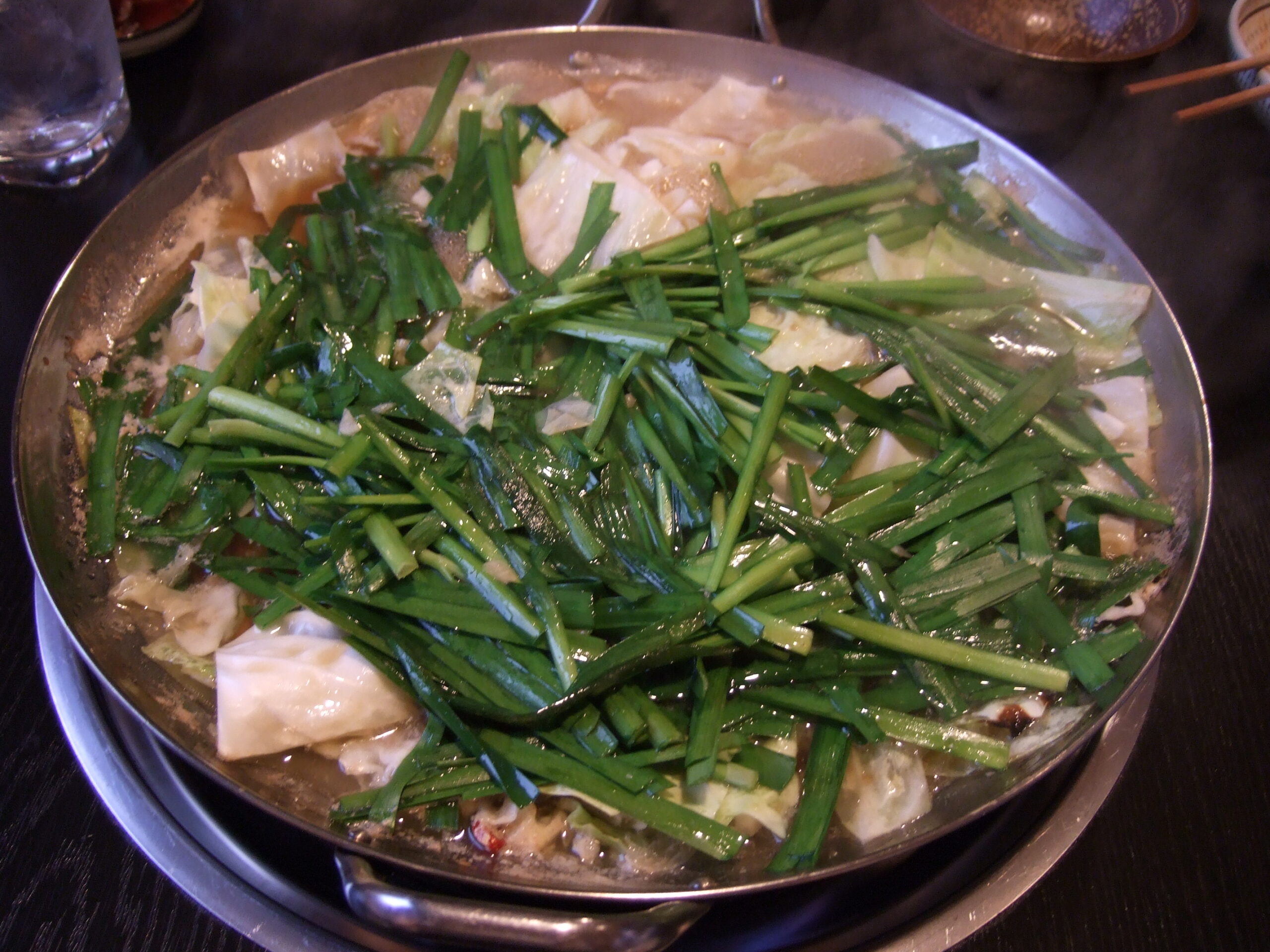
A pot of Motsunabe, the offal hot pot from Fukuoka, piled high with chives. Image Credit: pelican / Wikimedia Commons (CC BY-SA 2.0)
When exploring Fukuoka food, the iconic hot pot motsunabe is a must. This Fukuoka speciality is made from beef or pork offal, typically simmered in a savoury broth with garlic, cabbage and chives. Add tofu and vegetables to the mix too for variety!
Motsunabe’s Broth, Chives and Noodle Finish
Motsunabe is one of the best foods in Fukuoka thanks to its bold, umami-rich broth, which brings everything together into a comforting meal. Many restaurants finish the pot by cooking noodles in the last of the soup. Motsunabe is a Fukuoka favourite all year, and especially in winter!
Where To Eat Motsunabe
For the best motsunabe, head to Motsukou, a motsunabe restaurant in Hakata that has been serving the dish since 1978. Its version cooks four kinds of Japanese beef offal with cabbage and chives in a chicken-bone broth, leaves out garlic on purpose for a lighter taste, and comes with a homemade vinegar and soy dipping sauce. The pot finishes with champon noodles and white sesame. Motsukou opens in the evening from 17:30 (17:00 on Saturdays) and closes on Sundays.
Address: 7-14 Tsunabamachi, Hakata Ward, Fukuoka, 812-0024, Japan
Sapporo: Jingisukan
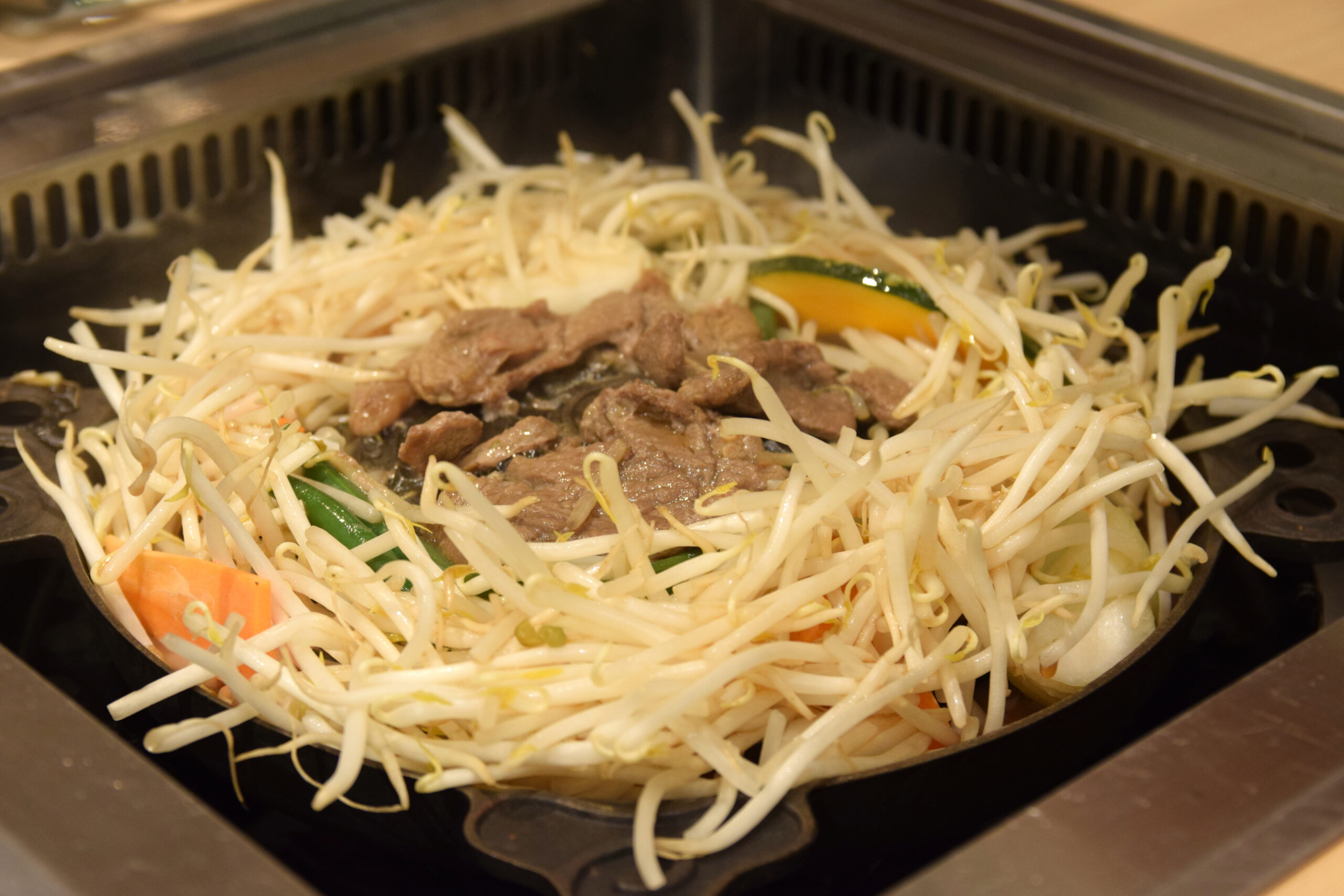
Jingisukan, lamb or mutton grilled on a distinctive domed pan, is a signature dish of Hokkaido. Image Credit: Raita Futo / Wikimedia Commons (CC BY 2.0)
Wondering what food in Hokkaido is like? Jingisukan is a dish that shows off the character of the region’s cooking.
What is Jingisukan?
Named after the Mongolian leader Genghis Khan, this dish is tender grilled lamb or mutton. The word “jingisukan” is the Japanese rendering of “Genghis Khan”, an example of gairaigo, the loanwords Japanese has borrowed from other languages.
Eating lamb is also far more common in Hokkaido, especially in Sapporo, than in other parts of Japan.
For the best food in Sapporo, put jingisukan on your list. It is cooked on a domed jingisukan pan, designed so that the juices from the meat run down and coat the vegetables below. Talk about smoky and savoury goodness!
Where To Eat Jingisukan
In Sapporo, order jingisukan at Jingisukan Daruma, a Susukino institution founded in 1954. The main branch is a 14-seat counter that opens from 17:00 until 5:00 the next morning and takes no reservations, so expect a queue in the evening. Daruma runs several more branches within walking distance in Susukino.
Address: Crystal Building 1F, Minami 5 Jo Nishi 4 Chome, Chuo Ward, Sapporo, Hokkaido
Gifu: Hida Beef

A presentation of Hida Beef. Source: Visit Gifu
Although Gifu is best known for its charming “gassho-zukuri” (合掌造り) houses, particularly in the UNESCO World Heritage site of Shirakawa-go, it is also home to one of Japan’s most prized culinary treasures: Hida beef.
What is Hida Beef?
Hida beef is a premium wagyu prized for its marbling, tenderness and rich flavour. To carry the name, it must come from Japanese Black cattle fattened for at least 14 months by registered producers in Gifu Prefecture, where the cattle spent the longest part of their lives, and the meat must be graded 3, 4 or 5 for quality. Japan’s Ministry of Agriculture, Forestry and Fisheries registered Hida beef as a Geographical Indication in January 2023.
There is an ongoing Hida beef versus Kobe beef debate over which wagyu is better, and Hida beef holds its own as a premium wagyu.
Much of it is raised in the mountains of the Hida region, where farmers take great care over their cattle, and the result is beef with a tender texture, high marbling and a rich flavour.
Where To Eat Hida Beef
To find the best Hida beef, head to the town of Takayama and Ajikura Tengoku, a Hida beef yakiniku restaurant with its own butcher’s counter. It opens for lunch from 11:00 to 14:30 and for dinner from 17:00 to 21:30, and closes on Tuesdays and on the second and fourth Wednesday of each month. A trip to Gifu isn’t complete without tasting Hida beef.
Address: 4 Chome-308 Hanasatomachi, Takayama, Gifu 506-0026, Japan
TIP: Hida beef can be enjoyed in many forms, from burgers and sukiyaki to yakiniku and even sushi.
Nagoya: Hitsumabushi

Hitsumabushi, a speciality of Nagoya. Image Credit: Kanesue / Wikimedia Commons (CC BY 2.0)
If you’re wondering what Nagoya food has in store for you, look no further! When it comes to food in Nagoya, one dish stands out above the rest: hitsumabushi.
What is Hitsumabushi?
Hitsumabushi is Nagoya’s signature eel dish: unagi grilled kabayaki style, cut into strips and served over rice in a wooden tub called an ohitsu. Nagoya has plenty of famous foods, and hitsumabushi is one of the best known.
What makes Nagoya hitsumabushi special is the savoury-sweet sauce brushed onto the eel as it grills over a hot fire.
Hitsumabushi is traditionally eaten in three ways: first plain, then mixed with condiments such as wasabi, spring onion and nori, and finally as ochazuke, with dashi or tea poured over the rice. This lets you taste the eel in different ways and shows off the quality of food in Nagoya.
Where To Eat Hitsumabushi
A top recommendation for hitsumabushi in Nagoya is Hitsumabushi Nagoya Bincho, which grills its eel the jiyaki way, directly over a strong fire without steaming it first, and glazes it with a sauce made from Aichi’s tamari soy sauce and mirin. Its Dai Nagoya Building branch is on the third floor, with a direct connection to the subway at Nagoya Station.
Located in: Dai Nagoya Building
Address: 3 Chome-28-12 Meieki, Nakamura Ward, Nagoya, Aichi
Aomori: Kaiyaki Miso
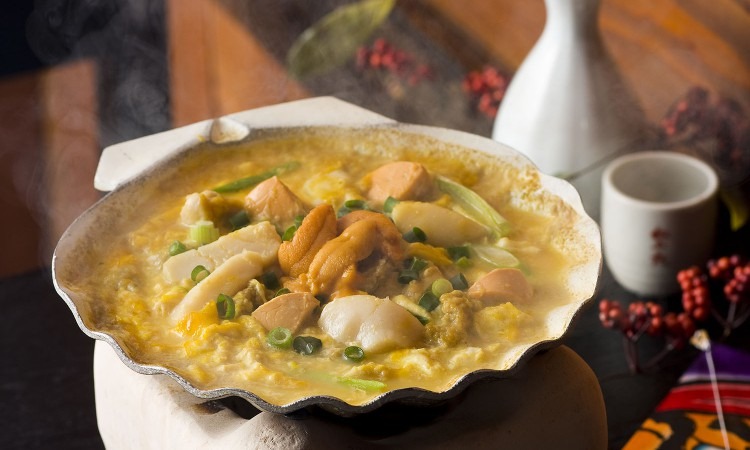
Kaiyaki miso, miso, egg and seafood cooked in a large scallop shell, a home-style dish from Aomori. Image Credit: Amazing AOMORI, the official Aomori travel guide
When thinking about Aomori’s famous food, apples come to mind first, as Aomori grows more apples than any other prefecture in Japan. Its coast also has a long food tradition built on scallops.
In Aomori, one of the best ways to taste that tradition is kaiyaki miso!
What is Kaiyaki Miso?
Kaiyaki miso is a home-style dish cooked in a large scallop shell used as a pan. Miso and stock go into the shell with beaten egg, and depending on the area, fish or scallops are added too. According to Japan’s Ministry of Agriculture, Forestry and Fisheries, Aomori’s fishing communities were already eating it in the Edo period, using wild scallop shells around 20 cm across.
Eggs were once precious, so kaiyaki miso was treated as nourishing food for people who were ill or expecting a baby. The writer Osamu Dazai, who grew up in Tsugaru, wrote of his longing for it in his travel memoir Tsugaru. Today it is still loved across the Tsugaru and Shimokita areas.
Where To Eat Kaiyaki Miso
For a true Aomori experience, head to Osanai Shokudo, a scallop specialist two minutes’ walk from JR Aomori Station, and order the scallop kaiyaki miso set meal. It serves lunch and an early dinner and closes early in the week, so check the hours before you go.
Address: 1-1-17 Shimmachi 1F, Aomori 030-0801 Aomori Prefecture
TIP: Visit from 2 to 7 August to catch the Aomori Nebuta Matsuri, when giant illuminated floats parade through the city centre.
Staying Connected on a Regional Food Trip with Jetpac
Exploring Japan’s local food takes you well beyond the dishes found on menus abroad. Let these 10 local Japanese dishes tell you a story of culinary culture, tradition and creativity from Japan’s regions.
Figuring out how to get to these regional locations? Stay connected anywhere in Japan with a Jetpac eSIM, giving you fast, consistent mobile data even in the most rural regions of Japan.


