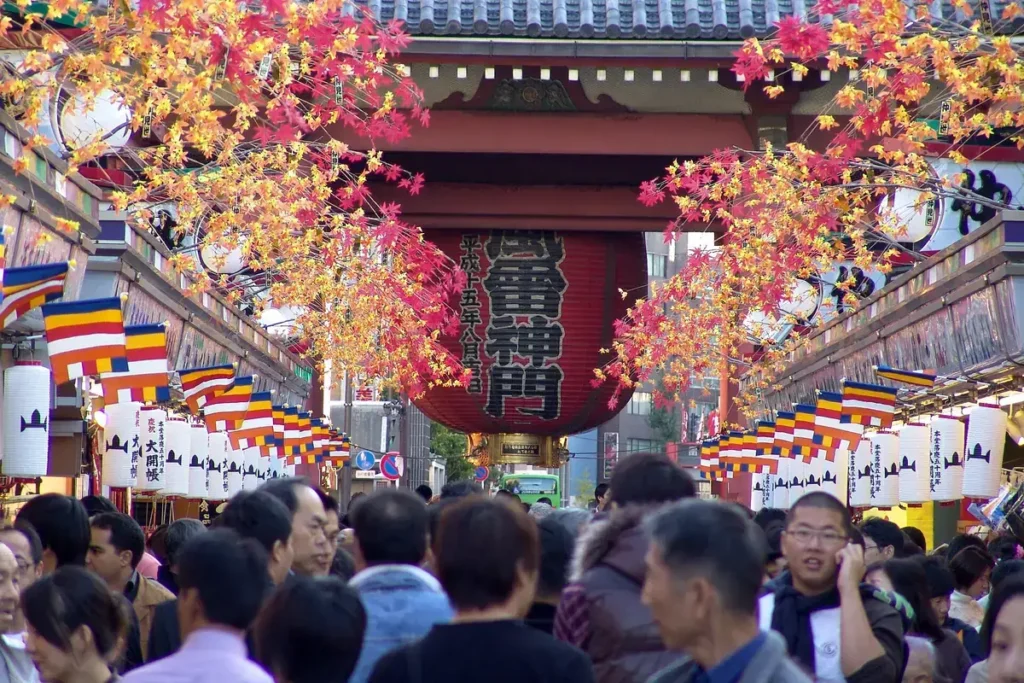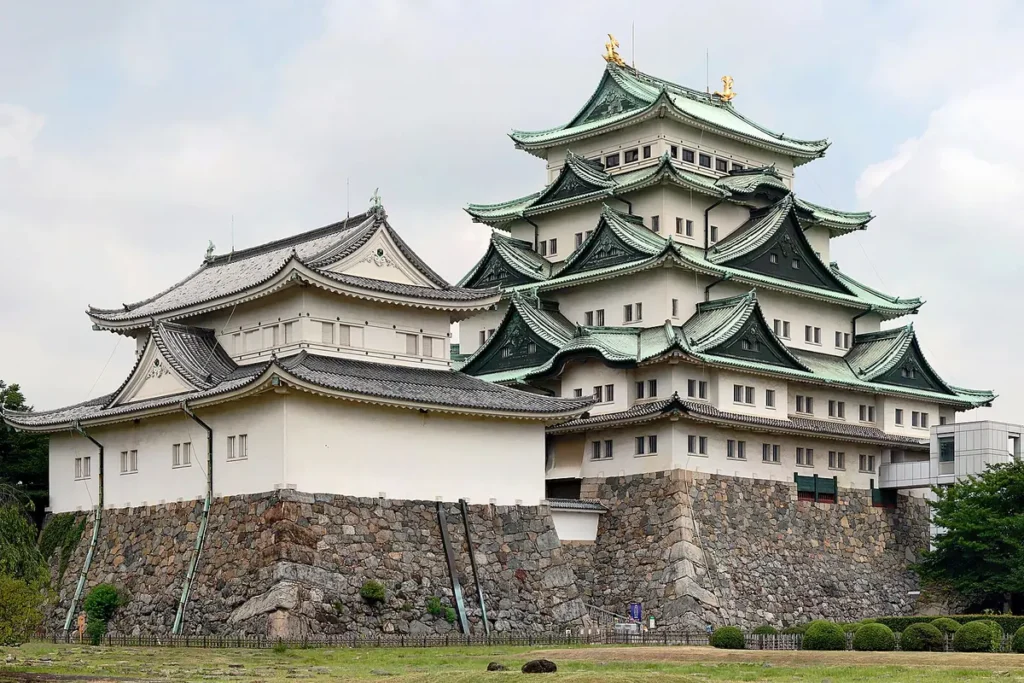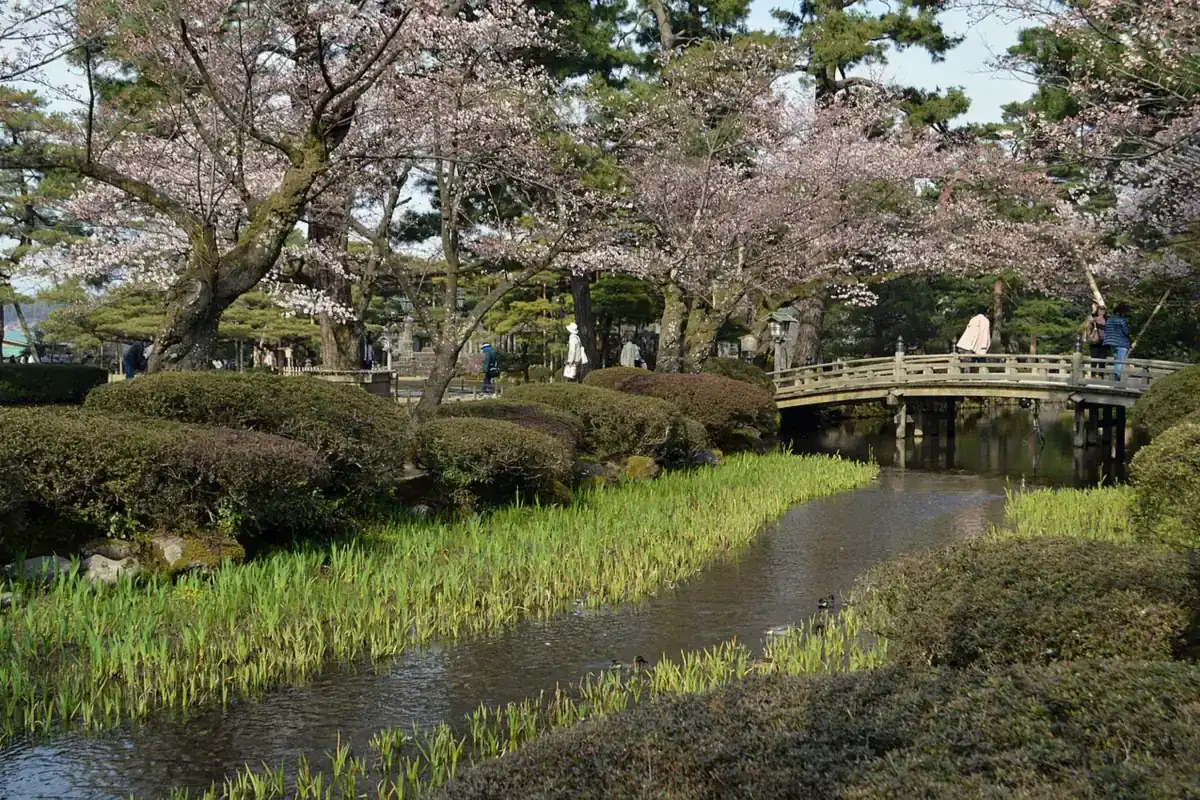
The best things to do in Kanazawa are walking Kenroku-en, one of Japan’s most celebrated gardens, climbing the rebuilt turrets of Kanazawa Castle next door, wandering the 1820 teahouse streets of Higashi Chaya, eating seafood at Omicho Market and seeing the samurai lanes of Nagamachi. All of them sit within about 20 minutes’ walk of each other, and the city is two and a half hours from Tokyo on the Hokuriku Shinkansen.
Here is each sight with its 2026 hours and fees, the order that saves the most walking, and a few things most guides leave out, such as Kenroku-en’s free early opening.
Kanazawa Sights, Hours and Fees in One Place
| Getting there | Hokuriku Shinkansen from Tokyo, about 2 hours 30 minutes. From Kyoto or Osaka, change at Tsuruga |
| Getting around | On foot, or the Kanazawa Loop Bus from the station’s east exit, ¥220 a ride |
| Kenroku-en | ¥320 adults; 8am to 5pm from 16 October to the end of February, 7am to 6pm from 1 March to 15 October |
| Garden and castle together | ¥500 combined ticket for Kenroku-en plus the castle turrets |
| Closed days to watch | 21st Century Museum exhibitions close on Mondays; Kanazawa Yasue Gold-Leaf Museum on Tuesdays |
| How long | One full day for the main sights; two days with museums and a gold leaf workshop |
Kenroku-en: hours, fees and the free early opening
Kenroku-en covers 11.4 hectares beside Kanazawa Castle and was maintained over generations by the Maeda family, who ruled the Kaga domain. Visit Kanazawa, the city’s official guide, counts it among Japan’s three most beautiful gardens. The name means “having six factors”: spaciousness, tranquillity, artifice, antiquity, water and views. At its centre, Kasumigaike pond surrounds Horai Island, built as a wish for the lord’s long life.
The garden is open every day. According to Ishikawa Prefecture’s Kenroku-en page, hours are 7am to 6pm from 1 March to 15 October and 8am to 5pm from 16 October to the end of February, with last entry 30 minutes before closing. Entry costs ¥320 for adults and ¥100 for children aged 6 to 17. Visitors aged 65 and over get in free with official ID showing their age.
Two tips save money and crowds:
- Go before breakfast. Kenroku-en opens free of charge before its paid hours, through the Renchimon and Zuishinzaka gates only. From November to February the early opening starts at 6am, from April to August at 4am, and in other months at 5am. You must leave 15 minutes before paid opening, so last entry is 7:30am in winter.
- Free days. Entry is also free for about a week at cherry blossom time in late March or early April, for three days during the Hyakumangoku Festival in early June, from 14 to 16 August, on 3 November, and from 31 December to 3 January.
In winter the pine trees wear yukitsuri, cones of rope and bamboo poles that hold the branches up under heavy snow. Our Japan in December guide has the 2027 winter light-up dates.

Map of Kenrokuen
Kanazawa Castle Park and its turrets
Kanazawa Castle Park sits across the road from Kenroku-en and is free to enter, with the same opening hours as the garden (it stays open to 9pm on night-opening evenings). Inside, the rebuilt Hishi Yagura turret, the long Gojikken Nagaya storehouse and the Hashizume-mon gate turret open from 9am to 4:30pm daily, and cost ¥320 for adults and ¥100 for children, the castle park’s fees page says. A combined ticket for Kenroku-en and the turrets costs ¥500. The Kahoku-mon gate and the black-and-white Nezumi-tamon gate, rebuilt in 2020, are free.
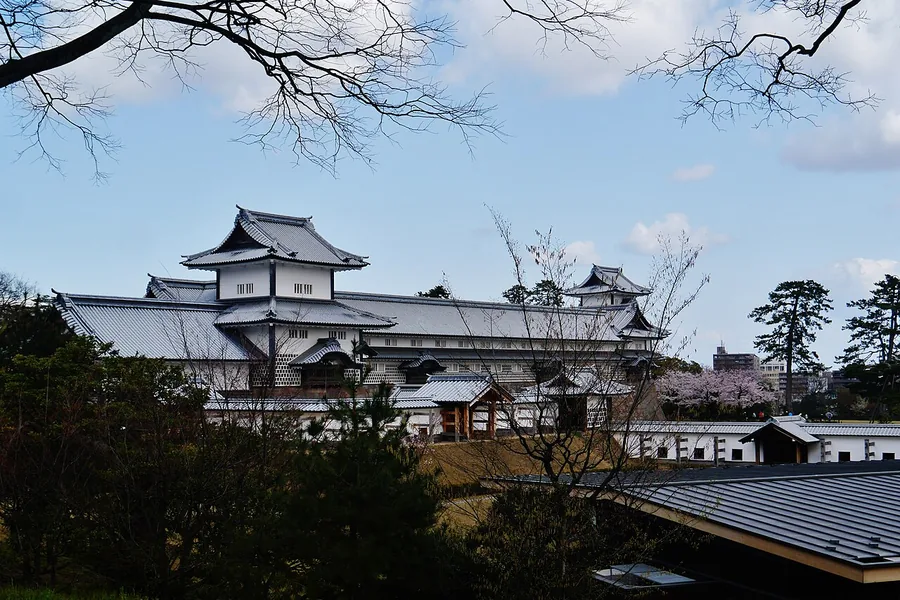
For a break, Gyokusen-an teahouse looks over the Gyokusen-inmaru garden and serves matcha with a seasonal sweet for ¥1,000, from 9am to noon and 1pm to 4:30pm.
The castle has been Kanazawa’s landmark for centuries. When the British diplomats Ernest Satow and Algernon Mitford travelled overland through Kaga in 1867, Satow recorded his first view of the city as “the white castle walls of Kanazawa peeping through the pine trees”, and spent the next morning “choosing lacquer and porcelain”, as he wrote in A Diplomat in Japan (1921, chapter 20). Kaga lacquer and Kutani porcelain, both in the Yasue Gold-Leaf Museum’s collection, are still the crafts to look for.
21st Century Museum of Contemporary Art: the Swimming Pool and timed reservations
Three minutes’ walk from Kenroku-en’s Mayumizaka gate, the 21st Century Museum of Contemporary Art has two parts. The free public zone opens from 9am to 10pm. The paid exhibition zone opens from 10am to 6pm (8pm on Fridays and Saturdays) and closes on Mondays, or the next weekday when Monday is a national holiday. Ticket prices change with each exhibition.
Its best-known work is Leandro Erlich’s The Swimming Pool (2004), in one of the courtyards. From the limestone deck it looks like a deep pool; in fact about 10cm of water sits on transparent glass, over an empty room with aquamarine walls that visitors can walk into, so people above seem to look down at people under the water. To go underneath, you need a same-day timed reservation, made through the museum’s online reservation link or the machine by the general information desk at the Honda Street entrance. Bookings open at 9am and close at 5:30pm (7:30pm on Fridays and Saturdays) or when slots run out, so book first thing and visit later.

Higashi Chaya: Kanazawa’s 1820 teahouse district
In 1820 Kanazawa moved its geisha houses out of the city centre into three districts, and Higashi Chaya is the largest. Its streets of wooden teahouses with fine lattice fronts now hold restaurants, cafés and souvenir shops, many selling gold leaf.
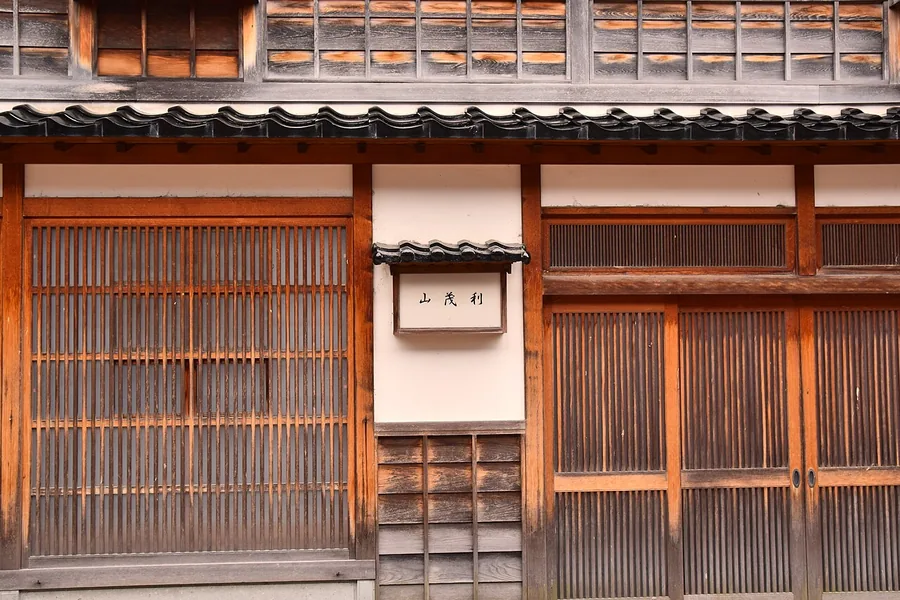
To see inside, visit Shima, a teahouse built when the district was founded in 1820 and now a national Important Cultural Property. It opens every day, 9:30am to 5:30pm from March to November and to 5pm from December to February, and costs ¥500 for adults and ¥300 for those aged 16 and under, with tea and a sweet extra.
Map of Higashi Chaya District
Gold leaf: the Yasue museum and workshops
Gold leaf is Kanazawa’s signature craft, and Visit Kanazawa notes that the traditional “entsuke” method of making gold leaf is recognised by UNESCO as Intangible Cultural Heritage. The Kanazawa Yasue Gold-Leaf Museum, near Higashi Chaya, shows the tools and process collected by gold leaf artisan Komei Yasue. It opens 9:30am to 5pm (last entry 4:30pm), closes on Tuesdays, and costs ¥310 for adults and ¥210 for those 65 and over, with under-18s free. Hands-on gold leaf workshops in Higashi Chaya start at about ¥1,760 for an hour, and HAKUICHI’s beginner workshop lets you decorate an accessory box, hand mirror or small plate.
Omicho Market: Kanazawa’s kitchen for 300 years
Omicho Market has fed the city for about 300 years, as its own site puts it, and its covered lanes hold fishmongers, greengrocers, butchers and small restaurants. It is a 15 minute walk from Kanazawa Station and 9 minutes from the castle’s Otemon gate. Stalls generally trade from 9am to 4pm, though each shop sets its own hours, and the market closes over New Year.

Go in the morning, as many stalls finish by 4pm, and for lunch head to the Omicho Ichibakan building, which holds several of the market’s popular restaurants. If you enjoy markets like this, our guide to Kuromon Ichiba Market in Osaka covers its Osaka equivalent.
Map of Omicho Market
Nagamachi samurai district and the Nomura house
Nagamachi, 15 minutes’ walk from Kenroku-en’s Mayumizaka gate, keeps the earthen walls and narrow lanes of the old samurai quarter. In winter the walls are covered with straw mats, komogake, to stop frost cracking them.
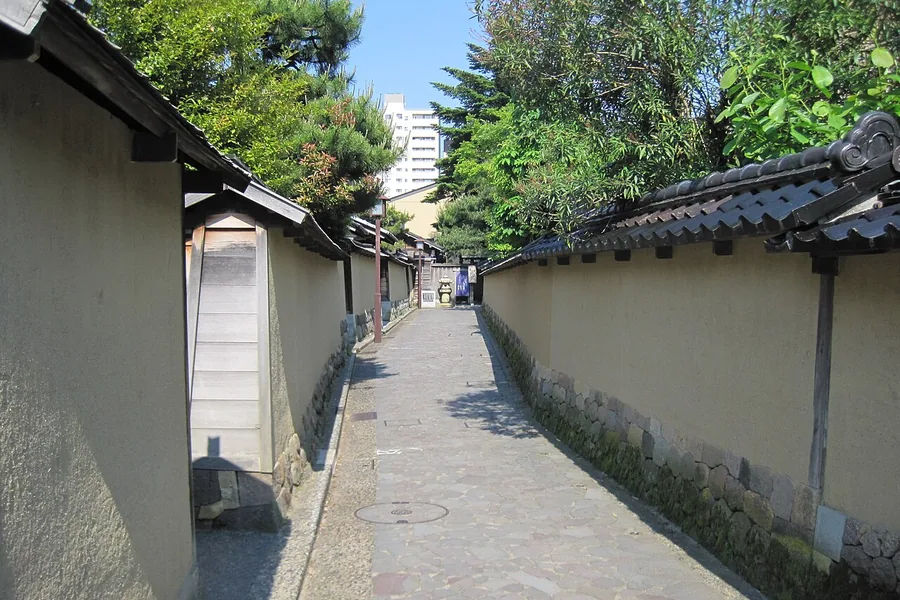
The Nomura Samurai Residence belonged to a family who served the Maeda lords for generations. It has a coffered ceiling of Japanese cypress, sliding doors painted by the Maeda family’s own painter, and a small garden with a Japanese bayberry over 400 years old. It opens 8:30am to 5:30pm (to 4:30pm from October to March) and costs ¥550 for adults.
Three minutes from the Hirokoji stop on the Loop Bus, Myoryuji, known as the Ninja Temple, was built as a place of prayer for the Kaga domain soon after Maeda Toshiie moved into Kanazawa Castle, and later designed with defence in mind. Visits are by phone reservation only and cost ¥1,200 for adults.
Getting to Kanazawa on the Hokuriku Shinkansen
The Hokuriku Shinkansen runs from Tokyo to Kanazawa in about 2 hours 30 minutes. Since 16 March 2024 the line has continued south to Tsuruga in Fukui Prefecture, so from Kyoto and Osaka you take a limited express train to Tsuruga and change to the shinkansen there. Visit Kanazawa gives about 1 hour 20 minutes from Osaka to Tsuruga, then about 40 minutes on to Kanazawa. JR West has a Tsuruga transfer guide with a map and video.
In town, the Kanazawa Loop Bus leaves the station’s east exit and stops at Omicho, Higashi Chaya, Kenroku-en, the museum and Nagamachi for ¥220 a ride. The right loop runs every 15 minutes from 8:30am to 6pm. A one-day bus pass pays off from four rides and brings discounts at 27 sights.
A one-day route through Kanazawa
| Time | Stop | Why then |
|---|---|---|
| 6am to 7:15am | Kenroku-en, free early opening (Renchimon or Zuishinzaka gate) | Free entry and an empty garden. Leave by 7:45am in winter |
| 8am to 9am | Kanazawa Castle Park | The park is open and free; the turrets open at 9am |
| 9am | 21st Century Museum | Book your Swimming Pool slot on the online link as bookings open |
| 9am to 10:30am | Castle turrets, then walk to Omicho (9 minutes from Otemon gate) | Use the ¥500 combined ticket if you paid for Kenroku-en |
| 10:30am to noon | Omicho Market, early lunch | Many stalls close by 4pm |
| 1pm to 3pm | Higashi Chaya, Shima teahouse, gold leaf workshop | Twenty minutes’ walk from Kenroku-en’s Katsurazaka gate, or the Loop Bus to Hashiba-cho |
| 3:30pm to 5pm | 21st Century Museum, your Swimming Pool slot | Open to 6pm (8pm Friday and Saturday) |
| 5pm onwards | Nagamachi at dusk, then dinner in Katamachi | The Nomura house closes at 4:30pm in winter, so do it first if it matters |
If you are planning a longer rail trip around Japan with Kanazawa on it, our guide to solo travel in Japan covers rail passes, apps and solo-friendly places to stay.
Kanazawa: questions and answers
How many days do you need in Kanazawa?
One full day covers Kenroku-en, the castle, Omicho Market, Higashi Chaya and Nagamachi, which are all within about 20 minutes’ walk of each other. Allow a second day for the 21st Century Museum’s exhibitions, a gold leaf workshop, the Nomura house and Myoryuji, or a slower evening in the teahouse district.
How do I get from Tokyo to Kanazawa?
Take the Hokuriku Shinkansen from Tokyo Station, which reaches Kanazawa in about 2 hours 30 minutes, according to Visit Kanazawa. Since March 2024 the line has continued to Tsuruga, so travellers from Kyoto and Osaka now change at Tsuruga from a limited express to the shinkansen for the last 40 minutes or so.
Is Kenroku-en free?
Not normally: entry is ¥320 for adults. But it is free during the early-morning opening before paid hours (through the Renchimon and Zuishinzaka gates), for visitors aged 65 and over with ID, and on set free days: cherry blossom week, the Hyakumangoku Festival, 14 to 16 August, 3 November and 31 December to 3 January.
Do I need to book the 21st Century Museum’s Swimming Pool?
Yes, to go underneath it. The museum takes same-day timed reservations only, online or at the machine by the Honda Street entrance, from 9am until 5:30pm (7:30pm on Fridays and Saturdays) or until slots run out. Viewing the pool from the deck above needs no booking.
When is the best time to visit Kanazawa?
Kenroku-en is at its most famous in early April for cherry blossom, when entry is free for about a week, and in winter, when snow settles on the yukitsuri rope cones over the pines. Avoid Mondays if the 21st Century Museum’s exhibitions matter to you.