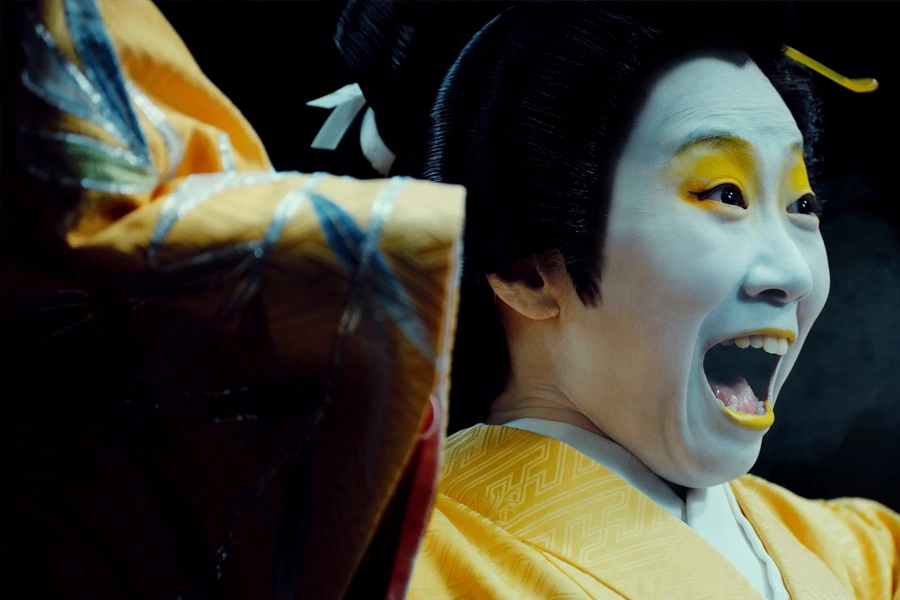
Every culture in the world has its own theatre and Noh is Japan’s oldest living rehearsal theatre: chant, dance and instruments arranged with exacting restraint, masks that shift with the tilt of a head, and silence treated as material.
Shaped in the Muromachi period and carried by family schools to the present day, it reads closer to lived rehearsal than spectacle—one of the roots of Japan’s traditional culture, with tea, poetry and etiquette echoing its timing and restraint.
Its themes of loss, longing, resolve, travel beyond language, which is why first-time audiences often feel its pull even before they know the code.
“Noh is a small, interdependent world—actors, musicians, mask carvers, weavers—each craft carrying a piece of the whole. What you see on stage is the tip of years of training that often begin in early childhood.”
—Sébastien Moncus, founder of My Taiken and Hōshō insider
What Noh is
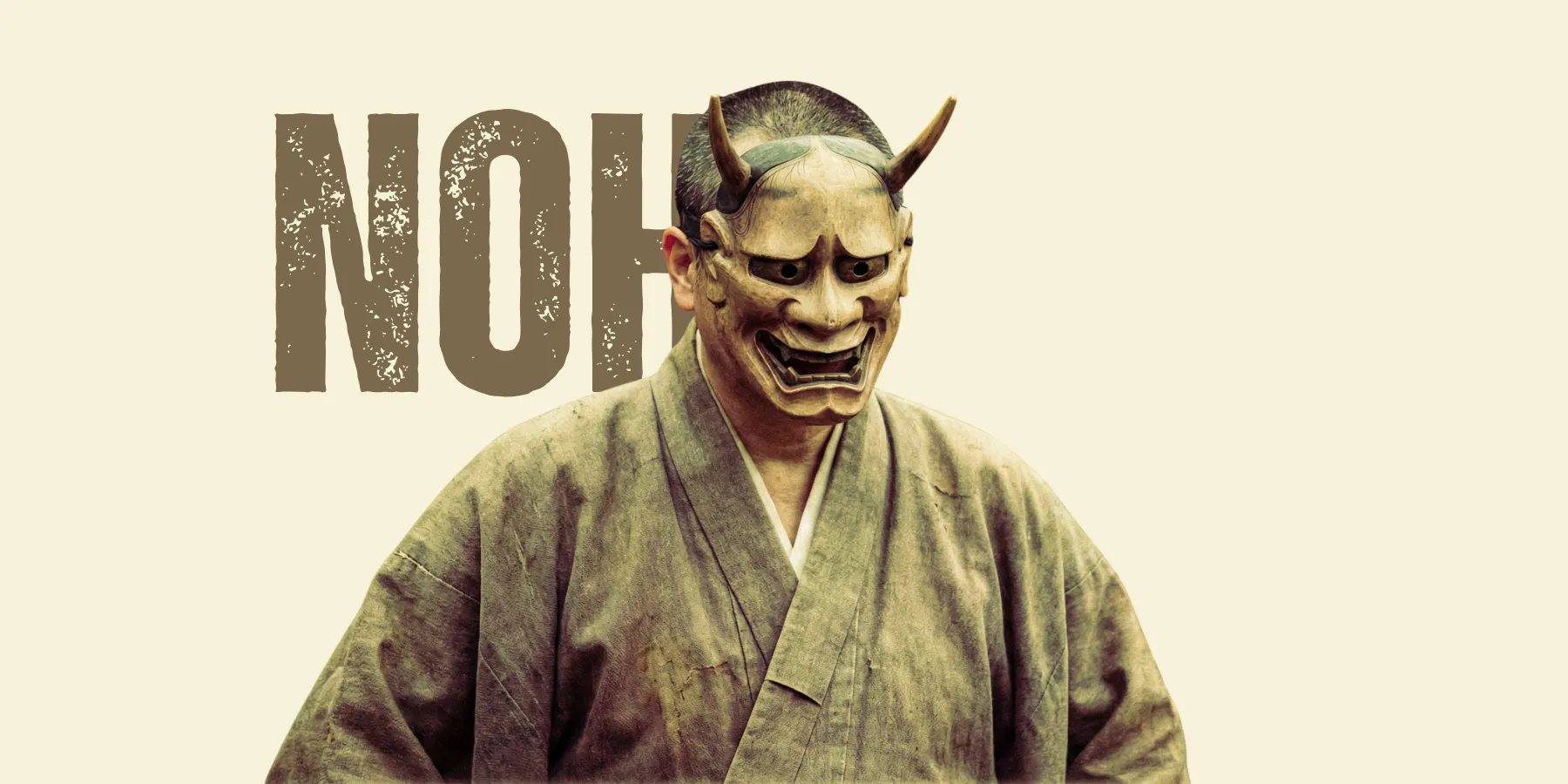
Noh is a classical Japanese theatre that brings chant, dance and music together in one tightly organised performance. Each role has a clear job. The lead is the shite; the partner is the waki. The musicians, called the hayashi, play the small hand drum (kotsuzumi), the hip drum (ōtsuzumi), the barrel drum (taiko) and a bamboo flute (nohkan). A chorus, the jiutai, carries the story’s words.
The word nō (能) itself means skill or talent. Noh is traditionally staged alongside kyōgen, short comic plays in everyday speech performed between Noh pieces, and together the two are known as nōgaku.
Movement is minimal and precise. A small change in stance or a quarter turn of the head can shift the emotion the mask seems to show. Walking is a smooth glide with the feet close to the floor. The voice follows a stylised chant, utai, so the words hold weight even in silence.
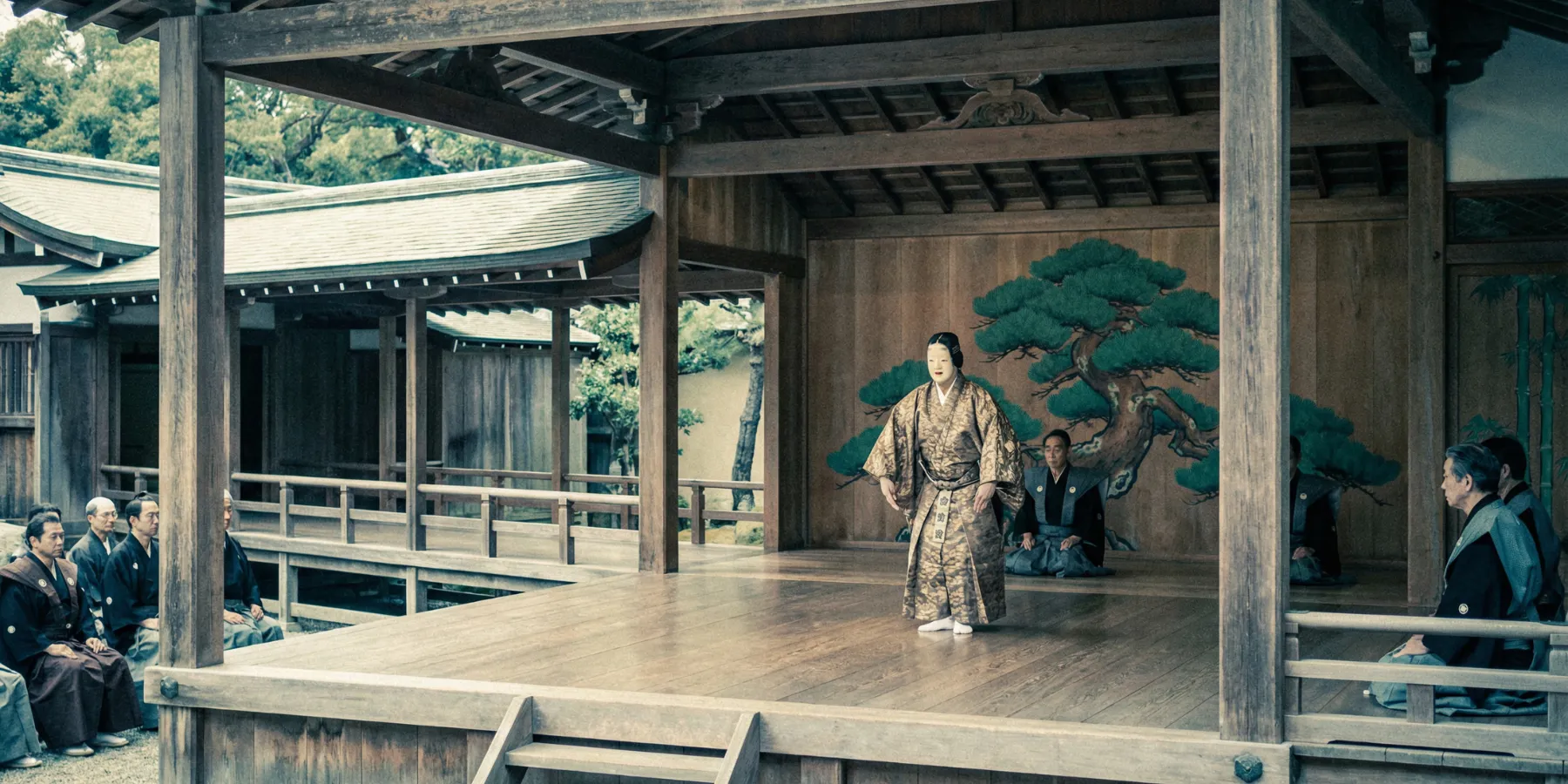
Picture a roofed cypress stage with a painted pine at the back and a side bridge for entrances. One figure steps into that space, and a slight change in how the light hits the mask can make the face read differently. That is the scale and power of Noh.
Where the form came from

Noh took shape across the late Kamakura (1185–1333) and Muromachi (1336–1573) periods. Many of its building blocks came from mainland Asia, mainly Tang-era China, often arriving via the Korean peninsula. Music and dance travelled with official envoys, monks and artisans.
Court imports took root first as gagaku (雅楽) and its dance wing, bugaku (舞楽). From the 8th century Sangaku (散楽) variety shows arrived from mainland Asia and, in Japan, evolved into sarugaku (猿楽). Between the 11th and 13th centuries dengaku (田楽) field dances flourished and shrine kagura (神楽) continued as sacred song–dance. In the late 13th to 14th centuries kusemai (曲舞) song–dance rose in popularity. In the 14th century Kan’ami and Zeami braided these streams under Ashikaga patronage and Noh took its classic form.
By setting, what each stream gave Noh.
- Court (gagaku/bugaku). Formal polish, measured decorum, and models for structure and pacing.
- Shrines and temples (kagura). A ritual frame and sacred tone; the painted pine and the bridgeway recall that meeting point of human and spirit.
Villages and towns (sangaku → sarugaku; dengaku; kusemai). Troupe craft, mime and comic timing; strong rhythmic dance energy; and sung narrative patterns that shaped how text and movement sit on the beat.
Essentially, Noh didn’t spring from one source. Court ceremonies and shrine rites gave it gravity; village dances gave it pulse; troupe theatre gave it craft; song–dance styles shaped its phrasing. In the 14th century, masters like Kan’ami and Zeami drew these strands together and, with shogunal support, set the training, repertoire and stage language that families carry today.
From there family lineages carried technique and licence, passing the craft from teacher to student so the form could endure.
Noh Theatre Under the Tokugawa Shoguns and Its Rescue After 1868
Noh’s bond with the warrior class, begun when Kan’ami (1333 to 1384) and his son Zeami (about 1363 to about 1443) won the favour of the Ashikaga shoguns, grew stronger under the Tokugawa shoguns (1603 to 1868). The second shogun, Tokugawa Hidetada, made Noh and kyōgen the official performing arts of the shogunate, with licensed troupes, and Noh actors were granted samurai status and paid salaries. As Osman Edwards wrote in Japanese Plays and Playfellows (1901), every daimyo who could afford it kept a troupe of Noh players, and old costumes, masks and music were faithfully preserved.
That support vanished when the shogunate fell in 1868. Actors lost their salaries, many left the stage, and Noh came close to dying out. One of the performers who kept it going was Umewaka Minoru (1828 to 1909), who carried on performing at his own home, built stages and opened Noh, until then largely a private art of the elite, to a paying public. With Hōshō Kurō XVI and Sakurama Banma he is remembered as one of the three great masters of the Meiji era, and their persistence is the reason the family schools survive today.
How the Noh stage works

A Noh stage is a roofed square of cypress (hinoki, 檜) with four corner pillars and a back panel called the kagami-ita painted with a pine. The pine functions as a yorishiro in Shintō—an object a deity may inhabit—so the panel “reflects” the shrine pine that once stood behind performers outdoors, letting the audience face the stage without turning away from the sacred tree. The left-side hashigakari bridge is both an entrance and a passage between worlds. There is no curtain or scenery; the constant architecture keeps focus on movement, voice, and season.
Behind the entrance curtain sits the kagami no ma (mirror room), where the lead actor dons the mask and settles the role; musicians ready instruments there, signalling that the performance is about to begin.
Positions and flow
Pillars act as landmarks for masked performers. The chorus sits at the side, the jiutai-za (地謡座), and the musicians at the rear, the hayashiza or atoza (囃子座/後座). Because these positions are fixed, sound and movement follow a known geometry the audience learns to read. Modern indoor theatres keep the roof, pillars and even pebbled borders to honour the form’s outdoor shrine origins.
Noh sits on UNESCO’s Representative List of the Intangible Cultural Heritage of Humanity. The listing recognises not just the stage art, but the living communities that pass it on through rehearsal, teaching, and licence. From medieval Kyoto to today’s iemoto (lineage head governing teaching and licences), training methods and repertoire have moved hand to hand, which is why a modern rehearsal still feels closely connected to Muromachi practice rather than a reconstruction.
In November 2025, Japan also announced a Memory of the World nomination for Zeami’s 15th-century Fūshikaden, with review expected in 2027 (NHK World-Japan).
A living craft ecosystem
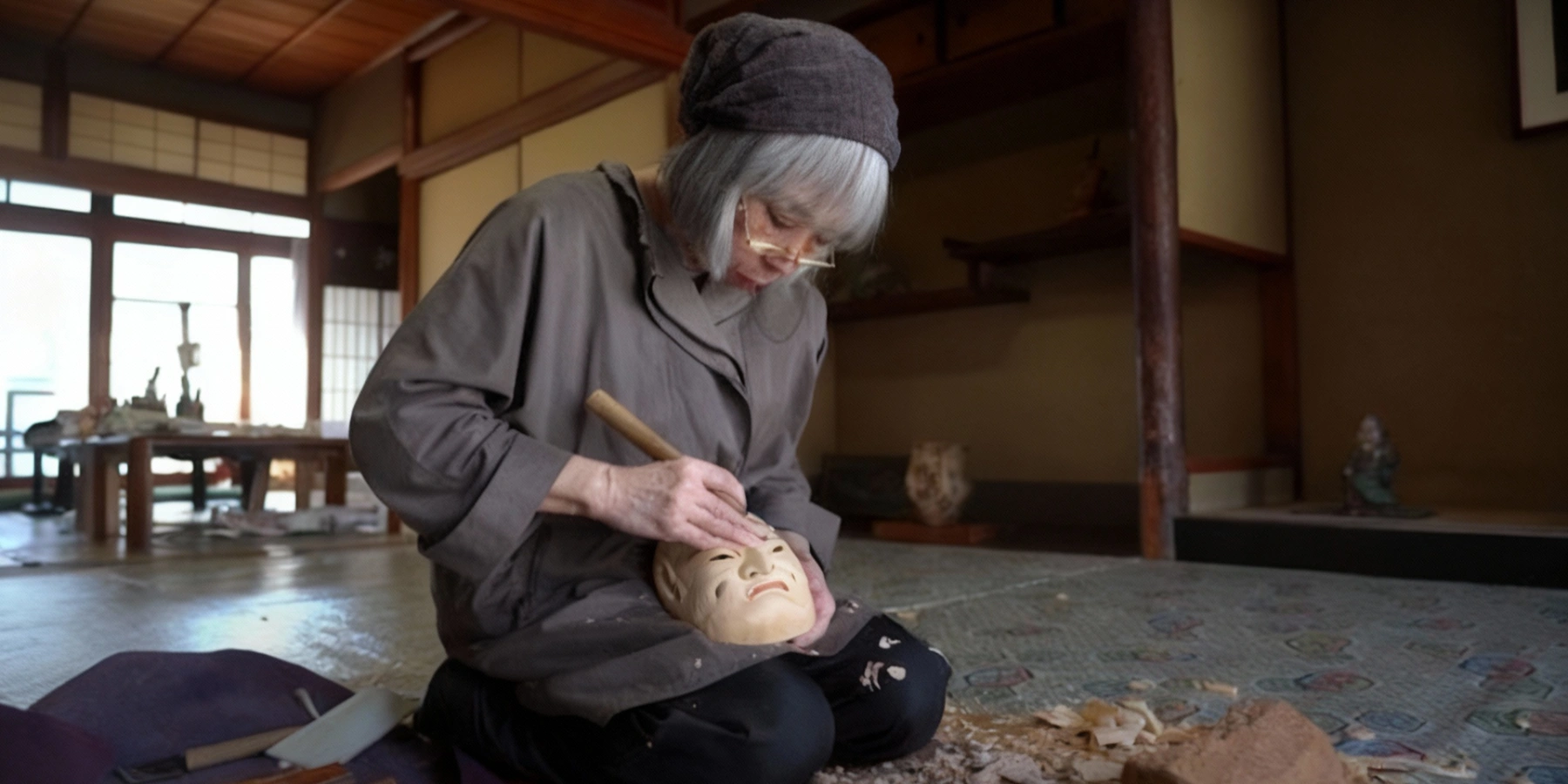
Noh Mask crafting
Noh keeps multiple crafts alive. Noh Masks call for specialist carvers and a gofun (matte white pigment from oyster shell) finish. Costumes rely on historic weaving and dyeing. Drums, flutes, and stage carpentry follow established making traditions. Keeping the form active sustains these workshops and the knowledge within them, so cultural value and practical livelihoods travel together.
Culture in practice today
On stage, audiences meet motifs often read as distinctly Japanese: patience in pacing, exactness in small actions, and collective coordination between actor, chorus, and musicians.
Attention to ma, the interval that gives shape to movement and sound, teaches a different way of listening and looking. Architecture still hints at shrine origins, so performances feel tied to place, season, and civic ritual even in modern theatres.
The influence travels too. Filmmakers, playwrights, and choreographers borrow Noh’s economy of gesture and structural clarity, while exchange projects bring new audiences without loosening the core etiquette that protects the work.
What Noh Asks of You
Noh is often packaged as spectacle: masks, brocade and poised stillness that fill photographs, while the practice that gives them force is left off the page. A truer frame is Noh as living practice, with introductions placing guests inside keiko, pace and silence carrying meaning, and commissions sustaining the people who keep the form alive.
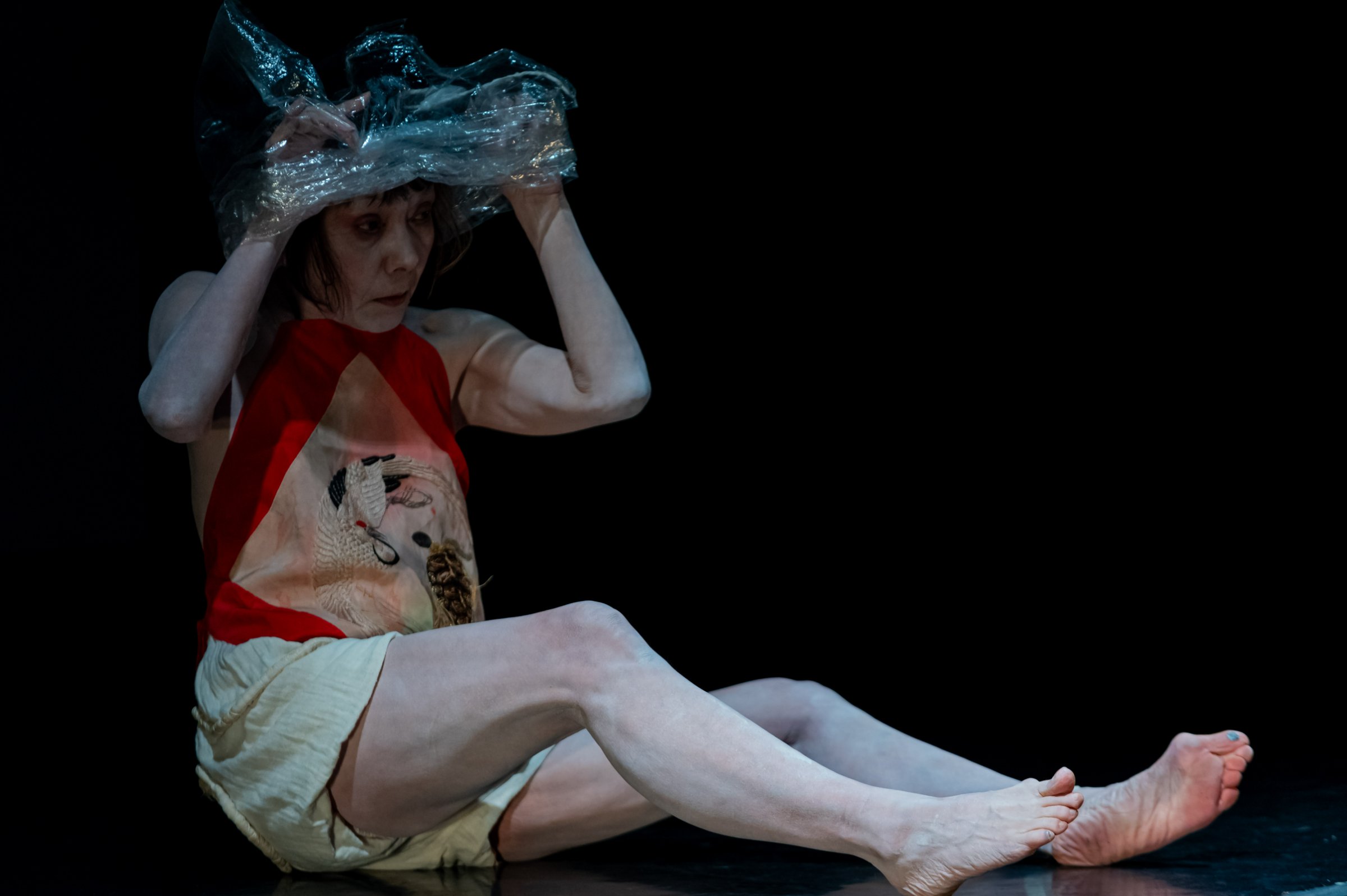

Experiencing Noh: Inside the Room
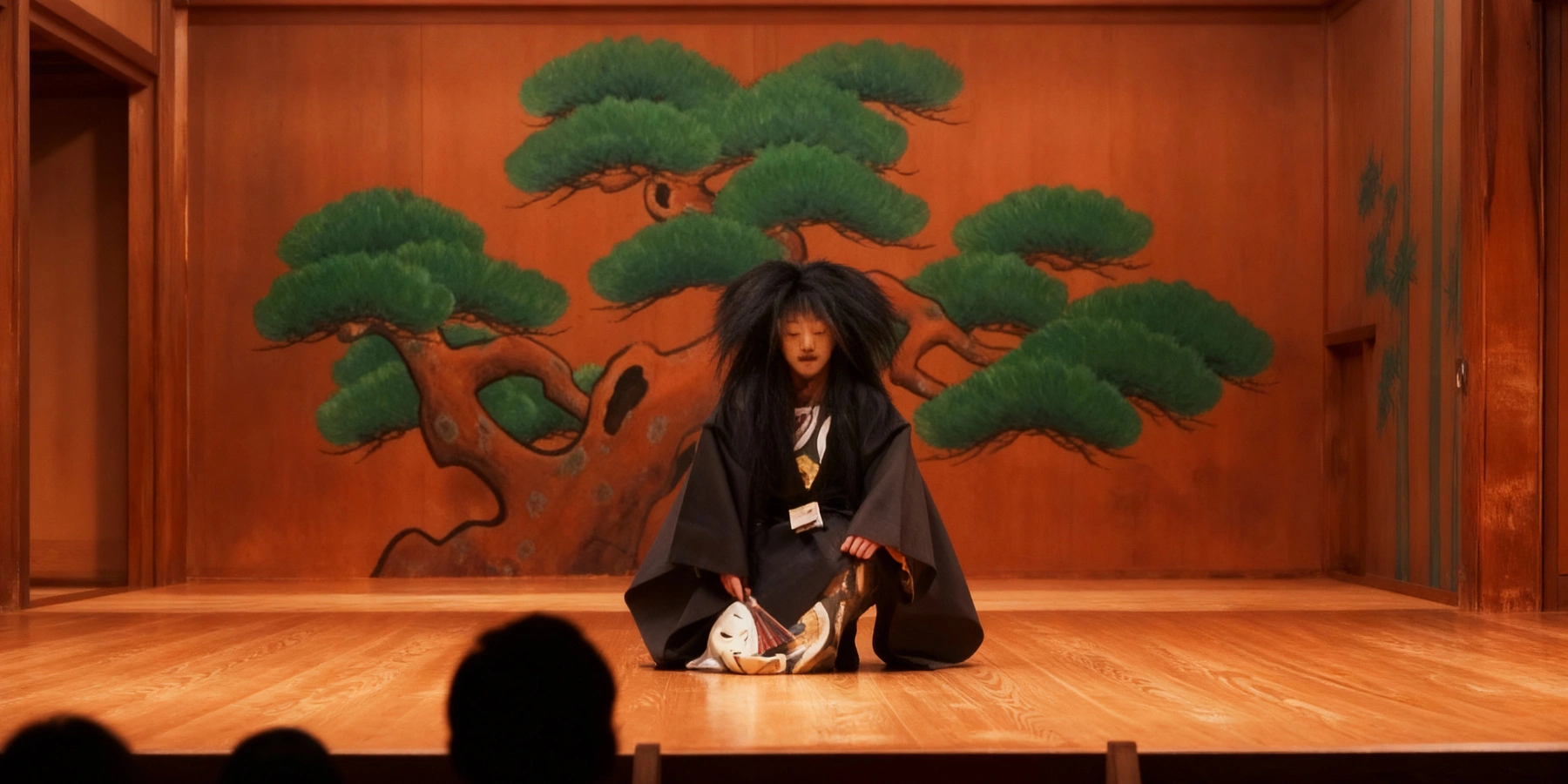
Image credit: My Taiken
In an introduction the ear leads the eye. Sound tunes the room before anything moves.
What you hear first
Before any mask appears, sound writes the room. The small hand drum, kotsuzumi, and the larger ōtsuzumi call to one another; the piercing nōkan colours the air; drummers give sharp kakegoe calls that mark energy; the chorus draws a clear line through text known as utai. Silence is not empty space but ma, the charged interval that lets breath and memory do their work.
Guests may notice school signatures most in the chant’s timbre, the tempo of entrances and turns, and the weight of stamps and slides. In practice, the master in front of you matters more than the label; your host can prime what to listen and look for so differences register without prior study.
“Inside our main Hōshō theatre in central Tokyo, the hashigakari is unusually long. We line it with real pine sprigs cut to different lengths for perspective and refresh them each month, so entrances carry a faint pine-and-hinoki scent.”
—Sébastien Moncus, founder of My Taiken and Hōshō insider
In Hōshō chant, listen for the straight, precise line and the moment a phrase seems to carry forward inside silence.
“Let the first full breath of chant land—straight, unexpectedly powerful—then use the quiet beat after it to ask a question; those pauses are there for you.”
—Sébastien Moncus, founder of My Taiken and Hōshō insider
How an observe-first introduction unfolds
You enter a privately run theatre or practice space by introduction. The session opens with a welcome and context—meet the master, hear the lineage, and learn what defines the school. Rather than a full play or a music-first focus, the master demonstrates key elements at working pace (mask handling, stance, turns, entrances) so the code of the form becomes legible. Bilingual hosting keeps questions flowing and the tone human.
Light guided moments may be offered under etiquette. If desired, a compact private performance can be added by arrangement; otherwise the emphasis stays on rehearsal and conversation. Photos or short clips may be taken with permission for private keepsakes; social posting is not part of the day.
“On arrival, pause and listen to the silence. In a Noh theatre it has weight—like stepping into a quiet church—so you can hear the floor breathe and the space settle before the first sound.”
—Sébastien Moncus, founder of My Taiken and Hōshō insider
What the Noh mask actually does
From the audience, the mask’s gofun face reads as matte. Light sitting on the eye apertures and cheek plane shifts the perceived mood with the tilt of the head. Inside the hollow, lacquer strengthens and finishes the form, but the expression you see is made by posture, angle and breath, not by a painted grin.
Noh in everyday Japan
Noh remains part of everyday life in Japan. You’ll see it on community stages, in school clubs, and on festival programs. NHK broadcasts features, and occasional cross-genre projects bring in new audiences without changing core methods.
Each spring, the Hōshō family stages a long-running televised Noh evening at Yasukuni Shrine during the cherry-blossom nights—a tradition of more than three decades. My Taiken can arrange special access and on-site support for guests who wish to attend, an atmospheric first encounter with the form. The references are familiar, too: many plays retell episodes from The Tale of the Heike and other classics.
The Tale of the Heike reached medieval audiences through biwa hōshi, blind travelling monks who chanted the story of the Taira clan’s rise and fall to the sound of the biwa lute. As Osman Edwards noted, these reciters opened up a whole new range of warrior subjects for the stage. Many Noh warrior plays grew from their tale, among them Zeami’s Atsumori, in which the ghost of a young Taira warrior killed at the battle of Ichi-no-Tani meets the man who killed him, now a Buddhist monk.
At festivals you may see a shimai (a short Noh dance performed in everyday dress with chorus), so the form appears outside full productions. The word oshimai (“the end”) echoes stage cadence in daily speech. Hannya masks show up in games, anime, and street art, reflecting Noh tales of jealousy and transformation.
The best known of those tales is Aoi no Ue (Lady Aoi), drawn from The Tale of Genji. Lady Aoi, Prince Genji’s wife, lies ill, represented only by a folded robe laid at the front of the stage, while the jealous living spirit of Lady Rokujō, a former lover of Genji, torments her. In the second half the spirit returns wearing the hannya mask, with horns, gilded eyes and a gaping mouth, until a mountain priest’s prayers drive it away. The hannya is one of the most recognisable Noh masks, and old examples carved from Japanese cypress are held in museum collections such as the Victoria and Albert Museum in London.
And kabuki, which grew in the 1600s, adapted plots and pacing from Noh plays such as Dōjōji and Shakkyō, and comic material from kyōgen, so the links are easy to spot.
Japanese Cinema’s quiet borrowings

Onibaba (1964)
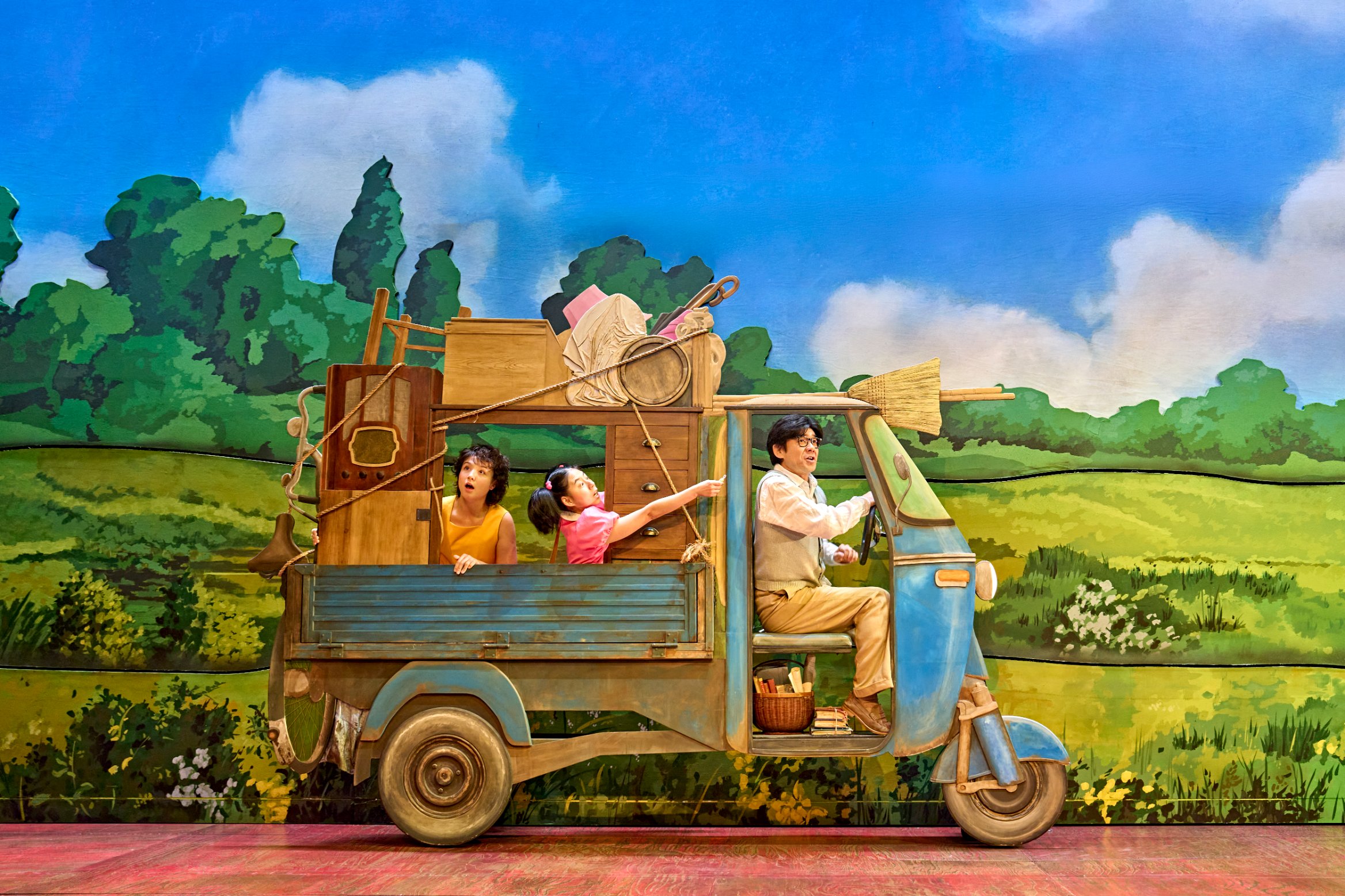
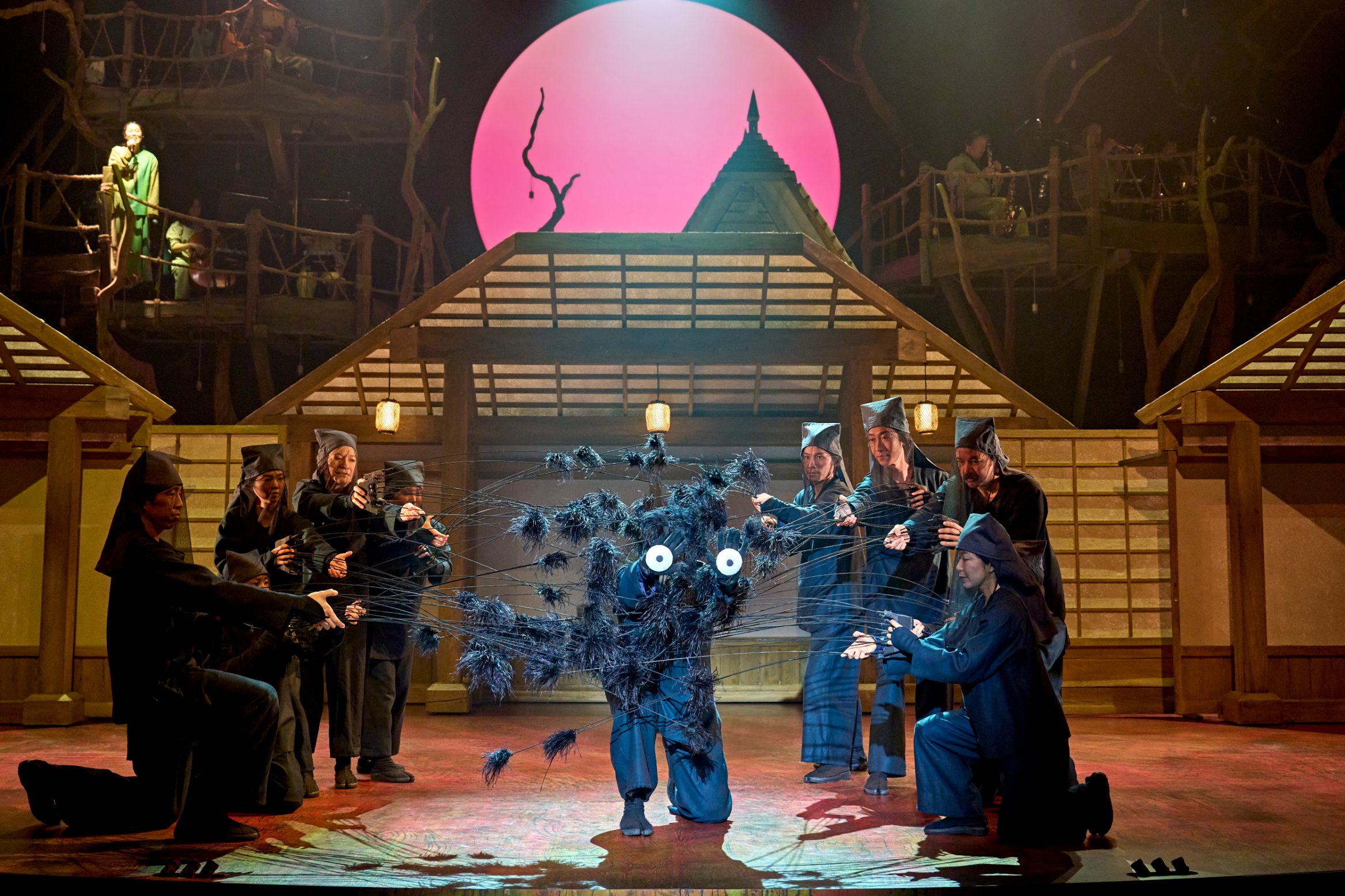
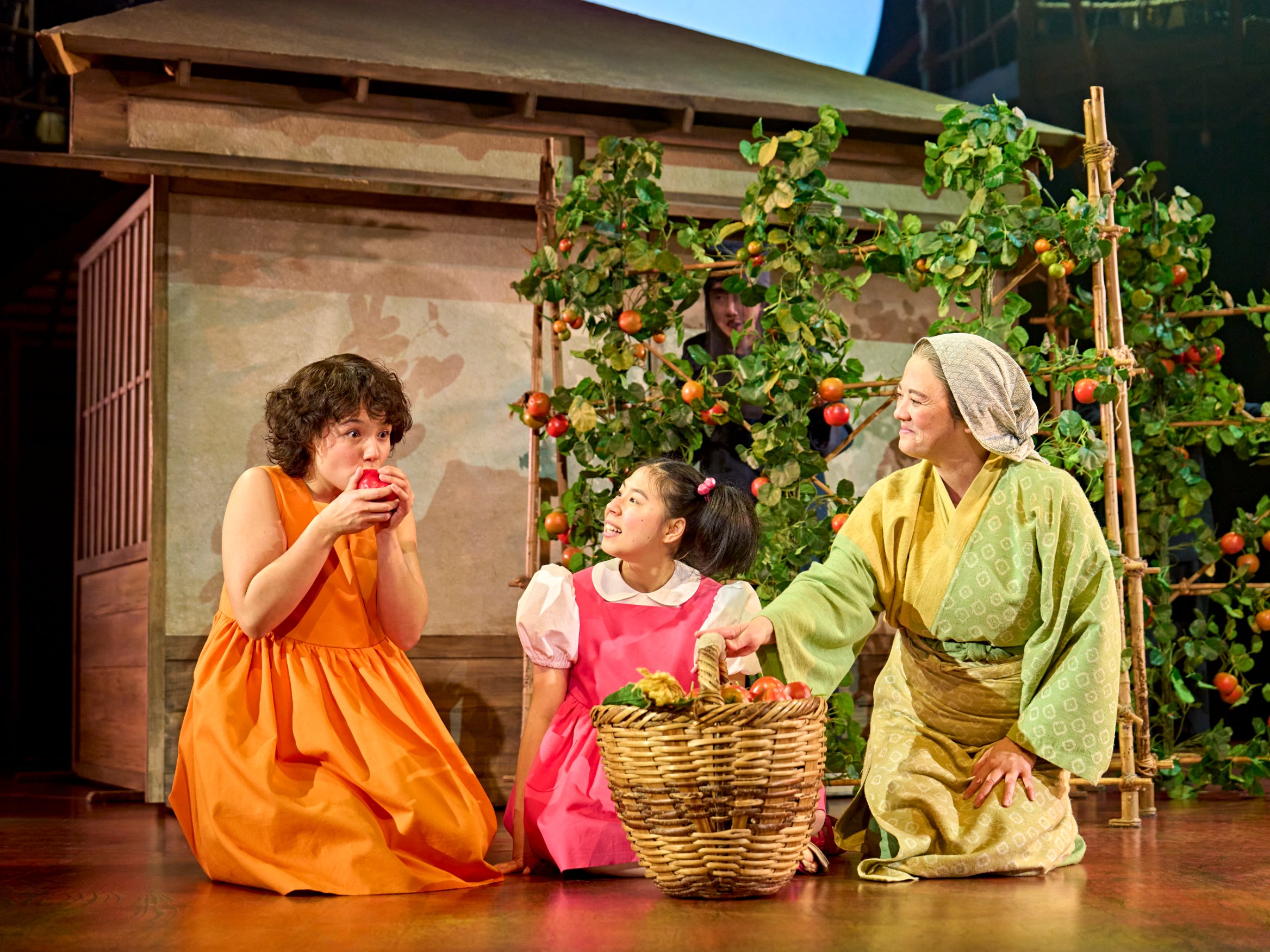
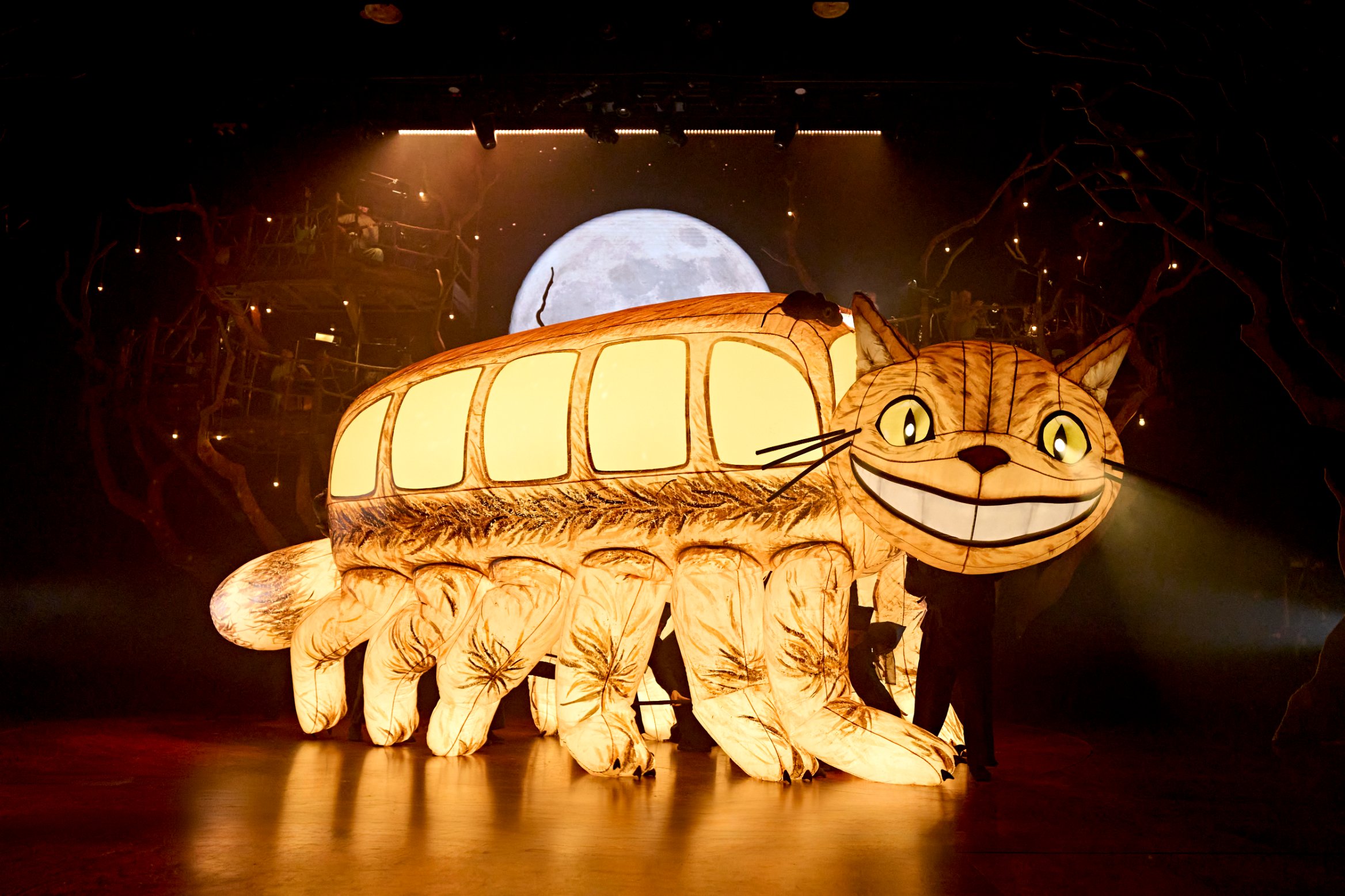
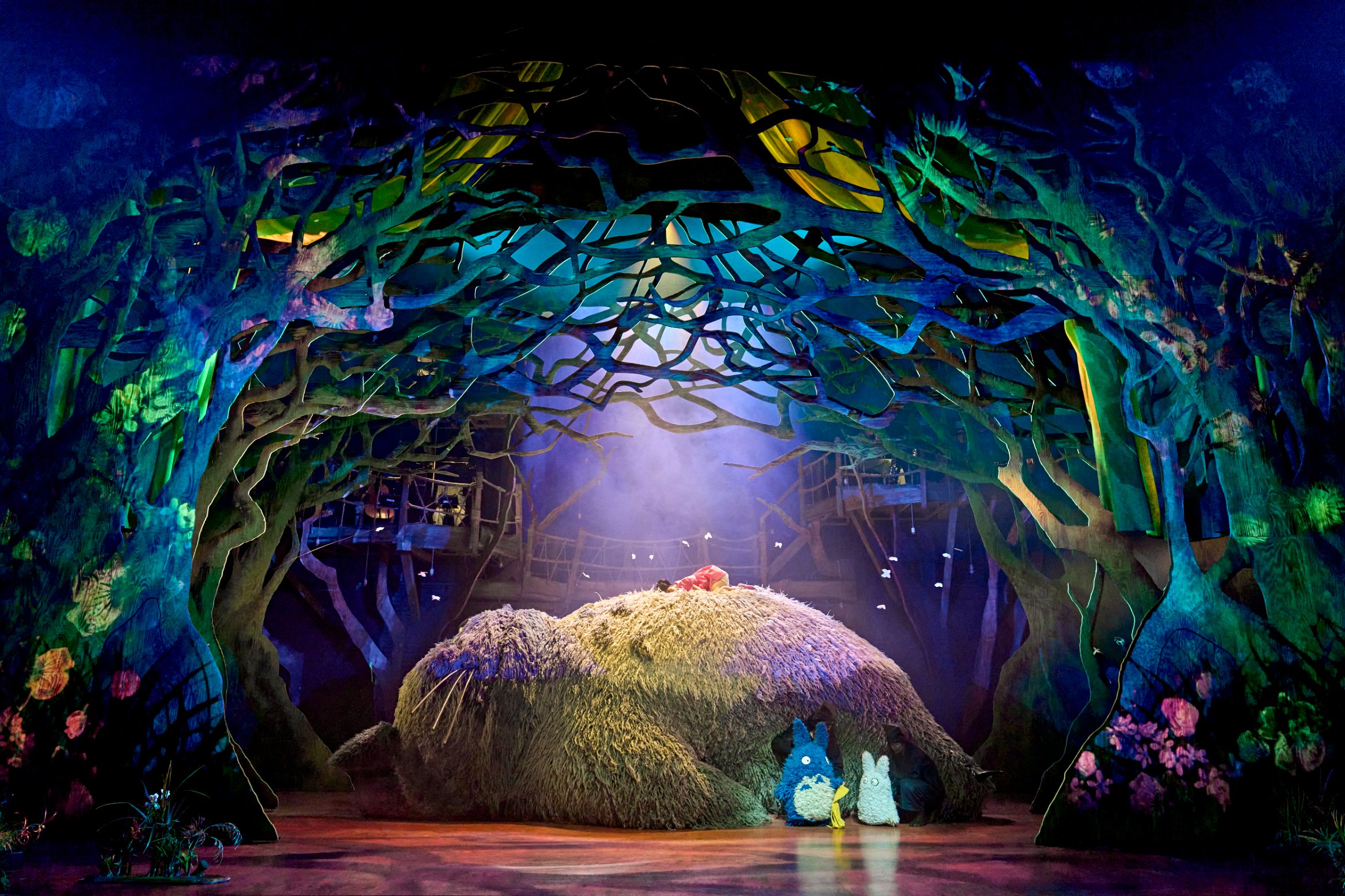
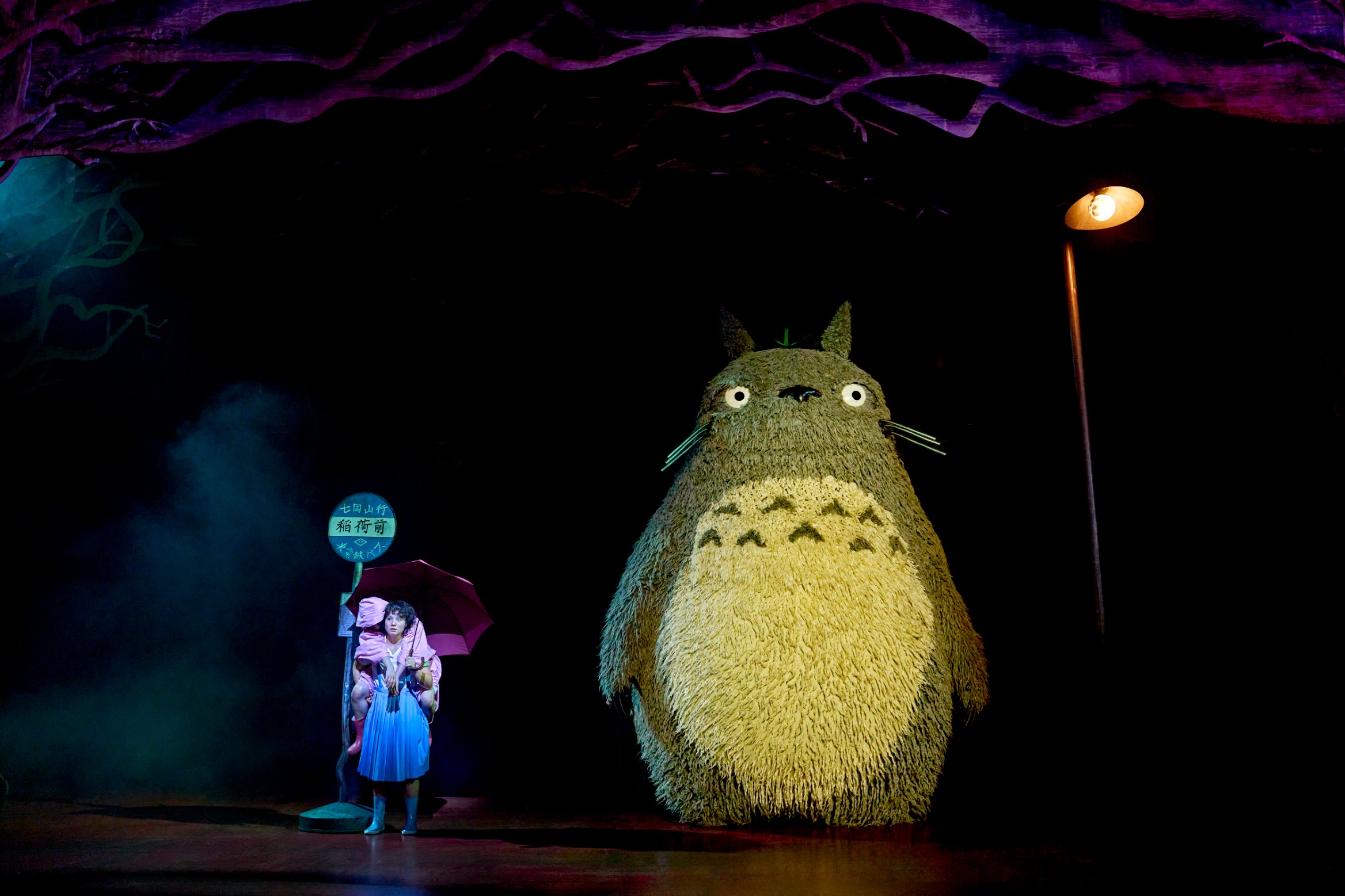
Japanese film-makers have long taken cadence, gesture and the poetics of the mask as reference points. You may not notice it as a quotation so much as a way of handling time, silence and the face. More than surface style, Noh helped set the very grammar of Japanese cinema—how films move, pause and build tension—via principles such as *ma* (間), *yūgen* (幽玄) and *jo-ha-kyū* (序破急). You can feel it in Ozu’s stillness and pillow shots, Kurosawa’s ritual cadence, and the aesthetic unease of J-horror, where ghosts and mask-like performance hold emotion in restraint. The key is that Noh’s grammar can inform modern scenes without turning them into pastiche.
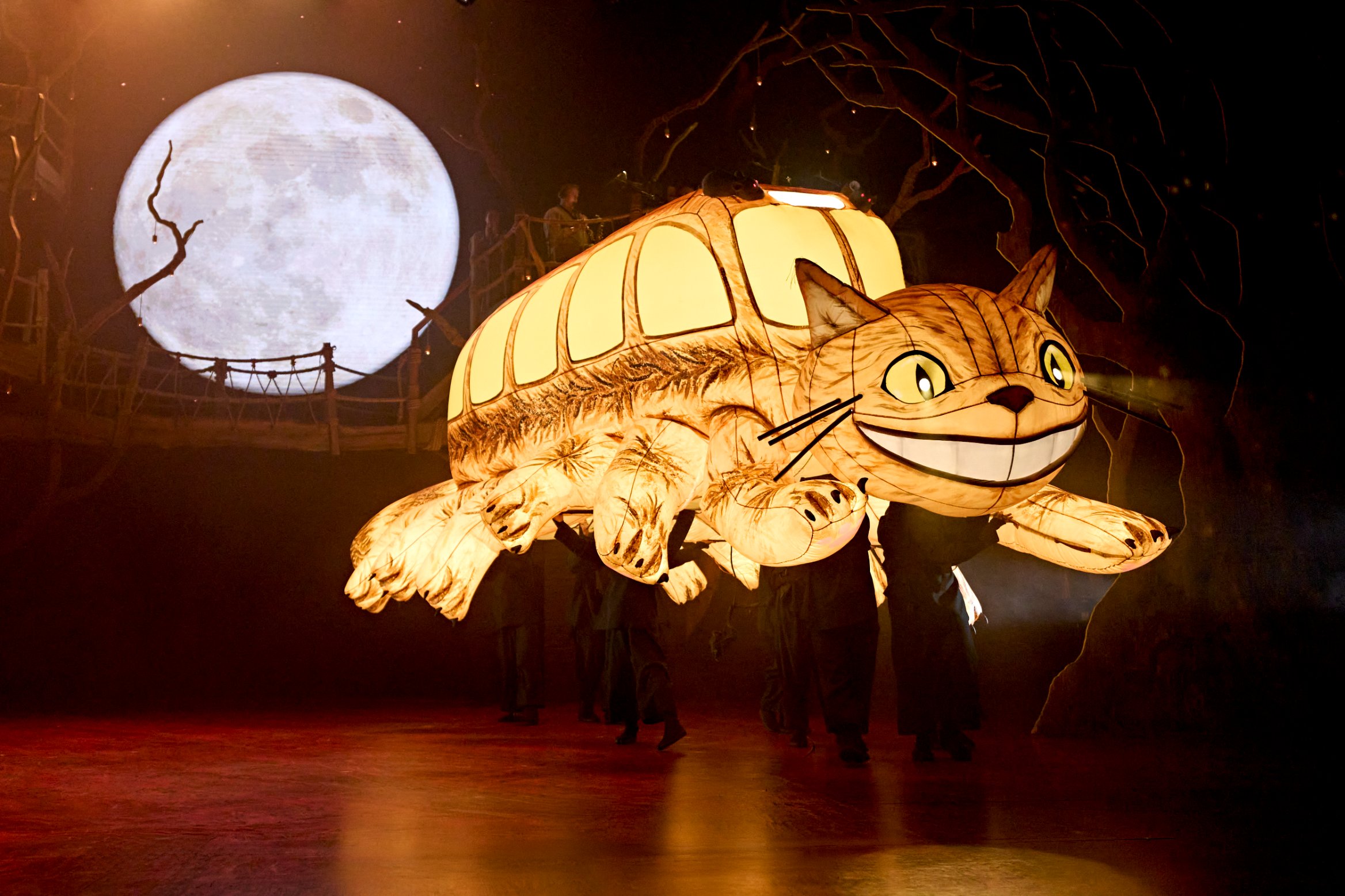

The Noh insider route
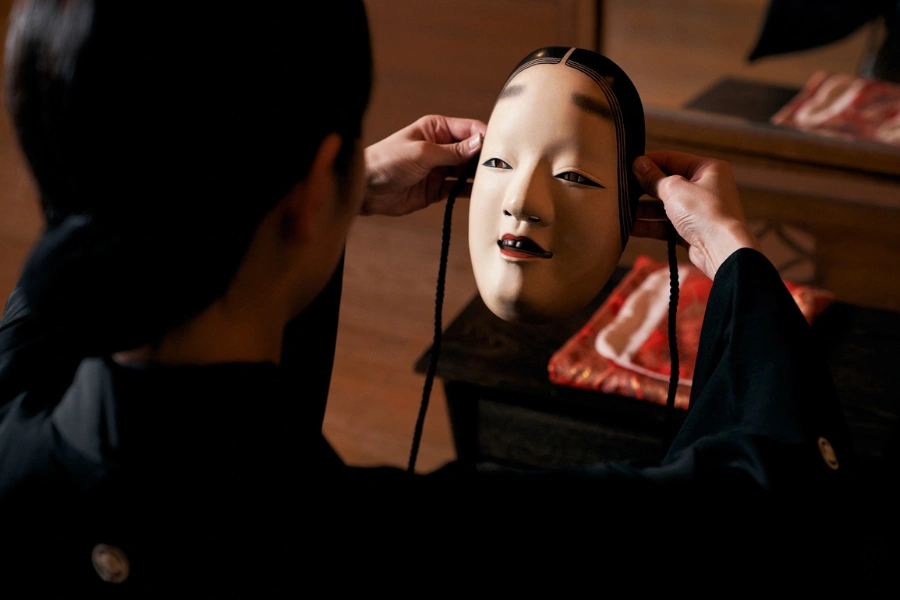
Image credit: My Taiken
If your goal is to truly experience Noh, skip anonymous ticketing and request a private introduction through My Taiken. Access begins with shōkai and continues in keiko: you observe first, prepare well, and keep names and venues unwritten. The team hosts bilingually, keeps parties small, and handles details discreetly so your time in the room feels like real practice, not a show. Discover Japan’s living arts through private encounters with Noh and kindred traditions.
These introductions align a guest’s intent and curiosity with the right master, set shared etiquette, and protect the unhurried pace of rehearsal so attention stays on practice, not performance packaging. Sébastien hosts bilingually and keeps the room human, conversational, and precise.
Guests often feel the form click at a single pivot: a drum call that tightens the air, a turn that changes a mask’s mood, a phrase that seems to continue inside the silence. That recognition arrives when the rush to “see everything” eases and attention settles on rhythm and interval. Ma is the active pause where meaning gathers and the next action becomes necessary.
Sustaining the Lineage
Support keeps the Noh ecosystem alive: stipends for apprentices, rehearsal space and stage upkeep, drum re-heading and flute maintenance, loom time for brocade and dye work, and careful conservation of masks. In other words, it funds continuity—people, tools, and workshops—rather than spectacle.
“Commissions go straight to the families and masters who sustain the art—not to an agency. Because encounters take place in private, professional venues within their working day, your support underwrites real rehearsal time, space, and craft, and you witness that everyday practice up close.”
—Sébastien Moncus, founder of My Taiken and Hōshō insider
Practicalities
Hosting is bilingual as standard, with Sébastien present to guide context and pace. Privacy is observed: photos or short clips may be taken only with permission for private keepsakes, and social posting is not permitted.
Dress simply so attention stays on the work; keep devices out of sight. To enquire, write with interests, travel window, and party shape. Alignment is confirmed privately, then a proposal and brief preparation notes follow.
Your way in
For travellers, families, and B2B partners who value intimacy and continuity over display, a private introduction through My Taiken is the natural path into Noh. Share your focus and dates, and the team will prepare the room with the right master and timing.
Request a private introduction: contact@my-taiken.com.
Boundaries that protect the work
Timing works best with advance planning. Because each encounter is tailored and private, three months’ notice opens the widest choice of masters and spaces; one month can still align in many cases; inside two weeks, options narrow sharply. Groups stay small so attention stays on the work, with family visits possible by prior arrangement. Discretion is part of the agreement: faces, venues, and training schedules stay off public pages, and any permitted photos or short clips are for personal keepsakes only. This care keeps the room calm, personal, and focused.
Sources
- Columbia University, Asia for Educators. (n.d.). Noh theatre. Asia for Educators. Retrieved 26 November 2025, from https://afe.easia.columbia.edu/special/japan_1000ce_noh.htm
- Encyclopaedia Britannica. (n.d.). Noh theatre. Britannica. Retrieved 26 November 2025, from https://www.britannica.com/art/Noh-theatre
- National Theatre of Japan. (n.d.). Invitation to Nōgaku. National Theatre of Japan. Retrieved 26 November 2025, from https://www2.ntj.jac.go.jp/unesco/noh/en/
- Stanford University. (n.d.). Staging: The Noh stage. Noh: Resources for Teachers. Retrieved 26 November 2025, from https://noh.stanford.edu/staging/stage/
- The Noh.com. (n.d.). History of Noh. The Noh.com. Retrieved 26 November 2025, from https://www.the-noh.com/en/world/history.html
- UNESCO. (n.d.). Nōgaku theatre. Intangible Cultural Heritage. Retrieved 26 November 2025, from https://ich.unesco.org/en/RL/nogaku-theatre-00009
- NHK World-Japan. (2025, November 25). Japan to seek UNESCO listing for Zeami’s treatise Fūshikaden from https://www3.nhk.or.jp/nhkworld/en/news/20251125_09/
- Edwards, O. (1901). Japanese Plays and Playfellows. Project Gutenberg. https://www.gutenberg.org/ebooks/57239