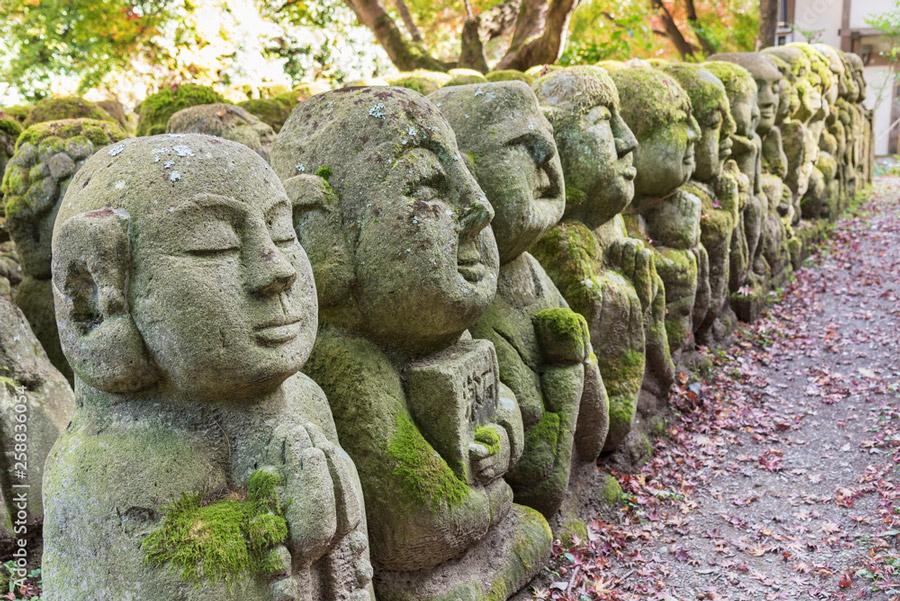
Located on the western outskirts of Kyoto, Arashiyama (嵐山), whose name translates as Storm Mountain, is centred on the Katsura River and the wooded hills that rise on either side of it. Its landscapes, temples, shrines and long history make it a favourite with visitors and locals alike.
With its historic sites, local food, shopping and places of pilgrimage, Arashiyama is one of Kyoto’s busiest sightseeing districts. It sits well away from the hustle and bustle of central Kyoto, and much of its appeal lies in the natural scenery that surrounds it.
Table of Contents
A Brief History of Arashiyama
When the Imperial family and court nobles began building retreats here during the Heian period (794 to 1185) to enjoy Arashiyama’s scenery, the area grew in popularity, especially with the nobility. In the 13th century, the retired Emperor Go-Saga (1220 to 1272) had several hundred cherry trees brought from Mount Yoshino in Nara and planted here when he built his Kameyama palace, turning Arashiyama into a cherry blossom destination. Neighbouring Mount Ogura became known for its autumn colours and its deer.
Arashiyama also played a part in the development of classical literature. Because nobles and courtiers visited so often, the area inspired poems about the changing seasons and the landscape. The red, orange and yellow foliage of autumn and the pink and white cherry blossom of spring made Arashiyama a favourite image for poets who wanted to express strong emotion.
See below for places not to miss in Arashiyama.


Nonomiya Shrine
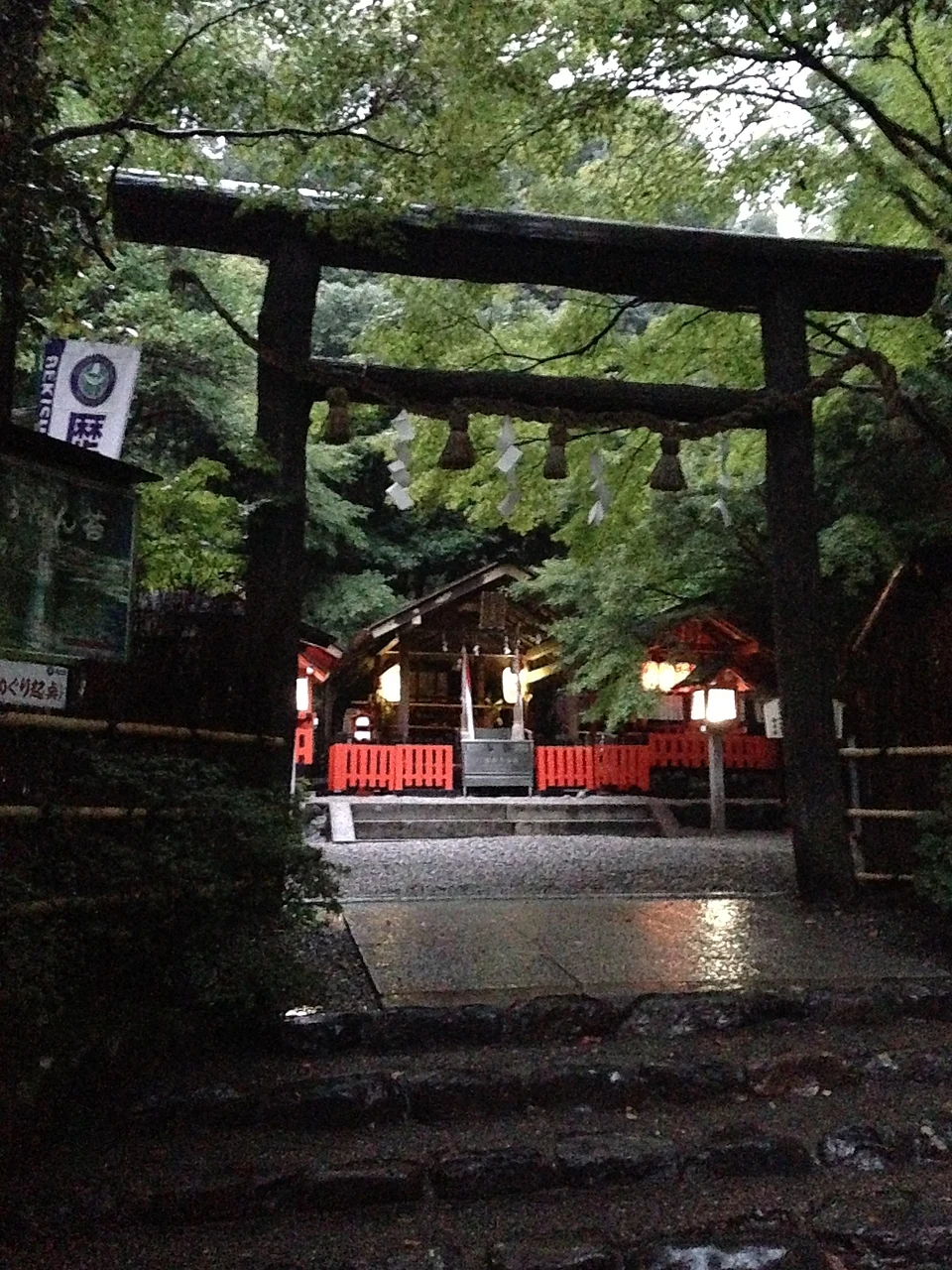
Located a short walk from Tenryū-ji temple, Nonomiya Shrine is surrounded by the bamboo groves of Arashiyama. The shrine is a popular stop on the Sagano walking route, which leads through the bamboo grove and up towards the Arashiyama hills. Despite its small size, the shrine has a long history. It was a place of purification for imperial princesses chosen to serve as priestesses of Amaterasu-Omikami, the sun goddess, at Ise Shrine in Mie Prefecture.
Nonomiya Shrine also appears in The Tale of Genji, one of Japan’s most celebrated 11th-century novels. Set in the Heian period, the book follows Hikaru Genji, the son of an emperor, and his relationships with a number of noble women. In the Sakaki chapter, Genji visits his former lover, Rokujō no Miyasudokoro, at Nonomiya, where she is staying with her daughter, who has been chosen to serve the sun goddess at Ise. Their bittersweet farewell takes place by moonlight.
Nonomiya Shrine has an unusual black torii gate known as a kuroki torii, made from sawtooth oak (kunugi) with the bark left on. The shrine describes it as the oldest style of torii in Japan, and it looks very different from the lacquered vermilion gates seen at most shrines. A brushwood fence (koshibagaki) made from kuromoji wood surrounds the shrine and gives it a rustic feel.
Sagano Bamboo Forest
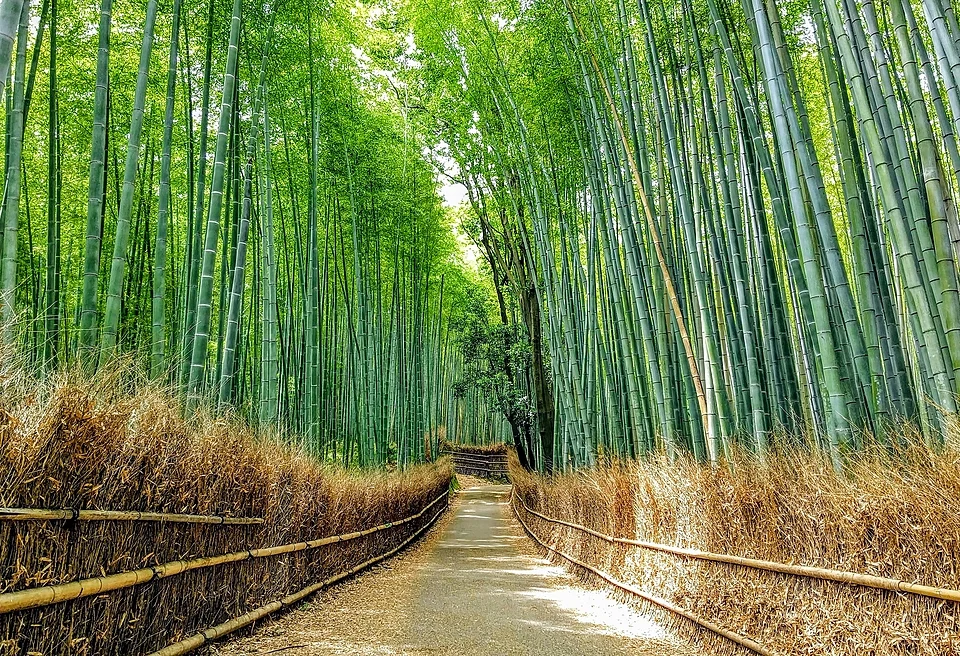
Growing tall on the outskirts of Kyoto, the Arashiyama Bamboo Grove, also called the Sagano Bamboo Forest, is a peaceful spot that is now often crowded with visitors. If you can get away from the camera shutters and chatter, you can hear one of Japan’s officially recognised soundscapes: the rustling, creaking and swaying of the bamboo. The grove was among the 100 Soundscapes of Japan chosen by the Ministry of the Environment in 1996.
The grove lies in the Sagano area of northwest Kyoto, close to Tenryū-ji temple. Trains on the JR Sagano Line reach Saga-Arashiyama Station from Kyoto Station in under 20 minutes, yet the bamboo path feels a world away from the busy city around it.
The bamboo stalks rise high above the path and lean in to form a canopy. When the wind blows through them, the rustling leaves, creaking stems and knocking trunks create a calm, almost meditative sound.
Togetsukyo Bridge
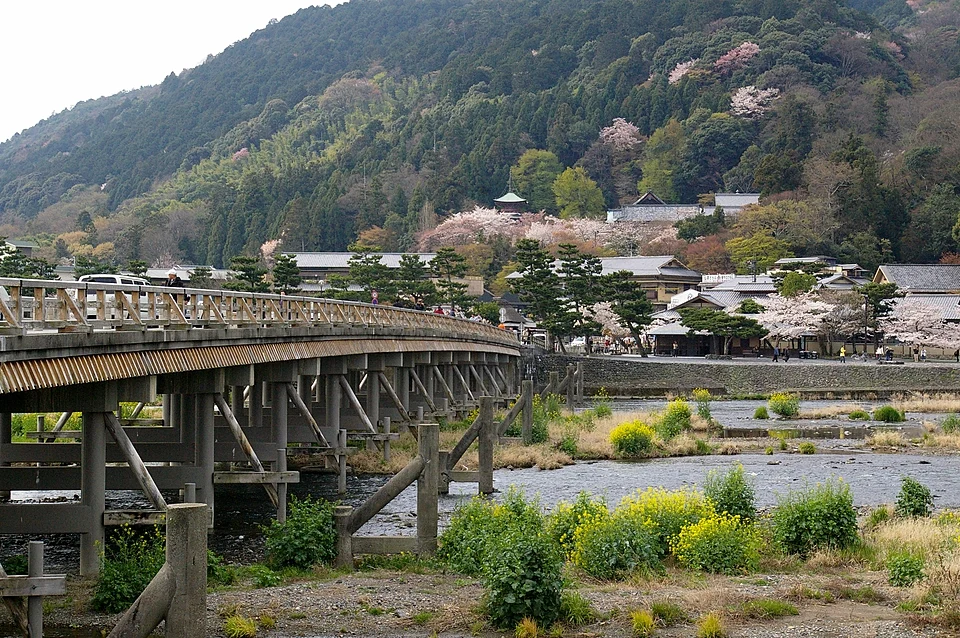
One of Kyoto’s most recognisable sights, Togetsukyo (渡月橋) is a 155 metre bridge across the Katsura River, which is called the Oi River along this stretch through Arashiyama. A bridge has stood here since 836. The current one was completed in 1934 with reinforced concrete piers and beams, and its cypress wood railings are the reason it still looks like a wooden bridge.
The name translates as “moon crossing bridge”. It is credited to Emperor Kameyama, who in the 13th century watched the full moon during a boating party on the river and remarked that it seemed to be crossing the bridge.
Togetsukyo has since become a lasting image in Japanese poetry and art, and the views around it live up to that reputation. Cherry blossom colours the hillside pink in spring, the maples turn fiery red in autumn, and when snow covers the peak in winter it looks like a scene from an ink landscape painting. It is a sight you will not want to miss in Arashiyama.








Matsuno’o-Taisha
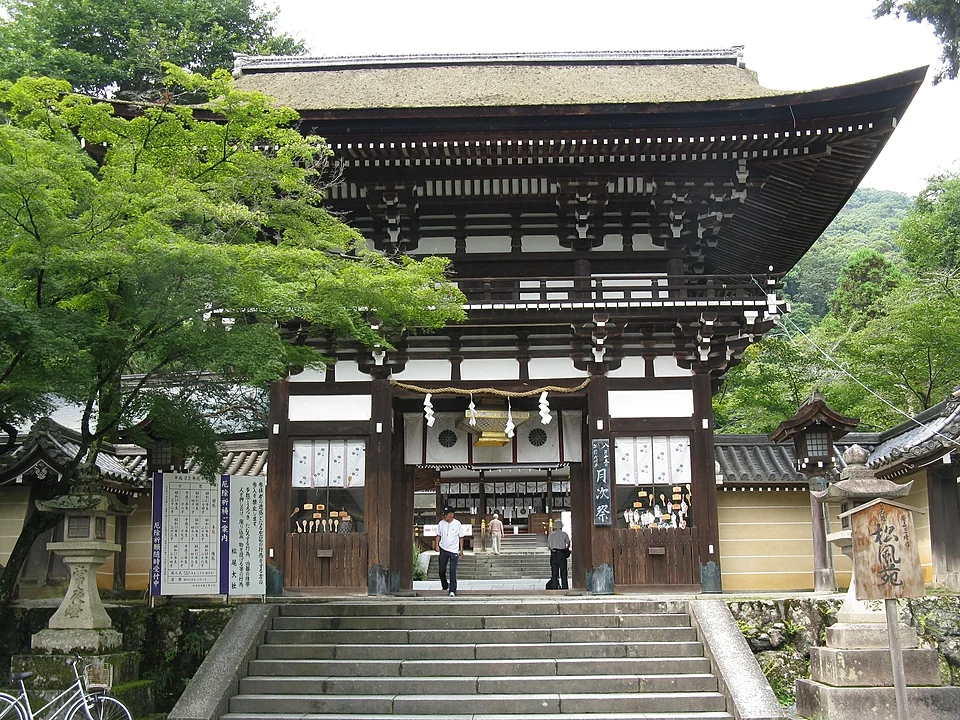
Matsuno’o Taisha was founded in 701 by the powerful Hata clan, almost a century before Kyoto became the capital in 794, which makes it one of the oldest Shinto shrines in the city. It sits a short distance south of central Arashiyama. Its main hall dates from the Ōei era (1394 to 1428) and was extensively restored in 1542. Having survived the fires that destroyed so many of Kyoto’s old wooden buildings, it is now an Important Cultural Property and one of the oldest buildings in the city.
The large grounds include a big torii gate at the entrance, a two-storey romon gate, a sacred waterfall and three gardens by the garden designer Shigemori Mirei, all completed in 1975 as his final work. A small statue hall between the gardens holds 21 sacred statues. The most important are three large Heian period wooden figures of the shrine’s deities, Ōyamakui no Kami, Ichikishimahime no Mikoto and Tsukiyomi no Mikoto, which are among the oldest and best-preserved Shinto statues in Japan.
Turtles appear all over the grounds, as they are regarded as messengers of Ōyamakui no Kami, the mountain god enshrined in the main hall. The Kame no I, or Tortoise Well, sits near the sacred waterfall. Sake and miso makers have long drawn water here when praying for success in business, and it is said that anyone who drinks from the well will enjoy a long and healthy life.