High in Kyoto’s eastern hills lies one of Japan’s most quietly powerful landmarks, Ginkaku-ji, the Silver Pavilion. Known officially as Jishō-ji Temple (慈照寺), this Zen temple is a mirror to Japan’s refined aesthetic values: restraint, balance, and the quiet beauty of impermanence.
Built during the Muromachi period, the Ginkaku-ji Temple is less a monument to grandeur than to philosophy. Visitors come not for spectacle but to sense wabi-sabi, the elegance of simplicity and the passing seasons reflected in moss, stone, and still water.
At a glance
A brief history of the Silver Pavilion

The history begins in 1482 when shogun Ashikaga Yoshimasa built a retirement villa at the foot of Kyoto’s eastern mountains. Inspired by his grandfather’s lavish Golden Pavilion (Kinkaku-ji), Yoshimasa envisioned a structure covered in silver leaf.
The silver never came. War and financial strain left the pavilion unfinished at his death, yet its bare wood and muted tones became something greater: the physical embodiment of restraint. Upon Yoshimasa’s passing, the villa was converted into a Zen temple, taking its place within the Shokoku-ji branch of Rinzai Buddhism.
Ginkaku-ji and its gilded sibling Kinkaku-ji embody two philosophies of beauty: one dazzling, one subdued. Today, the Silver Pavilion Temple endures not as a monument to opulence but to the Japanese appreciation of imperfection and simplicity.


Architecture and gardens
The heart of this temple is its understated two-storey pavilion. The lower floor, known as the Shinkuden, served as Yoshimasa’s study; the upper, Chōon-kaku, was designed for moon viewing. The roof’s curving lines evoke waves, and the absence of silver makes the pavilion appear naturally weathered, a deliberate expression of wabi-sabi.
Surrounding it are the famed gardens and architecture, carefully composed to reflect the seasons. The sand garden features the Ginshadan, a raked cone of white sand symbolising Mount Fuji, and a rippling terrace that glows under the moon. Beyond it lies the moss garden, lush with green textures, stepping stones, and reflective ponds.
The garden’s design follows Muromachi culture, merging art, architecture, and nature into seamless harmony. As you ascend the walking path, a gentle trail loops around the hill, offering panoramic views over Kyoto, particularly striking in spring and autumn.
Visiting today
Many travellers ask: can you go inside? The Silver Pavilion cannot be entered, as the interior is preserved, but the surrounding pathways and gardens provide more than enough space for contemplation and photography.
The grounds follow a single one-way route. The numbered list below matches the temple’s own precinct guide, in walking order from the main gate.
| No. | Japanese Name | Translation / English Name | Notes |
| 1 | 総門 (Sōmon) | Main Gate | The principal entrance to the temple grounds. |
| 2 | 銀閣寺垣 (Ginkaku-ji Gaki) | Ginkaku-ji Hedge/Wall | The distinctive hedge or wall along the path. |
| 3 | 中門 (Chūmon) | Middle Gate | An intermediate gate. |
| 4 | 庫裏・大玄関 (Kuri・Ōgenkan) | Priest’s Kitchen & Main Entrance Hall | The administrative and entrance buildings. |
| 5 | 書院 (Shoin) | Drawing Room / Study | A style of Japanese residential architecture. |
| 6 | 宝処関 (Hōshokan) | Hōshokan | A precinct building on the route between the Shoin and the Abbot’s Quarters. |
| 7 | 方丈 (Hōjō) | Abbot’s Quarters | The main residence of the head priest. |
| 8 | 東求堂 (Tōgū-dō) | Tōgū-dō Hall | A National Treasure; a small hall containing a private Buddha statue and a famous 4.5-mat room (Dōjinsai). |
| 9 | 弄清亭 (Rōseitei) | Rōseitei | A small building/room (often a tea room or rest area). |
| 10 | 銀沙灘 (Ginshadan) | Sea of Silver Sand | The massive, perfectly raked white sand garden. |
| 11 | 向月台 (Kōgetsudai) | Moon-Viewing Platform | The iconic conical pile of sand in the garden. |
| 12 | 八幡社 (Hachiman-sha) | Hachiman Shrine | A small shrine dedicated to the Shinto god of archery and war. |
| 13 | 観音殿 銀閣 (Kannonden Ginkaku) | Kannon Hall, the Silver Pavilion | The formal name for the Ginkaku (Silver Pavilion) itself, dedicated to Kannon (Goddess of Mercy). |
| 14 | 洗月泉 (Sengetsusen) | Moon-Washing Spring/Fountain | A feature in the garden. |
| 15 | 展望所 (Tenbōsho) | Observation Deck / Viewing Spot | A spot on the path offering a panoramic view. |
| 16 | 弁財天 (Benzaiten) | Benzaiten Shrine | A small shrine dedicated to the Buddhist goddess of music, literature, and water. |
| 17 | 漱蘚亭跡 (Sōsentei Ato) | Site of the Sōsen-tei Pavilion | The former location of a garden pavilion within the grounds. |
| 18 | お茶の井 (Ocha no I) | Tea Well | A well believed to have been used to draw water for tea ceremonies. |
Important Details
- Tickets are available on-site at the entrance.
- The map at the gate outlines the walking route through the moss gardens and around the pavilion.
- Arrive early or during quiet hours (8:30 to 10:00) to enjoy fewer crowds.
Photography enthusiasts will find ample inspiration here. The pond provides reflective symmetry, while the pavilion’s upper floor offers contrast between light and shade. For best results, a mid-range lens captures both architectural lines and textural detail.





Best seasons and atmosphere
During spring the garden is a vision of soft pinks as cherry trees bloom around the pond, while autumn transforms the hillside into deep reds and golds. The temple also offers rare winter clarity after snowfall, though icy mornings shorten visiting times.
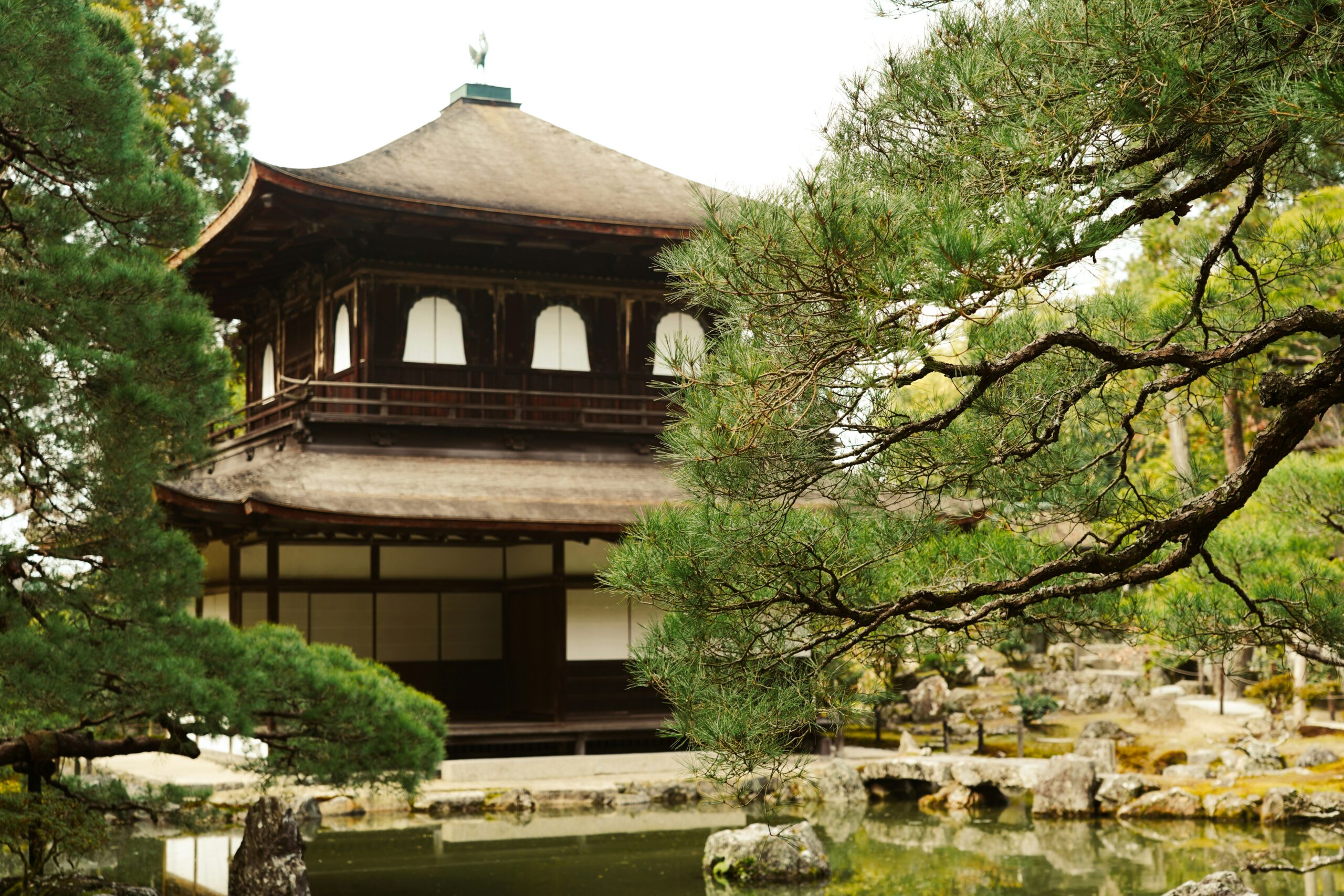
Each season has its charm, but autumn’s balance of weather and light makes it the best time to visit. The elevated trail provides a warm glow over Kyoto’s skyline as dusk falls, ideal for photos and quiet reflection.
Access and nearby attractions
For visitors wondering how to get to Ginkaku-ji, the temple sits at the northern end of Kyoto’s Philosopher’s Path, a scenic stone walkway lined with canals and cherry trees. From Kyoto Station, take bus 100 or 5 to the Ginkakuji-michi stop (around 40 minutes). Walking from Nanzen-ji via the Ginkaku-ji walking route takes roughly 30 minutes at an easy pace.
If you’re planning tours, local guides often combine it with Nanzen-ji Temple, Eikan-dō, and the Philosopher’s Path, offering insight into Zen aesthetics and garden symbolism.
For digital planners, the temple’s official site runs a live camera that refreshes every few minutes, so you can see the grounds as they are right now, while paper maps available at the gate include the Ginkaku-ji walking path and nearby tearooms.
Map of Ginkaku-ji: The Silver Pavilion and the Art of Stillness
Experiencing Ginkaku-ji’s essence
What makes Ginkaku-ji special is not grandeur but restraint. Every corner reveals thoughtfulness, the curve of a bridge, the silence of a corridor, the shimmer of water under a pine.
The architectural style reflects a time when art, tea, and poetry converged. It was here that Yoshimasa hosted early tea gatherings that shaped Japanese tea ceremony culture, blending elegance with humility. The result: a timeless lesson in aesthetics still guiding artists today.
Visitors often describe the temple as “alive with quiet”, where even footsteps seem to fade into the hum of cicadas. The moon viewing platform, once used by Yoshimasa himself, remains a symbolic place to appreciate the passing of time, the soul of Kyoto distilled into wood and stone.
Final reflections
To discover Ginkaku-ji is to glimpse Kyoto’s deeper character. This is not a temple of spectacle but of subtleties, a place that rewards stillness over speed. Among Kyoto’s many temples, the Silver Pavilion Temple stands as a meditation on imperfection and endurance.
If you walk the Philosopher’s Path, pause at Jishō-ji Temple, breathe in the scent of moss and cedar, and let the hush of the garden remind you why Kyoto remains Japan’s spiritual heart.