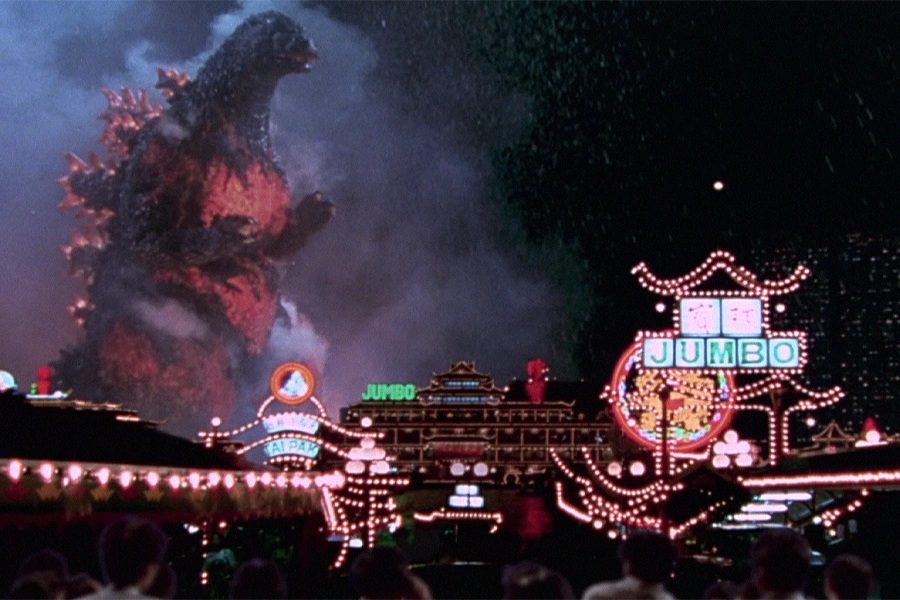
A monster movie (also known as The Kaijū Eiga) was a genre that many people would watch in the 1950s. Kaijū translates as “strange beast”, and eiga means film. One of the most famous monster movies that may have popped into your head was probably the Godzilla series. The first Godzilla film, produced by Toho Studios in 1954, soared its way through, bringing many people around the world to anticipate its upcoming movie.
A total of 32 monster films were produced by Toho Studios, Hollywood films, including books and various video games featuring Godzilla. Some of you may have even seen the recently released “Godzilla vs. Kong (2021)”.
Today we take a look at the image and perception of Godzilla during the Shōwa Era (1954-1975).
Evolution of Godzilla
Godzilla: The Iconic Monster
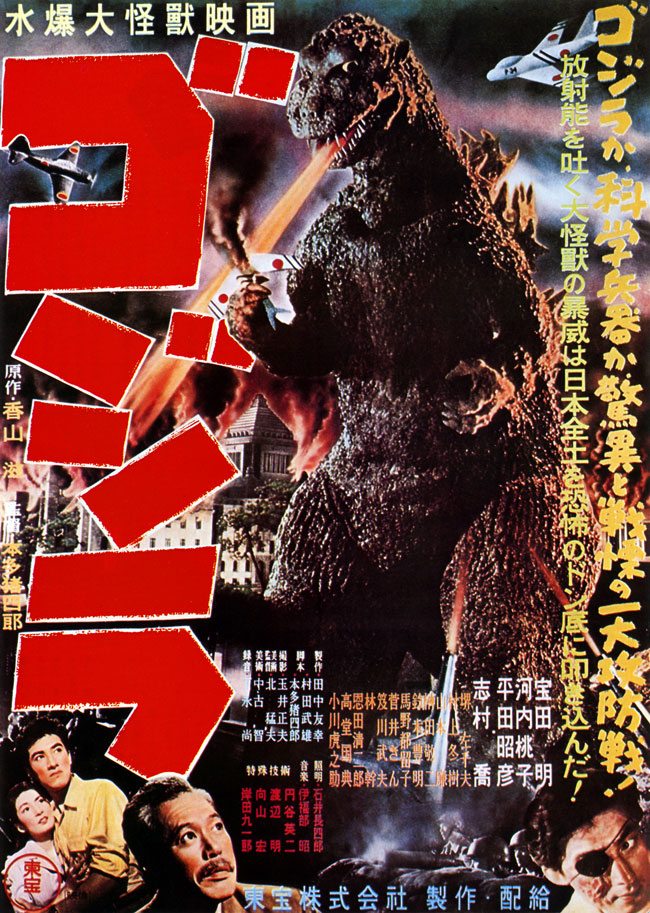
Gojira opened across Japan on 3 November 1954 and drew close to 9.7 million admissions, an enormous audience for a film people understood straight away as being about them. Ishiro Honda directed, Tomoyuki Tanaka produced, Akira Ifukube wrote the score, and Eiji Tsuburaya ran the special effects unit. Between them they built a monster that has outlasted almost every other creature in cinema.
How they built him mattered as much as what he stood for. American monster films of the period relied on stop motion animation, a painstaking frame by frame process that would have taken years to complete. Tsuburaya put a performer inside a suit instead and set him loose on meticulously detailed miniature sets, with high speed cameras capturing the destruction so that collapsing buildings read as vast rather than small. Haruo Nakajima wore the suit, with Katsumi Tezuka as second suit actor. The first version was built over a bamboo and wire frame, packed with metal mesh and cushioning and coated in latex, and weighed roughly 100 kilograms. It proved almost impossible to move in, and a lighter suit had to be made before filming could work properly. The technique later picked up the nickname suitmation, and it became the house style for Japanese monster films for decades.
Even the roar was handmade. Ifukube tried animal recordings first and none of them worked, so he loosened the strings on a double bass, rubbed a resin coated leather glove along them, and slowed the recording down.
The name was studio invention as well. Inuhiko Yomota records that it was made by fusing the English gorilla with kujira, the Japanese word for whale, and that Toho kept it strictly confidential through every stage of pre-production. The story underneath it came from Shigeru Kayama, a novelist who had built his pre-war reputation on detective thrillers and lurid adventure writing. Tomoyuki Tanaka had started with little more than an idea about an enormous creature rising from twenty thousand fathoms down, and it was Kayama who turned that into something filmable.
When the film reached America in 1956 as Godzilla, King of the Monsters!, Terry O. Morse cut it to 80 minutes and edited in Raymond Burr as an American reporter. A great deal of the atomic material went with those cuts, including the references to Nagasaki, the Bikini tests and contaminated tuna.



Where the Effects Came From
Eiji Tsuburaya was fifty three when he made Godzilla, and he had spent nearly thirty years working out how to film things that could not be filmed. Inuhiko Yomota traces the route he took to get there.
In 1926 Tsuburaya worked as a cameraman on Teinosuke Kinugasa’s A Page of Madness, one of the strangest and most ambitious experiments in Japanese silent cinema. He came away from it with a lasting taste for German Expressionist lighting, and the shadowed, low key look he favoured for the rest of his career starts there.
In 1937 he ran the effects on New Earth, released in Germany as Die Tochter des Samurai, a co-production made with Nazi Germany. It was the film on which he first pulled off optical techniques that had not been attempted in Japan before, and it made his name.
Then in 1942 he staged the attack on Pearl Harbor for The War at Sea from Hawaii to Malaya. There was no location to shoot and no usable footage of the raid. He built the harbour as a miniature on a studio set, and the sequences drew particular praise. His reputation for reproducing the South Seas inside a studio was made there, and it followed him: Josef von Sternberg brought him in on The Saga of Anatahan, shot in Japan in 1953, the year before Godzilla.
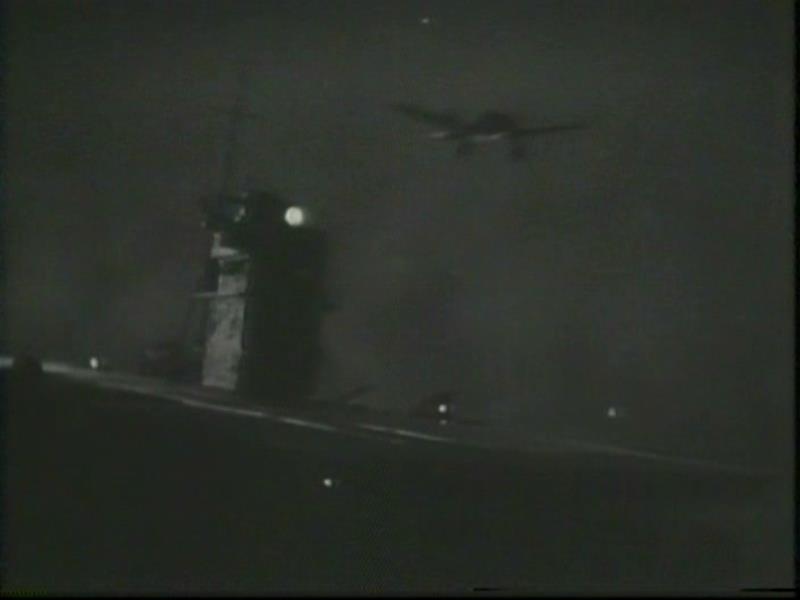
So when he built a miniature Tokyo in 1954 and sent a man in a suit through it, he was working from twelve years of practice. He had already built a miniature Pearl Harbor and destroyed it on camera. In large part the Godzilla effects unit was a wartime effects unit that had changed subject.
Ishiro Honda’s route ran alongside it. He was born in 1910, the same year as Akira Kurosawa, and the two of them worked as assistant directors to Kajiro Yamamoto in the same period and stayed friends for the rest of their lives. Toho was the studio most closely tied to the military and turned out more propaganda features than any other during the war, and Honda’s own commitments to that effort held his directing debut back until 1949.
Much of the rest of the crew, the director of photography and art director among them, came off Mikio Naruse’s unit, and Ifukube had written scores for Naruse as well. Toho handed its monster picture to the people who made its serious films, which tells you a good deal about how the studio saw it.
The Shift in Perspective of the Godzilla in Shōwa Era films
Monster Stereotype: A Fearsome Kaijū

The first-ever original Kaijū film, Godzilla (1954), was directed by Ishiro Honda. The film depicted symbolic tragedies in the 1950s that would still be clear and vivid in the minds of the Japanese.
It begins with an apparent tribute to the Lucky Dragon 5 incident, where a fishing boat in Japan was hit by a nuclear fallout contaminating the crews with radiation illnesses.
Godzilla was seen as a sea monster that would be the reason why fishermen would have days where they would not catch enough fish for the day. In earlier times, it was believed that local young girls were sacrificed to satisfy the monster.
Honda created Godzilla as a catastrophic sea monster manifested from the atomic bombings of Hiroshima and Nagasaki. Godzilla was a living nightmare that was born out of the nuclear attacks committed by America on Japan during WW2.
The city of Tokyo that the creature repeatedly attacked displayed the horror, pain, and agony the Japanese population was left and scarred with.
No wonder the viewers felt no remorse for the death of Godzilla! In the first two films of this franchise series, Godzilla was often a villain on a rampage that brought back terror to the people in Japan.
The Transition to Comedy
In 1962, Godzilla hit a starting point where its monstrous behaviour was toned down in the third movie King Kong vs. Godzilla. In hopes to expand the audience of Godzilla, Eiji Tsuburaya, the special effects director, took the whole series of Godzilla in a lighter direction.
Removing the heaviness and dark atmosphere of Godzilla, many comedic scenes were added. Other crews of the film were taken aback by some of the actions. I mean, have you ever seen two giant beasts volleying a giant boulder?
To capture goofy moments of Godzilla and King Kong, special effects of slow-motion were used on the big screen.

Unfortunately, many criticised the loss of the serious tone and sentiment the original movie had. But this did not stop Toho Studios to continue its comedic trend onto the rest of the Shōwa Era series. Godzilla and other monsters featured exhibited more human-like silly traits that would attract and entertain younger children.
The Turning Point: Antagonist, Defender & Friend

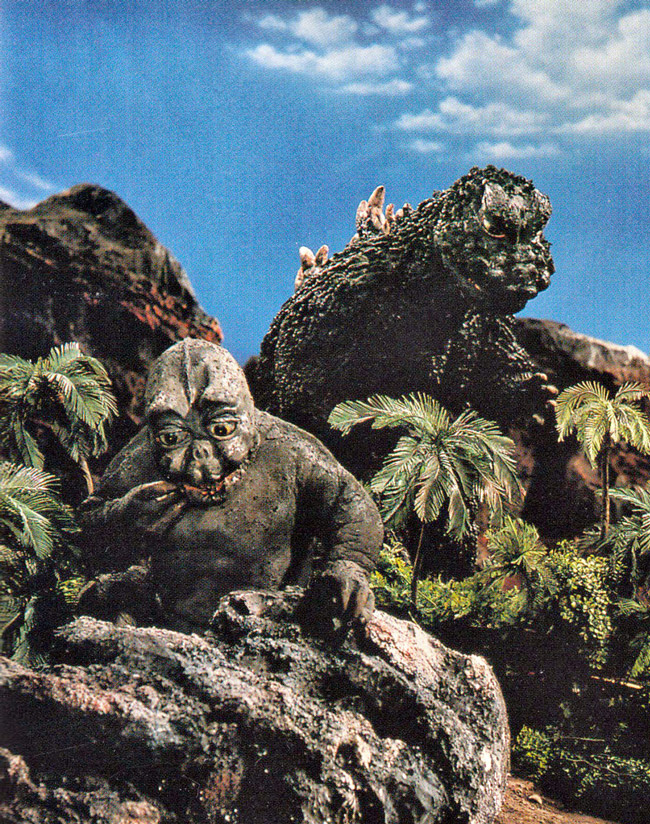
All Monsters Attack (1969), the following Toho Studios picture, had the lowest rating of all the Showa Era films. Despite this, the video appealed to children who had been bullied in some way. The film is told through the imagination of the juvenile protagonist, Ichiro, who journeys to Monster Island and encounters Minilla, Godzilla’s offspring.
Here, he realises that Minilla is being bullied by a monster group. They work together to inspire young people to fight and conquer adversity.
Other films of Ishiro Honda featuring Kaijū
If you’re a Kaijū movie enthusiast, here are a few other films Ishiro Honda directed that you might want to check out next!
Rodan (1956)
Rodan is a 1956 Kaijū film showing the romantic side of two monsters. Here we get a glimpse of a similar vibe from the classic love story of Romeo and Juliet.
The tragedy of how one of the monsters dies from a volcanic eruption and the unwillingness of its lover to live without them chooses to kill itself.
Varan (1958)
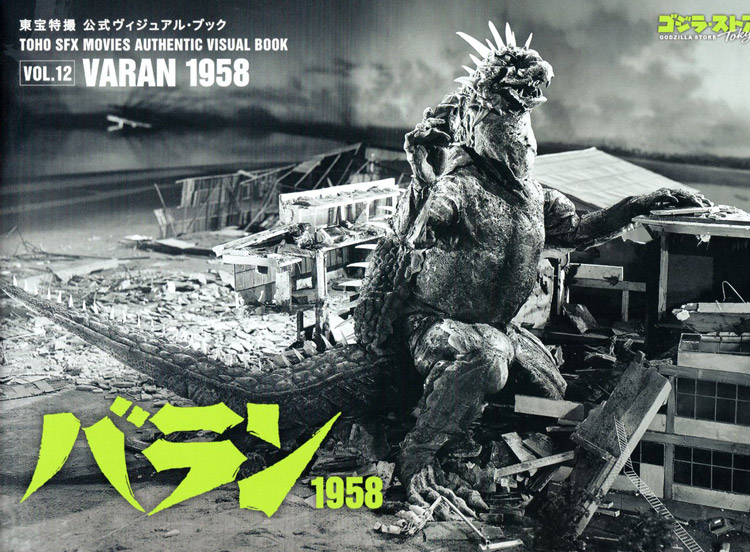
Do you want something more powerful and indestructible than Godzilla? Then Varan is the one for you. Varan was the last black and white kaijū film Toho made.
The monster goes berserk over the whole of Japan, wiping whatever human or building that is in it’s way. Will this be the end of Japan? Watch now!
The War of the Gargantuas (1966)

The War of the Gargantuas is based on the sons of Frankenstein’s monster who were raised differently. Sandra grew up with loving and heartwarming humans but Giara was raised in the wild forest with other animals.
There will be a time when the two sibling monsters are tested on their love for each other. How long can Giara control and resist himself living like one of the humans? Watch if you want to find out how it will go!








References:
Inuhiko Yomota, “The Menace from the South Seas: Honda Ishirō’s Godzilla”, in Alastair Phillips and Julian Stringer (eds), “Japanese Cinema: Texts and Contexts”, Routledge, 2007.