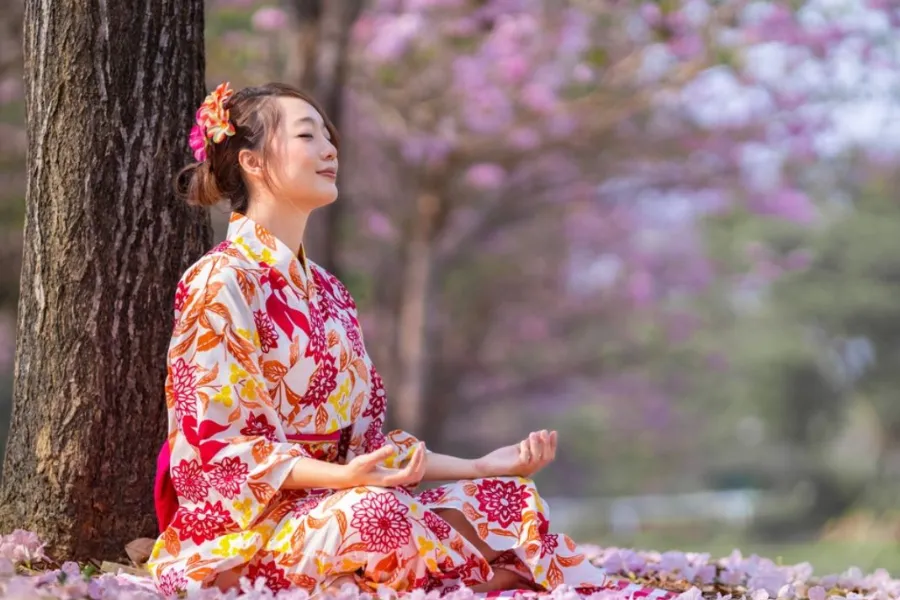
Japanese zen gardens, an embodiment of tranquillity and aesthetic elegance, hold a significant place in Japan’s cultural and spiritual landscape. These carefully designed spaces are more than just picturesque scenes, as they are a manifestation of harmony, reflection, and a deep-rooted connection with nature.
History and Philosophical Roots
Key Elements of Japanese Garden Design
Japanese Gardens as Cultural Symbols
Cultural Symbolism in Contemporary Contexts
History and Philosophical Roots
Japanese gardens date back to the Asuka period (593 to 710), when the first pond gardens with islands were built. The Zen dry garden, or karesansui, came much later, taking shape in Zen temples during the Muromachi period (1336 to 1573). Both evolved from Chinese landscape gardening, adapted to Japan’s unique aesthetics and religious beliefs. Moreover influenced by Zen Buddhism and Shintoism, these gardens represent spaces for spiritual reflection and connection with nature.

Image Credit: Shutterstock
Zen Buddhism’s Influence
Zen Buddhism’s focus on meditation has led to gardens that are minimalist and introspective. Elements like meticulously arranged rocks, pruned trees, and flowing water are not merely decorative but serve as symbols for life and nature, promoting mindfulness and inner peace.
Shintoism’s Sacred Connection
Shintoism, integral to Japan’s spiritual identity, emphasizes the sacredness of nature. In gardens, this is reflected in the thoughtful placement of natural elements, creating a balance and inviting visitors to connect with nature’s spiritual essence.
Famous Zen Gardens in Kyoto: Tenryū-ji, Saihō-ji, Ryōan-ji and Ginkaku-ji
Many of the best-known Japanese zen gardens are in Kyoto and are linked to a small group of monks and designers. The Zen master Musō Soseki (1275 to 1351), founding abbot of Tenryū-ji in Arashiyama, created its Sōgenchi pond garden, the first Zen garden in Japan to be designated a Place of Special Scenic Beauty. He is also credited with remaking the garden at Saihō-ji, now known as the moss temple, in 1339.
Ryōan-ji holds Japan’s best-known karesansui, fifteen rocks set in a rectangle of raked white gravel. It is usually dated to the late fifteenth century, although its present form may be later, and nobody knows for certain who designed it. Suggestions range from anonymous Zen priests to the painter Sōami, and the names of two garden workers, Kotarō and Seijirō, are carved on one of the stones.
Tradition also credits Sōami with the garden at Ginkaku-ji, the Silver Pavilion, which the shogun Ashikaga Yoshimasa began building as his retirement villa in 1482. Stewart Dick repeated this attribution in Arts and Crafts of Old Japan (1904), but it remains a traditional claim that cannot be proved. Ginkaku-ji’s most photographed features came later. The flat bed of raked white sand called the Ginshadan, or sea of silver sand, and the tall flat-topped cone of sand beside it, the Kōgetsudai or platform facing the moon, date from the mid Edo period or later.
Key Elements of Japanese Garden Design

Image Credit: Byfood
The serene beauty of Japanese zen garden is a result of several key elements working in harmony. Each component, from koi ponds to rock formations, is not just a design choice but a reflection of philosophical concepts. Here, we explore these elements and their significance in crafting a tranquil garden space.
Koi Ponds: Symbolism of Life
More than ornamental, koi ponds in Japanese gardens symbolize life and connection to nature. The koi, with their vibrant hues and movements, evoke calmness and continuity, while lily pads and lotus flowers add spiritual significance, representing purity in Buddhism.

Image Credit: Dreamstime
Rock Formations: Nature’s Endurance
Essential to the garden’s structure, rocks symbolize nature’s endurance, often representing mountains and islands. Their thoughtful placement in terms of size, texture, and shape contributes to the garden’s naturalistic feel. In Japanese zen garden, rocks take on abstract meanings, symbolizing elements like water and philosophical concepts in karesansui or dry rock gardens.
Garden makers traditionally gave individual stones names and jobs. Florence Du Cane, in The Flowers and Gardens of Japan (1908), describes three stones treated as essential to every garden. The Guardian Stone is the most important stone in the middle distance, the Stone of Worship is a broad flat stone at the front from which the best view of the garden is had, and the Stone of the Two Deities completes the group. Island stones followed set patterns too, such as the Elysian Isle, built from stones arranged to suggest a tortoise with a trained pine growing from its back. Stewart Dick’s Arts and Crafts of Old Japan (1904) calls rocks the bones of the garden and records that a large garden could hold 138 named stones, each with its own purpose. These names come from traditional garden lore as recorded by Western writers around 1900.
Manicured Trees: Nature’s Imperfect Beauty
Trees like maples, pines, and cherry blossoms, selected for their seasonal beauty, longevity, and symbolism, are pruned to highlight nature’s imperfect beauty. Therefore the practice of bonsai, cultivating miniaturized trees, reflects a deep appreciation for nature’s intricacies and the virtue of patience.
Winding Pathways: Contemplative Exploration
Designed in a zig-zag manner, these pathways encourage contemplative exploration, offering varied perspectives of the garden. Moreover, they are made from materials like stepping stones or gravel, they enhance mindfulness, guiding visitors to stay present as they journey through the garden.
The Roji: Japanese Tea Garden Paths
The Japanese tea garden, or roji, is a garden path with a single job. Okakura Kakuzō’s The Book of Tea (1906) describes it as the path from the waiting shelter to the tea room, meant to cut guests off from the outside world before they reach the tea. He pictures irregular stepping stones over dried pine needles, moss-covered stone lanterns and the shade of evergreens, and notes that each tea master sought a different mood, with Sen no Rikyū aiming for utter loneliness. Okakura also retells a story of Rikyū watching his son sweep and water the roji. When the path was spotless, Rikyū shook a tree so that a few autumn leaves fell across it, because he wanted the path to look natural as well as clean.

Image Credit: Pixabay


Japanese Zen Gardens as Cultural Symbols
The appreciation of impermanence (wabi-sabi) and the pursuit of harmony (wa) are central themes reflected in Japanese gardens, echoing broader cultural attitudes. Moreover, here you can find a list of the best Japanese Gardens to visit in London.
Wabi-Sabi: Embracing Impermanence and Imperfection
This principle of Wabi Sabi, finding beauty in what is impermanent and imperfect, shapes Japanese gardens. Their asymmetrical layouts, weathered materials, and alignment with seasonal changes demonstrate this. Moreover, these gardens evolve, reflecting the natural cycle and teaching the appreciation of life’s transient beauty, a key aspect of Japanese culture.

Image Credit: Delicure
Wa: The Pursuit of Harmony
Harmony, central to Japanese garden design, involves balancing natural elements like water, rocks, and plants, and integrating the Japanese zen garden with its environment. Moreover, this mirrors a broader cultural focus on harmony in social and cultural practices, emphasizing balance and cohesion in society.
Cultural Symbolism in Contemporary Contexts

Image Credit: Zen Fusion Home
This cultural appreciation for balance and harmony extends into contemporary digital expressions, including entertainment platforms like online casino games, where Japanese aesthetics and themes are often incorporated to create immersive experiences. Therefore, in user interface designs of apps and software, there’s an influence of Japanese minimalism and functionality. Video games, too, often incorporate Japanese themes, blending traditional visuals with interactive storytelling.
Moreover, the principles of wabi-sabi and wa find new forms in these digital realms. The elegance and balance in the design of these games. Therefore, the seamless integration of traditional and modern elements reflects a continuity of these age-old cultural values.
Sources and Further Reading
- Florence Du Cane, The Flowers and Gardens of Japan (1908)
- Stewart Dick, Arts and Crafts of Old Japan (1904)
- Okakura Kakuzō, The Book of Tea (1906)