Setsubun is the Japanese bean-throwing festival held the day before the traditional first day of spring, and in 2027 it falls on Wednesday 3 February. Families throw roasted soybeans out of the door shouting “Oni wa soto, fuku wa uchi” (“Demons out, good luck in”), then eat an ehomaki sushi roll facing the year’s lucky direction, which for 2027 is north-northwest.
This guide explains each custom and where it comes from, gives the 2027 calendar for the big temple and shrine festivals in Tokyo, Narita and Kyoto, and shows how to mark Setsubun at home in the UK.
Setsubun 2027 at a glance
Date: Wednesday 3 February 2027. First day of spring (risshun): Thursday 4 February. Lucky direction for ehomaki: north-northwest. Public holiday: no; shops, offices and sights run as normal. The chant: “Oni wa soto, fuku wa uchi” (鬼は外、福は内).
Setsubun Customs, Food and Temple Festivals
Setsubun 2027 Falls on Wednesday 3 February
Setsubun (節分) means “seasonal division”. It once marked the eve of all four seasons, and only the eve of spring kept the name. Its date follows risshun, the first day of spring in the old solar calendar, which begins when the sun reaches 315 degrees of longitude. The National Astronomical Observatory of Japan’s almanac for 2027 puts risshun on Thursday 4 February at 10.46am Japan time, so Setsubun is Wednesday 3 February.
The date usually lands on 3 February, but it can move. In 2021 Setsubun fell on 2 February for the first time since 1897, the observatory noted, because risshun arrived a day early that year. Setsubun is not a public holiday: it is missing from the Cabinet Office’s list of 2027 national holidays, so trains, shops and museums keep normal hours while temples and shrines hold their ceremonies.

Setsubun 2027 Calendar: Tokyo, Narita and Kyoto
We compiled this calendar from each temple’s or shrine’s own pages and the official tourism sites. Where the 2027 programme is not out yet, the times shown are from 2026 and usually repeat.
| Date in 2027 | Day | Where | What happens |
|---|---|---|---|
| 2 to 4 February | Tuesday to Thursday | Yoshida Shrine, Kyoto | Setsubun-sai over three days, with about 800 stalls on the 2nd and 3rd; tsuina-shiki demon chasing on the 2nd; Karo-sai fire for old charms on the 3rd |
| 2 and 3 February | Tuesday and Wednesday | Mibu-dera, Kyoto | Free performances of the masked Mibu kyogen play “Setsubun”, on the hour from 5pm to 8pm (2024 times) |
| 3 February | Wednesday | Senso-ji, Asakusa, Tokyo | Processions at about 11.30am and 1.30pm, bean throwing and the Fukuju no Mai dance; bean throwing by Asakusa entertainers from about 4pm (2026 times) |
| 3 February | Wednesday | Naritasan Shinshoji, Chiba | Bean throwing by sumo wrestlers and NHK historical drama actors at 11am, 1.30pm and 4pm (2026 times) |
| 3 February | Wednesday | Kitano Tenmangu and Rozan-ji, Kyoto | Kitano tsuina kyogen at 1pm, then dance by Kamishichiken maiko and geiko; the oni dance at Rozan-ji from 3pm (2024 times) |
| 3 February | Wednesday | Homes across Japan | Mamemaki bean throwing; ehomaki eaten facing north-northwest |
| 4 February | Thursday | Nationwide | Risshun, the first day of spring in the old calendar, at 10.46am |
Mamemaki: Roasted Soybeans and “Oni wa Soto, Fuku wa Uchi”
Mamemaki (豆まき), bean scattering, is the heart of Setsubun. The head of the household throws roasted soybeans out of the front door and around the rooms, calling “Oni wa soto!” as the beans go out and “Fuku wa uchi!” as they are thrown inside. The demons being chased out are oni, the horned ogres of Japanese folklore, which in the old belief stood for winter and the illnesses that came with it. The roasted beans sold for the purpose are called fuku-mame, lucky beans.
Afterwards people eat some of the beans for health in the year ahead, counting them by age. Helen Gunsaulus, writing in 1923, recorded that in some regions people counted out their age plus one, wrapped the beans with a coin in paper rubbed over the body, and threw the packet away at a crossroads to get rid of bad luck.
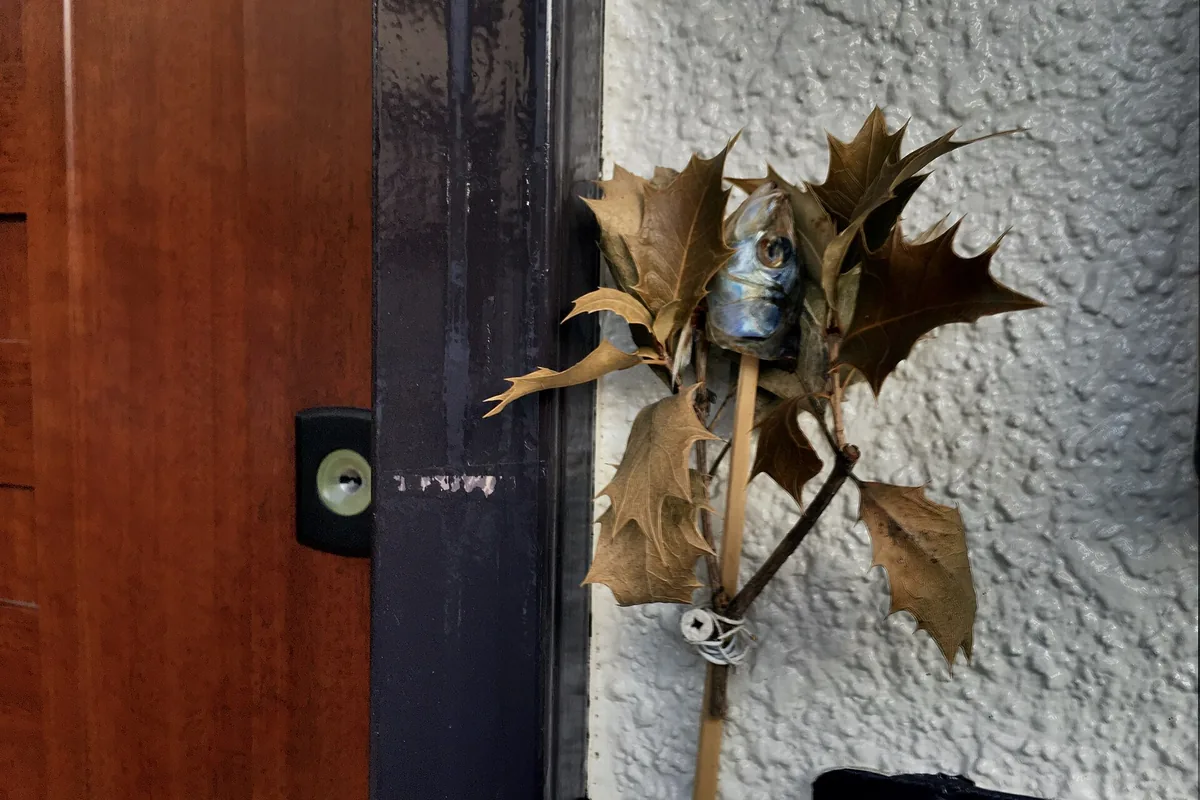
The last step is a charm to stop the demons coming back: a sprig of holly with a grilled sardine’s head pushed onto it, called hiiragi iwashi (柊鰯), fixed beside the front door. Gunsaulus wrote that the prickly holly keeps demons from re-entering the house, while Hearn found that nobody in Matsue could tell him why demons feared the holly leaf and the fish’s head.
Ehomaki in 2027: Eat the Roll Facing North-Northwest
Ehomaki (恵方巻) is a thick, uncut sushi roll eaten on the night of Setsubun. The custom is to face the year’s ehō, the direction of Toshitokujin, the god who governs the year’s good fortune, and eat the whole roll in silence while making a wish. Each person eats a roll of their own, and it is never cut, because cutting it suggests cutting your ties.
The direction is set by the year’s heavenly stem, one of the ten signs of the traditional Chinese calendar, and only four directions are ever used. The Japanese customs writer Miura Yasuko gives a shortcut by the last digit of the year: years ending in 2 or 7 face north-northwest. 2027 is a year of the stem hinoto, so the 2027 ehō is north-northwest, strictly “north-northwest by north” at 345 degrees. Open a compass app, turn until it reads 345, and start eating.
| Year | Last digit | Heavenly stem | Ehomaki direction |
|---|---|---|---|
| 2027 | 7 | Hinoto (丁) | North-northwest (345 degrees) |
| 2028 | 8 | Tsuchinoe (戊) | South-southeast (165 degrees) |
| 2029 | 9 | Tsuchinoto (己) | East-northeast (75 degrees) |
| 2030 | 0 | Kanoe (庚) | West-southwest (255 degrees) |
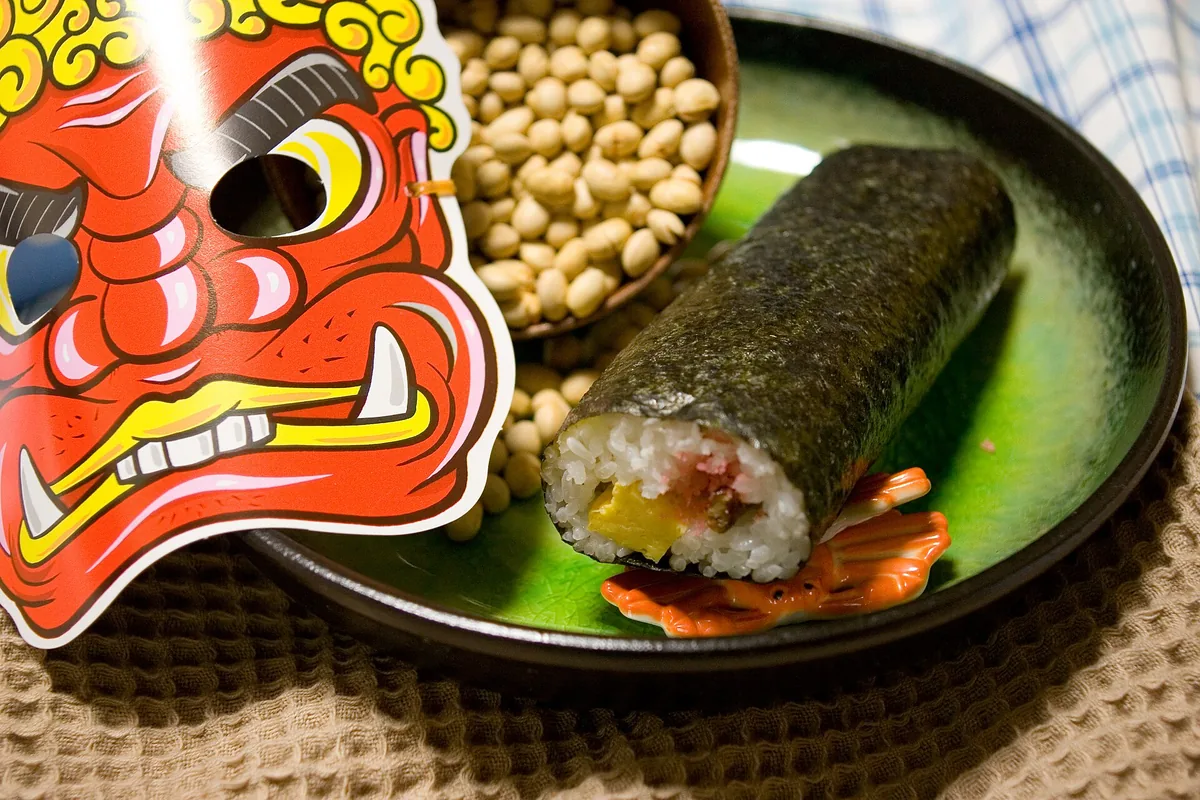
The roll is younger than the beans. A 2017 study by the Religious Information Research Center in Tokyo notes the theory that merchants in Osaka’s Senba district ate sushi rolls at Setsubun in the late Edo period to pray for good business, while the origin is not certain. The rolls went by local names such as marukaburi-zushi, “bite-it-whole sushi”, until 7-Eleven Japan began selling them nationwide as ehomaki in 1998, which the study treats as the start of the custom spreading across the country.
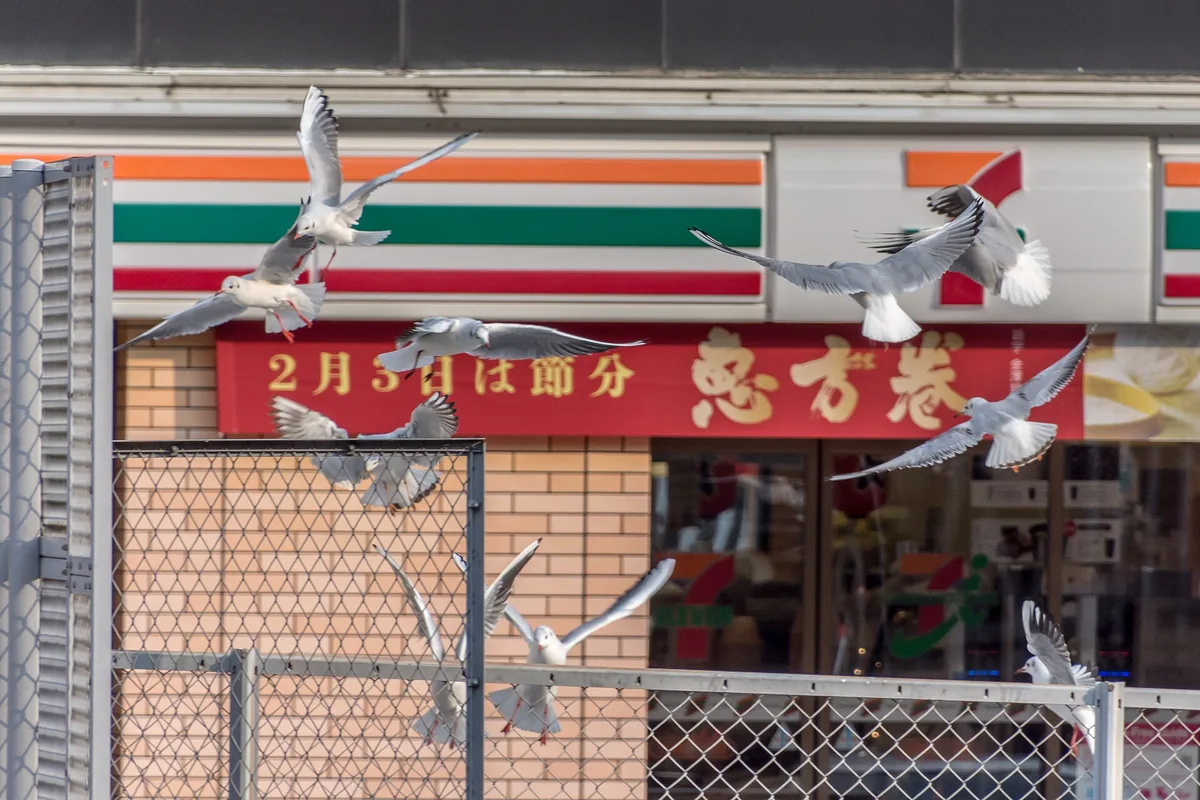
Shops now make so many that leftovers became a problem. Since January 2019 the Ministry of Agriculture, Forestry and Fisheries has asked food retailers each season to make ehomaki in line with demand and to take pre-orders, so in Japan it pays to reserve yours at a convenience store or supermarket a week or two ahead.

From the Heian Court’s Tsuina to Hearn’s Matsue
Bean throwing grew out of tsuina (追儺), a demon-expelling rite of the Heian imperial court. In it an exorcist called the hōsōshi, wearing a gold mask with four eyes and carrying a spear and shield, chases the demons away. Yoshida Shrine in Kyoto still performs it in the form handed down from the Heian court, with red, blue and yellow demons for the hōsōshi to drive out.
Under the old lunar calendar Setsubun fell close to New Year, and Gunsaulus noted that the demon chasing, which she called oniyarai, had once opened the New Year celebrations before becoming a festival of its own. Our guide to New Year traditions in Japan covers the January customs that come before Setsubun, ending with the dondo-yaki bonfire for the decorations around 15 January.
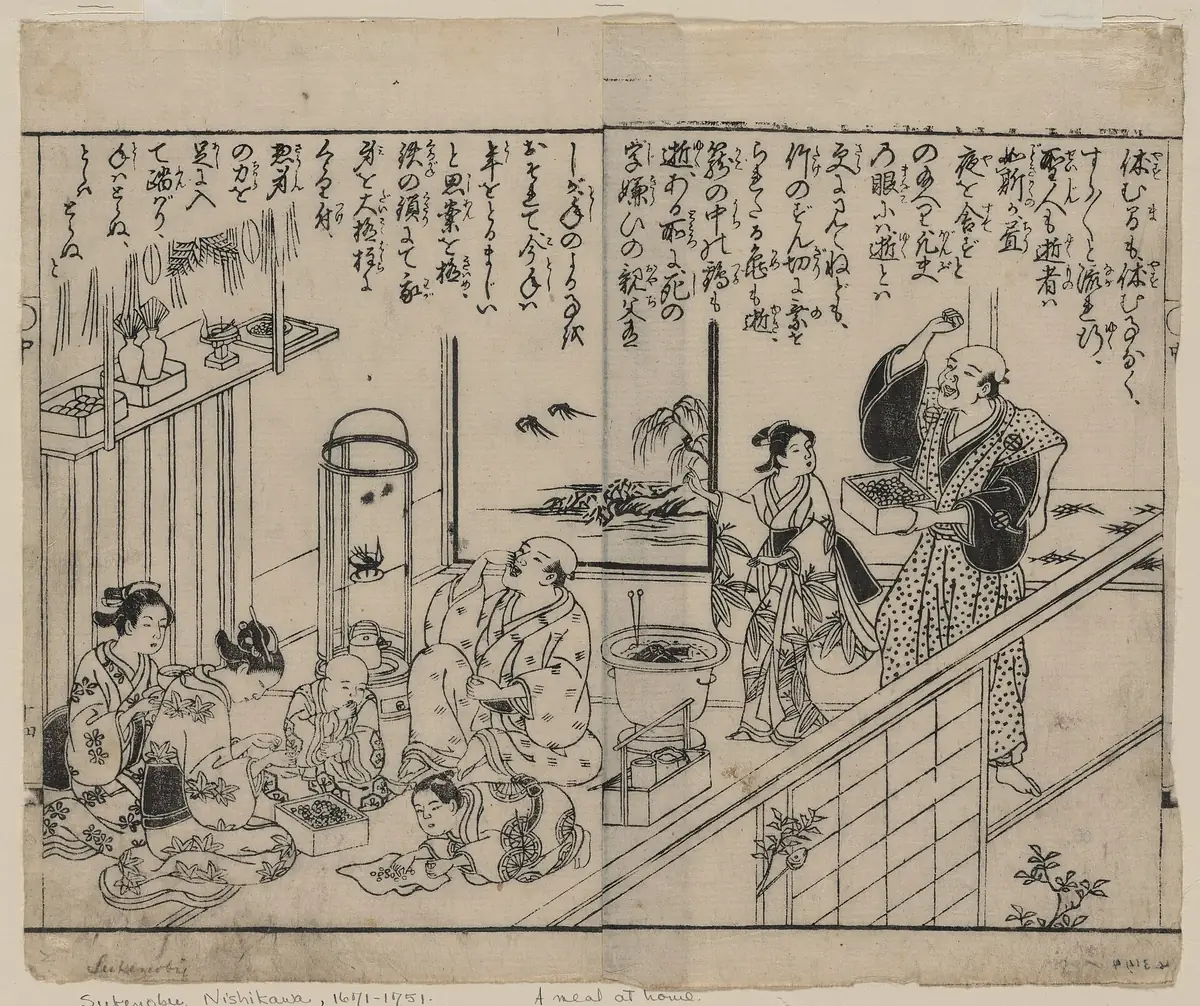
Lafcadio Hearn watched Setsubun in Matsue in the early 1890s and described a professional “caster-out of devils” who walked the streets after dark rattling a Buddhist staff and calling “Oni wa soto! Fuku wa uchi!” For a small fee he recited a sutra in your house and threw dried beans in four directions. Hearn added that the swept-up beans were kept until the first clap of spring thunder, when some were cooked and eaten, and confessed in Glimpses of Unfamiliar Japan (1894) that he could not find out why demons disliked peas, though he sympathised with the demons.
Setsubun at Senso-ji, Naritasan and Yoshida Shrine
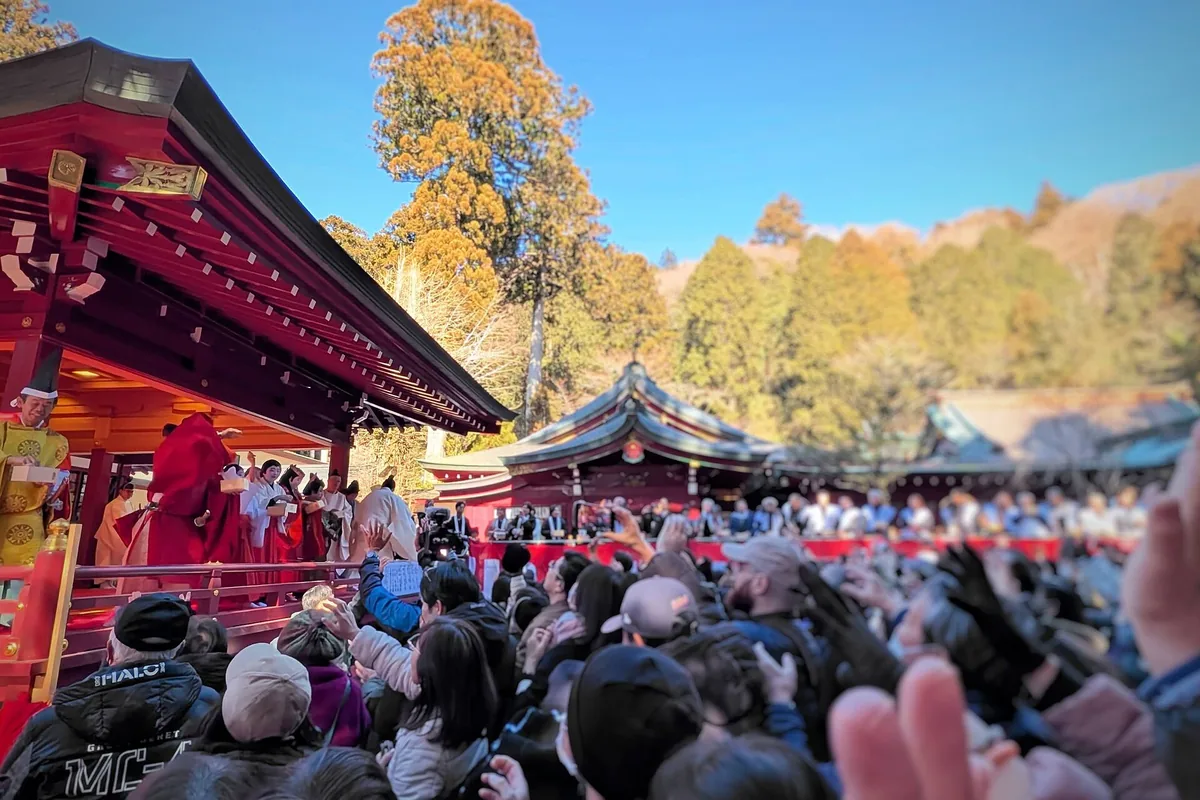
Temples and shrines across Japan hold public bean throwing, and the large ones invite sumo wrestlers, actors and other people born in that year’s zodiac sign to throw from a stage. Beans rain down on the crowd, so bring a bag and arrive early.
Senso-ji, Asakusa: Lucky Beans and No Demons
Senso-ji holds its Setsubun-e on 3 February. The crowd at Senso-ji calls “Senshū banzai, fuku wa uchi” (“A thousand autumns, ten thousand years, good luck in”) and never “Oni wa soto”, because, GO TOKYO explains, no demons can exist in the presence of Kannon, the bodhisattva of compassion enshrined there. In 2026 processions set off at about 11.30am and 1.30pm, the bean throwing was followed by the Fukuju no Mai, also called the dance of the Seven Lucky Gods, and entertainers with ties to Asakusa threw beans from about 4pm, the busiest session of the day. Asakusa Station on the Ginza and Asakusa lines is about five minutes’ walk away. Our guide to Taito City, Senso-ji’s home district covers the rest of the neighbourhood.
Naritasan Shinshoji: Sumo Wrestlers and Drama Stars
Naritasan, the great temple of the fierce Buddhist guardian Fudō Myōō in Narita, near Narita Airport, is known for its celebrity bean throwing. Its own events calendar says sumo wrestlers and actors from NHK’s year-long historical drama throw the beans. The Chiba Prefectural Tourism Association listed the 2026 special bean-throwing ceremonies at 11am, 1.30pm and 4pm on 3 February, with three further sessions open to anyone who paid a 10,000 yen participation fee. Here too only “Fuku wa uchi” is called: the tourism association explains that before Fudō Myōō even demons are moved by his great compassion to mend their ways. Keisei Narita and JR Narita stations are about ten minutes’ walk away.
Yoshida Shrine, Kyoto: Three Days and 800 Stalls
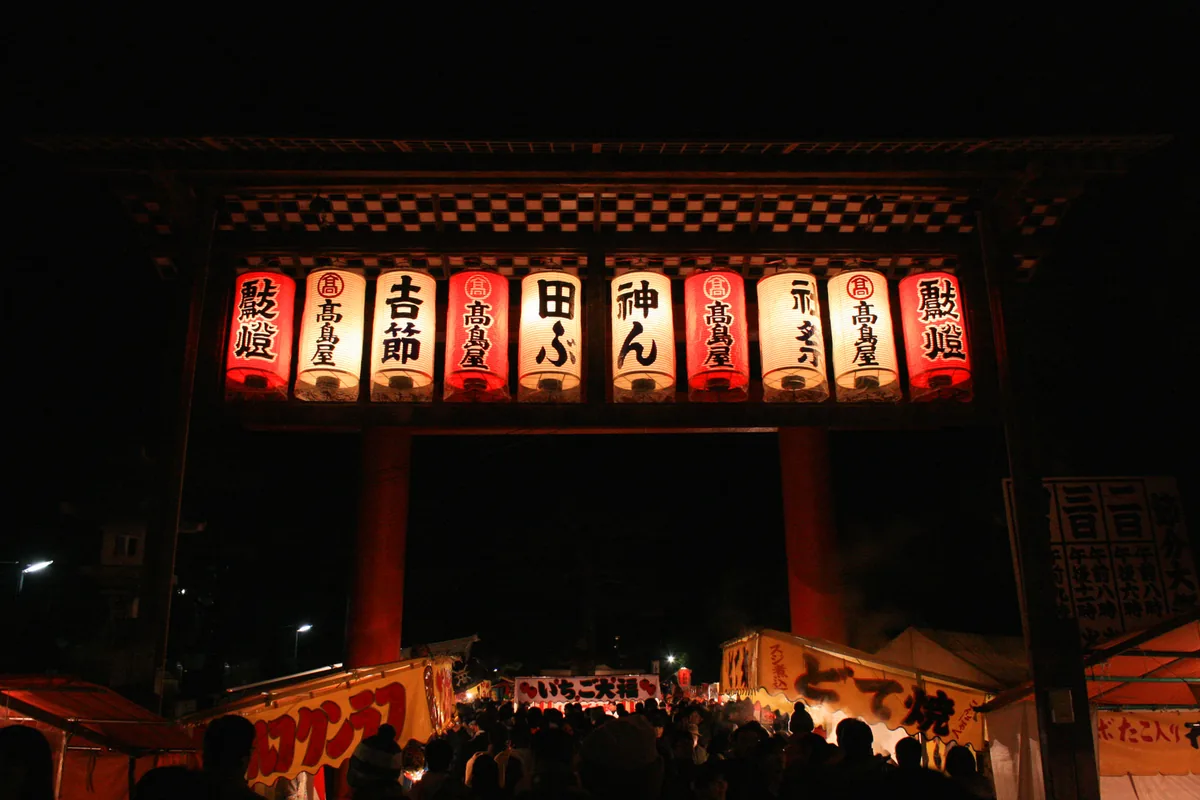
Yoshida Shrine in Kyoto’s Sakyo ward holds its Setsubun festival over the three days around the date. The shrine says about 500,000 people come each year and about 800 stalls line the approach on the 2nd and 3rd. On the 2nd the tsuina-shiki brings out the masked hōsōshi described above, and on the 3rd old charms and talismans are burned in the Karo-sai, a fire pit five metres across and five metres high in front of the main shrine. Bags of lucky beans with a lottery ticket attached cost 300 yen in 2024.
Maiko, Kyogen and Oni Dances Elsewhere in Kyoto
Beyond Yoshida, Kyoto has a full Setsubun programme, and several events are free. At Yasaka Shrine in Gion, geiko and maiko throw the beans and perform dances. Mibu-dera stages its masked Mibu kyogen play “Setsubun” without charge every hour in the evening. Rozan-ji holds an oni dance in which red, blue and black demons, standing for three human failings, are driven out, and at Kitano Tenmangu the Shigeyama Sengoro kyogen company performs the Kitano tsuina kyogen before Kamishichiken’s maiko and geiko dance. For more on what is on that month, see our guide to festivals and events in Japan in February.
Marking Setsubun at Home in the UK
Setsubun is easy to bring home. For mamemaki, roast dried soybeans in a dry pan until they crack and brown, let them cool, and throw a handful at the door with the chant, keeping a few to eat: one for each year of your age. For an ehomaki, roll seasoned sushi rice in a full sheet of nori around seven fillings, one for each of the Seven Lucky Gods. JR East’s guide suggests kanpyō gourd strips, shiitake, rolled omelette, cucumber, eel or conger eel, prawn and pink sakura denbu fish flakes. Then turn to 345 degrees on your phone’s compass and eat it in silence. Our guide to Japanese supermarkets and grocers in London lists where to buy the rice and nori.
Setsubun: Questions and Answers
Setsubun falls on Wednesday 3 February 2027. The National Astronomical Observatory of Japan’s 2027 almanac puts risshun, the first day of spring in the old calendar, on Thursday 4 February at 10.46am Japan time, and Setsubun is always the day before it. The date is usually 3 February, but in 2021 it fell on 2 February for the first time since 1897.
Face north-northwest, strictly north-northwest by north at 345 degrees. The direction follows the year’s heavenly stem, and years ending in 2 or 7 always face north-northwest. In 2028 the direction is south-southeast, in 2029 east-northeast and in 2030 west-southwest. Eat the whole roll in silence while making a wish.
It means “Demons out, good luck in”. Families call it while throwing roasted soybeans out of the door and around the house on Setsubun. Lafcadio Hearn heard a professional exorcist calling the same words in the streets of Matsue in the early 1890s. Senso-ji in Tokyo and Naritasan Shinshoji call only the second half, because they hold that no demon can stand before their deity.
No. Setsubun is not on the Cabinet Office’s list of national holidays, so offices, shops, trains and museums keep normal hours on 3 February 2027. Temples and shrines hold their bean-throwing ceremonies during the day and evening, and the big ones, such as Senso-ji, Naritasan Shinshoji and Yoshida Shrine, draw large crowds.
After the bean throwing, people eat some of the roasted soybeans, counted by age, to stay healthy in the year ahead. Helen Gunsaulus recorded in 1923 that in some regions people took their age plus one in beans, wrapped them with a coin and threw the packet away at a crossroads to get rid of bad luck.
In Kyoto, Yoshida Shrine’s three-day Setsubun-sai draws about 500,000 people a year, by the shrine’s own count, with about 800 stalls on 2 and 3 February 2027. In the Tokyo area, Senso-ji in Asakusa and Naritasan Shinshoji in Narita hold the best-known bean throwing, with sumo wrestlers, actors and entertainers throwing from a stage.