Shochu is Japan’s own distilled spirit, made by fermenting a base ingredient such as sweet potato, barley or rice with koji mould and then distilling it, usually once in a pot still. Most bottles are 25% alcohol, and in Japan it is usually drunk long, cut with hot water, cold water, soda or tea, or poured over ice.
This guide covers how shochu is made, the legal split between honkaku and ko-rui shochu, and the five main base ingredients with the koji moulds that shape their flavour. It ends with serving ratios, a comparison with sake and soju, and UK bottles with prices checked on 2 November 2026.
Shochu at a glance
What it is: a Japanese spirit distilled from a koji-fermented mash.
Usual strength: 25%, within a range of 20% to 35%.
Legal ceiling: 45% for single-distilled shochu; under 36% for column-distilled shochu.
Main bases: sweet potato (imo), barley (mugi), rice (kome), brown sugar (kokuto) and buckwheat (soba).
Where it is made: mostly Kyushu and Okinawa, which make over 90% of it.
Classic serve: oyuwari, with hot water poured into the glass first.
Shochu Types, Koji and How to Drink It
What Is Shochu? A Spirit Distilled From Koji-Fermented Sweet Potato, Barley or Rice
Every shochu starts with koji, steamed rice or another grain on which a mould has been grown. The mould’s enzymes turn starch into sugar, which yeast then turns into alcohol. Distillers ferment the koji first, then add the main ingredient, such as steamed sweet potato, and ferment the mash again.
That mash, at 14% to 19% alcohol, is distilled once to between 37% and 45%, so much of the base ingredient’s flavour comes through, as the Japan Sake and Shochu Makers Association explains. Water then brings most bottles down to 25%. More than 90% of shochu comes from Kyushu, the southernmost of Japan’s four main islands, and from Okinawa.


Shochu History: A 1559 Shrine Carving and Two National Booms
Distilling reached the Ryukyu Kingdom, today’s Okinawa, through trade in the 15th century. Japan’s National Tax Agency dates the country’s first single-distilled spirits to mid-15th century Okinawa, and a Portuguese merchant, Jorge Álvares, found people in southern Kagoshima drinking a rice spirit in 1546.
The oldest Japanese use of the word is a grumble. In 1559 a carpenter at Kōriyama Hachiman Shrine, in today’s Isa in northern Kagoshima, wrote on a wooden board that the head priest was so mean he never offered the workmen any shochu. Isa City keeps the board out of public view as a prefectural cultural property.
Sweet potatoes reached Kagoshima from Okinawa in the 17th and 18th centuries and became its main base. Lighter barley shochu from Oita set off the first nationwide boom in the late 1970s, and a second boom in the early 2000s carried sweet potato shochu across Japan.
Honkaku and Ko-rui Shochu: Pot Still up to 45%, Column Still Under 36%
Japan’s Liquor Tax Act sorts shochu by its still. Single-distilled shochu, made in any still other than a continuous column still, may be up to 45% alcohol. Column-distilled shochu must stay under 36%.
Honkaku shochu, meaning authentic shochu, is the single-distilled kind, made from koji and one main base ingredient whose flavour it keeps. Awamori, Okinawa’s rice spirit made with black koji, belongs to the same family. Ko-rui shochu comes off the column still, made from molasses and cereals, and tastes clean and neutral, much like vodka. Japanese labels state the category, so look for the words Honkaku Shochu or Awamori on the bottle.
Takara’s Jun, sold since 1977, is a familiar ko-rui shochu, made from a sugar cane molasses spirit. Shochu is also one of the usual spirits for homemade umeshu, in which green ume fruit and sugar steep for months.
Imo, Mugi, Kome, Kokuto and Soba: Shochu’s Five Main Bases
The law allows dozens of base ingredients, but five cover most bottles, and each has a home region.
Imo Shochu From Kagoshima and Miyazaki
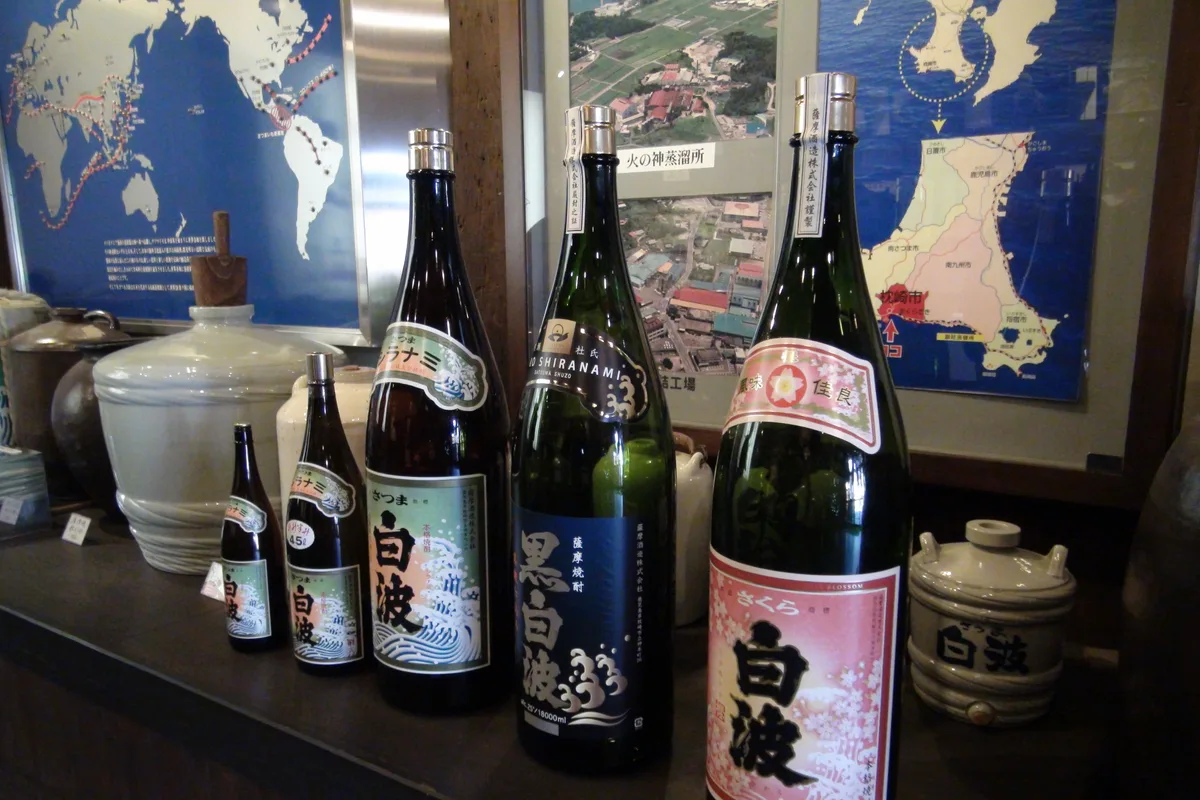
Sweet potato shochu, imo jōchū, smells of steamed sweet potato and tastes round and gently sweet. Satsuma Shochu, named after the old province of Kagoshima, is a protected geographical indication. The Kagoshima distiller Hamada Shuzo explains that it must use Kagoshima sweet potatoes and water, be pot distilled and be bottled in the prefecture.
Kagoshima had 100 distilleries in 2019. Fresh sweet potatoes rot quickly, so many distil straight after the harvest, from September to December, and Kogane Sengan is the traditional variety. Neighbouring Miyazaki has Japan’s largest shochu output, and many bottles sold there are 20%, a habit dating from a 1953 law that taxed 20% shochu less.
Mugi Shochu From Iki and Oita
Barley shochu, mugi jōchū, is often the easiest first bottle, mellow and lightly nutty. Iki, an island off northern Kyushu, calls itself its birthplace, and Iki shochu has been a protected geographical indication since 1995. Its recipe of one part rice koji to two parts barley makes it sweeter and richer than most.
Oita’s barley shochu is made entirely from barley, koji included, a method that only became possible in the 1970s. Its light, smooth bottles drove the late 1970s boom.
Kome Shochu From Kuma in Kumamoto
Rice shochu, kome jōchū, is full and savoury when distilled at normal pressure. A low-pressure still boils the mash at a lower temperature and gives a lighter, fruitier spirit. Its heartland is the Hitoyoshi Kuma basin in southern Kumamoto, home of the protected name Kuma Shochu, where the Sagara family ruled for nearly 700 years and traded across Southeast Asia.
Kokuto Shochu, Made Only in the Amami Islands
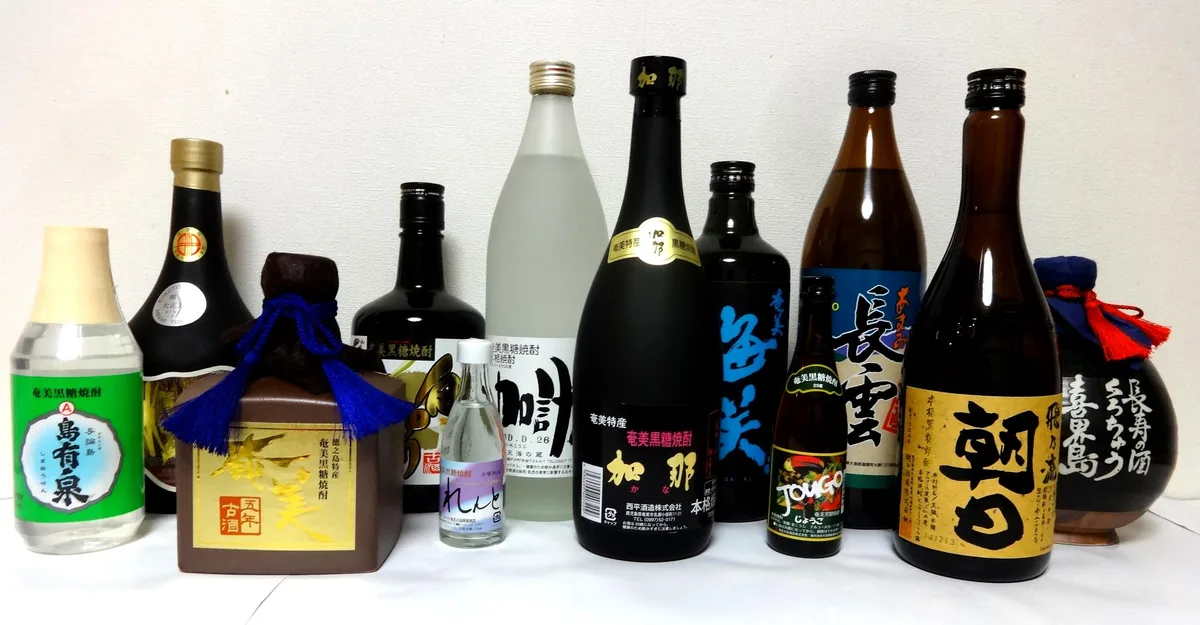
Brown sugar shochu, kokuto shōchū, is light with a hint of sweetness, and it can legally be made only in the Amami Islands, between Kagoshima and Okinawa. When Amami returned to Japan in December 1953, a sugar spirit counted as rum and paid a higher tax. The islands won permission to call it shochu on one condition: it must contain rice koji, which is still what separates it from rum.
Soba Shochu, First Distilled in Miyazaki in 1973
Buckwheat shochu, soba jōchū, is light and smooth with a little sweetness. A Miyazaki distillery made the first in 1973, using rice koji, and Miyazaki remains the largest producer.








White, Black and Yellow Koji: The Moulds Behind Shochu’s Flavour
Koji does three jobs in shochu. Its enzymes free the sugar, and it creates many of the aroma compounds. The black and white moulds also make citric acid, which protects the mash from bacteria in Kyushu’s warm climate, as the makers’ association’s koji guide explains.
Yellow koji (Aspergillus oryzae) is sake’s mould. It makes no citric acid, so few distillers use it, though it gives a fruity, floral aroma.
Black koji (Aspergillus luchuensis) has made Okinawa’s awamori for centuries, and Kagoshima’s sweet potato distillers adopted it around 1912. It brings out the base ingredient and leaves a long finish. Labels often say so: Kuro Kirishima and Satsuma Kuro Shiranami are the black koji versions of two famous brands.
White koji, a pale mutant of black koji found by Genichiro Kawachi in 1918, is now the most widely used, and it gives a smoother, rounder spirit. Koji has a whisky story too, told in our beginner’s guide to Japanese whisky.
Oyuwari, Mizuwari, Rokku and Chuhai: How to Drink Shochu
Shochu is gentle enough to sip neat, but most people in Japan cut it, and with food it is usually brought down to between 10% and 15%, the makers’ association says.
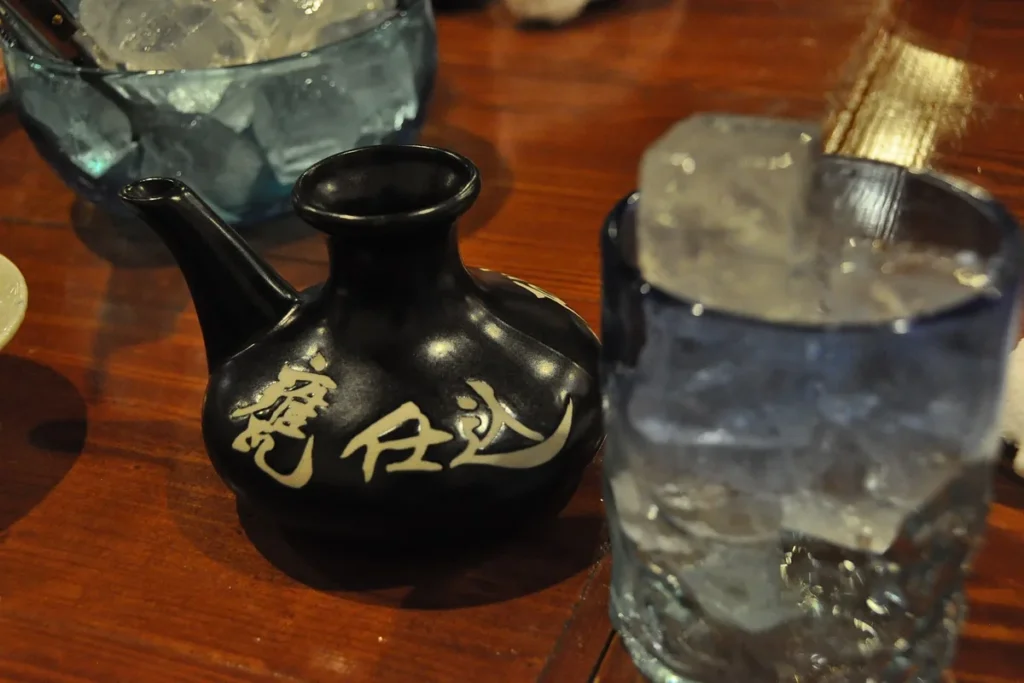
Oyuwari, with hot water. Pour the hot water first, then the shochu, so they mix without stirring. Hamada Shuzo’s standard is 6:4, shochu to water, while JETRO’s shochu guide suggests 1:1 with water at about 70°C. It is the classic winter serve for sweet potato shochu.
Mizuwari, with cold water. JETRO suggests 3:2 or 1:1 with soft water. In Kyushu some people mix it hours ahead, because resting makes it smoother.
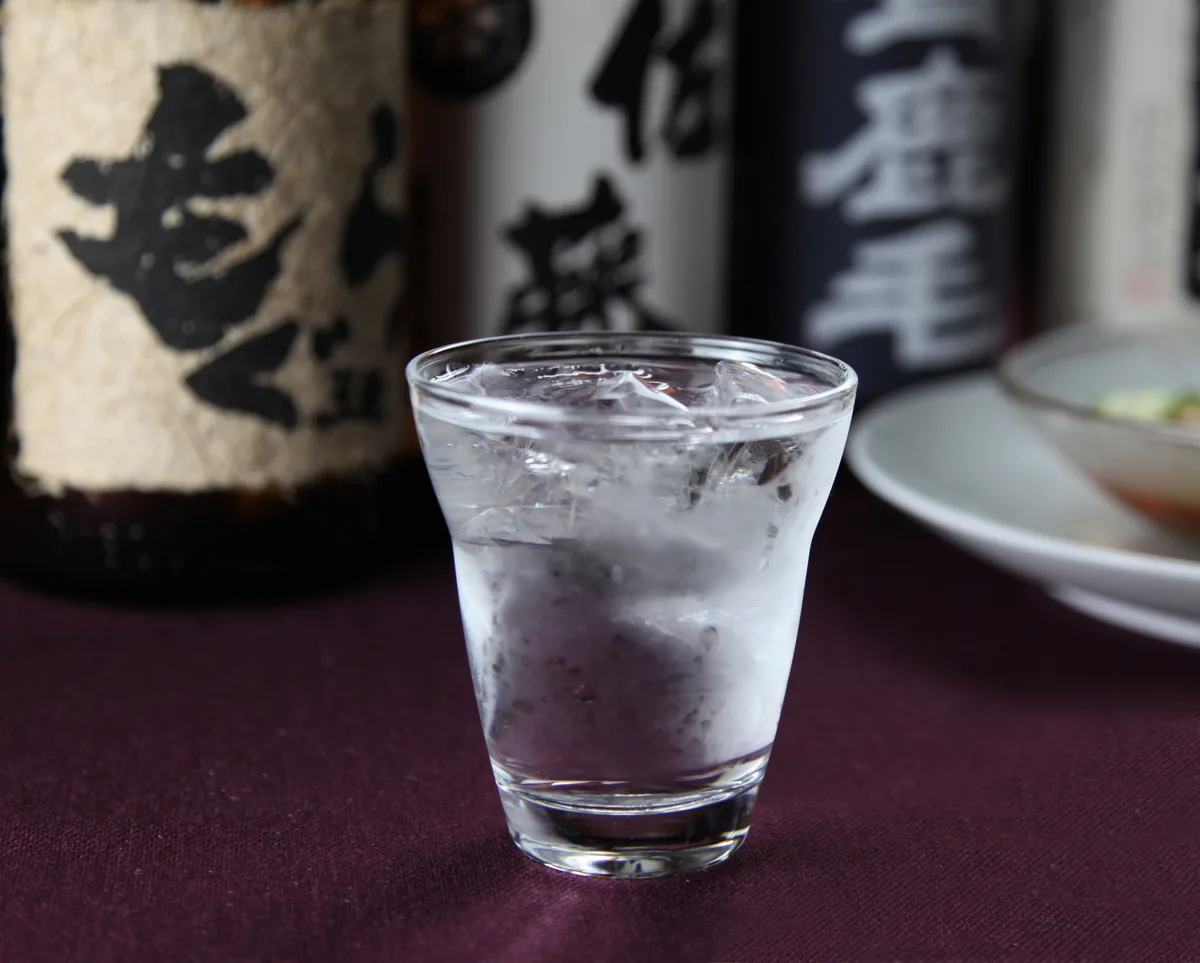
Rokku and soda. On the rocks, use three or four large ice cubes. With soda, JETRO’s ratio is 1:3 over ice, and with citrus added an izakaya sells it as a chuhai, from shochu and highball, or as a lemon sour.
Ochawari, with tea. The makers’ association pairs oolong tea with sweet potato shochu, green tea with rice shochu and barley tea with barley shochu.
| Serve | Shochu to mixer | Ratio from | Strength in the glass |
|---|---|---|---|
| Oyuwari (hot water) | 6:4 | Hamada Shuzo | 15% |
| Oyuwari (hot water) | 1:1, water at about 70°C | JETRO | 12.5% |
| Mizuwari (cold water) | 3:2 | JETRO | 15% |
| Mizuwari (cold water) | 1:1 | JETRO | 12.5% |
| Soda or chuhai | 1:3, over ice | JETRO | about 6% |
| Rokku (on the rocks) | shochu only | JETRO | 25%, falling as the ice melts |
Shochu vs Sake vs Soju: Strength, Process and Base Compared
Sake is brewed and goes no further than fermentation, which keeps it at 15% to 16%. Shochu distils a fermented mash. In Home Life in Tokyo (1910), Jukichi Inouye called sake, at “about fourteen per cent of alcohol”, “still the principal alcoholic beverage in Japan”, and noted that mirin was made with “a spirit distilled from sake lees”, a kind of shochu still made today. Our guide to sake regionality covers how sake varies by prefecture.
Soju is Korea’s spirit, and the familiar green bottles hold diluted soju, a neutral column-still spirit. HiteJinro lowered its Chamisul Fresh to 15.7% in June 2026.
| Shochu (honkaku) | Sake | Soju (diluted) | |
|---|---|---|---|
| Country | Japan, mostly Kyushu and Okinawa | Japan, made nationwide | South Korea |
| How it is made | Fermented, then distilled, usually once in a pot still | Brewed (fermented only) | Column-still spirit, diluted and flavoured |
| Base | One main ingredient, such as sweet potato, barley or rice | Rice | A mix, such as rice, barley and corn |
| Mould | Koji, mostly white or black | Koji, yellow | Traditional soju uses Rhizopus moulds |
| Usual strength | 25% (legal maximum 45%) | 15% to 16% | 15% to 25% |
Six Shochu Bottles to Buy in the UK, by Base Ingredient
This table picks one bottle for each base, plus a black koji sweet potato for comparison. All were in stock at a UK retailer on 2 November 2026, and the flavour notes are the seller’s own words.
| Base | Bottle | Producer and region | Strength and size | Flavour, in the seller’s words | UK retailer and price |
|---|---|---|---|---|---|
| Sweet potato (imo) | Satsuma Shiranami | Satsuma Shuzo, Kagoshima | 25%, 700ml | Natural sweetness of sweet potato with a full body and aroma | Yutaka online, £39.90 |
| Sweet potato, black koji | Kuro Kirishima | Kirishima Shuzo, Miyazaki | 25%, 900ml | Round sweetness, with a distinctly crisp aftertaste | Yutaka online, £28.99; Rice Wine Shop, £37.99 |
| Barley (mugi) | iichiko | Sanwa Shurui, Oita | 25%, 900ml | Mellow, and never tiring to drink | Yutaka online, £49.40 |
| Rice (kome) | Toyonaga rice shochu (Land of Plenty) | Toyonaga, Kumamoto | 24%, 720ml | Exceptionally smooth and mellow, with a sweet meadowland flavour | Natural Natural online, £45 |
| Brown sugar (kokuto) | KANA | Amami Islands, Kagoshima | 30%, 720ml | Rich sweetness and deep flavour from brown sugar | Yutaka online, £85 |
| Buckwheat (soba) | Towari | Takara Shuzo, Miyazaki | 25%, 720ml | Nutty flavours of roasted soba and a buttery smooth palate | Yutaka online, £54.05 |
For a first comparison, pour the Satsuma Shiranami and the iichiko as oyuwari at 6:4. Sweet potato and barley sit furthest apart, and the hot water lifts the aroma of each.
Where to Buy and Drink Shochu in London: KANPAI, Rice Wine Shop and Natural Natural
KANPAI Taproom, London Bridge. London’s KANPAI sake brewery runs a taproom on Druid Street, and its drinks menu lists nine shochu by the glass, each marked with the serve it suits. Prices start at £6 for a 50ml pour of iichiko Silhouette. Six awamori are poured too, which makes it the easiest place in London to try both, and our guide to awamori covers Okinawa’s side of the family. KANPAI’s taproom page gives the hours: from 5pm Wednesday to Friday, from noon at weekends, and closed on Monday and Tuesday.
Address: 48 Druid Street, London SE1 2EZ. Nearest station: London Bridge.
Map of KANPAI London Craft Sake Brewery and Taproom
Rice Wine Shop, Soho. The Japanese grocer at 82 Brewer Street lists two black koji sweet potato shochu, Kuro Kirishima and Satsuma Kuro Shiranami, at £37.99 a bottle. It opens every day, from 10am Monday to Saturday and from noon on Sunday.
Natural Natural, Ealing Common and Finchley Road. Its online shop lists rice, barley and sweet potato shochu, including the Toyonaga rice shochu above. Natural Natural’s shops page gives the two stores, at 21 Station Parade, W5 3LD, and 1 Goldhurst Terrace, NW6 3HX, and both open daily. Call to check the shelf before you travel.
Yutaka, online. The Yutaka brand’s online shop had the longest shochu list we found, with more than 20 bottles. For more grocers, see our guide to Japanese markets and supermarkets in London.
Drink Japan gave shochu and awamori their own Spirits of Japan zone in 2026, as our Drink Japan 2026 exhibitor guide records, and the Drink Japan London page carries the next dates once they are announced. For sake, whisky and the rest, see our guide to Japanese drinks.
Shochu: Questions and Answers
Shochu is a Japanese distilled spirit made by fermenting a base ingredient such as sweet potato, barley or rice with koji mould, then distilling it, usually once in a pot still. Most bottles are 25% alcohol, and more than 90% is made in Kyushu and Okinawa.
Yes. Most shochu is 25% alcohol, and single-distilled shochu can legally reach 45%. Sake is brewed without distillation and is usually 15% to 16%. Because shochu is normally cut with water or soda, a glass of it in Japan often ends up at 10% to 15%, close to sake.
Sake is Japanese, brewed from rice and koji with no distillation, and usually 15% to 16%. Soju is Korean and distilled. The familiar green-bottle soju is diluted soju, a neutral column-still spirit made from mixed grains; HiteJinro’s Chamisul Fresh has been 15.7% since June 2026.
No. Honkaku shochu is distilled once in a pot still from one main ingredient with koji mould, so it tastes of sweet potato, barley or rice, and it is usually 25%. Most soju is diluted soju from a column still, made from mixed grains, light in flavour and around 15% to 25%.
The classic serve is oyuwari: hot water into the glass first, then shochu, at 6:4 shochu to water according to Hamada Shuzo. Other favourites are mizuwari with cold water at 3:2 or 1:1, on the rocks, with soda at 1:3 as a chuhai or lemon sour, or with oolong, green or barley tea.
Rice Wine Shop at 82 Brewer Street in Soho lists Kuro Kirishima and Satsuma Kuro Shiranami, and Natural Natural in Ealing Common and Finchley Road lists rice, barley and sweet potato shochu online. Yutaka’s online shop has the largest range. To taste first, the KANPAI taproom at 48 Druid Street pours nine shochu by the glass.