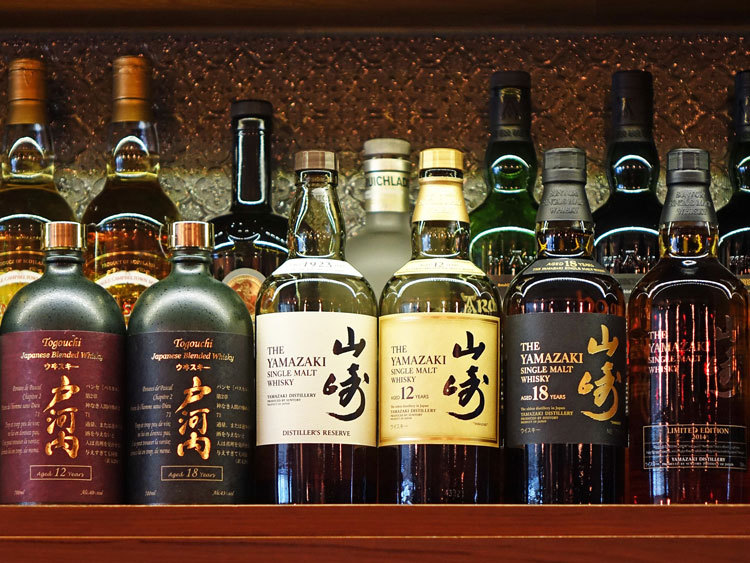
2015 was a moment in history that changed Japanese whisky forever. This was the year that the reputable whisky critic Jim Murray named in his Whisky Bible a Japanese whisky – Yamazaki Single Malt Sherry Cask 2013 – to be the world’s best, with no Scotch whiskies making it to the top five. Japanese whiskies had been slowly creeping up the ladder for years. But it was this defining moment that truly altered its international reception.
Whisky, after all, is not the first thing that often comes to mind when we talk about Japanese alcoholic drinks. Izakaya scenes are often filled with images of foam-lined beer mugs, and for good reason – Japan’s finest brews (Asahi, Kirin, Sapporo, and the like) are popular nationally and worldwide.
At Japan Nakama, we’re big fans of Japan’s national beverage, sake, and have covered it on various occasions. Now, we thought, is as good a time as any to take a closer look into their friends in the industry – Japanese whiskies.
Key Parts of This Whisky Guide
So, what actually is Japanese whisky?

Japanese whisky is relatively young – it only arrived in Japan in the late 1800s when the American Commodore Matthew Perry arrived in Japan for the second time to make sure the country would remain open to the rest of the world after decades of isolation.
On his second visit, Perry brought gallons of bourbon with him as a gift for the emperor. But he didn’t have a clue who the real ruler of Japan was in terms of the distinction between the figure head emperor and the shogun who made all the decisions. The bourbon ended up in the hands of samurai who served the shogun and they loved it.
In fact, one story reports that the drunken warriors threw their arms around Perry and shouted “Nippon and America, all the same heart!”
But it wasn’t bourbon that caught on in Japan. It was scotch and that wouldn’t happen overnight. It would be a long process of trial and error between two men – Masataka Taketsuru, the founder of Nikka and Shinjiro Torii, the founder of Suntory.
Before I get into the story of these whisky titans, there’s another man who gets overlooked in the history of Japanese whisky. His name is Jokichi Takamine, a chemist who studied in Scotland before Taketsuru and went to America to make whisky.
Takamine’s claim to fame is that he figured out how to apply koji-kin, the special mould used to make sake and shochu, to wheat bran in whisky making. His innovation cut down the eight day wheat bran malting process to two days. Takamine’s technique was praised for how cost-effective it was.
Unfortunately, local maltsters didn’t appreciate their livelihoods being under threat and they started protests in 1891. Eventually, a fire broke out in the distillery where Takamine’s equipment was stored and everything was destroyed. While Takamine rebuilt his equipment, his koji-kin malting didn’t catch on. He might have been consigned to history if not for recent efforts to restore his good name.
In 2021, Takamine Whiskey was created as a way to revive the koji-kin whisky making process. The brand keeps the American spelling of its own name. It is double distilled and aged for eight years in virgin oak and ex-bourbon casks.
Let’s return to the stories of Masataka Taketsuru and Shinjiro Torii. Both men had different approaches to making whisky and both deserve credit for pushing the industry forward.
Taketsuru is often considered the father of Japanese whisky because he went to Scotland to study Scottish whisky. But instead of going to America like Takamine, he went back to Japan. On returning, Taketsuru was hired by Torii.
The founder of Suntory wanted to make a whisky that appealed to Japanese tastebuds. Construction of the Yamazaki distillery, Japan’s first malt whisky distillery, began on the outskirts of Kyoto in 1923, with Taketsuru running it. The whisky it was built for took another six years to arrive. Suntory Shirofuda, or White Label, reached drinkers in 1929, and Suntory’s own company history records it plainly as a failure. It tasted too Scotch-like for Japanese palates, it sold badly, and the disappointment opened a rift between Taketsuru and Torii.
After 11 years at Suntory, Taketsuru left to build his own distillery in Hokkaido, where the region and climate reminded him of Scotland. This would turn out to be the birthplace of Yoichi Distillery, owned by Nikka.
As you can imagine, an intense rivalry ignited between Nikka and Suntory. Both companies strived to prove they were the best in different ways. Taketsuru was the consummate craftsman, fine-tuning every piece of the Nikka whisky-making process. Torii was ever the business man, pumping as much money into marketing as he did his products, which caused an international buzz for Suntory. According to a report from 1976, Suntory produced 255 million bottles of whisky that year and shipped them out to 68 countries.
By the 1990s, interest in Japanese whisky had waned. This was because of changing tastes, as consumers were more interested in white spirits like vodka. And then in 2001, a ten-year-old Nikka whisky from the Yoichi distillery broke records in a prestigious whisky magazine, reigniting the category’s popularity.
Today, Suntory and Nikka are the two giants dominating the Japanese whisky industry, with Suntory owning the brands Yamazaki, Hakushu, and Chita, while Nikka owns Yoichi and Miyagikyo.


What is special about Japanese Whisky?
Japanese whisky is special in different ways. The most distinct part of it is that Japanese whisky blending is typically performed in-house. In Scotland, whisky blends are typically made by combining whiskies that are produced from distilleries across the country. In Japan, however, the nature of the industry is such that whisky companies tend to own the distilleries and the brands without mixing with competitors.
This means that a blended whisky such as Hibiki will be made from malt whiskies from Yamazaki, Hakushu, and grain whisky from Chita, all of which are owned by Suntory. Because of this, producers can use all sorts of pot stills for distilling the spirit, and casks of different sizes and woods (such as Japanese mizunara oak or sherry casks) to create a plethora of flavours.
Another special aspect of Japanese whisky is the superb quality of water that is used to make it. In fact, the first Yamazaki distillery was opened in Osaka Prefecture because of its proximity to the many rivers near the region, where several centuries ago a tea master had chosen to build a tea room nearby for its access to the pristine water. To see what is actually special about Japanese whisky in action, we’ve included one of our favourite scenes from the movie Lost in Translation, featuring Bill Murray.
The 2021 rules that decided what counts as Japanese whisky
For most of the category’s history there was no legal definition of Japanese whisky at all. A bottle could carry a Japanese name, a Japanese label and a Japanese price, and still hold spirit distilled in Scotland or Canada and merely bottled in Japan. That was perfectly legal, it was common, and it is the thing most likely to catch out anyone buying their first bottle.
The Japan Spirits and Liqueurs Makers Association settled it on 12 February 2021. The standards took effect on 1 April 2021, and producers had until 31 March 2024 to sell through old stock and relabel, so every bottle made to the rules has been on shelves since then.
To call itself Japanese whisky under the standards, a bottle has to meet all of these:
- Ingredients limited to malted grains, other cereal grains, and water drawn in Japan. Malted grain always has to be in there.
- Saccharification, fermentation and distillation all carried out at a distillery in Japan.
- Distilled to below 95 per cent alcohol.
- Matured in Japan, in wooden casks of 700 litres or less, for at least three years.
- Bottled in Japan, at 40 per cent alcohol or above.
- Plain caramel colouring is the only addition allowed.
Two things are worth knowing before you use this as a shopping rule. These are a trade association’s standards rather than government law, so they bind the association’s members and not every producer in Japan. And plenty of good bottles sit outside them. A world whisky blended in Japan from imported and Japanese stock can be excellent, it simply cannot call itself Japanese whisky. Read the back label, and if it claims only “product of Japan” without naming a distillery, you are most likely holding one.
How do you drink Japanese Whisky?
There really is no correct way to drink Japanese whisky. In Japan, whisky highball is popular, in which two parts soda water is added to whisky. For higher-end whiskies, however, it is common to have it neat or on the rocks.
Building a highball that keeps its bubbles
The highball is the reason a great deal of Japanese whisky gets drunk at all, and Japan is where the serve was turned into a craft. Bars there treat it seriously enough that the order of assembly matters.
Chill the glass and fill it to the top with ice, so the ice has no room to move around and melt. Pour the whisky over the ice and stir it once to bring the spirit down to temperature. Add soda water that has been kept cold, pouring it down the inside of the glass rather than straight onto the ice. Then stir once more, gently, lifting from the bottom. Every extra stir costs you carbonation. A twist of lemon peel over the top finishes it. Nikka Days and Suntory Toki are both built for this and cost a fraction of what the aged single malts do.
Mizuwari, the still water version
Where the highball uses soda, mizuwari uses still water and ice. It is the standard pour at an izakaya table over a long evening, and it opens up a whisky that can feel tight when served neat. The same rule about stirring applies, and soft bottled water suits it better than anything heavily mineral.
Yuzu, matcha and sakura in the glass
Japanese whisky takes to cocktails well, and bartenders tend to reach for Japanese flavours to go with it. A yuzu whisky sour swaps the usual lemon for yuzu juice, which is sharper and more floral and cuts through a sweeter blend. A matcha whisky sour adds ceremonial grade matcha for a grassy bitterness that sits against the oak. A sakura old fashioned uses cherry blossom syrup in place of sugar, and is worth making in spring when the syrup is easy to find. None of these need an expensive bottle underneath them.








Enhancing the Experience with Whisky Glasses
To get the most out of your first few sips of whisky, it’s essential that you use the right glassware. Whisky can be enjoyed in a variety of glasses, and unlike wine, you don’t have to use different glasses for different types of whisky. Whether it’s a Yamazaki Single Malt, a traditional Nikka Taketsuru Pure Malt, or a Toki Blended, having a glass that you love is part of the experience.
Whisky glasses come in all shapes and sizes. Old Fashioned tumblers have straight edges and a heavy base, while tulip shaped glasses narrow towards the rim to gather the aroma, which is why distillery tasting rooms tend to use them. Either works at home, and the one you reach for matters more than what it cost.
Wide and thick bases distinguish the top whisky glasses. This is good for a number of reasons. First, if you like your whisky on the rocks, the thick bottom will keep it colder for longer and prevent the ice from melting too rapidly. The same is true if you like whisky stones, since glass is a poor heat conductor, allowing the whisky to remain colder for longer. A large hole also makes it simple to fill with ice.
Drinking from a whisky glass is a way to show your appreciation for the skill of the maker, as well as a way to appreciate their craft. If you want to get the most out of a whisky, you need to be able to smell it and appreciate the aromas that come from it. You also should inhale the whisky’s aroma before taking a sip.
Where to drink Japanese whisky in London
Buying a bottle blind is an expensive way to find out you do not like something. London has enough specialist bars that you can taste across several distilleries in one evening for less than the price of one of the aged bottles below.
Black Rock in Shoreditch is built around a hollowed out oak trunk that runs down the middle of the room and holds the whisky. The list is arranged by flavour rather than by country, which makes it an easy place to work out what you actually like before you commit to a bottle.
Milroy’s of Soho has been selling whisky on Greek Street since 1964 and keeps a bar behind the shop. Being a merchant first means the staff will talk you through a Japanese bottling properly, and you can buy the one you liked on the way out.
Melody Whisky Bar runs tastings and flights, which is the cheapest way to put three or four Japanese expressions side by side in one sitting.
For buying at home, The Whisky Exchange carries the widest Japanese range in the country, and Japan Centre stocks the everyday bottlings such as Suntory Kaku that are built for highballs.
How to get started with Japanese Whisky?
Japanese whisky is infamous for being expensive, especially due to increasing interest and limited demand. In 2018, a 50-year-old Yamazaki first edition was sold for $343,000 at an auction in Hong Kong!
So how do you get started? For this purpose, we’ve compiled a shortlist of 3 affordable (relatively, given the usual price range), accessible Japanese whiskies for those who are keen to try.
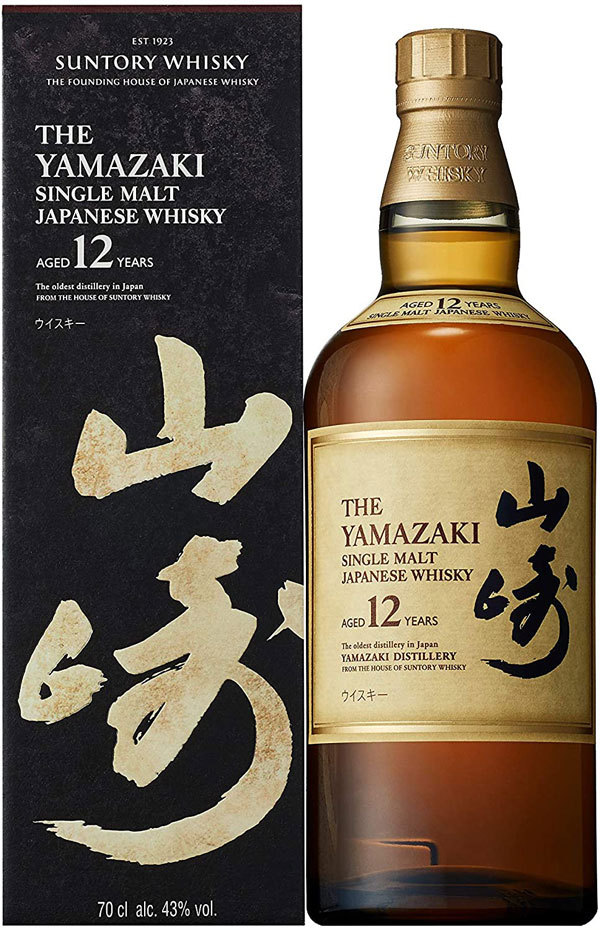
Yamazaki 12 Year Single Malt
An absolute classic, the Yamazaki 12 Year Single Malt is the most expensive in this list, and was one of the first Japanese whiskies to enter the UK market.
Flavour profile from The Whisky Exchange: cinnamon, orange, pineapple, honey
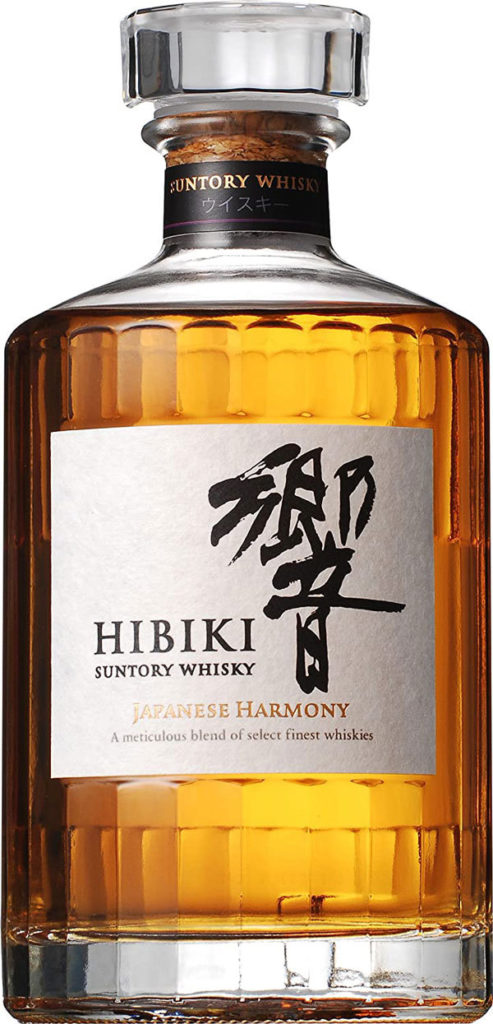
Hibiki Japanese Harmony
Hibiki contains a blend of malt and grain whiskies from Yamazaki, Hakushu, and Chita.
Flavour profile from The Whisky Exchange: black pepper, cinnamon, orange, apricot, oak
Nikka Taketsuru Pure Malt
The Nikka Taketsuru Pure Malt is a non-age-statement blend containing a high percentage from the Miyagikyo distillery and the rest from Yoichi. This has been aged for 10 years including in sherry casks.
Flavour profile from The Whisky Exchange: clove, pear, cherry, smoke, butterscotch, plums
Finally, we’ve included a video from Suntory introducing their Yamazaki Distillery. For a deeper dive into Japan’s finest whisky spots, check out our Whisky Distillery Tour Guide here.