Japanese drinks run from sake, shochu and beer to green tea, ramune and Calpis, and the one Japan buys most of is beer. National Tax Agency figures for the year to March 2024 put beer at 28% of all alcohol sold in Japan, with sake at 5%.
This guide starts with the alcoholic drinks, compared in one table by what each is made from, how strong it is, how it is served and which bottle or can to buy in the UK. It then covers the teas and soft drinks sold in Japanese convenience stores and vending machines, with a link to our longer guide wherever one exists.
Japanese drinks at a glance
Best-selling alcohol: beer, 28.4% of all alcohol sold in Japan from April 2023 to March 2024.
Sake: under 22% alcohol by law, and commonly 13% to 17%.
Shochu: up to 45% by law for single-distilled shochu, usually 20% to 30%.
Most-grown tea: sencha, 48.1% of Japan’s 2025 tea crop.
Oldest soft drink name here: ramune, recorded in Tokyo in 1872.
Japanese Drinks, From Sake to Ramune
Japanese Drinks by Volume: Beer 28%, Sake 5%
Japan’s National Tax Agency publishes how much of each kind of alcohol is sold every year in its Sake no Shiori report. The latest year covers April 2023 to March 2024, when 7.82 million kilolitres were sold. The table below uses the agency’s own tax categories, with each share worked out from its figures.
| Category (tax category) | Sold, thousand kilolitres | Share of all alcohol |
|---|---|---|
| Beer | 2,221 | 28.4% |
| Liqueurs (alcohol mixed with sugar or other flavourings) | 2,038 | 26.1% |
| Spirits and similar | 858 | 11.0% |
| Happoshu (low-malt sparkling beer) | 747 | 9.5% |
| Shochu, both kinds | 667 | 8.5% |
| Sake | 391 | 5.0% |
| Fruit wine, including grape wine | 332 | 4.2% |
| Other brewed drinks | 241 | 3.1% |
| Whisky | 203 | 2.6% |
| Mirin | 92 | 1.2% |
Sake has fallen furthest. In the year to March 1976 Japan bought more than four times as much sake as it does now, according to the same series. Beer and liqueurs together now account for more than half of everything sold.


Japanese Alcoholic Drinks Compared: Base, Strength and Serve
Strength is where Japanese drinks differ most, from a 5% sparkling sake to a 45% shochu. Every bottle in the last column was listed by a UK shop when we checked on 2 November 2026; prices change too often to print.
| Drink | Made from | Typical strength | How it is served | One to buy in the UK |
|---|---|---|---|---|
| Sake | Rice, rice koji and water | Commonly 13% to 17%; legal limit under 22% | Chilled at 8°C to 10°C for ginjo, or warmed to about 42°C to 45°C | Dassai 45 Junmai Daiginjo, 16%, 720ml (Yutaka) |
| Sparkling sake | Sake with bubbles, often from a second yeast fermentation | About 5% to 8% for sweet styles; awa sake 10% or more | Well chilled | MIO Sparkling Sake, 5%, 300ml (Yutaka) |
| Shochu (single distilled) | Barley, sweet potato, rice and others, with their koji | Usually 20% to 30%; legal limit 45% | Straight, on the rocks, or with cold or hot water | iichiko Silhouette barley shochu, 25%, 70cl (Drinkfinder) |
| Awamori | Rice koji made with black koji mould | Usually 20% to 30%; aged kusu can pass 40% | Straight, on the rocks or with water | Chuko Yokka Koji Awamori, 43%, 72cl (Master of Malt) |
| Umeshu | Green ume fruit, sugar and a base spirit | 10% to 15% | On the rocks or with soda | Choya Original Plum Wine, 10%, 750ml (Yutaka) |
| Japanese whisky | Malted grain and other cereals, with water drawn in Japan | 40% or more | Neat, on the rocks, as a highball with soda, or mizuwari with still water | Suntory Toki, 43%, 70cl (Ocado) |
| Beer | Malt, hops and water; some lagers add rice | About 5% | Very cold, from the can or tap | Asahi Super Dry, 5% (UK supermarkets; UK stock is brewed in Italy) |
| Chuhai | Shochu or another spirit with soda and fruit | 6% and 8% for the cans named here | From the can, chilled | -196 Lemon, shochu and vodka with soda, 6%, 330ml (Sainsbury’s) |
| Japanese wine (koshu) | Grapes grown in Japan; the koshu grape for this style | About 12% | Chilled, with food | Grace Koshu Kayagatake, Yamanashi, 12%, 750ml (Selfridges) |
| Japanese gin | Gin with Japanese botanicals such as yuzu, sansho pepper and green tea | About 43% | Gin and tonic, or a highball | Roku Gin, 43%, 70cl (Averys) |
Ten Japanese Alcoholic Drinks, From Sake to Craft Gin
Sake: Rice, Koji and Water, Served Cold or Warm
Sake, called nihonshu in Japan, is brewed from rice, rice koji and water, and its legal definition caps it at under 22% alcohol. Koji is steamed rice grown with a mould whose enzymes turn the rice starch into sugar for the yeast. Many sakes are 13% to 17%, according to Japan’s National Research Institute of Brewing. Brewers usually add water to bring the strength to around 15% before bottling.
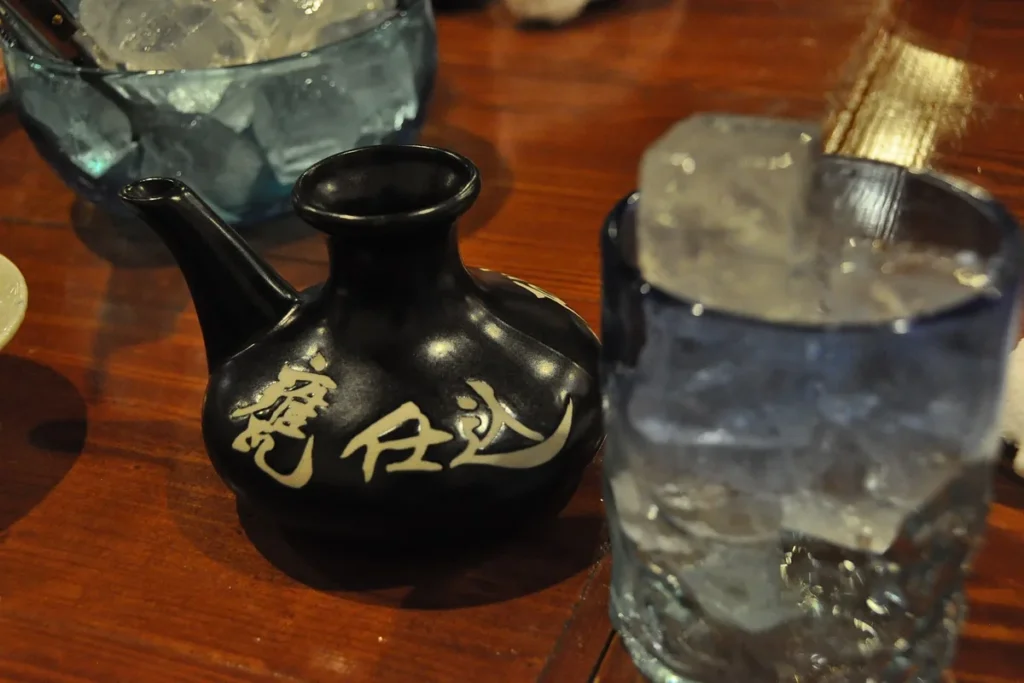
Sake is drunk across a wider range of temperatures than other alcoholic drinks, from about 5°C to 55°C, says the Japan Sake and Shochu Makers Association. The brewing institute suggests aromatic ginjo sake slightly chilled. Warm sake, called kan, is usually heated to about 42°C to 45°C. In Tokyo in the 1880s, Eliza Scidmore watched cherry blossom crowds draw sake “into open-mouthed porcelain bottles, which are set in hot water if warm saké is desired”, then drink it “from little shallow porcelain or lacquer cups that hold barely a tablespoonful” (Jinrikisha Days in Japan, 1891, chapter eight).
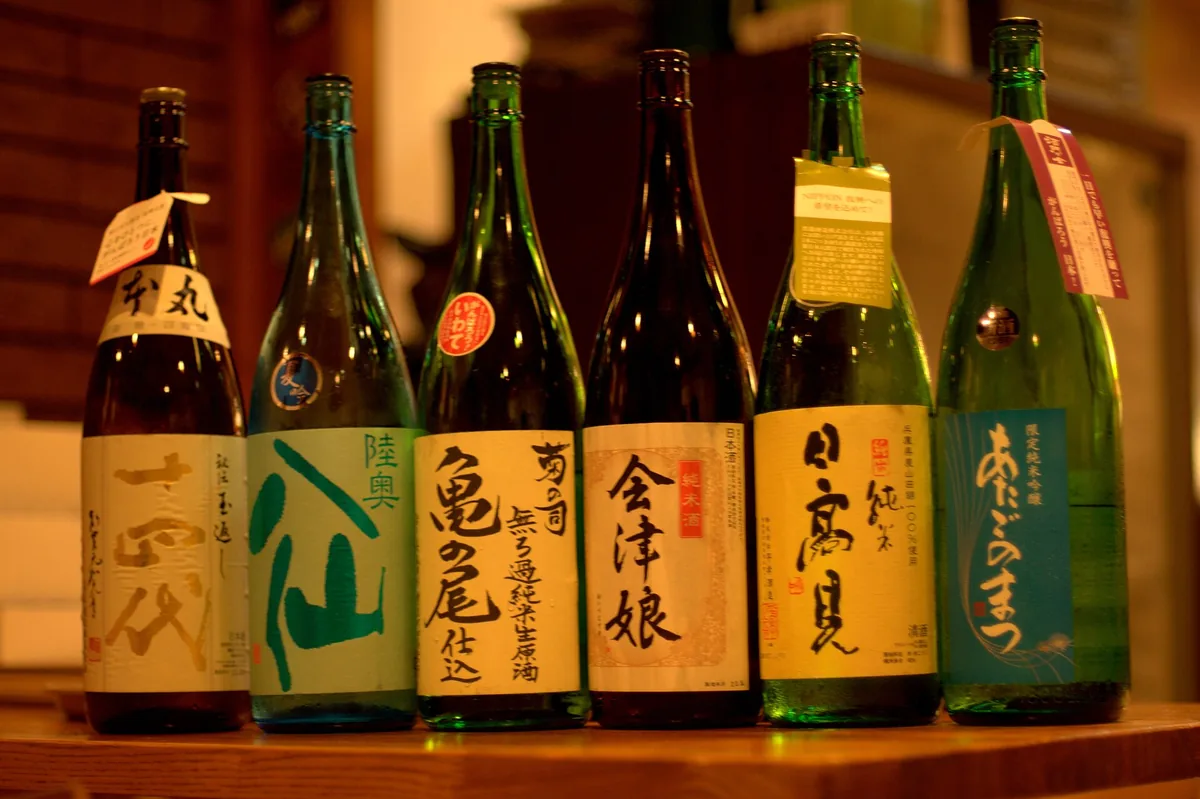
Around 1,300 breweries make sake in Japan, and where they are shapes how it tastes, as our guide to sake regionality explains. For a French angle on the same drink, Champagne cellar master Régis Camus blends sakes from partner breweries in our HEAVENSAKE review.
Sparkling Sake: MIO at 5% and Awa Sake at 10% or More
Sparkling sake gets its bubbles from carbon dioxide trapped during a second yeast fermentation, and the brewing institute describes styles running from sweet bottles at 6% to 8% up to dry, stronger ones. MIO from Takara Shuzo, brewed at its Shirakabegura brewery in Hyogo, is widely sold in the UK. It is light, sweet and 5%, closer to a spritz than a glass of sake.
Brewers who want the bubbles taken more seriously formed the Awa Sake Association in 2016. Its awa sake standard allows only Japanese-grown rice, koji and water, requires the carbonation to come naturally from a secondary fermentation, and sets a minimum of 10% alcohol, with a clear sake whose bubbles rise in a single stream.
Shochu: Barley, Sweet Potato or Rice From a Pot Still
Shochu is Japan’s own distilled spirit. Honkaku shochu, the traditional kind, is made in a pot still from grains or sweet potatoes and their koji, and the law allows it up to 45% alcohol. Shochu from a continuous column still is a separate category, capped below 36%. Barley, sweet potato and rice are the main bases, with buckwheat, sake lees and brown sugar among the others.
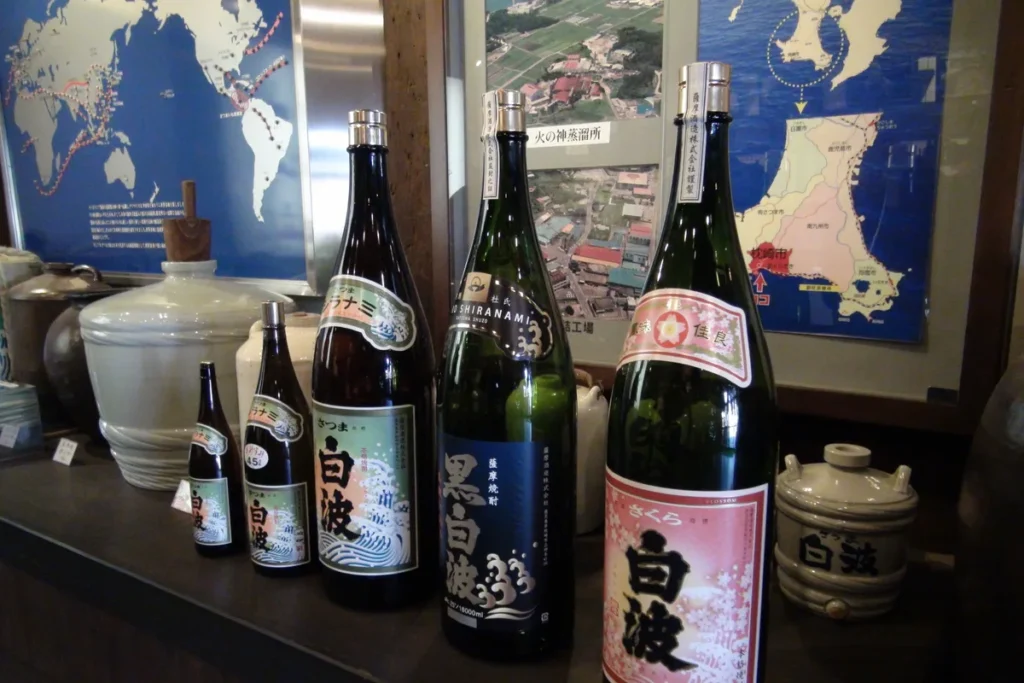
Most bottles are 20% to 30%, and the brewing institute’s guide to shochu and awamori lists the ways it is drunk: straight or on the rocks for the full flavour, with cold water over ice, or with hot water, which brings a glass down to about 15%. Iki, Kuma and Satsuma shochu are protected place names. Our guide to what shochu is covers the styles and how it compares with sake and soju.
Awamori: Okinawa’s Black Koji Spirit and Three-Year Kusu
Awamori is Okinawa’s traditional shochu. The National Tax Agency defines it by its koji: all of the rice is made into koji with black koji mould, which gives a rich, full flavour. Ryukyu awamori is a protected place name, alongside the three shochu names above.
Awamori aged for three years or more is called kusu. Since 1 August 2015 a bottle can only say kusu if all of it has been aged that long, the Ryukyu Shimpo reported when the rule changed. Kusu can be over 40% and still taste mellow, according to the brewing institute. Our guide to awamori, Okinawa’s spirit names the island distilleries and their aged bottles.
Umeshu: Green Ume Steeped in Spirit and Sugar
Umeshu is made by steeping unripe green ume, a Japanese fruit between a plum and an apricot, in a spirit with sugar for months. It is often sold in English as plum wine, though nothing is fermented. CHOYA’s Aged 3 Years umeshu lists Kishu Nanko ume, sugar and cane spirit, at 15%. The CHOYA Original sold in the UK is lighter, at 10%. Our guide to umeshu has its history and a recipe for making it at home.
Japanese Whisky: The 2021 Standards and the Highball
Since April 2021, the Japan Spirits and Liqueurs Makers Association’s standards have set what a bottle labelled Japanese whisky must be: grain mashed, fermented and distilled in Japan, aged in Japan for at least three years and bottled in Japan at 40% or more. They are an industry standard for members, so a few bottles with Japanese names still sit outside them.
A highball is whisky topped with chilled soda water over ice, and mizuwari uses still water instead. Our beginner’s guide to Japanese whisky covers Suntory, Nikka and how to build a highball that keeps its bubbles.
Japanese Beer, Happoshu and the October 2026 Tax Change
Japanese tax law defines beer as a drink fermented from malt, hops and water, and happoshu as a sparkling drink that uses malt or barley for only part of its recipe. For years the lower-malt drinks were taxed at lower rates. That ended in October 2026, when the Ministry of Finance completed a change begun in 2020 and set one rate for all beer-type drinks, 54.25 yen on a 350ml can.
In the UK, Asahi Super Dry at 5% is the Japanese lager on most supermarket shelves, though The Grocer reported that Asahi brews UK stock at its brewery in Padua, Italy. Our guide to Japanese beer brands covers Kirin, Sapporo and Suntory, along with the pouring customs of an evening out.
Chuhai: Shochu, Soda and Fruit in a Can Since 1984
Chuhai began as a shochu highball: shochu topped with soda and usually lemon or another fruit. Takara Shuzo sold the first canned chuhai in Japan in 1984. Its Takara can Chuhai lemon is still on sale, at 8%. The October 2026 tax change raised the duty on chuhai and similar sparkling drinks to 35 yen a 350ml can, according to the Ministry of Finance.
The easiest chuhai to buy in Britain is Suntory’s -196. Suntory says each flavour starts with whole fruit frozen in liquid nitrogen at minus 196°C, then crushed and infused with shochu, vodka and soda; the lemon can at Sainsbury’s is 6%.
Japanese Wine: Koshu Grapes and the Japan Wine Label
Only wine made in Japan from grapes grown in Japan can be labelled Japan Wine, under a National Tax Agency labelling rule in force since 30 October 2018. A wine naming one grape variety must contain at least 85% of it, and the same 85% applies to a place name.
The grape to know is koshu, grown in Yamanashi Prefecture, west of Tokyo. It makes light, delicate white wines that suit the same food as sake. Grace Wine’s Koshu Kayagatake, at 12%, is stocked by Selfridges.
Japanese Craft Gin: Yuzu, Sansho and Tea Leaves
Japanese gin keeps juniper at its core and adds botanicals grown in Japan. Suntory’s Roku, at 43%, uses six: cherry blossom, cherry leaf, sencha, gyokuro, sansho pepper and yuzu peel. Kyoto’s KI NO BI uses a rice spirit base, and Nikka distils its Coffey Gin in the same continuous still as its grain whisky. Our guide to Japanese gin compares seven of them.
Japanese Tea: Sencha, Matcha, Hojicha and Mugicha
“Tea began as a medicine and grew into a beverage,” Kakuzo Okakura wrote in the first chapter of The Book of Tea (1906). In Japan, green tea is poured free in many restaurants and sold cold in bottles from vending machines. Japan exported 12,612 tonnes of it in 2025, according to the Ministry of Agriculture, Forestry and Fisheries’ October 2026 tea report, and the EU and the UK together took almost a fifth.
Sencha, Nearly Half of Japan’s Tea Crop
Sencha made up 48.1% of Japan’s 2025 tea crop, according to the same report. The leaves are steamed and rolled. The ministry’s brewing guide suggests water at 70°C for top grades and hotter water for everyday sencha, steeped for about 90 seconds. Our crash course in Japanese green tea covers gyokuro, genmaicha and a dozen more.
Matcha, Stone-Ground From Shaded Tencha
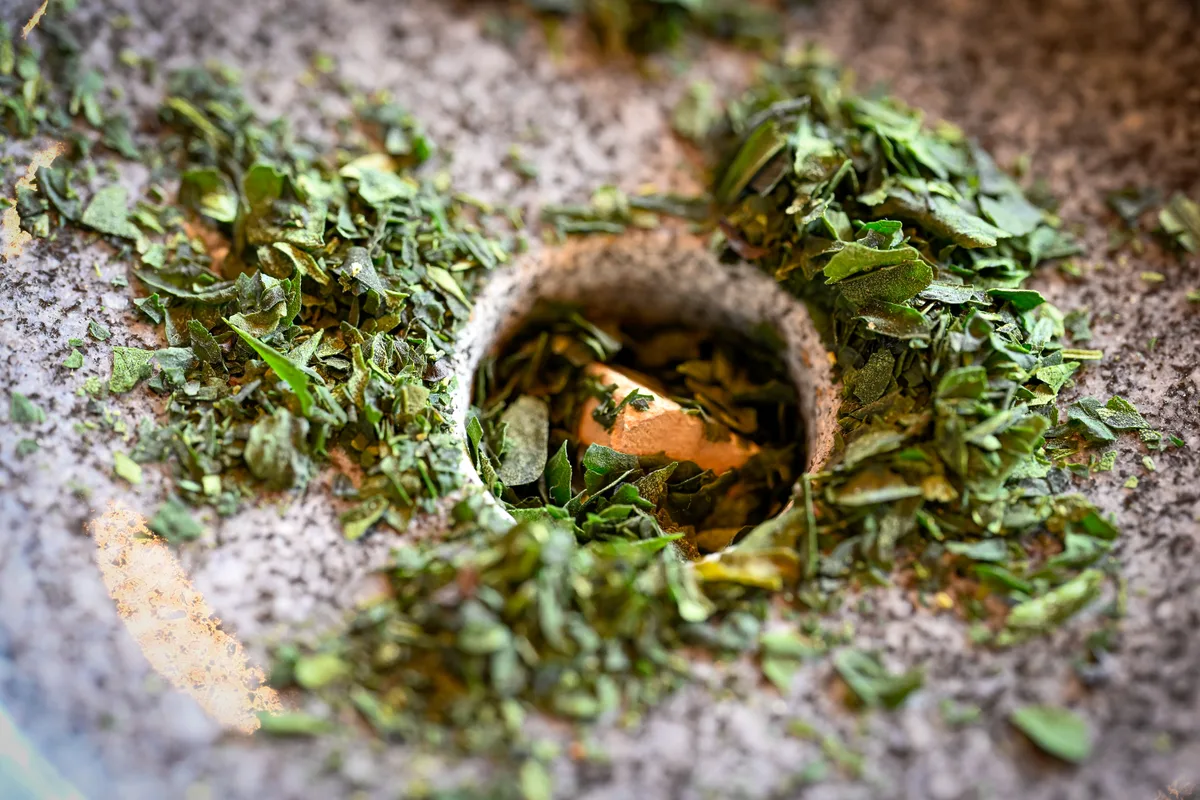
Matcha starts as tencha. The tea bushes are covered to keep off direct sunlight, and the leaves are steamed and dried without rolling, then ground in a stone mill to a powder of 1 to 20 microns. Because it is whisked into the water, you drink the whole leaf. Tencha was 8.6% of the 2025 crop. The ministry reports that its production has more than tripled since 2014.
Hojicha, Roasted and Brewed With Boiling Water
Hojicha is green tea roasted until the leaves turn brown, which gives it a toasty aroma. The ministry’s guide groups it with bancha and genmaicha and brews all three with boiling water for about 30 seconds, to bring out the roasted smell.
Mugicha, Roasted Barley Served Cold
Mugicha is an infusion of roasted barley, so it contains no tea leaf and no caffeine. In Japan it is usually drunk cold. It was served hot in the 1880s too: on the climb up Mount Fuji, Eliza Scidmore’s party was welcomed at a shrine with “many cups of hot barley-tea” (Jinrikisha Days in Japan, 1891, chapter seventeen).








Japanese Soft Drinks: Ramune, Calpis, Canned Coffee and Pocari Sweat
A Japanese vending machine holds most of these drinks in one place, hot and cold. Our guide to Japanese vending machines explains how they spread to almost every street corner.
Ramune, Named After Lemonade in 1872
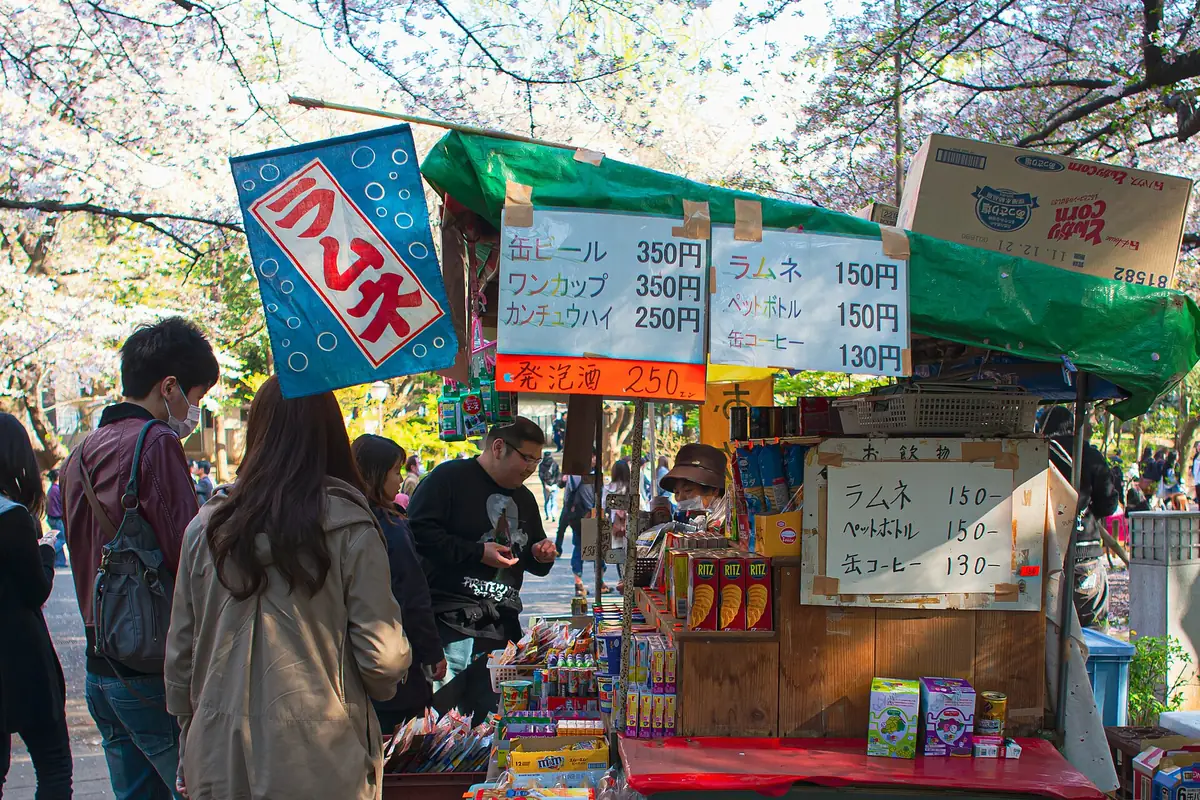
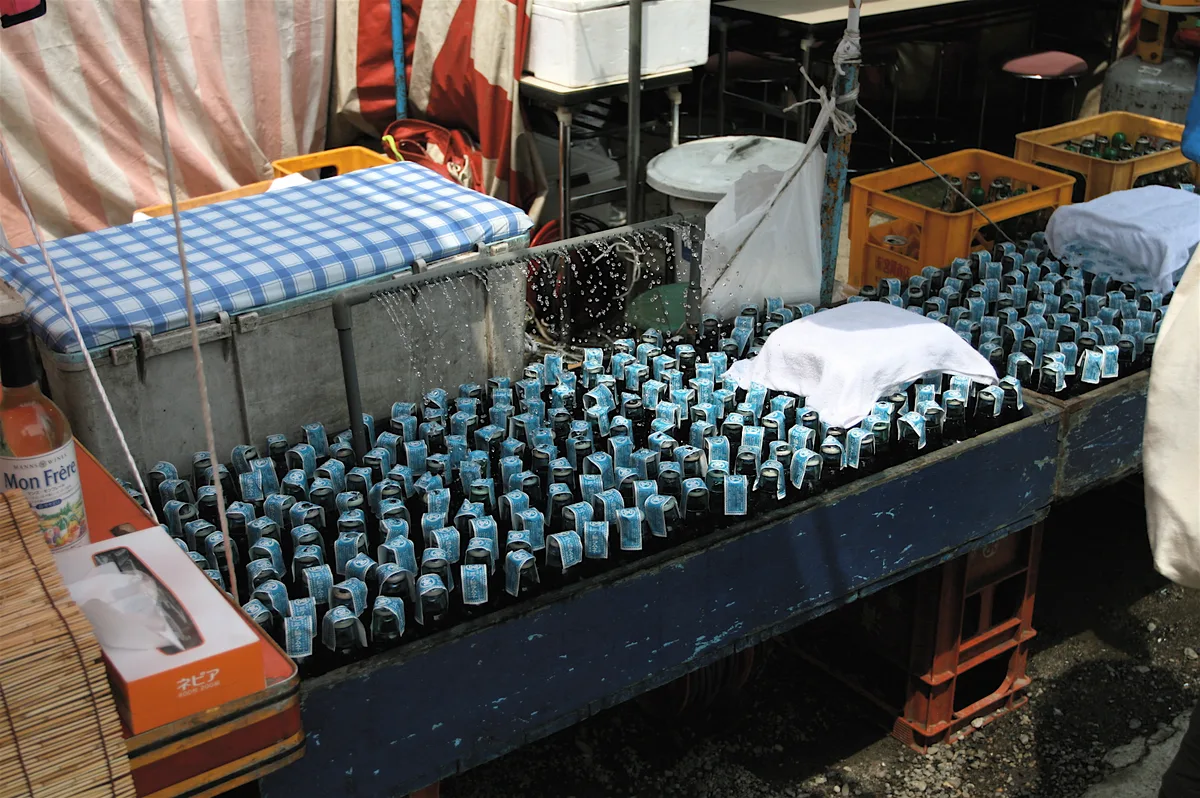
Ramune is a Japanese pronunciation of lemonade. The Japan Soft Drink Association traces it to 4 May 1872, when Chiba Katsugoro of Tokyo applied for permission to make it, and 4 May is now Ramune Day. The bottle is sealed by a glass marble in its neck, which you push down to open it. Festival stalls sell it from tubs of cold water, as in the photo below.
Calpis, Fermented Milk Since 1919
Kaiun Mishima launched Calpis in July 1919 as Japan’s first lactic acid bacteria drink. Asahi, which now owns the brand, says it is made by fermenting skimmed milk with lactobacilli and yeast. It is sold as a concentrate to dilute with water, and as the ready-to-drink Calpis Water, launched in 1991.
Canned Coffee, First Sold by UCC in 1969
UCC founder Tadao Ueshima created what UCC’s coffee museum calls the world’s first canned coffee with milk in 1969. Brands such as Suntory Boss and Georgia followed with cans of their own. The story of Ueshima and the rest of Japan’s coffee scene is in our guide to Japanese coffee culture.
Pocari Sweat, the 1980 Rehydration Drink
Pocari Sweat, from Otsuka Pharmaceutical, went on sale in 1980. Otsuka’s own account says the idea came from a researcher who saw doctors drinking intravenous solution to recover after surgery, and set out to make a drinkable version that replaces the water and electrolytes lost in sweat.
Amazake, Sweet Rice Koji With No Alcohol
Amazake means sweet sake, though the koji kind has no alcohol at all. Marukome, a major maker, describes its rice koji amazake as 0% alcohol with no added sugar: the sweetness comes from the koji’s enzymes breaking rice starch down into sugar, the same first step as in sake brewing.
Tasting Japanese Drinks in London at Drink Japan
The simplest way to taste across this list in the UK is Drink Japan, the London tasting show run by Rie Yoshitake and Chris Ashton, the co-founders of the International Wine Challenge’s sake competition. Its 2026 edition at The Lindley Hall in Westminster included tastings with every ticket, free masterclasses and a Spirits of Japan zone for shochu and awamori presented by the Government of Japan. Our event page is updated as soon as the next dates are announced.
Japanese Drinks: Questions and Answers
Beer. National Tax Agency figures for April 2023 to March 2024 put beer at 28.4% of all alcohol sold in Japan, followed by liqueurs, the tax category for alcohol mixed with sugar or other flavourings, at 26.1%. Sake was 5.0% and shochu 8.5%.
Sake is brewed from rice, rice koji and water, is commonly 13% to 17% alcohol and has a legal limit under 22%. Shochu is distilled, from barley, sweet potato, rice or other bases with koji, and is usually 20% to 30%, with a legal limit of 45% for single-distilled shochu. Shochu is often drunk with water or soda.
Chuhai is shochu, or another spirit, mixed with soda and usually lemon or other fruit. Takara Shuzo sold the first canned chuhai in Japan in 1984, and its lemon can is 8%. In the UK, Suntory’s -196 Lemon, made with shochu and vodka, is sold at 6%.
Ramune, a lemonade sealed with a glass marble, dates its name in Japan to 1872. Calpis, a fermented milk drink, has been sold since 1919, canned coffee since UCC’s first in 1969, and Pocari Sweat, a rehydration drink, since 1980. Cold barley tea, mugicha, and bottled green tea are everyday drinks too.
Sencha is loose-leaf green tea, steamed and rolled, and the most grown tea in Japan, at 48.1% of the 2025 crop. Matcha is made from tencha, grown under shade, dried without rolling and stone-ground to a fine powder, which is whisked into water so the whole leaf is drunk.
Japanese grocers such as Yutaka stock sake, sparkling sake and umeshu, spirits shops such as Master of Malt carry shochu and awamori, and supermarkets sell Asahi beer, Suntory Toki whisky and -196 chuhai. In London, the Drink Japan tasting show lets you try hundreds of Japanese drinks before buying.